
Base price: $30.
2 – 4 players.
Play time: 30 – 45 minutes.
BGG | Board Game Atlas
Buy on Amazon (via What’s Eric Playing?)
Logged plays: 2
Full disclosure: A review copy of Starry Night Sky was provided by Buffalo Games.
We’re really coming down to the wire here with reviews! I think I have two more games’ worth of photography (maybe three) before I need to disassemble my photography studio and start packing for real. Something to focus on this weekend, I suppose. In the meantime, this means that you can rest assured that the games I’m telling you about in this time period are games that are particularly interesting, new, or compelling; otherwise, I’d just have waited. This latest one is a new title from Emma Larkins, designer of Abandon All Artichokes! I’ve had my eye on Starry Night Sky for a while; let’s see how it plays!
In Starry Night Sky, players take on the role of amateur astronomers attempting to map out new constellations. The thing is, as you do, the sky becomes easier to scan to look for even more new constellations! So while it’s competitive, you are helping out your fellow astronomers, to some degree. These constellations will even form the foundations of Myths! You know, look up at the sky and figure out a creation mythos; as you do. So move around the board, collect some Star Tokens, and chart those constellations! Will you be able to make a name for yourself in this uncharted territory?
Contents
Setup
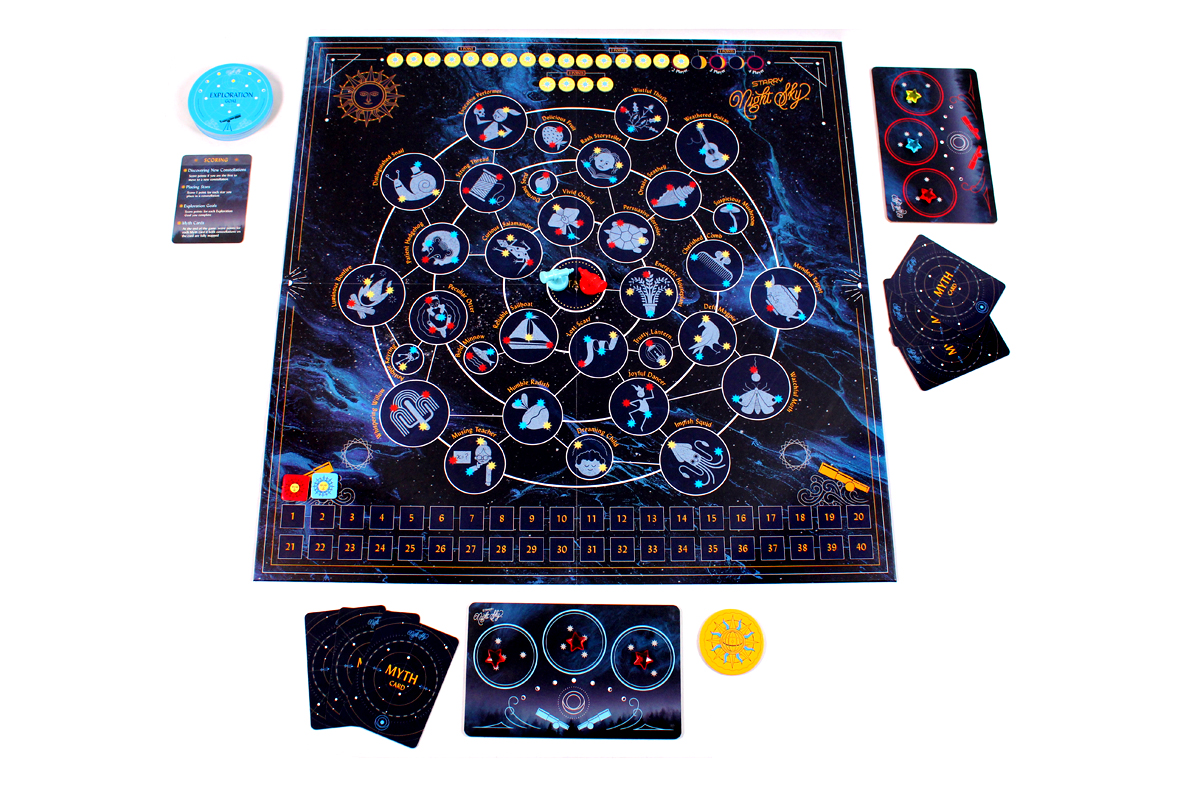
First, you want to set out the board:

Then, place Discovery Markers on the Night Track:
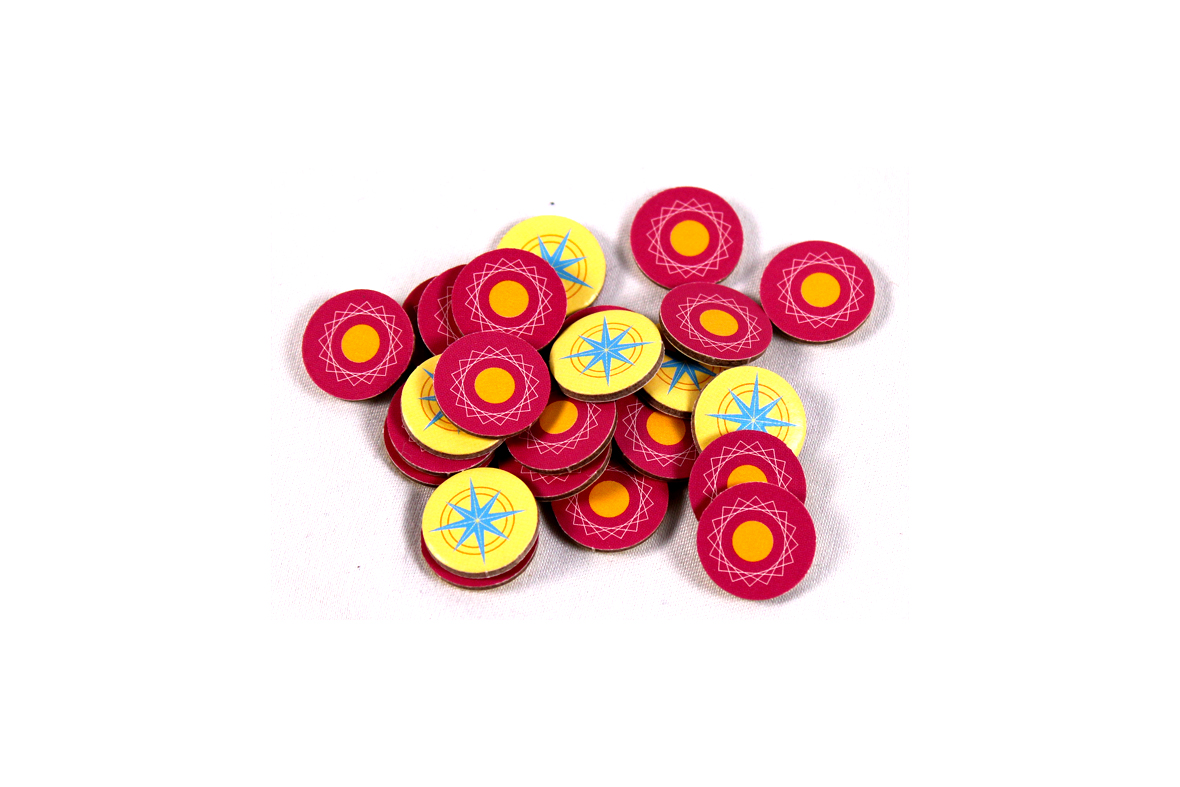
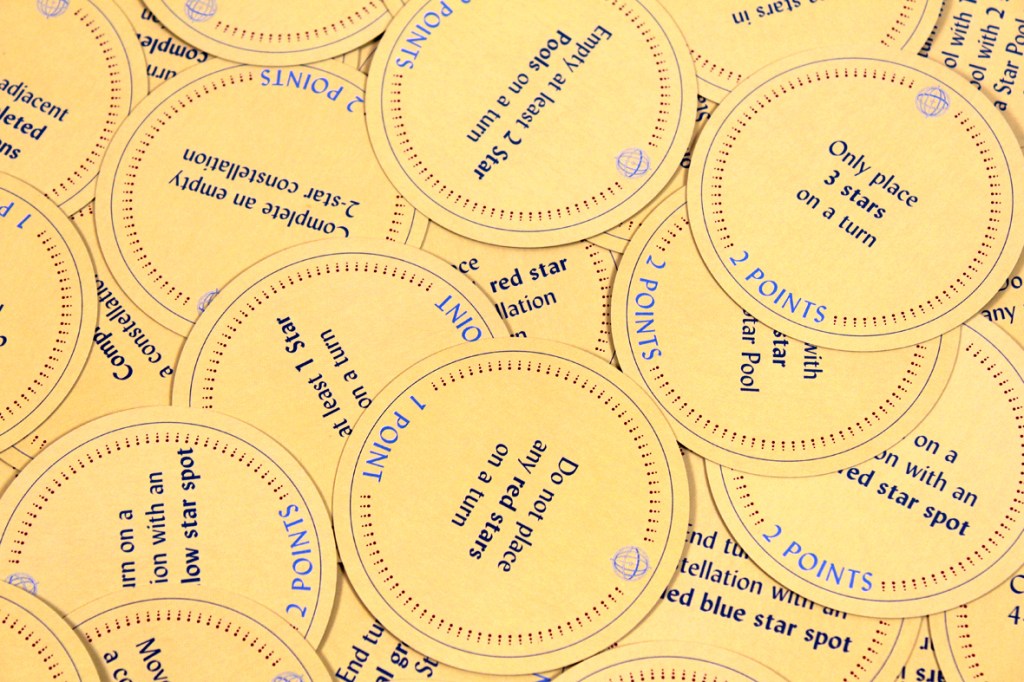
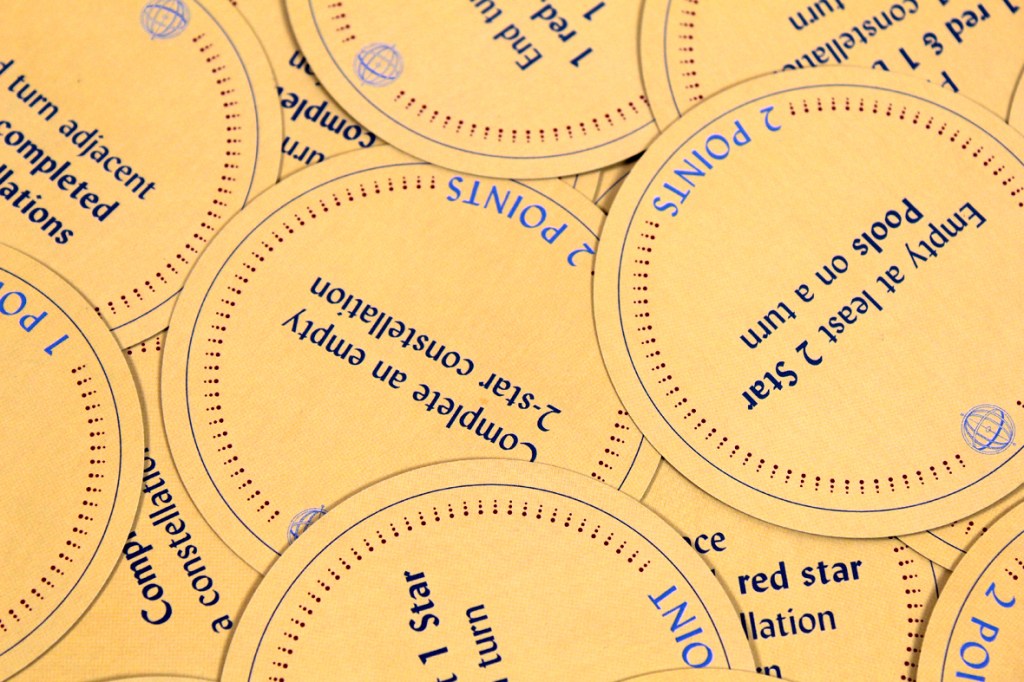
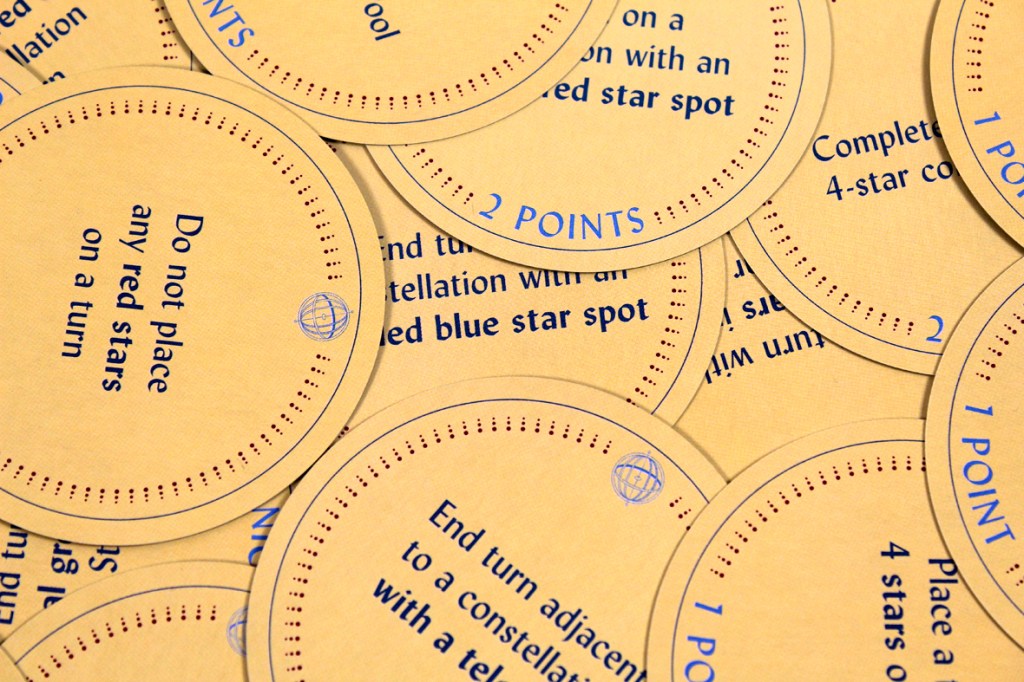
Fill up the spaces until you cover the space for your player count, then add four more to the Dawn Track below the Night Track. Then, shuffle the Exploration Cards:
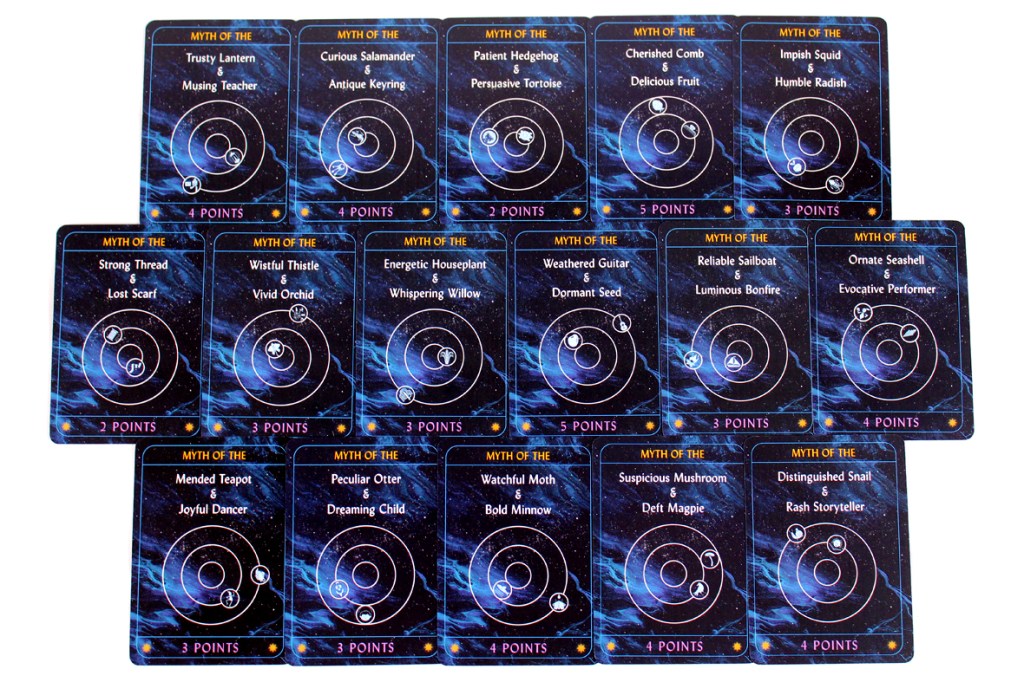
Shuffle the Myth Cards as well and deal three to each player:

Then, give each player a player board:
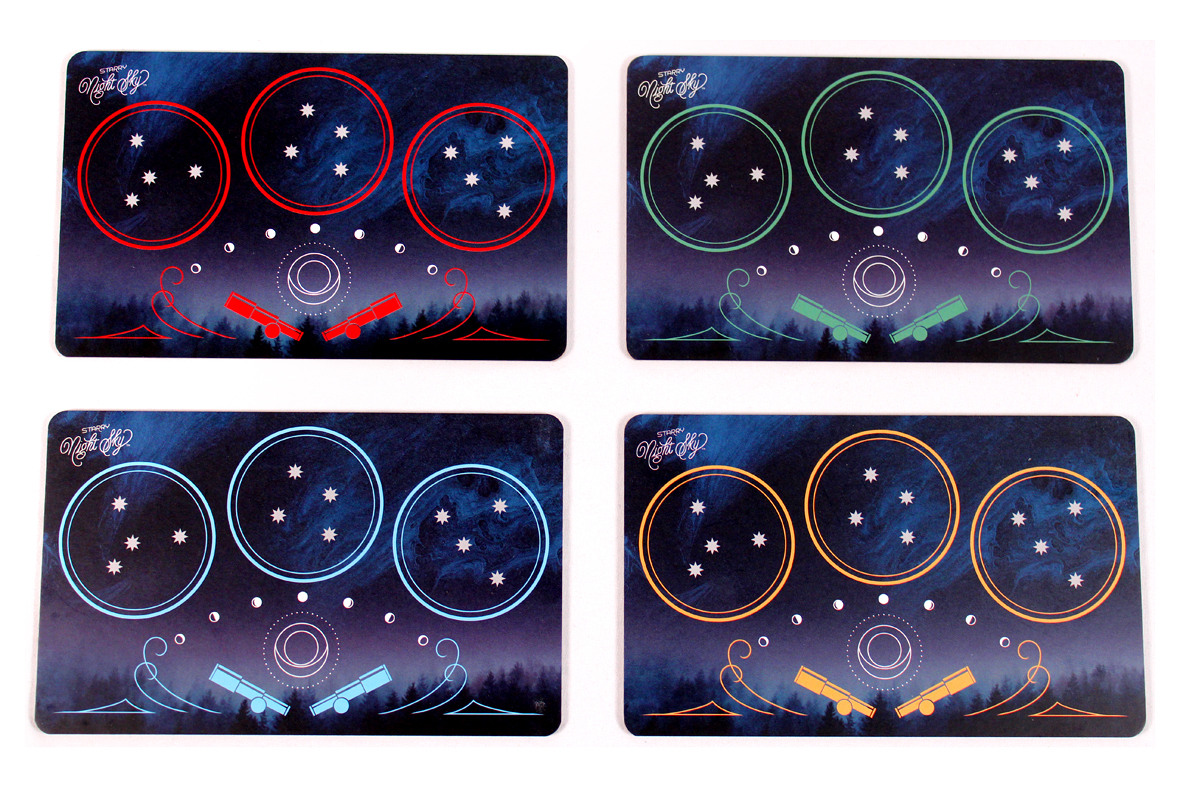
Now put the Star Tokens in the bag, shake them up, and have each player draw three. They should place one in each of the three Star Pools on their player board.

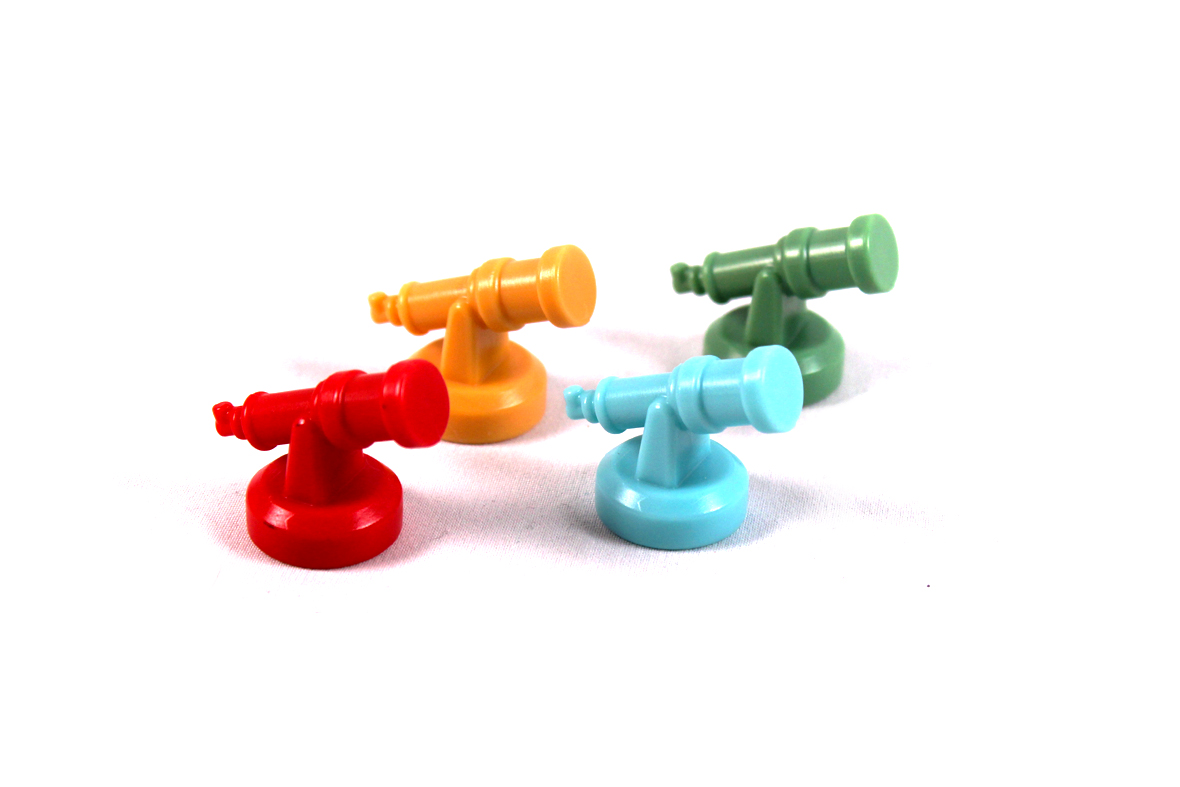
Have each player place their Telescope on the START space:
You should be ready to start!
Gameplay
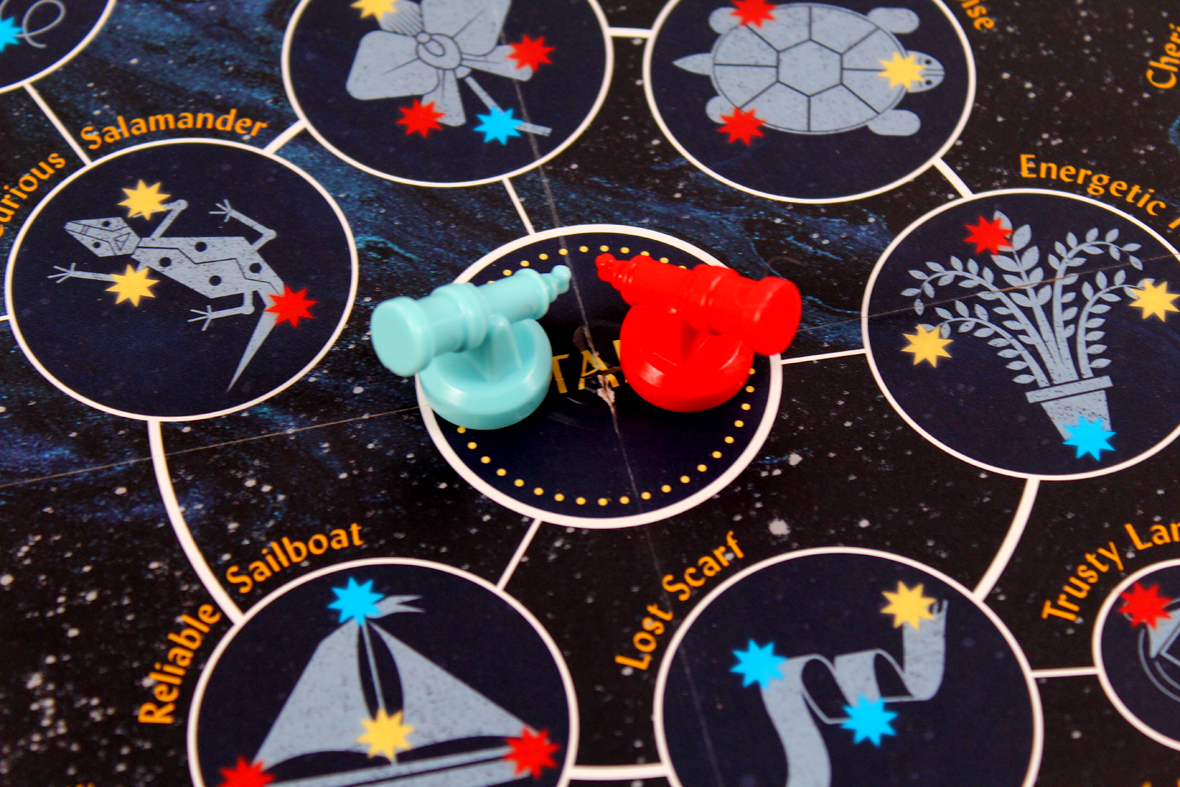
Starry Night Sky is a game about exploring and charting constellations! As you do, you’ll collect points, and the person with the most points wins! Each turn, a player Gathers and then Explores.
Gather
To start, you’ll get some things essentially every turn. You’ll usually kick your turn off by drawing an Exploration Card. If you have three Exploration cards already, you don’t draw another one.
Then, you’ll draw three new stars and add them to your Star Pools. Each Star Pool can hold four stars at most. If there are already four stars in a pool, you draw one fewer star. Then, you place the stars you drew in pools of your choice (you cannot place stars in a pool that already has four).
Explore
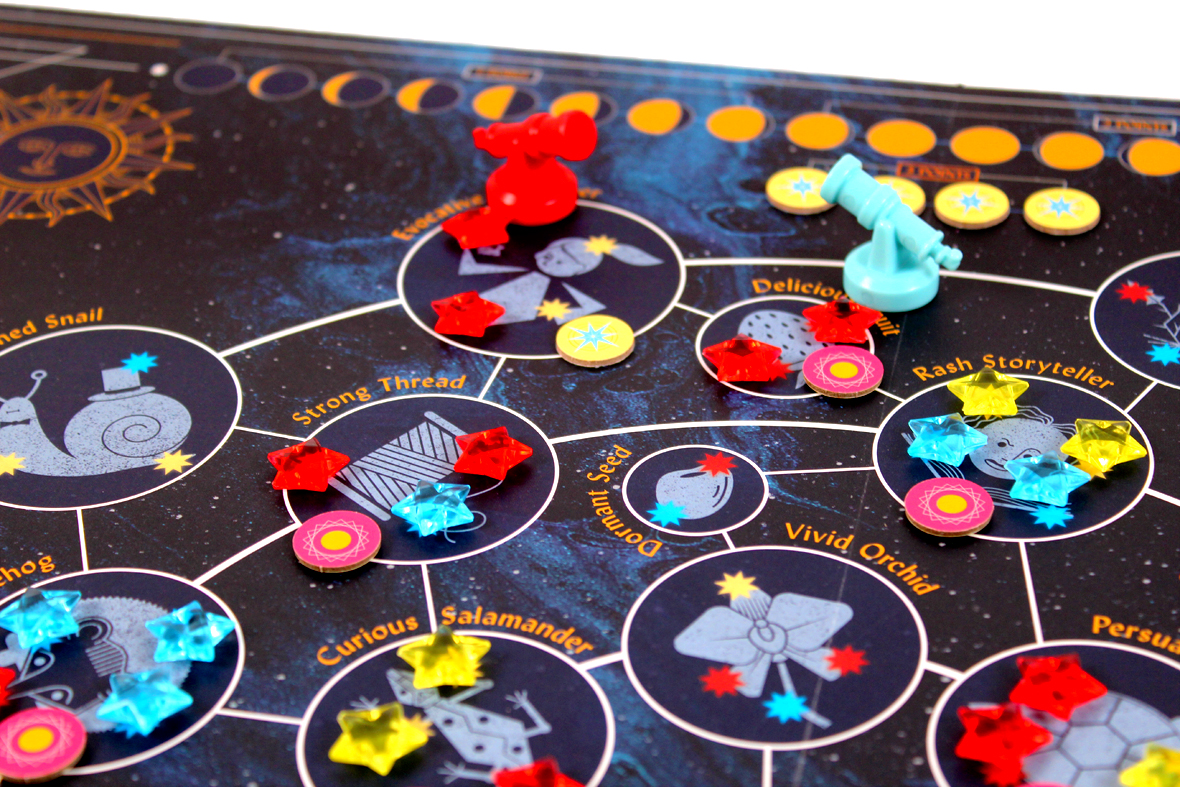
After doing that, you Explore! You must move your telescope to an adjacent constellation. Note that you must skip over the Start Space and any fully-mapped constellations (more on that later).
If the constellation has no stars on it, you discover it! Place the leftmost Discovery Marker on the Night Track onto the constellation and score the indicated points.
Either way, when you land on a constellation, you have to map it! Place at least one star on a space that matches that star’s color on the constellation. If you can’t (because you don’t have the right colors), you can’t move to that constellation. You don’t have to fill them all, though, if you do, flip the Discovery Marker to the pink (complete) side.
If you move to a partially-mapped constellation, you can move and Explore again! You can use a different star pool (or the same one) for the second Explore action. You can only do that once, though; your turn ends immediately after the second Explore. You gain 1 point per star token you placed on your turn, including any placed on the second bonus Explore action.
Additionally, on your turn, if you complete the challenge on an Exploration Card, you can turn it in for points. If you’d prefer, you can instead discard the Exploration Card and take a star of the color of your choice from the bag, adding it to a star pool of your choice (providing it has fewer than four).
End of Game
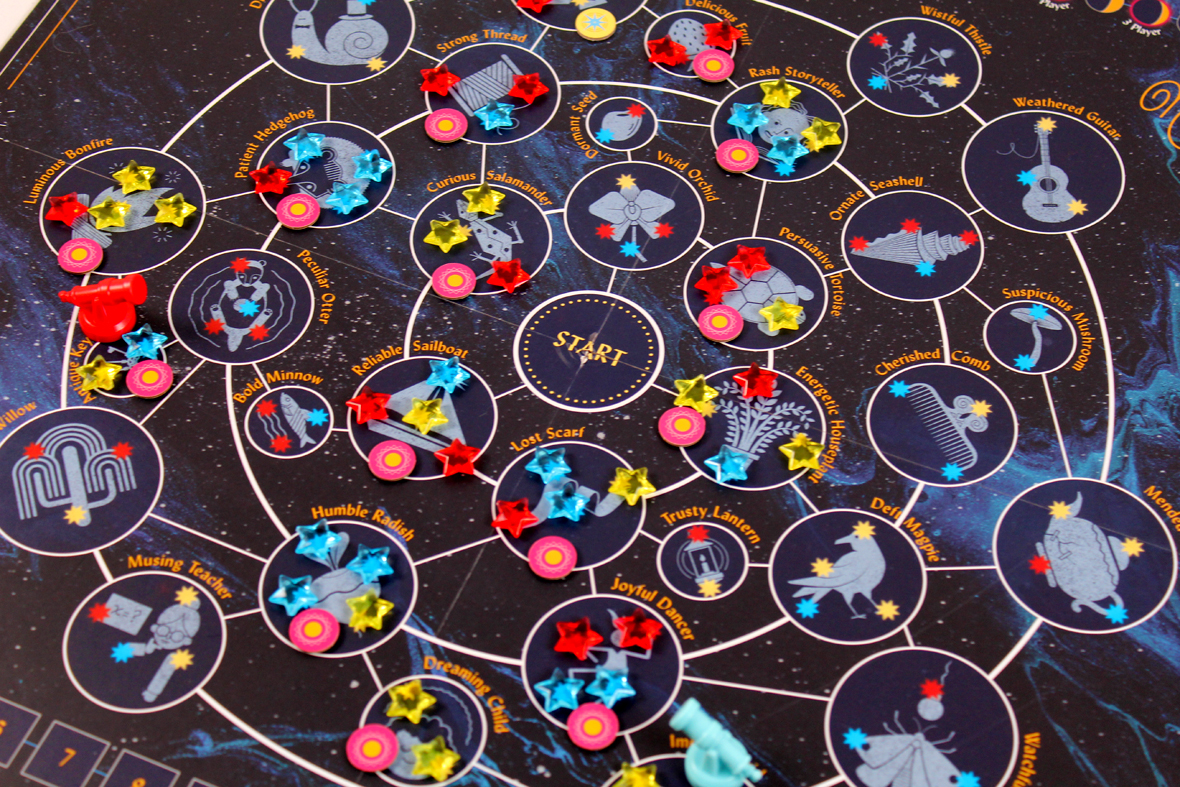
The game ends when the final Discovery Marker is removed from the Night Track. At that point, complete the round so that every player has the same number of turns. If a player discovers a new constellation on their turn during this round, they take from the Dawn Track (since the Night Track is empty).
Once the game ends, players score their Myth Cards. A Myth Card is scored if both constellations on the card are fully-mapped, even if they were mapped by other players.
The player with the most points wins!
Player Count Differences
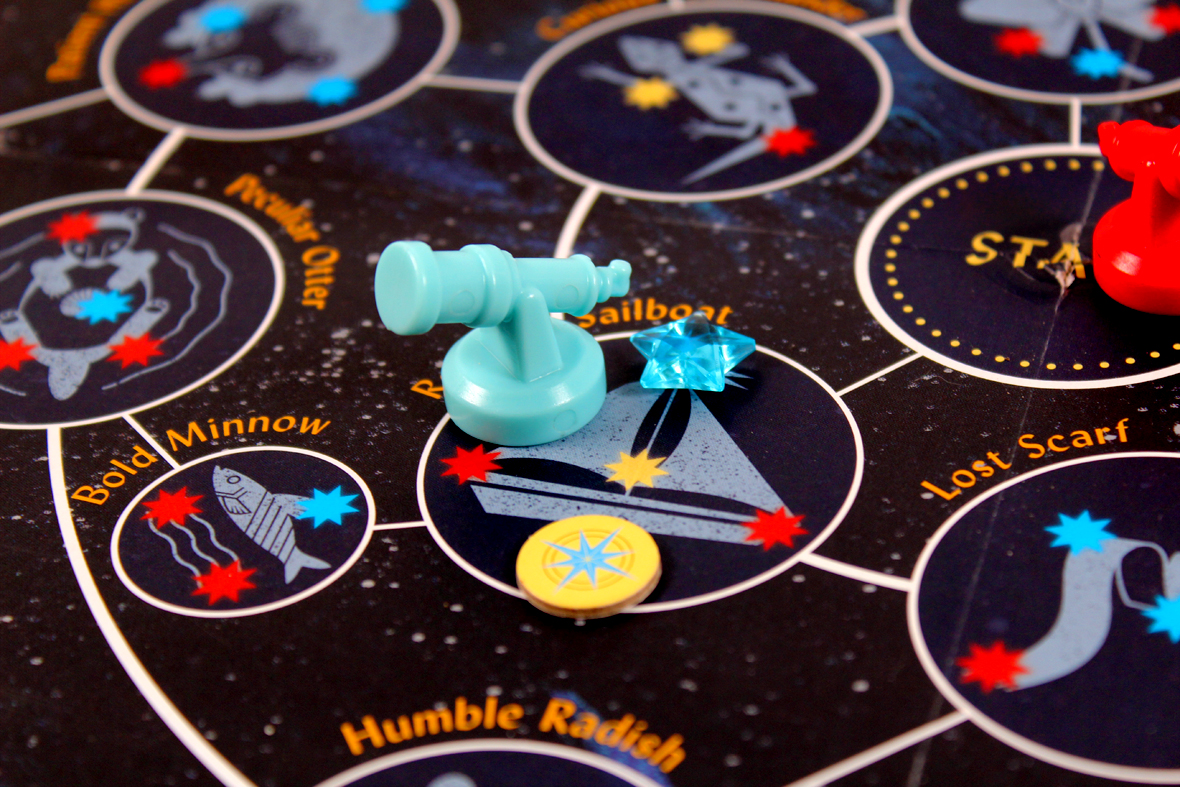
Interestingly, I noticed that fewer players tends to make the game a bit swingier than more players does, which runs counter to my usual expectation. With fewer players, you have to be a bit choosy about which constellations you go after. There aren’t enough for everyone to discover everything, so you’ll likely end up in a spot where plenty don’t get discovered. You still get plenty of points for the ones you discover, but, unfortunately, you run the risk of your Myth Cards going a bit more unfulfilled (since there won’t be as many players randomly filling out your constellations for no real reason beyond points for them). Plus, with more players, the network tends to get fuller faster, so it becomes easier to go after the constellations you want. Just an interesting note. This means that it’s more critical to go after your high-value Myth Cards, to some degree, and make sure you lock those down. With more players, more of your Myth Cards are likely to get filled out, so you’ll generally see more points (and less variance as a result). Just an interesting math outcome; doesn’t necessarily affect my enjoyment of the game one way or another. That said, with more players, the Distinguished Snail is more likely to get filled in, and he’s my favorite, so I’ve gotta lean in that direction.
Strategy
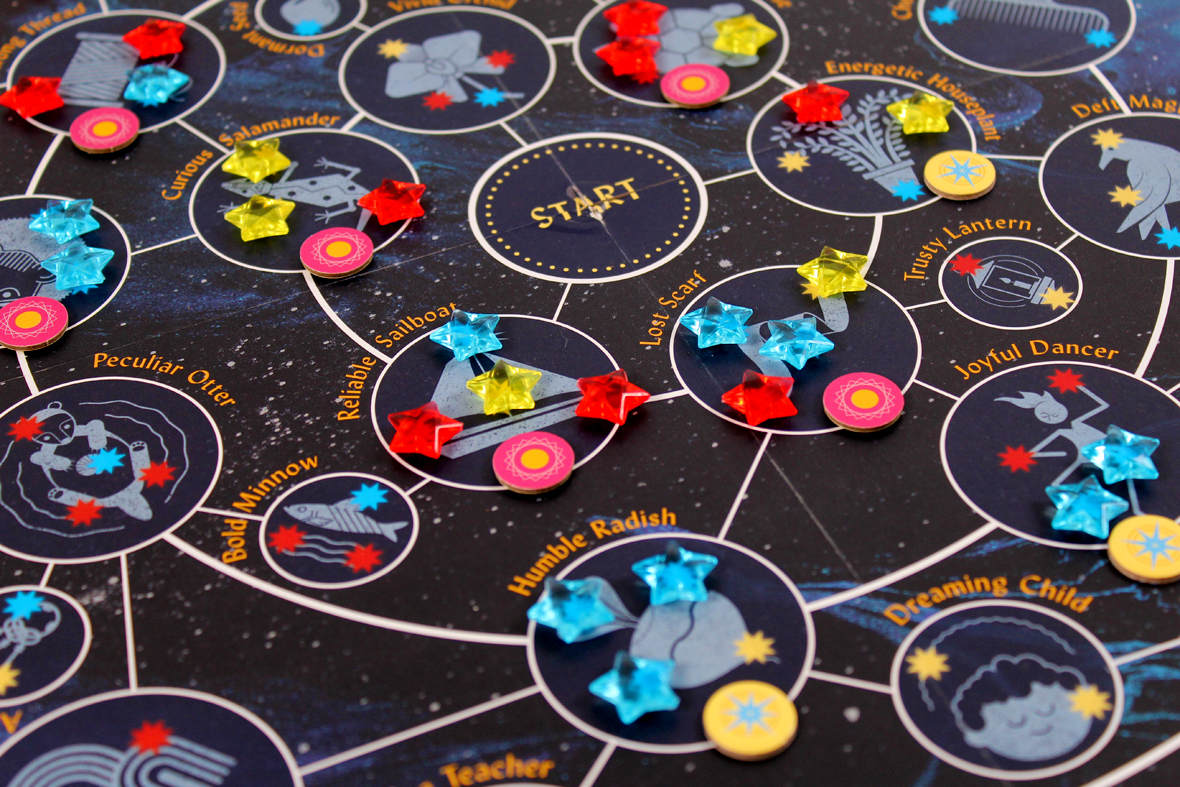
- Try to maximize how many Star Tokens you place a turn. The more you place, the more points you earn! There’s not really much else to it. This generally means you should shoot for trying to hit two different constellations in a given turn, if you can.
- Keep your Myth Cards in mind. You should be focusing on those whenever possible; they’ll add quite a few late-game points if you manage to fill all three of them out. The challenge is if they’re on opposite sides of the board, but hopefully you can get other players to try and make the pathway a bit easier for you.
- Try to ride other players’ coattails! Use routes that other players have created. Are they working towards one of your spaces? Consider going somewhere else for a bit and letting them push forward until they’re done. Then you can make a very easy move to the space you want to go to!
- You can play more Star Tokens if you just fill in someone else’s constellation, but be careful: you might be helping them win! There’s no way to really know if your opponent has a particular constellation on one of their Myth Cards (at least, not until it’s too late), but it’s worth trying to be a bit cognizant of that so that you’re not just giving them points for free if you can avoid it.
- A single-point Exploration Card may just be worth cashing in for a Star Token, especially if placing it finishes a Myth Card. Placing a Star Token is a point, fulfilling an Exploration Card is a point; if you’re not sure which to go for, err on the side of fulfilling a Myth Card (since that gives you additional points on top of the Star Token you’ve placed).
- Don’t let any of your Star Pools get too full! You want to be getting three Star Tokens per turn. Letting one hit four is fine, but you don’t want to leave it at four for any length of time. That junks up your ability to acquire additional Star Tokens on subsequent turns. While that may seem relatively low-impact, you are reducing your draw by a third which means you’re just stuck with what you already have. That may not help you that much!
- In the early game, you can probably get more points filling out two constellations than just discovering one. Discovering a constellation is relatively low-value early on, and doing so immediately ends your turn after you place. Filling out another constellation and getting a bonus Explore action, on the other hand, lets you place even more Star Tokens, which can really bump up your points in the early game. Towards the later game, discovering a constellation is just as good (when it’s worth 3 points).
Pros, Mehs, and Cons
Pros
- Whatever they paid the person who did the box art, it wasn’t enough. The box art is incredible for this game; it’s probably one of the best-looking boxes I’ve ever seen for a board game. It’s spacey and artistic and reflects and glows in all the right ways. It’s really exceptional; quite striking.
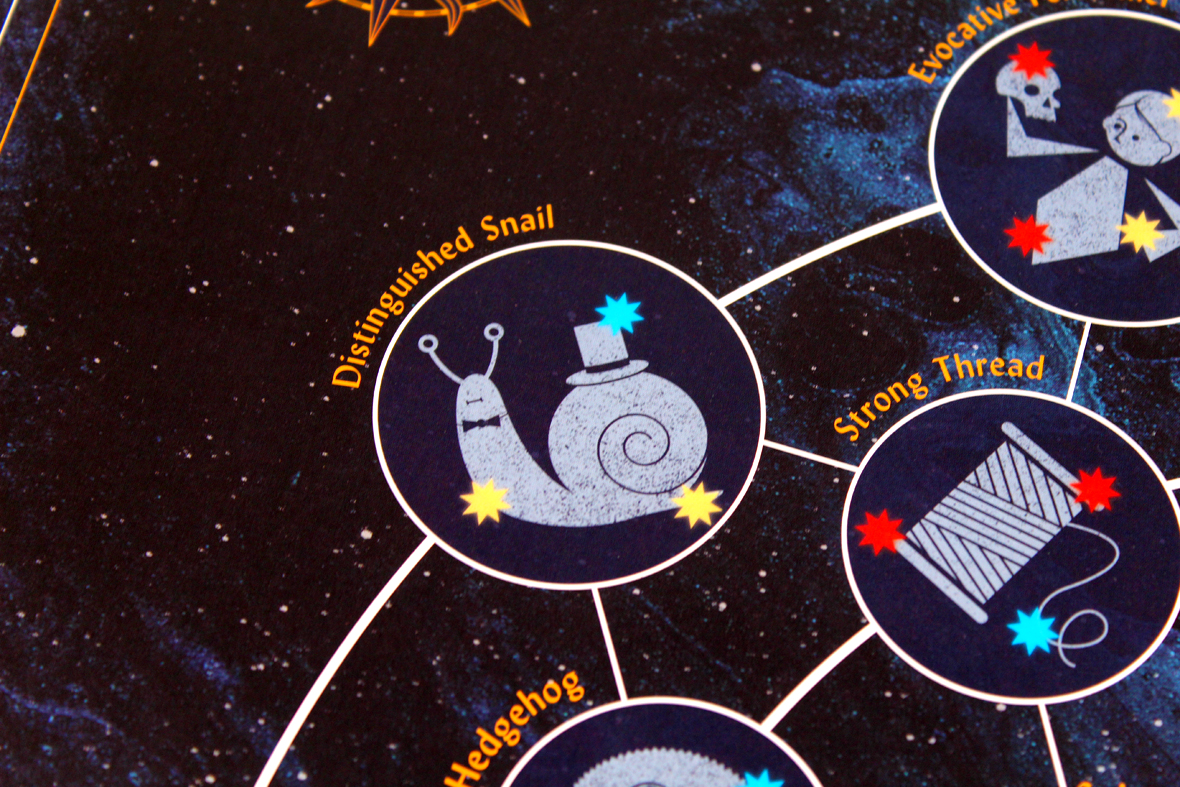
- The Distinguished Snail has a little hat! A top hat! For his shell! He’s my favorite constellation ever. It’s nice to have a little fun friend.
- The little Star Tokens are quite nice! They’re very pleasant, especially since they could have been the like, Standard Gem Tokens that come with a ton of games. I appreciate that they went for something a bit more thematically-appropriate.
- There have been a couple constellation-themed games coming across my purview lately. They’ve all been great! It’s a theme I like a lot. Discovering constellations, making constellations, naming constellations; they’re all things I’ve gotten to try in games lately and I’ve been loving it.
- This is a very lovely and approachable game, which I like. It helps that the game looks good and there isn’t a lot in the way of negative player interaction, so it makes for a very friendly and pleasant game without much in the way of trouble. I’ve found it really easy to dive into a game as a result, which is really nice.
- The semi-cooperative nature of the game is also pretty cool. I like that players can interact with each other without having to necessarily be tearing each other down or messing with each others’ plans. Here, they’re helping each other and getting points along the way. It’s a nice way to make the game semi-cooperative while still keeping things interesting.
- The gradual collapsing of paths into one shortcut is also neat, if it works out. It’s neat in that it helps you more quickly access the entire board, which you almost certainly need if you’re going to fulfill all of your Myth Cards. Other players may fill in constellations closer to the center, but on the outer edges of the board you’re likely on your own. It’s a nice way to also make it so that players have a shot at fulfilling all of their Myth Cards, even in games with fewer players.
- The per-turn challenges of the Exploration Cards (or being able to trade them in for a Star Token that you need) is a really neat trade-off (and a nice way to mitigate the luck of the draw of pulling a token from the bag). I really like this, honestly. The challenges give you something to do beyond just repeating the game’s simple structure over and over (which makes the game easy to learn but still interesting every time). If you get a card you don’t like or need, you can just dump it and try again with a new Star Token. A quick way to make sure players don’t get stuck with cards they don’t want to use.
Mehs
- This is a place where the board would have benefitted from being double-layered; any jostle can really mess up the game’s state. Be careful. Having a way to slot the Star Tokens would have been great. If you bump the table too hard, that’s going to be a game over (or pretty close).
- There are a lot of little Discovery Markers to place at the start of the game. Mildly irritating. It’s a very minor irritation, but I have big-ish hands and it’s tough to get them all placed in a way that’s nice and looks good. It’s easier when your other players are helping.
Cons
- The individual spaces can get a bit busy; it’s sometimes hard to see what Star Tokens are still needed. The challenge is with three players and Star Tokens and all sorts of telescopes on a given space, it’s pretty difficult to see what else is on the space (like its title or the empty spaces for Star Tokens). Once you get familiar with the game, it’s not as big of a problem, but it can make certain spaces pretty messy (especially the small ones).
Overall: 8.5 / 10
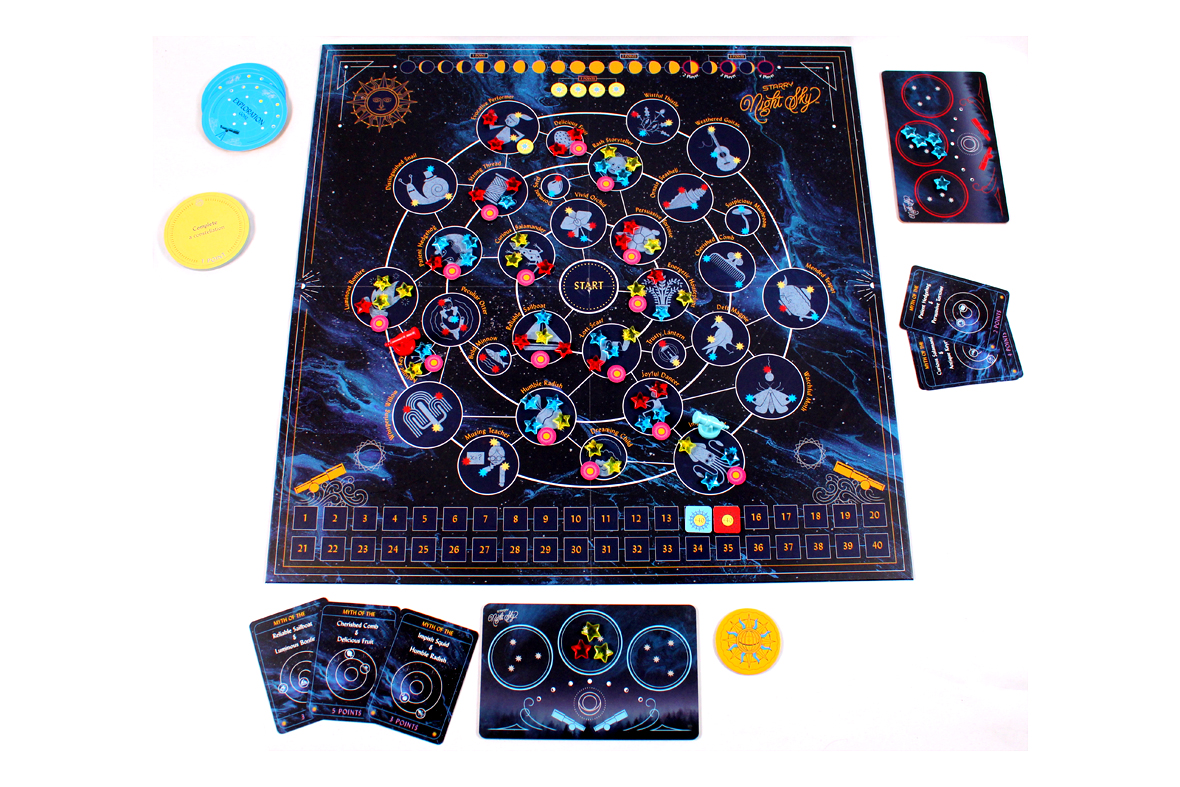
Overall, I think Starry Night Sky is a really great game! I love space and astronomy-themed games, and this one obviously caught my eye right away. What a beautiful box. It reminds me a lot of things I like about Ticket to Ride, but it’s a bit more semi-cooperative in nature. Here, you’re not building routes so much as you are shrinking the game board. It’s really interesting! After a few rounds, it’s very easy to get just about anywhere. The key is, to fill in those spaces, you have to spend Star Tokens (and get points), but that might be helping other players fill out their Myth Cards (especially at four players). I think that’s kind of fun, though! You never know who you’re helping. The Exploration Cards add a nice bit of variety to the mix, offering mid-game challenges and incentivizing players to do things that might not always be aligned with their overall goals in the hopes of gaining more points. I particularly like that you can just dump the goals for a free Star Token of your choice, as well; it fits some strategies a bit better. All the tokens do make the board a bit busy, though; it can sometimes be hard to see empty spaces (and I worry that jostling the board can prove disastrous, since the Star Tokens are just free-floating). That said, Emma Larkins is proving to be a master of approachability and vibrant game design, and Starry Night Sky is an excellent title in that regard, even if it’s a bit lighter than my usual playing fare. If you’re looking for a game that’s approachable and fit for a wide audience, you’re a fan of stars and constellations, or you just want to see a delightful snail with a top hat, I’d definitely recommend checking out Starry Night Sky! I’ve really enjoyed it.
If you enjoyed this review and would like to support What’s Eric Playing? in the future, please check out my Patreon. Thanks for reading!
 What's Eric Playing?