
Base price: $25.
2 – 6 players.
Play time: ~20 minutes.
BGG | Board Game Atlas
Buy on Amazon (via What’s Eric Playing?)
Logged plays: 2
Full disclosure: A review copy of Too Many Cooks was provided by Good Games Publishing.
I was going to say time flies when you’re having fun, but I spent a good amount of the last several weeks just unpacking and building furniture, so I’m not sure time has especially flown for me. Slept great, though! Fatigue will do that for you. But, like clockwork, it’s almost Gen Con time again, so I’m back with more reviews ahead of that. What will be the hot games this year? Always hard to say. Maybe Sky Team? I do love Sky Team. I got to try Too Many Cooks at GAMA, and I had a blast with it there, so that’s what we’re gonna talk about today. Let’s dive right in!
In Too Many Cooks, you and your fellow players are working together to make the perfect soup. I’m not really much of a soup guy, so I have to use my imagination. The challenge here is that while you all have shared tastes that you agree on, you also have secret Personal Tastes that you have to satisfy for the soup to be any good. There’s something here about cooks and broth, but I wouldn’t know. You’ll have to be quick if you want to get the perfect soup made together. Will you be able to do it?
Contents
Setup
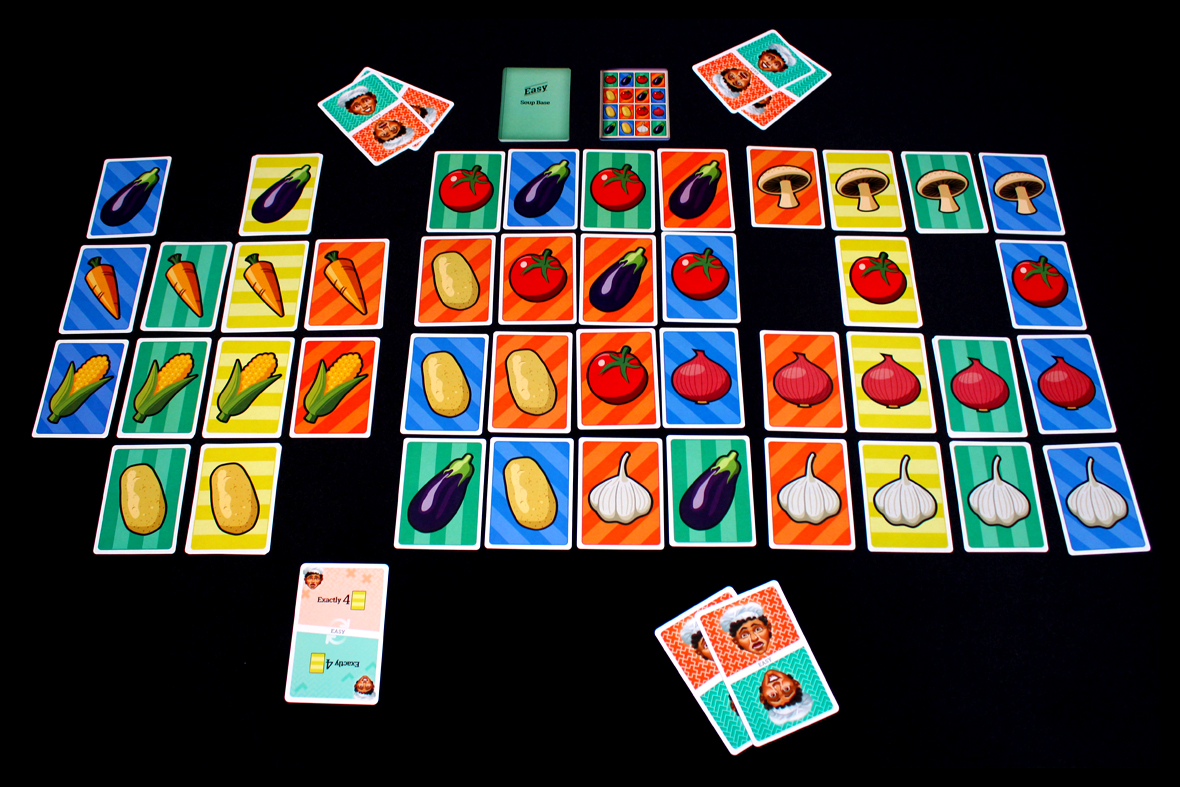
To kick things off, place two Star Cards near the play area.

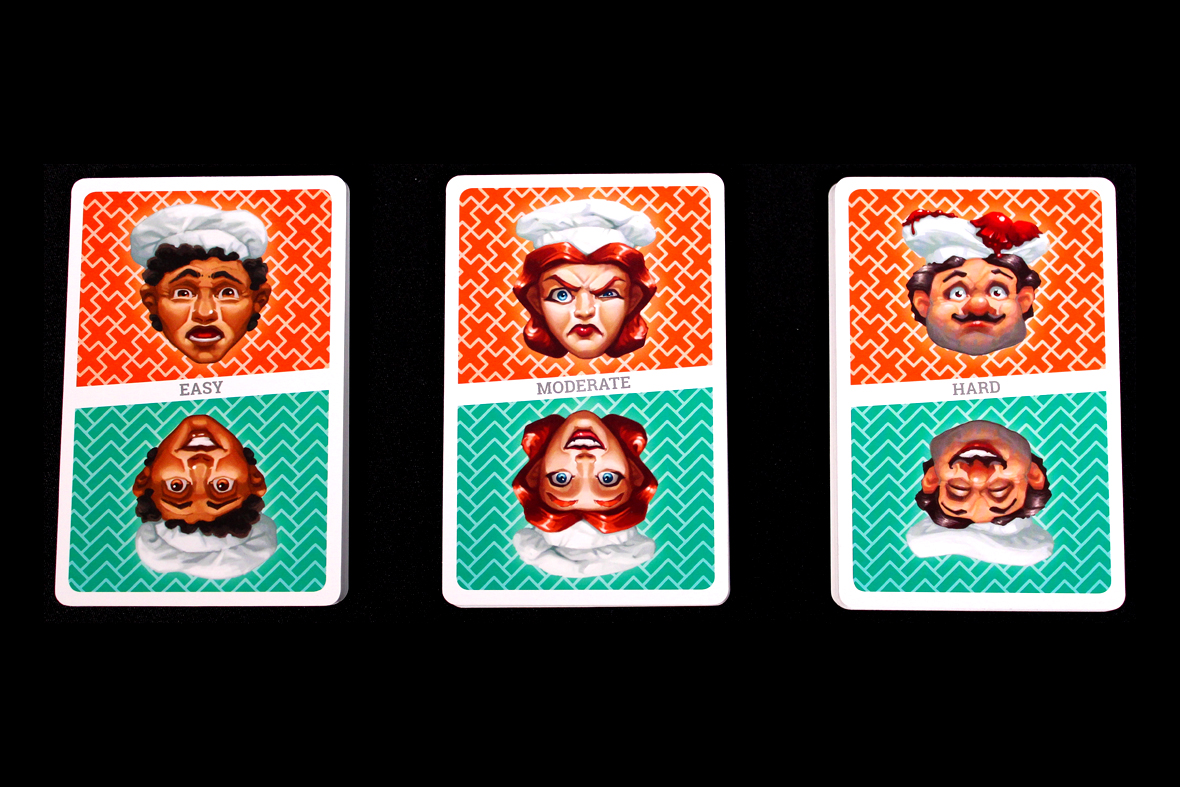
Then, chose a difficulty! That will let you shuffle that level’s Taste Cards together:
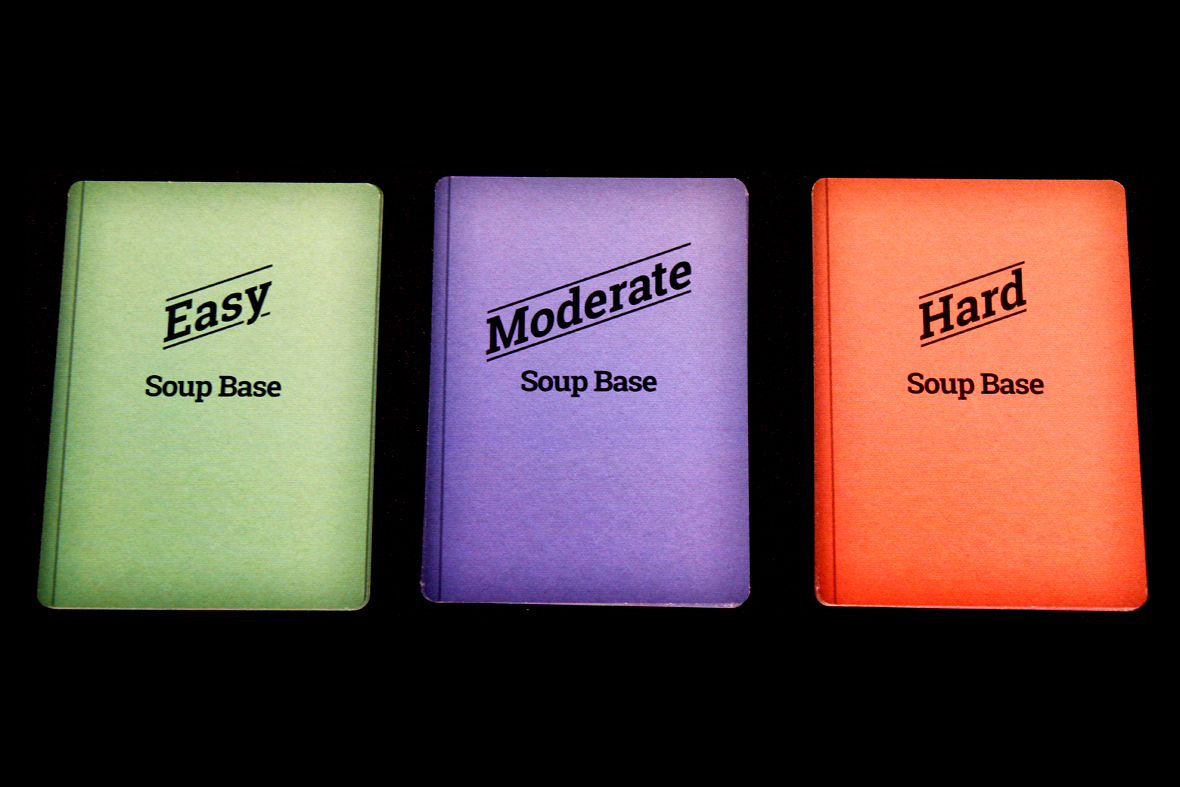
You can also draw and place one Soup Base Card face-up for your chosen difficulty level:
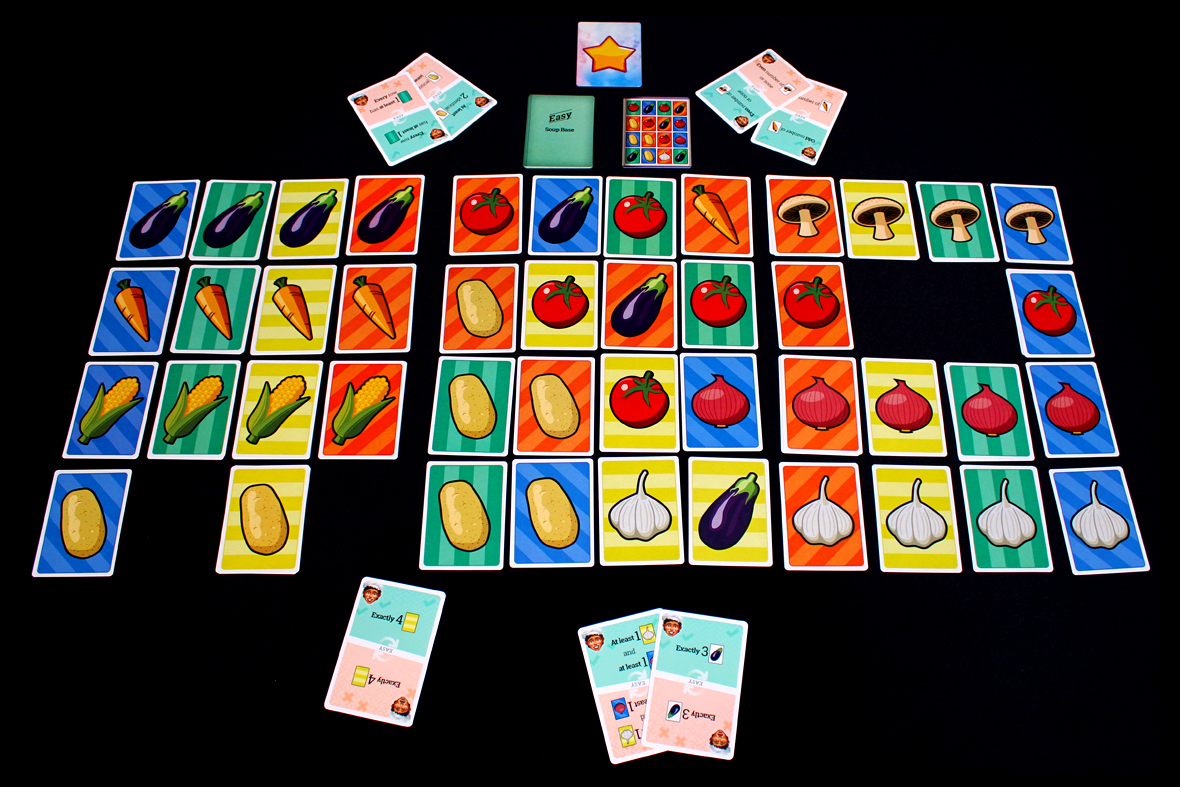
Once you do, organize the Vegetable Cards, leaving space in the middle to build the 4×4 grid:
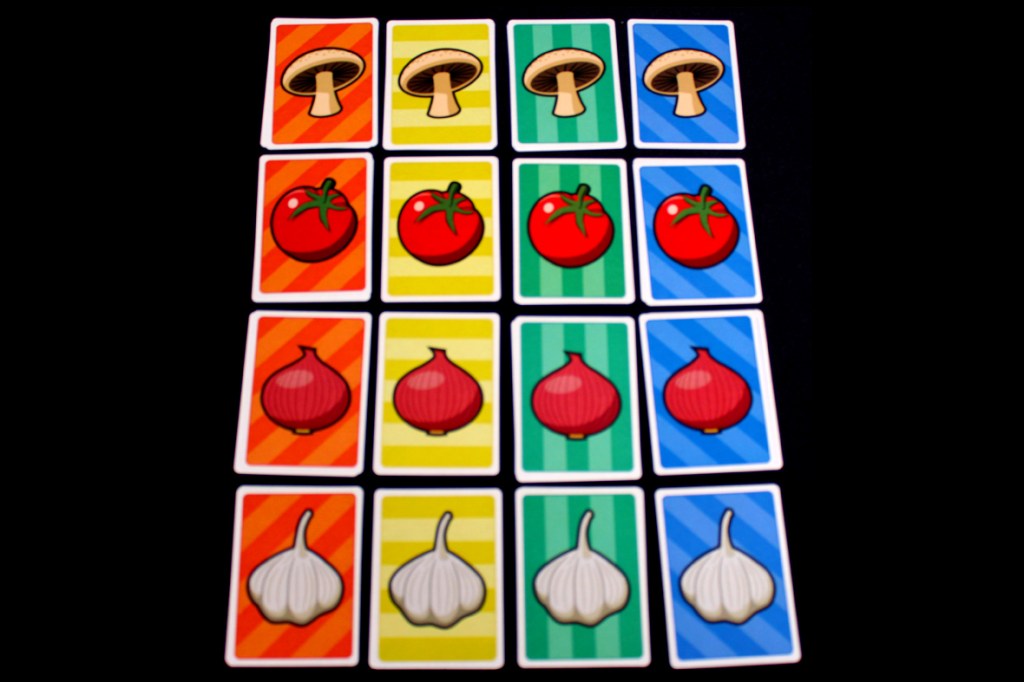
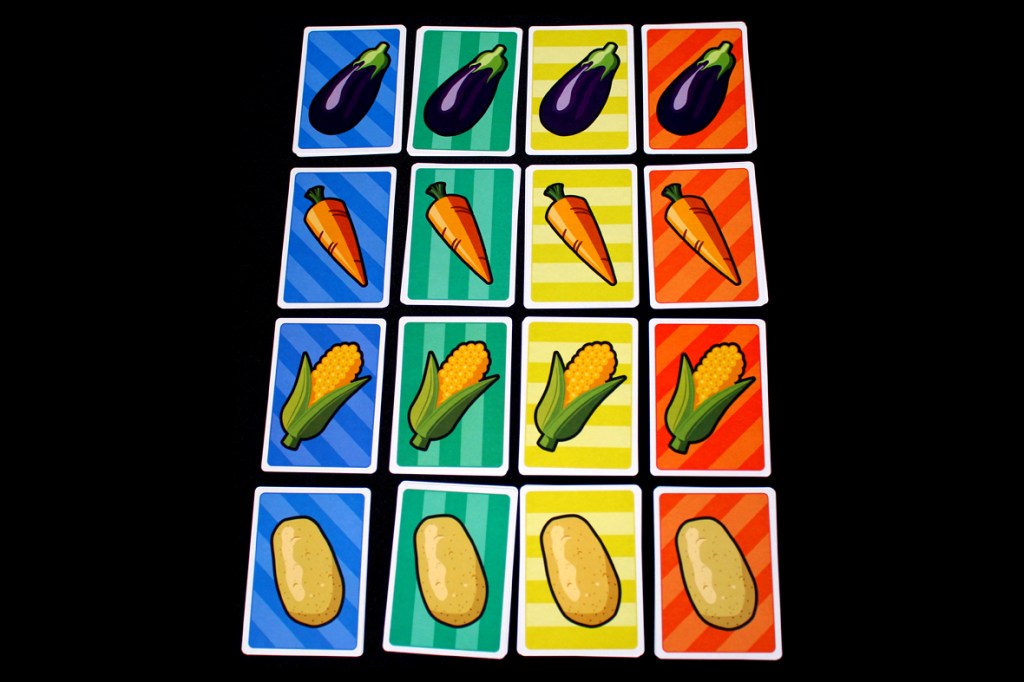
The remaining veggies are spares; you might use them later. Draw Taste Cards from the deck depending on which round you’re in:
- First Round: 7 Tastes
- Second Round: 9 Tastes
- Third Round: 11 Tastes
Deal them out to each player until they have two (or three, if playing with two players). The remaining tastes are set aside face-up so that they can be seen by everyone, but with the red (Unhappy) side up. These are Shared Tastes (as opposed to the Personal Tastes in everyone’s hands). Have everyone set their Personal Tastes to be Unhappy-side up in their hands.
You should be ready to start!
Gameplay
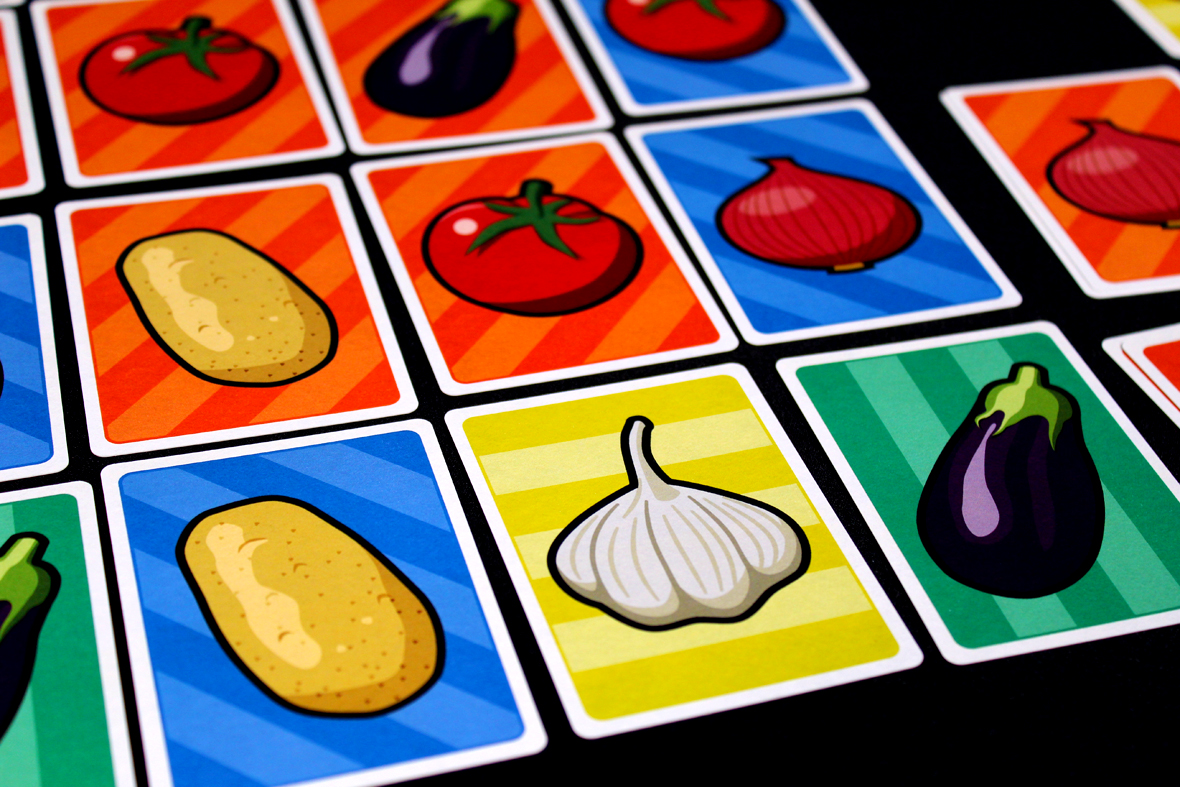
Over the course of a round, players will take turns messing with the soup until everyone’s Personal and Shared Tastes are satisfied. Be careful, though! You’re on the clock! (You can find the timer here.)
Each turn, you can do one of three things:
- Change a Card: You can choose any card in the soup and swap it with a spare vegetable card, with one condition: you can never change the card’s color and vegetable at the same time! This means you must either change the color of the card on your turn or change the vegetable.
- Rotate a Row or Column: You may pick a row or column and slide all the cards in that row or column in the direction of your choice. The card that exits the 4×4 grid is then moved into the newly empty space created by the shift.
- Pass: If your Personal Tastes and Shared Tastes are Satisfied, you may pass! This doesn’t mean you’re out for the round; if you suddenly become Dissatisfied, you can express it, flip one or more cards over, and then take your turn when it comes back around to you.
Let’s talk about Tastes, actually. When you find that one of your Personal Tastes (or a Shared Taste) is satisfied, you flip it to the green (happy) side and express it. If you find that your Tastes are no longer met, flip the card back to the red (unhappy) side. You can also say something to let the other players know how you felt about the move, poositively or negatively. However, you cannot say exactly what happened to make you happy or unhappy. No mentioning specific ingredients or colors!
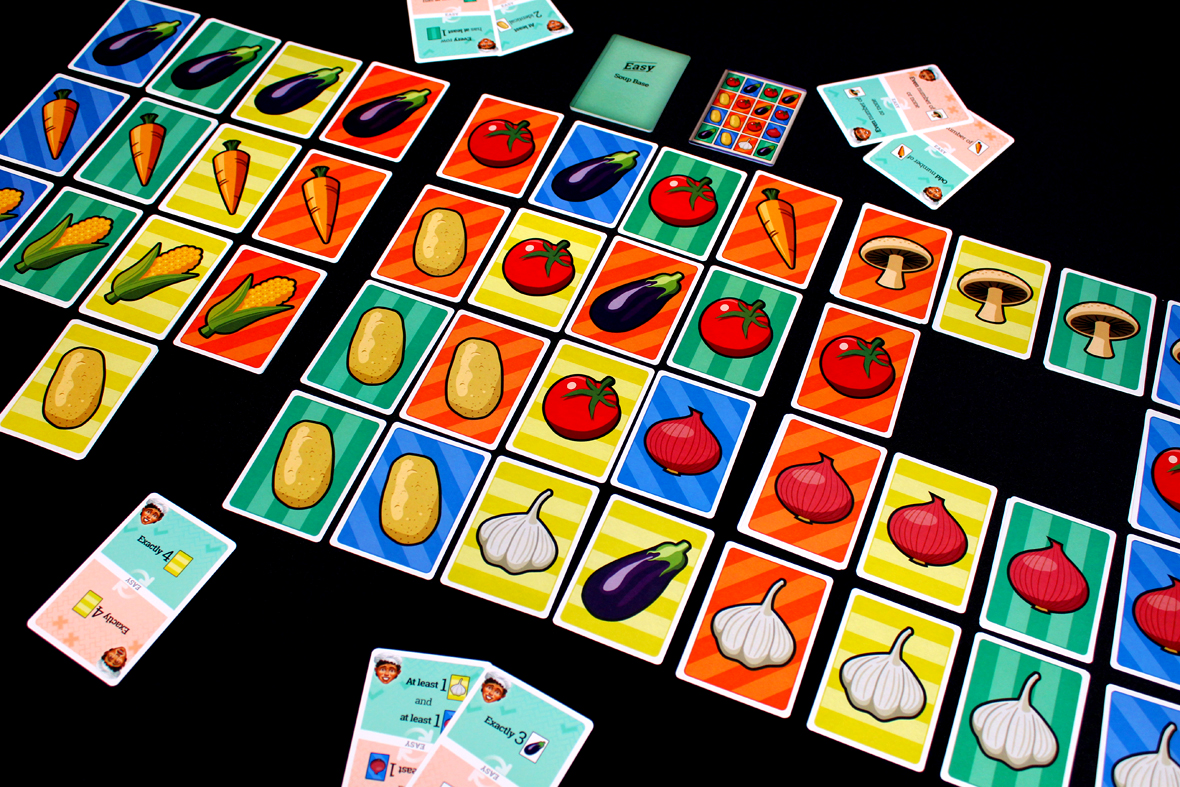
Once everyone has passed or the timer runs out, check to see how you did!
- If you satisfied all tastes, you gain a star!
- If you satisfied all but one taste, you neither gain nor lose a star.
- If you missed two or more tastes, you lose a star! If you don’t have any stars left to lose, you lose the game! Your restaurant shuts down.
- If you somehow miss five or more tastes in one round, you also instantly lose. I think you just get ruined on Yelp or something.
Player Count Differences
I wouldn’t say there are a ton here, practically. More players distributes out how much you get to do, personally, but it also means that each chef can focus on fewer Tastes to fulfill, which can be pretty good! Sometimes, at least. Sometimes that specificity leads to a bit of tunnel vision among players, since they do their Taste to the exclusion of all else. Watch for those players. That said, the opposite can happen at low player counts. You can have players who aren’t sure what to do so they can’t decide and take forever. Remind them that the game is timed; that usually helps. That said, I mostly play this for the silly passive-aggressive comments and the mild deduction, so I’m not too particular about player counts. I’ve enjoyed it with two, though, so don’t worry about that! I think it would be hectic at six, but potentially a fun, silly hectic as well. No major preference, here.
Strategy
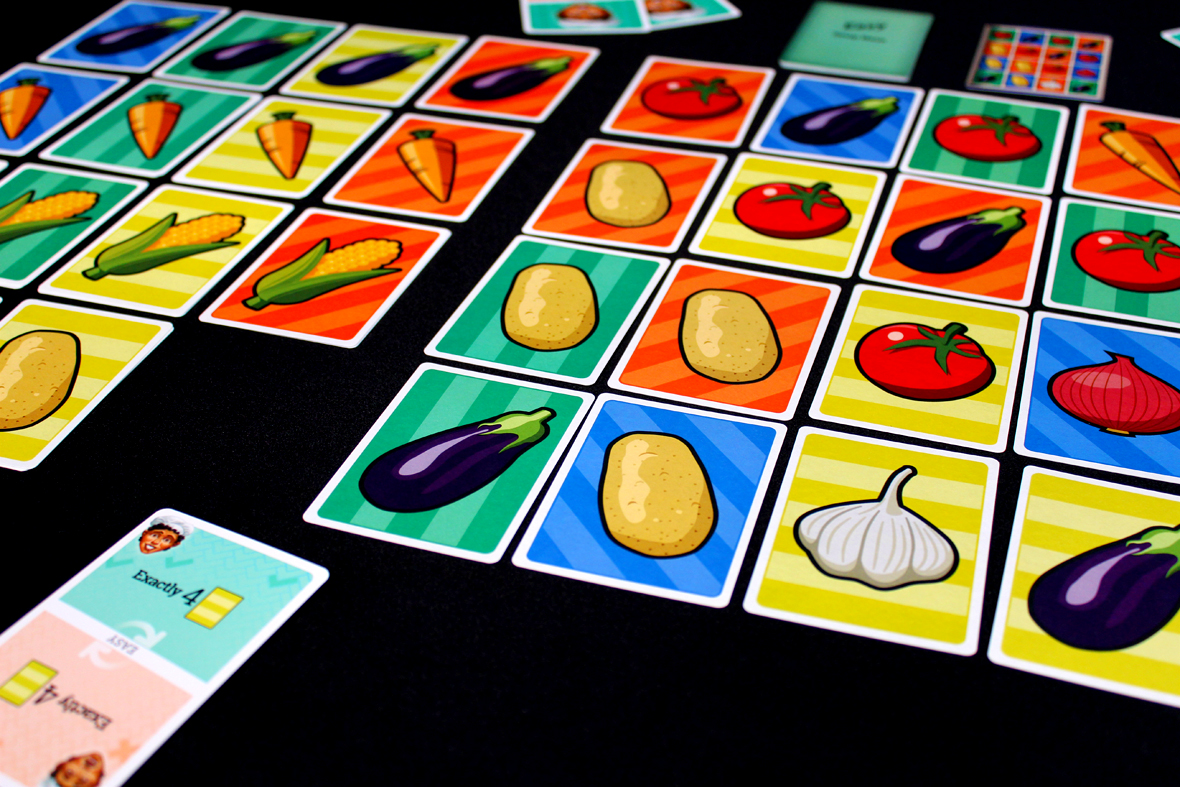
- Try to figure out what benefits your co-players! You can see what they’re playing, so figuring out what their Taste Cards are can be pretty helpful. Plus, it gives you something to do if there’s nothing you can do to advance on your own Personal Tastes / the Shared Tastes are already completed.
- It can also be helpful to try and make it clear from your plays what moves would benefit you the most. Are you consistently getting rid of red cards? Maybe you want fewer. Tossing out eggplants? That might be a clue. Try to behave fairly consistently so that other players have a good shot at picking up what you want to do.
- Particularly, if you can make moves that accomplish multiple conditions for you at the same time, that sends a pretty clear signal what you’re looking for. Ideally, you should be able to make a move on multiple Tastes at once if you can get lucky. This can be a big clue for other players! And is just generally good because it helps you accomplish more of your Tastes faster.
- No matter what, move fast. You’re on a timer. Do not stop and overthink what you’re planning to do! Five minutes is not that long, especially on the higher difficulty levels. That time can go by insanely quickly. It’s a fast-paced game, so don’t break the rhythm too much. Worst-case, you can fix a mistake later.
- If you’re not playing, you should be watching. What’s everyone else doing? Like I said, try to pick up on what they’re playing and going after and what they’re removing; you might learn a few things! Plus, it gives you options for tings to do when it’s not your turn.
- I forget about being able to shift a row or a column basically every time I play; don’t forget that. You can very literally move an entire row or column around, which can drastically change the landscape of the play area. I pretty much never remember that that’s a thing when I play, which, not great! That’s half of the things you can do. Don’t forget!
- Similarly, don’t forget that there are going to be criteria that are public! Satisfying those can be a good way to get every one on the same page (or surreptitiously make progress on your goals). Just, in general, keeping an eye on the Shared Tastes is a good idea. It’s the kind of thing you can easily forget in the heat of the moment, though, so make sure you’re trying to take a look at them at least once a round.
Pros, Mehs, and Cons
Pros
- The lightbulb moment when you figure out what another player’s requirement must be is very satisfying, both from a deduction standpoint and from a “makes the player feel smart” standpoint. I love deduction for this, though! Part of the game is just trying to watch carefully and figure things out, and sometimes that leads to the greatest satisfaction of all: getting to see all the gears click perfectly into place for someone. It’s the best. It also goes a long way towards making the players feel like they have agency and that their deduction matters, which is good. Player empowerment and all that.
- Quick play is always nice. I mean, each round is five minutes; you can’t really get a ton faster than that short of playing Win, Lose, Banana or something. It’s a very quick and punchy little game (and it technically supports drop-in / drop-out play, since you can have chefs join or leave between rounds).
- I enjoy how this and Decorum both have the “please feel free to be passive-aggressive about another player’s move that messes you up”. I love that kind of thing! It’s fun to get to gently rag other players for messing up your brilliant schemes by trying to do their own thing, especially since the game gives you avenues to be as passive-aggressive as you’d like. Chef accents optional, especially since accent work can be a bit dicey.
- It’s also just thematically very silly, since you’re making each other mad over a soup. I guess some people take their soups very seriously? Wouldn’t know; not a soup guy.
- I enjoy the difficulty leveling of this one! I like that getting a five-star rating means you’re ready for the next difficulty level. I think having a built-in “maybe you should try the next difficulty level” thing is really smart, and I love how Too Many Cooks does that. If you manage to hit five stars, you’ve been very successfully completing every level with no mistakes, so this might be a bit too easy for you. If not, you can stay on that level for as long as you want. No judgment! It’s a nice and subtle way to push players towards their zone of proximal development.
- Given how many cards there are, I vaguely appreciate the cards you keep in your hand being a different size than the others? Just makes things easy to find in the box. I can be a bit annoyed with different sizes of cards, but here the two different sizes have very important distinctions, so it’s best to not get them mixed up. I like that here.
- Just algorithmically, the game is impressive! All the Taste Cards working together in any combination is really impressive. I think this is one of the more impressive elements of the game. All of the Taste Cards, drawn and dealt however, can be completed in one round. There’s some algorithmic design on the backend of this game to make that work, but it works really well and it’s an impressive feature of the game.
Mehs
- The setup of the game can take a bit, just because there are a lot of cards to lay out pretty precisely. Card grids can always be a bit of a pain to set up, especially when you have to set up the card grid and set the spares aside where there may not be enough spares to fill out their areas and now you’ve got weird holes. It’s .. a little annoying.
- Similarly, the game takes up a fair amount of space. Just a function of a game where you need to basically make three grids of cards. Relative to the size of the components the game has a fairly large footprint.
- The box is a little oversized for being entirely cards. This is a pet peeve of mine, unfortunately. I understand from a manufacturing and publishing standpoint something something box sizes something something standardized something something easier to see on a shelf and all that, but it’s always a bit annoying when I open a box and there’s just a bunch of air inside.
Cons
- Taking turns in a real-time game can occasionally feel a little wonky, especially with more players. It just means that you’re watching time tick down and you can’t really do anything to actively benefit your situation, which can feel strange.
Overall: 8.25 / 10
Overall, I think Too Many Cooks is a lot of fun! I’m always a fan of cooperative deduction; it makes for a real team effort kind of game. It’s nice to have everyone aligned on a common goal, even if that common goal is “the ideal soup”. Here, most of the deduction is just done by having players watch each others’ moves and occasionally comment positively or negatively, similar to Decorum, another recent favorite of mine. What I like about Too Many Cooks, though, is that the real-time play makes the game move fast and hectic, which can be a lot of fun. It does feel weird to have turns when the game is being played in real-time, as sometimes you get stuck with a player who panics and can’t decide what to do. Just … nudge them a bit. The difficulty leveling also works pretty well, but what it definitely does is show how impressively-designed the game is. All the Taste Cards work together and fit together when played, which, especially at the Hard difficulty, is really impressive! It makes the game feel seamless, which is always nice. Plus, the game lets players inject their own flavor (pun intended) by responding in silly ways when their Tastes are violated, keeping the gameplay light and fun for everyone involved. Easy to pick up, fun to play, and a nice gradual difficulty curve make for a great combination, and if you’re looking for those or you enjoy a deduction game, I’d definitely recommend checking Too Many Cooks out! I’ve quite enjoyed it.
If you enjoyed this review and would like to support What’s Eric Playing? in the future, please check out my Patreon. Thanks for reading!
 What's Eric Playing?