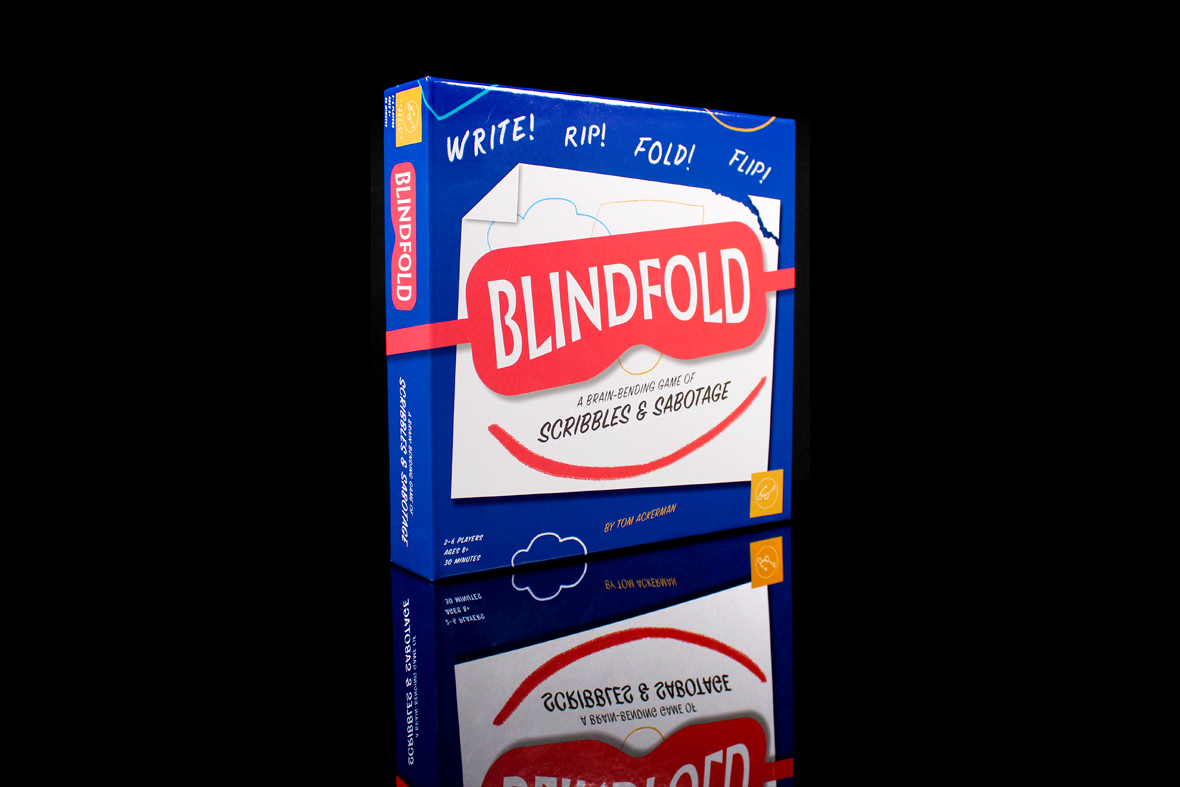
Base price: $20.
2 – 6 players.
Play time: ~30 minutes.
BGG | Board Game Atlas
Buy directly!
Logged plays: 2
Full disclosure: A review copy of Blindfold was provided by Chronicle Books.
It’s been a real challenge to get party games to the table lately, so I was fortunate that my friend invited me over for a game day where we had pretty much the exact right number of people for a variety of party games. The sweet spot, I think, is 6 – 8 people. More than that and you have trouble getting them all around a table; fewer than that and you can probably make a strategy game work, if you want. It’s finicky like that. But we got a lot played, including Glitch Squad, which you read about a while ago (and Ole Guacamole). Last of the three was Blindfold; let’s dive in and check it out!
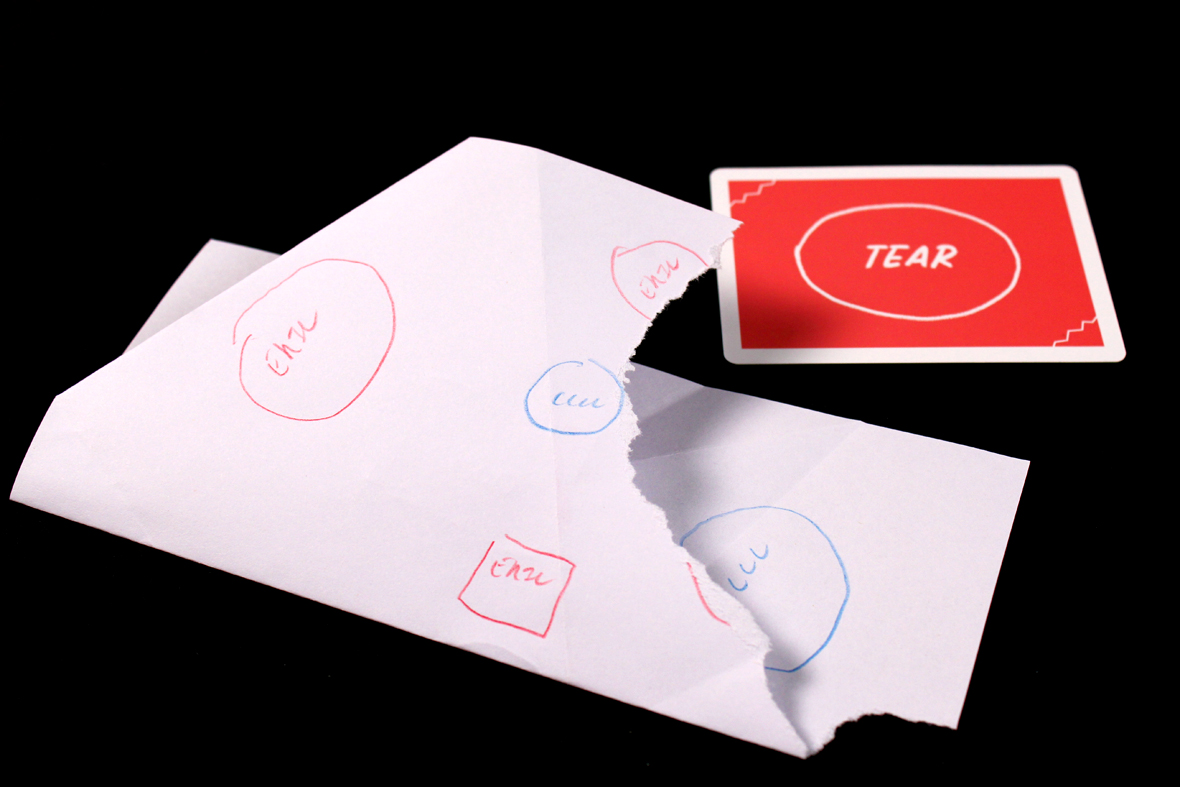
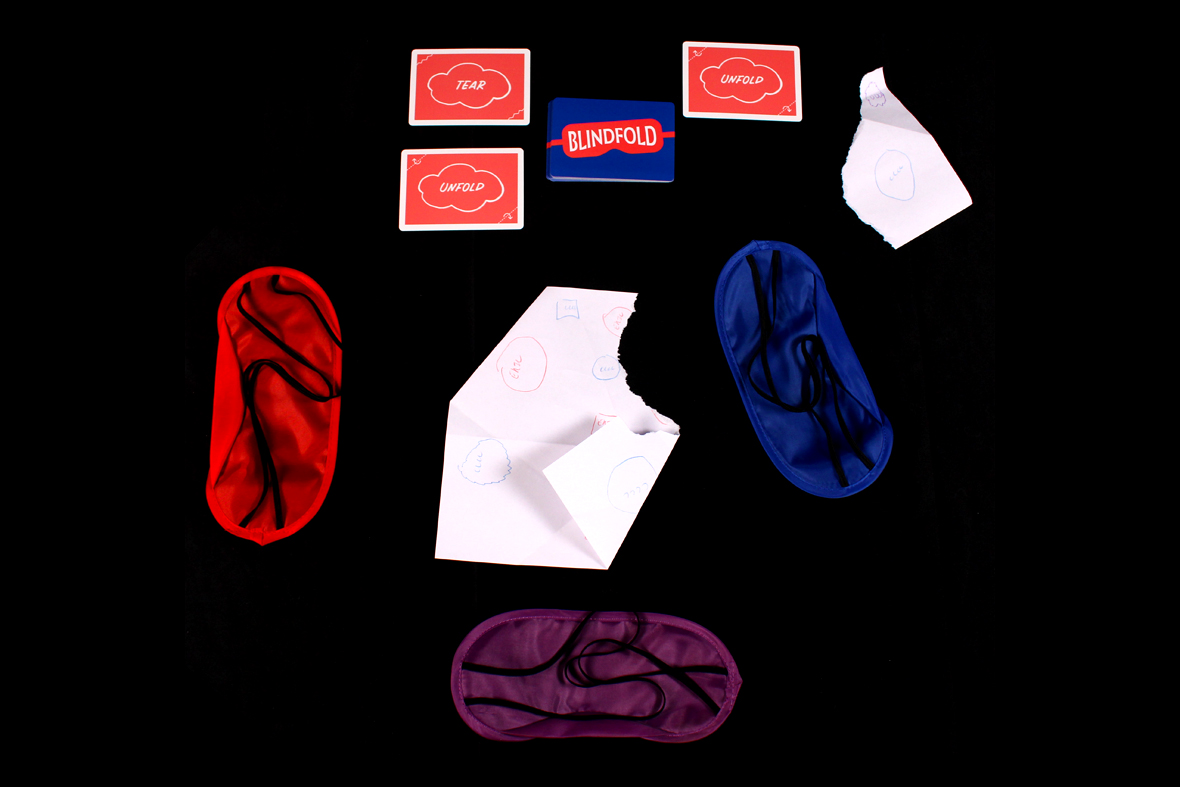
In Blindfold, players are trying to tag a sheet of paper with their own name and a shape. Each turn, you draw a card, perform that action, and draw that shape. Pretty simple, right? As you might guess from the name “Blindfold”, the game gets a bit nastier and more complex. You see (or, rather, you don’t), the game provides each player a blindfold in their player color, and when you’re taking your turn, you must wear it. The actions make things even more complicated, as the paper can be folded, unfolded, flipped, or even torn, as the cards dictate. You can also score on other players’ turns, as long as your tags are visible! Just make sure you don’t draw on anyone else’s; you’ll ruin their tag and score nothing. The chaos that ensues won’t be something you see much of, at least, but can you get the points that you need to win?
Contents
Player Count Differences
The only major difference as the player counts shift is just effective entropy. With fewer players, you’re going to have fewer major alterations made to the paper between your turns, which may work in your favor. However, that also means you’ll have fewer instances where you might be able to earn more points on another player’s turn, so that might work against you. I’d largely guess that these cancel each other out, to some degree, as a result. With more players, the game does take a fair bit longer, though, which can be an odd vibe for a party game. It usually just means there’s a lot of downtime between your turn, but an enterprising player might be able to use that to their advantage (or at least heckle the other players, where necessary). I’d probably stick to the smaller end of the player count, regardless, though; less complicated and less chaos.
Strategy
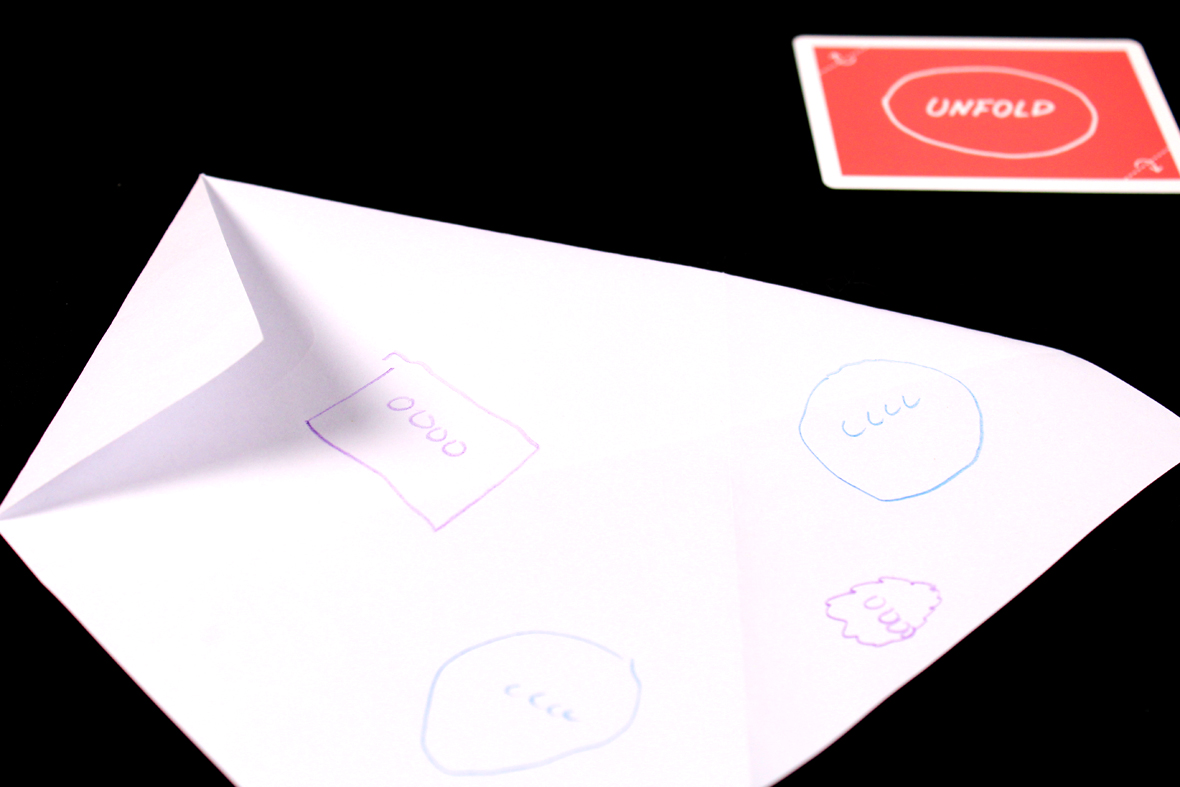
- You never thought cursive would be useful, huh? It can be pretty helpful to write your tag in cursive, since you’re not picking up the pencil to do so. You don’t have to worry about moving or shifting your letters too far out of the shape, as a result. Bless the player who has to figure out how to write some of those capital cursive letters, but otherwise, it may be a useful strategy.
- The four letters you choose at the beginning of the game can matter a lot. You probably don’t want to pick something complicated. There are some schools of thought that suggest that, say, OOOO is a good tag, but as someone who tried that one game, it’s suddenly very easy to forget how many O’s you’ve written, which can be its own particularly funny catastrophe.
- You can use your hands to make the bounds of your shape, if you need. It stabilizes the paper you’re drawing on and it gives you a very physical boundary for the shape you’re drawing. If you place your hand right, it’s also a good place to draw your first letter from, so you can improve your odds of actually getting points.
- There’s something very powerful about trying to gaslight your friends into thinking that they’ve either messed up the shape or finished / still need to add some letters to their tag. We got someone, once, and it was incredible. But you can definitely try to provoke the player drawing when it’s not your turn; just remember the rules forbid you touching them in any way (and that’s not really cool). Instead, just try to convince them they’re missing a letter or that they grabbed a different shape than the card they actually picked. Both are needlessly cruel and fun. You really can have it all.
- Make sure to ask someone to flip around the paper and show it to you before you start; you really will want to know what’s under folds and on the other side before you get too busy. You’re allowed a courtesy look at the paper before you get started, so you can ask someone to show you the other side and what’s under folds and such. You should take a look and try to get a sense of where you’re actually going to make your tag.
- It helps to make friends so you can score on their turns; try to make friends with the player who plays after you, so you’re not reacting to them. If you’re cooperating with another player, they’re at least somewhat less likely to cover your tags on their turn, so you might be able to double your scoring potential. Just keep in mind that if another player goes along with it, either they don’t notice you’re beating them or you don’t notice they’re beating you. It helps to know which is which. I suppose you could be tied, in which case, yeah, cooperate.
- When all else fails: it’s a party game; just roll with it. Don’t overthink strategy in party games; that’s not really what they’re for. Just try to trick your friend into writing the wrong tag.
Pros, Mehs, and Cons
Pros
- A lot of fun interactions, here. I think the ongoing rule of party games is that they should be at least as much fun to watch when it’s not your turn as they are to play, and Blindfold clears that bar pretty adeptly. Watching another player messily try to write their name or a tag or something when they clearly cannot see the paper and have no idea how to draw a square is pretty funny.
- It’s very fun to mess with the player currently trying to do something while they’re trying to do it. It’s even better if it works. It’s essentially the perfect crime. You just do a little bit of gaslighting and then you get away with it.
- The little blindfolds are fun! They’re not like, high-quality blackout eye masks, and they’re decently uncomfortable to wear for any real length of time, but they’re fun colors and they match the player colors and there are six of them, so that’s something.
- I appreciate that everyone gets a four-letter code to use rather than using player names or something. This makes it a bit more equitable, since some players have very short / very long names. Though, if you want a particularly mean pro move, take someone else’s name as your tag. That usually can throw them off a decent amount.
- Fairly portable, which is nice. It’s a smaller box, which is good for a party game, though I am confused as to why the cards are in a separate tuckbox inside of the game box when they have a perfectly workable spot.
- Having everyone use a different color is wise, too. Makes it pretty easy to spot players, which is nice.
Mehs
- The game ran a bit longer than I expected; I almost wish there weren’t a final round. I think it would keep the scores a bit lower, which might be nice. I think the game just kind of hits a peak and a stride and then, especially if players are falling behind one leader, it might as well just end and let players play again.
- Giving the other players the ability to vote down “almost” correct writing seems a bit arbitrary; it just enables either dogpiling (everyone voting down one player as often as possible) or a null state (everyone voting down everyone else constantly). It’s one of those things that’s supposed to be fairly well-policed by other players, but it’s not great in practice. I wish there were a more by-the-book way to evaluate players’ tags as valid or invalid, rather than leaving it up to their opponents.
- The paper feels like a specific size? I worry about running out eventually. Having games with fundamentally finite components stresses me out a bit as someone worried about infinity. I don’t think it’s a real functional issue, but it’s something I worry about with this. Worst-case, standard printer paper will still cover your bases.
- Not the biggest fan of colored pencils, generally speaking. They’re finicky and I haven’t seen a pencil sharpener in years. I assume, worst-case, there’s options, but I considered switching to markers for my review.
Cons
- This has a pretty standard “rich get richer” thing going on, points-wise; if you fail to get your code on the paper early on, you have no real way to catch up; you can just make it harder for other players to score points. It’s pretty fundamentally additive; the more rounds you can get your tag visible, the more points you get for that round (since you always score all visible tags). If you miss your first tag (as some players do), you’re starting the game at a pretty significant disadvantage that isn’t going to be able to get better in any meaningful way. Doesn’t feel great, even in a party game.
Overall: 6.75 / 10
Overall, I had fun playing Blindfold. As a party game, it pretty solidly clears the bar. It’s easy to teach, quick to pick up, fun to watch, and pretty interactive, even when you’re not playing. Those are all pretty good things. Most party games should be meeting this bar, to be honest, but I’m glad BlindFold does. The places where it falls a bit short, for me, are more of the nitpickier things. Scoring and player interaction aren’t crucial to whether or not I really enjoy a party game, but they are going to be things that have to be handled with a lot of care for the party game to make its way into my favorites. BlindFold doesn’t do my favorite things, on that front. The tags scoring once for every time they’re visible means that if you end up in a good spot, you’re not really incentivized to do anything other than coast (or do a crab bucket and try to pull the other players down, once you’re sufficiently far ahead). These things are fine; they’re just not my favorite. I’d also have preferred some way for players to judge tags as invalid that wasn’t just a vote among your opponents. Seems to be a fairly biased court. For players unburdened by the more annoying nitpicks of mechanical design choices, though, everyone I’ve played BlindFold with has quite enjoyed it. The opportunities for a little bit of good-natured gaslighting are pretty high, and the core concept is silly and fun, which are the perfect recipes for a party game. So I waffle, a bit. But nonetheless, there’s a good amount to enjoy, here. If you’re looking for a quirky party game, you’re just down to test your skills blindfolded, or you just want another reason to gaslight your friends, you monster, you might enjoy BlindFold!
If you enjoyed this review and would like to support What’s Eric Playing? in the future, please check out my Patreon. Thanks for reading!
 What's Eric Playing?