Base price: $12.
1 player.
Play time: ~15 minutes.
BGG | Board Game Atlas
Buy directly!
Logged plays: 7
Full disclosure: A review copy of River Wild was provided by Button Shy.
Fell a bit behind this week, which always sucks. I don’t really “do well” when I get sick, so I just end up being kind of useless for a multiple-week span. This one was particularly bad, which is unfortunate. It’s why we have buffers of reviews, granted, but boy howdy did I manage to get sick pretty badly. All good now, so I’ve turned my game room back into Photography Studio Mode (a relatively simple task, which is nice) and I’m going to spend my evenings trying to catch up a bit before PAX West and Big Bad Con and all the other things I’ve committed to through September / October. Spooky Season? Something like that. This week is another Button Shy title, so let’s dive in and check out River Wild!
In River Wild, you’re attempting to create a land that thrives in harmony for the various mythical-and-sometimes-mundane species that inhabit the Wild. As the river flows from the mountains, so too must you focus on sculpting it around lands to give them some sacred and magical protection. Plus, I mean, you have to keep the dragons away; they tend to eat tourists. Not great for the reputation. Can you build a land where the myriad creatures can thrive?
Contents
Setup
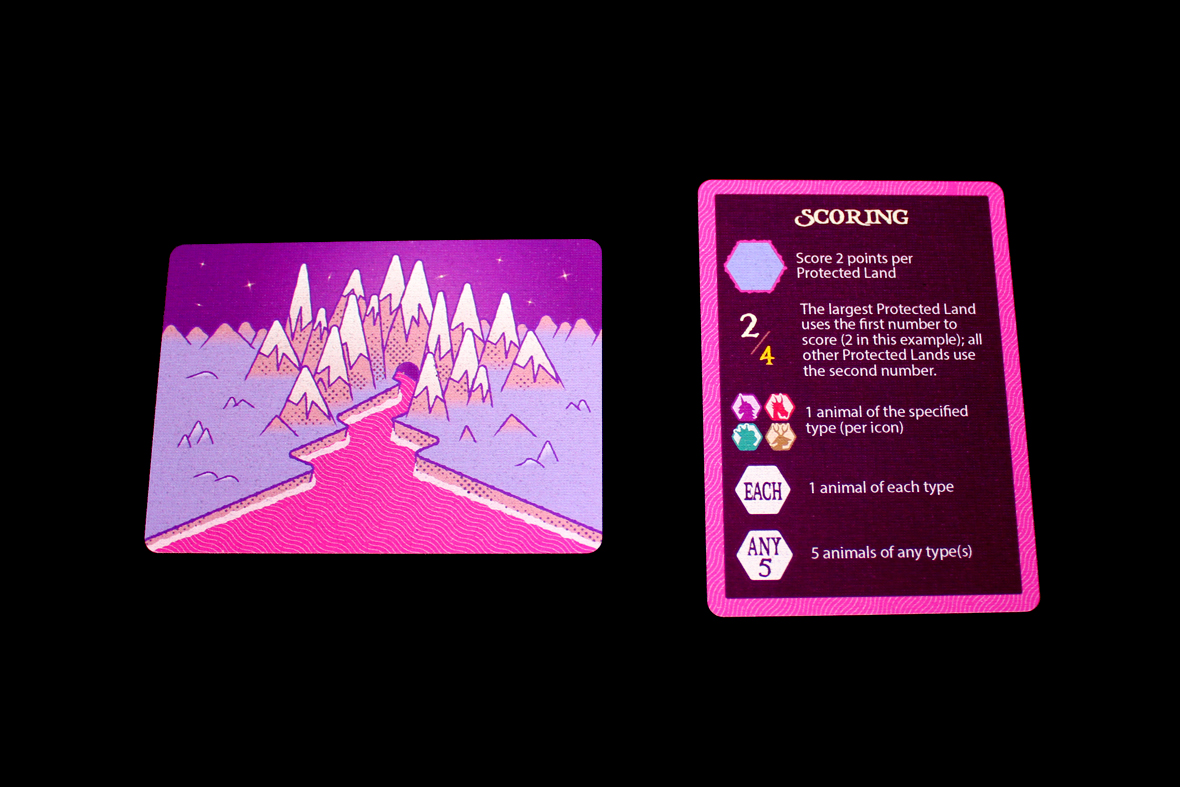
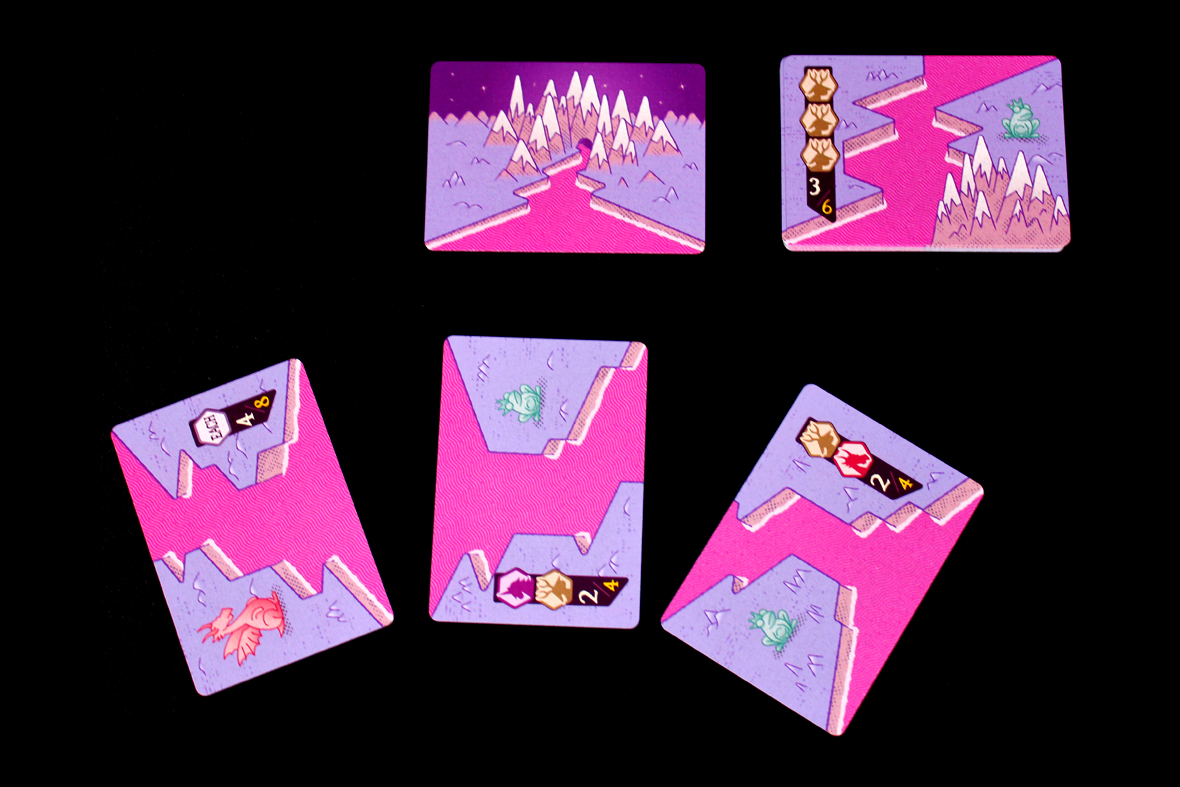
Not a whole lot, here. You’re going to start by placing the Source Card at the top of your playing area, so you have a lot of room below it.
Next, shuffle up the 16 River Cards so that you have a deck made. The top card will be visible; don’t worry about it.
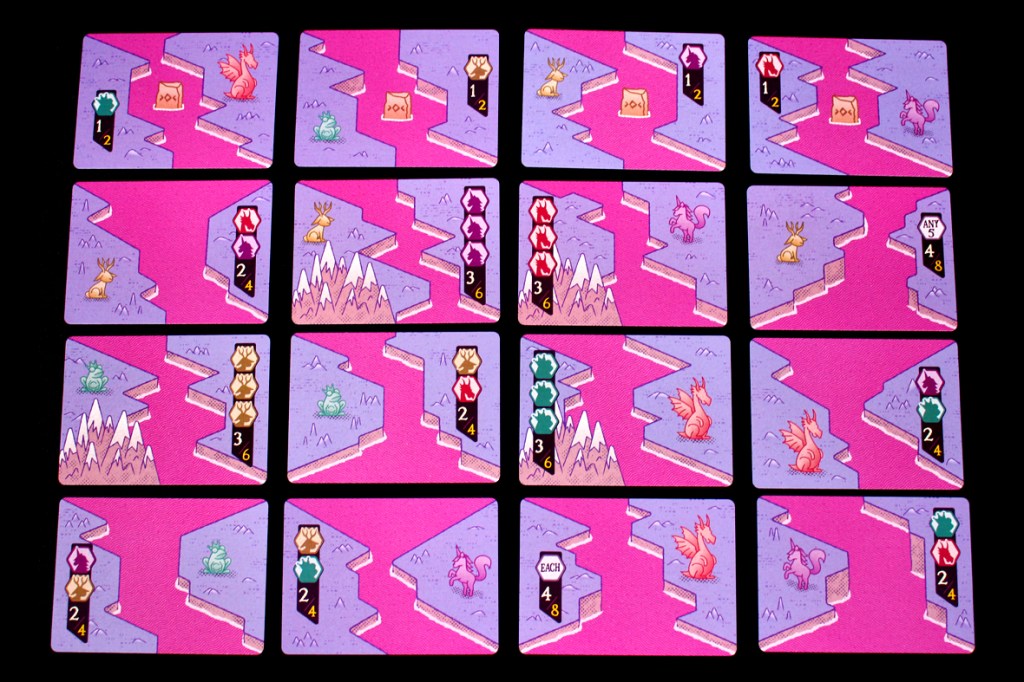
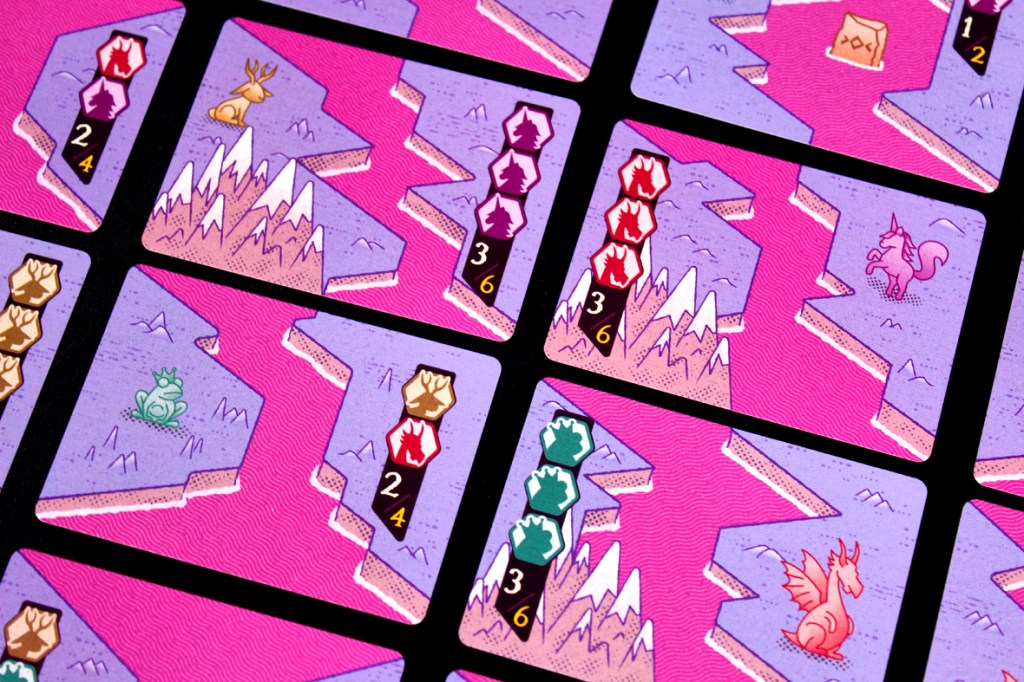
Draw a hand of three cards; you should be ready to start!
Gameplay
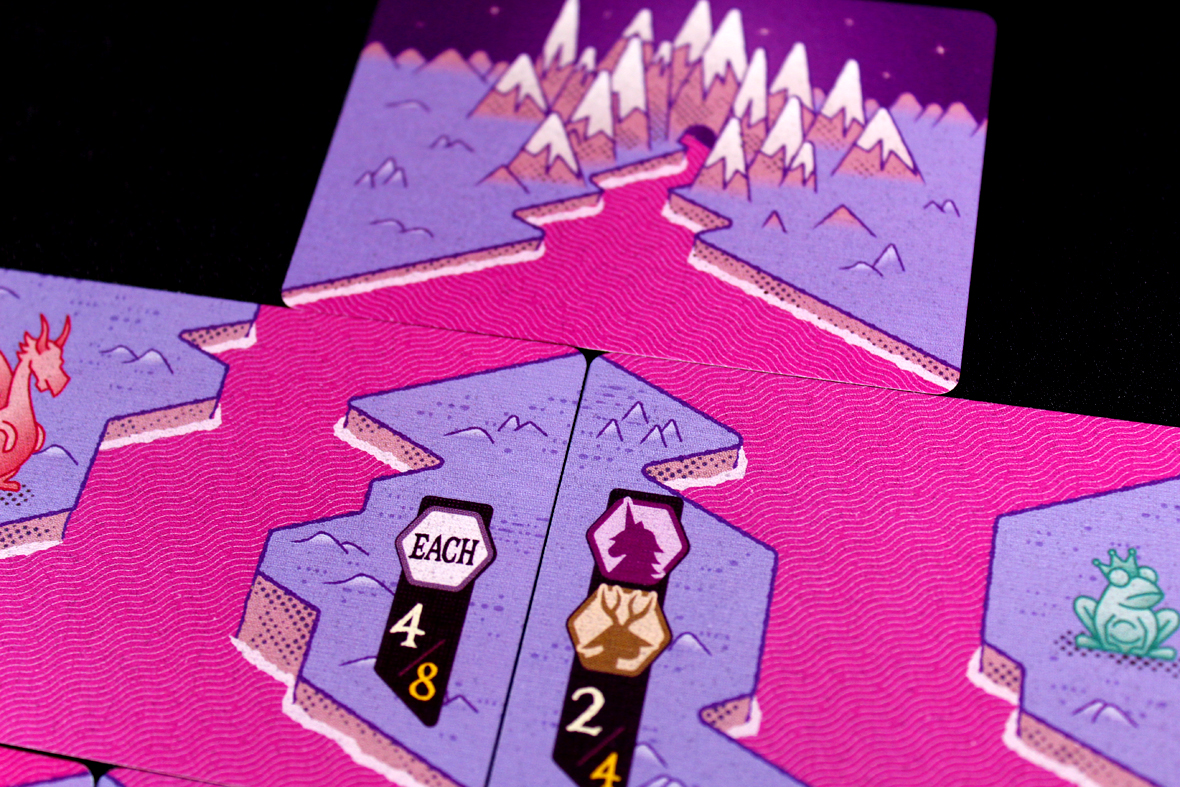
So, your goal over a game of River Wild is to create Protected Lands (areas of land that are completely enclosed) by letting the river flow down from the Source Card (or other mountains). On a given turn, you’ll place a card from your hand to extend the river. You do this by placing it either completely below a card or below a card offset by half a card’s width. Land cannot connect to river, but mountains may touch land or create a new river by becoming a new source. Keep in mind that the cards are double-sided, with a mirror of the card on the back of it. After placing a card, draw a new card, and continue until you’ve placed all your cards or you cannot legally place a new card.
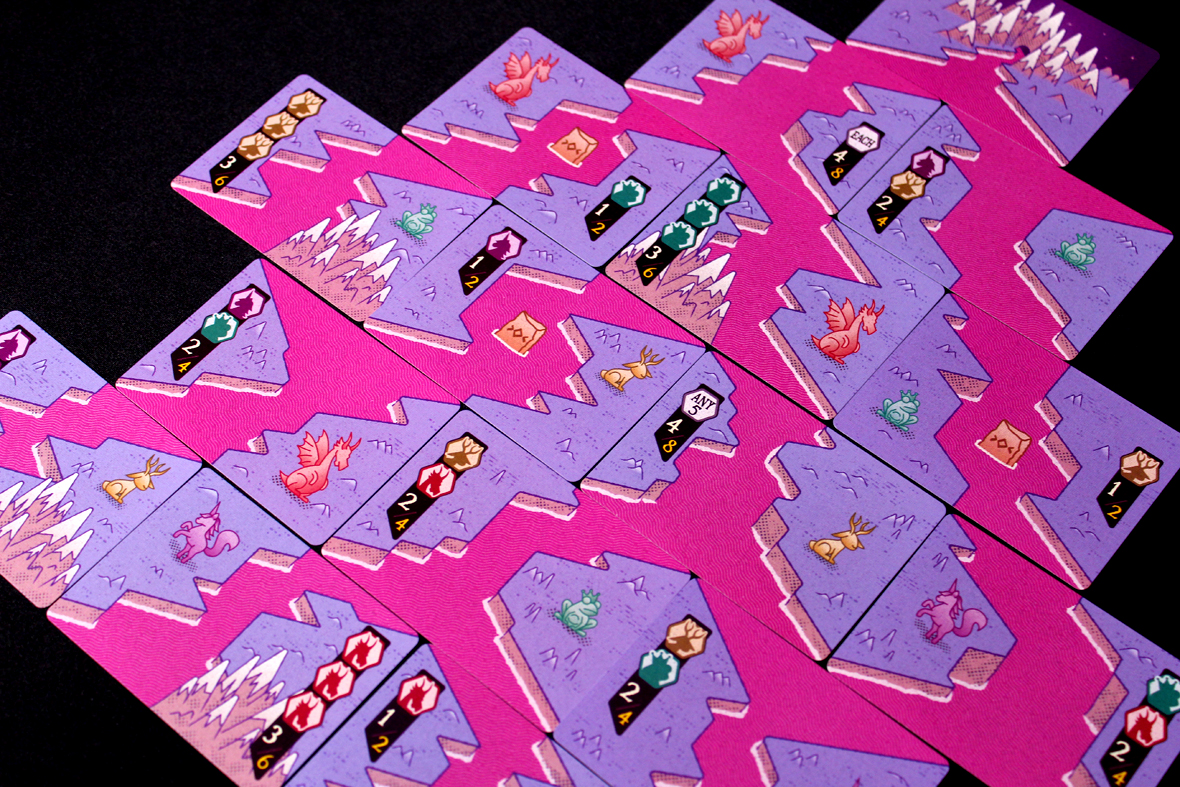
Once you’re done playing, you score! To start, you gain 2 points for each Protected Land you’ve created, and then you can see how many points you earned from Scoring Goals. For each Scoring Goal, first check to see if the requirements are met in the Protected Land that the Scoring Goal is in. A Scoring Goal can be met multiple times in a single Protected Land; in that case, it scores multiple times. Once you’ve done that, check to see if the Protected Land is your largest Protected Land. If it is, you score the first (smaller) value; if it’s not, you score the second (larger) value.
After you finish up scoring, you can check your Rank in the rulebook to see how you did!
- 0 – 29 points: Embarrassing Environment
- 30 – 34 points: Decent Domicile
- 35 – 39 points: Harmonious Habitat
- 40 – 44 points: Sublime Sanctuary
- 45+ points: Heavenly Haven
Player Count Differences
None this time! River Wild is a solo-only game.
Strategy
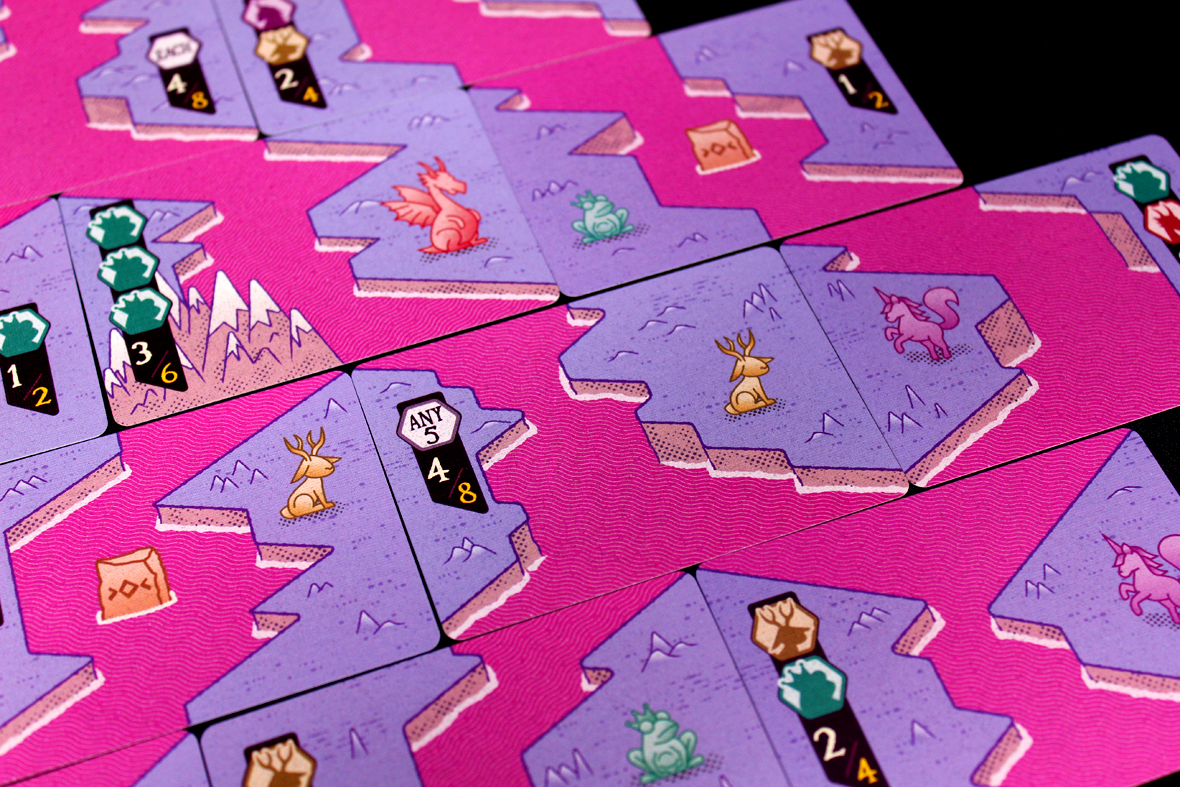
- Try to always get a Runestone between two Protected Lands. That can grant you a ton of points, depending on your Scoring Goals. Runestones are generally useful, so try to be careful about your placement. If you get really fancy, you might be able to get multiple Runestones affecting the same Protected Land! That’s a good way to get a bunch of points.
- Make sure to close the Protected Lands you care about by the end of the game. That’s the only way they’re worth any points! It’s easy to get distracted and forget about them, but close them off when you have the opportunity; you may not get the right card to do it again.
- Don’t get distracted by trying to create one huge Protected Land. This is where the game can get away from you. For one, that Protected Land becomes difficult to close, so you might end up not actually having a Protected Land at all. That’s bad. Plus, lumping all of your Scoring Goals into one Protected Land can be suboptimal, since then you end up getting lower scores for all of those Goals.
- Keep in mind that Mountains can be sources for rivers! I forgot that a few times. Just worth keeping in mind. It can help you close off Protected Lands and help you figure out places to place rivers without getting stuck.
- Stacking the same animal Scoring Goals in one Protected Land can be great, if you can pull it off. Frogs, for instance, can earn you a lot of points if you get a bunch of them together with their Scoring Goals. Just remember not to make the Protected Land too large!
- Honestly, creating a large Protected Land that’s non-scoring and trying to score a bunch of smaller Protected Lands might be best. The challenge there is not wasting all of your Animals on that Protected Land, but I’m sure you can figure out how to manage both ends of this. I believe in you.
Pros, Mehs, and Cons
Pros
- The color scheme for this game rules. It’s just got a ton of pizzazz? I’m not sure, but I love it. Even the wallet looks great with that navy / neon pink thing that it’s got going on. Really great art direction all over.
- I like the art style a lot, as well. Not done talking about the art! I also just like the look of everything, particularly the frogs. They’ve all got little crowns! I love it. It’s just all … so good.
- Steven Aramini just gets spatial games, and River Wild shows the benefit of his experience designing a lot of these. Aramini has been doing this for a while, and I think this is a pretty smart spatial game. Button Shy does love these half-card offset games (Unsurmountable, Super Slopes, … others, I’m sure), so that’s all good, but he’s also just been plugging away on a variety of different games lately. I’m a big fan of his body of work, and River Wild is another solid title in his resume, now.
- I love Button Shy’s Whole Thing, as you know, so it’s nice to have more portable games in my collection. It’s portable, easy to set up, and easy to play. I’d call it easy to teach, but I’m teaching games to myself and I can be notoriously dense with game rules when I’m learning by myself. It’s an ongoing problem.
- This is not an easy game! I was pleasantly surprised by how tricky it is. The first few games really threw me, as I was trying to figure out how Protected Lands and scoring and all of that worked. The strategy is definitely something you have to work out over a few games, which I appreciated! Kept me interested. I tried to make sure my photos showed my best game, though, since, you know, have to pretend like I know what I’m doing and all that.
- The scoring system is interesting as well. I particularly like that the game punishes you for your largest Protected Land; I think that’s very interesting. Otherwise you would just kind of lump everything together, and the game specifically discourages that. It’s smart (but very annoyingly tricky!).
Mehs
- Letting cards be either directly below or offset by a half width can lead to some odd situations. It’s just the kind of thing you end up regretting later because now you’ve left a spot open that can’t be a Protected Land or something. I generally prefer when it’s one or the other; letting it be both can be more trouble than it’s worth for a lot of players.
Cons
- I’m always a bit middling on solo games that just give you a score and a rank, but I appreciate that “Embarrassing Environment” at least makes it clear that you didn’t do particularly well. It’s telling that this is my least favorite thing about the game (usually means that the rest of the game is fine) but I do generally like a game that will tell me if I lost or not or has some more specific success criteria than “here’s the points you earned”. To the game’s credit, it at least gives you a rank rating at the end if you didn’t do that well that makes it pretty clear, so that counts for something.
Overall: 8 / 10

Overall, I like River Wild! I’ve been appreciating a lot of Button Shy’s solo offerings for a while now, and River Wild’s big selling point for me is that it’s just super vibrant. I love the color scheme and the art style of this game, and it looks great on the table every time I play it. I appreciate that it shoots for fantastical rather than just fantasy, and it really sticks the landing. That all said, the core gameplay loop is fun, as well; Steven Aramini is a designer that I have a lot of respect for (mostly because I like so many of his games), and this is another one that’s firmly in the like pile, for me. My favorites of his remain the -opolis series (and Animal Kingdoms), though keep an eye out for Fliptown. Enjoyed that one. River Wild isn’t as expansive as some of those games (though it has the same number of cards as the -opolis series), but I think it’s got a lot going for it nonetheless. It’s definitely the kind of game that will catch someone’s eye if you’re playing it, to be sure, and the nice thing about solo games is that you can just invite anyone interested to help you place cards. The game’s easy enough to teach, though learning the strategy is a bit more of an investment. I love what Button Shy’s been doing in the solo space, so I’ll have more to say about more games in the near future, but in the meantime if you’re looking for a game with a flawless color scheme, you want to challenge yourself with a solo experience, or you just are a Button Shy fan like me, I’d recommend checking River Wild out!
If you enjoyed this review and would like to support What’s Eric Playing? in the future, please check out my Patreon. Thanks for reading!
 What's Eric Playing?