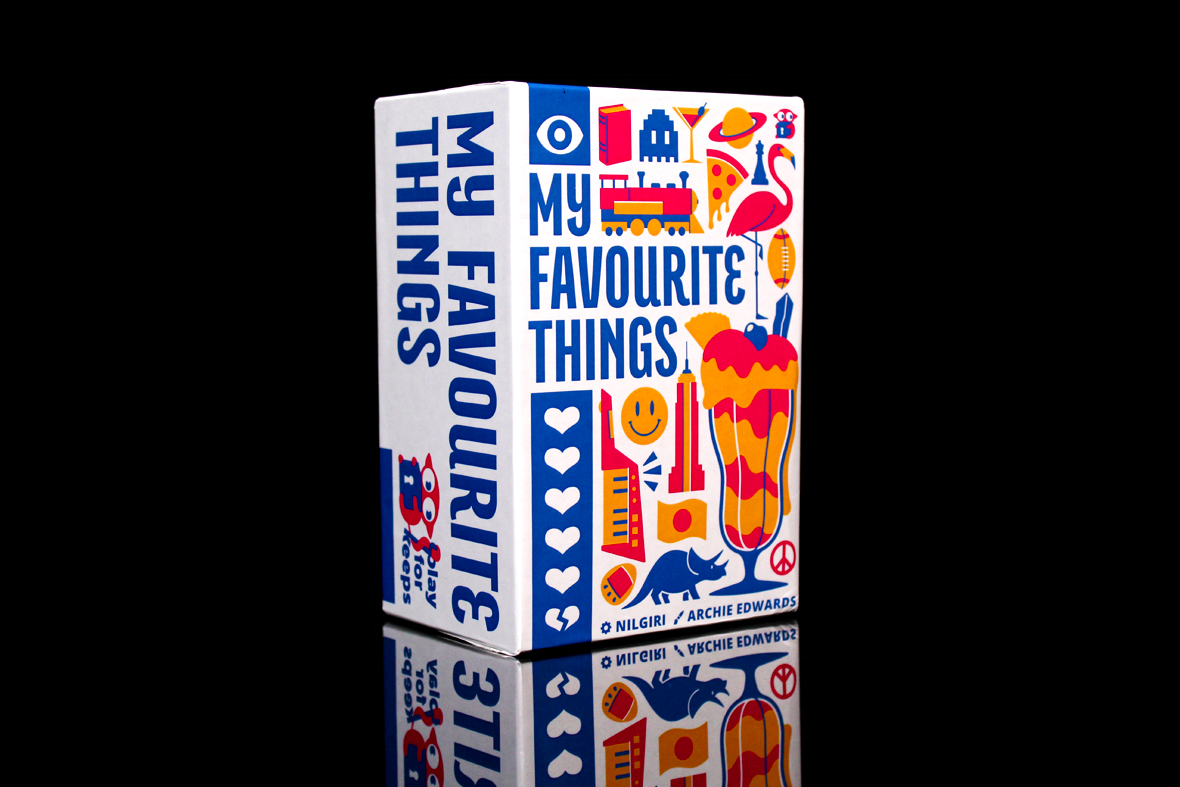
Base price: $XX.
3 – 6 players.
Play time: ~30 minutes.
BGG Link
Check it out on Kickstarter! (Will update link when Kickstarter is live.)
Logged plays: 5
Full disclosure: A preview copy of My Favourite Things was provided by Play for Keeps. Some art, gameplay, or other aspects of the game may change between this preview and the fulfillment of the Kickstarter, should it fund, as this is a preview of a currently unreleased game.
Editor’s Note: Apologies if I spell Favourite as Favorite during this review. USA, USA, and all that.
It continues to be a trick-taking time of the month on What’s Eric Playing?, which is great, because I love trick-taking. One of my favorite genres of games. It’s just a hoot. But after four trick-taking games, who knows what we’ll get up to next week? Even I don’t, because I’m still running a bit behind! That’s the dream. Though I’m finally back home for like, six full weeks before I go on vacation again. And by vacation I mean BGG.CON, so, whatever. I’ll still have fun. In the meantime, though, let’s check out My Favourite Things!
In My Favourite Things, players vie to learn about what each other likes through the only possible medium for this type of communication: a trick-taking board game! Over two rounds, players will ask each other for categories, decide on their favorite things, and then play a couple hands of trick-taking with examples of those categories as the cards! You’ll learn a lot along the way. Can you earn the most points?
Contents
Setup
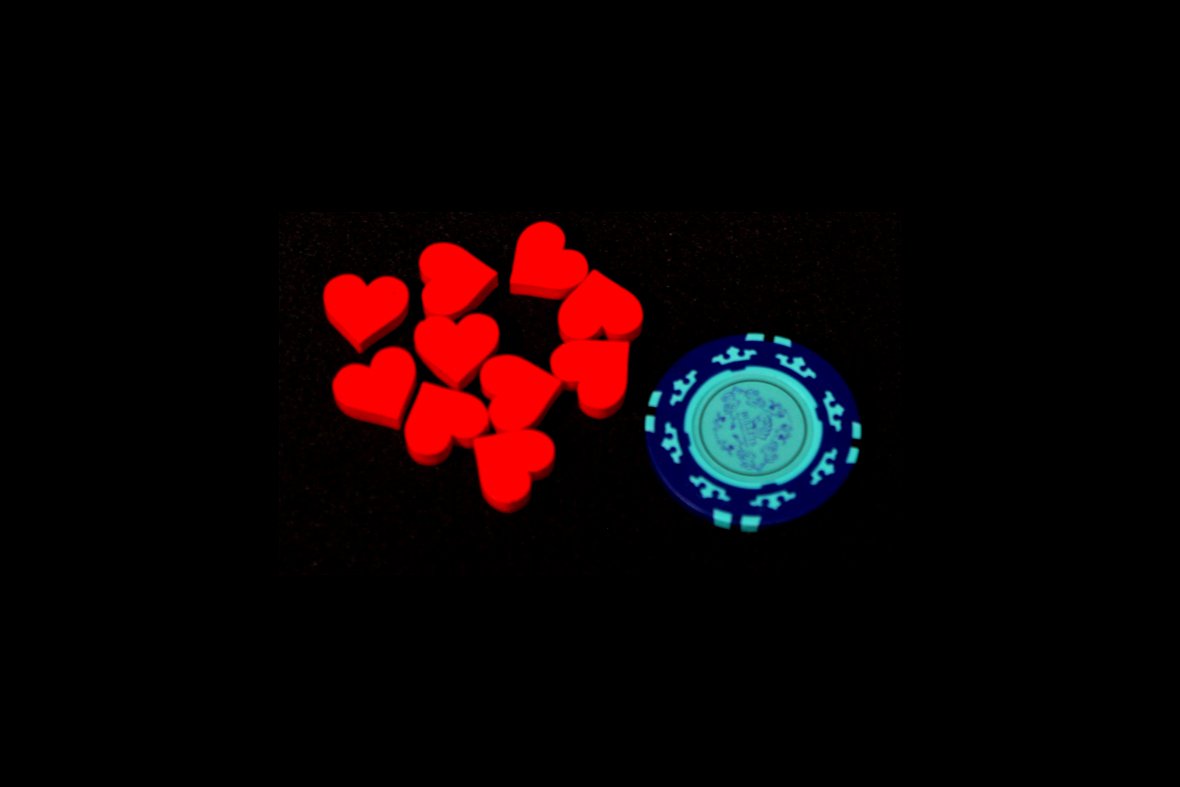
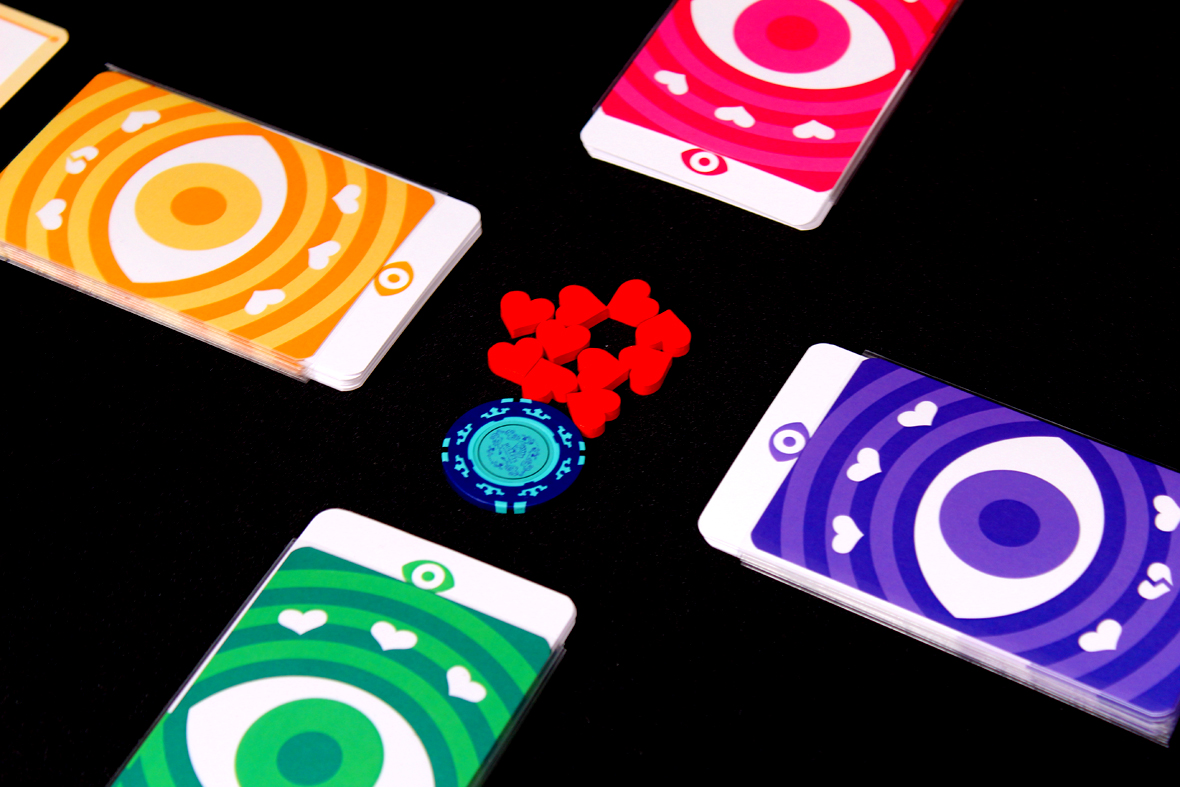
To kick things off, give each player a dry erase marker, and place the hearts in the center of the play area:
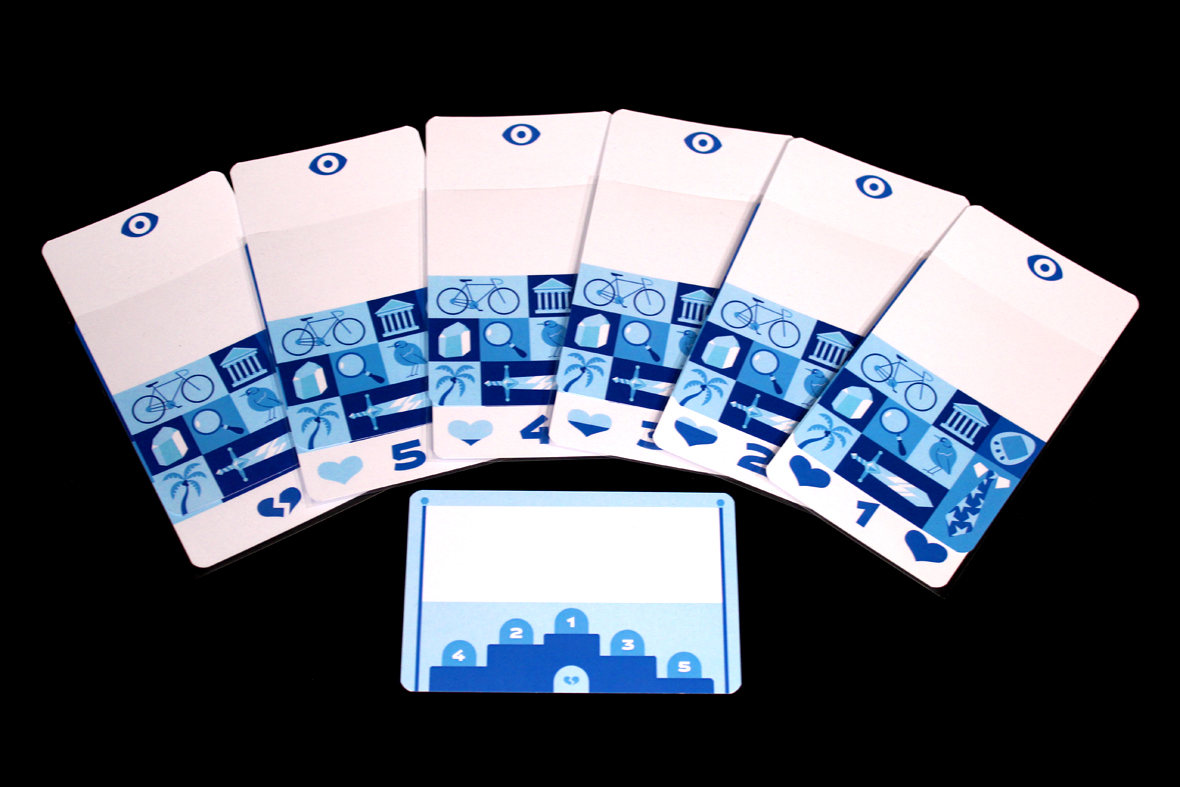
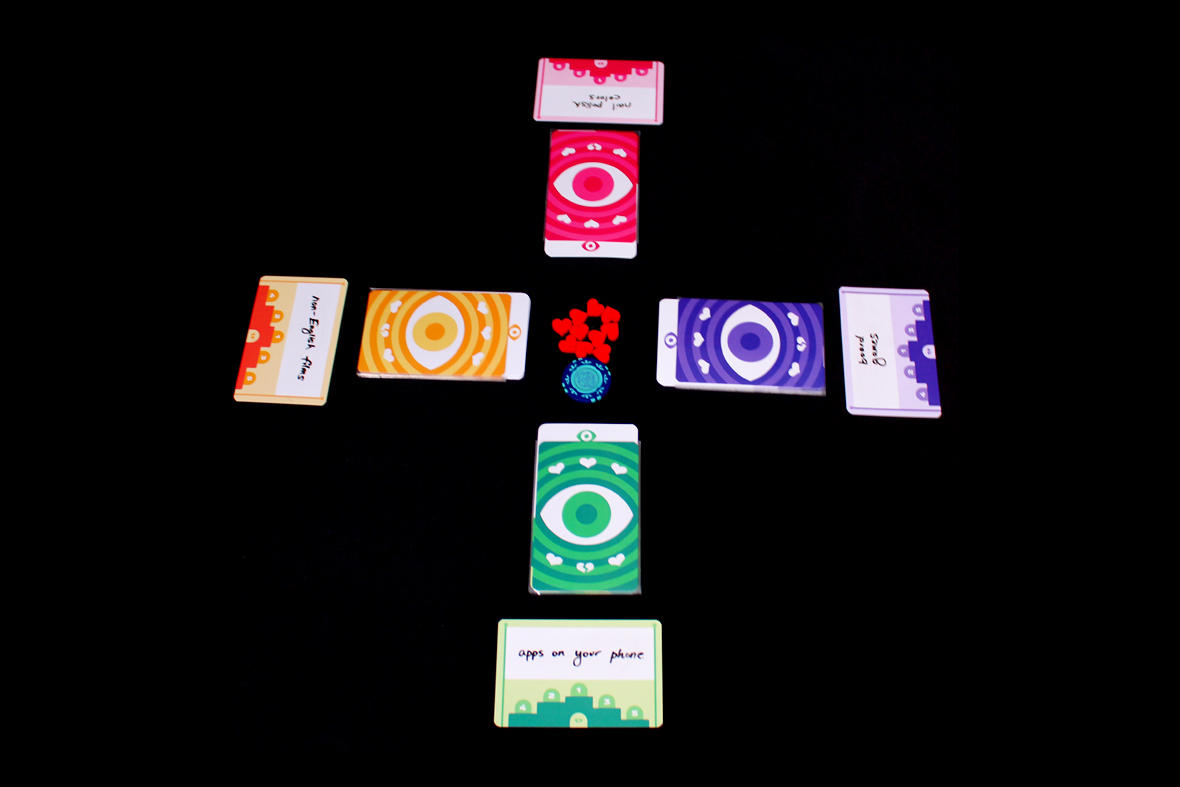
Then, give the starting player the start player token. From there, give each player a set of writing and ranking cards and the category card in their color of choice (the writing and ranking cards should be in the same sleeve). They should be blank right now, but you’ll fill them in later.
Players should be ready to start!
Gameplay
The game of My Favourite Things is all about getting to know your friends! And then using that knowledge to win tricks.
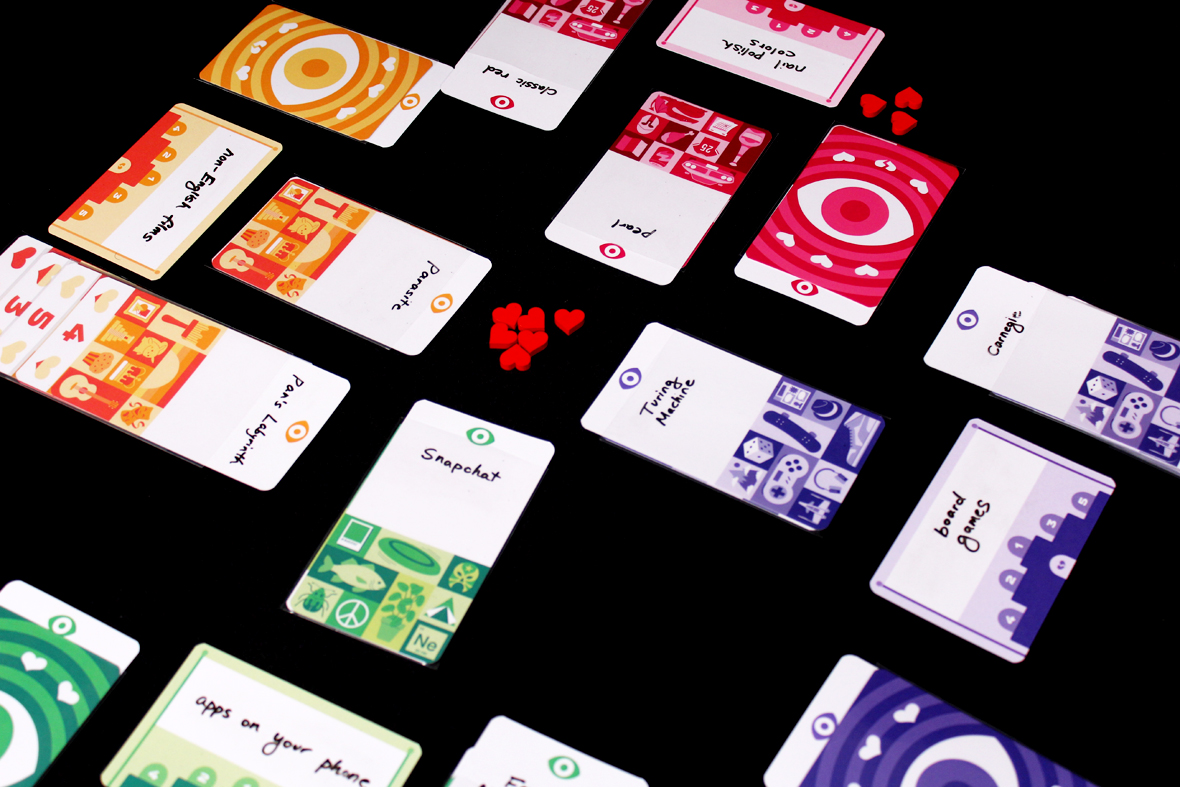
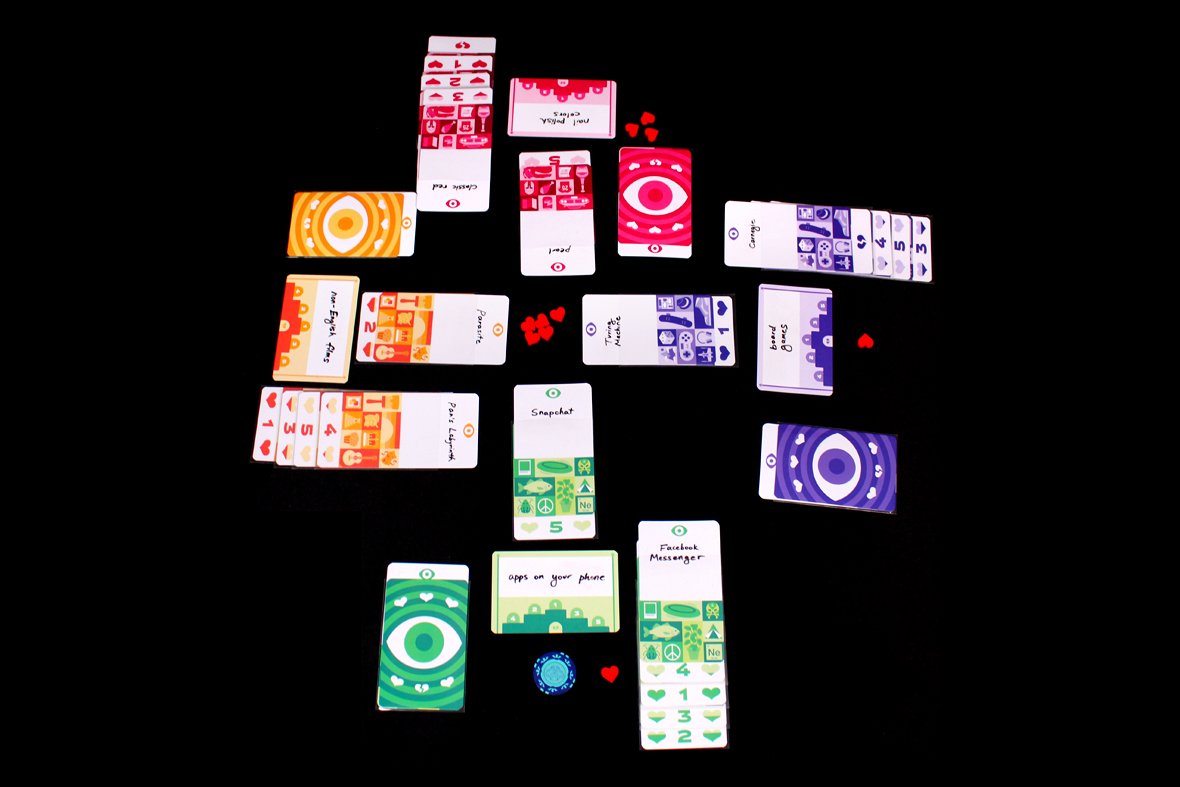
To start each round, players will pick a category that they want to know more about. It can be anything from types of hats to Digimon to mythical creatures to Pantone Colors of the Year to whatever you can come up with. Get creative. Then, in the first round, players pass the category and the writing / ranking cards to the player on their left. (In the second round, players pass to the right.) Players pull the writing cards out of the sleeves and write examples of those categories. On 1, you write your favorite example of that category; on 5, you write your fifth-favorite example. On the broken heart (I call it the Heartbreaker), you write your least favorite example. Once you’ve filled them all out, put the ranking cards back into the sleeves, shuffle them, and give them back! After all the players get their cards back, each player should read their category card and the provided examples. Then the trick-taking begins!
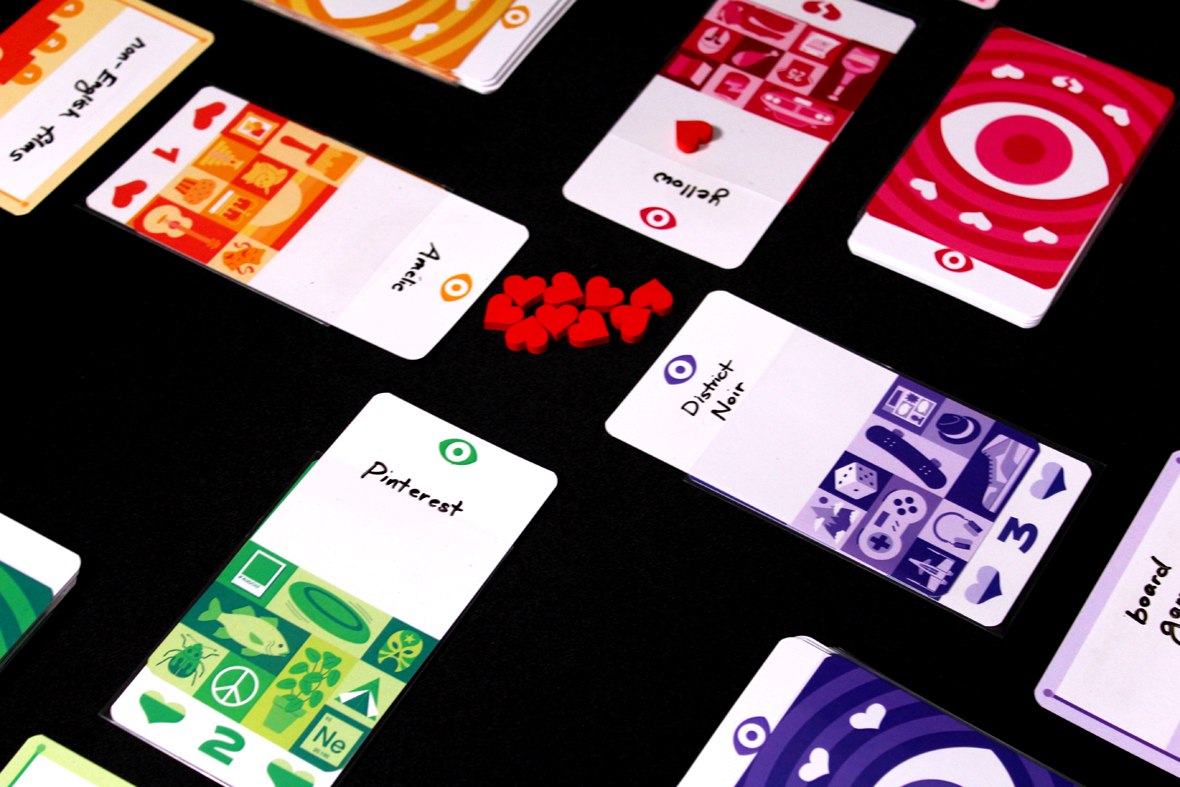
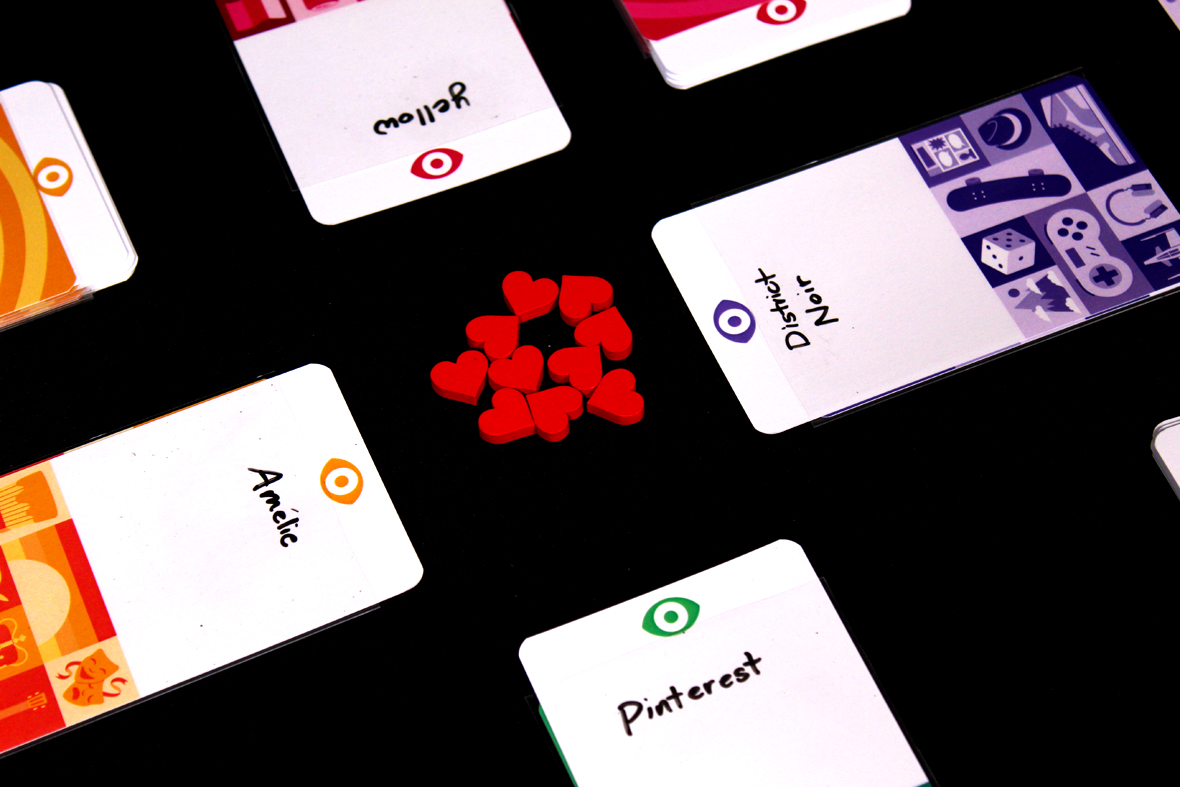
The starting player may play any card from their hand, and every other player should, in turn order, also play a card from their hand. Once every player has played a card, lift up the writing card to see what each card’s ranking is. The card with the lowest ranking wins! There is one exception: if any player has played a 1 and another player played a Heartbreaker, the player who played the Heartbreaker wins! In the event of a tie (multiple players play the same best ranking), the player who played first wins. The winning player takes a heart token and becomes the lead player for the next trick.
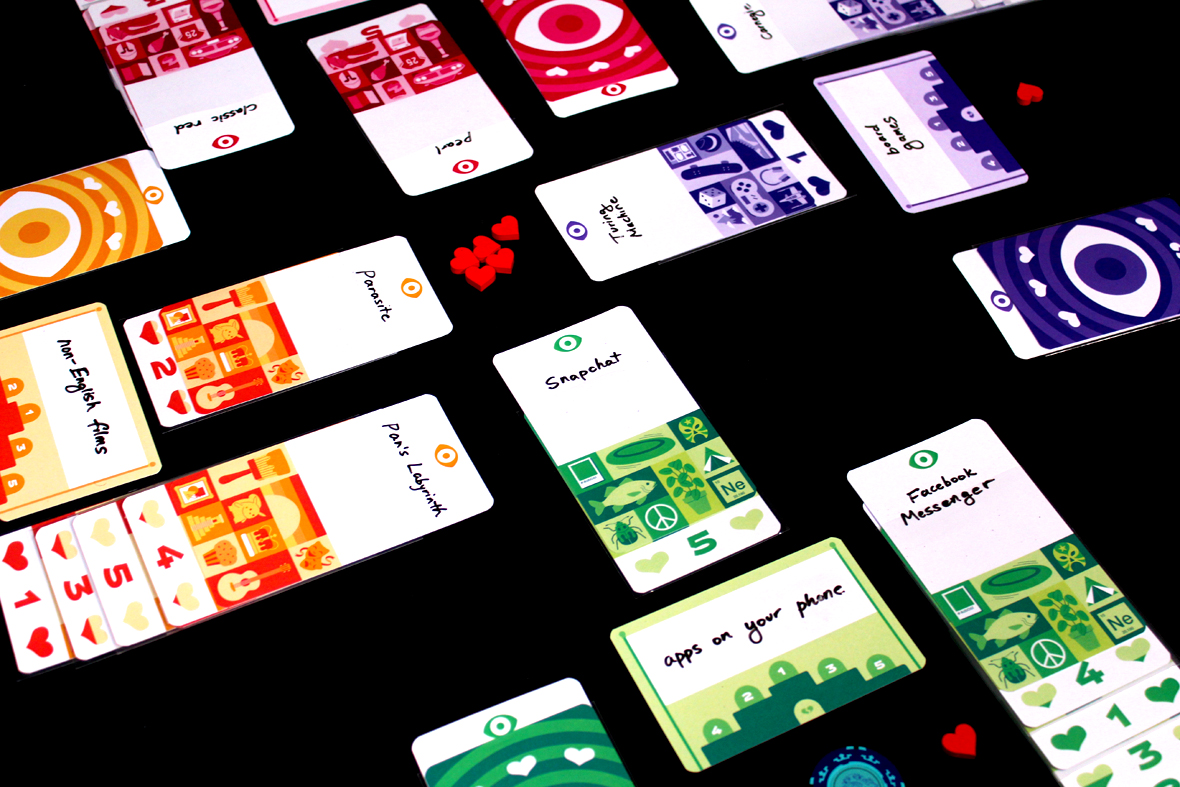
Continue until five tricks have been played, and then the round ends. Erase all the cards and set up for a new round as previous. After the second round, the player with the most hearts wins!
Player Count Differences
There aren’t really major player count differences in My Favourite Things, either. I mean, at some level, you really only care about the player to your left and right, since those are who you engage with. That said, with more players, there are fundamentally more opportunities for a 1 and a Heartbreaker to be played in the same trick, leading to an automatic win condition for the first player to play their Heartbreaker. At lower player counts, there are fewer Heartbreakers, so it’s a bit less likely that you’ll see one that frequently (and there won’t be enough for there to be one in every trick like there are at 5+ players). Personally, I like the game with more players since you get to learn even more about more people (and you get a wide range of categories, usually). That said, a tight game is also fun! Plus, with three people, you get to ask all the other players a category! Both are fun.
Strategy
- At some level, again, it’s a party game; you don’t really need to be thinking about strategy all that hard. Really, focus on having fun and learning more about other players and asking questions. You may not win, but it’s a good time nonetheless.
- In the first round, you’ll know (ideally) what the value of the card played before you is. You can use that to try and guess what card you should play. Unless you’re leading the trick, the person who plays before you is using your cards. This usually means you should know what value is on those cards, so you can try and play one that beats it from your hand.
- Sometimes you’ll just want to throw off. If you’re pretty sure a 1 and a Heartbreaker have already been played, there’s not much point to actually playing any of your useful cards. In that situation, just throw a 3 or something, if you can.
- Keep an eye on your cards; you may be able to intuit what the 1 or the Heartbreaker is just by comparison. Is there a card that’s uniquely different than the others? Does it feel out of place? That might be your 1 or your Heartbreaker. Sometimes it’s easy to guess! Sometimes it’s very much not.
- Also keep track of what your opponents have played. It’s a lot less scary to play the 1 when you know there aren’t any Heartbreakers lurking. It’s trick-taking; you always want to be counting cards, essentially. Knowing what’s been played lets you know your odds for subsequent tricks.
Pros, Mehs, and Cons
Pros
- These cards are a lot bigger than the original version, which is actually really good. Bigger cards make for more space to write on, which can be pretty helpful! You can also have more complex categories or more space for people like me with awful handwriting to try and write more legibly.
- Conceit-wise, I love this game. It’s a trick-taking game, yes, but your currency is really just cool facts about other people. And I think that’s amazing. I learn so much every game and I get to ask people fun questions that I want to know. It’s really good!
- You can also make this as interesting, challenging, or personal as you want. I like games that put creative agency in the hands of the players, and you can have a lot of fun with it! Try asking people to list their favorite things in a category they hate. Try asking a category that’s their least favorite examples of something! Try asking something that will invite player discussion. It all can be pretty interesting!
- I love how the game prompts conversations about what people ranked, and the thrill of finding out if your guess was right. At least once per round, I want to be able to say “oh, huh; I thought you preferred {OTHER THING}.” I like that! I get to learn more, and there’s usually some good debate.
- The trick-taking component is just gamey enough to appeal to competitive folks, I find. It’s not my favorite trick-taking game, but I do love the party element and how it combines with the trick-taking! I think there’s some good aspects of both coming out here, though you may find if you’re looking for a high-strategy trick-taking game, there are other games with more strategic offerings out there.
- I like that you pass in both directions over the course of a game. It gives you a nice opportunity to take revenge on your opponent if they ask you too personal of a category. It also messes with the strategy a bit, since you can no longer anticipate what the preceding person played.
- The art style is very engaging, and it’s a lot of fun that the cards give you ideas for categories! It’s exactly what you want from a party game in that sense; it’s bright, colorful, interesting, and fun.
Mehs
- One thing I never thought that much about was how the cards can smudge inside of the sleeves if you don’t give the ink from the markers a chance to dry. Inside of the sleeve is hard to clean, so try to wave the cards a bit so that the ink dries before you slide them back in. Try not to write on the sleeves, either, but I mean, I’ll still appreciate you if you do.
- From a gameplay standpoint, it’s mildly annoying once you’ve used your 1 and your Heartbreaker since you are going to have a lot more trouble winning tricks. Some rounds you’re just a little out of luck. It’s not the worst, since, again, I enjoy losing this game just as much as winning (not that I’ve won), but it could be annoying if you enjoy winning a bit more.
Cons
- Hopefully they’ll fix this in the released version but the sleeves currently are a bit tight; it can be hard to get the cards out. It confounds some of my players and makes it hard to get the cards out quickly for comparison after a trick. Not exactly ideal.
- There’s a remarkably un-fun version of this that you might end up playing if other people care too much about winning; instead, encourage them to pick a category that they’d like to learn about the other player. It comes from a better place. You can softball your opponents and ask categories that you mostly already know the answers to, I suppose, so that you know exactly what cards you’re going to be playing. It … doesn’t really help you win all that much since the other players are trying to figure it out. If you find someone’s being really competitive, just tell them to … cool it. It makes the game less fun if they’ve got bad energy about it.
Overall: 9 / 10
Overall, I love My Favourite Things! I’ve been eyeballing this for like, five year, I guess, after I played it at BGG.CON in 2018! Since then, I’ve been hoping for someone to bring it stateside, and finally, after what felt like forever, it happened! Now y’all get to try one of my favorite party trick-taking games (narrow band of games, to be fair). I really like getting to know people and learning more things about them, so this game is very firmly up my alley. There’s a certain level of “game-ness” that I think I’m looking for in my party games, though. I want at least enough strategy to give me something to focus on, to some degree. This has that! If you’re looking for like, Skull King-level strategy or Brian Boru levels of engagement, this might not be quite the same thing, nor is it trying to be! It’s just a very interesting and very novel party game that’s gotten some good quality-of-life upgrades. I’ll be super interested to see what the final version looks like, but rest assured, this one’s going to be in rotation a lot for me on work trips or at conventions or various events. There’s so much to learn, and My Favourite Things gives a really nice, pleasant, and approachable framework for letting players have those conversations and discoveries. I really love this game, and if you’re looking for a pleasant, friendly party game, you enjoy all kinds of spins on trick-taking, or you just want to add the letter u after the occasional o in words, My Favourite Things will likely be right up your alley! I really have had a great time playing this one.
If you enjoyed this review and would like to support What’s Eric Playing? in the future, please check out my Patreon. Thanks for reading!
 What's Eric Playing?