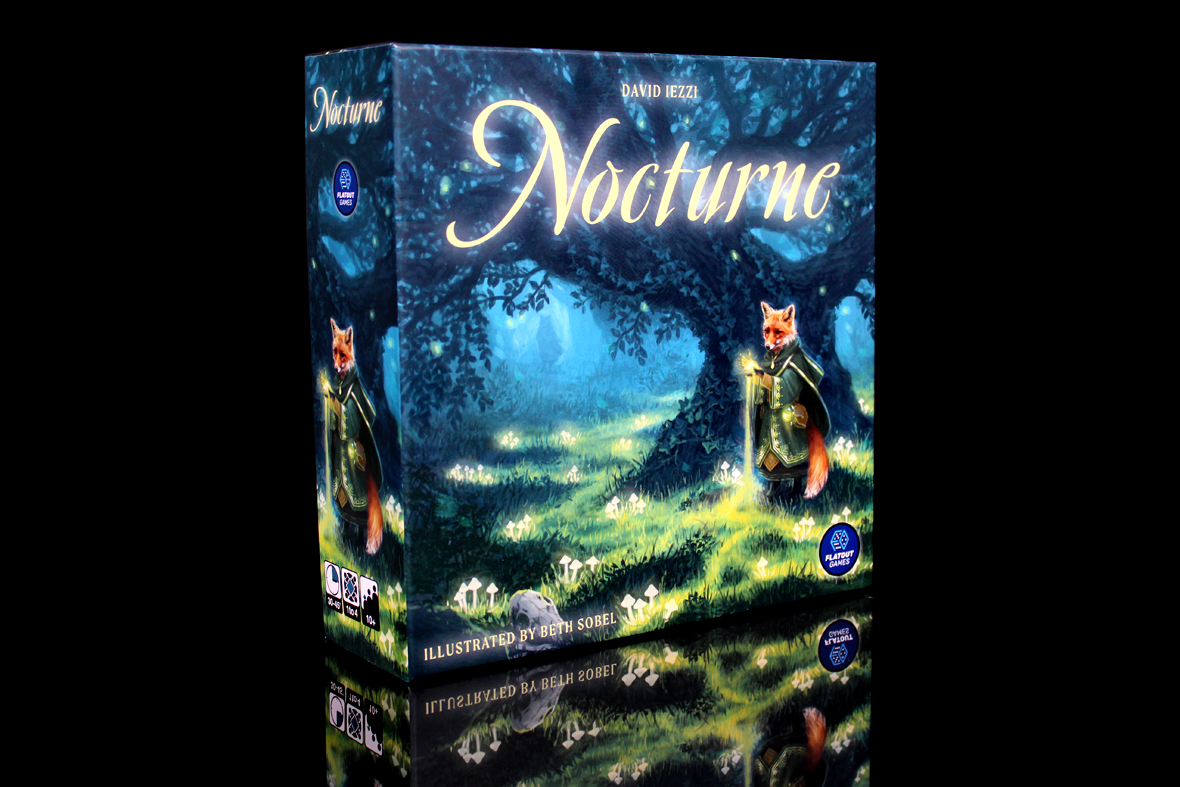
Base price: $XX.
2 – 4 players.
Play time: 30 – 45 minutes.
BGG Link
Check it out on Kickstarter! (Will update link when Kickstarter is live.)
Logged plays: 2
Full disclosure: A preview copy of Nocturne was provided by Flatout Games. Some art, gameplay, or other aspects of the game may change between this preview and the fulfillment of the Kickstarter, should it fund, as this is a preview of a currently unreleased game.
It’s time for the annual Flatout Games release! It’s essentially a holiday in the hobby board game space, given how well they’ve been firing on all cylinders for the last couple years. Between Cascadia and Fit to Print, I know what my favorites are, but there’s something for everyone in the puzzley drafting space of these games. A lot to like. This year, they’re releasing Nocturne, so let’s dive right in and see what that’s about!
In Nocturne, players take on the role of fox mystics casting spells to get their hands (paws?) on enchanted items. As you do, you must navigate the challenge of other mystics in the forest using their magic to potentially swipe what you had your eyes on, so you’ll have to be quick and careful to get what you need. The items alone are valuable enough, but if you can use them in recipes to brew concoctions, you can potentially score even more points. Do you have what it takes to outfox your opponents?
Contents
Setup
Little bit of setup, for this one. Each player should get a Character Card:

Keep it on the A side for the standard game; the B side gives every player unique abilities. Each player then gets Spell Tokens in the matching color:
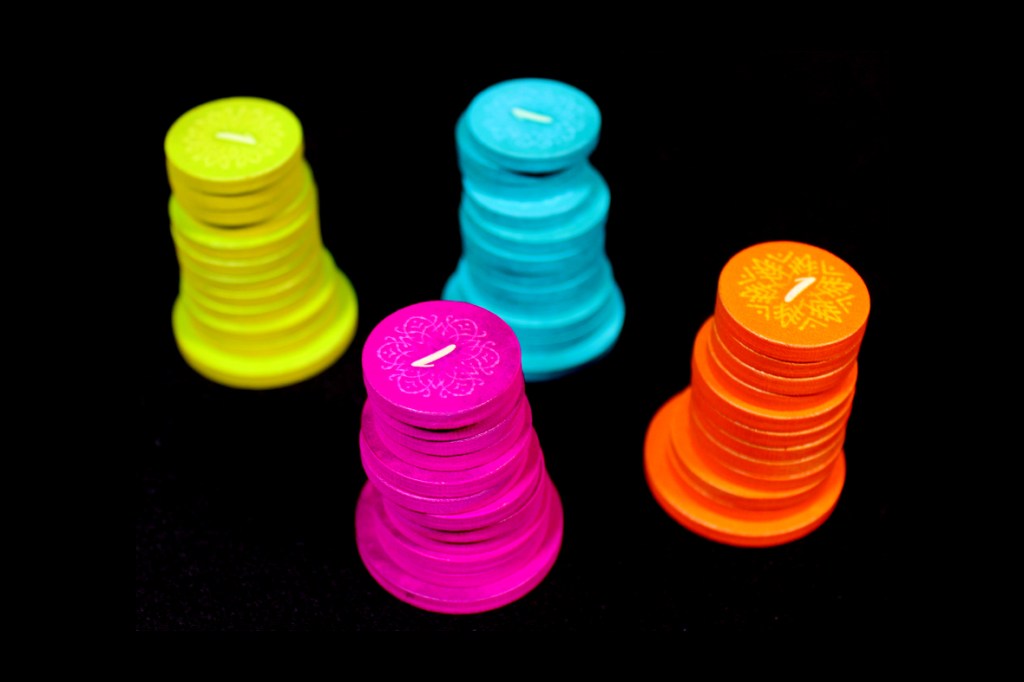
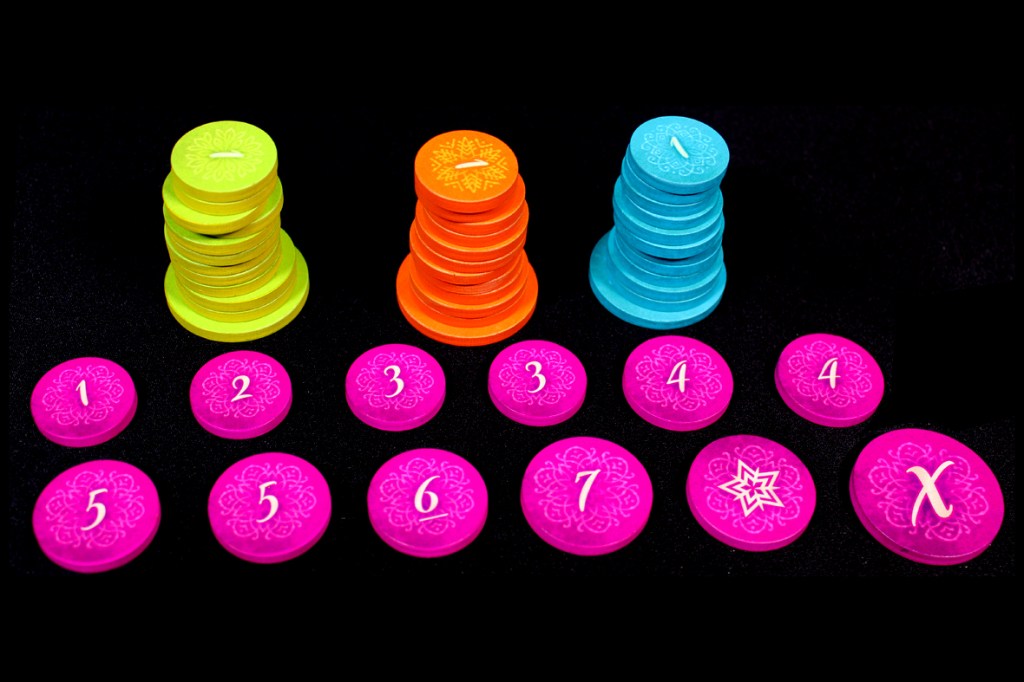
At higher player counts, you remove a few:
- 2 players: Use all the Spell Tokens.
- 3 players: Remove one of the 3s; use the others.
- 4 players: Remove one 3 and one 4; use the others.
After doing that, you’ll want to shuffle the Starter Concoction Cards and deal each player one.
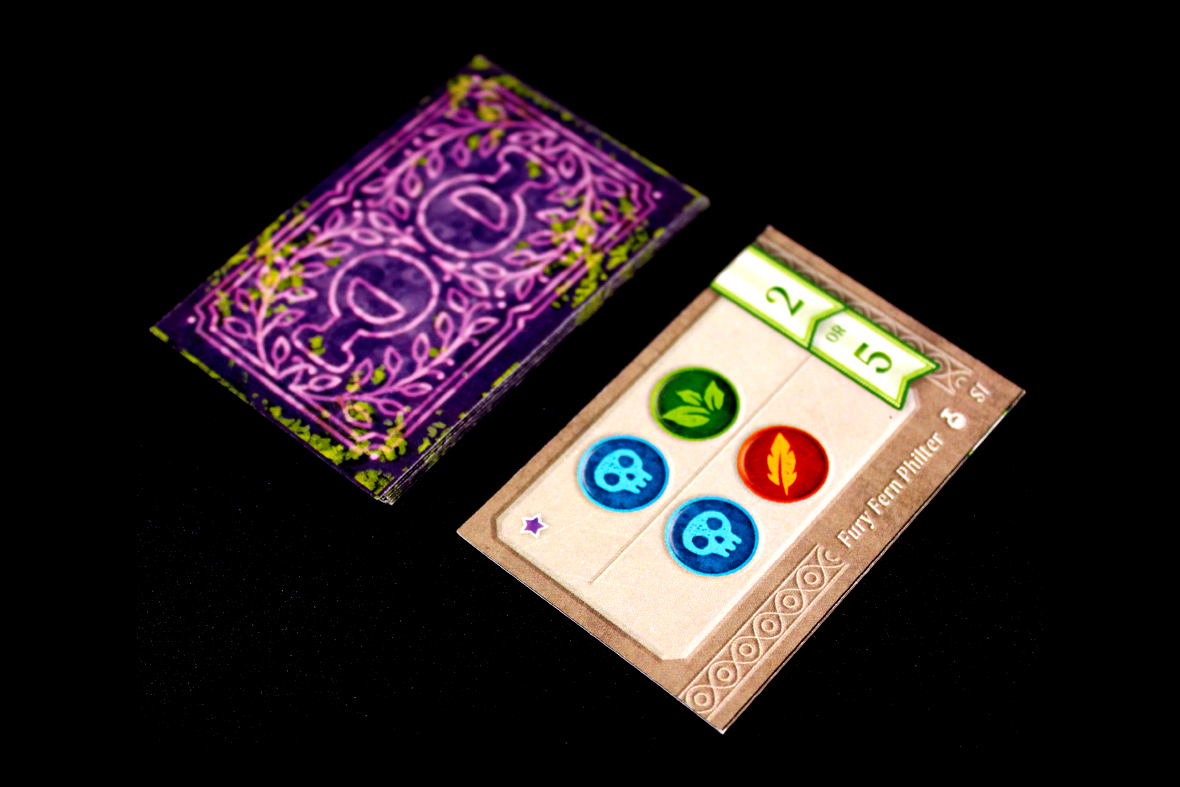
There are a few more decks to shuffle. Shuffle the standard Concoction Cards:
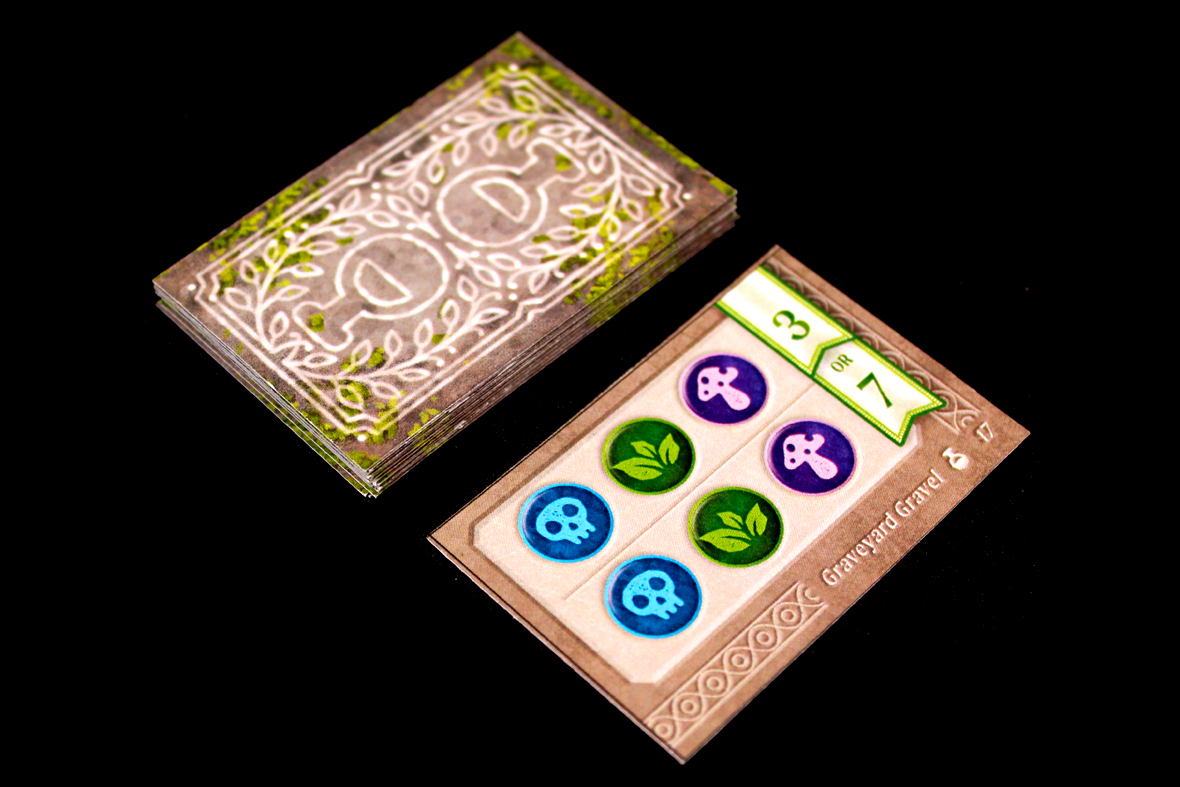
Shuffle the Twilight Goal Cards:
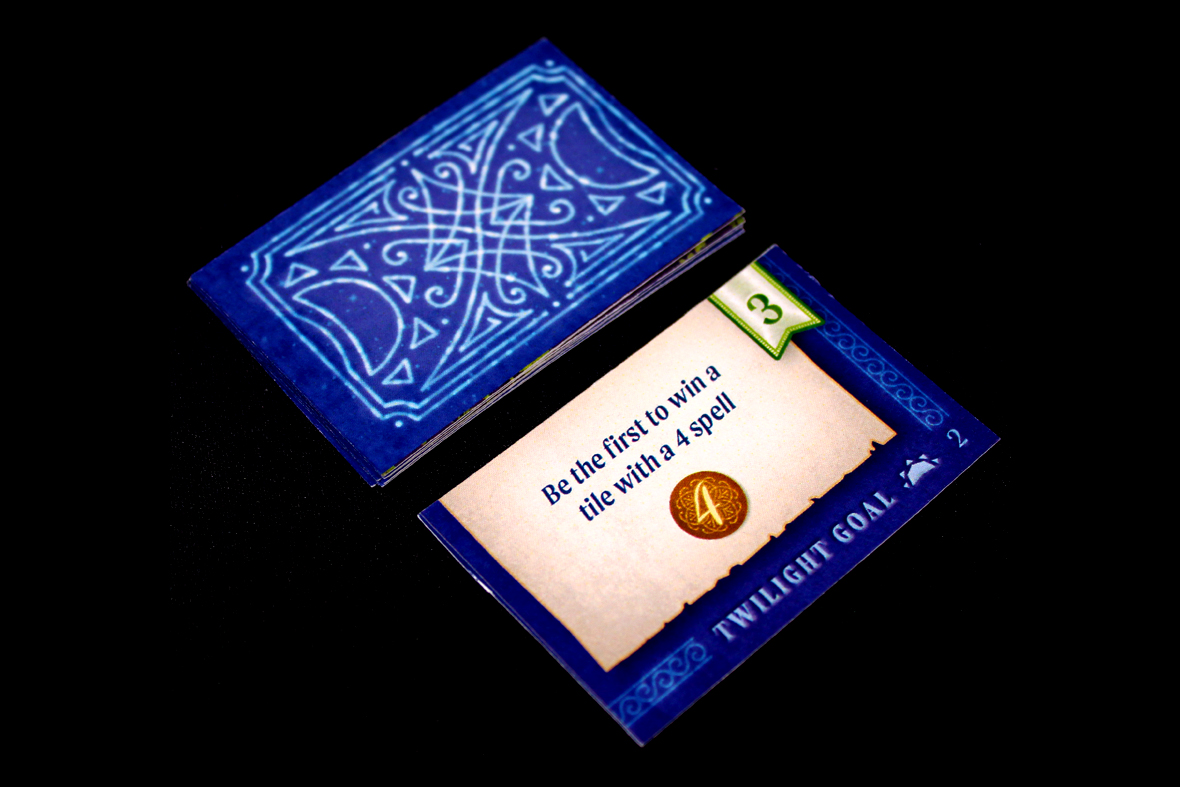
Shuffle the Moonlight Goal Cards:
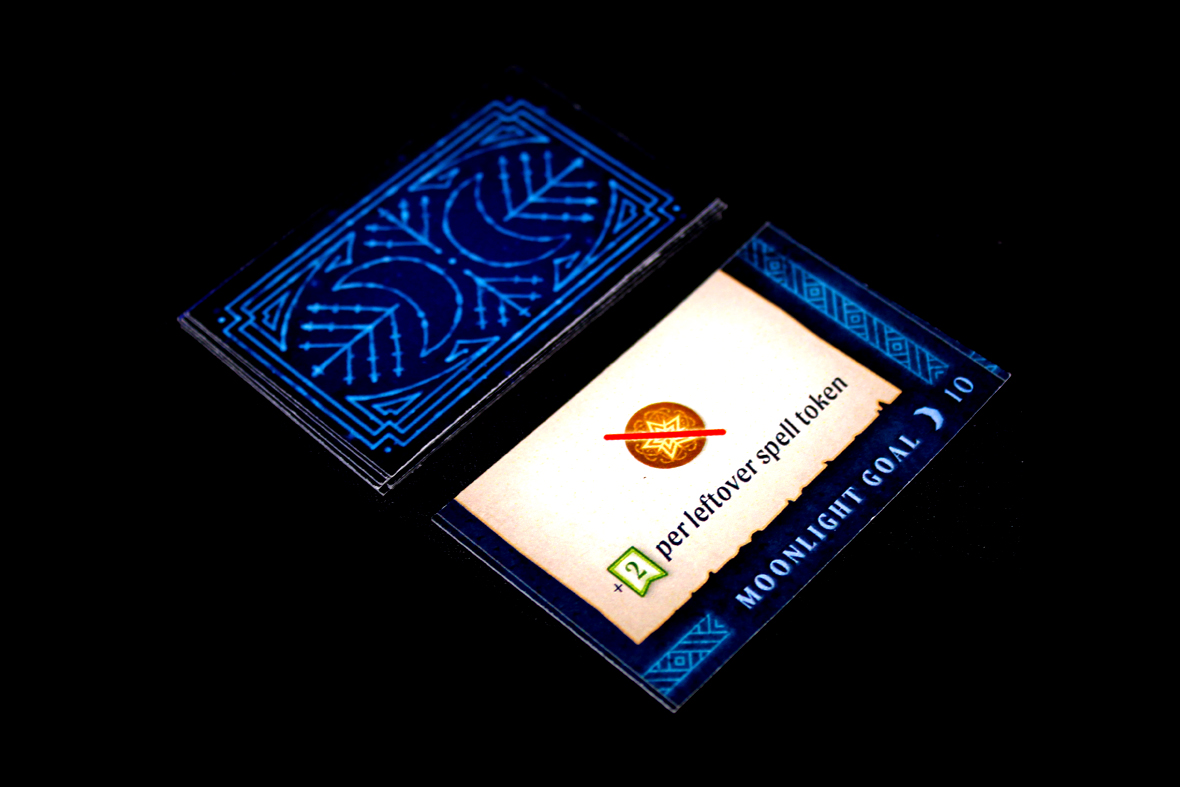
You’ll use most of them later. Reveal three Twilight Goals, placing them face-up in view of the players.
The Shadow Spell tokens should be placed face-up in ascending order near the card decks; you’ll use them later.
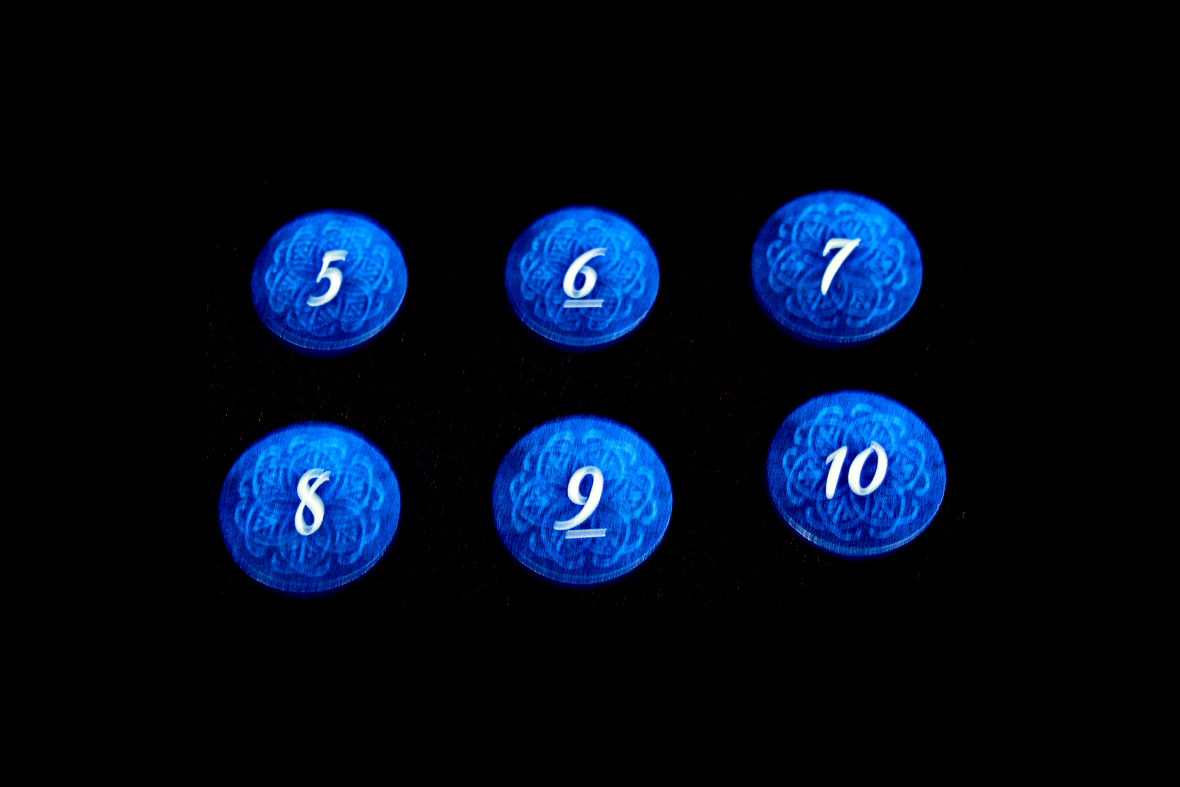
Shuffle the Item Tiles!
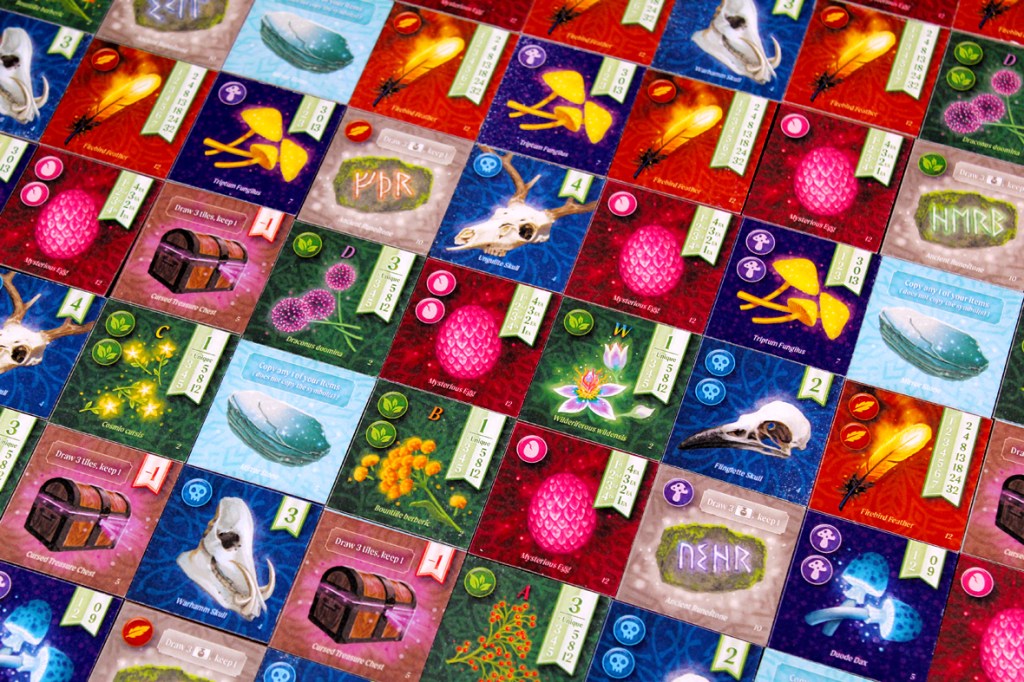
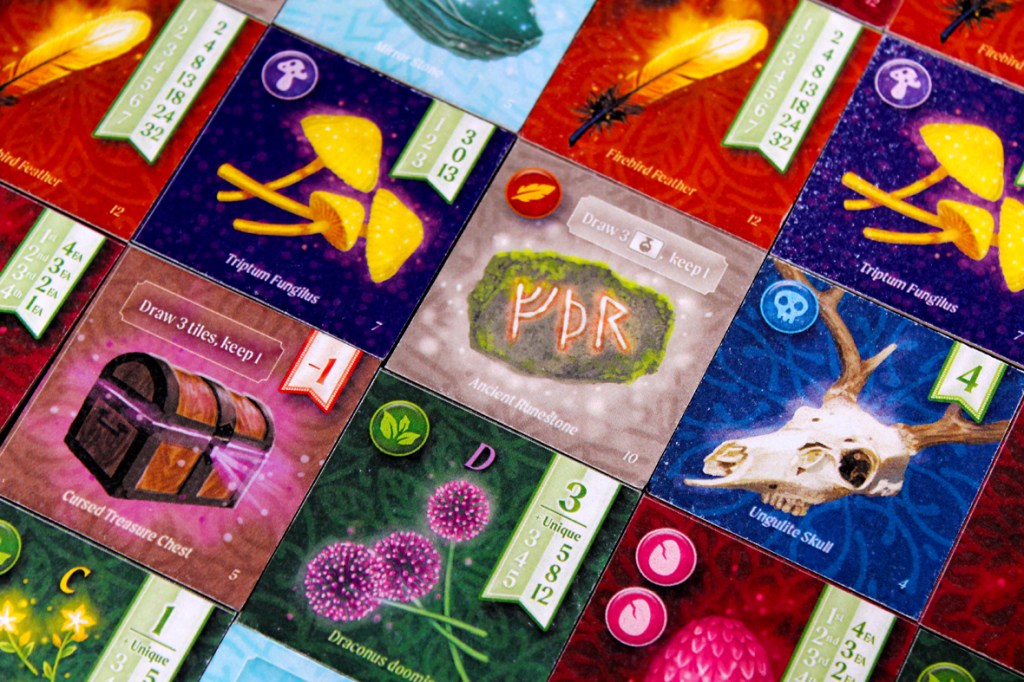
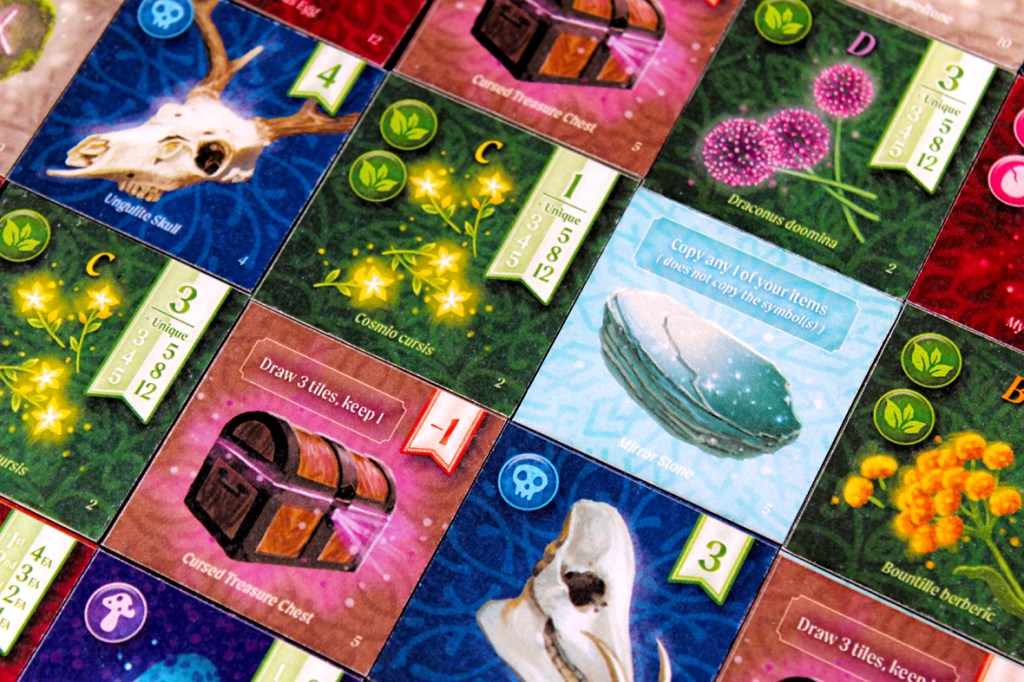
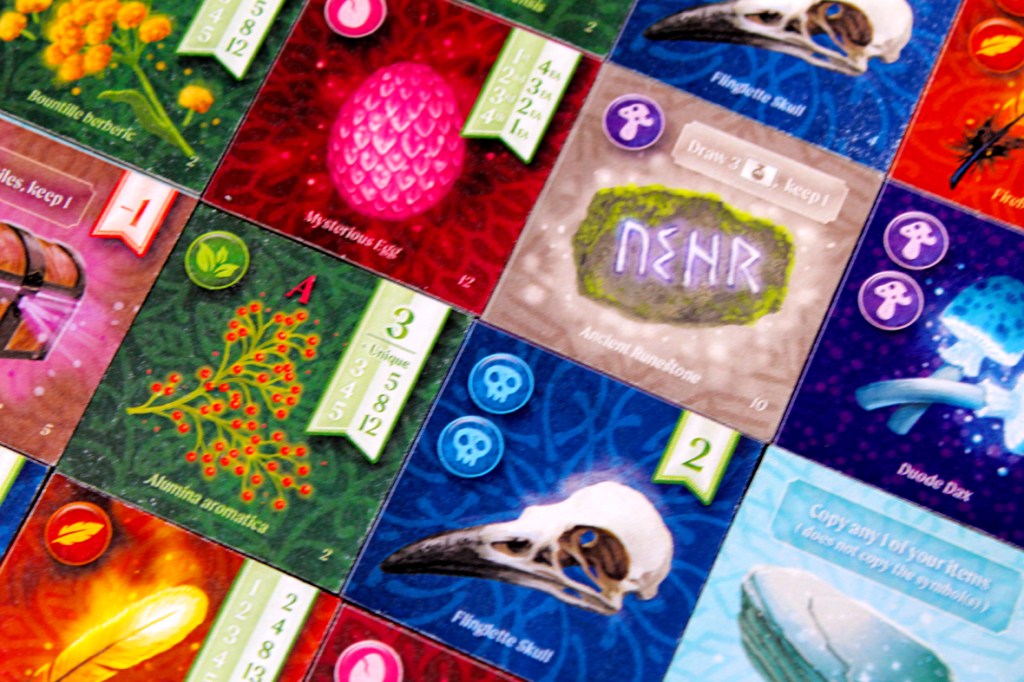
You’ll make a grid based on player count:
- 2 players: 4 rows, 4 columns
- 3 players: 4 rows, 5 columns
- 4 players: 5 rows, 5 columns
The remaining Item Tiles can be set aside for now. Finally, place the Forest Sprite Board nearby, and place tiles on it based on your player count:
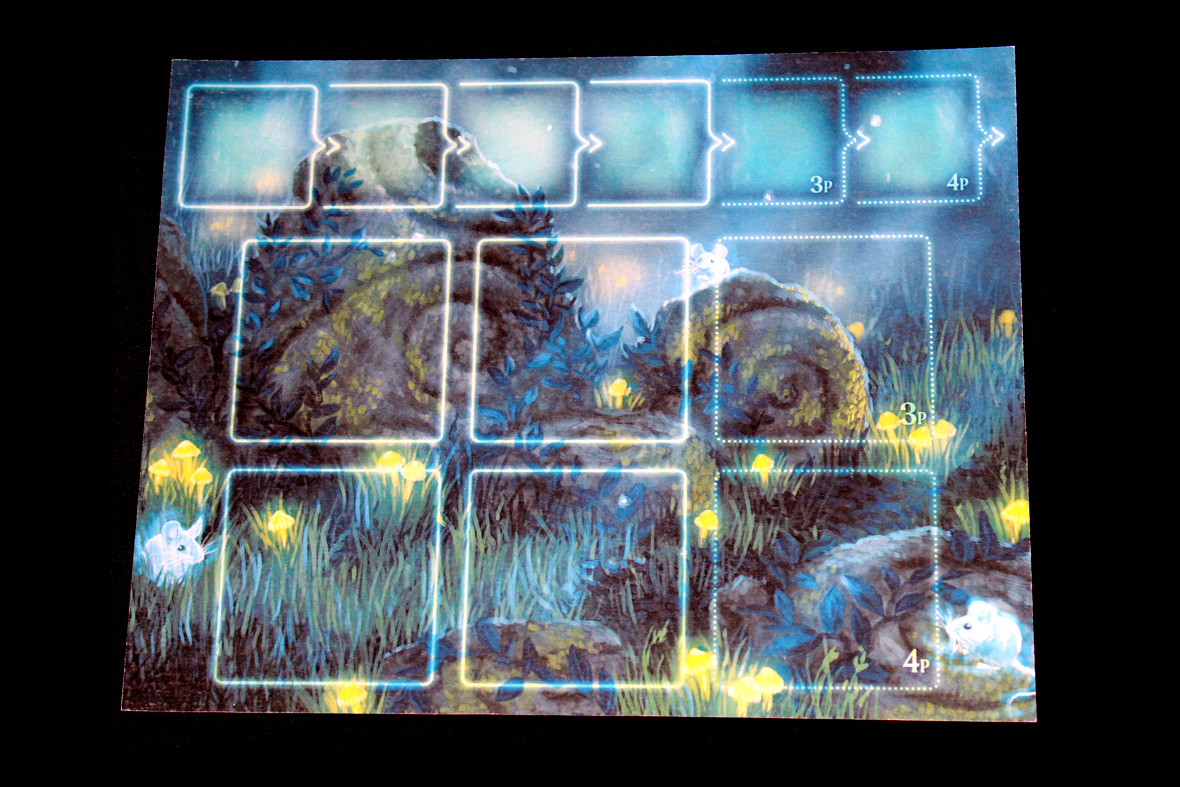
- 2 players: 4 tiles
- 3 players: 5 tiles
- 4 players: 6 tiles
You should be ready to start!
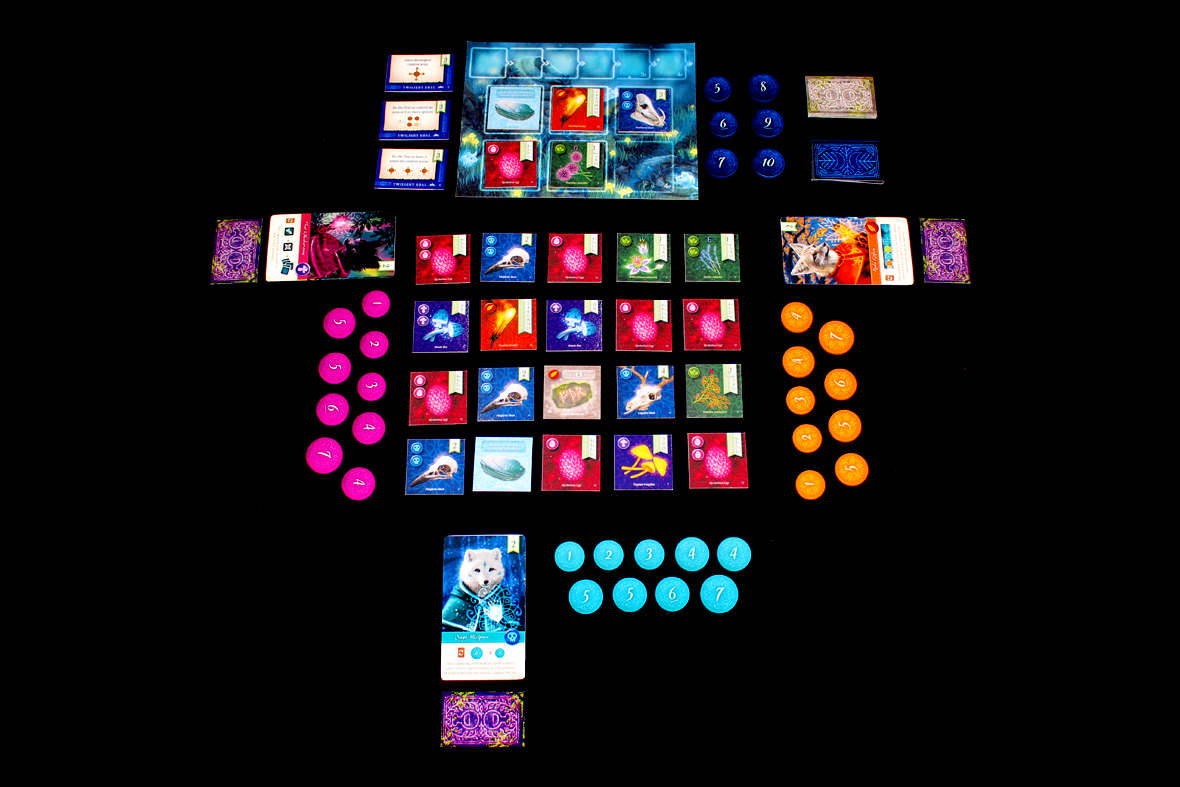
Gameplay
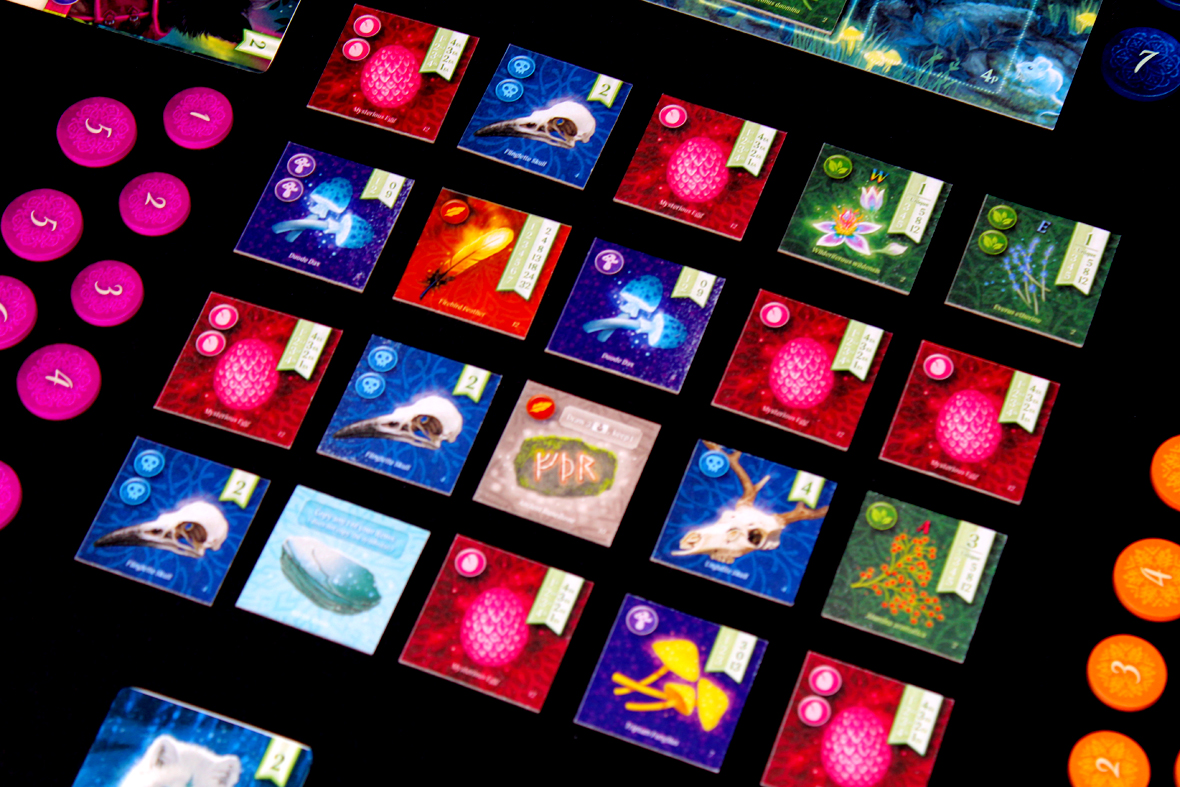
A game of Nocturne is played during a night in the enchanted forest. In each of two rounds (Twilight and Moonlight), players cast spells and make appeals to the Forest Sprites to try and earn magical items to fuel concoctions and for their magical properties. Your goal? Score as many points as possible.
Each round primarily consists of a Spell Casting Phase, in which players place their spell tokens on tiles on the board in the hopes of adding them to their collection. To start the first phase of the round, the start player places their lowest-value Spell Token onto one of the tiles in the forest. Once that happens, the next player clockwise can either place one of their Spell Tokens or pass. If they choose to place, the token they place must be placed orthogonally adjacent to the previously placed Spell Token and must be strictly higher in value. If they cannot do both of those things, they must pass. Once every other player has passed, the player who placed the most recent Spell Token takes the tile underneath of it, flipping the Spell Token upside-down and putting it in the tile’s place. If you want, you can also place your Star Token; that’s higher than any other tile and you win immediately. Various tiles have various effects; some let you draw Concoctions, some let you draw tiles, and others are just worth points. It’s possible to immediately win a tile by placing the highest available Spell Token on a tile or by placing on a tile that has no orthogonally adjacent tiles. Note that if a player starts a phase by placing on a tile with no orthogonal neighbors, that’s known as Corner Casting; while they win the tile no contest, the player to their left becomes the new start player and may place on any tile to start.

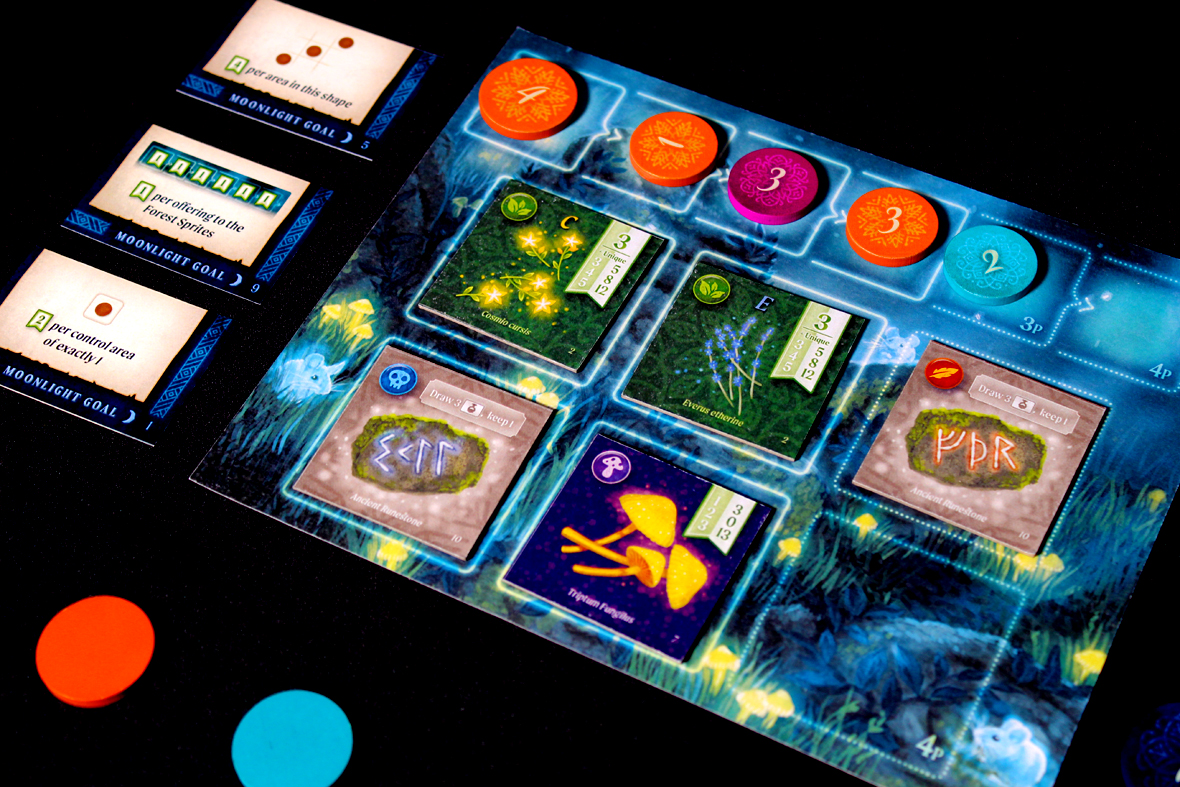
All players retrieve their Spell Tokens and may place any on the Forest Sprite board. When a token is placed, the Sprite Board is sorted from highest to lowest, left to right. That means your token may be placed between others. If your token is the same value as one already present, place to the left of that token. There’s a limit, though, and adding your token may cause another player’s token to get pushed off. If that happens, it’s returned to them for later. Then, the player who won the tile starts a new Spell Casting phase with a value of their choice. If that player chooses to pass, the next player may place on any tile in the forest.
Some tiles may cause you to complete goals during the Twilight Round; if that happens, take the card; it’ll be worth 3 points later.

After all the tiles in the forest have been won (or when all players pass), the Twilight Round ends. To complete the round, resolve the Forest Sprite board by letting players from highest value to lowest value on that board take a tile of their choice, flipping their Spell Token over. Any players with Spell Tokens still in their pool can, from highest to lowest remaining, swap those tokens out for a Shadow Spell Token (again, highest to lowest). Break ties using the Forest Sprite board. All Spell Tokens swapped this way are returned to the box. Players take all their tokens back from the Forest Sprite Grid, reveal three Moonlight Goals, reset the Forest Grid, and refill the Sprite Board. Once that’s done, the Moonlight Round begins!
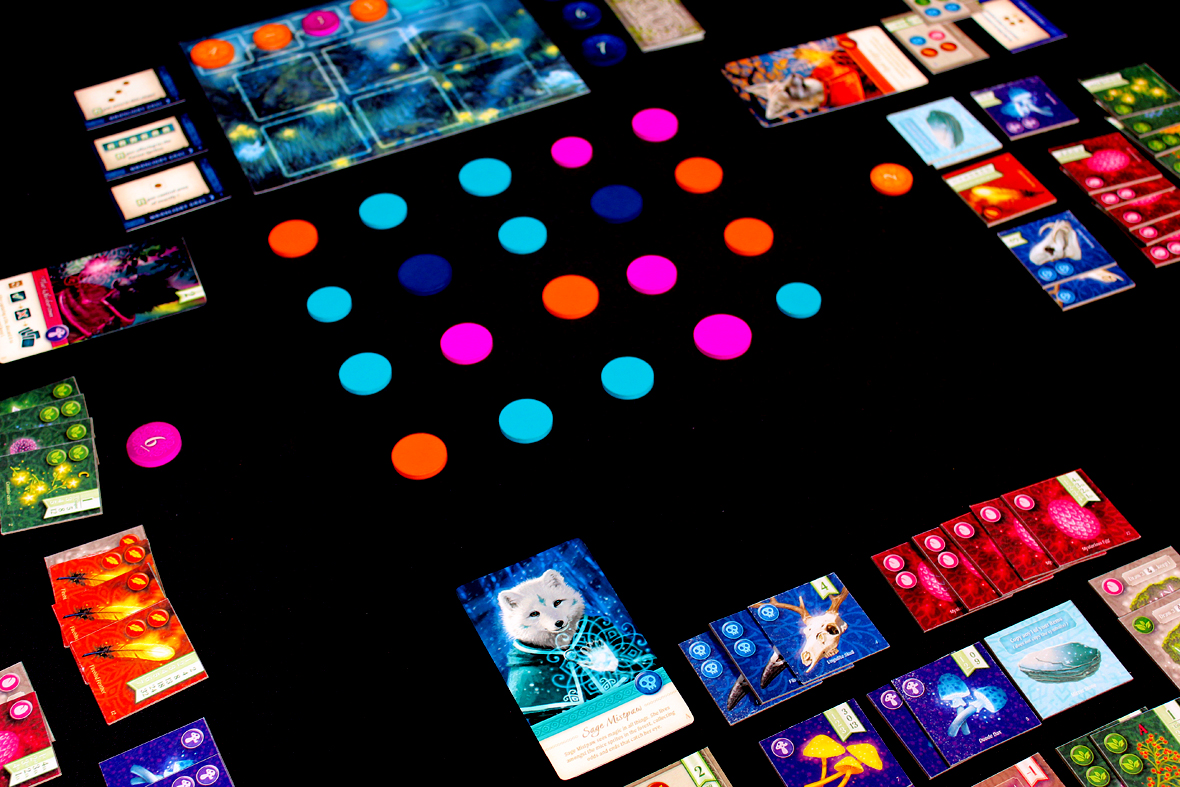
When the Moonlight Round ends, that’s game over! Resolve the Forest Sprite Board one last time, assign Mirror Stones, and score! Concoctions score for symbols present among your tiles, so that can be even more points. The player with the most points wins!
Player Count Differences
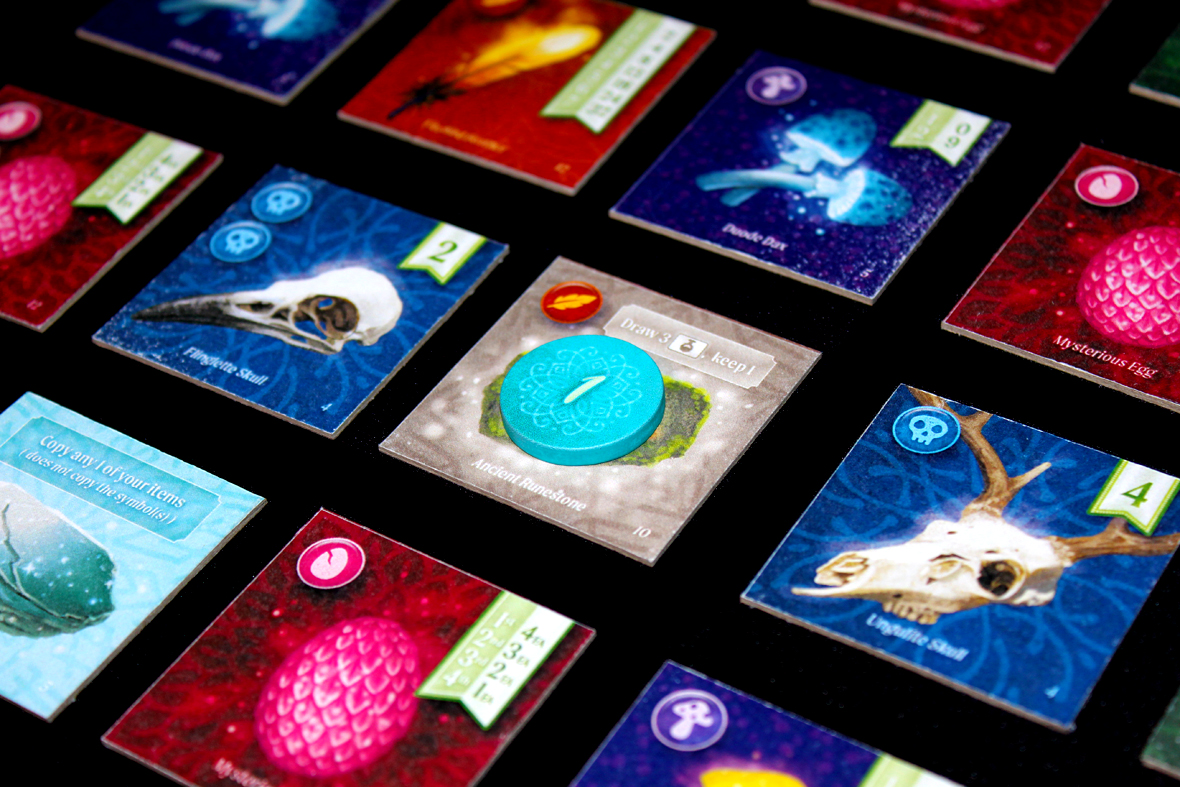
As with most games with some semblance of an auction component tend to go, I do prefer Nocturne at higher player counts. With more players, there’s more dynamic action happening within the play space. You can never be sure who’s angling for which tiles or what they’re going to bid with their spell tokens to get there. It makes the game chaotic, to some degree, but it’s also a more interesting back and forth, in my opinion, than the two-player game. There, either you get the tile or your opponent does. That’s fine, and I still actually quite enjoy the two-player game, but it’s clear to me when playing that more interesting things would happen in a four-player game. I like the contention and competing with other players for spots on the Forest Sprite board, and I even enjoy losing out to Shadow Spells from a player that I blocked in the previous round. Chaos suits auction games, in my opinion, and Nocturne’s particular blend of bidding-based token placement can often benefit from a bit of chaos. That said, if you’re looking for high strategy and control, the two-player game may be more your speed.
Strategy
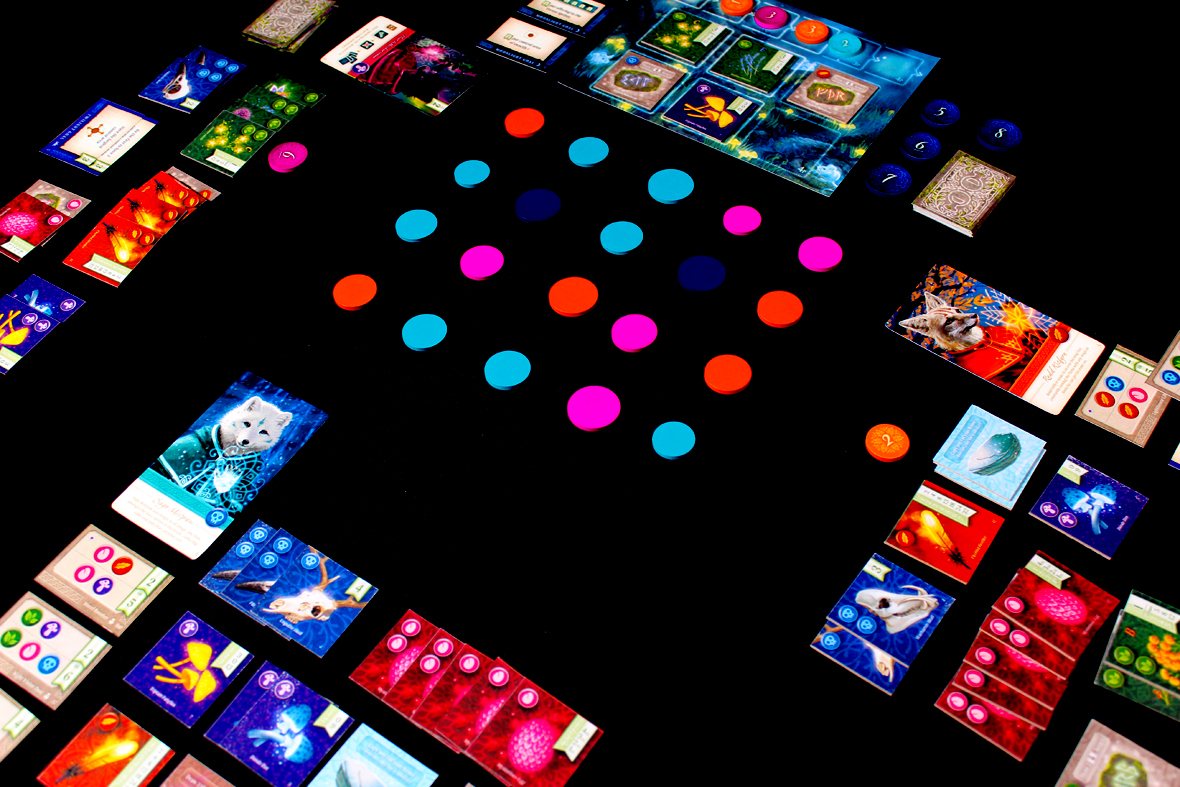
- Sometimes it’s worth dropping the big spell token so you can take the exact tile you need. You can take the risk that it comes back around and you get the tile you want, sure, or you can just slap a 7 or 10 or whatever you’ve got on it and make it very clear to everyone that you’re taking this specific tile thank you very much. I prefer the latter. It’s cleaner.
- Other times, dropping a low-value token on a tile you want is great, since it means that nobody can come back around and take it. This doesn’t claim the tile; it just protects it from future incursions during this phase until another tile is claimed. It means you can potentially come back to it later.
- Never be afraid to pass. Sometimes you might be in a situation where another player has set you up for a bad outcome. When that happens, just pass! Let them deal with it instead. It may even put you in a better spot, depending on what they take as a result.
- Corner casting isn’t necessarily always a “immediately do this”. It’s great for you, since you get a tile for cheap, but it also gives your opponent free placement on the board next turn, so they might be able to get an even better tile for cheap. Keep that in mind when you’re looking at what tiles your opponents are setting you up to take; they may be trying to bait you into a Corner Cast that gives them great board position.
- During the Twilight Phase, you might want to avoid taking all of the remaining tiles so that you can swap some of your spell tokens in for the more-powerful Shadow Spells. These can’t be used on the Forest Sprite board, yes, but they’re higher value than any of the other tokens on the board! That’s usually pretty good. You can use them in the second half of the game to really lock down the tiles that you need.
- If you do well on the Forest Sprite board, you can often get the tiles you need. Keep an eye on that board at the start of the round! It may be worth “donating” your higher-value tokens so that you can get first crack at those tiles if you need or want something in particular.
- Getting Concoctions is usually good. Early in the game they’ll help you determine what tiles to go after, and late in the game you may be able to grab one you can already score. They’re usually just points and even more points if you get the right symbols. What’s not to like? Just keep in mind that you may not score if you don’t completely fill them out, so it’s worth trying to make sure you actually get all the correct symbols before the game ends. This is also where the Forest Sprite board can be really helpful.
Pros, Mehs, and Cons
Pros
- The art style is incredible, as one would expect from a Beth Sobel-illustrated game. I’m particularly partial to blues and greens in game art, so, as you might guess, I’m pretty happy with the style of this game. It looks great. Beth does a great job with a realistic-yet-fantastical style generally, and it really works for this game thematically. Everything has a near-photorealism that’s interspersed with a sort of magical floatiness, making for a game that feels ethereal and foggy just like a magical forest should.
- This is a truly zany spatial draft, and I kind of love that. Placing down numbers to essentially bid your way orthogonally to taking tiles for set collection is buckwild, to some degree, and it’s great. It’s so interesting to try and figure out what your opponent(s) will play and how you want to respond and what you’re willing to lose.
- I really like the color scheme for the player pieces! It’s a very pleasant set of colors.
- There are a lot of different ways to be successful in this game, and I like to see that. You can go hard in the main area, try to lay claim to the Sprite Board, build out a ton of Concoctions, or just go for various sets of items. I’ve seen players win with very few Concoctions, for instance; it can happen.
- I appreciate that the various Concoctions are named. It’s a tiny thing that helps with my immersion! I look at them occasionally and it’s fun to see that they actually have something magical going for them rather than just being an abstract collection of symbols.
- I always like set collection games with a variety of different scoring types. There’s just a lot of different ways to score individual sets of tiles; there are even some that have a set collection mechanic and are worth points on their own! That’s always nice.
- The Forest Sprite board is interesting! I appreciate that it gives players additional shots without a ton of loss on their end. It’s a neat way to mitigate missing out on high-value tiles, especially for players that spent their high-value spells early to get something they needed. There can even be a good amount of contention over who gets to choose and the order they get to choose in, which might influence which spells you place.
Mehs
- I understand that they’re different, but Twilight and Moonlight are just close enough to confuse me as to which one is first. I kind of wish there were a player reference card or something.
Cons
- Scoring can be a bit of a pain with all of the distinct moving parts. There are just a lot of different things to add up, which might throw off some players. It’s one of the hazards of set collection games with diverse scoring methods; it just adds a lot of calculations on the backend.
Overall: 8.25 / 10
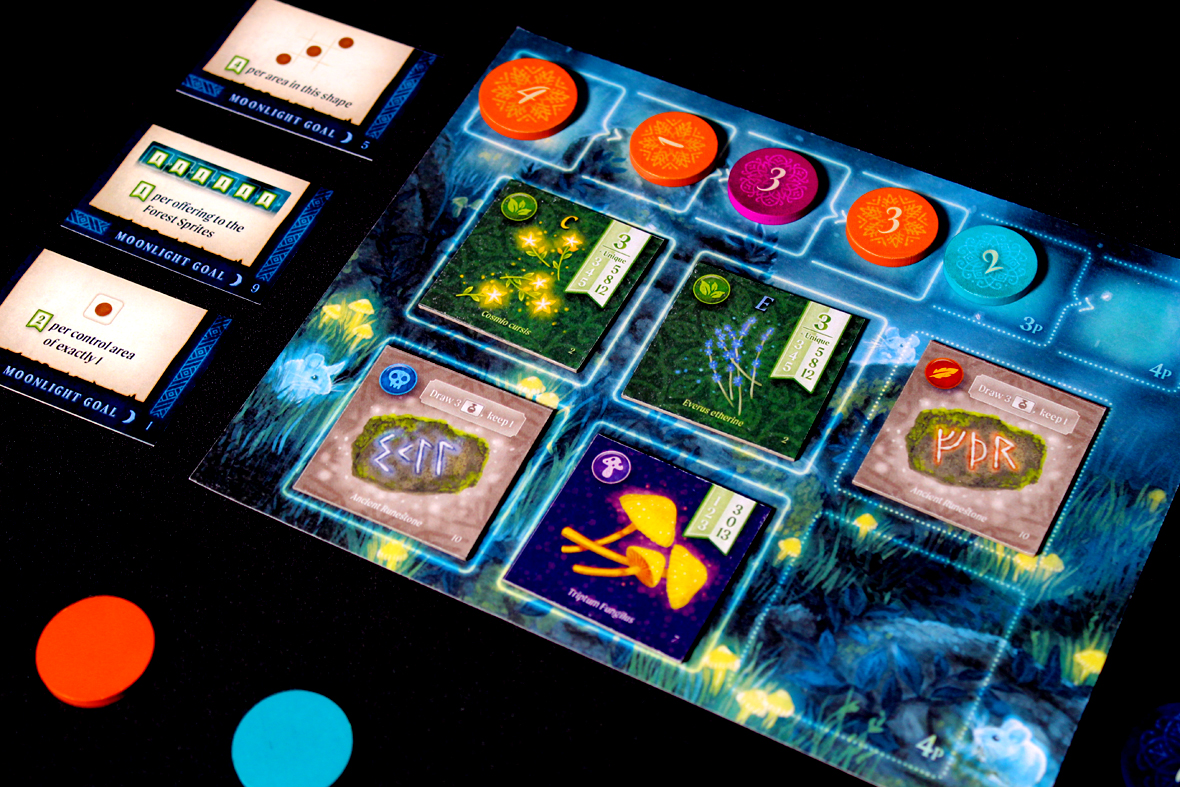
Overall, I think Nocturne is a really neat game! I’m never usually a fan of auction games, as I find that they’re all a bit too abstract for me to do a good job effectively evaluating how much any given piece is “worth”. This, however, is an auction game where the auction component is nicely disguised enough that I don’t really realize that I’m bidding until the bid is over! That’s always nice. Plus, Nocturne has some good safeguards in place. Even if you don’t get to take the tile, you can place your bid token on the Forest Sprite board and try again at the end of the round. It, overall, makes for a less intense competitive game as I see from most of my auction games, but there’s still the classic puzzley tile-laying that Flatout fans have come to expect and enjoy. No worries there. The game’s further enhanced by some particularly excellent art from Beth Sobel, but Beth does fantastic work, so it’s no surprise that the game shines with her touch. I’ve been pretty routinely impressed with Flatout’s yearly strategy game output, and this has been another solid year for that. If you’re looking for more puzzley strategic content, you’ve just become a Flatout Lifer, or you like foxes in the forest, you’ll likely have a blast with Nocturne! I know I enjoyed it.
If you enjoyed this review and would like to support What’s Eric Playing? in the future, please check out my Patreon. Thanks for reading!
 What's Eric Playing?