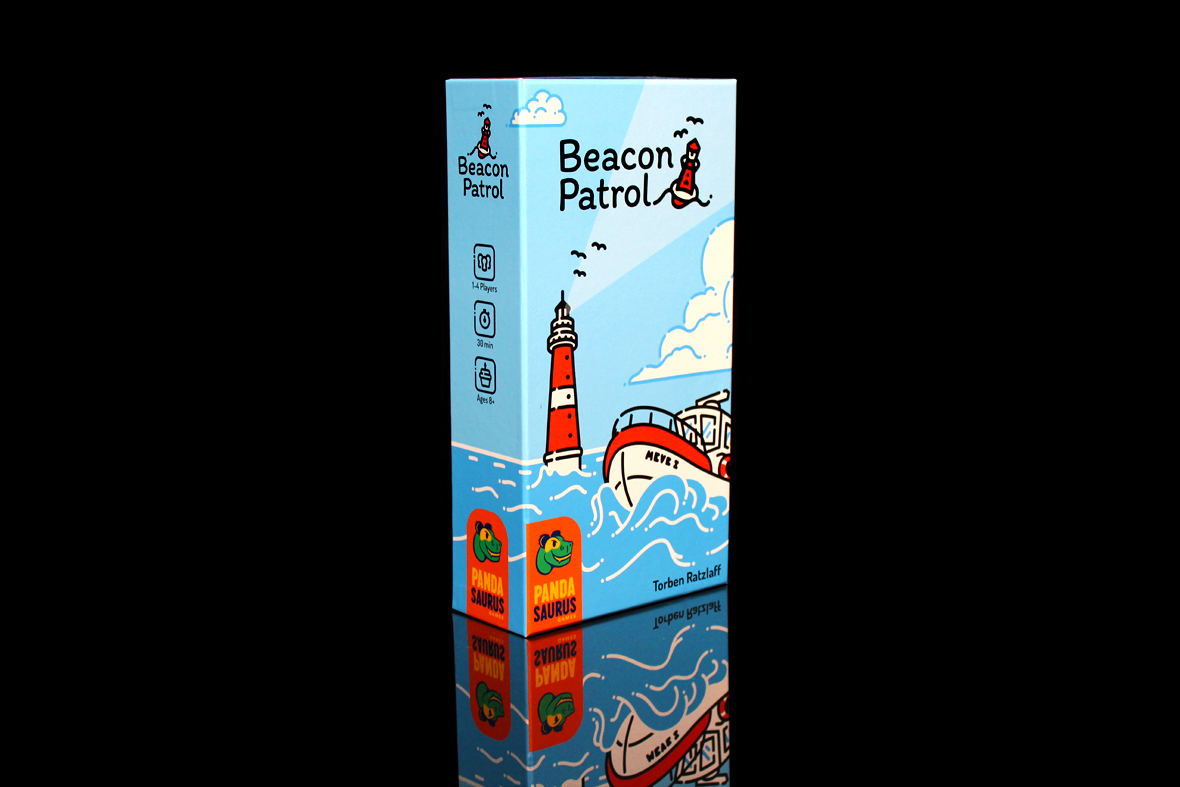
Base price: $20.
1 – 4 players.
Play time: 30 – 45 minutes.
BGG Link
Buy on Amazon (via What’s Eric Playing?)
Logged plays: 3
Full disclosure: A review copy of Beacon Patrol was provided by Pandasaurus Games.
Alright, back with more reviews post-spooky season. I meant to get more ahead on reviews, but then Spider-Man 2 happened and that kind of threw my schedule for a near-permanent loop. Now I’m trying to mostly spin it back into shape before BGG.CON and PAX Unplugged and end of year holiday stuff, but as you might guess, that’s easier said than done. I’m very glad I’m only doing two reviews a week these days; four would have put me in the ground. Plus, I mean, it’s almost the holidays! I need to buy furniture and presents and such. But more on that later. Right now, let’s talk Beacon Patrol!
In Beacon Patrol, players are captains of the Coast Guard, looking to help keep the North Sea safe. This means you have to learn the sea, explore it, and understand its quirks and contours! This cooperative game will pit you and your friends against the sea itself to score points and make a beautiful coastline where people can live and do whatever people in the North Sea do. Sea stuff; I’m sure. Will you be able to complete your survey? Or will you end up with more sea than seen?
Contents
Setup
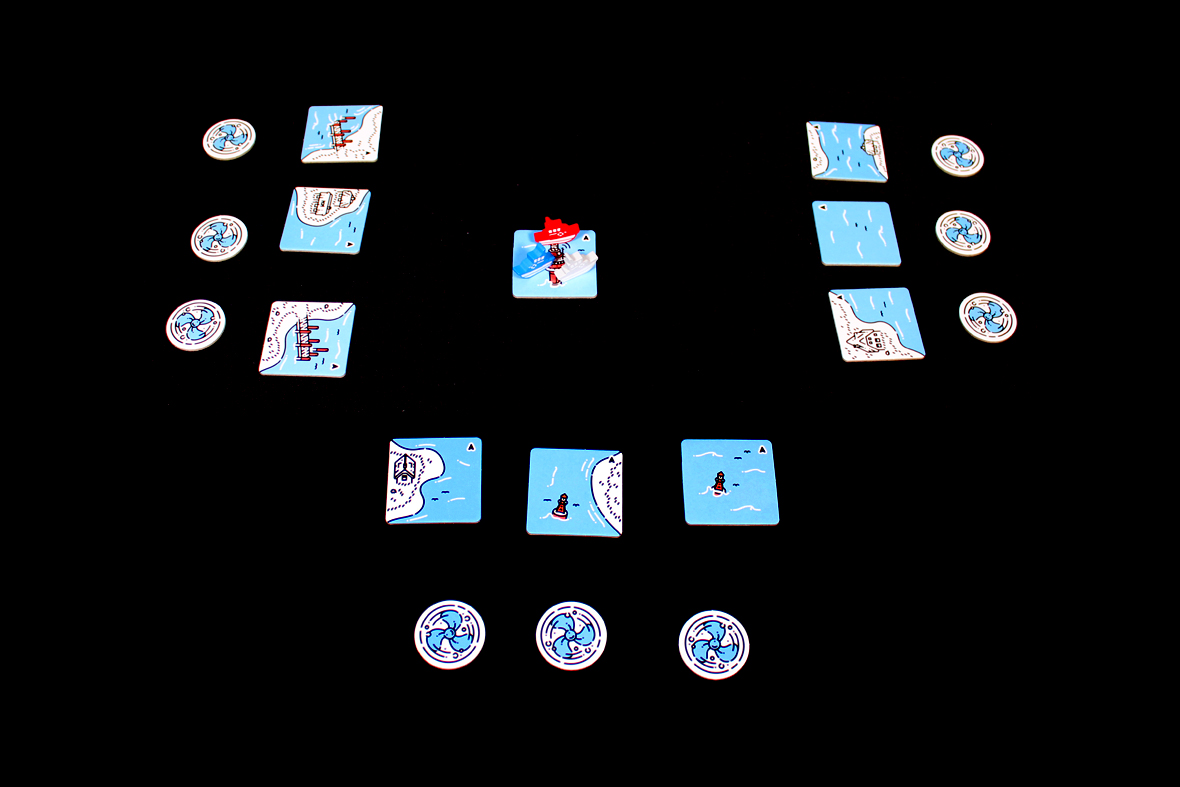
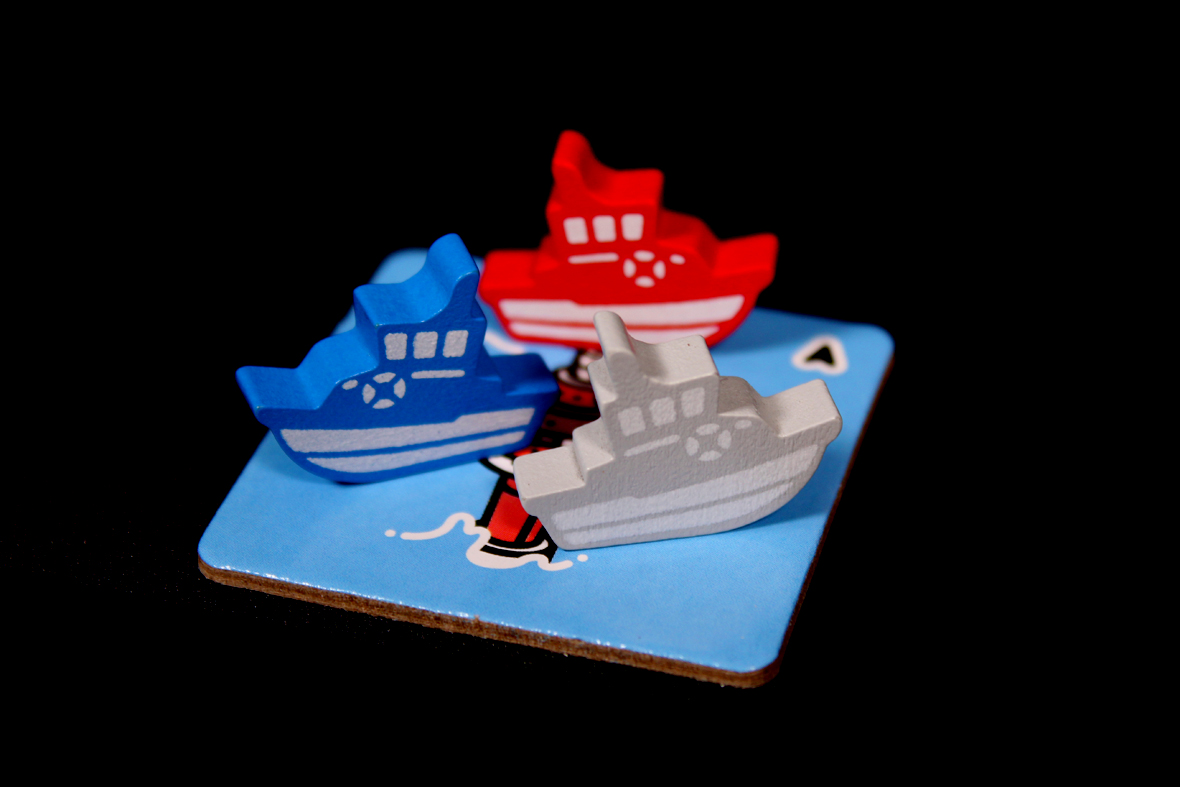
Setup isn’t too challenging. First up, you’ll want to place the Beacon Patrol HQ tile in the center of the table.
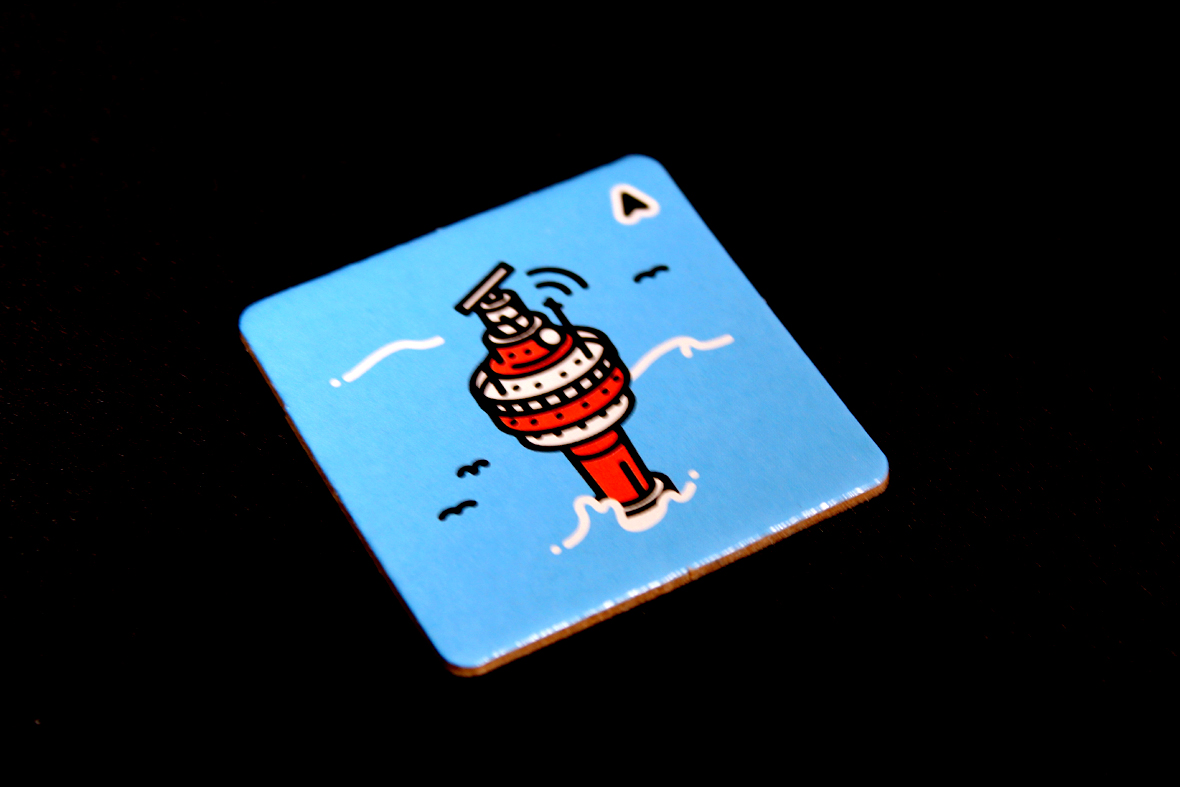
You can place your ships on it as well!
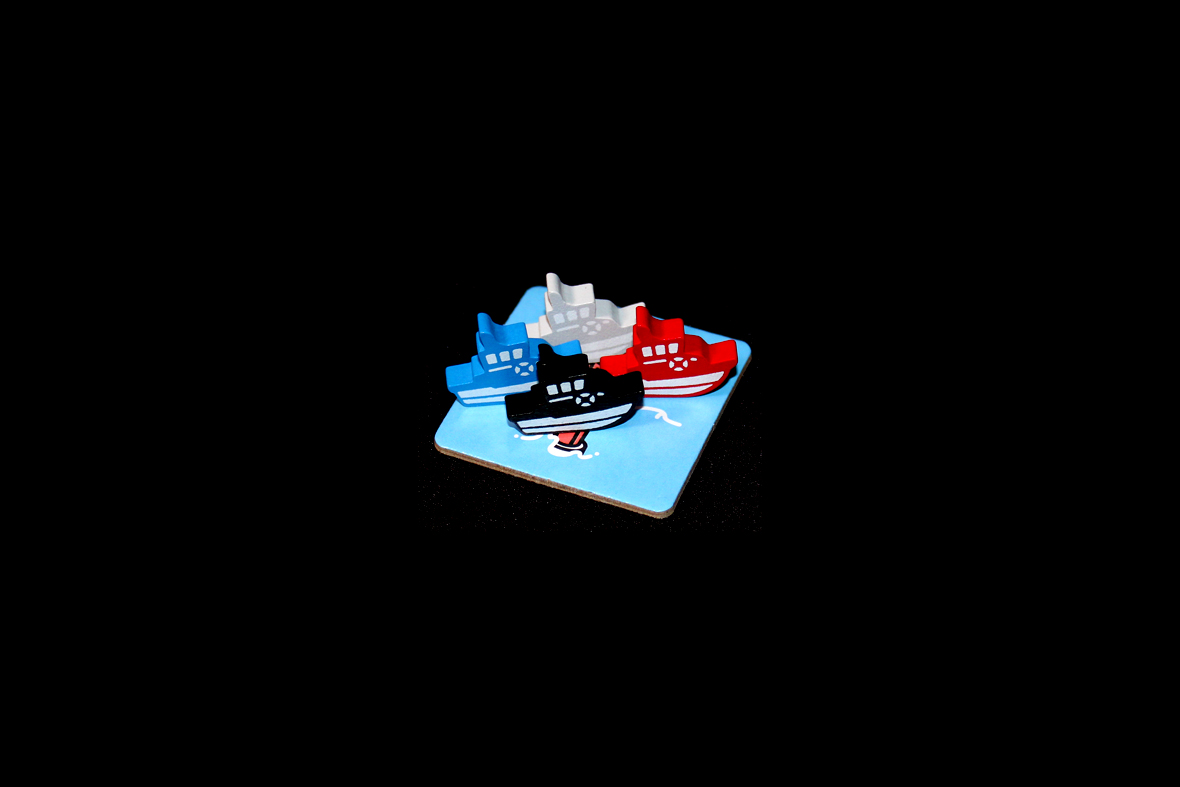
Then, shuffle the tiles. You may want to remove the Piers and Windmills; they’re part of two mini-expansions. I’ll still talk about them anyways later. Give each player a hand of tiles and some movement tokens; display them face-up.


- 1 player: 3 tiles, 4 movement tokens
- 2 players: 3 tiles, 3 movement tokens
- 3 players: 3 tiles, 3 movement tokens
- 4 players: 2 tiles, 2 movement tokens

Choose a first player and you should be ready to start!
Gameplay
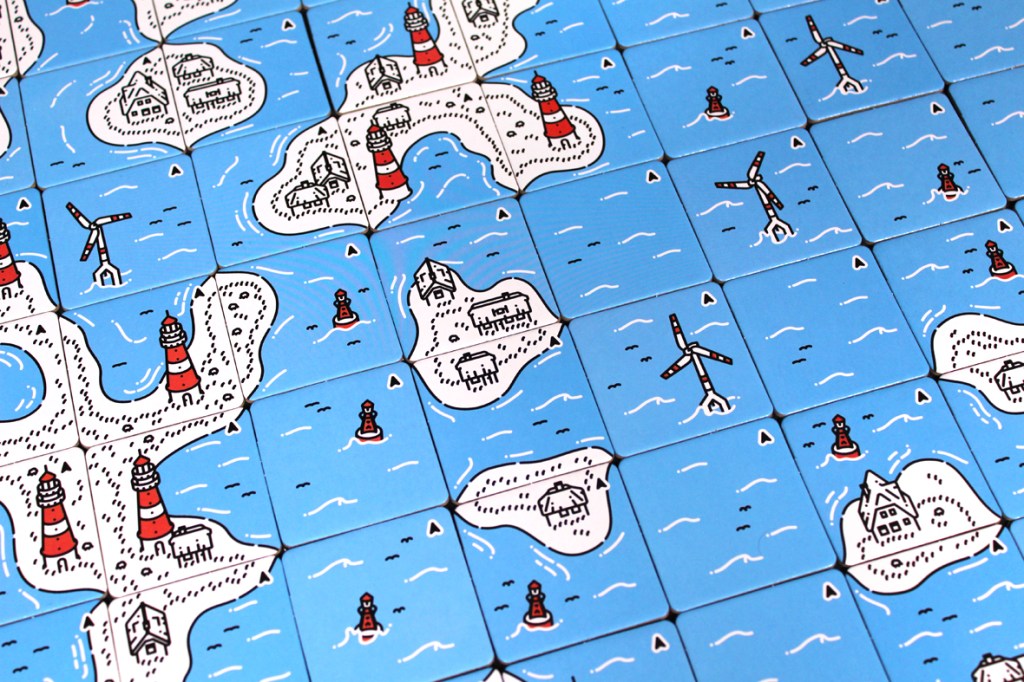
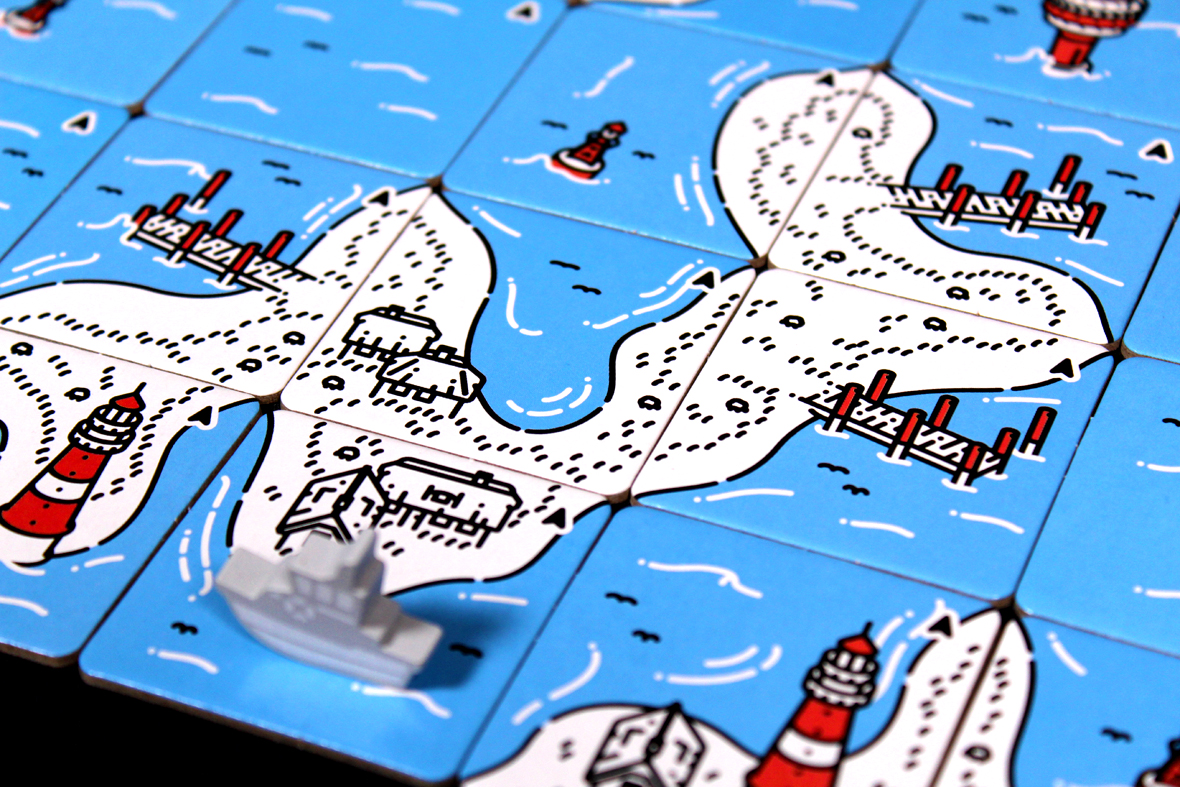
Beacon Patrol is all about exploration! Your goal is to travel far and wide placing tiles and building out a landscape. Your goal is to have tiles be “fully explored”! A fully explored tile has tiles attached to each of its four edges. Fully explored tiles are worth points, and your goal is to cooperatively score as many points as possible.
Each turn, you can do one of a handful of things. Let’s go through each!
Place a Tile
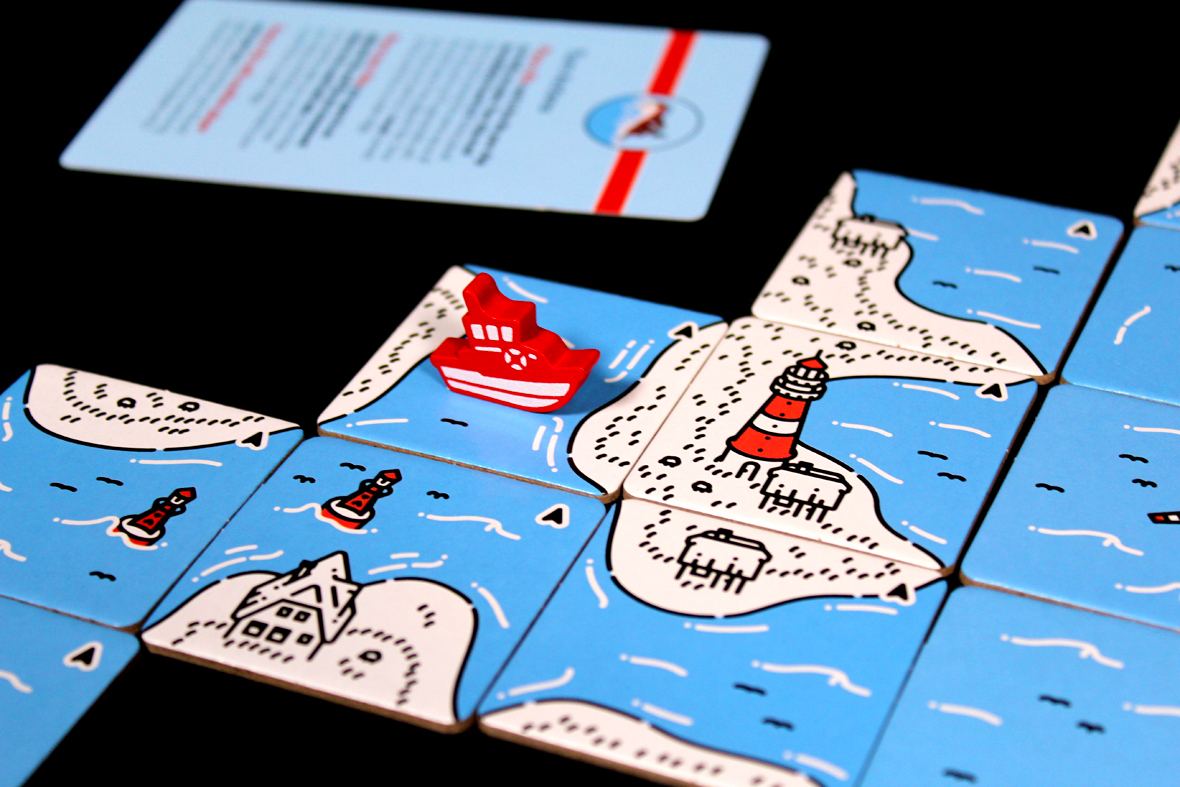
To place a tile, add it to the play area in any empty space adjacent to your ship token. Note that all tiles must be in the correct orientation (the arrow in the top-right should point the same way on every tile) and you should place the tile such that water touches water and land touches land. When you do, you must immediately move your ship onto that tile. However, ships, unlike cars, must move through water, so you cannot place a tile if it’s a land-to-land connection; you must make a water-to-water connection so that your ship can move there.
You may place up to three tiles per turn with fewer than four players; with four players, you may only place up to two tiles per turn.
Move Your Ship
Flip one of your movement tokens to the red side to move your ship to an adjacent tile (again, via a water-to-water connection). You may only move as many times in a turn as you have blue Movement Tokens to flip to the red side. Note that this is optional; you don’t have to move any spaces. You may, instead of flipping a Movement Token, discard any tile you don’t want to play or cannot play from the game to move a space.
Swap Tiles
You may swap one tile with any of your co-players for free, each turn. Again, optional.
End of Turn
At the end of your turn, discard any unplayed tiles and flip all red Movement Tokens back to blue. If you’re playing solo, you may keep one unplayed tile instead of discarding all of them.
Refill your hand back to three tiles.
End of Game
Once all the tiles have been played or discarded, the game ends. Then, tally scores! Each tile scores 1 point if it’s connected to tiles on all four sides. Buoys score 2 points instead, and lighthouses score 3 points. The Beacon Patrol HQ is considered a lighthouse for scoring. Check your scores against the tiers in the rulebook to see how you did!
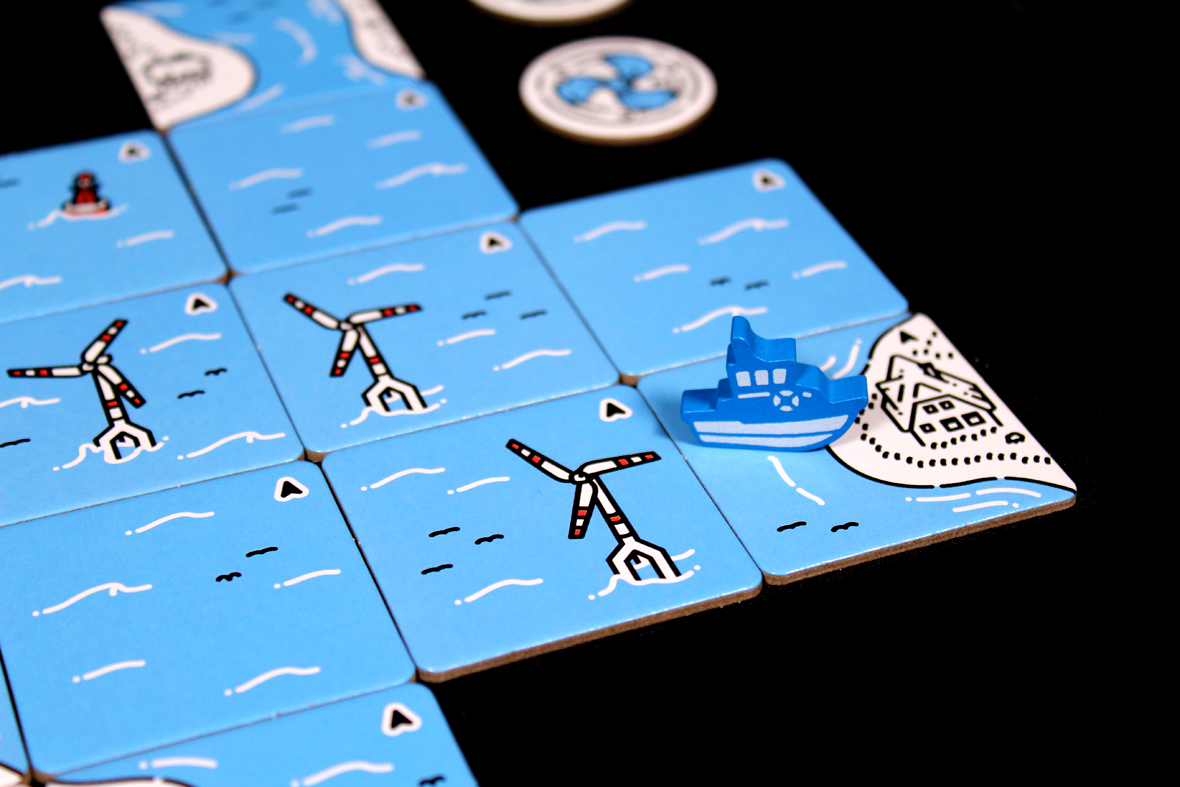
For an extra challenge, try the two mini-expansions in the rulebook; they reward you for open ocean tiles and buildings on islands!
Player Count Differences
In terms of the core gameplay loop, not much changes as you increase the player count. There are tiles to lay and movement tokens to use, and that’s kind of it. With more players, you can use fewer tiles per turn, granted, but you also get an enormous benefit: you can see so many more tiles. At higher player counts, the larger hands make for more tiles that you can potentially trade or swap, even if it comes at the cost of more player turns between yours. If you’re particularly annoyed about slow players, well, this game is meant to be a little methodical, so, that may be something worth knowing in advance. Plus, you can rely on more players for advice, in an ideal world. There’s some steps taken to mitigate this improvement, as mentioned: fewer tiles that you can place on a turn, for one, and the board getting bigger between your turns might leave you stranded without a place to put new tiles. That’s less ideal. But hopefully that’s not a consistent issue for you. Either way, I wouldn’t say this leads me to having a strong preference for Beacon Patrol; I just see that and think that’s neat.
Strategy
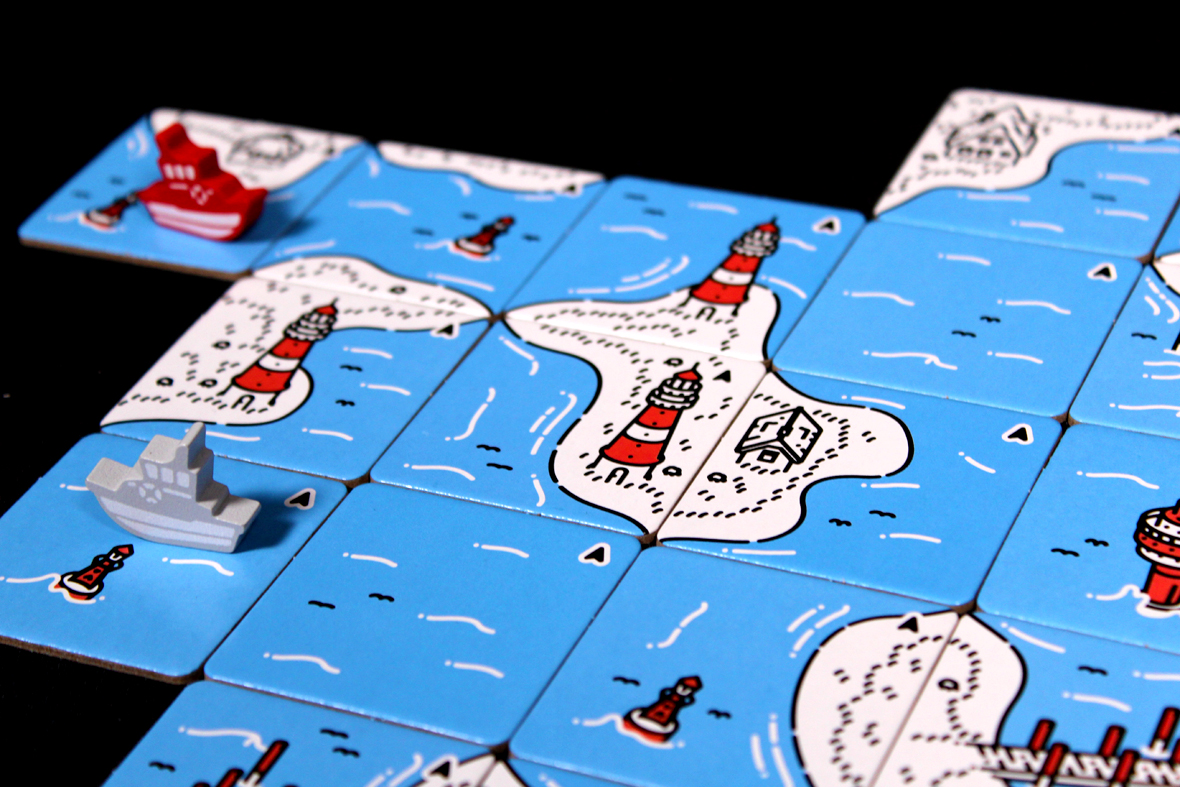
- Don’t block yourself in. Try not to move yourself onto a tile that’s hard to get out of easily, even towards the end of your turn. It can waste a bunch of movement and you might not be able to play all of your tiles if you keep doing that.
- Keep in mind how your movement will set up subsequent turns. You may, for instance, want to move back towards the center of a set of tiles you placed, rather than staying on the edge. That might allow you more flexibility next turn with what you place and where. Planning ahead is good!
- Ideally, you’re not discarding tons of tiles. The more tiles you can successfully play, the more points you should theoretically score. If you discard too many for movement, you’re going to start running into spots where you can’t place anything useful, and that will not only make it hard to navigate around them but impossible to score those tiles.
- Open ocean tiles are great for expanding your reach. They’re just broad and very navigable by all players which is pretty good. Plus, they allow you to branch off a few distinct islands, so you can use them to keep your islands small. Naturally, they’re finite, though, so be careful.
- Try to pass “bad” tiles to other players, especially if they can place their other tiles without issue. You don’t want to have three terrible tiles; it’s a bad use of your turn. Passing one to another player, however, means that you can keep that bad tile floating for a while. Maybe it’s something that can be used or is useful! I tend to pass to the player to my right, as a result; they have the longest time until their next turn, so there’s plenty of opportunities for another player to trade for it (unless another player has a tile I want more).
- Going off in your own directions can be good, but it does make it challenging to get back to other players if needed. Sometimes it can be helpful having multiple players defining the space around an island together from each side, especially as you start placing more and more land on the tiles. It’s not an explicit requirement, but if y’all go your own ways, you’re going to have trouble getting the band back together over the course of the game. It might still be fine!
- The size of the islands really doesn’t matter until you start playing with the Docks. I generally warn away from giant islands just because they take a lot of effort to circumnavigate and close up, but, there’s also just no real benefit to huge islands. Once you bring in the Docks mini-expansion, which gives you points per building, then, sure, big island, but until then, no benefit.
Pros, Mehs, and Cons
Pros
- The art style here is super pleasant. It has an airy, children’s book-like quality to the art; I really like it. I think the game’s going for visually soothing, and highlighting just the water, the buoys, and the lighthouses makes it very easy for players (me) to tell what’s important. I’m particularly impressed that the designer did the art, too!
- More generally it’s a very blue game, which I like. Blue’s a great color! I mentioned this a lot back when I talked more about Red Raven’s stuff, especially Sleeping Gods, but I really enjoy cooler colors, so I’m particularly partial to blues and greens.
- The ability to trade tiles really makes the game for me. It adds a nice layer of interactivity to the cooperation. The critical thing is that it avoids punishing players for having a bad draw (to some degree) by letting them offload their worst tile onto another player. You can pass a bad tile around enough that it eventually becomes just the tile you need, and that also lets you plan for some contingencies. It does mean that there’s a bit more utility with more players, however, since more players have more possible tiles to pull from.
- Plays pretty quickly. You’re just moving a few times and playing a few tiles; it moves pretty fast, especially if you get a good sense of what to do collaboratively. There’s not a whole lot of extra to it.
- Not too difficult to teach, either. It helps that all the tiles can only be placed one way, honestly.
- The mini-expansions are nice; they set a neat tone for other possible expansions. I’d love to see what else could be done in this game’s space; it’s very neat.
Mehs
- Horrifyingly, we seem to have returned to the Weird-Shaped Box Era of board gaming. The box is so … tall and then so narrow, as well. I’m still not entirely sure where I’m going to store it. Any recommendations are much appreciated.
Cons
- I almost wish there were a way to visually mark a tile complete once you complete it, rather than the somewhat-inefficient tile-by-tile scan that has to happen later. It’s a minor gripe, granted, but the final row-by-row scoring can feel a little tedious and inefficient. Having a way to mark the increase in real-time and count the tile “marked” leaves less room for mistakes, I think.
Overall: 8.5 / 10
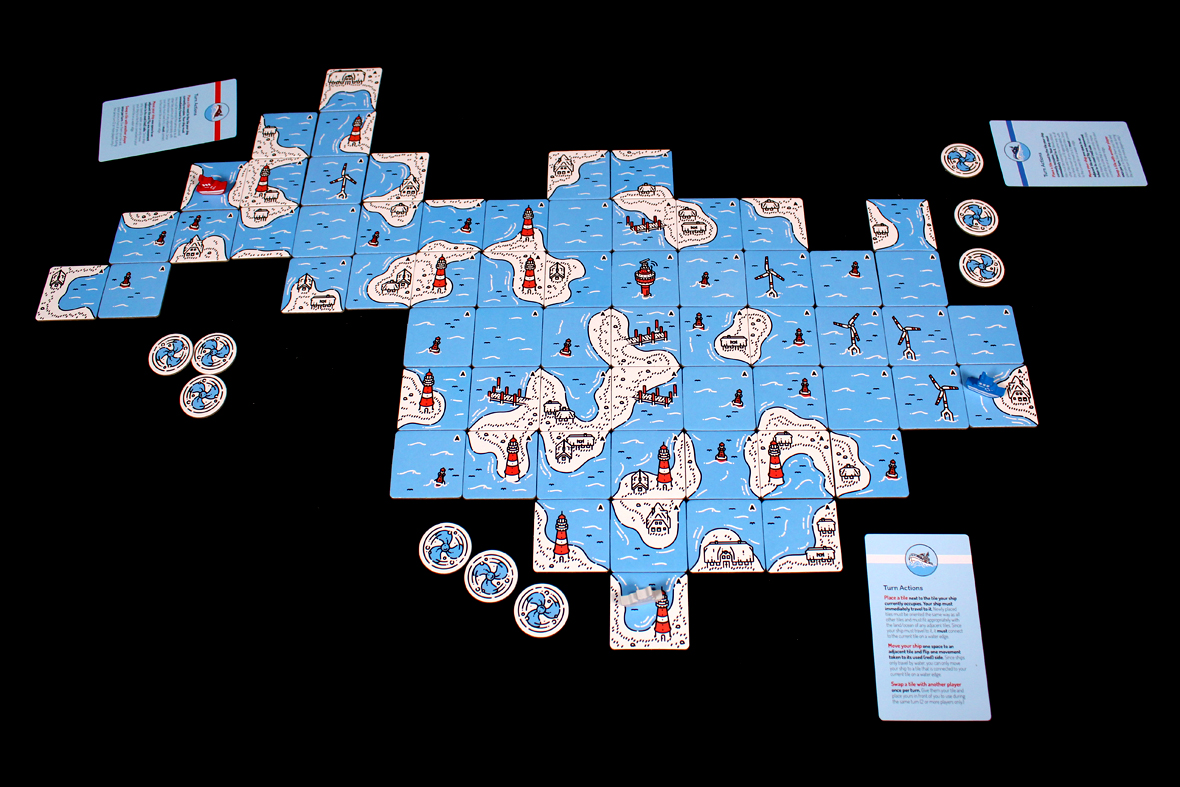
Overall, I think Beacon Patrol is a great relaxing little coop game! A lot of times on here I’ll talk about how I just really want to play a cooperative game that makes me think and work really hard and challenges me viscerally. Beacon Patrol isn’t that. It’s cozy. It doesn’t have huge problems that I can only solve with violence. It just has little boats and the islands that they uncover and some cute lighthouses. And you know what? That’s fine. I think Beacon Patrol sets out to offer a wholly pleasant experience for players and it accomplishes that quite handily. Sure, the box size is … strange, and checking tiles at the end of the game can be a bit tedious, but those end up being mild annoyances that pale in comparison to the extremely pleasant experience of just placing tiles, moving your boat around, and planning out islands. I also enjoy the little mini-expansions that come bundled with the core game; they add nice benefits to thinking about how you structure your open ocean areas and how you place your islands and the buildings on them. It’s pleasant! The game gives me real Dorfromantik cozy cooperative vibes, but the ability to trade a tile each turn with another player is a good amount of in-game interactivity that ensures that players stay engaged when it’s not their turn. They might want something you have and / or vice versa. It’s a smart and subtle move. Good design. This is all to say that I’m a big fan of Beacon Patrol, and if you’re looking for more cozy cooperative games, you enjoy tile placement, or you just want to set sail on a tiny boat, I’d highly recommend it!
If you enjoyed this review and would like to support What’s Eric Playing? in the future, please check out my Patreon. Thanks for reading!
 What's Eric Playing?