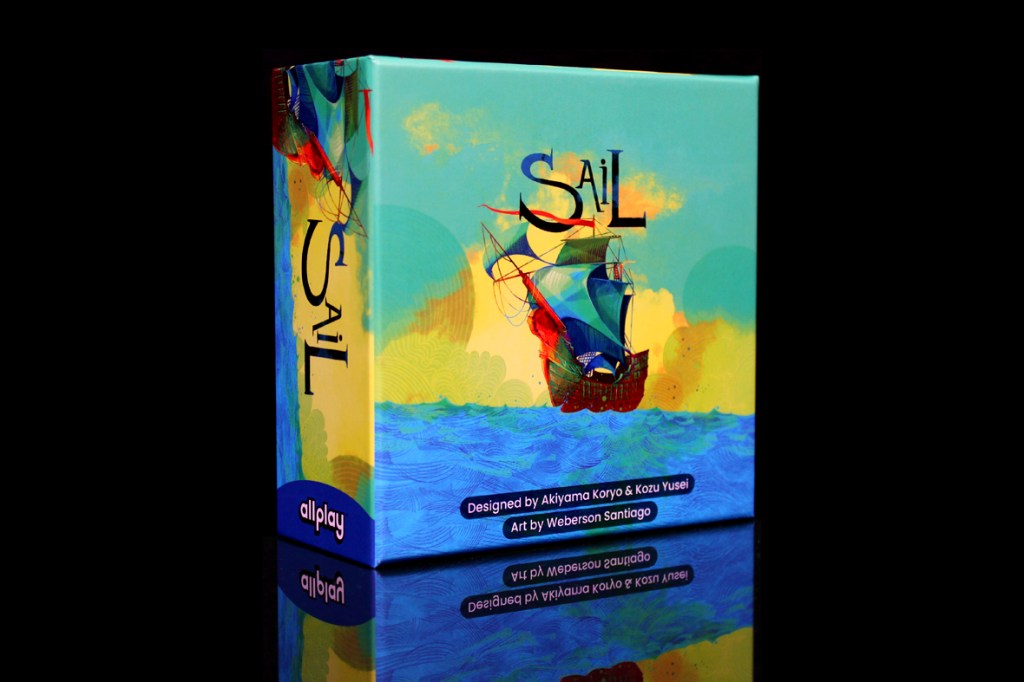
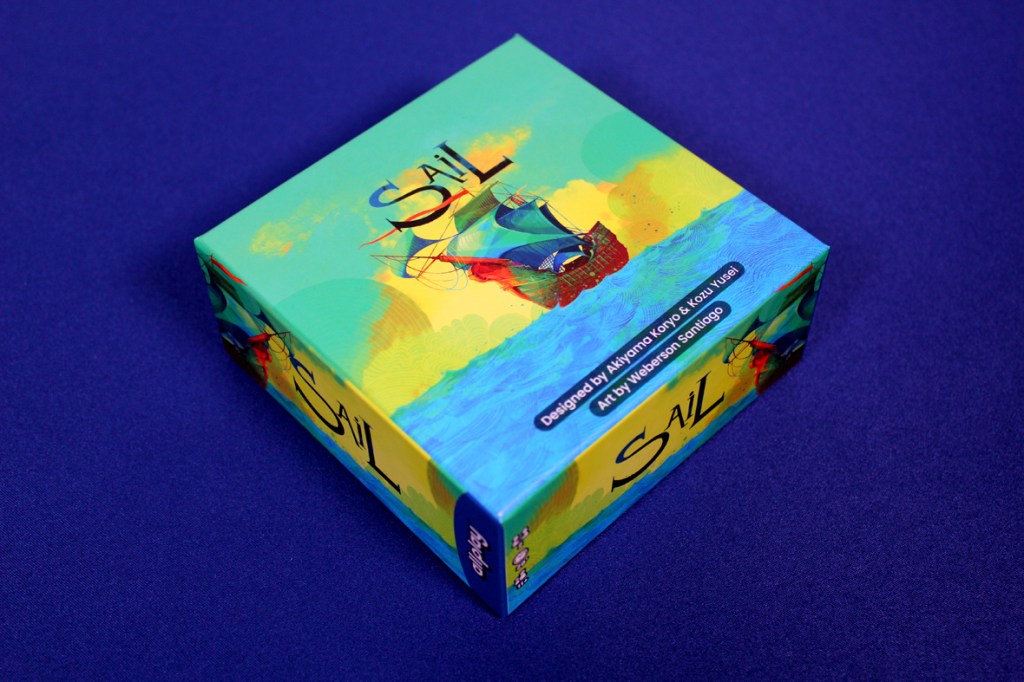
Base price: $24.
2 players.
Play time: ~20 minutes.
BGG Link
Buy on Amazon (via What’s Eric Playing?)
Logged plays: 2
Full disclosure: A review copy of Sail was provided by Allplay.
There’s a grand ambition I have every holiday season to actually get ahead on reviews, and, well, it looks like this is going to be another year where that doesn’t really happen pretty much at all. I’m trying to get ahead before BGG.CON, at least, so that’s something. I should have a few weeks of reviews ready by that point to maybe give me some runway before things get too festive over here. After PAX Unplugged, though, I should be kicking it locally at home for a nice, relaxing holiday season. Has that ever happened? No. Will it ever happen? No. Is it a nice thought? Yes. Either way, we’ve got some games to check out, so let’s get right to it. First up is one of Allplay’s new small box games, Sail!
In Sail, players are pirates aiming to sail the seas to their destination. Is there loot? Plunder? A five-or-so movie series? It could really be anything at this point. The one thing there’s guaranteed to be is a Kraken, unfortunately, and that giant menacing cephalopod stands between you and your destination. Some islands do also, but it’s not their fault. They’re just victims of circumstance. So get a partner, gather your cards, and steer your ship to victory or doom! Can you make it through these rough seas? Or will you end up on the fast track to the ocean floor?
Contents
Setup
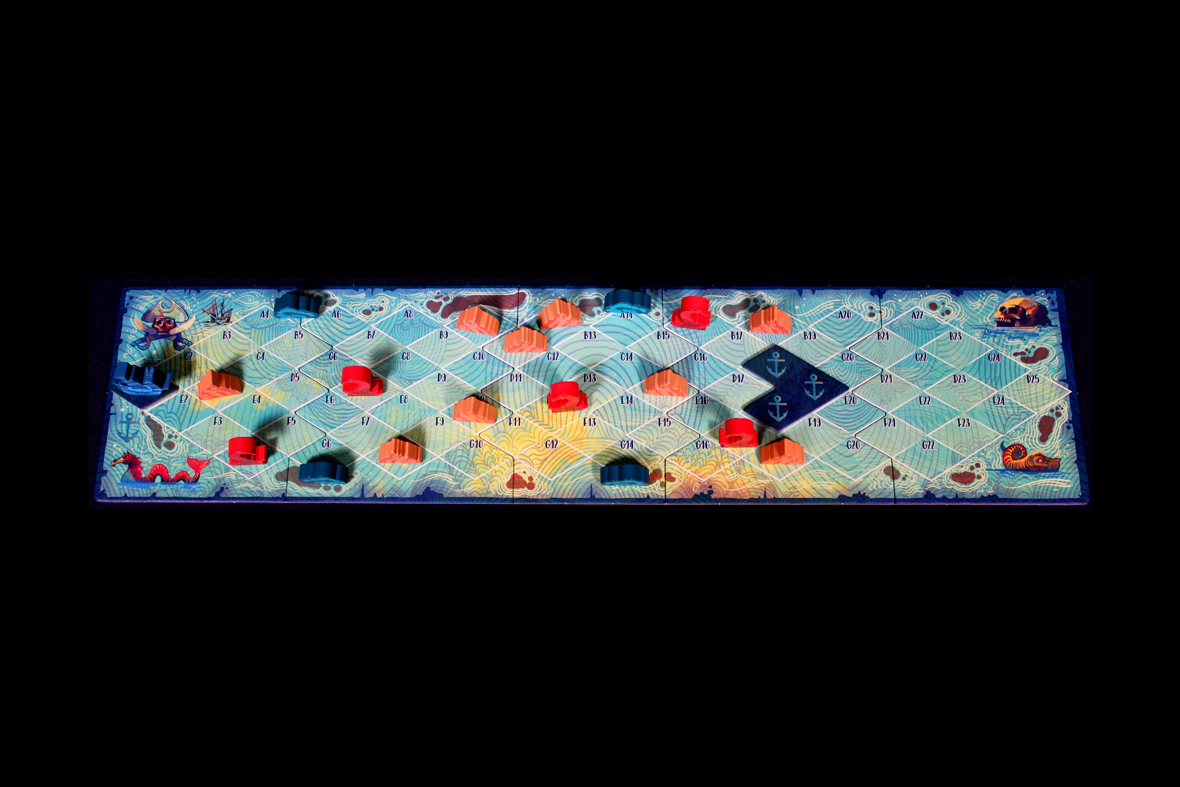
First, set the board between players. The scenario booklet will tell you where to place various components to set up for the game you want to play:
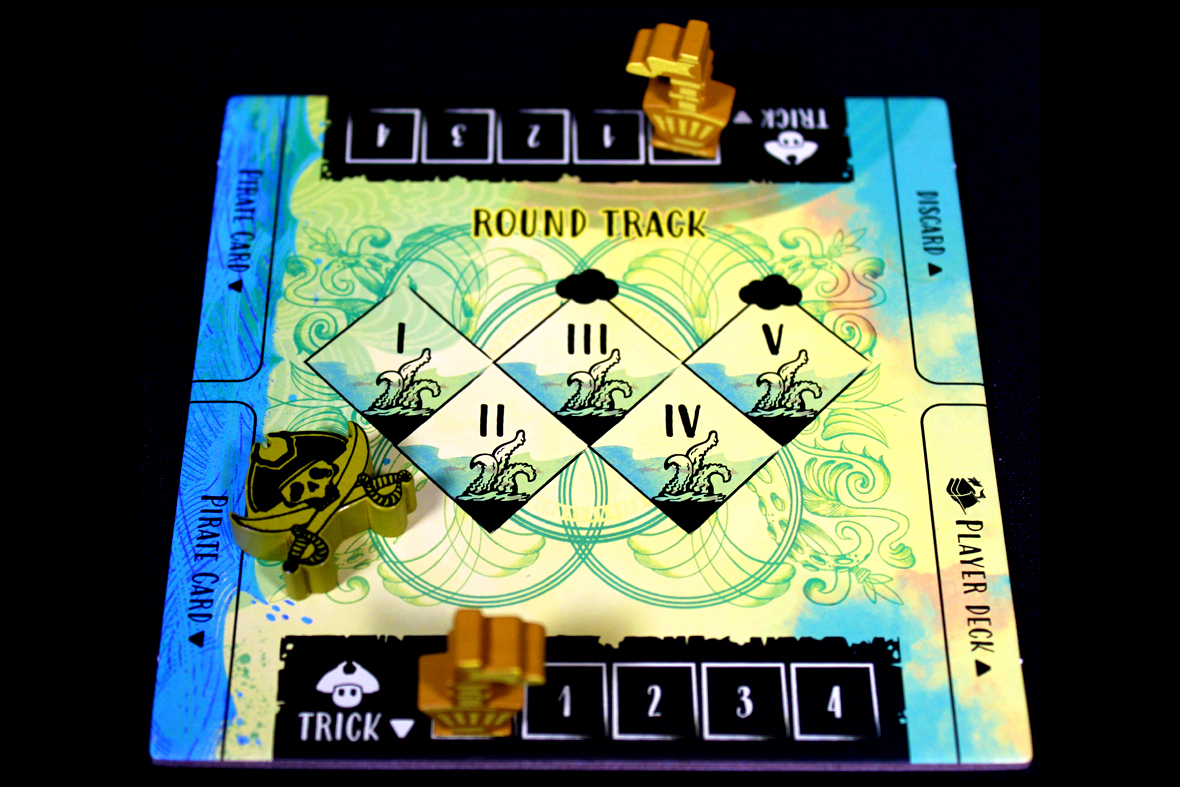
The Round Tracker goes on one side of the board:
The Kraken Tracker goes on the other:
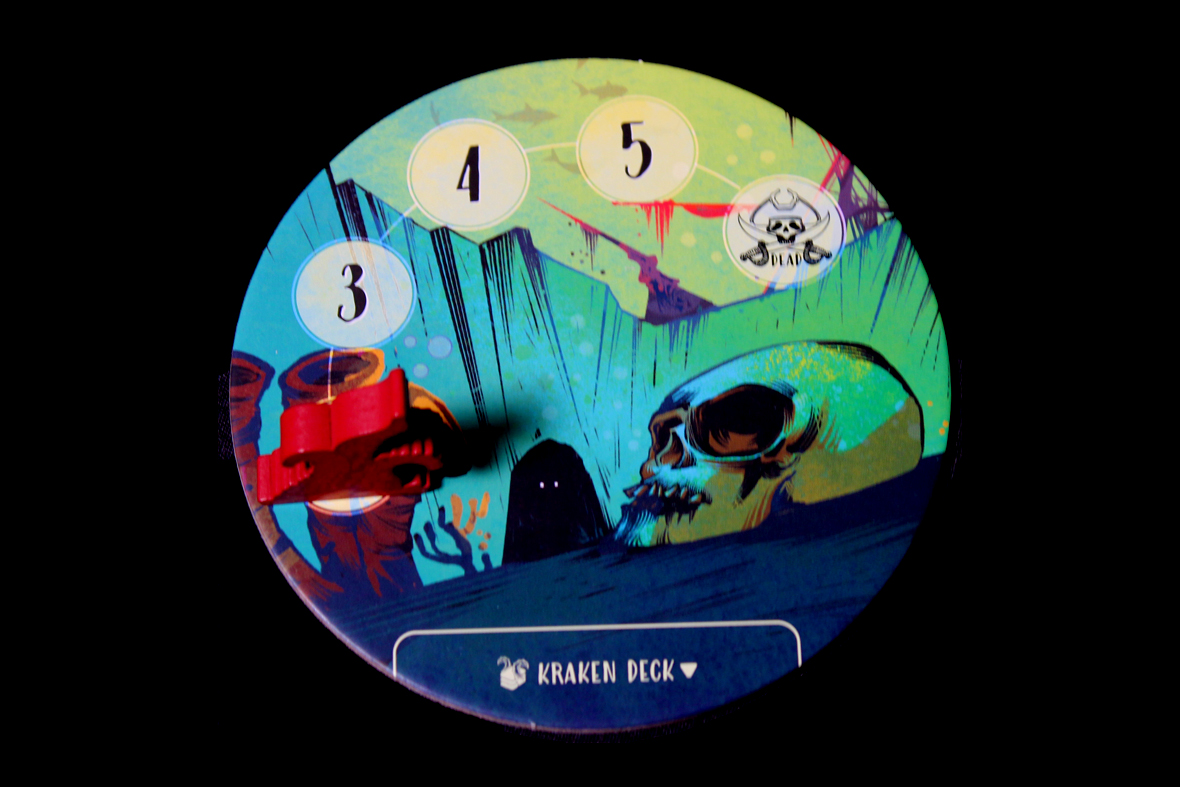
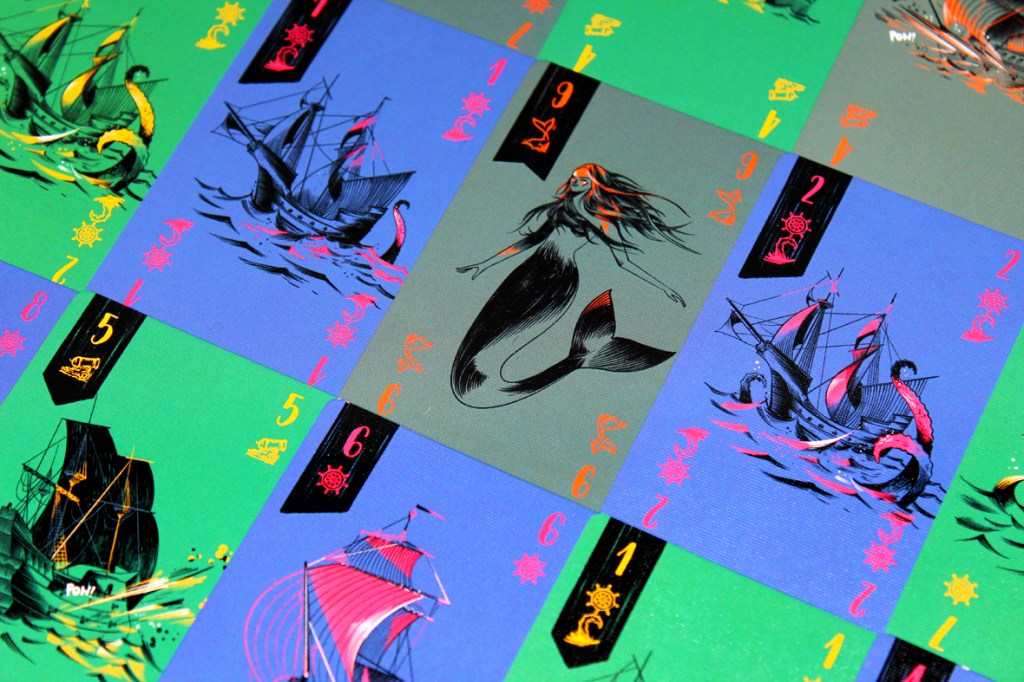
Both players set their Tricks Won counter to 0, and set the Round Tracker to 1. Place the Ship Token on the Start token. Next, set up the decks. Remove the 1s and 2s, shuffling them and placing them below the Kraken Deck spot with the Kraken Card on the bottom. Shuffle the other cards and deal each player nine:



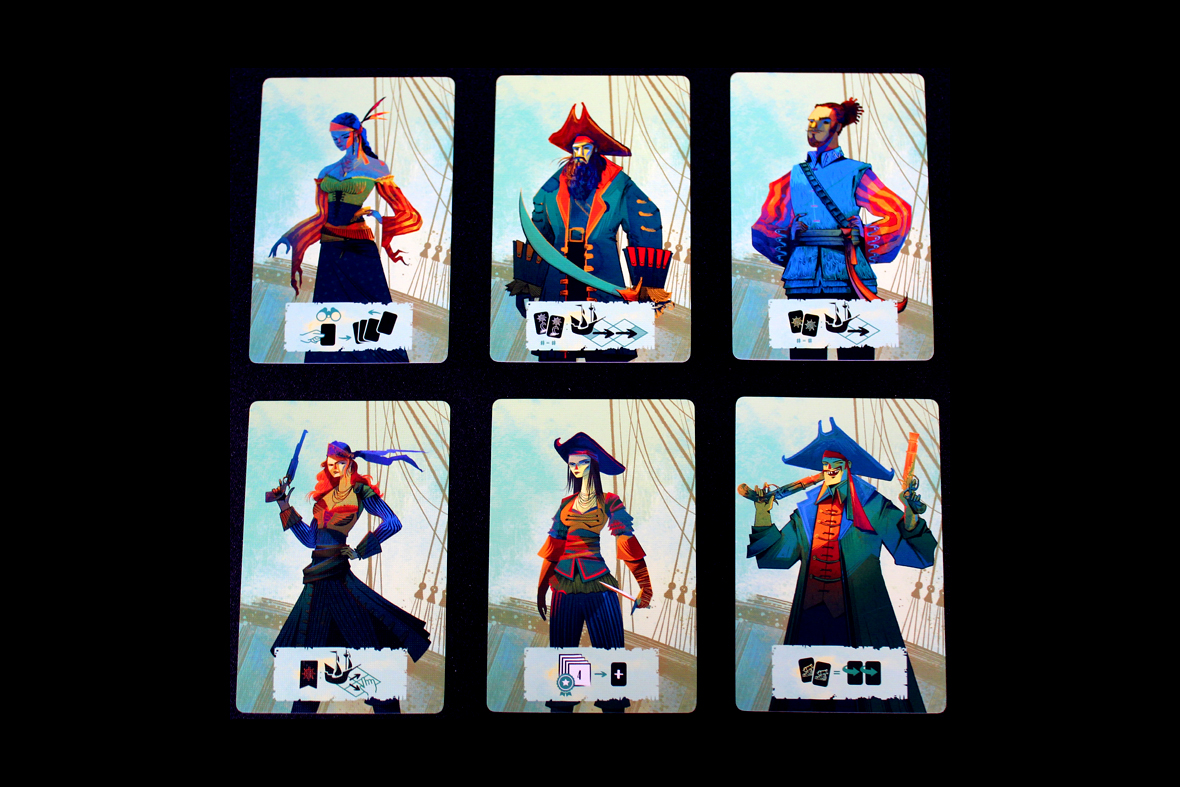
Each player should get a Pirate Card:
You should be ready to start!
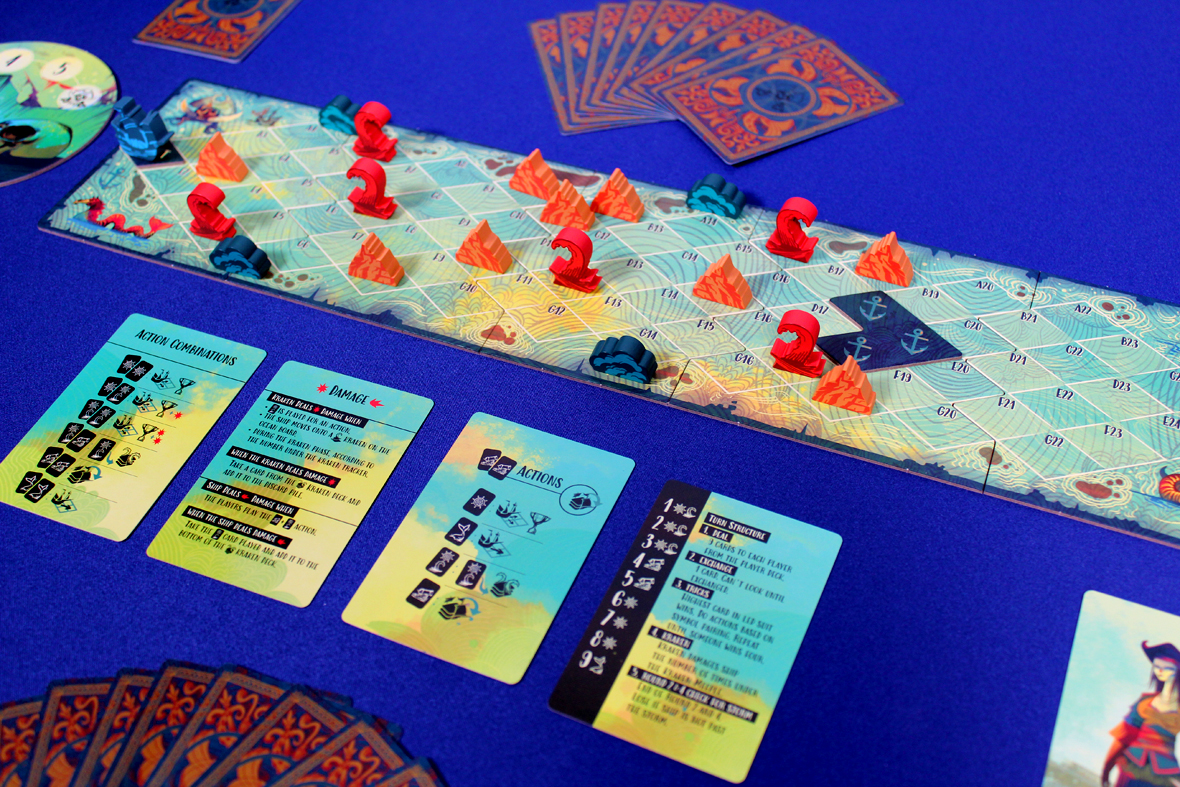
Gameplay
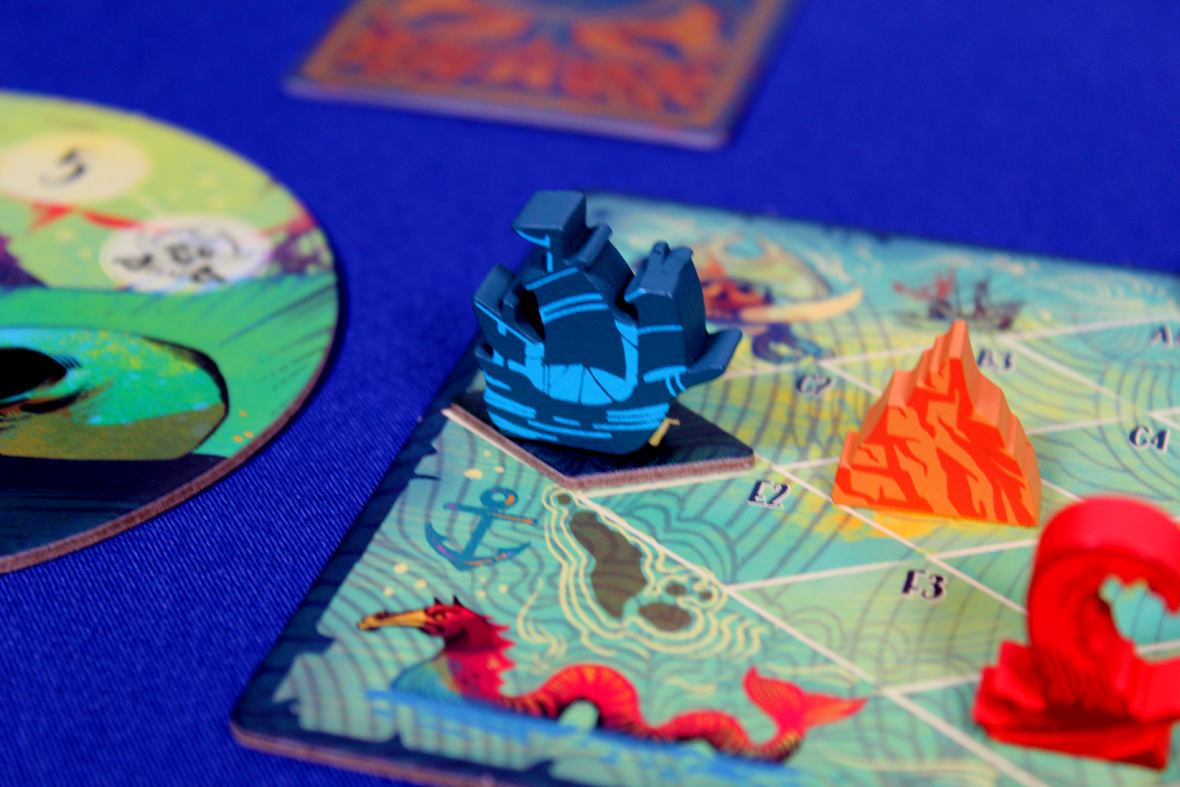
Your goal in Sail is to make it to the finish! Avoid storms, take tricks, and use your pirate abilities to navigate various challenges over up to five rounds.
To start a round, each player gives the other player a card from their hand at the same time. Each round is made up of a series of tricks. Here, however, one player leads and the other follows, and that’s it. The two cards played can trigger an action in certain combinations. For instance, two cannons has you draw the top card of the deck and execute its ability, or two whales lets you move the ship forward. If there’s no matching action, nothing happens, but if you match up a Kraken tentacle or two, you might get attacked! When that happens, you’ll add cards from the Kraken Deck to yours, gradually making that deck smaller. If it runs out entirely, you’ll lose!

If either player wins four tricks, the round ends! You’ll reset for a new round. If you make it to the end, you immediately win! Otherwise, if you haven’t made it through the storms quickly enough or if you don’t make it to the end before the final round, you lose!
Player Count Differences
None, this time! Two-player only.
Strategy
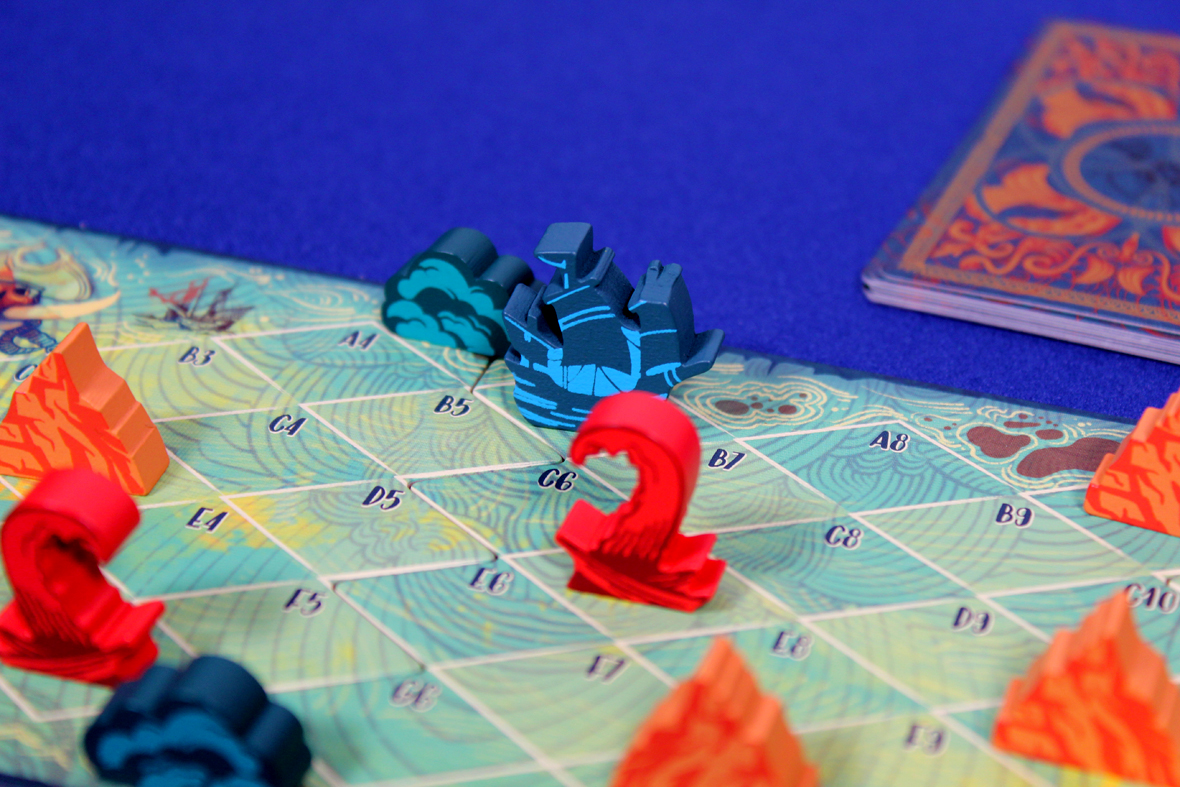
- There’s something to the idea of always leading with the card your opponent gave you unless you have a better idea, but be a bit careful with that. For instance, if one player has the player power where they get to look at two Cannon cards instead of one, I’ll likely pass them the 5 of a given color, since that’s a Cannon. They might, in the same vein, pass me the 4 if they already have a 5. That said, I may not have the 4 but am passing it so that I run out of a color and I can play something else. There may be other reasons! I’d usually play the card, but it depends on how experienced my partner is, I think.
- You should have a plan for how to lose at least one trick on purpose. Both players should do that so that they can shift control of the tricks to their partner if they start winning too many in a row.
- Keep track of what cards your partner likely has. Generally useful! This will let you do things like track whether or not playing a card will lose or win you the trick so that you don’t just go four and out in a given round. You really don’t want to do that, actually; that sucks.
- Using the Cannon can be helpful for card effects, but it also tells you which cards aren’t in either of your hands (allowing you to figure out what your partner has. Using Cannons to get through the entire leftover deck is great, since after that you know exactly what’s in your partner’s hand if you’re paying attention (hint: it’s everything that isn’t in your hand or discarded).
- It’s not the most glamorous, but you do need to bury some cards in the Kraken Deck every now and then. If you don’t, you risk the deck running out between rounds (or even during a round if you’re unlucky). When that happens, you lose. So keep an eye on it every now and then. Could you use a cannon better? Probably. Are you going to? Not this time.
- The only way to play two 9s (letting you move directly ahead one space) is to play one and have your partner throw off the other. Worth knowing. There’s only one whale tail symbol per suit, so to play two for the action, yes, you must play a 9 in a suit your partner doesn’t have so that they can play a 9 in a different suit. It works.
- If you’re going to win the game, go win the game; don’t worry about refilling the deck or taking damage. When you hit the end, you instantly win; as long as you don’t lose before that, you’re golden. So if the Kraken Deck was going to run out next turn and you win this turn? That’s still a win. If you were going to hit the end of Round 5? Still a win. Don’t bother to set yourself up defensively if you can just make it there and win.
Pros, Mehs, and Cons
Pros
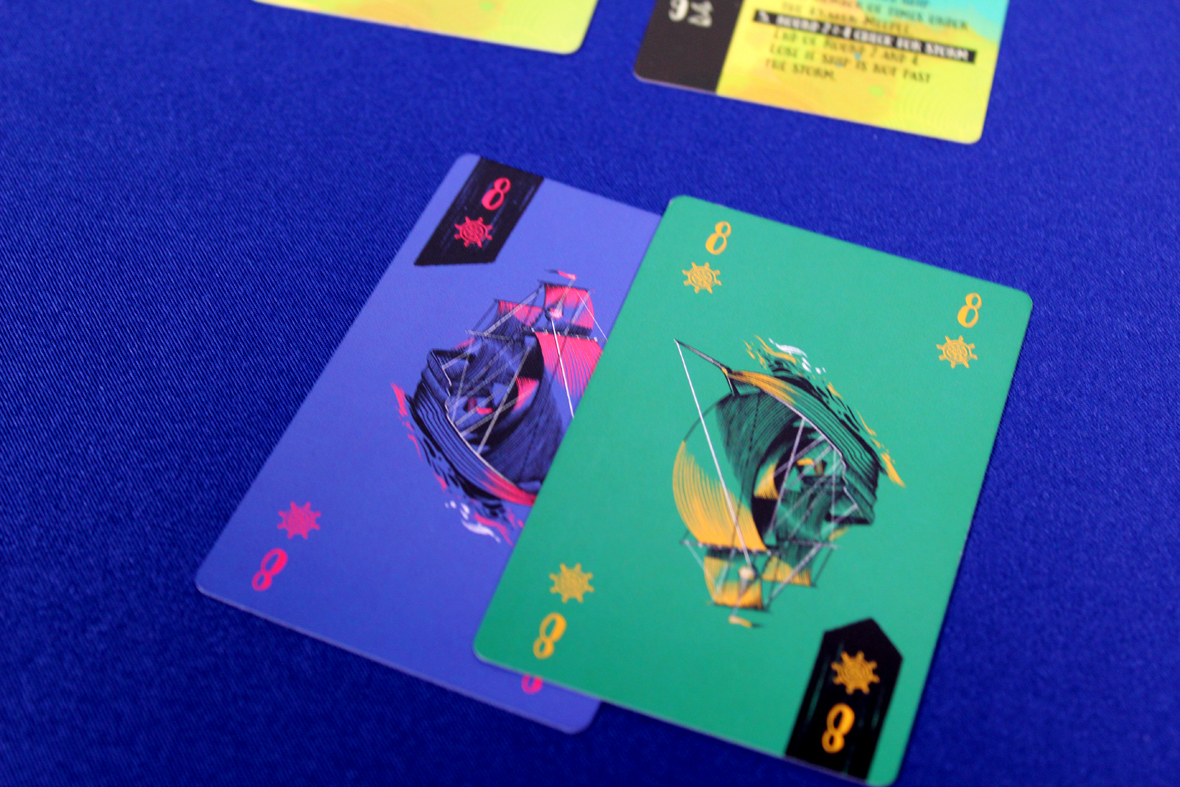
- As you might guess from Weberson Santiago, the game’s color and style and presentation are all extremely striking. This is just a good-looking game. Thoroughly impressed from cards to box to board. Santiago is in a high-caliber tier of board game artists and I’m always delighted to see his art pop up.
- I generally really like this box size; you can bring a lot of games in one bag with it. I’m a bit less fond of the tiny components, but for portability this box is pretty good! It’s not going to beat out Button Shy for me, but, you know, we do what we can.
- Cooperative trick-taking games are always fun for me, just because it’s a great way to learn some of the more complex strategies with someone, rather than just hitting them over the head with it. I think it improves player ability to discover interesting strategies just because there’s supportive players to help or collaborate. Players will still learn these strategies in competitive environments, they just have to learn them in spite of other players (or to spite other players) rather than with their help.
- Plays pretty quickly. It’s about 30 minutes, even with more thought-prone players. It’s a great lunchtime game for two.
- I like the trick-taking as more of a means to an end than anything else. It’s a way to allow players to decide what action they’re taking without granting them the autonomy to actually choose that action every time. It’s a neat system and it works well, here.
- I also appreciate the decent complexity of the game; you have to do a lot in order to win, especially in the later scenarios. The scenarios increase in difficulty at a good rate, too, but the later game looks pretty challenging based on what you start with.
- The scenarios themselves are also fantastic; you can essentially calibrate the game’s difficulty to your liking every time you play. I usually recommend everyone try the Training Mode unless you’re already pretty skilled trick-taking pros. It’s a nice way to learn the mechanics of the game.
Mehs
- I would like if the rulebook were a little more explicit about some things. Using “you” can be ambiguous sometimes between the singular and collective “you”, such as “when you win a trick” being printed on a card. We’re assuming it means the singular you, but we’re not entirely sure. Making that explicit would be awesome.
- A bit more tracking for which cards have been played would be nice. This is one thing I like about Board Game Arena; for The Crew, that can happen automatically. An instant visual lets you know which cards are still in play. Not much to be done here, but definitely a point in favor of a digital adaptation.
Cons
- A small-box game with a ton of tiny pieces and tokens mostly just makes me wish the game was larger so that the pieces could also be larger. There’s just a ton of little tiny pieces in here. It helps that I got the deluxe upgrades (thanks, Allplay) so that they’re at least wood and 3D and such, but the tiny cardboard pieces do make for a kind-of messy experience regardless of how you slice it. There’s a parallel universe out there with a full-size box and bigger components that probably goes over well with players, even though it’s a relatively short two-player game.
Overall: 8.5 / 10
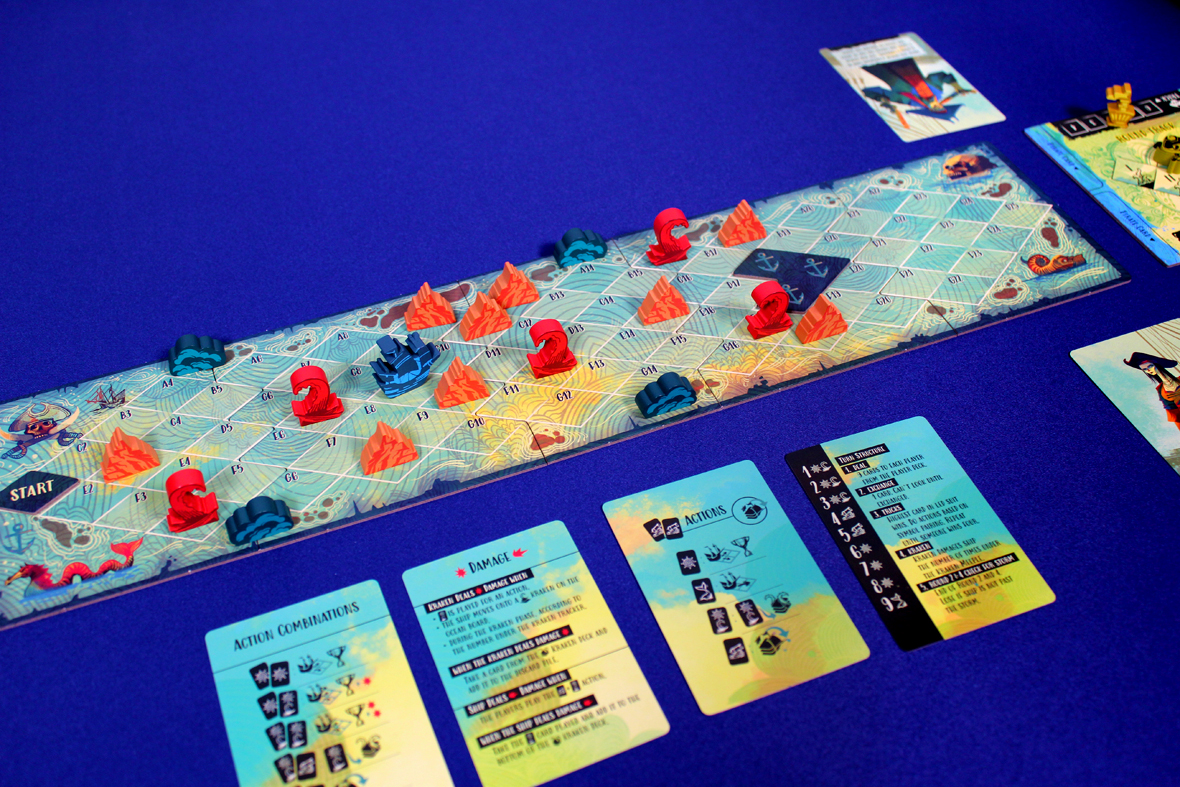
Overall, I think Sail is a great two-player game! For me, trick-taking, especially at two players, can always be a bit of a dicey proposition. The Fox in the Forest did it extremely well, and The Fox in the Forest Duet was extremely not my speed. The Crew adds a dummy player, which also works, but there usually has to be something. Sail does a great job using the trick-taking as essentially an action selection vote. Both players can (potentially) influence which action is taken, but if you play poorly, you may force your partner to play a card that doesn’t help anyone. It requires thoughtful play and then some actual management and planning around how you want to move the ship. Crashing into islands doesn’t help anyone. Beyond that, though, there’s plenty to do and some good difficulty scaling; you can keep playing the game on increasingly-difficult scenarios to find a sweet spot for you and your gaming partner. Plus, it’s still quick enough to be a great date night game for gamers or a lunchtime game for friends without mentally exhuasting me, which is the dream. While the game is fun, granted, the art style of the game truly elevates it. Weberson Santiago is doing some of his best work on this game and it absolutely shines visually. Just a great game to look at. I love the color work and the cards and the suit art and the pirates; just an all-around triumph. I do wish the components were a bit larger, but that’s the sacrifice you make to hit that box size, I suppose. Either way, if you’re looking for a great two-player game, you love trick-taking, or you just want to live the pirate’s life, I’d recommend Sail! I quite liked it.
If you enjoyed this review and would like to support What’s Eric Playing? in the future, please check out my Patreon. Thanks for reading!
 What's Eric Playing?