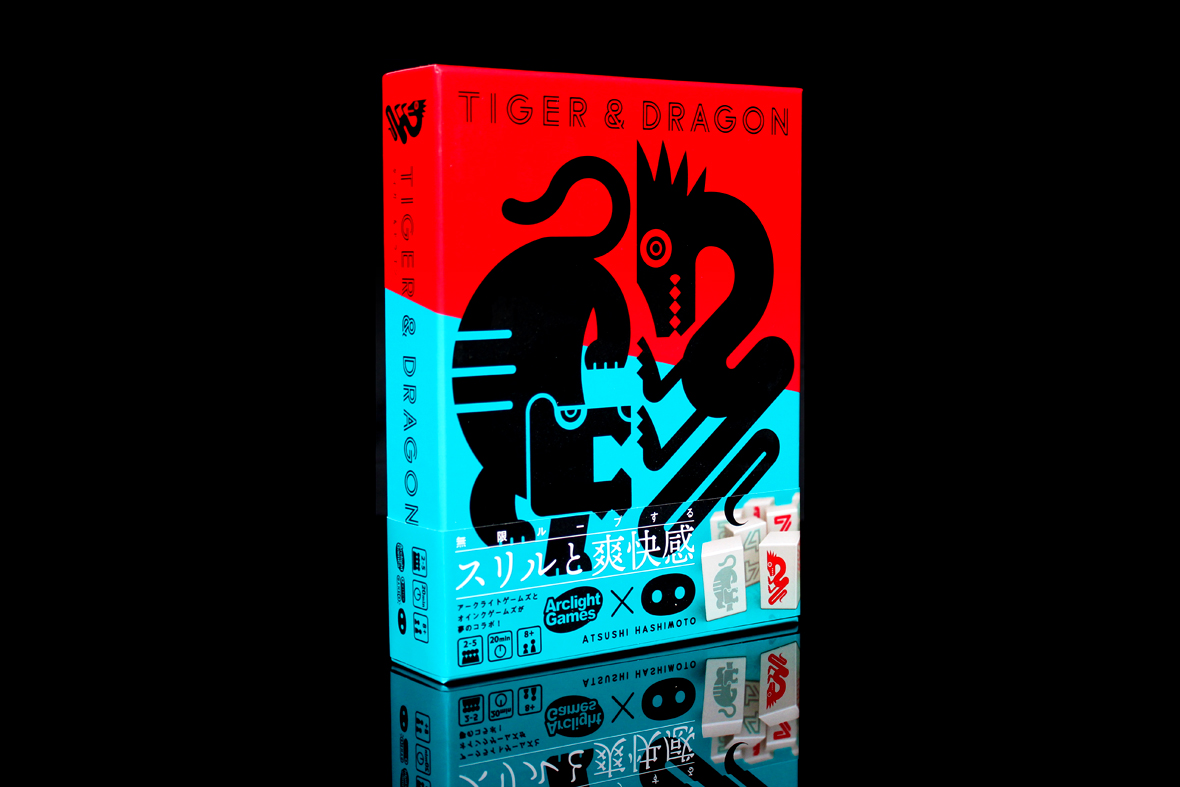
Base price: $39.
2 – 5 players.
Play time: ~20 minutes.
BGG Link
Buy directly!
Logged plays: 2
In case you’re wondering why the reviews are late this week, I started writing this at 11:37PM and I’m unfortunately a divine soul trapped in a flesh body. I didn’t do too badly, though! I should have written last week but I’m finding with alarming frequency that I get almost no writing done when I travel. There’s a lesson here, but I refuse to learn it, so we beat on, boats against the current. I had a busy weekend and I was at PAX Unplugged! But I promise (ish) that I’m back on the beat, now. So why don’t we check out Tiger & Dragon, from Oink Games?
In Tiger & Dragon, players are fighting on a huge battleground! As you attack and defend, harness the power of the Tiger or the Dragon to defeat your opponents and potentially claim victory! Each Battleground brings its own challenges, so you’ll need strength and wits to bring home a victory. Do you have what it takes?
Contents
Setup
Not too much, actually, despite this being the Largest Oink Game. First, each player gets a player board:
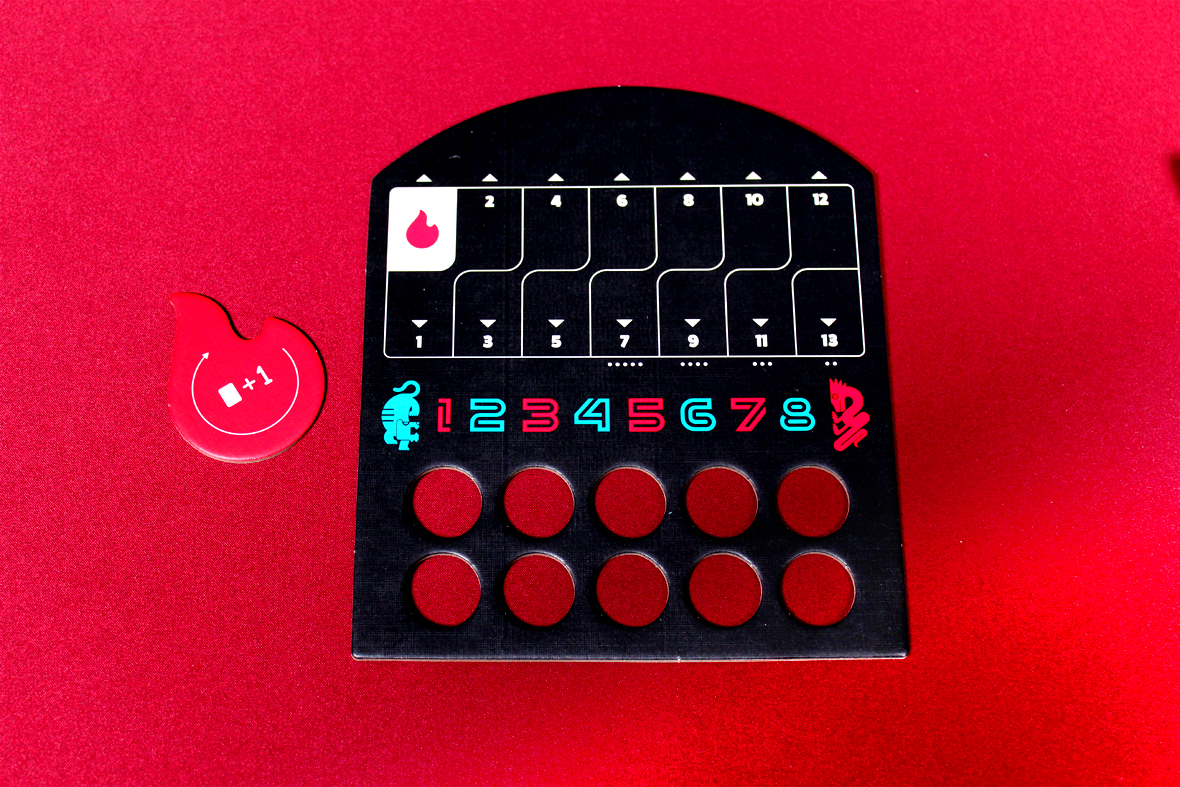
Then, you should draw a Battlefield Card! Technically you’re only supposed to do this once per game; at two, we kind of have enjoyed changing it up each round. Don’t tell anyone!
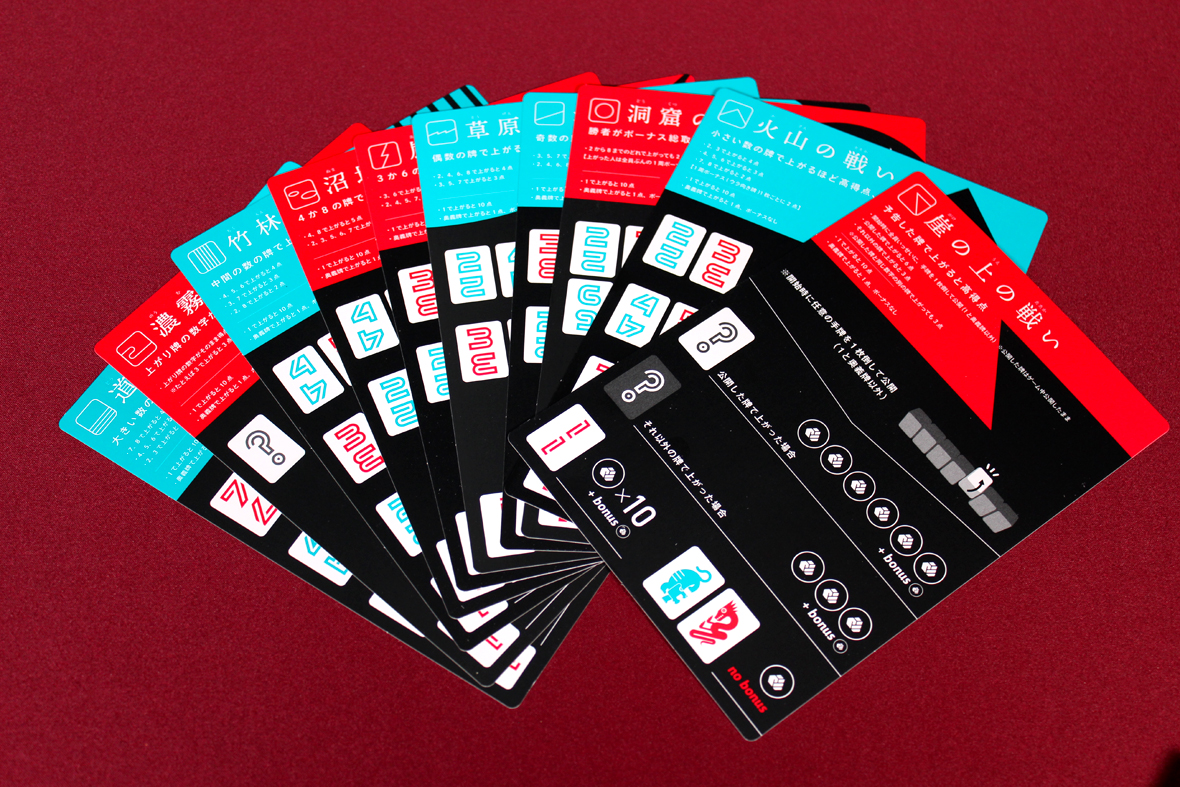
Place the Score Chips nearby.

Then, mix up the tiles:
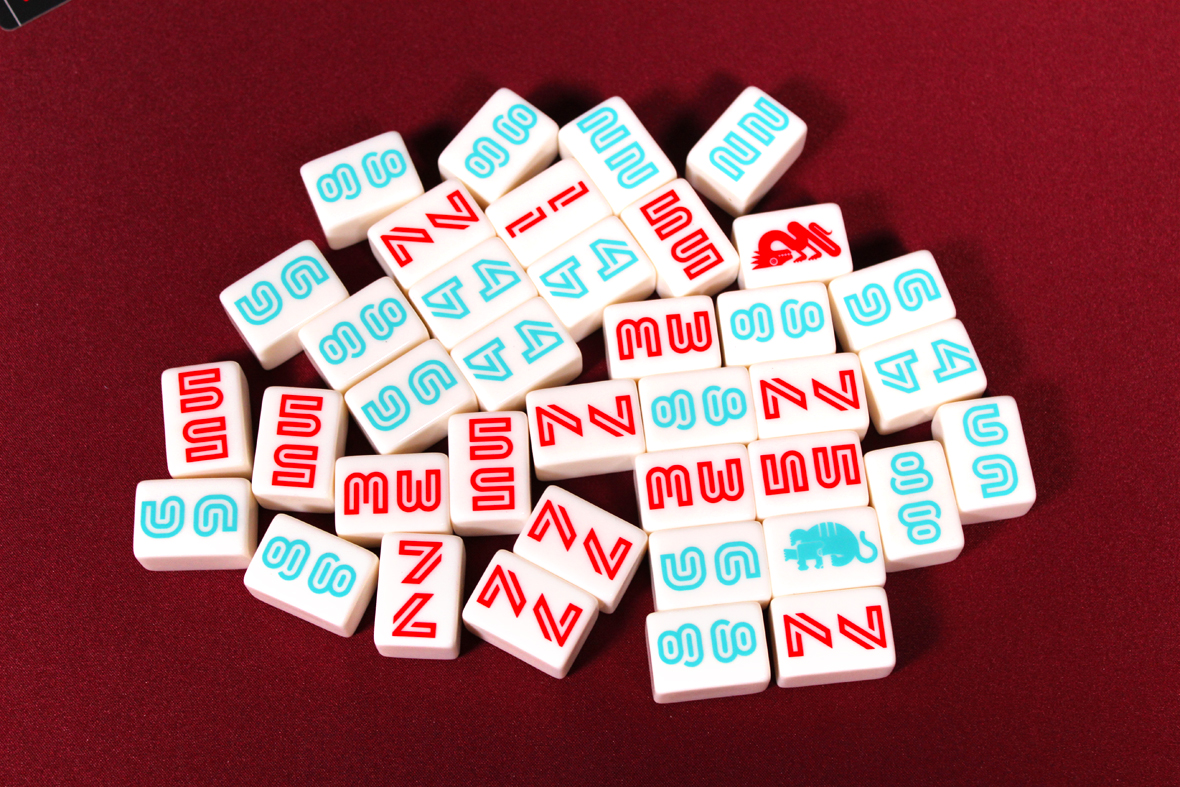
Each player takes 13 / 11 / 9 / 7 tiles for a 2 / 3 / 4 / 5 player game. Set the remaining ones aside. The starting player takes one extra tile. You should be good to go!
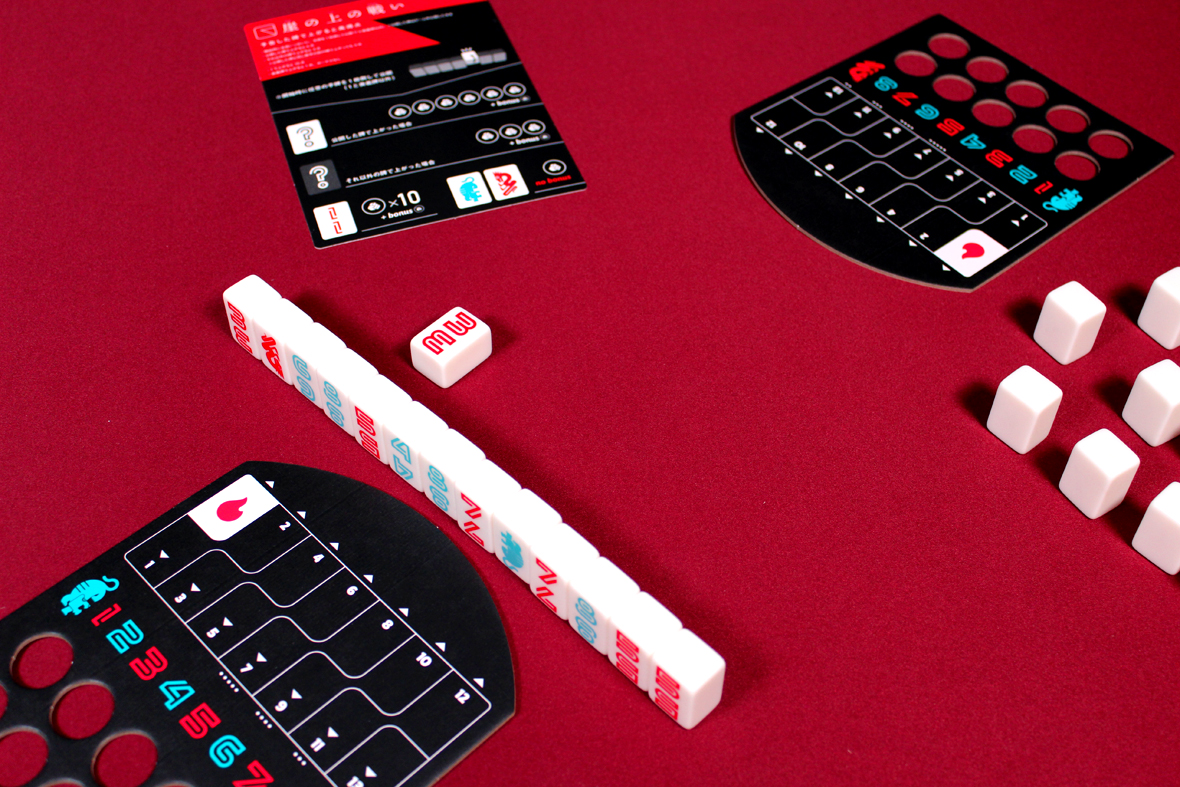
Gameplay
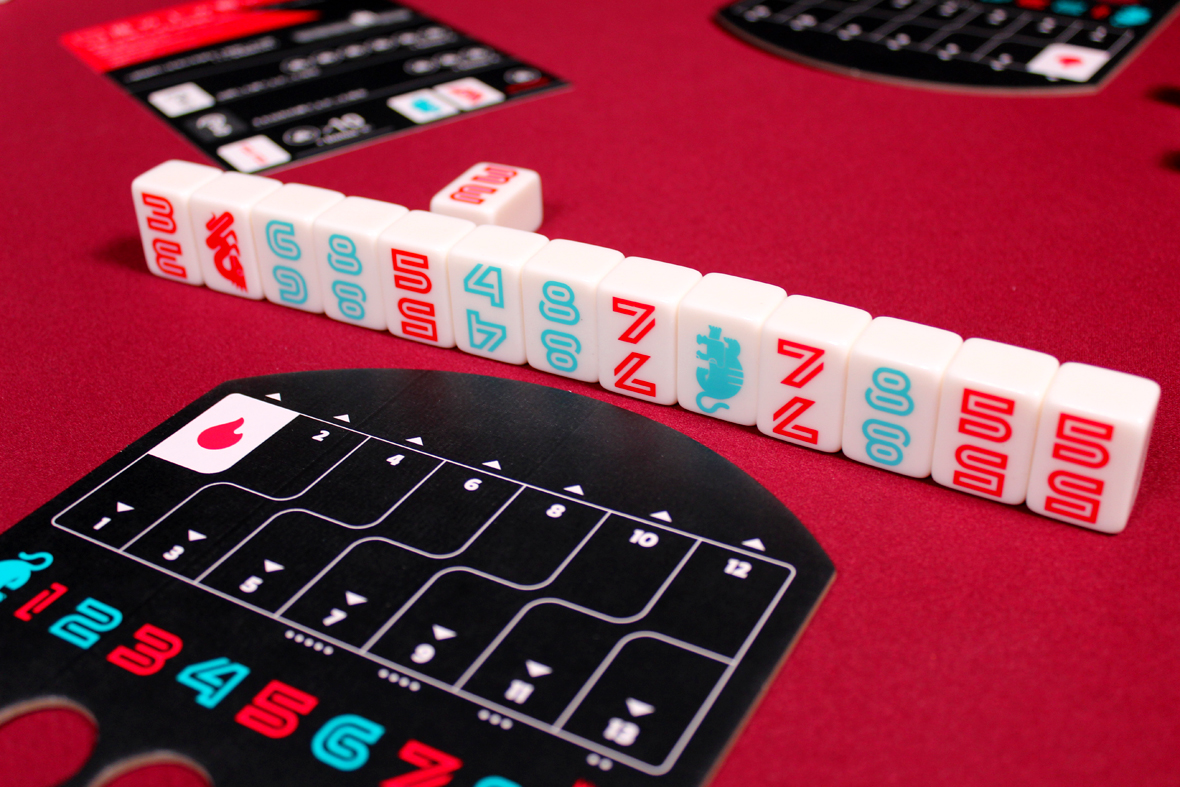
So, Tiger & Dragon is a game of offense and defense. Each round, players attack and defend to try and earn points by using all of their tiles first. The rules change with the Battleground Card, however, so be careful!
To start, the starting player attacks with a tile of their choice, placing it in the top-left slot face-up. Every tile used to attack can only be defended against by a tile with the same value being placed in the first available slot on a player’s board, with a few exceptions:
- Any even number can be blocked by the Tiger.
- Any odd number can be blocked by the Dragon.
- The Dragon is blocked by any odd number.
- The Tiger is blocked by any even number.
If you cannot or do not want to defend, you must pass. If everyone passes, the attacking player attacks again but first plays one of their tiles face-down in the corresponding defense position as a bonus. Otherwise, the player who defended attacks next. Note that it’s polite to let players know when you only have one tile left.
Play continues until a player has placed their last tile. If you would use your last tile as a face-down bonus tile, you … don’t do that and you just use it to attack again. Then, score points!
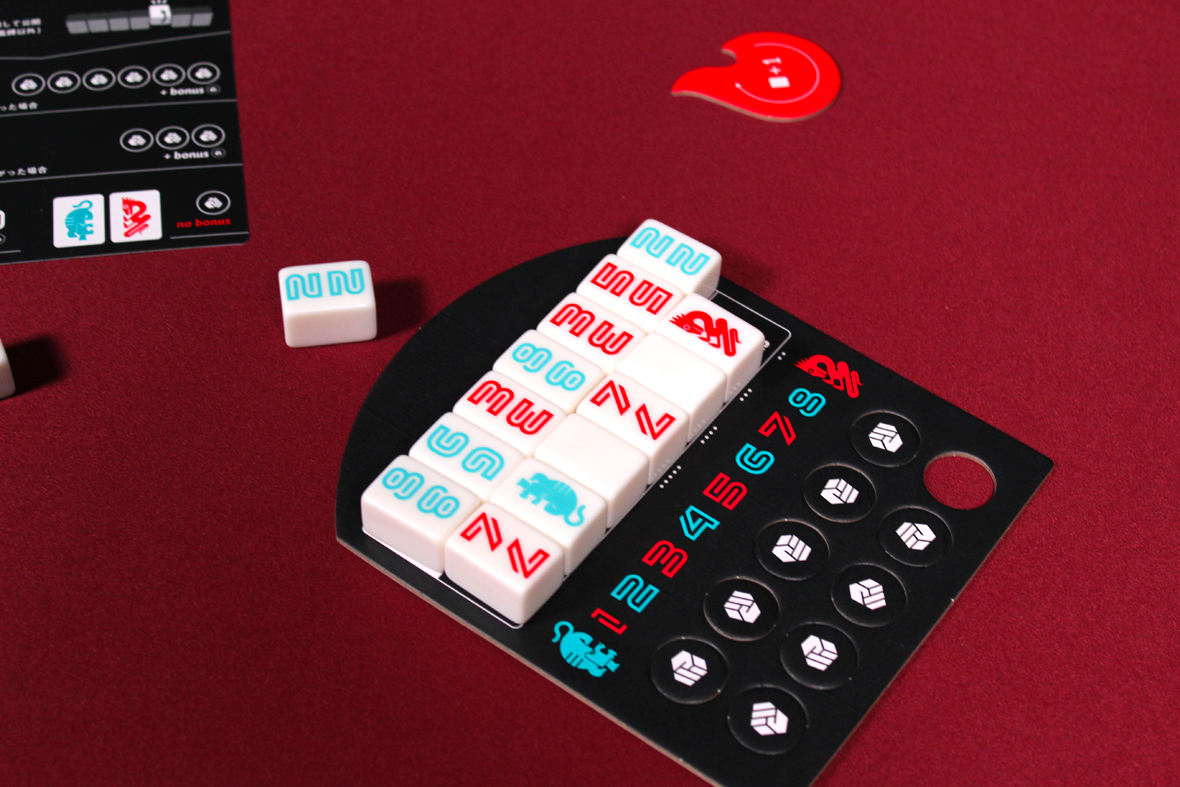
The player who ran out of tiles wins the round and collects points based on the Battleground Card. Unless otherwise stated, generally, you gain 1 bonus point for each face-down tile you had on your board as well (winning with the Tiger or Dragon usually cancels out this bonus). Note that players who did not win the round earn no points. Tough break. Reshuffle and redeal the tiles, passing the start player token to the left. Once a round ends and a player has 10 or more points, the game ends and the player with the most points wins!
Player Count Differences
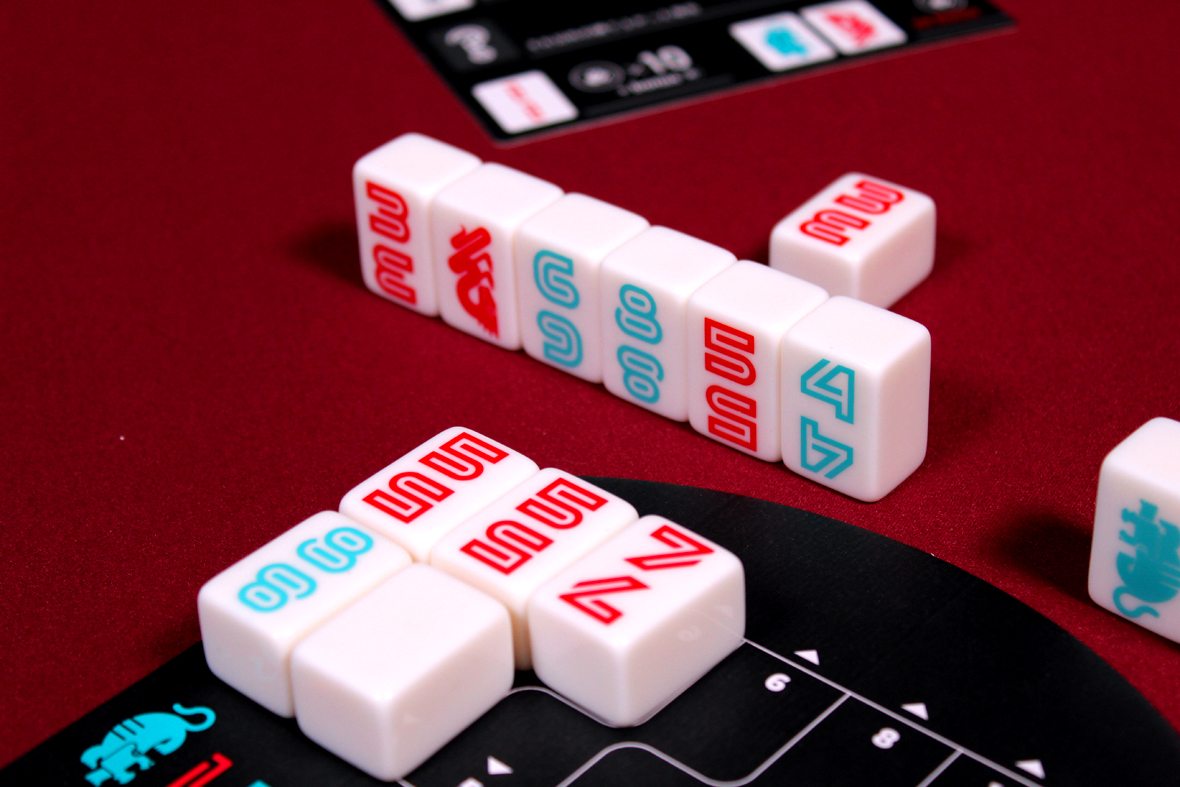
Here, I’m actually a bit of a fan of the middle player counts. With more players, you can usually assume that most attacks will be blocked and there’s some strategic planning among the chaos. Can you figure out who’s holding certain tiles? There’s also a bit more strength to variance, as getting all three 3s and the Dragon puts you in a pretty good position for using up all of your tiles if you know what you’re doing. With two players, it’s fairly all-or-nothing and back-and-forth, but still pretty fun. I just tend to think the game shines a bit more with three or four. I really enjoyed not totally knowing who was going to block the attack and the surprise and thrill of it all. Lower player counts push a lot of the tiles out of play, so you’re just never sure if that number still exists or if you’re safe to play all of that number and just go out quickly. I’ve enjoyed my plays at both ends of the player count spectrum, but I tend to think the game shines a bit brighter closer to the middle.
Strategy
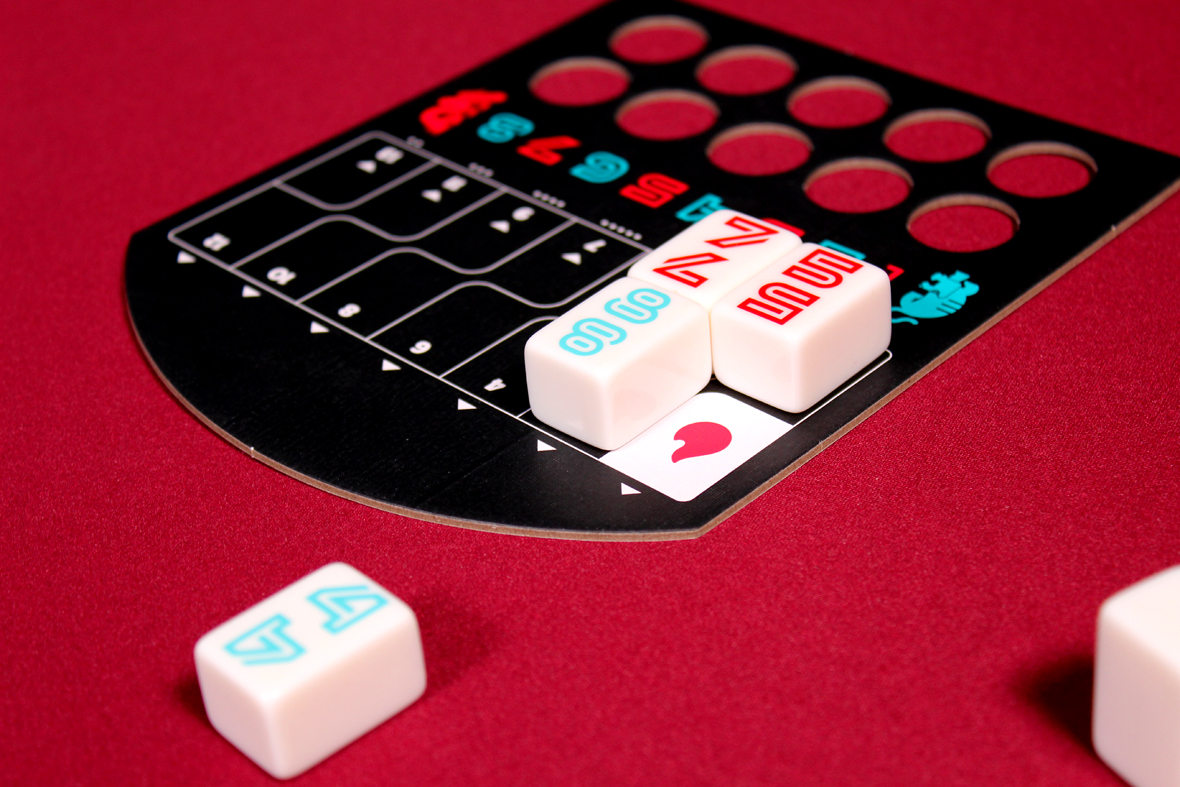
- On the plus side, the Battleground Card does tell you what everyone’s prioritizing. You know if players are trying to keep high or low or middle numbers, so even if you can’t win the round, sometimes you can make sure the player who does doesn’t get a ton of points out of it. Mean, but effective.
- Having the 1 is nice, but the Dragon usually keeps you from playing it. It’s not a perfect slam dunk, and even if you wait until the Dragon is played, it might be too late in the round for it to be worth it. But does playing your 1 to draw out the Dragon just enable a player with multiple 3s to win the round? Hard to say.
- Note that having the best offensive tiles isn’t enough! You have to be able to defend so that it becomes your turn. You can have amazing tiles that you never get to play, which is a hilarious bummer. You need at least one thing you can defend with so that you can go on the attack, hence why the Tiger and the Dragon are great.
- There aren’t a lot of reasons to lead with the Tiger or the Dragon unless you’re running out of tiles. They’re blocked by pretty much anything. There are times where they’re useful (especially if a lot of tiles have been played or are removed), but they’re not exactly going to be the thing that wins a turn at the very beginning of a round.
- Similarly, there’s almost no reason to try and win with the Tiger or the Dragon. It’s better than letting another player win, granted, but if you do win you get very few points and no bonus points, which is sad.
- Winning with the 1 rules! You win the game immediately, essentially. 10 free points and your bonus points are pretty hard to beat.
- The 8s seem really bad until you’re the only player left with a bunch of them. Any number can be great in the right context. While the 1 is easiest to win with, you really only get one shot with it and then you still have to finish the round. If you have a bunch of a tile that nobody else has, you might be able to ride the wave and get a ton of bonus points if you play your tiles right. Just beware the Tiger and the Dragon!
Pros, Mehs, and Cons
Pros
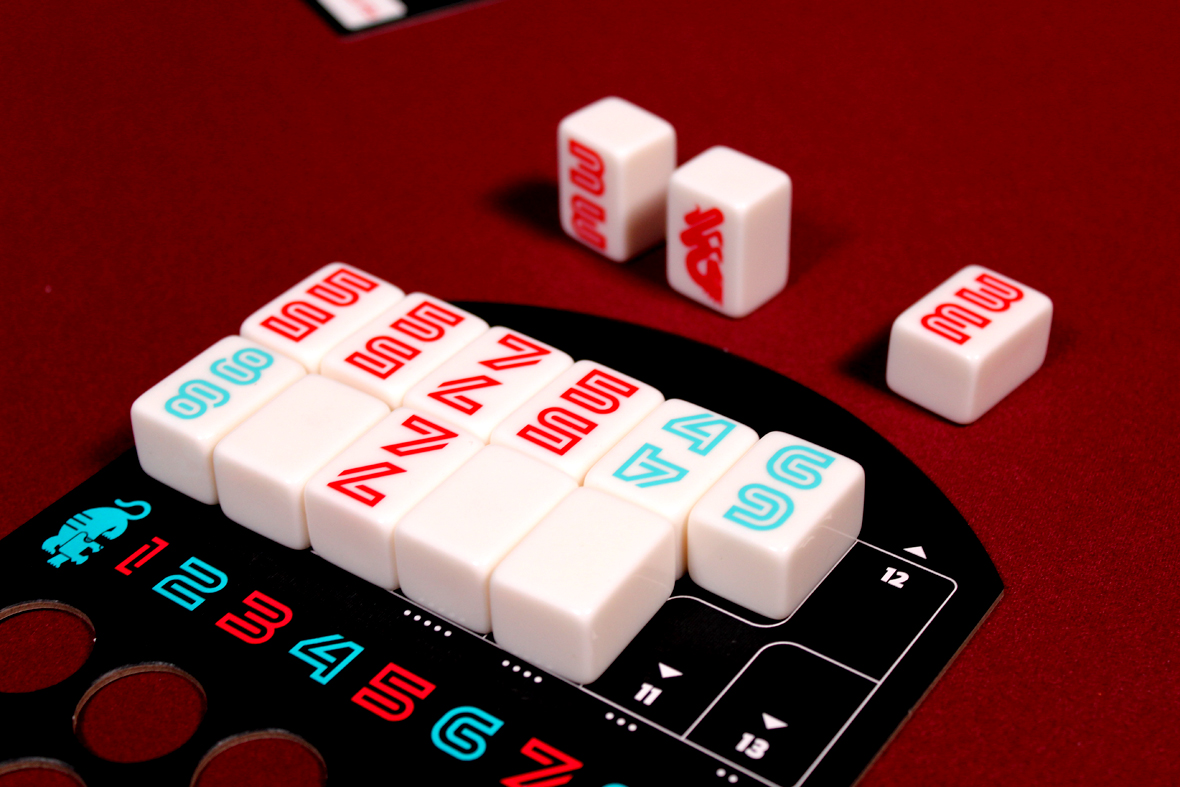
- The aesthetic is really fun. I love the color scheme and the choice of big, chunky tiles and the whole thing. It’s a great-looking game.
- The tiles feel great to use, which is nice. I guess they’re plastic? But they feel really nice. I’m impressed!
- I like the variety of the Battleground Cards! They’re mostly simple but there are a few hectic ones in there. I particularly like the ones that mess with the game’s format, like the Battleground that forces you to play with one tile facing out, and if you win with that tile you get more points. Things like that are pretty solid. There are a few other tricky ones in there that I won’t spoil for y’all, but they do a nice job of making even the more mundane Battleground Cards pop.
- There’s a lot of interesting play here for folks who enjoy counting cards, and keeping track of what’s in play is a good way to keep players engaged between turns. The game moves pretty fast, as well, so there’s not usually a lot of downtime. But it’s fun to try and keep track of / speculate as to what players are trying to bury, since that can mess with probabilities and predictions.
- Still surprisingly portable. It’s big, but not that big; you can do a lot with it.
- Wow, the largest Oink Game? It’s pretty massive and impressive, which is really cool. It’s always fun to see, even though I definitely prefer Oink because they tend to stick to one of four (now two, usually) box sizes. Makes stocking a shelf easier.
Mehs
- Wow… the largest Oink Game. Really is a particular size that doesn’t really fit with the rest of my Oink Games, so I’m making peace with that.
- I might have bought this a bit too early, since my copy exclusively has Japanese rules and cards. Whoops. I’ve read the English rulebook, but I still don’t have one, and it’s not on BGG, so that made writing this review a bit difficult (as well as learning to play the darn game). Thankfully, it’s one of like, two games I played at BGG.CON, so I did get to enjoy it.
Cons
- Repacking this can be a mild pain. You just have to be very precise about where all the tiles go; there’s not a lot of extra room to spare between that and the player boards. I originally worried I was going to have to punch all the score chips back in (nightmarish), but I ended up just removing the insert and dumping them in the side.
Overall: 8.25 / 10
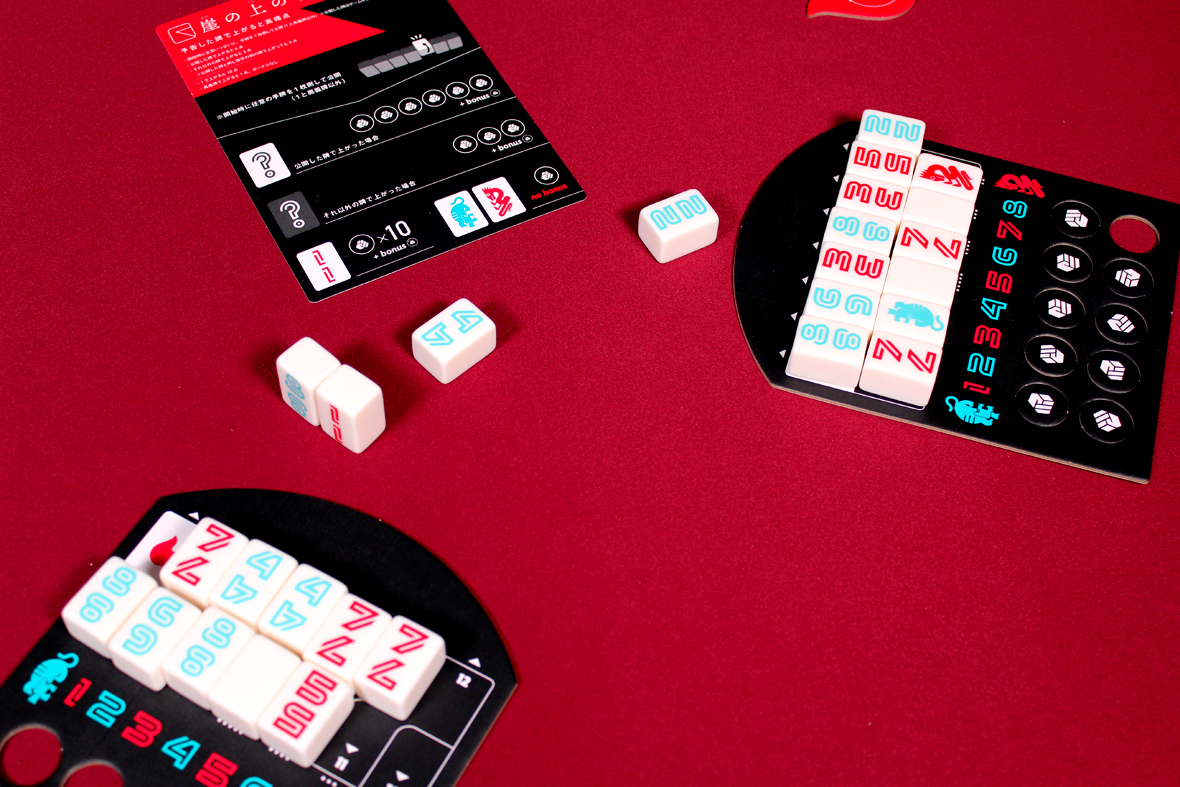
Overall, I think Tiger & Dragon is a lot of fun! Granted, there’s a slight bias here since I’m always excited about Oink Games (for the most part; there’s one I didn’t love), but I really enjoyed this and thought it was a cool concept. It’s fast-paced while still being strategically interesting and while I genuinely suck at this game, I’m interested in playing it again to learn what I did wrong by having the other player beat the tar out of me a few times. It’s a growth process or a masochism thing; who knows. I think for players who enjoy the kind of quick back-and-forth strategic gameplay, this game has a lot to offer. The subtle changes in priorities as the Battleground changes from game to game can be really interesting, and figuring out how to influence the state of the game to get yourself in the right spot to go on one big offensive can be great. There’s really nothing better than trying to guess what a player’s last tile is (so you can play something else) and then being totally wrong and accidentally giving away the round. Maybe that’s not the best? Again, who knows. If you’re a big Oink fan, though, this game still has the feel of an Oink Game; the quick play, easy rules, and occasionally-whimsical details still maintain the thematic throughline of their entire product line, which I love. It’s just got an injection of a bit of new, which is also great! I can’t wait to see what Oink does with stuff like this in the future. For the Oink Games fans, the quick strategy fans, or the gamers who love good tiles, I’d recommend Tiger & Dragon! I’m looking forward to playing it again.
If you enjoyed this review and would like to support What’s Eric Playing? in the future, please check out my Patreon. Thanks for reading!
 What's Eric Playing?