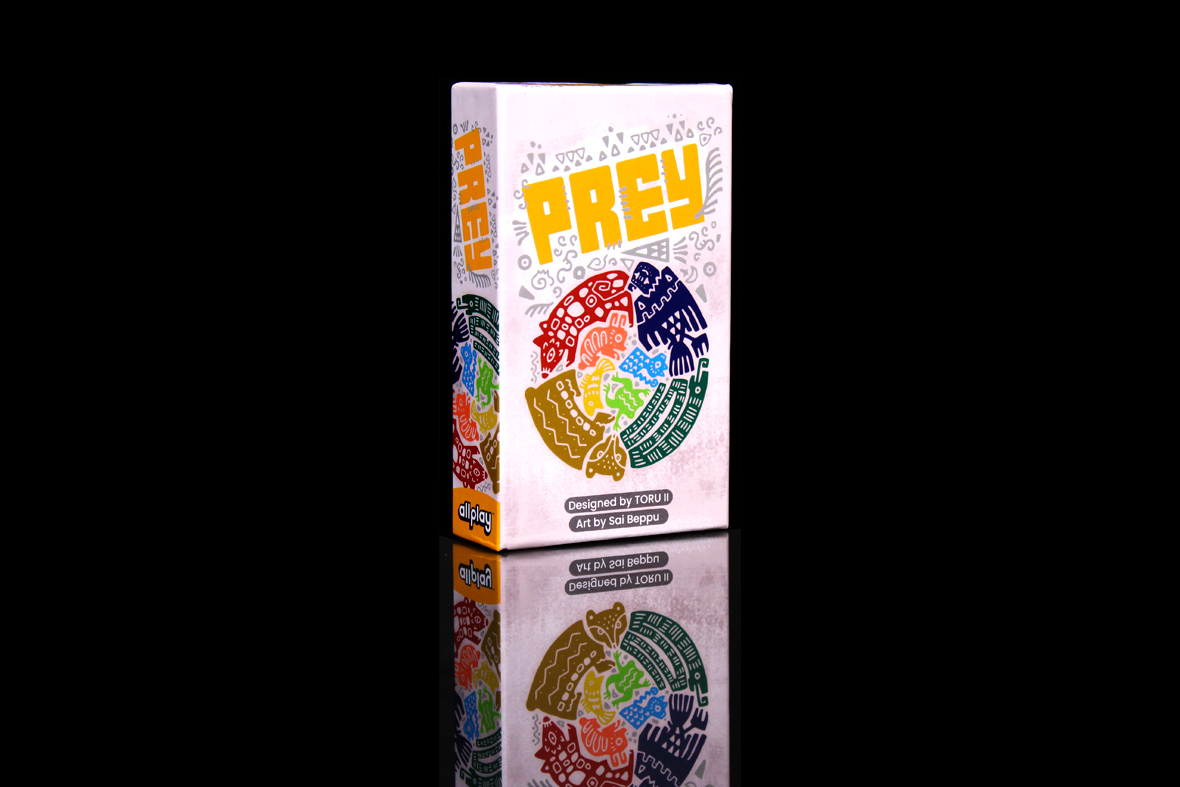
Base price: $10.
3 – 4 players.
Play time: ~20 minutes.
BGG Link
Buy on Amazon (via What’s Eric Playing?)
Logged plays: 2
Full disclosure: A review copy of Prey was provided by Allplay.
Yeah, whoops. I got extremely behind from holiday travel and so you’re getting the latest What’s Eric Playing? reviews I’ve written in an age. It’s already 1AM and I’m not even done writing, to say nothing of photos. That’s what happens when you make too many plans! Also, I mean, it’s the wintertime here almost and it’s always dark, so I mostly just want to sleep. Thankfully, in this specific circumstance, it’s a powerful motivator, so let’s lean into that, shall we? We’ve got a couple cute games for you this week, so let’s get started with Prey, from Allplay!
In Prey, you’re trying to make your way to the top of the food chain, but the situation can turn on you at any time. You can go from a food-chain alpha to an absolute omega or however they classify that stuff; that whole wolf study was fake anyways. What makes this interesting is that any prey that are left after the predators have their fill have their own food chains to fulfill in this trick-taking game. Will you be able to survive?
Contents
Setup
Easy one. Give each player a pair of dice in the same color:

Set out the matching point cards on the 0 side, one for each player:

Shuffle the cards and deal each player twelve. In a three-player game, set aside the fourth set of twelve cards.

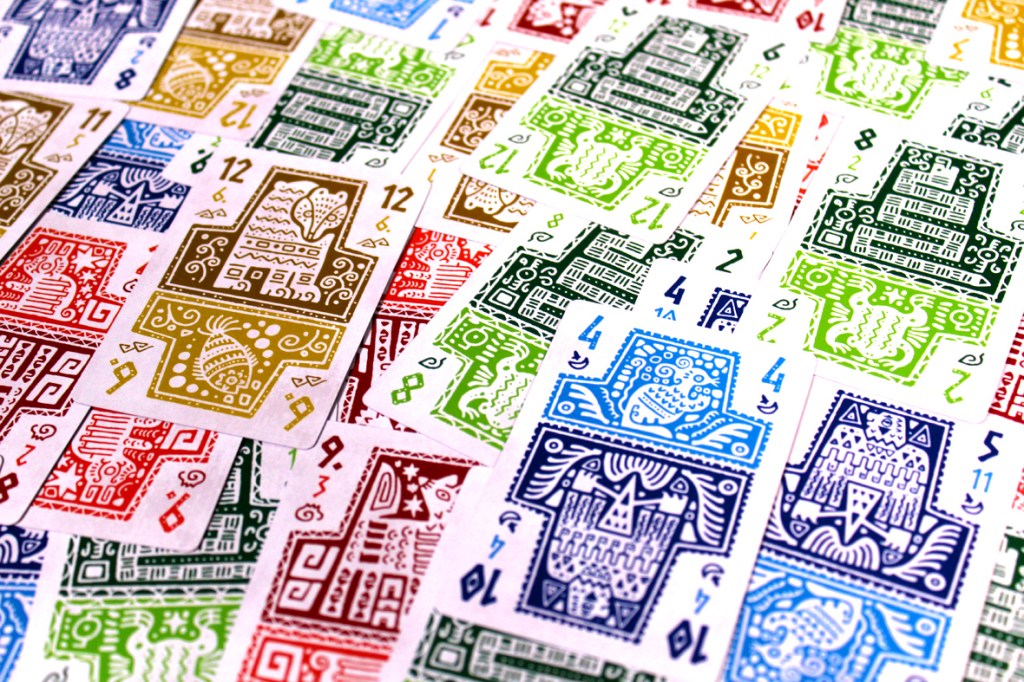
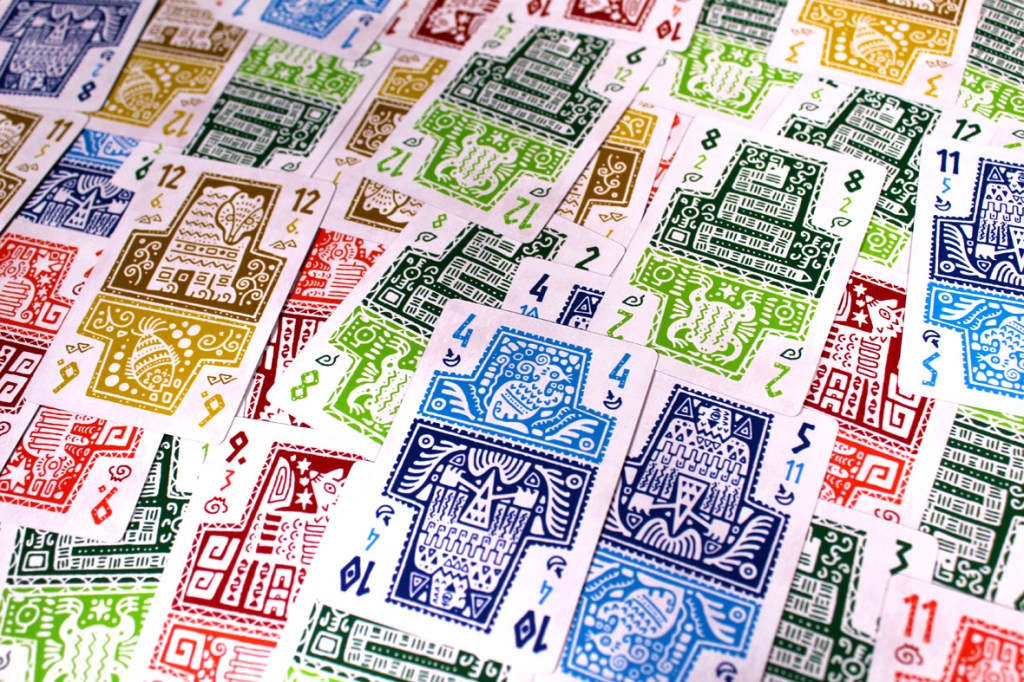
Make sure the cards are all Predator (dark) side up. You’re good to start!

Gameplay
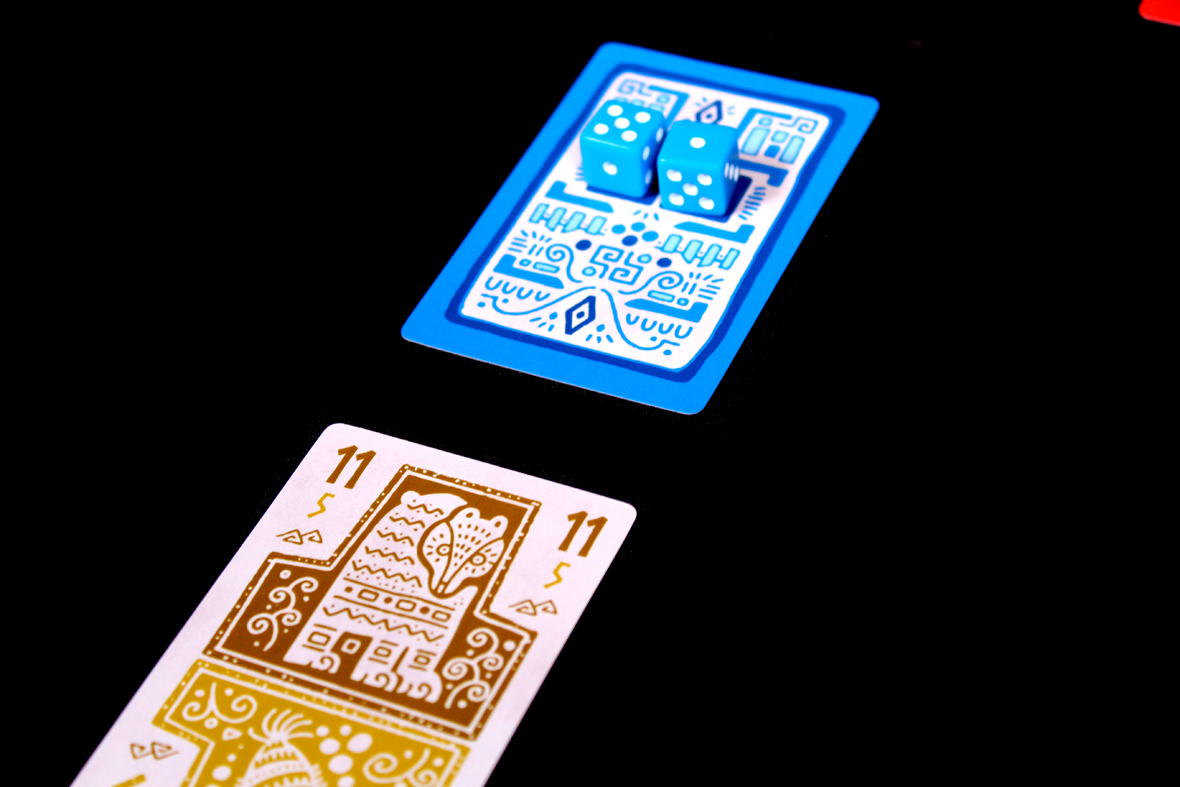
Prey is a pretty simple trick-taking game with a twist: halfway through a round, all your Predator Cards that remain become Prey cards instead!
To start a round, each player rolls their dice until they get two different values. Once they have, set the dice on their score card. Those are their two target numbers for the round. One note: if you roll a 6, your target number can be 6 or 0. Your goal is to take a number of tricks equal to one of your target numbers.
Taking tricks is easy. The player with the lowest total target numbers starts the round and plays a card. Each player plays a card and that’s a trick. The player who kicks off the trick’s card is the lead suit; all other cards must be the lead suit if possible. Once everyone’s played a card, the player who played the highest card of the lead suit wins the trick.

After six tricks, all the cards in your hand get flipped! Then play six more tricks with all your cards on the Prey side. After all twelve tricks have been played, check to see how many tricks each player won. If any player’s won a number of tricks equal to one of their target numbers, they earn a point! If they already have a point, they win!
Player Count Differences
Not many; you already set aside twelve cards with three players; with four, you just have another player taking tricks. It’s not not different, though: more players taking tricks means that there will inevitably be more competition, as there are fewer tricks available per player. That might work out in your favor, though, if you’re trying to take fewer tricks. It seems like it would be harder to hit a six, but who knows. Either way, not a huge difference otherwise; I don’t have a strong preference.
Strategy
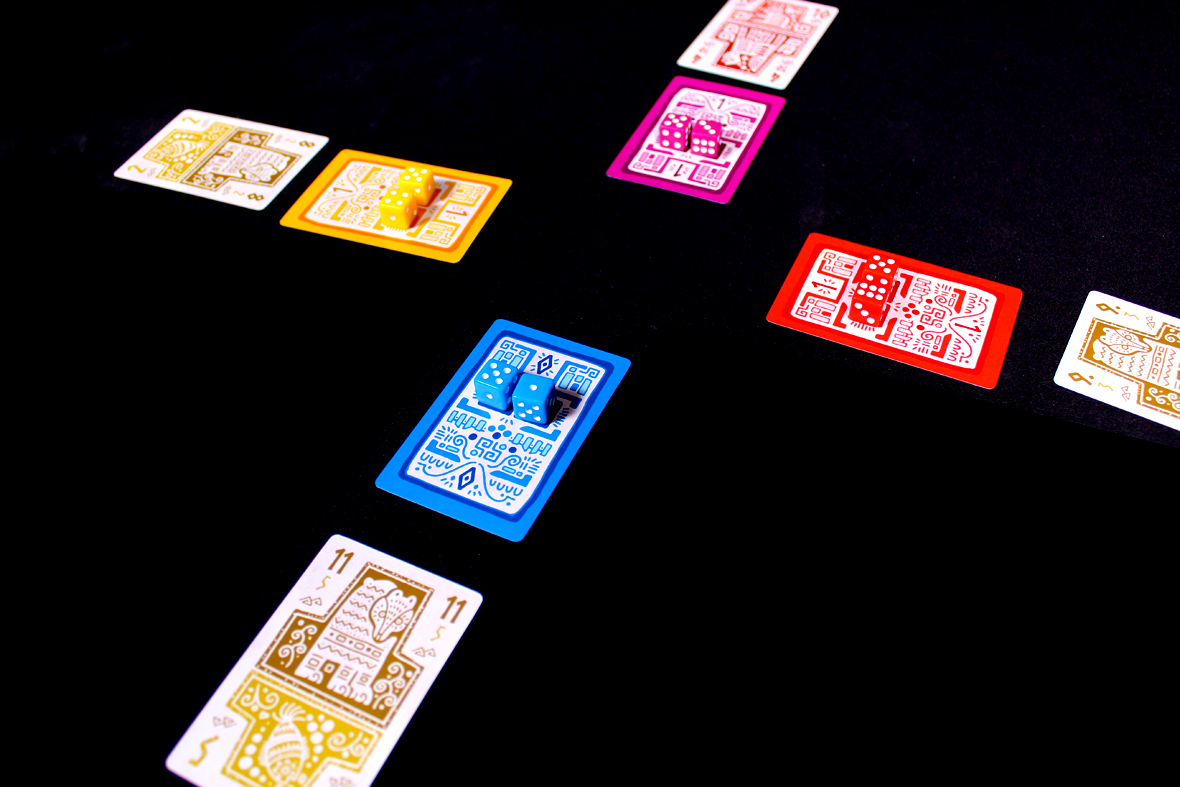
- As with most trick-taking games, running out of one suit is not a bad idea. You can use that to throw off high cards or low cards that you don’t want if that suit is ever played. That can help set you up to win or lose later tricks so that you stay close to your target number.
- Be careful with the cards you keep going into trick seven. Remember that after trick six, your hand flips, so reorganize it and keep track of what you still have in hand; your strategy might suddenly shift precipitously.
- Also watch out for getting locked into taking tricks or losing tricks. This can be a real problem towards the end of the round, especially if you only have cards of one color. If the lead player does not have that color, you’ll just be playing cards that can’t win. If you’re leading and you’re the only one with that color, you can’t lose to anything, which may not be what you want either.
- I usually try to fit a few early wins in and then figure it out from there. It helps prevent the late-round stress-fighting for tricks that happens between some players. I still participate in that every now and then, but I’m trying not to make a habit of it.
- You should try to disrupt other players’ attempts to score. If you aren’t going to score, then you have a duty to make sure other players don’t score either, lest you fall behind. Regardless, you do have to do due diligence and see what they’re shooting for every round. If you’re not paying attention, they’ll swipe the game out from under your nose.
Pros, Mehs, and Cons

Pros
- Love the art style here; it’s fun! It’s got a very glyph-y vibe to it, and the color choices are great. Sai Beppu doesn’t miss, and this is another great example of that fact.
- Flipping your cards presents some weird and interesting strategy choices; I love it. You can try to prepare around it, but unless you’ve got some impressively eidetic memory, I wouldn’t expect you to remember what everyone else played, so you might not necessarily know where you stand relative to other players.
- The high portability is great. I love these tiny box games! I just got some Oink Games sleeves, and it’s super nice to note that two of these small games fit in one of those. These games are going places with me.
- I appreciate that this is mostly a straightforward trick-taking game; it makes the game a lot easier for newer players to pick up. It has two major tricks: one is setting the number of tricks you want to take randomly without looking at your hand, and the other is suddenly shifting all the values of the cards in your hand and kicking back to a new round. It’s tough. But if they were adding that onto a particularly complex trick-taking system, I don’t think players would be able to stomach that as easily.
Mehs
- As with many trick-taking games, it can be a bummer if you get stuck in a round where you can only win (or lose!) tricks. Try to make sure you have enough cards to get yourself out of a bind before it gets too bad. It helps to watch other players’ scoring areas and see how many tricks they’ve taken so you know when they’re going to change to either trying to win or trying to lose tricks.
- With new players, remind them to be careful to make sure their entire hand is on the Predator or Prey side. It’s something that players forget and that can negatively affect both the game and their strategy.
Cons
- I wish there were something to be done if there are enough consecutive rounds where nobody scores. It feels like it can extend the game arbitrarily. We have started calling them “bum rounds” and while we laugh about them, at a certain point it gets annoying that the game doesn’t meaningfully progress for anyone.
Overall: 8 / 10

Overall, I like Prey a lot! I think it’s pretty ideal as a “new to trick-taking” game, which makes it extremely well-suited for Allplay’s small-box game collection. They publish a lot of trick-taking games, so there’s some incentive here for them as well. Full-market capture and all that. But they’re putting the usual level of quality product design into it: the art is fantastic, the footprint of the box is extremely minimal, and even the tiny dice are pretty nice. It’s a game that looks like it should be in a larger box and at a higher price point than it is, but the simplicity of it and the elegance make for nice grounding elements, even if the game can occasionally run a bit long when nobody scores in a given round. That’s nobody’s favorite. I do kind of wish there were a bit clearer indicator for the Predator / Prey sides of the card, something very visually easy to spot. For newer players, I’ve found that there’s a risk that they don’t always notice, so they plan around a card they don’t have and then play it as its wrong value, which feels bad. Just remind players to check. If you’re looking for a good introductory trick-taker, you like small box games, or you just want to be your own food chain magnate, you’ll likely enjoy Prey! I think it’s fun.
If you enjoyed this review and would like to support What’s Eric Playing? in the future, please check out my Patreon. Thanks for reading!
 What's Eric Playing?