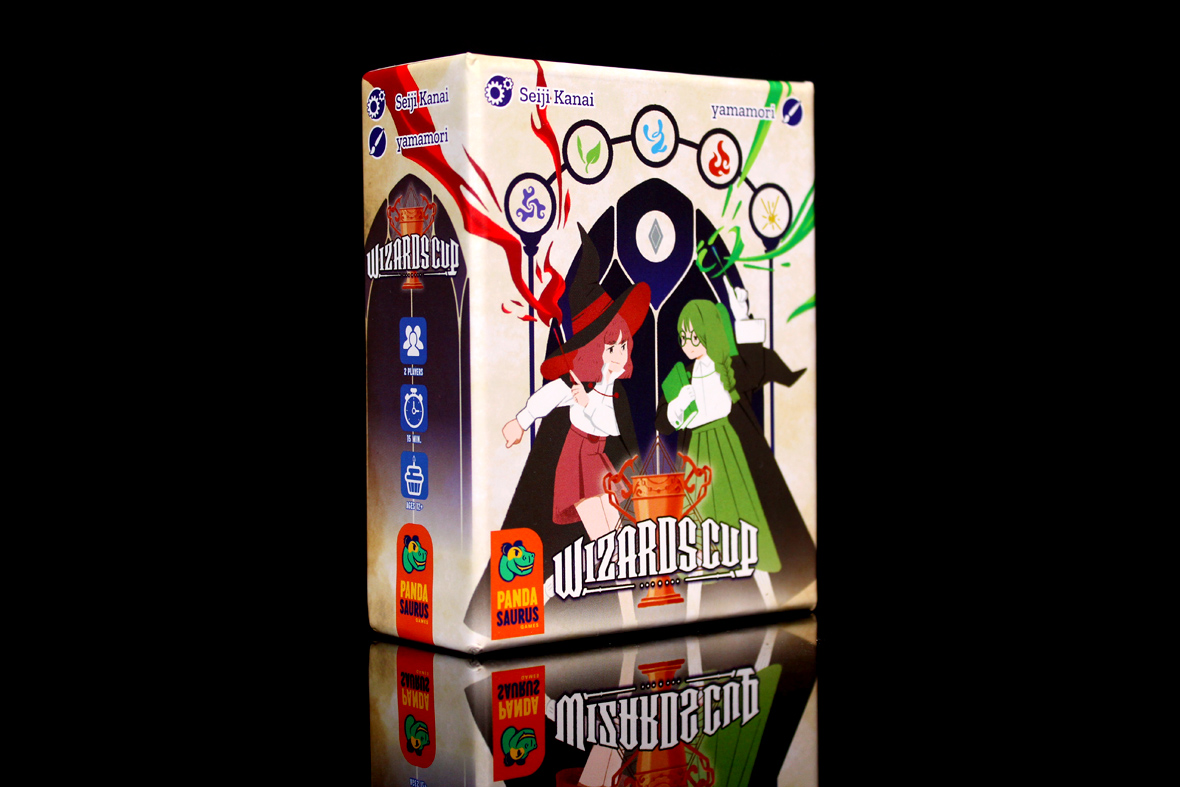
Base price: $15.
2 players.
Play time: ~15 minutes.
BGG Link
Buy on Amazon (via What’s Eric Playing?)
Logged plays: 4
Full disclosure: A review copy of Wizards Cup was provided by Pandasaurus Games.
I was writing, but then my friend asked me, “I haven’t seen a lot of movies; do you have any recommendations?” and then I recommended somewhere in the neighborhood of 100 movies to her. I used to really like movies! Then we hit the Prestige TV era and I found it harder to focus on movies when there’s so much good TV. I mostly watch good TV, now. I have a few movies, but I mostly keep around movies that I would otherwise rewatch regularly and are kind of upbeat, like the Spider-Verse movies or Promare or Everything Everywhere All At Once. This could be a discussion for another time. This week, speaking of shorter attention spans, I’m covering some smaller-box games. Let’s dive into one with Wizards Cup!
In Wizards Cup, players finally get to be the kings of a country outright. That’s all background story. Now, it’s time for the Wizards Cup, a magical dueling tournament. You’ll be sending your six best mages to the Cup to compete, but once they’re there, they’re on their own! That was a lot of there-adjacent words in that sentence. Homophones! Will your country and their mages be able to take home the prize?
Contents
Setup
Really, almost none. Give each player their own deck of 18 Wizard Cards:
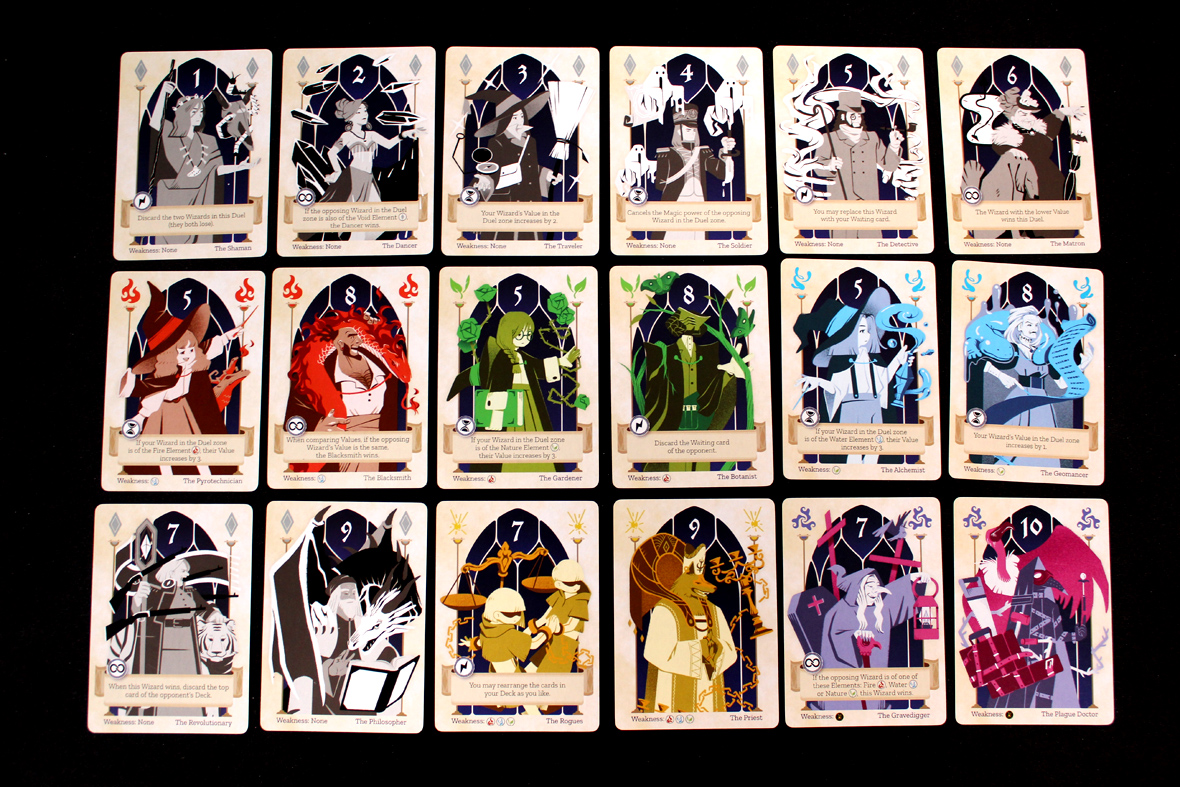
Each player should shuffle them up and set them aside. Also set nearby the three Victory Tokens:
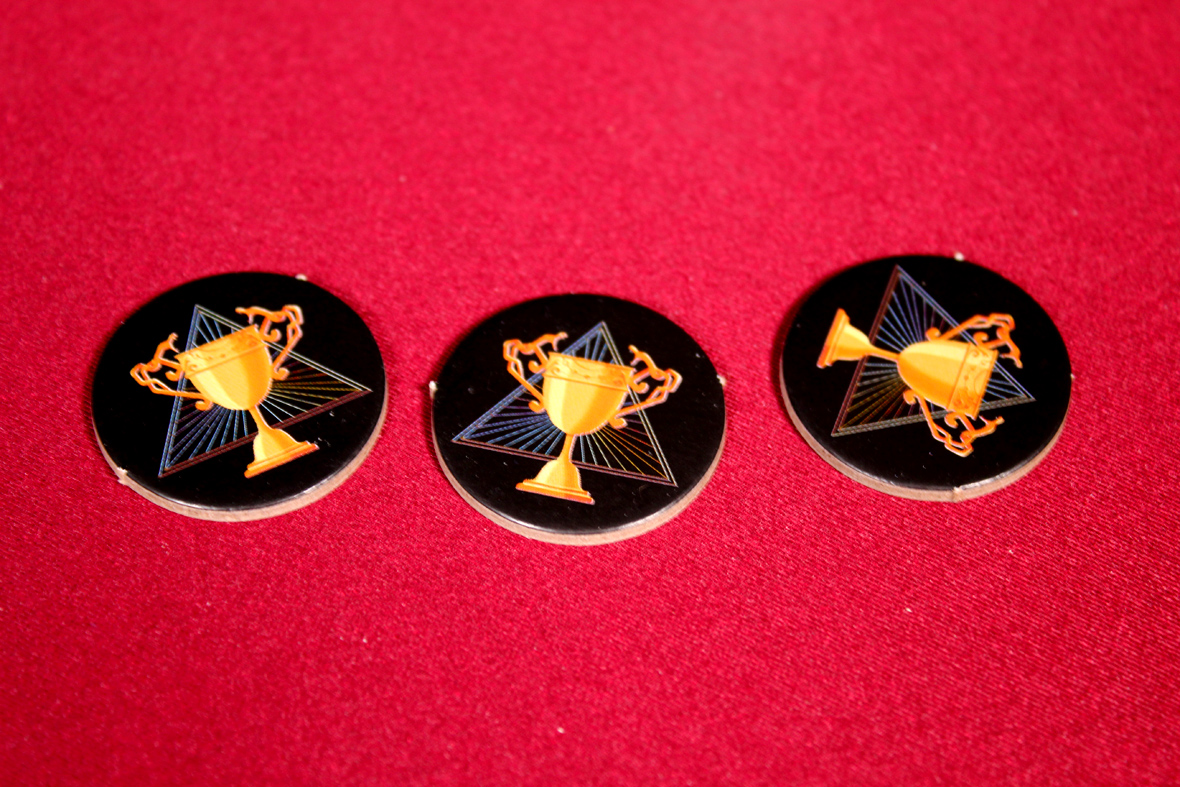
Then you’re set!
Gameplay
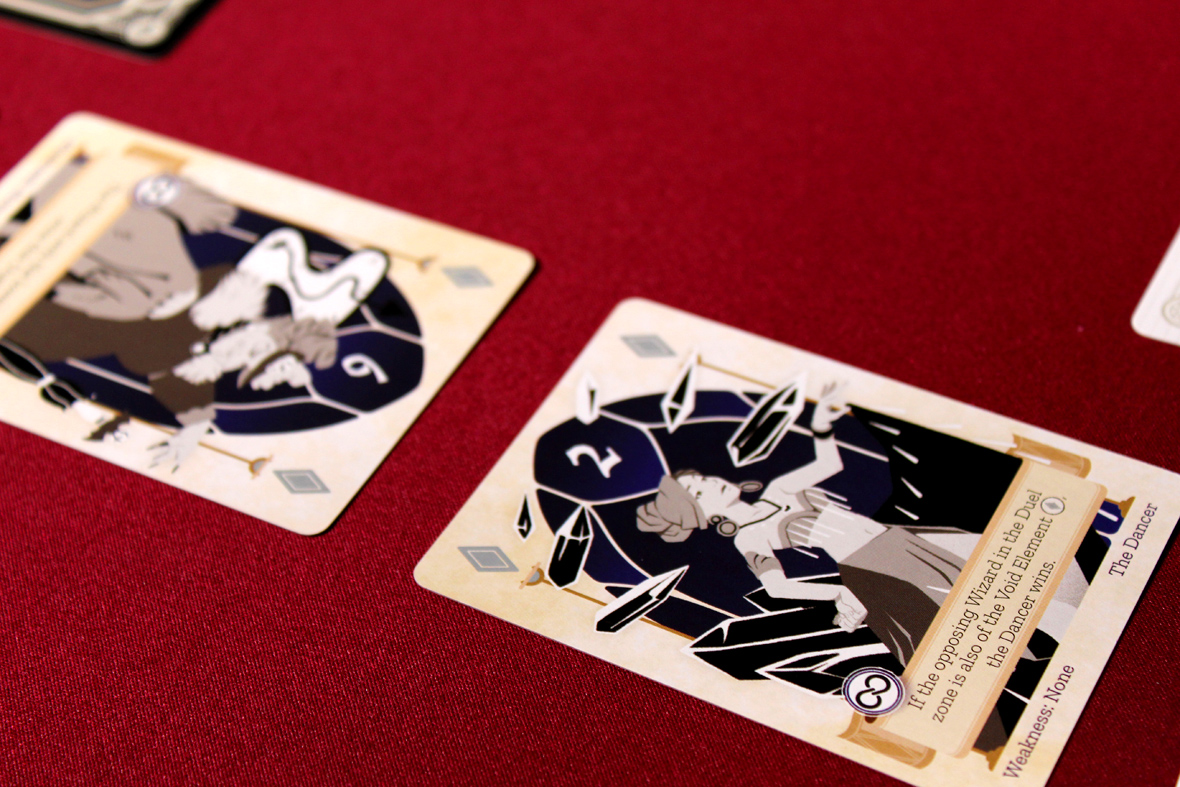
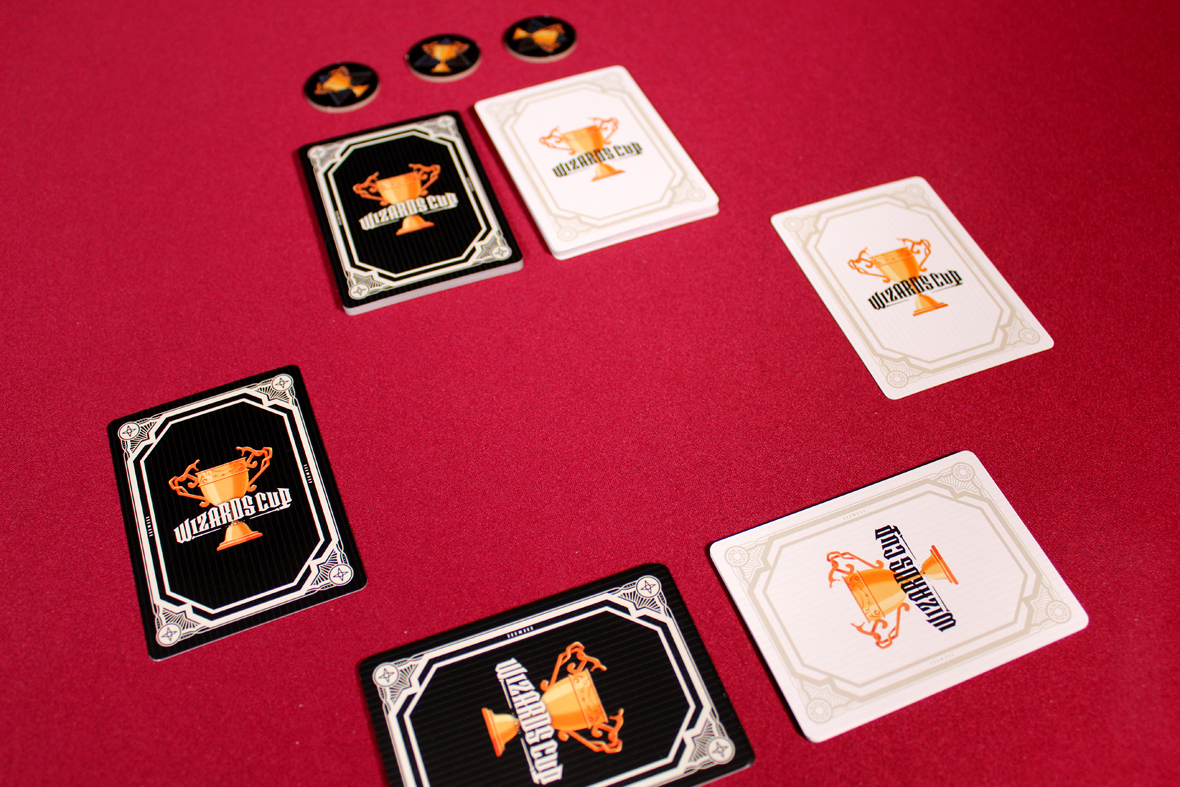
So, a game of Wizards Cup goes for up to three rounds, as players send their team of wizards out to combat. The quirk of the game is that once your team is decided, you really don’t have that much input over what happens! It’s an auto-battler, like Challengers; your only contribution is team setup.
For the first round, each player draw a random card from their deck. Those cards must be included in your set of six. From that, choose five more cards from your deck; those will be your complete set. You can set the order however you’d like, but one card must be set aside as the Waiting Card; that may or may not be used (depending on other cards in your deck). Once both players have a deck of five and a Waiting Card, you can start battling!
The top card of each deck is first to be played. Check for instant-activating effects, and then once those are resolved, generally, the higher number wins (or a card loses to a card of a type it’s Weak to). The losing Wizard is discarded; the winning Wizard stays in place. The loser reveals a new card and play continues!
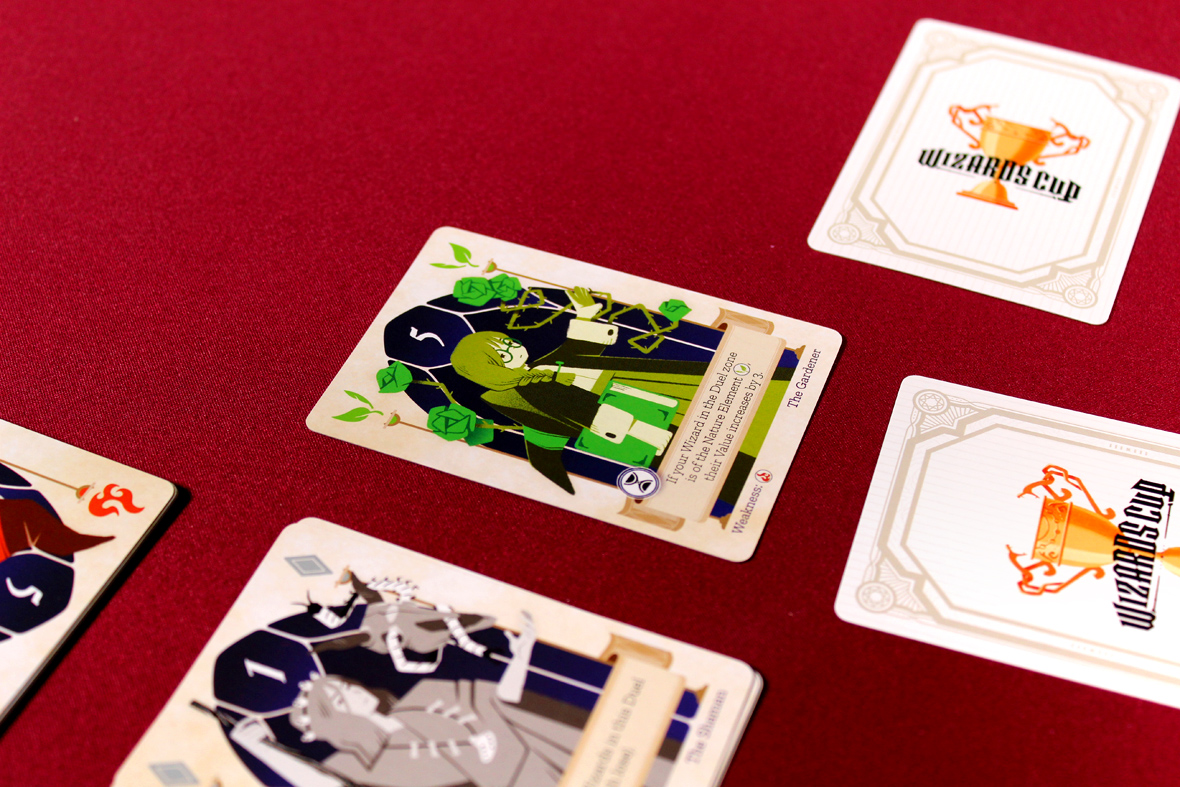
Once one player is out of cards, if the other player still has at least one card, they win! They take a Victory Token. If both players run out of cards at the same time, it’s a tie. Both players can then exchange a card in their set of six for any of the cards in their deck (just one, though) and then set the order of their cards and their Waiting Card. Once that happens, the next round begins!
Play until one player has won two Victory Tokens. That player wins!
Player Count Differences
None! This one is two-player only.
Strategy
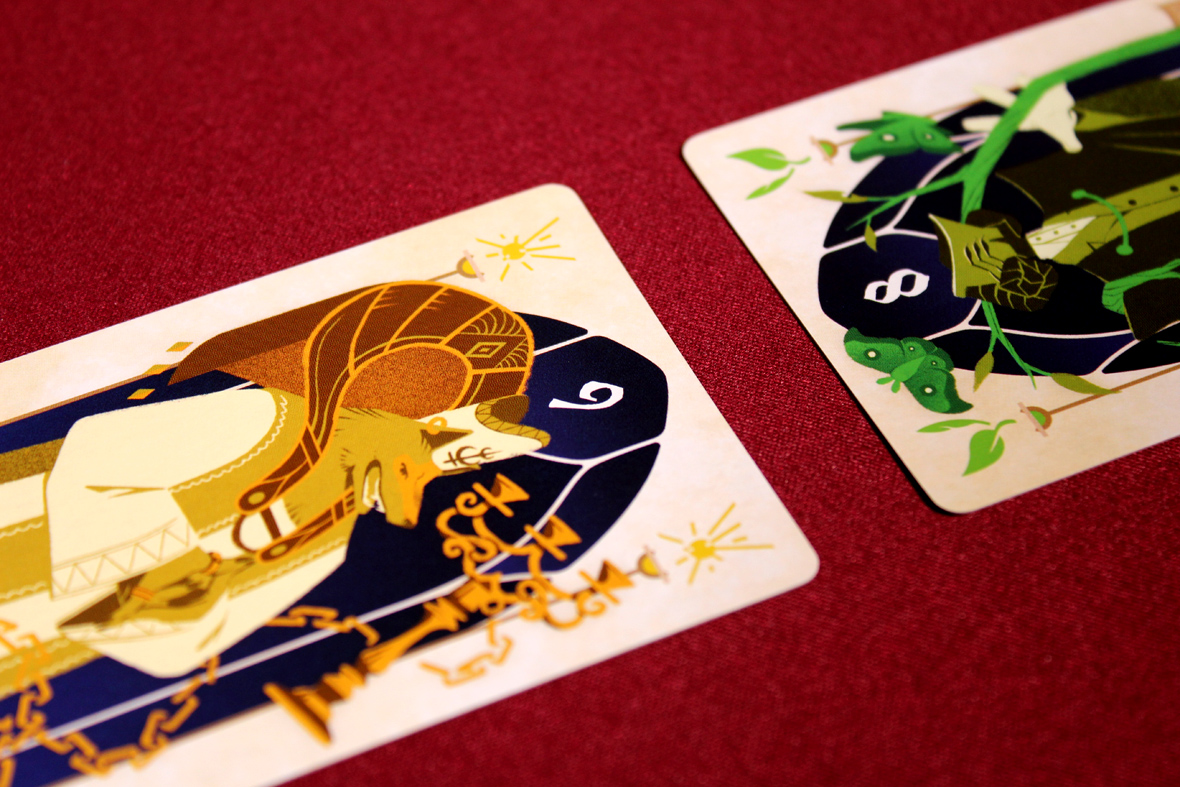
Editor’s note: I really suck at this game. Sorry.
- If you don’t like the first card you got dealt, just make it your Waiting Card. You don’t have to use it! Sometimes a Waiting Card is just a good way to swap a card out of rotation (or make your opponent think you did). There’s strategy around which ones you choose and whether or not you use it!
- Remember what your opponent just played! Knowing their deck allows you to think about how to counter their deck, which is going to be important.
- It’s probably useful to have something that can get you out of a bind. I sometimes throw in the Void 1, just because it discards both players’ cards and that can do a lot for clearing a particularly nasty card that might counter a lot of your deck.
- There are a lot of perfectly reasonable counters for various strategies. There’s elemental weaknesses and Magic Power effects, for instance, so you can usually counter any one card a number of different ways. That does make it hard to plan an overall effective strategy, but you can usually figure out something that gets you partway there.
- Leading with only high-value cards is a pretty bad idea. A lot of the lower-value cards have better effects or aren’t as vulnerable to various weaknesses, so you might find that only high-value cards leaves a few holes in your strategy.
- There is no one perfect deck. You can’t just go in and have a perfect deck to combat every situation; you only get six cards (and you really only use five of them, usually). Instead, you have to try and stay robust against a variety of different outcomes until you get a sense of how to most effectively counter your opponent and trap them. Just be warned that they’re doing the same thing for you, so you’d ideally want to win the first round either way.
Pros, Mehs, and Cons
Pros
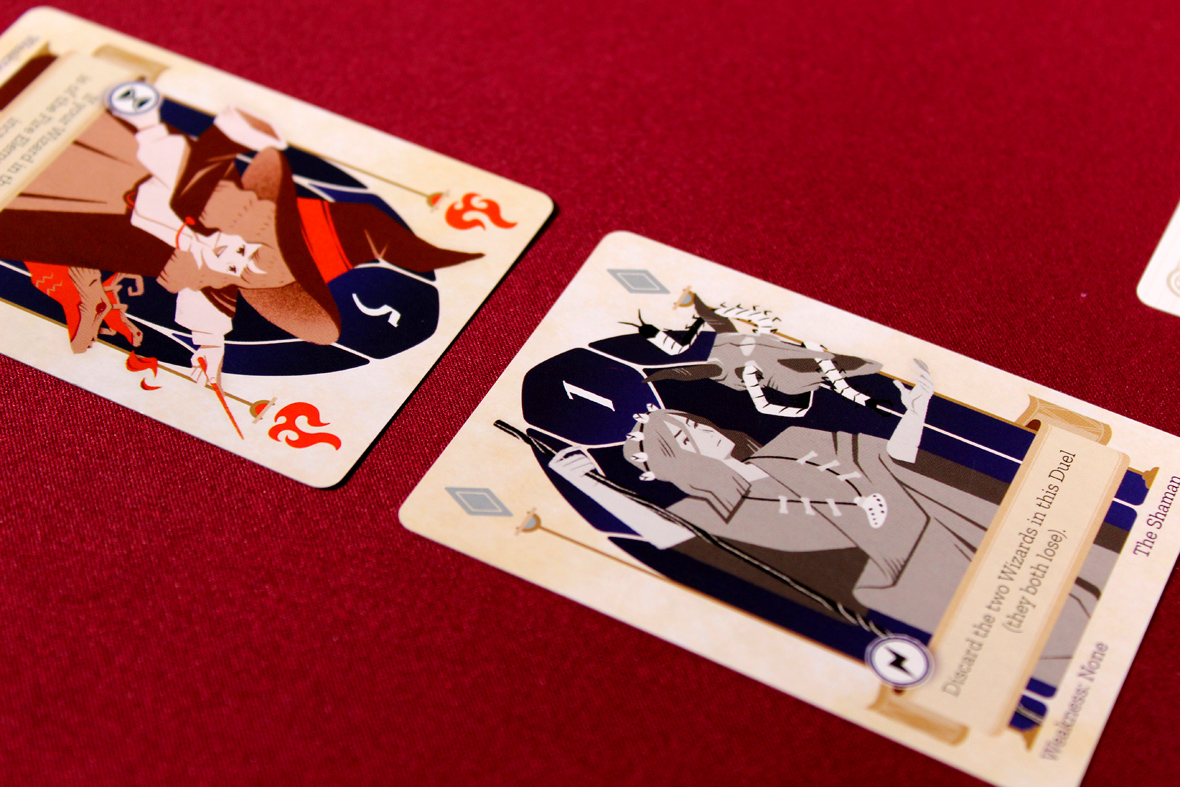
- The art style is super fun! It’s somewhere between a more anime style and a tarot style, with a little bit of an ornate vibe. It really works, especially with the color choices and the character styles. Looks great.
- This is a great, compact autobattler; haven’t seen anything quite like it. That said, I haven’t played an especially high number of autobattlers, either, so that’s not necessarily a high piece of praise. Wizards Cup is compelling, though, and that’s fun.
- Really love the portability of it, too. Love small box card games; they’re becoming my bread and butter. Fun to play, fun to take places; I took this one on a first date. Got trounced, but it was still a great choice.
- The rounds are super fast; really good pace once you know what all the cards do, especially. Figuring out all the cards is the difficult part, to be sure. Once you have that down, you should be pretty set.
- I like how much of the game is adjusting to your mistakes from the previous round and hoping your opponent doesn’t counter the changes you’re making to counter them; it’s very cerebral. You definitely need to do a fair bit of thinking if you want to be successful, but there’s nothing stopping you playing a completely random game to try and throw your opponent off. That could be fun too, and it might even work! I prefer sitting and trying to figure out if my opponent is going to counter my counter and if so, if I need to add a counter counter counter or whatever until I give myself a soft headache.
Mehs
- Once you commit to a deck style, you can’t really make any big edits to it. You’re kind of committed from the get-go; you only get at most two swaps over the course of the game. If you’re completely hosed, you might just end up losing fast and trying again next game. It happens.
- I desperately want to type Wizard’s or Wizards’ Cup; Wizards Cup doesn’t jive with me, linguistically. It really just seems like there should be a possessive apostrophe somewhere in there. It’s driving me nuts.
Cons
- Boy howdy it took us a while to figure out how to play this game correctly. I think it might just be the layout of the rulebook that threw us off; it’s formatted more like a big page than a booklet and I think a booklet here might have been more optimal. Even with the dividing lines, the images create a bunch of flow issues and we ended up getting more confused.
Overall: 7.25 / 10
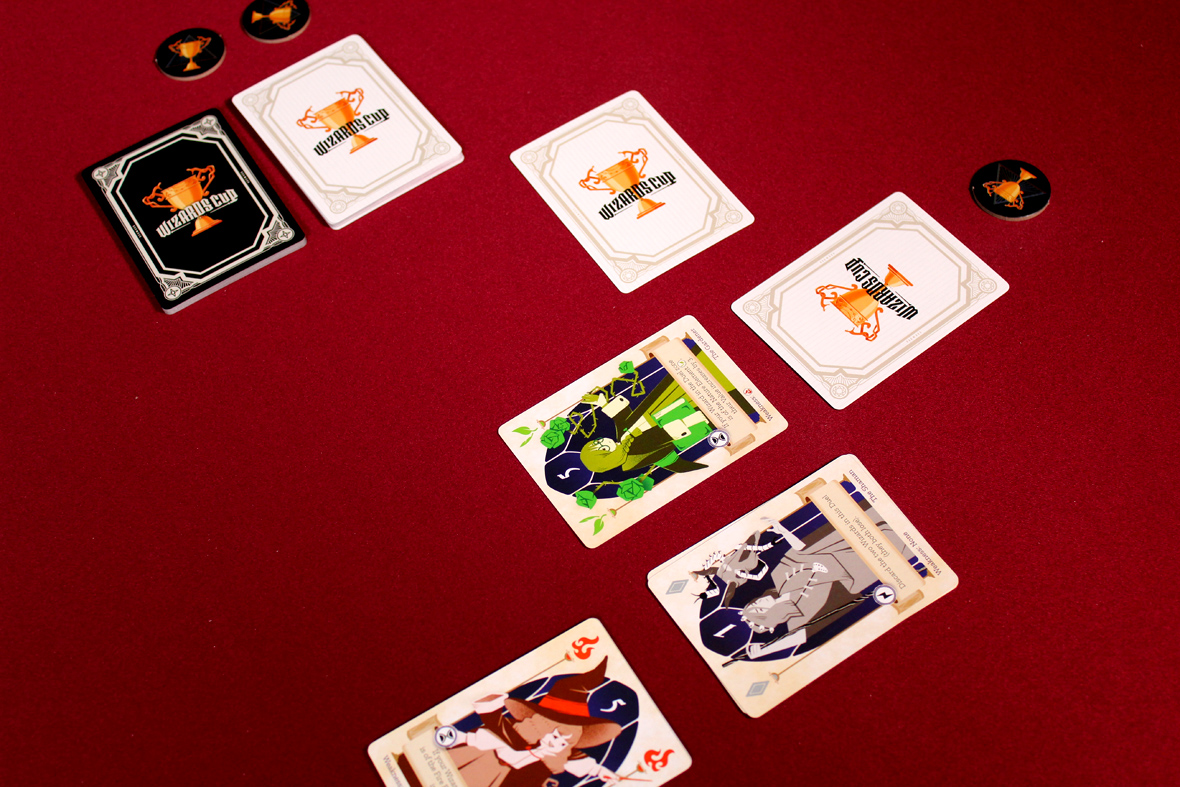
Overall, Wizards Cup is a fun little game! I was particularly intrigued because it has that flair of a game that seems like it would feel random, but a particularly skilled player will win a fair amount of the time more than half. That’s a well-designed game experience, though not terribly surprising coming from Seiji Kanai, of Love Letter fame. His skill really is on display here by even letting the player feel like they have no control beyond specifying some inputs and then getting the outputs of a bunch of duels, but as you get more familiar with the game, you start to see where the tweaks and the ordering of your deck really start to matter. It’s extremely clever, though I can imagine it might be frustrating at first. Didn’t love the rulebook layout for this one, actually; that ended up making our lives difficult when we were first learning to play. I think the game is much more elegant than that experience first prepped us for, though, so I was excited to get back into it and try again, and I’ve been thinking about it a lot since then. Looking forward to getting another shot at it soon. If you’re looking for a quick little duel game, you enjoy games with fun art, or you want to be dazzled by another game from the genius behind Love Letter (and others), look no further than Wizards Cup! I’ve had a lot of fun with it.
If you enjoyed this review and would like to support What’s Eric Playing? in the future, please check out my Patreon. Thanks for reading!
 What's Eric Playing?