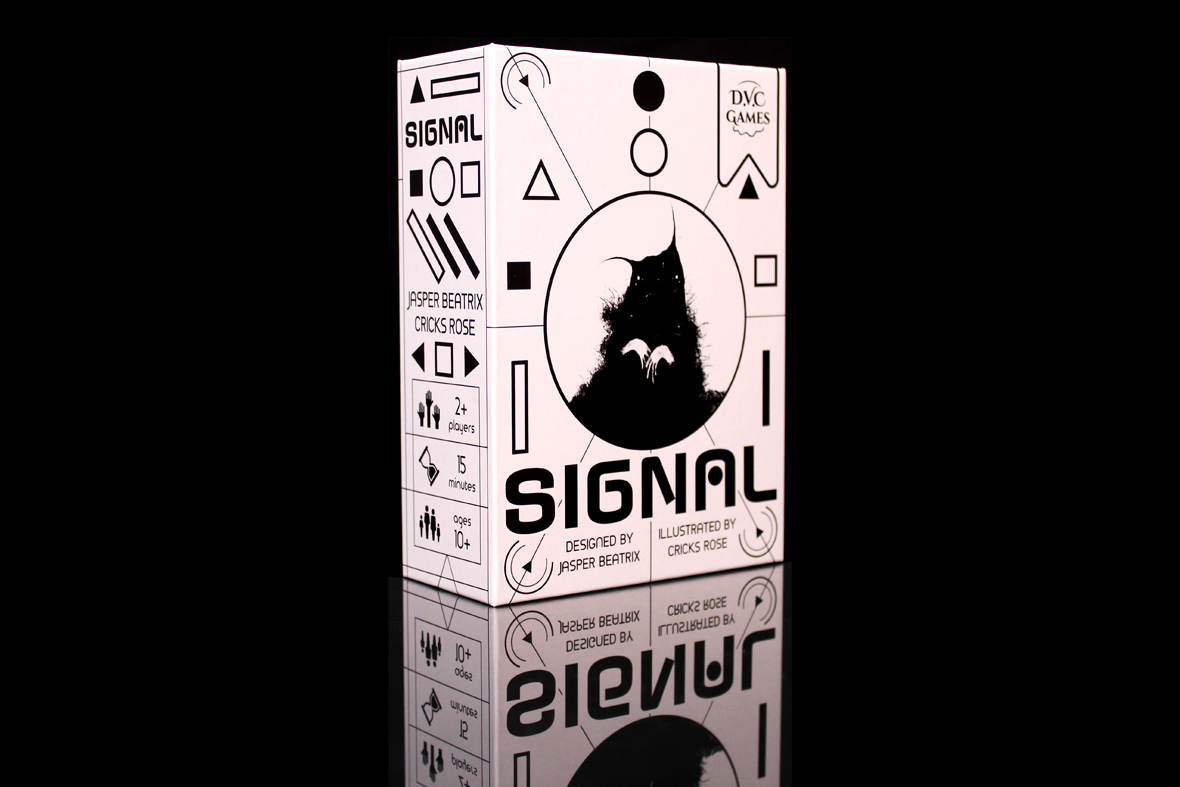
Base price: $25.
2+ players.
Play time: 10 – 20 minutes.
BGG Link
Buy directly!
Logged plays: 3
Full disclosure: A review copy of Signal was provided by DVC Games.
I really like finding myself on the tail end of reviewing. Eventually, I get it all done, but I’m trying to live my best life while balancing, you know, a whole ‘nother bunch of things. This week was largely Blue Prince, but, rogue-like tile-laying puzzle exploration game is incredibly up my alley, to the point where I don’t think I could really bring myself to do much else for a couple days. Honestly, I could write an entire couple essays just based on that. But I digress; I’ve been really excited about Signal for a while, too: it’s from some of the same folks who made the deeply-underrated Rosetta: The Lost Language, which I talked about a while back and absolutely loved. Let’s find out about Signal!
In Signal, players are split into two roles: one role is the Alien, who has just arrived at our world. The other, the Scientists, seek to understand their messages. What secret emerges within those communications? The only way to find out is to successfully transmit and get a response. Each Alien has their own rules and mysterious patterns, and so you never quite know what you’ll get in return. Can you crack all of their codes?
Contents
Setup
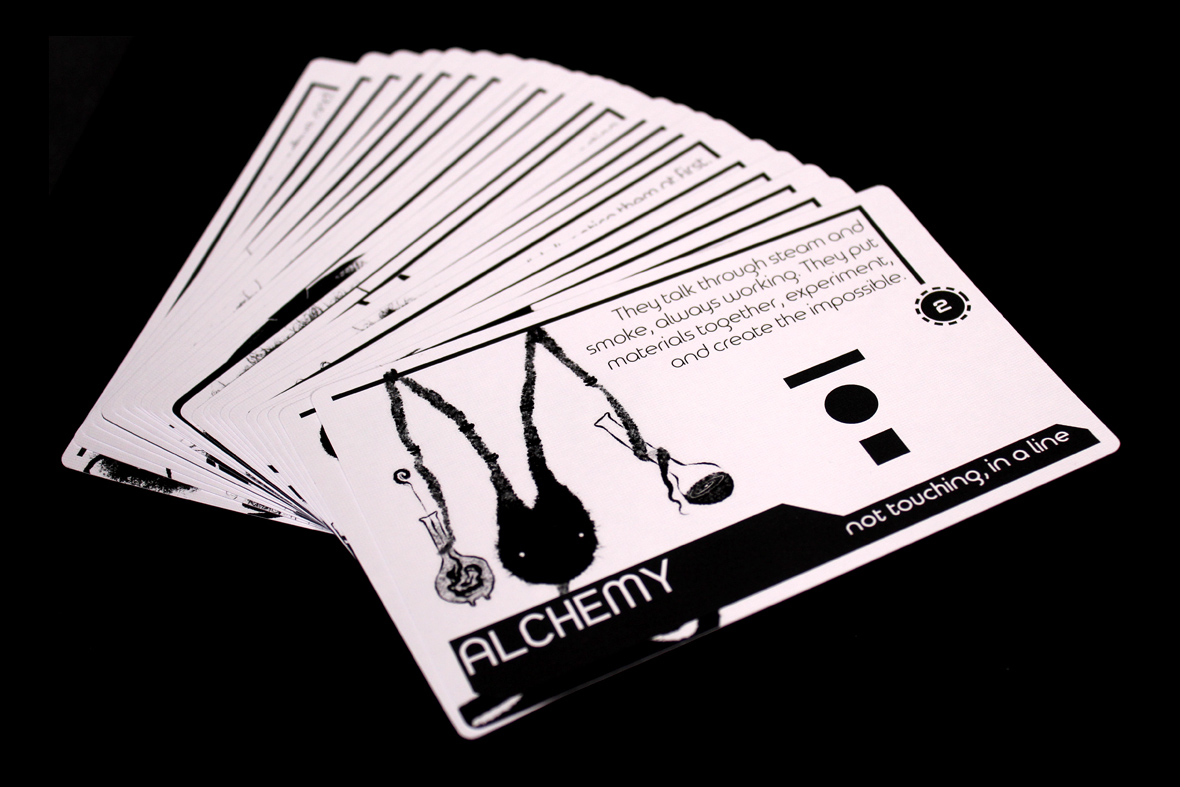
Not a ton here! Just pick an Alien Card and place it Alien-side facing the Scientists. Don’t let them see the side with rules!
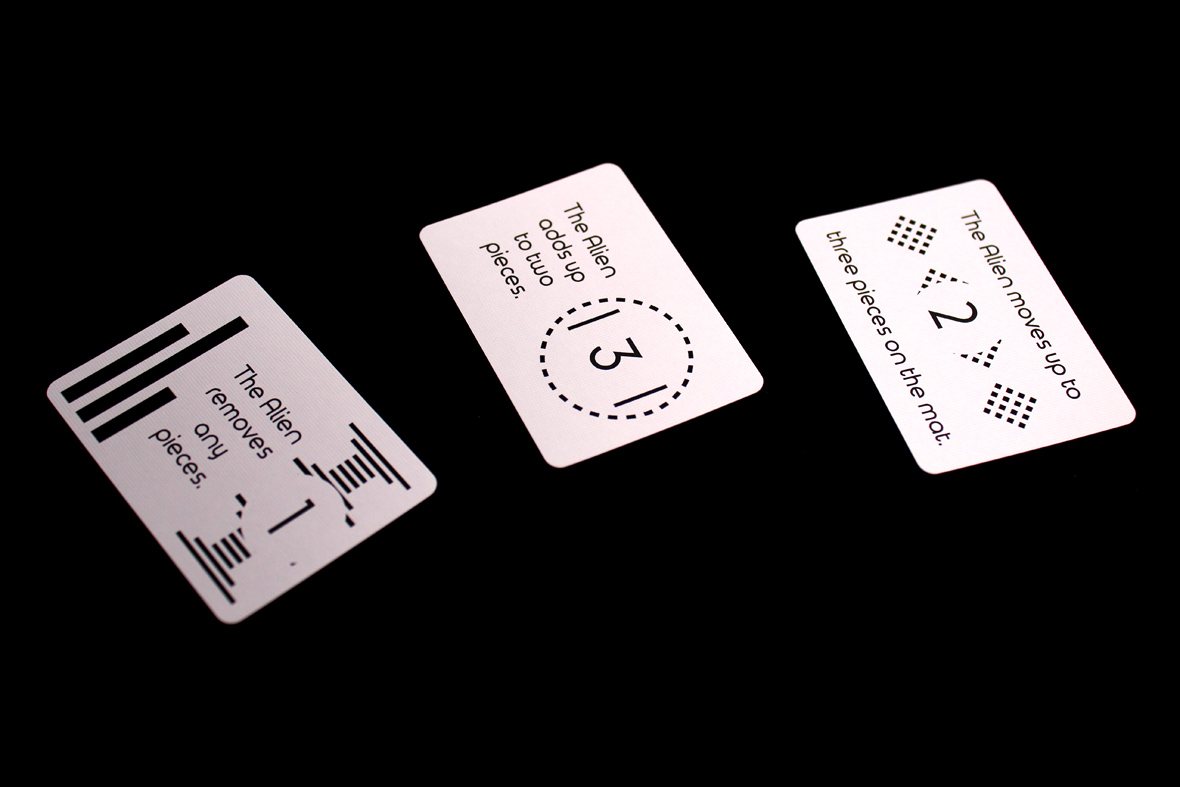
Give the Scientists the tokens:

And give them the stars:

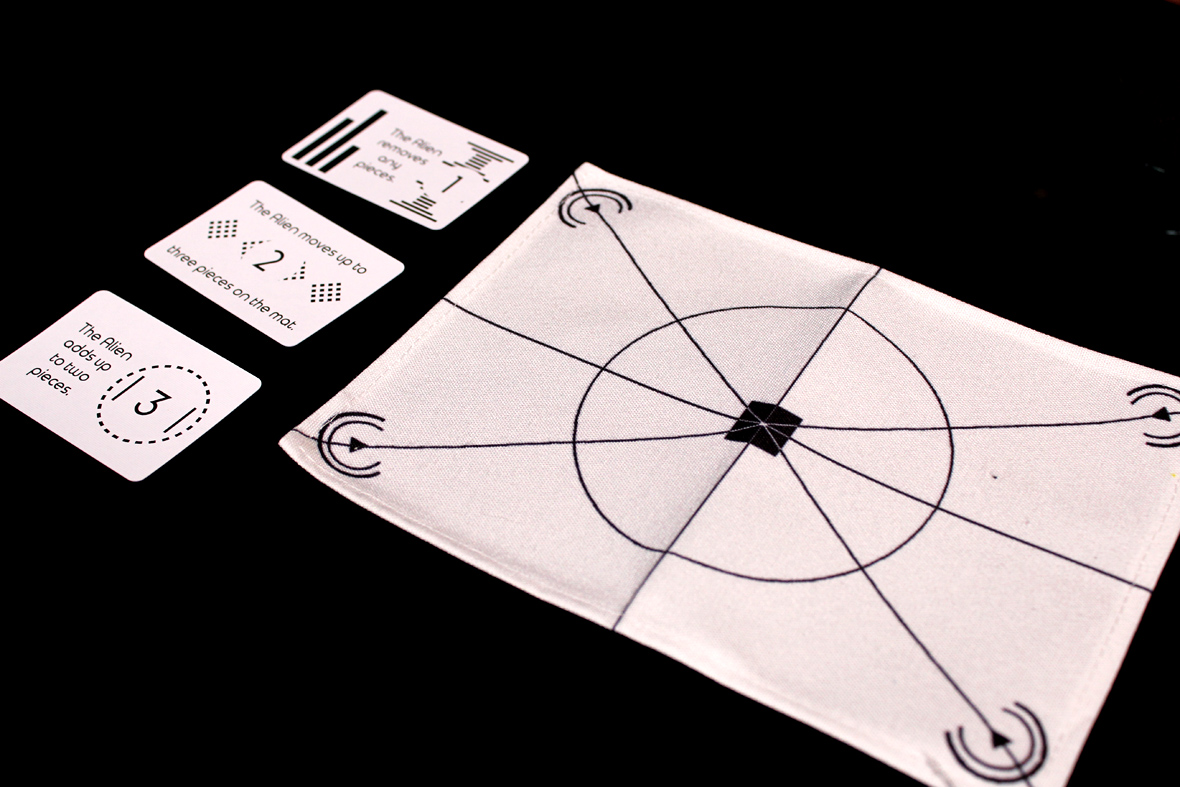
Choose one of each of the 1 / 2 / 3 cards and set them out.
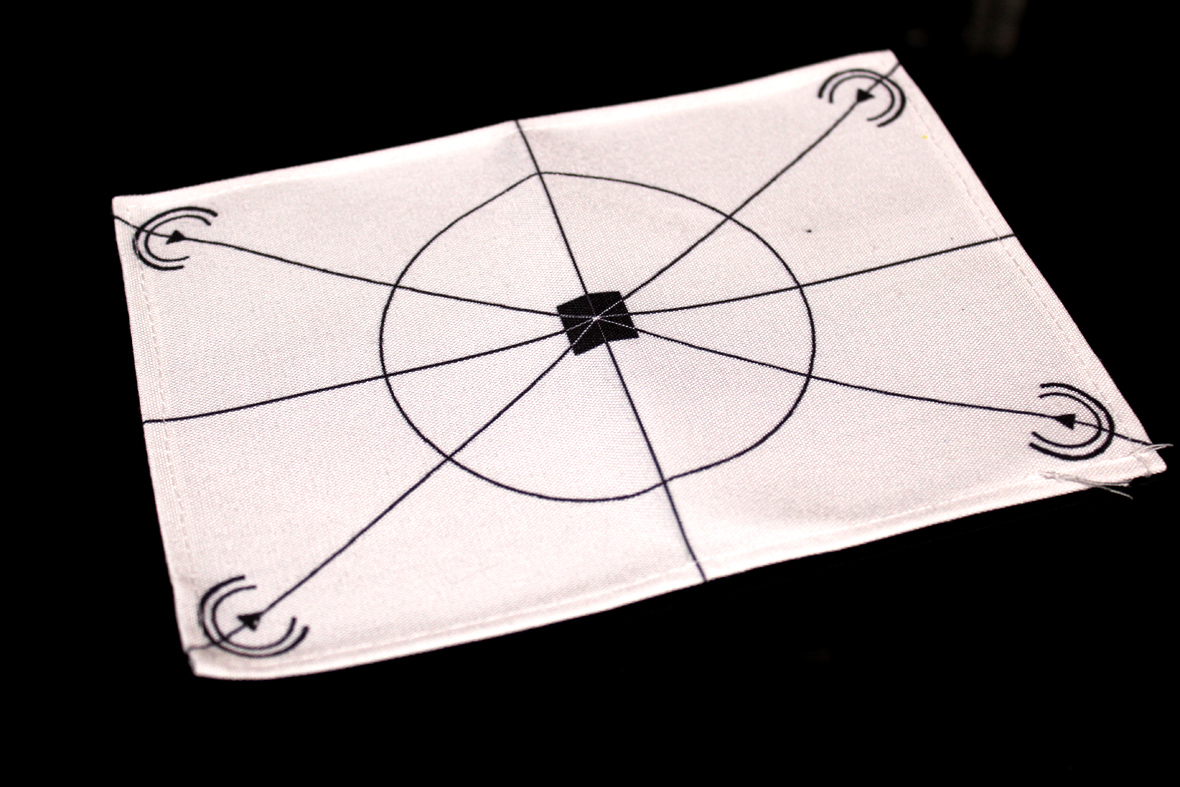
Set the mat in the center:
You should be ready to start!
Gameplay
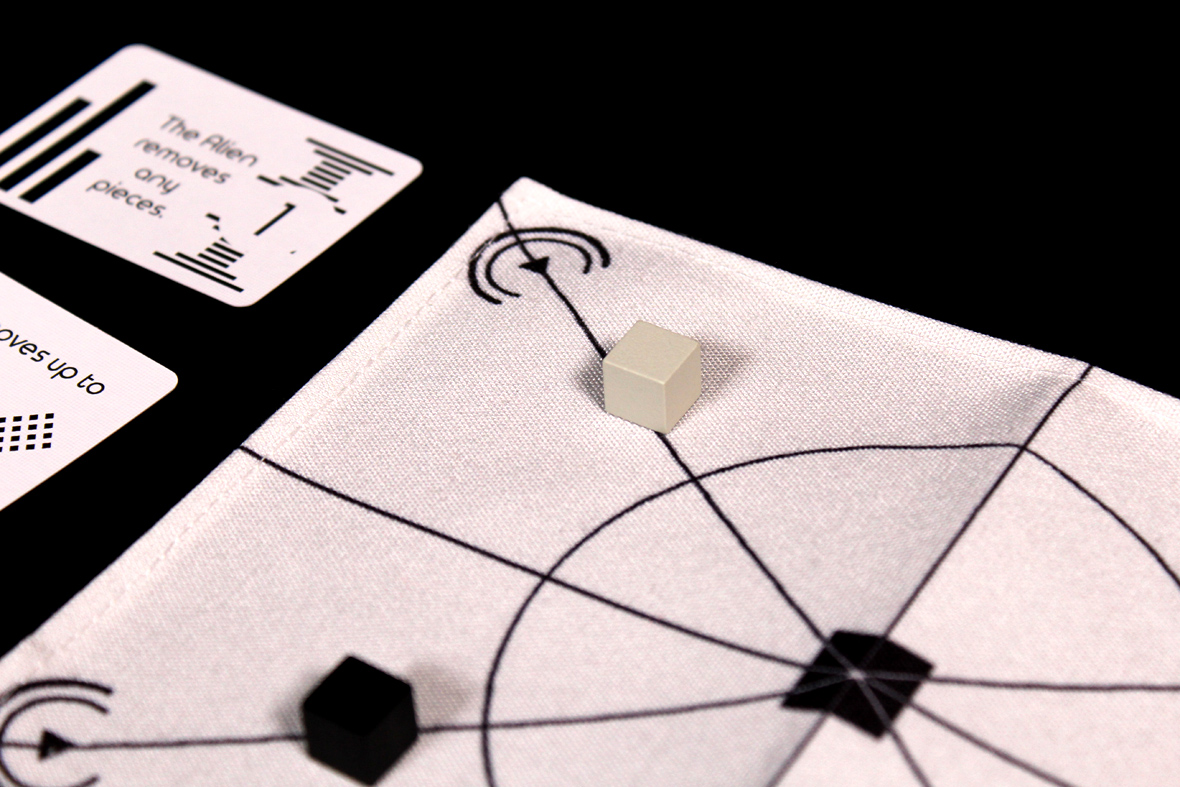
Call and response is the name of the game, here. The Scientists will send their signals and get responses from the Alien! Your goal remains the same: you always want the Response to match the Goal Signal printed on the Alien Card.
Each Phase (out of three), there are ten rounds where the Scientist will first Transmit before getting a Response. To Transmit, the Scientist places as many as ten and as few as zero pieces on the mat. The only really important rule is this: the Scientist cannot Transmit the goal Signal to start. Once you’ve chosen a signal, place a red Star on the mat to indicate that you’re ready for a Response.
Once the Alien gets a Signal, they must follow their card’s rules. In Phase 1, it’s just the first rule. In Phase 2, it’s the first and second. In Phase 3, it’s all three rules. The Alien must perform the rules in order. There’s even more fun to it!
- No backtracking or deviating. Follow the rules.
- If a piece leaves the mat, it’s removed.
- You can skip rules that you can’t execute.
- If the rule doesn’t specify, you choose. This means you can pick which piece to work with or how far to move something if it doesn’t specify.
The Scientists can take pictures or document the Alien’s process. Once the Alien is done, they take the Star Token. This is a full Response. If the Goal Signal is not created as the Response, you have to try again. The Scientists clear the mat and start with another Transmission.
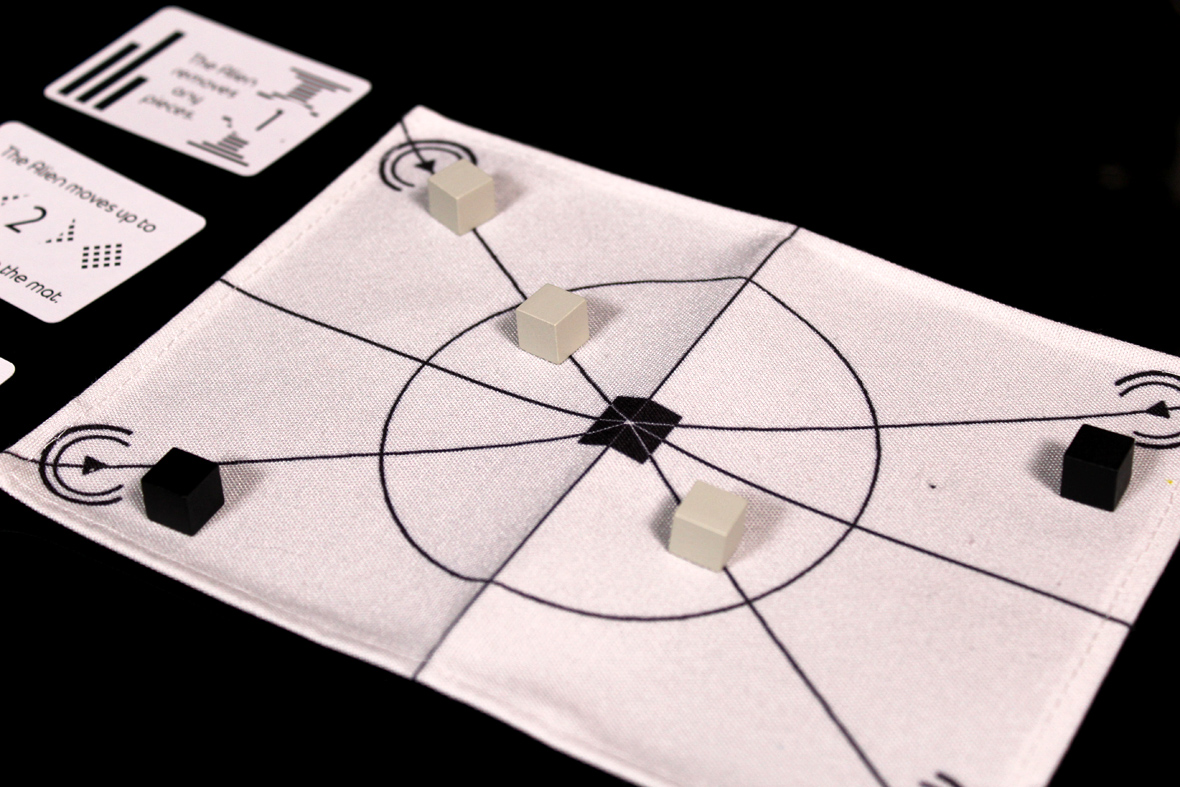
If the Response matches the Goal Signal, you’ve completed the Phase! Move onto the next one and add in a new Rule for the Alien. You score 1 point for each remaining Star token. Give the Scientist the Star tokens back and try again. Continue playing until the third Phase is completed and see how many points you got in total! Any unused ability cards are worth the printed amount. (A score of 20+ is really good!)
Player Count Differences
Not really any, with this one. You can add more players to be the Alien (collectively) or you can add more players to be the Scientist (collectively), but it’s still team-based cooperative play. I would say that more Scientist players makes the game a bit easier, since you can collectively have more players remember what happened, but it also adds a confounding variable of, you know, more voices. There are more people who have their own opinions and may not necessarily jive with yours, which may make deduction more challenging. Live your best life, though I do enjoy playing two players.
Strategy
- If you’re the Alien, you’re on the same team as the Scientists. Remember that! This means that if you’re not sure what you should do when presented with a rule, do whatever helps the Scientists the most! This might mean that you make a move that doesn’t necessarily get them closer to the Goal Signal, but it may help give them more information. Sometimes the real advantage is knowledge!
- As the Scientists, your goal is to observe and remember but also experiment. You need to vary your approach, assuming that you don’t correctly guess the number and type of pieces you need to place to get the Goal Signal on your first try. It could happen, but it’s also fairly likely to not happen.
- Keep in mind that the name on the Alien Card is a clue. Not just the name, but also the Goal Signal. What pieces are in there? How many types and colors? Worth thinking about. With the name, though, it might tell you what you can expect. Or, at least, I would expect something different from Magnetism than I would from Alchemy or Light.
- Experiment in three dimensions, as well! Sometimes stacking things makes a difference! Sometimes it absolutely doesn’t and doesn’t help you! Only one way to find out!
- Watch the Alien’s movements to try and figure out the rules. You’re allowed to take photos or notes or whatever you need. There’s a lot of information in watching their behaviors.
- You need to decide when you want to make a minor change or a major change to your strategy. Sometimes you know what you’re doing isn’t working and you need to start from scratch. Other times you’re just one piece away from figuring it out. Both are outcomes that will likely happen at some point, and figuring out the appropriate response is key.
- If you’re not sure, use the cards. Yes, you lose potential points by using the cards, but nobody cares and nobody’s counting. You’re going to be fine. Just use them, make your life easier, and then keep moving. That’s literally what they’re there for.
Pros, Mehs, and Cons
Pros
- Absolutely love the alien art styles. They’re extremely surreal and otherworldly. I think they’re unknowable and that’s what I like about them. Sometimes aliens should just be shapes and ideas approaching the form of something recognizable but not quite there. It makes them a bit scarier, but a lot of times the unknown is what people fear the most.
- The game plays super quickly! I love a fast game. It means you can play a bunch of rounds and change up who plays where so everyone gets a shot at the experience.
- I love a box with a magnetic lid. It’s just … classy. It’s a charming little upgrade over a telescoping box, and they used the lid to great effect, printing a bunch of additional information on it. So not just form, but also function!
- The black-and-white color scheme is really striking, as well. It makes photography a nightmare but it does look sharp. Very high-contrast and all that.
- I do like how free-form the game is. There are plenty of ways to get to the right suggestion but it’s more about facilitating an experience than it really is about scoring points and “winning”. It has the trappings of a larger game being built around it at some point, which would be cool. (Sort of like how Star-Crossed requires a Jenga tower for its game.)
- Letting the Alien have so much freedom on how to play is interesting, as well. I appreciate that they’re explicitly encouraged to help their co-players; I can imagine that message getting lost on some players otherwise.
Mehs
- This one’s tough on new players; just keep that in mind if you’re playing the Alien in the first game. Knowing not just what’s possible but how to go about making those deductive connections is hard in any game and especially challenging in this one. Just be gentle on your co-players if you’ve played before.
Cons
- There’s something a bit sad about how you can’t play as the Scientists once you know an Alien’s rules. I wonder if this sort of thing could be done programmatically, like Turing Machine. It does seem like some level of this could be automated to create rules, but I don’t quite know enough about the way that would be done. It would be super cool, though!
Overall: 8.5 / 10
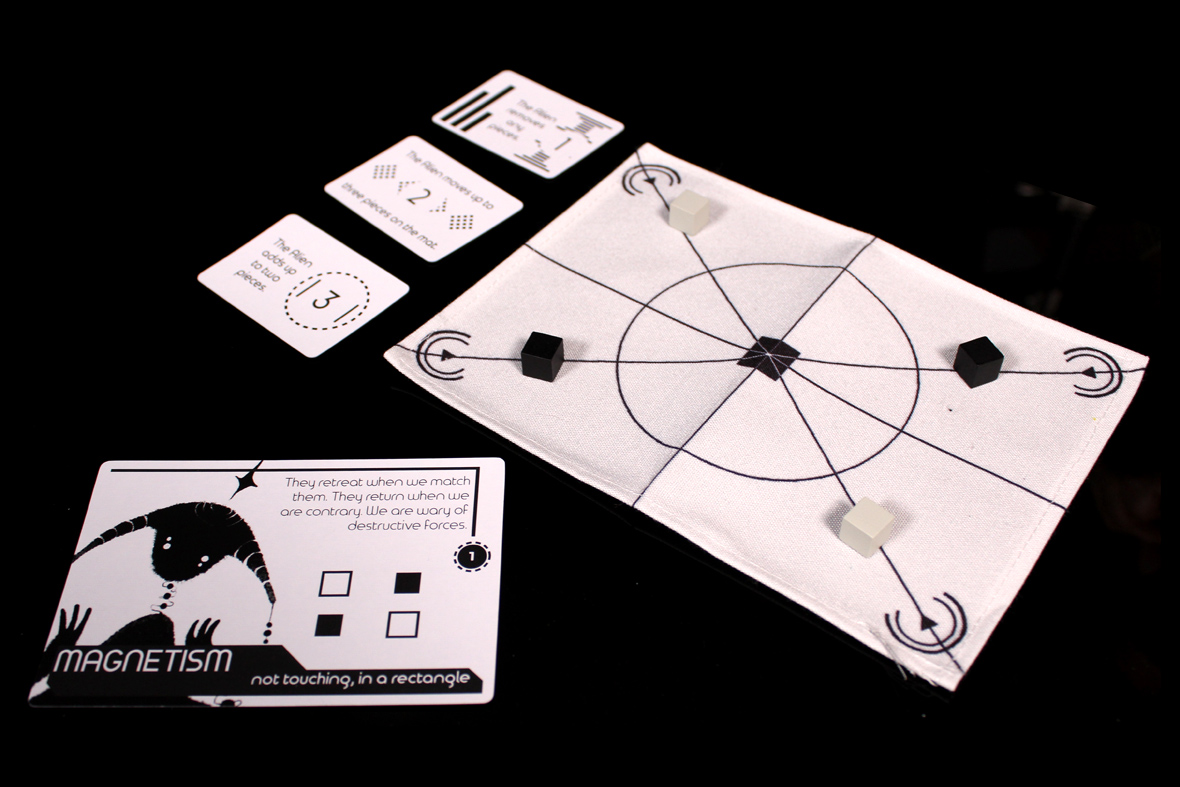
Overall, I think Signal is great! I love games about language and communication; they’re super interesting and they have a lot of cool depth to them. I’ve loved them since Dialect, Rosetta, A Message from the Stars; all games like that. Signal sits very proudly in such good company, with a lot of cool stuff to explore. I do wish that there was some sort of way to automatically generate the Aliens to keep the game moving forever, but I’m selfish in that regard. The Aliens as a presence are forceful, though! They’re entirely unknowable and just on the edge of terrifying. Not scared of them, but they’re so ominous and otherworldly and it’s fantastic. Each one is a masterpiece, even if an almost completely black-and-white game is extremely difficult to photograph. I did my best. It’s striking. I’m interested in trying this with larger and mixed groups, and thankfully the game is really portable so it’ll probably end up in my to-go kit for a while. I really enjoy the deduction elements as well, though this game can be tough. That’s half the fun, though. If you’re looking for an interesting and novel language deduction game, you’ve always thought that you could solve the puzzle in the movie Arrival, or you just like aliens, you’ll probably enjoy Signal! It’s a really neat game.
If you enjoyed this review and would like to support What’s Eric Playing? in the future, please check out my Patreon. Thanks for reading!
 What's Eric Playing?