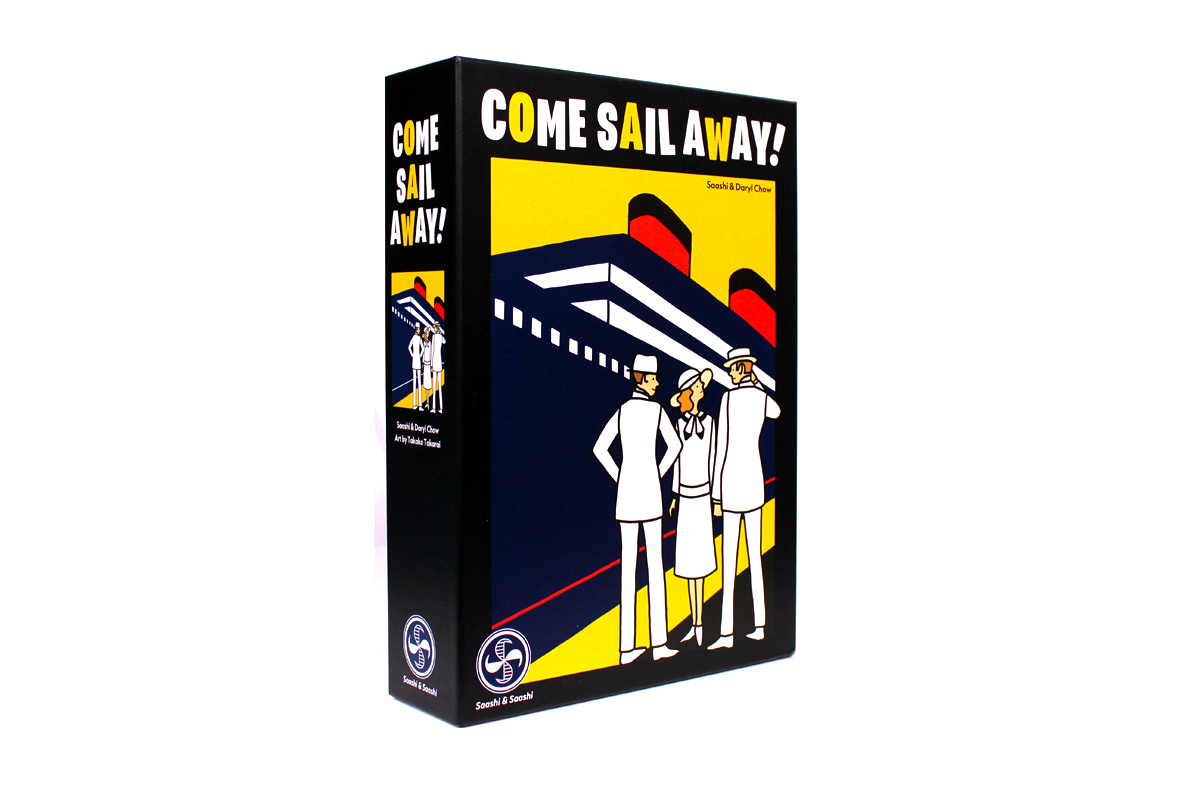
Base price: ¥6,600.
1 – 4 players.
Play time: ~25 minutes.
BGG Link
Buy directly!
Logged plays: 3
A good friend of mine recently went to Japan and asked me if I wanted anything, and this was top of my list. I think I have most of the other Saashi & Saashi games released, lately, on account of them attending PAX Unplugged. Really a huge highlight, there: they came with Daryl Chow, a genius game designer, and were selling all of their stuff together. There was a polite line around the booth of folks who knew how rare of an opportunity this was, and I think they sold out completely. Hope they both come back next year and become a regular fixture of the show (or start coming to PAX West). Either way, she did come back with a surprisingly-not-damaged copy of Come Sail Away!, which I was impressed by. Transporting games is a tough business. So, let’s talk more about it!
In Come Sail Away!, players are living the dream and helping passengers board their luxury cruise liners. You’ve got the rooms prepared and the boat is empty, so now, just make sure everyone gets where they want to go. The passengers are a little agitated about having to wait in line, however, so they might get frustrated if you don’t put them in the rooms they want to be in most in order. Thankfully, there’s plenty of room on the dock so you can always just pass them off to another boat before they get mad, if you’re in a bind. Will you be able to make the crowd happy before their trip?
Contents
Setup
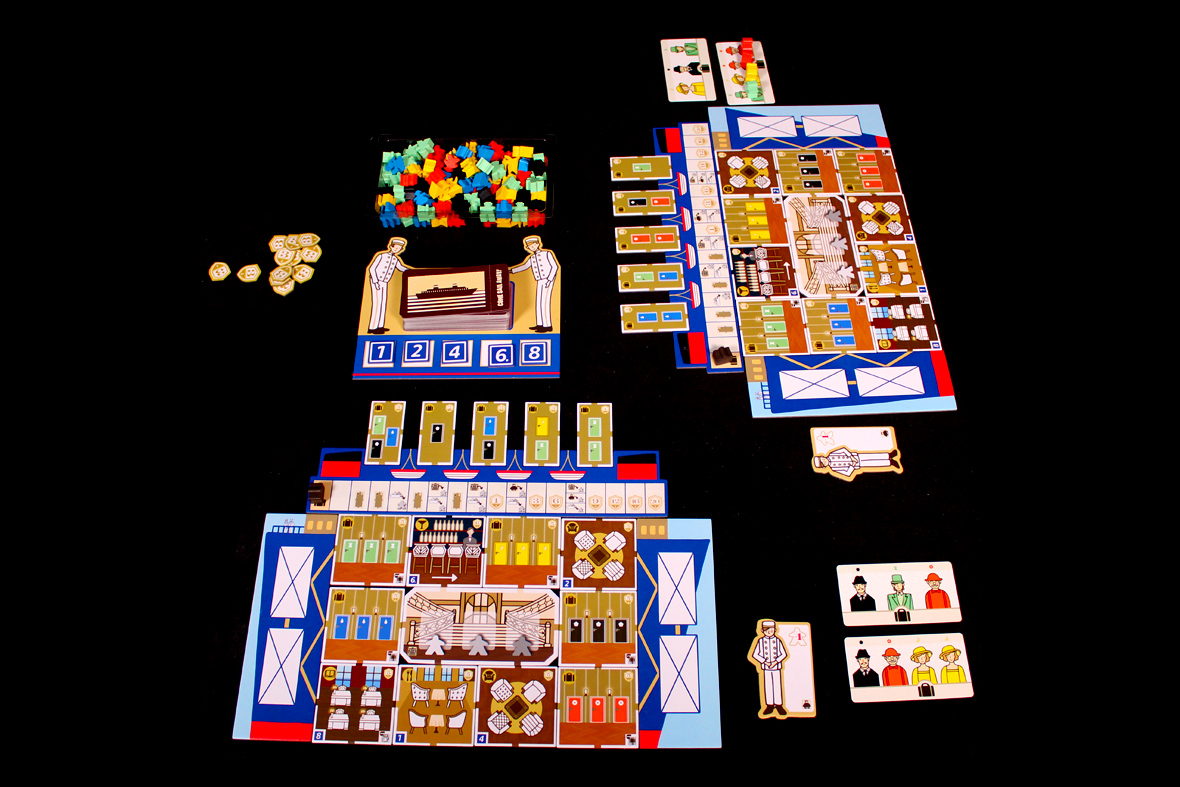
Not too aggressive in terms of setup; all of the large tiles and such have player-specific backs, so you can organize those before or after a game to make setup much easier. Either way, give each player a set of tiles:

One player chooses five of the numbered rooms and shuffles them with the cabins, placing them around the Grand Staircase. That plus the top / stern / bow makes a full ship. Take a Luggage Token and place it on 0 to complete the look:
Each other player follows suit. Then, shuffle the extra Small Cabins and give each player five to place above their boat (in the slots):
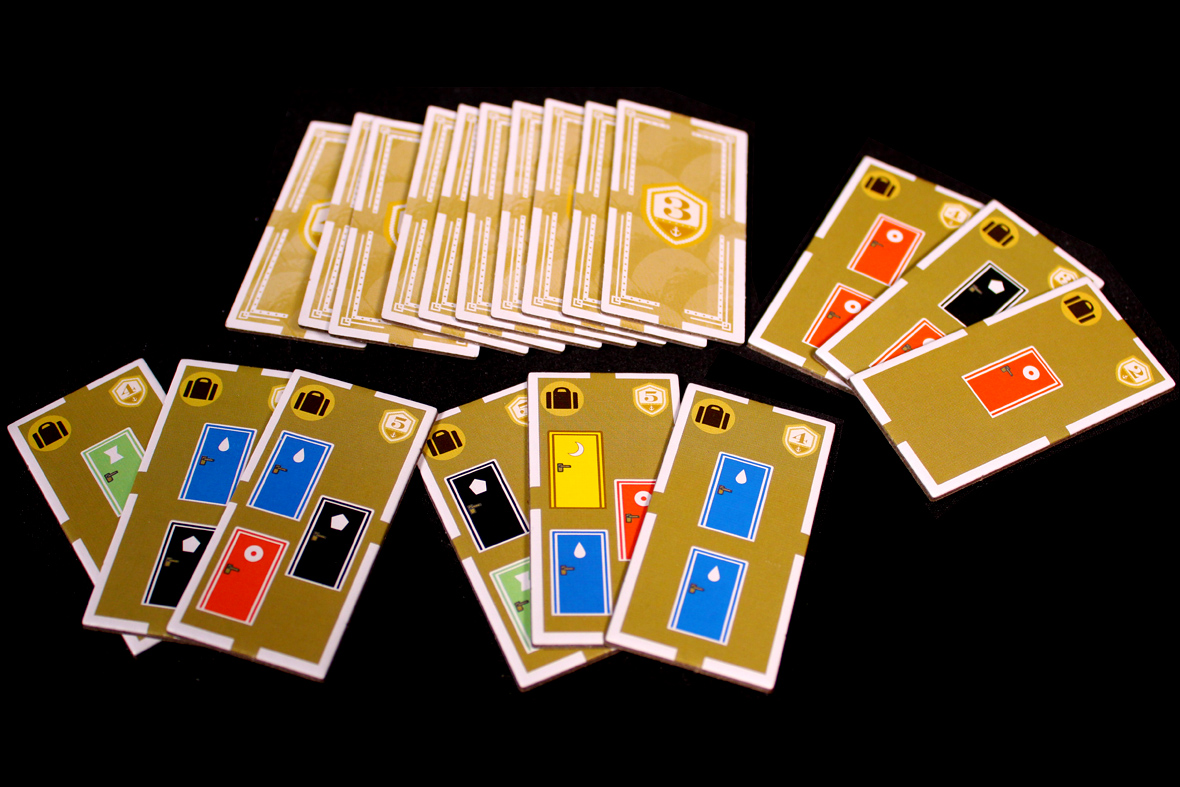
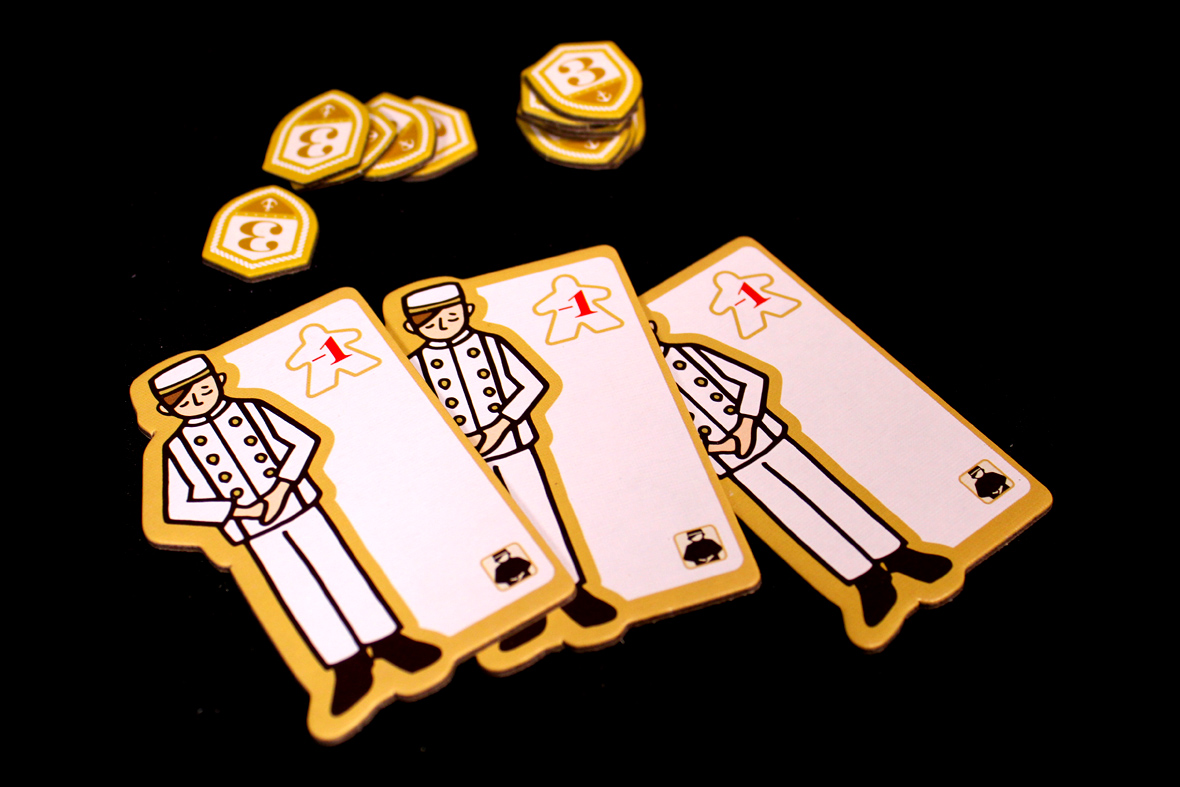
Give each player a Disgruntled Passenger Board and set the Bonus Tokens near the center.
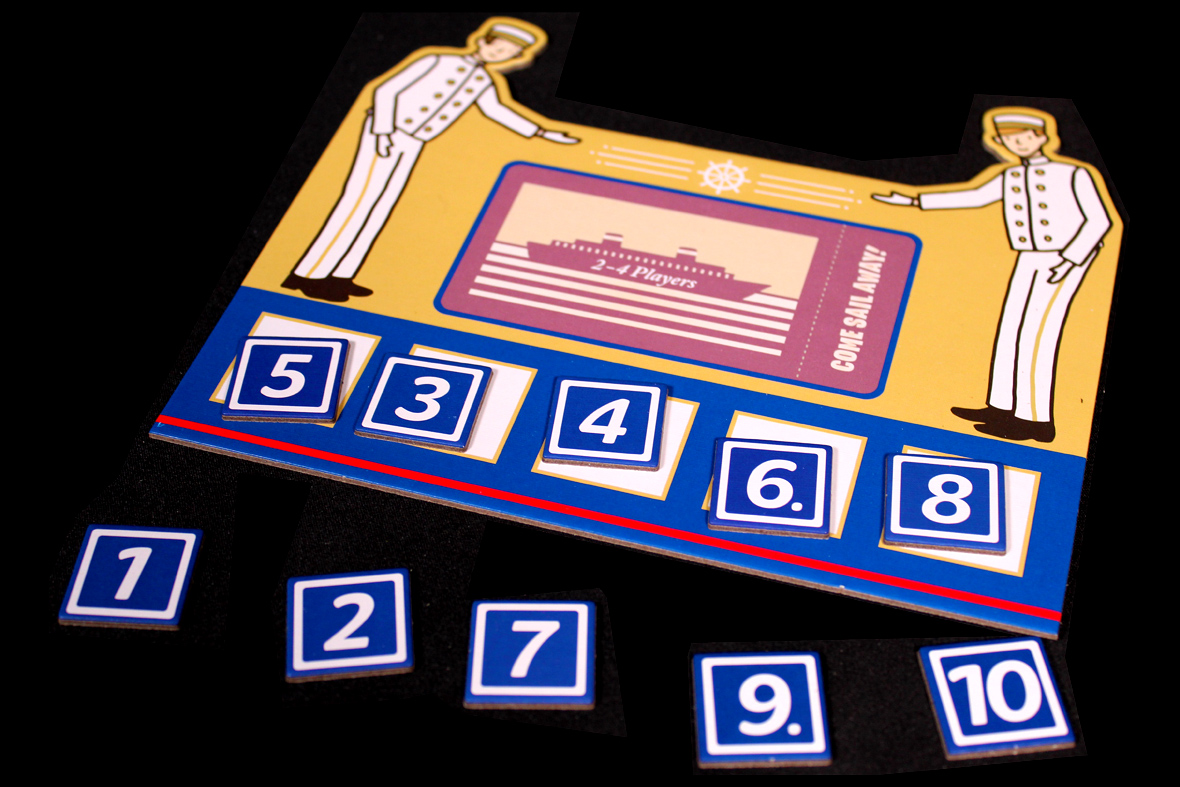
Place the Common Board in the center and the Bonus Number tokens corresponding to the numbered rooms you’re using on there:
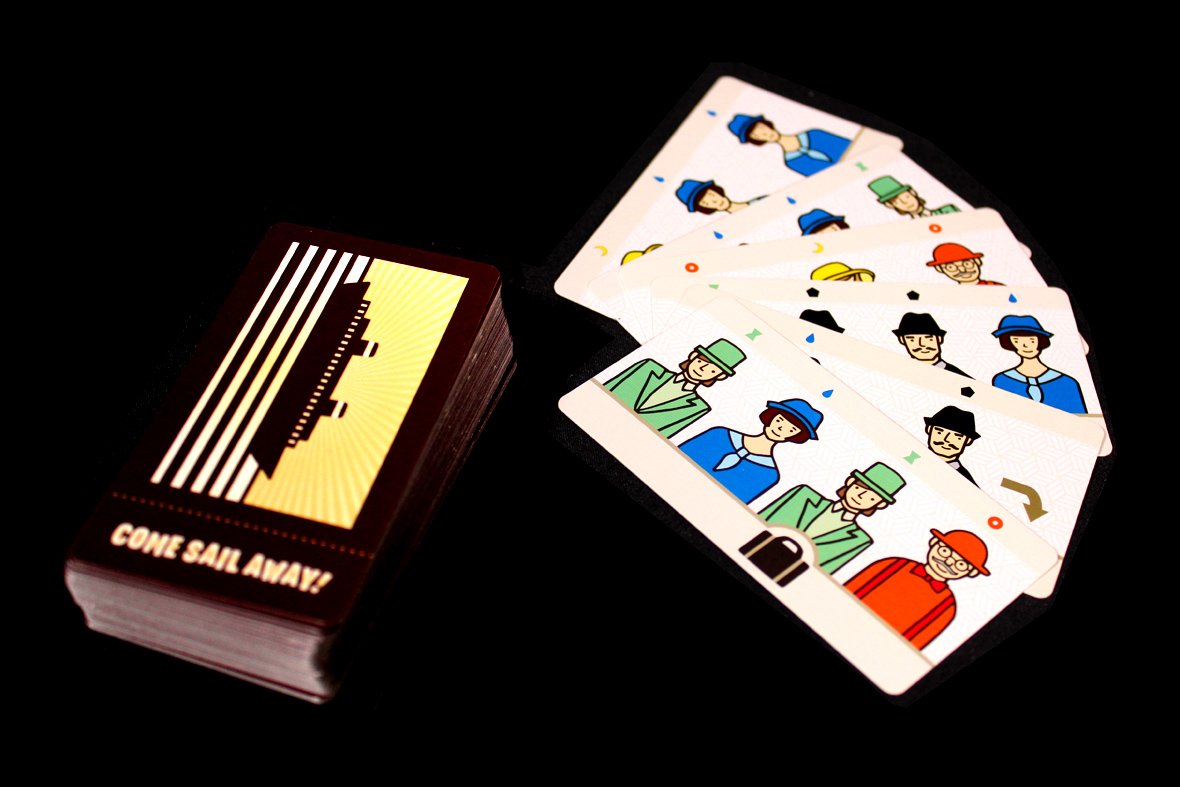
Shuffle the cards and deal each player two.
You should be good to start!
Gameplay
Wildly, not a particularly complex game. Your goal is to score points by filling your ship with passengers, and helping passengers get their luggage to cabins does even more for you.
Over twelve rounds, you’ll take one turn each round choosing one of the two cards in your hand and playing it. That card depicts passengers that you must add to your boat, either left-to-right or right-to-left. Each passenger must be placed in a room orthogonally adjacent to the last passenger placed, and each passenger placed must follow the rules of that room or be placed in Disgruntled Passengers. I assume it’s a secret hold below decks; very fancy. You cannot double back or hit the same room more than once, but two-passenger cards let you place each passenger in a different room that doesn’t have to be adjacent.
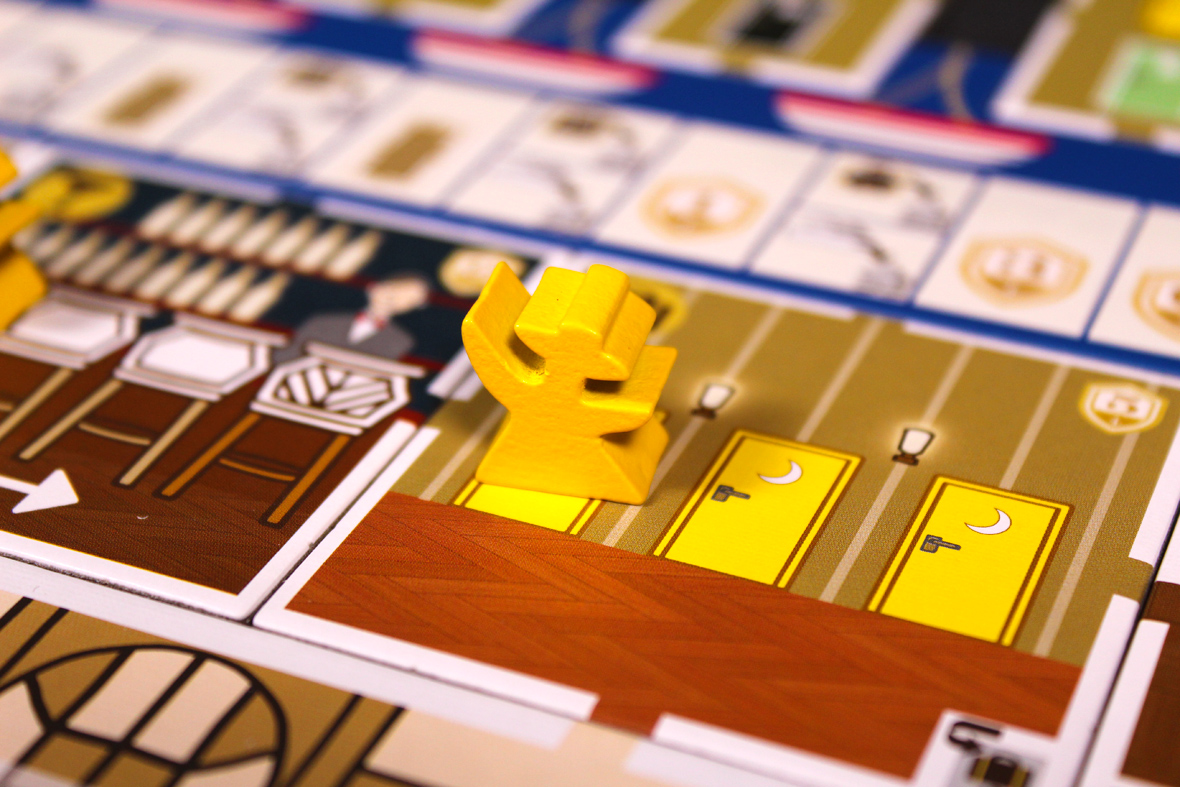
The rules for rooms vary, but they usually are pattern-based, such as all different colors, all of one color, four or five different colors, two pairs; things like that. Adding the passenger with the luggage symbol below them to a cabin of their color lets you move up the Luggage Track by one, granting an immediate effect. This may let you add extra Small Cabins (just like a real boat), move passengers from the Grand Staircase or Pier or Disgruntled Passengers cage, or just give you points. Upon completing a room, you remove the passengers from it and flip it over. If nobody has completed that room yet and it’s a numbered room, take a Bonus Scoring Token and flip the corresponding Bonus Number Token to the X side.
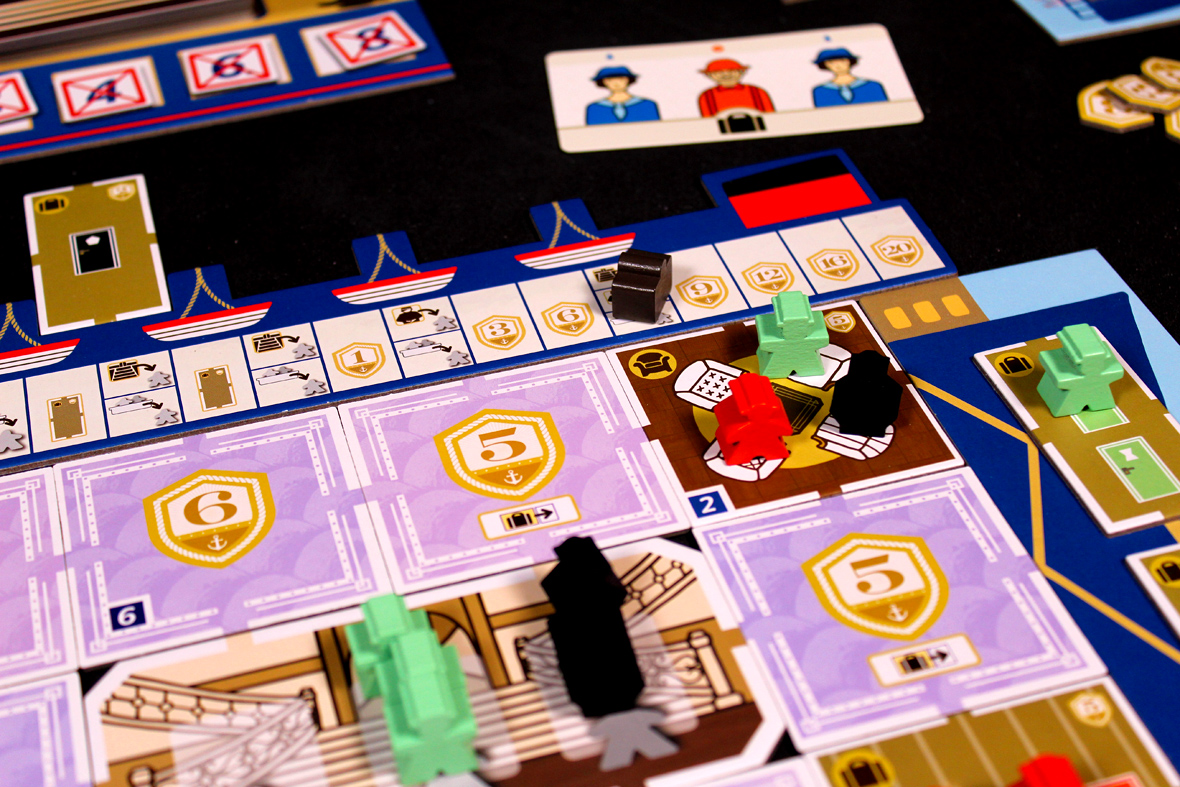
At the end of your turn, pass your remaining card to the left and draw a new one from the deck. Play continues until 12 rounds have happened. After that, players total their scores and the player with the most points wins!
Player Count Differences
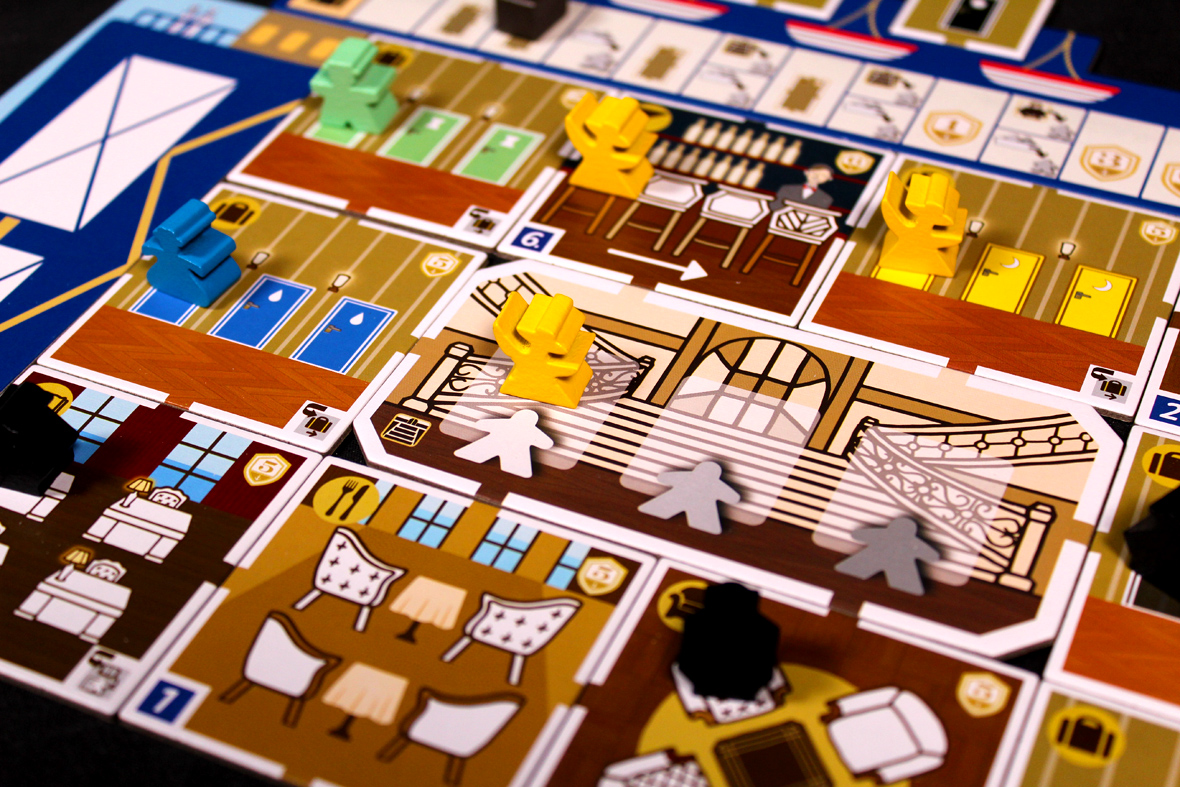
The nice thing about drafting games is that they tend to play a bit similarly across player counts. Here’s no exception, really. As you play, you get a card from an opponent, draw a card from the deck, play one of them, and pass them along. With more players, there’s a lower chance that you’ll get the same card back, I suppose (still not 0%), but the player count doesn’t affect the draft that much. What you will see some shifts in is I would expect a lower score at higher player counts, as it will be harder for players to monopolize the Scoring Bonus tokens the same way that they can with two, as players will shift priorities based on their cards and, by necessity, whatever their opponents are doing. This can sometimes cause those Scoring Bonus tokens to get mostly distributed over a round or two if all four players fill out different rooms at the same time, for instance, whereas even if both players in a two-player game focus on filling out different rooms, they should get two tokens cleanly and potentially share the third one. It’s not a huge potential swing but it’s non-zero, so, figured I’d mention it. No real preference otherwise, though I will say Come Sail Away! is quite snappy with two players.
Strategy
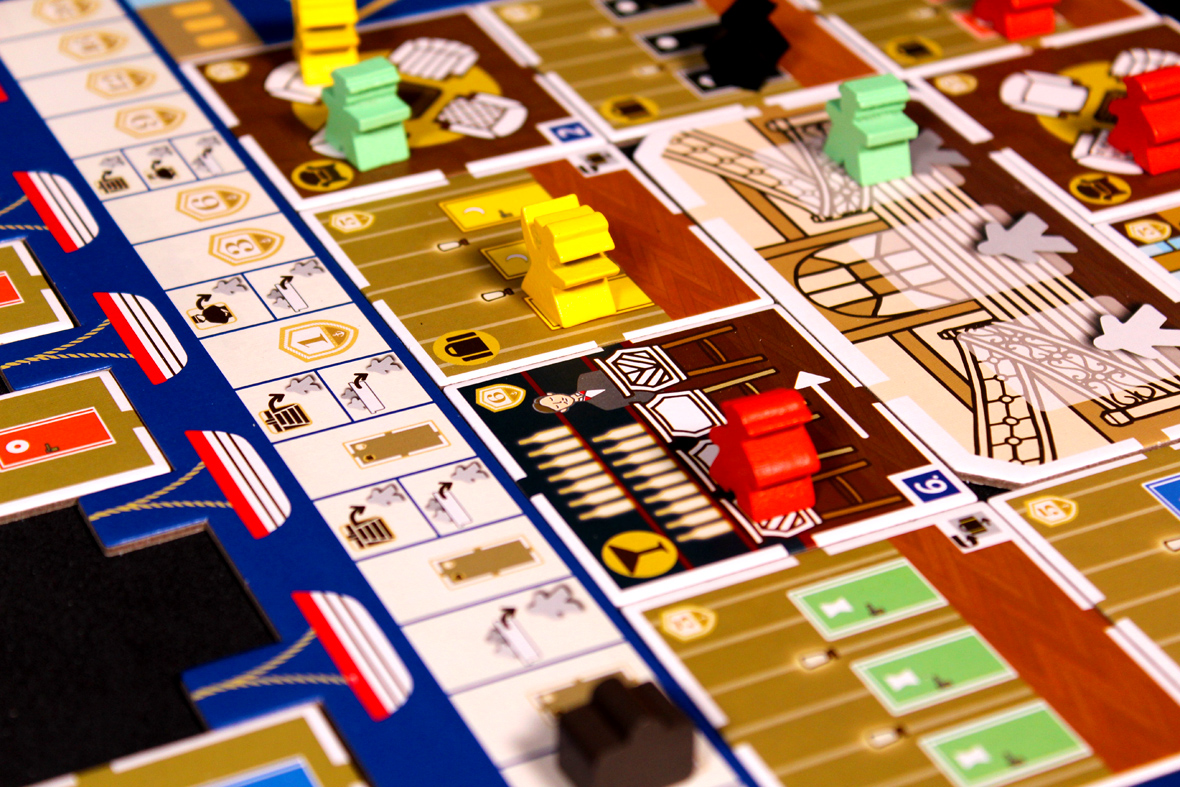
- Disgruntled Passengers aren’t the worst thing that can happen. You can get rid of them pretty easily with various Luggage Track effects (or the Theater, if you’re playing with that). That kind of makes the space just useful storage that you need to clear before the game’s end if you want to avoid losing points. But, if it comes down to it, just do the math: are you earning more points with this than you would if you didn’t take the penalty? Worth considering!
- Try not to isolate rooms. When you isolate a room by completing the rooms around it, you make it impossible to place there without disgruntling a passenger (and they only have so many gruntles to lose). Especially worry about isolating the corners, since they can’t be reached via the Grand Staircase. If you cut off a corner, you might just not finish that room.
- Keep an eye on what other players are doing if you want Bonus Tokens. You can pretty sneakily also complete a room that another player is going to complete this round so that you both get Bonus Scoring Tokens. It’s slimy, but, hey, this is a public information game. That said, if players catch you looking, they will eventually make it difficult, so, you know, don’t slow the game down or be too obvious about it if you actually want to make this a strategy.
- The number of passengers doesn’t necessarily make a card “better” or “worse”; it really comes down to whether or not you can place them all effectively. Placing four passengers perfectly is obviously better than placing two, probably, unless that means you’ll have less room for other high-value cards later, for instance. You also don’t want to completely fill your cabins with passengers with no luggage, since you’ll miss out on Luggage Track rewards. Plan accordingly.
- Don’t neglect the Luggage Track. There are big scoring opportunities there, especially if your opponents aren’t filling it out. It’s tough to beat 9 unanswered points, for instance, especially with the other placement bonuses you get from filling it out.
- Certain rooms have specific Completion Bonuses, which is always nice. You can use them to place extra passengers in rooms, which can help you complete additional (even isolated) rooms. All very useful.
- The Grand Staircase is useful, but don’t rely on it too much. The Grand Staircase is extra storage for three different passenger types. You can place as many passengers of a type on there as you want (provided you only place one passenger there per turn), but as those spaces fill up, it limits your options. Plus, you’re not scoring anything for them being there, so you may be able to more effectively place those passengers elsewhere.
Pros, Mehs, and Cons
Pros
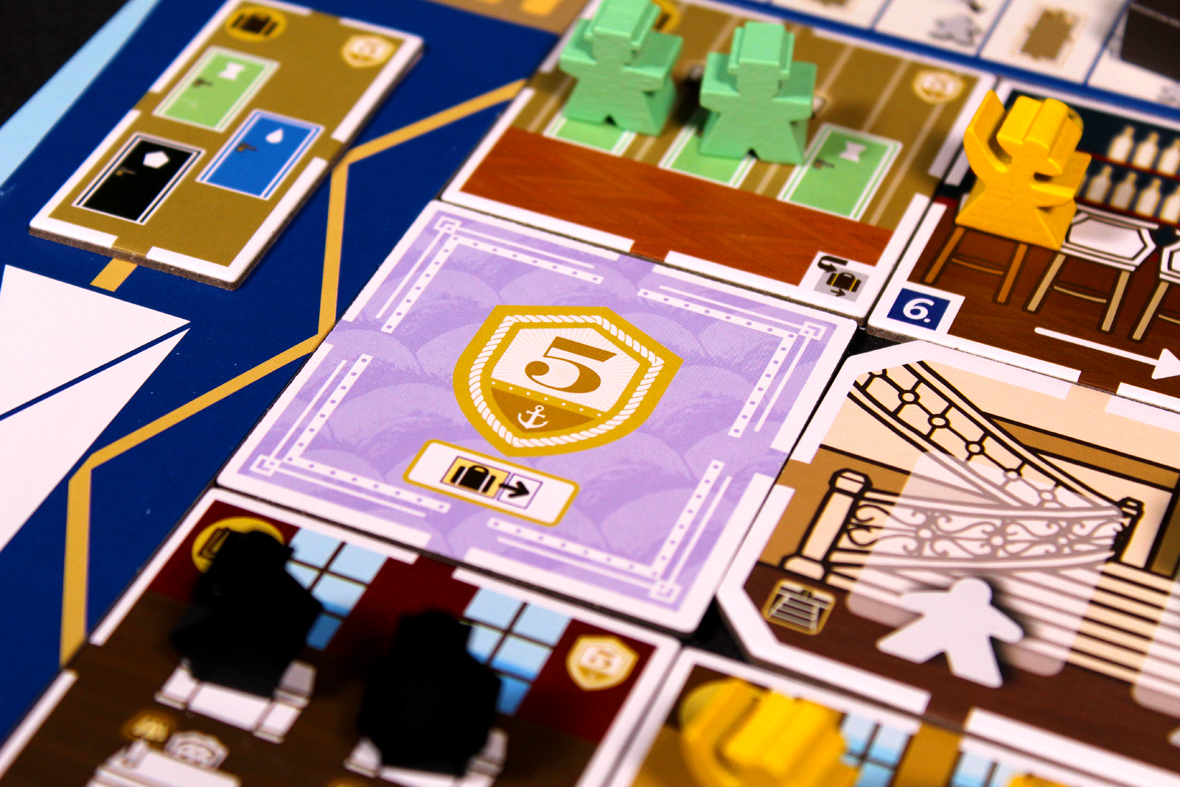
- The art style is really great, here. I just really jive with Saashi & Saashi’s art style. It’s nostaglic and a bit whimsical and colorful and it makes the whole thing look bright and exciting and inviting. I find it very charming.
- This game was a lot shorter than I expected it was going to be, so we ended up playing it a couple times in quick succession. I think when I see a large box I assume lower bound 45 minutes, so getting through this in 25 was a nice change of pace. I think they just wanted everyone to have a big boat, which I can respect.
- I like the variety of tiles; it seems like a pretty easy game to add more tiles to as well, if you’re looking to expand. You can play with any five of the ten tiles, making for, what, 252 possible combinations of games? If you’ve played them all, please let me know in the comments which one is the best. Note that I’m not counting placement or cabins in this, otherwise the number would be unbelievably high. (Would it be 252 factorial? Someone who does math, help.)
- Daryl Chow and Saashi are just a powerhouse design team, and for a nice casual game, no exception here. I love pretty much all of both of their designs, so, whenever they team up I know I’m in for a treat and this was no exception.
- I enjoy the challenge of completing rooms getting you points but drastically limiting your subsequent options. Once they’re complete, you can’t place on them anymore! This means that you might want to be strategic about how you approach finishing that room if you don’t want to cut off other useful options.
- Very approachable, too! I feel like I could teach this to anyone. I think the game seems more complex than it ends up being, since you’re really just placing tokens and trying to score points.
- Most of the iconography is very clear, as well. It takes a game to figure it out, but once you’ve got the general idea of what they’re going for, everything is pretty easy to power through.
Mehs
- Flipping tiles that are flush with other tiles continues to be mildly annoying. It’s not the worst, but you do occasionally have to move things so that you can flip a tile to its completed side.
- It would be nice to have either a round tracker or a designated game space to place cards to make it clear how many rounds are passing (for players that don’t stagger their cards to track like I do). If you’re not doing this already, stagger your played cards so you can see how many rounds you’ve played. If you do that, you’ll know when the game is about to end. You can also just … count to twelve, but I’m usually all-in on strategy when I’m playing and I need visual cues.
Cons
- Must be a production error of some kind, but the player colors on the back of my tiles are not particularly consistent. The purples aren’t all the same purple on the back of the tiles, which threw us off. There are some other coloring mistakes but that’s one of the more egregious. I wonder if these were just two different printings or two different machines that got combined together, or if they’re all like this?
Overall: 8.75 / 10
Overall I think Come Sail Away! is another great Saashi.& Saashi title. I had forgotten Daryl Chow was a designer on it before I played it the first time, but I love his games too, so that makes this one basically a no-brainer for me. While Remember Our Trip is pleasant and nostalgic, Come Sail Away! is boisterous and snappy in a way that I find quite entertaining, as you’re trying to place essentially a snake of passengers without pissing any of them off. It’s a smart design, especially as the game progresses and players have differentiated enough for the various cards to be extremely helpful or very not. Sometimes you get the thrill of a perfect placement just boosting your score to new heights or you’re exactly one passenger short of an amazing combo. Both are good, and getting to have that level of fine-tuned control over your strategy makes the game fun to play, win or lose. I will say genuinely that I’m not entirely sure what Saashi and Daryl Chow get about games that makes their games so appealing to me, but I love them every time I play. Remember Our Trip edges Come Sail Away! out ever so slightly for me (just on theme), but I’d happily spend the day playing both or either at any point (especially since I owe my friend who bought me this game a few plays of Remember Our Trip since she enjoyed this so much). Come Sail Away! continues a proud tradition of Saashi & Saashi games looking great and playing great, so if you’re interested in a pretty great casual game, you enjoy drafting and strategic placement, or you just like boats, I’d definitely recommend checking it out!
If you enjoyed this review and would like to support What’s Eric Playing? in the future, please check out my Patreon. Thanks for reading!
 What's Eric Playing?