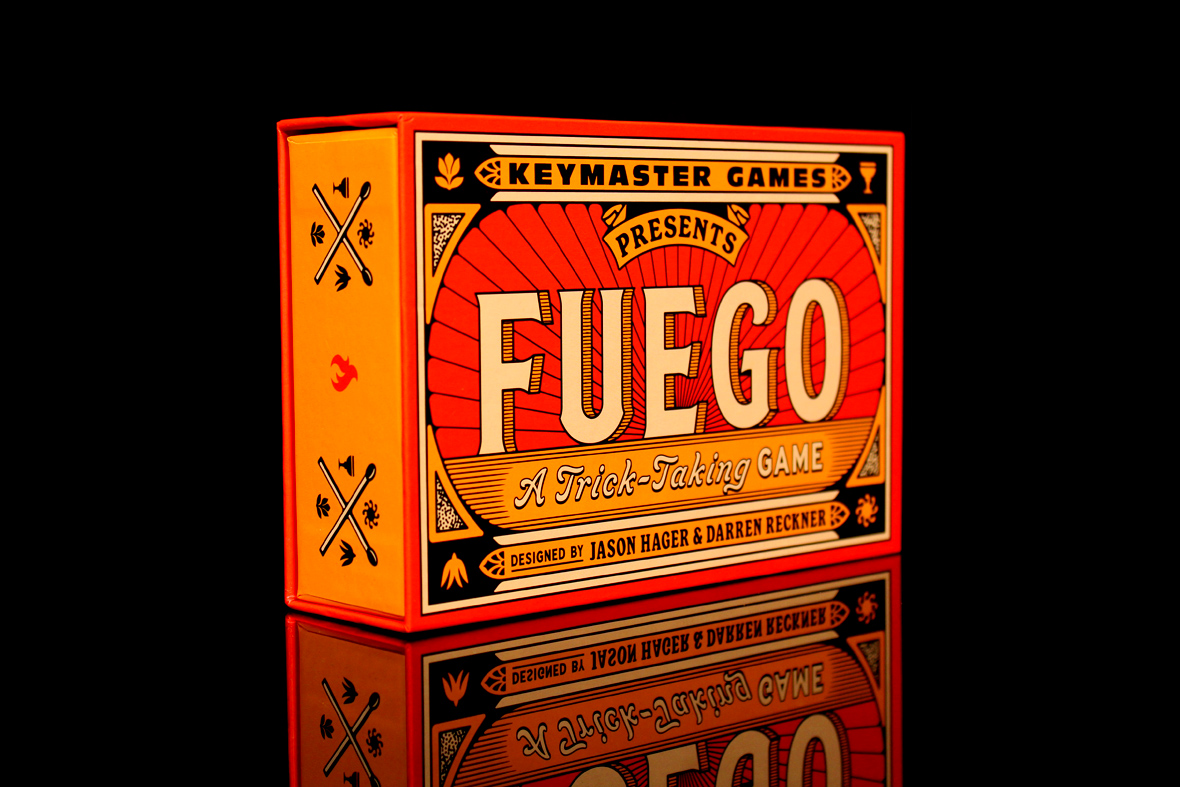
Base price: $25.
2 – 4 players.
Play time: ~30 minutes.
BGG Link
Buy on Amazon (via What’s Eric Playing?)
Logged plays: 2
Full disclosure: A review copy of Fuego was provided by Keymaster Games.
It’s Gen Con week, kiddos! That means I’m as behind as ever on reviews and I’ve got two new games for y’all before I hightail it to Indianapolis. If you’re reading this and coming to Gen Con, say hi! Just, know I’m a bit skittish. It’s an ongoing thing. There’s games to play and things to do, though, so I’m going to just dive right in and see what we’ve got. This week, it’s going to be two cool games that, while not the most recent game in town, are still worth checking out if you’re going to Gen Con! Let’s try Fuego, from Keymaster Games!
In Fuego, you’re all about fire. In this case, putting out your opponent’s fires. Fire is dangerous, after all. Steal their Flame Tokens by winning tricks so that you can extinguish them before they burn out! The only problem is that occasionally, to burn out you’ve gotta burn bright; a Wildfire might be just the thing if you can handle the risk. Get excited. But is the fire worth the risk?
Contents
Setup
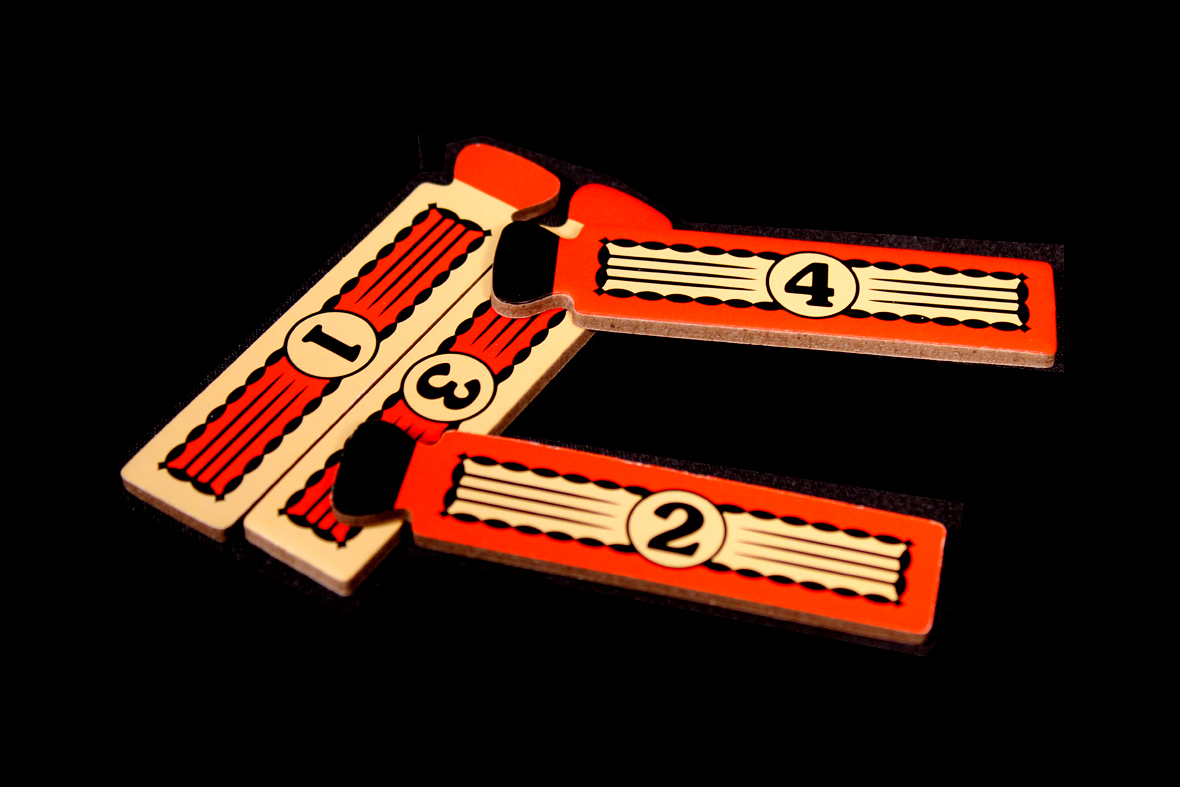
Not a ton here. Make a Fireline of the four tokens:
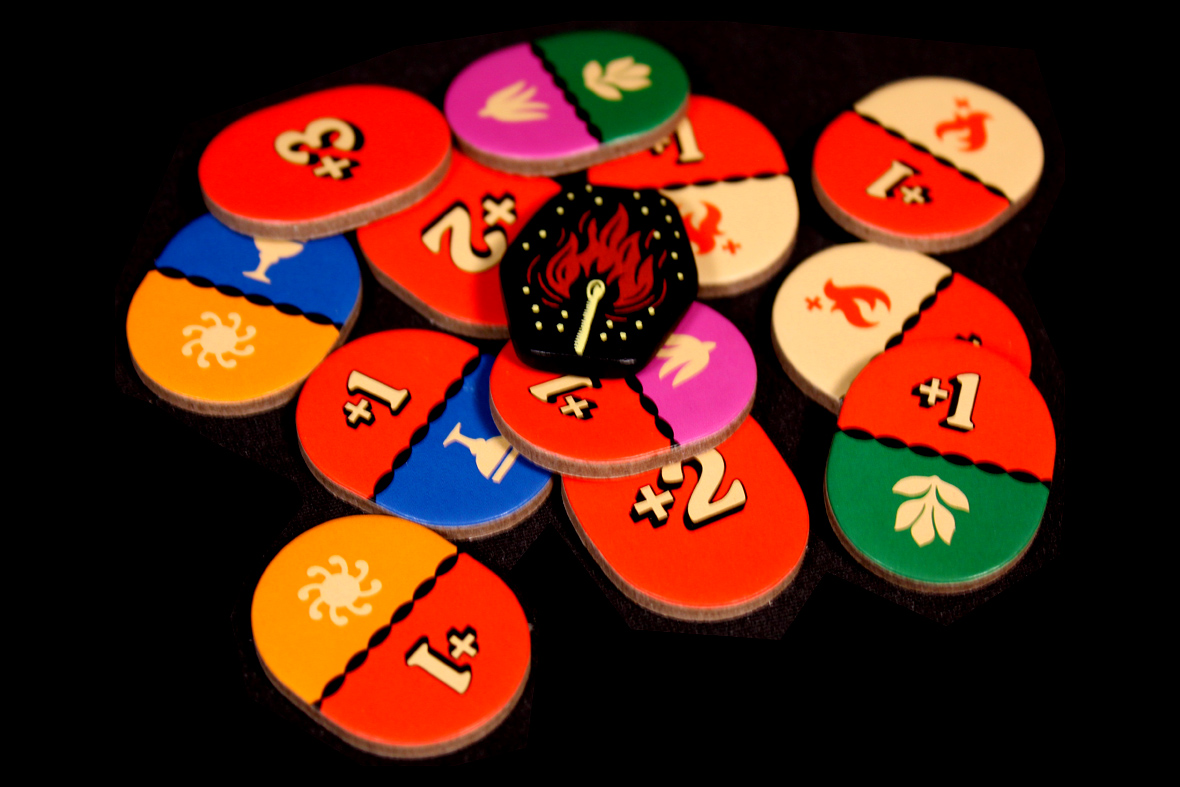
Shuffle the various Strike Tokens and give each player one.
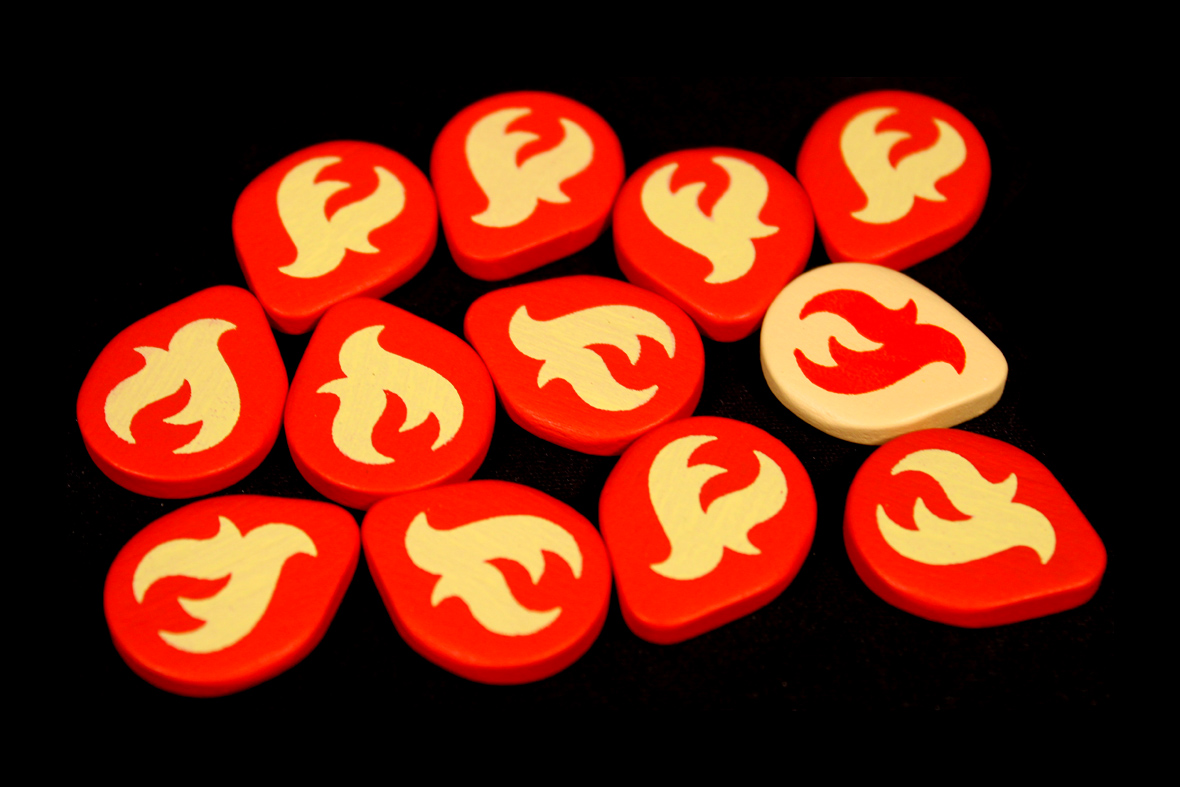
Shuffle the Flame Tokens around as well. The player with the White Flame token starts the game.
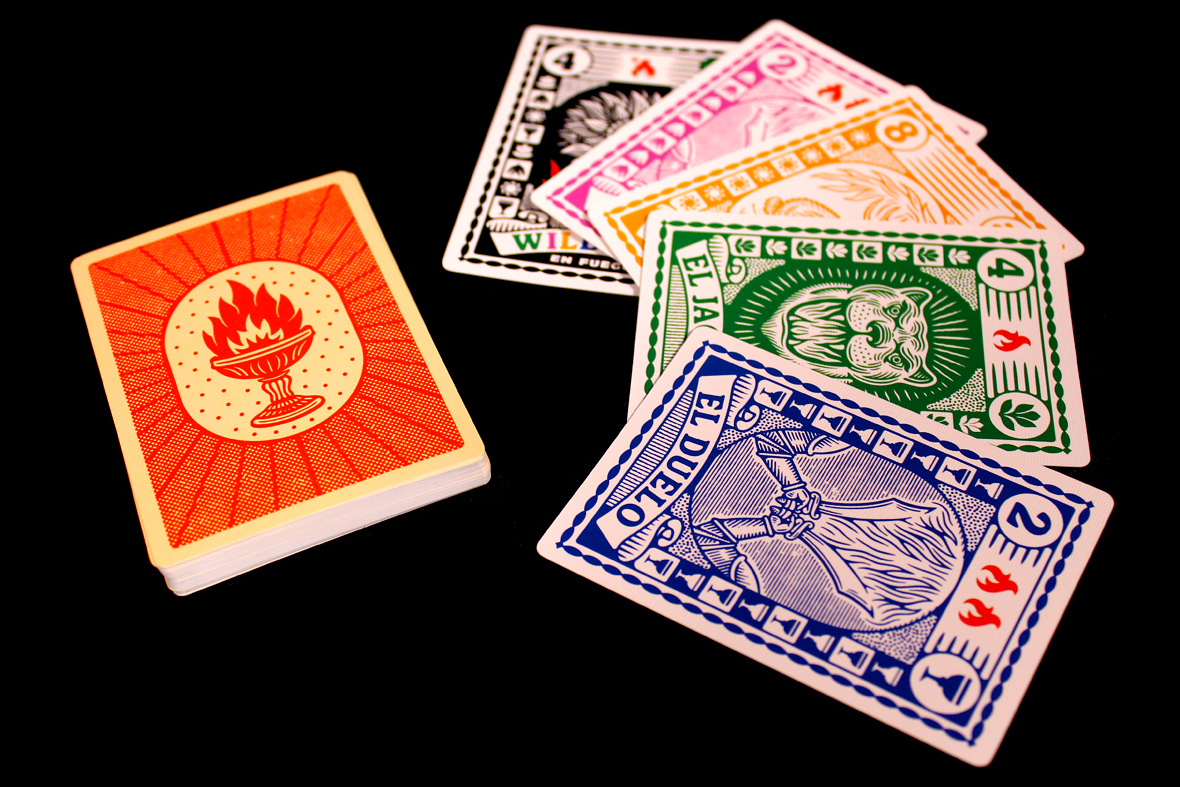
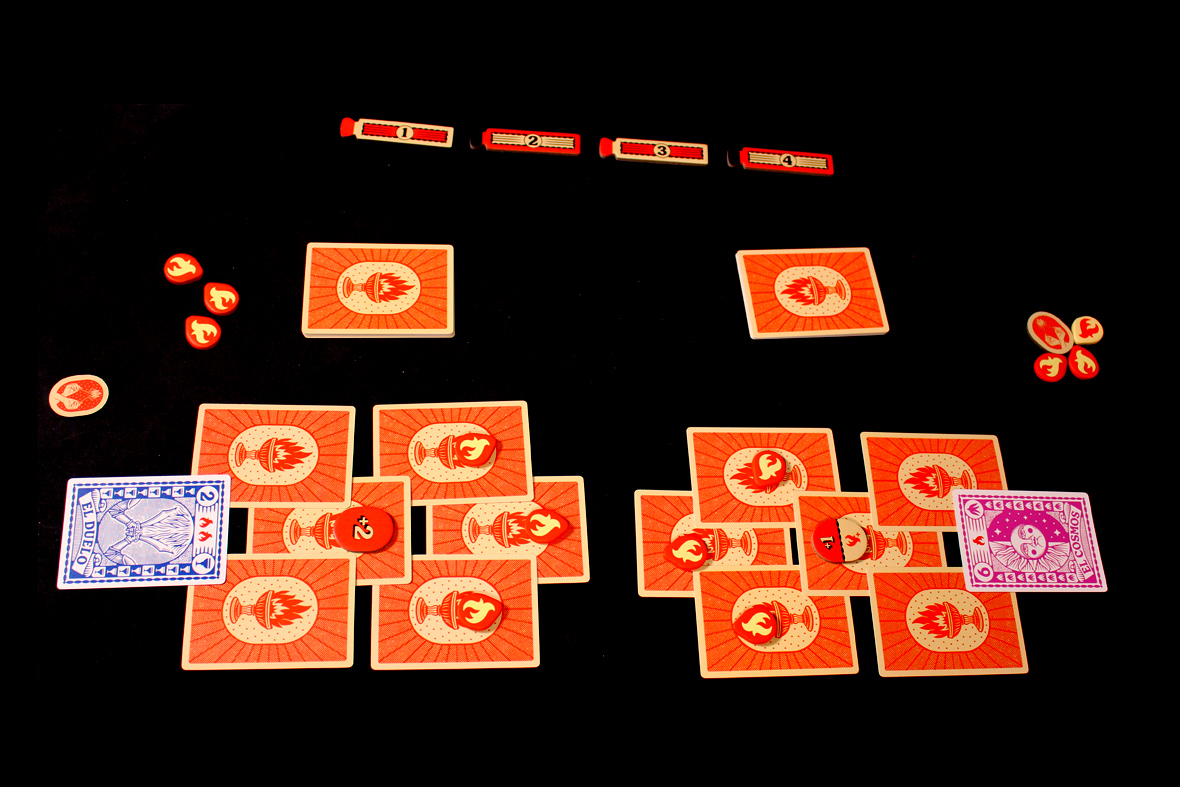
Shuffle the cards and deal each player eight cards. With fewer players, you’ll make each player who plays on their own team a Torch. A Torch is a nifty thing, made of cards set face-down in a 1 – 2 – 1 – 2 -1 pattern. The bottom-most card gets flipped face-up, the top three cards each get a Flame Token, and the middle gets a Strike token.
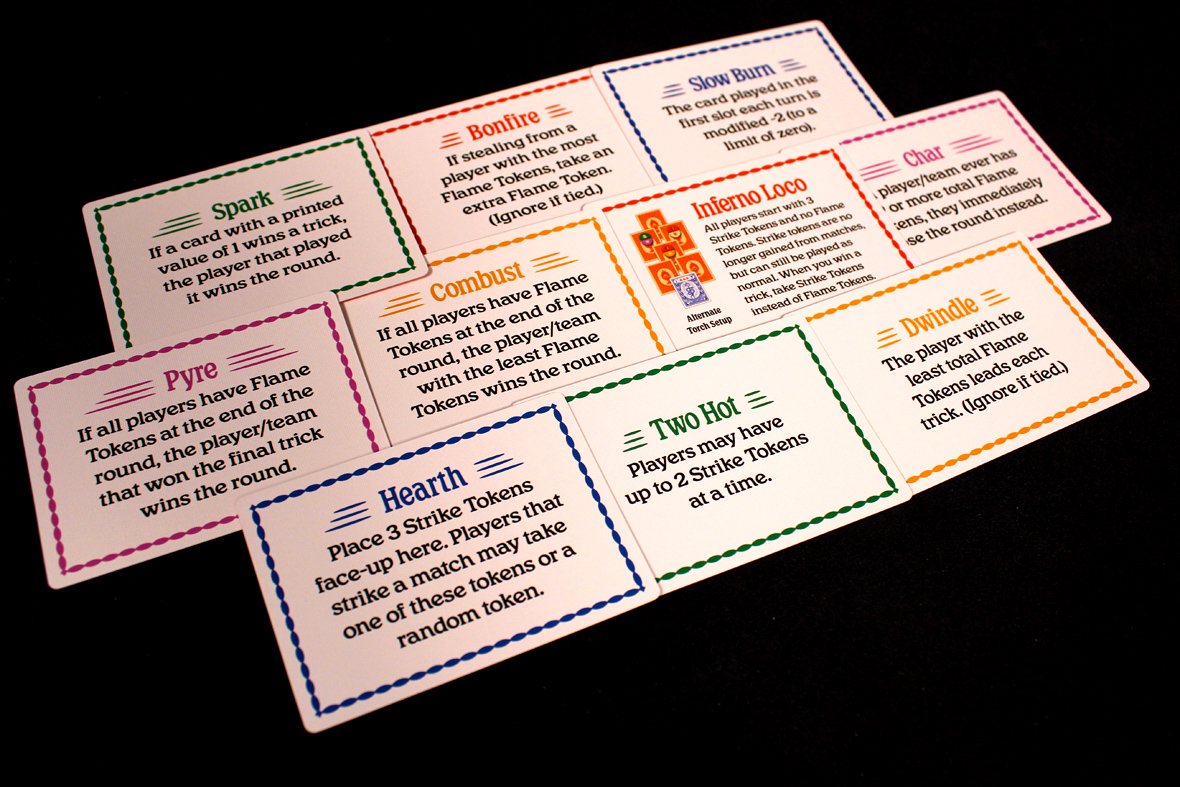
If you want to mix things up a bit, try using Caliente Cards! They add an interesting effect to the game (or each round, if you want to try a new one each round).
Either way, you’re ready to start!
Gameplay
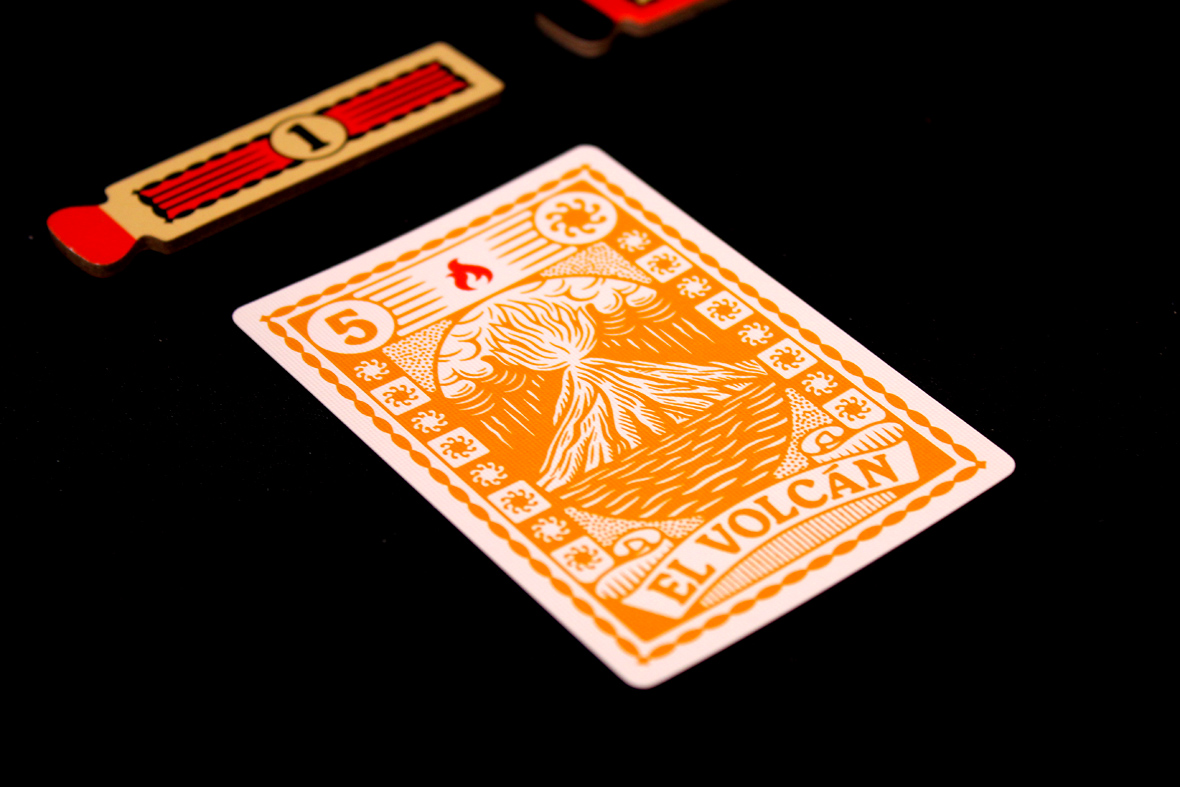
This one’s actually pretty straightforward, too. It’s a trick-taking game! One player leads the trick with a card, establishing the Lead Color. Everyone must play the Lead Color (they could instead play a Wildfire, but they don’t have to) if they have it and the highest card of the Lead Color wins the trick. Simple enough.
Where it gets interesting is how you score. When you take a trick, the card you used to take the trick indicates how many Flame Tokens you get to take from your opponents. If you win with an 8, you get none. Win with a 1, however, and you pull three Flame Tokens. For starters. Wildfires make things even more dangerous. With these, you can increase the number of Flame Tokens the winner takes! Better hope it’s your team.
Things get even weirder if players play two consecutive cards of the same value. If you do, yell “MATCH!” and flip them both face-down. They’re cancelled and you gain a Strike Token (you can have one at a time). You can use this to get rid of pesky cards or to cancel out the Wildfire’s Flame Token boost effect. It all works.
Strike Tokens are handy boons that let you change cards’ values or colors to suit your needs. You can use them to force (or avoid!) a match, even.
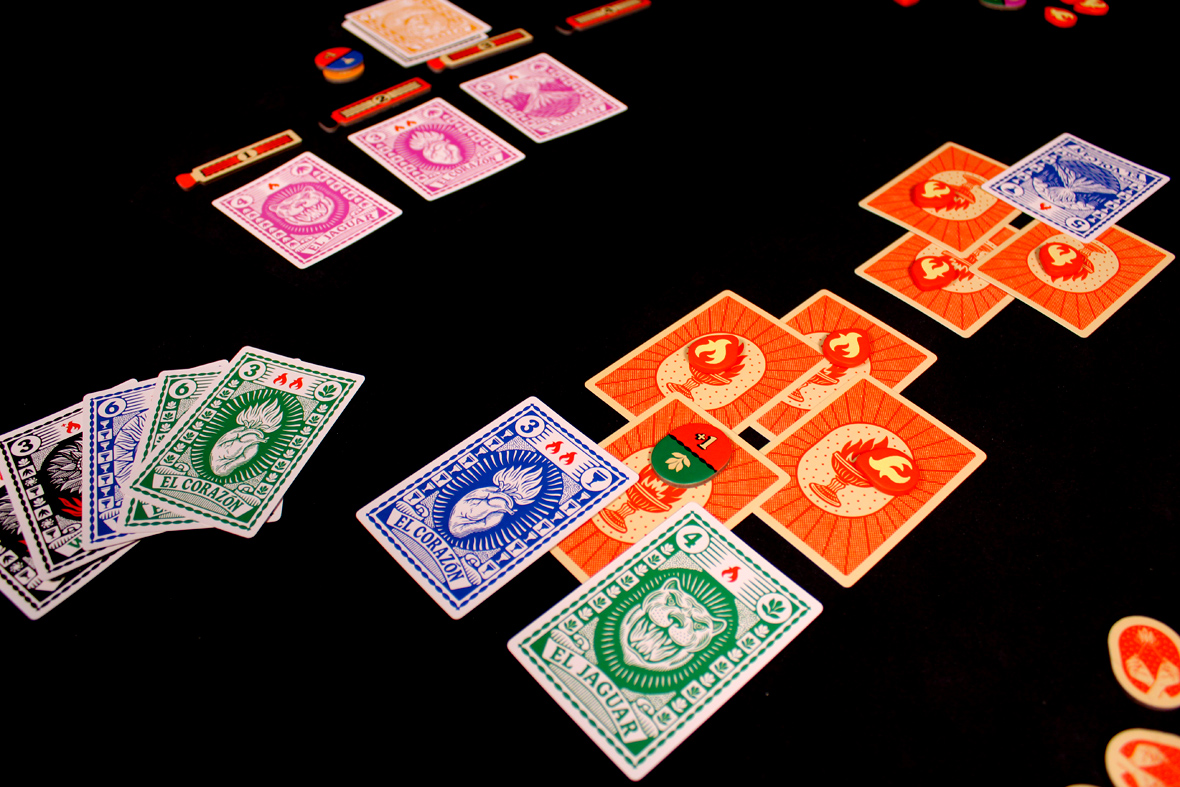
A round ends when all cards have been played (most Flame Tokens wins) or one team runs out of Flame Tokens (they lose). Set up and go again! The first team to win two rounds wins the game!
Player Count Differences
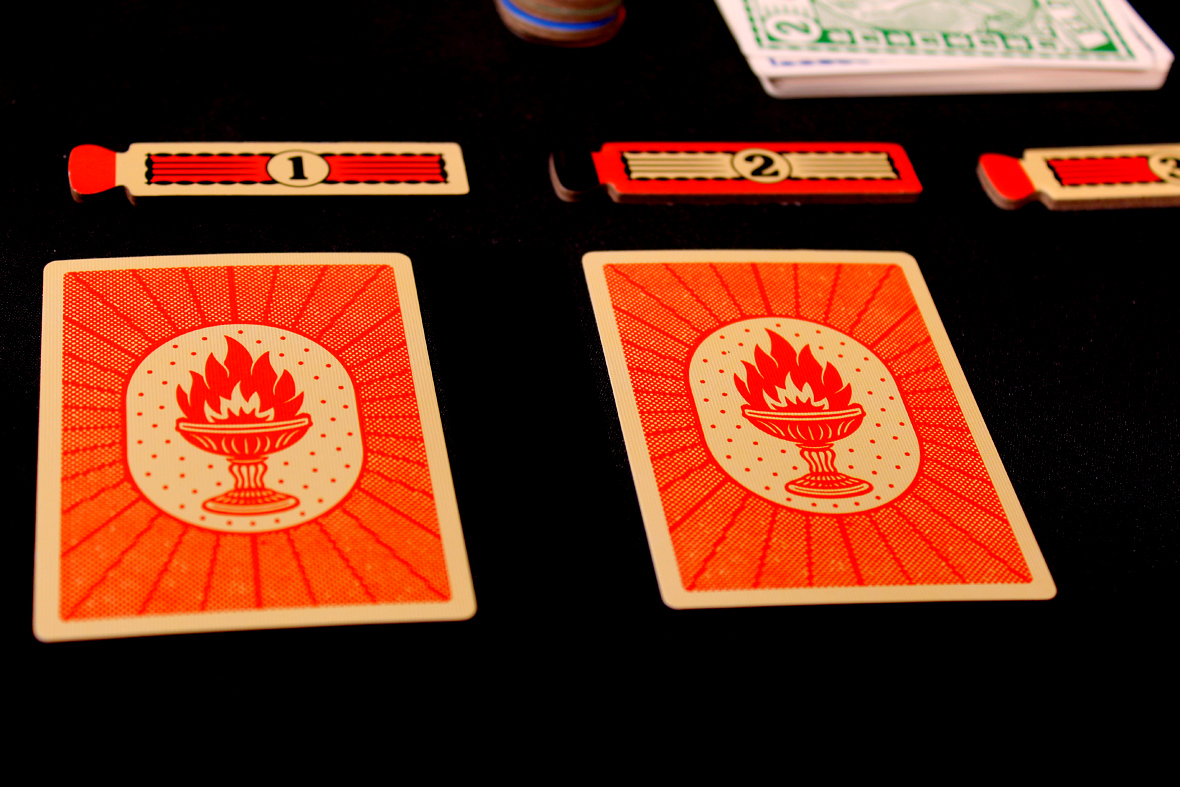
The major thing is how the game handles who plays. Within the realm of how play works, it all mostly is the same. Your goal is to win the round by playing the highest card in the lead suit, same as always. With fewer players, one (or more) get the Torch, which can occasionally affect how you play. Do you want your opponents to see what cards you have available? Probably not. Most interestingly for a team-based trick-taking game, Fuego supports three players. One player is on their own against a team, which is pretty cool. The game uses the Heat Token at three to show who the solo player steals Flame Tokens from (instead of letting them choose) so there’s now an element of strategy to who should win tricks when. I think it’s really cool, and I really enjoyed playing solo against a team. New strategies and new playstyles emerge. At two, it’s also pretty neat, but there it’s still pretty balanced: a hand of nine cards and a Torch for everyone. I wouldn’t say I have a strong player preference, but this time I’ll at least specifically note that it’s because the various options are so cool.
Strategy
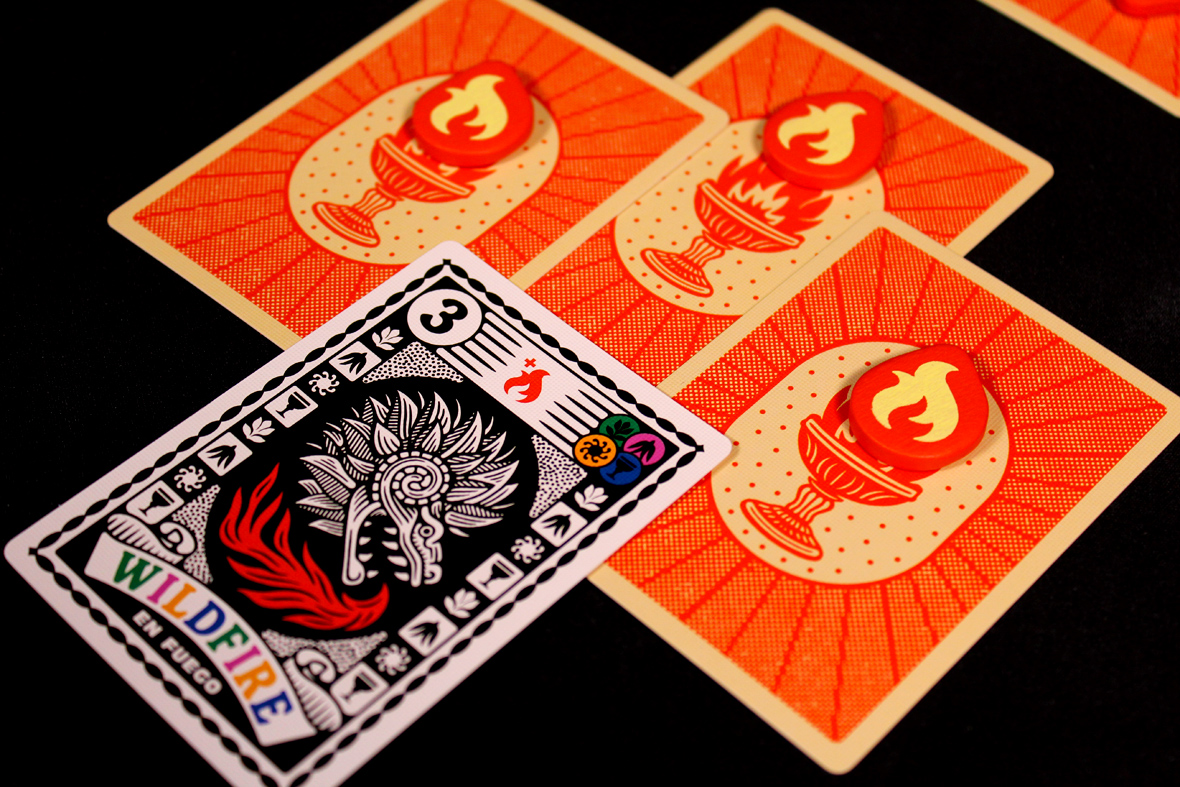
- You can flip a round on your opponent pretty easily if you have the right cards. Win a trick with a 1 and boost it with a Wildfire to really put the pain on your opponent, for instance. You can lose a lot in one go.
- Generally, don’t outplay your partner. You can’t communicate, but they’ve likely got some strategy they’re working towards. Might be helpful if you’re on the same page with that one.
- Outplaying yourself might be necessary; your opponent may beat your first card with theirs. Your goal is to win tricks, after all. You don’t necessarily want to play poorly, but winning more tricks is usually a good idea.
- Going last has its perks. This usually means you have the final play of a trick, which can let you influence the outcome. If your team is already winning the trick when it’s your turn to play the last card, throw a Wildfire on there! That’s just another free Flame Token for the home team.
- Running out of one color is nice because you can then play cards to match or cancel. The problem with obviously running out of one color is that your opponents can now win tricks if they lead that color and your team doesn’t have any. You don’t want to lose a trick to a 1; it’s an expensive habit.
- Careful with Wildfires! Just like California couples hosting a gender reveal, you can’t take too many risks with pyrotechnics. Using Wildfires can be a great way to boost your score, but if you mess around too much, you might just be pumping up your opponent.
- 8s are great ways to win tricks, but won’t score you many tokens. You need to balance winning tricks against taking Flame Tokens if you want to win the round.
Pros, Mehs, and Cons
Pros
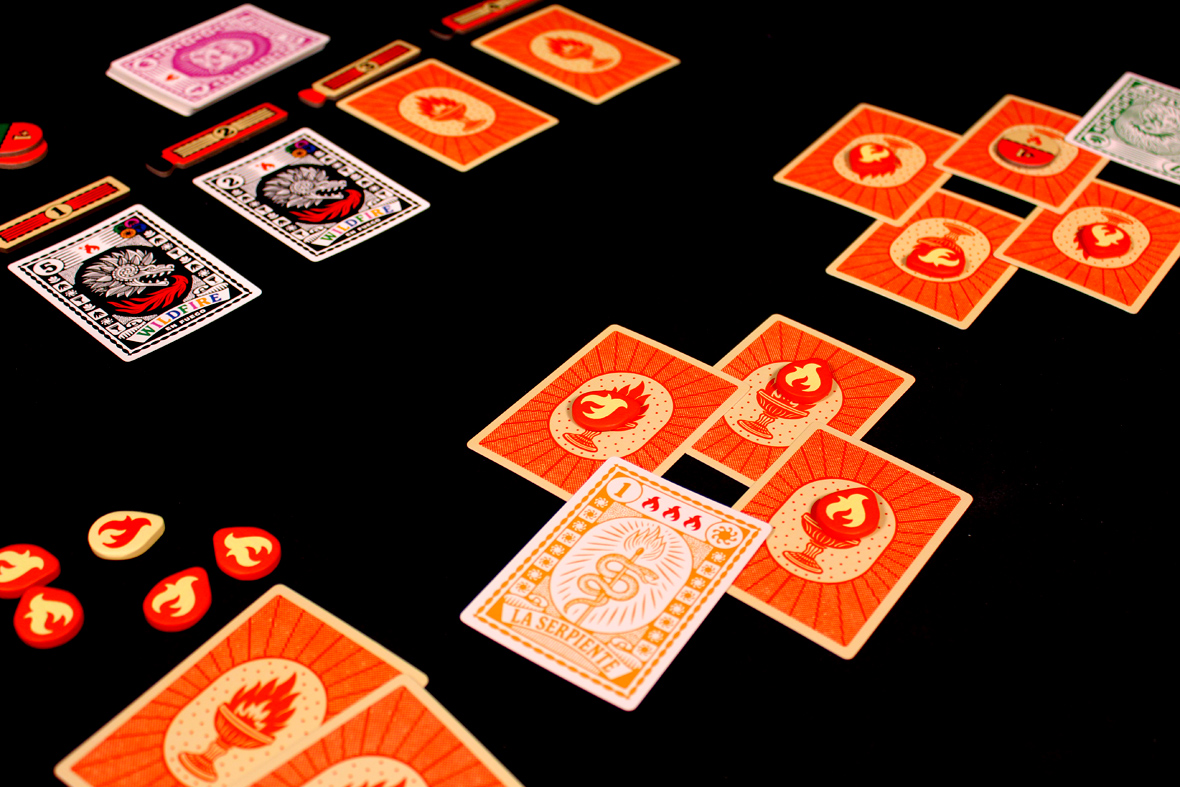
- The art style is fantastic. I really like how the game looks. This isn’t a particularly notable note, given that it’s Keymaster, but I think it’s nice to point this out every time.
- I really love the two-player enhancements; it makes the trick-taking element playable and interesting! The 3-player rules are interesting too; the game just scales with player count nicely. It’s not just that it plays well with every player count; it’s specifically that the different player counts have different feels to them and they’re all rewarding.
- The Caliente Cards do a good job mixing up the game even more; I like splitting them round-to-round and just consistently having new ones. It keeps the game fresh and exciting, which is nice, but it more importantly makes the game weird, which I think is more critical in the long-term.
- Quick-play works really well, here. The tricks are super short and it’s very easy to figure out who won and how they’re doing. Just try to keep track of what cards have been played, too, if you want to do well.
- Nice and portable. It’s a pretty small small-box game, which works in its favor. I also like the matchbox aesthetic. Reminds me of Matches.
- Surprising nobody with a Keymaster title, the tokens are particularly nice as well. They aren’t just a nice texture; they’re all pleasantly shaped as well. They knocked it out of the park again.
- The match rules are interesting as well. I like how you can use a throwaway card to occasionally cancel out cards with fancy effects, high-scoring cards, or even the Lead Color of the suit, if you play right.
Mehs
- It would be nice to have a way to track rounds won. This is a very low-yield meh, but it’s still a meh. Sometimes we play a round, go get a snack and come back and we don’t remember exactly. Maybe I’m getting old.
Cons
- Oh, if you’re not careful, you can absolutely and completely mess yourself over. There’s a tendency to do this with newer players, but you can essentially bet big with Wildfire Cards, play poorly, and immediately lose a round if your opponent is slick enough. That kind of sucks, so I’d recommend not getting too excited when you first start. It also feels bad.
Overall: 8.5 / 10
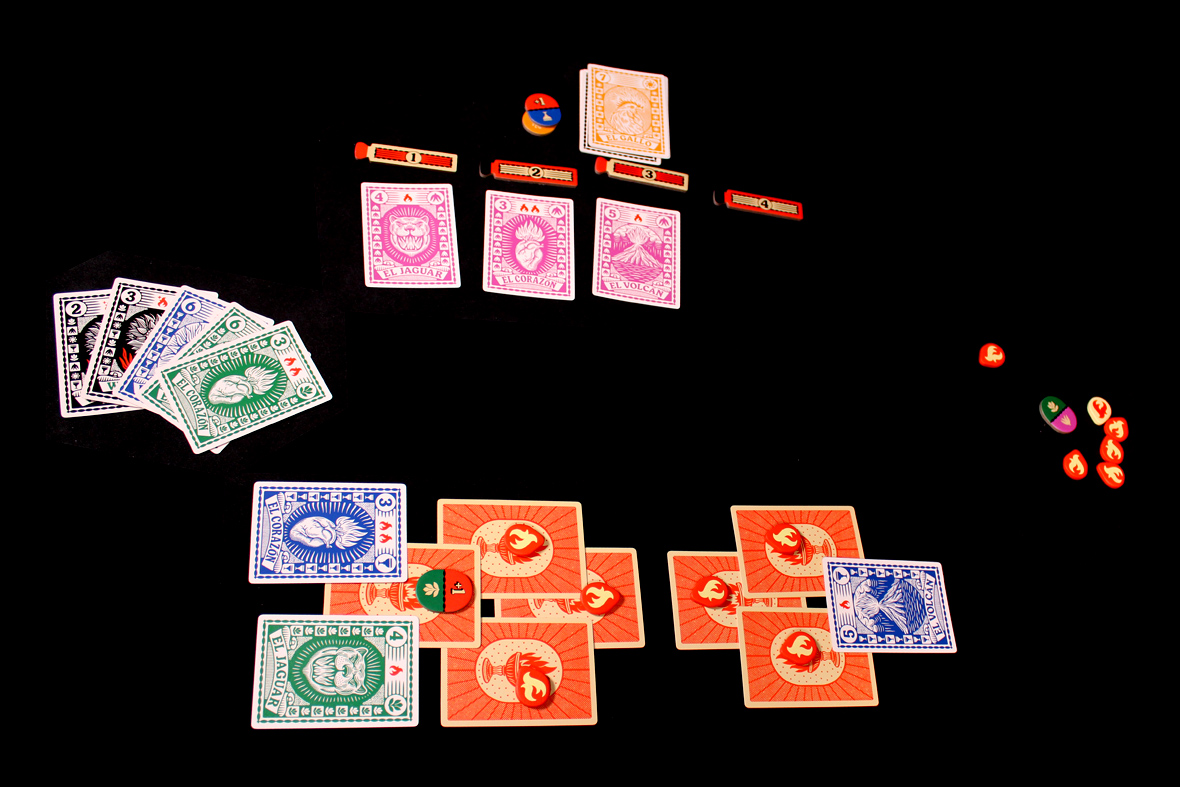
Overall, I think Fuego is great! It’s catchy, fun to look at, and feels great to play, which, as I’ve come to learn over the past several years, is kind of the hallmark of a good Keymaster title. I think this one’s got some staying power, though; it combines the simple elegance of a good trick-taking game with enough unique twists that it gives the weirdos who only play trick-taking games (my aspirational crew) something new to chew on while they wait for the inevitable next weird trick-taking game. You love to see it, and they deserve to be happy in their own weird way. I think there’s a lot of cool risk-management gameplay you have to worry about, here, and I particularly like the way that they approach lower player counts with the partially-public information between your Hand and your Torch. It’s slick. I love seeing games do this in the same way that I always liked the two-player drafting system of Hokkaido (play one card and discard one card, pass the cards, then draw a new one). Mixing it up can lead to interesting strategies or interesting gameplay interactions, and it all works well for Fuego, here. Add in some awesome art and you’ve got a real winner. If you’re a trick-taking fan, a Keymaster fan, or a pyromaniac, I mean, Fuego has something here worth checking out! If you’re the last thing, though, uh, be careful with that; I live in a relatively dry state.
If you enjoyed this review and would like to support What’s Eric Playing? in the future, please check out my Patreon. Thanks for reading!
 What's Eric Playing?