
Base price: $49.
1 – 4 players.
Play time: ~60 minutes.
BGG Link
Check it out on Kickstarter!
Logged plays: 2
Full disclosure: A preview copy of Satchel Quest was provided by Weird City Games. Some art, gameplay, or other aspects of the game may change between this preview and the fulfillment of the Kickstarter, should it fund, as this is a preview of a currently unreleased game.
I’m so glad it’s started raining again. During the summer I just kind of … wish it were the fall. Better temperature, worse weather; it’s the whole reason I moved to Seattle. I love it here and it’s already been raining for like three days. It’s the perfect weather to do what I need to do best: stay in and play board games. So far, I’ve been able to do that, and here we are! More games to review. Next up is Satchel Quest, from Weird City Games!
In Satchel Quest, all you brought into the dungeon was a bag! A bag full of things, granted, but a bag nonetheless. It’s what’s inside that counts, though: specifically, what’s inside the bag. You’ve got spells and gems and staves and at least one monster in there, so hopefully that’ll help you adventure deep within the dungeon and strike it rich! What will you find in the depths, and how will that affect how you move forward? Only one way to find out!
Contents
Setup
Set out the Market Board:
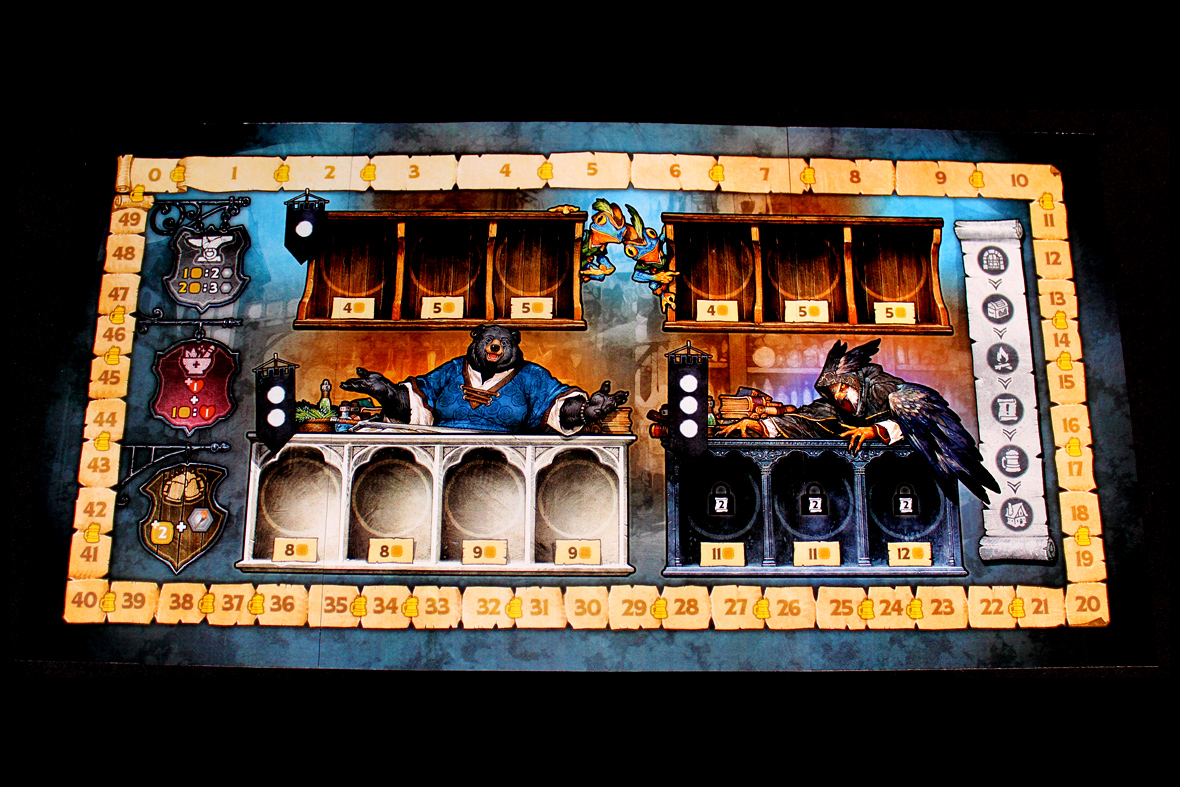
Set the chips out (there are 1 / 2 / 3 pip chips). They go by the Market Board; you’ll use them later.

Place the gold tokens nearby as well:

Same with the tools:
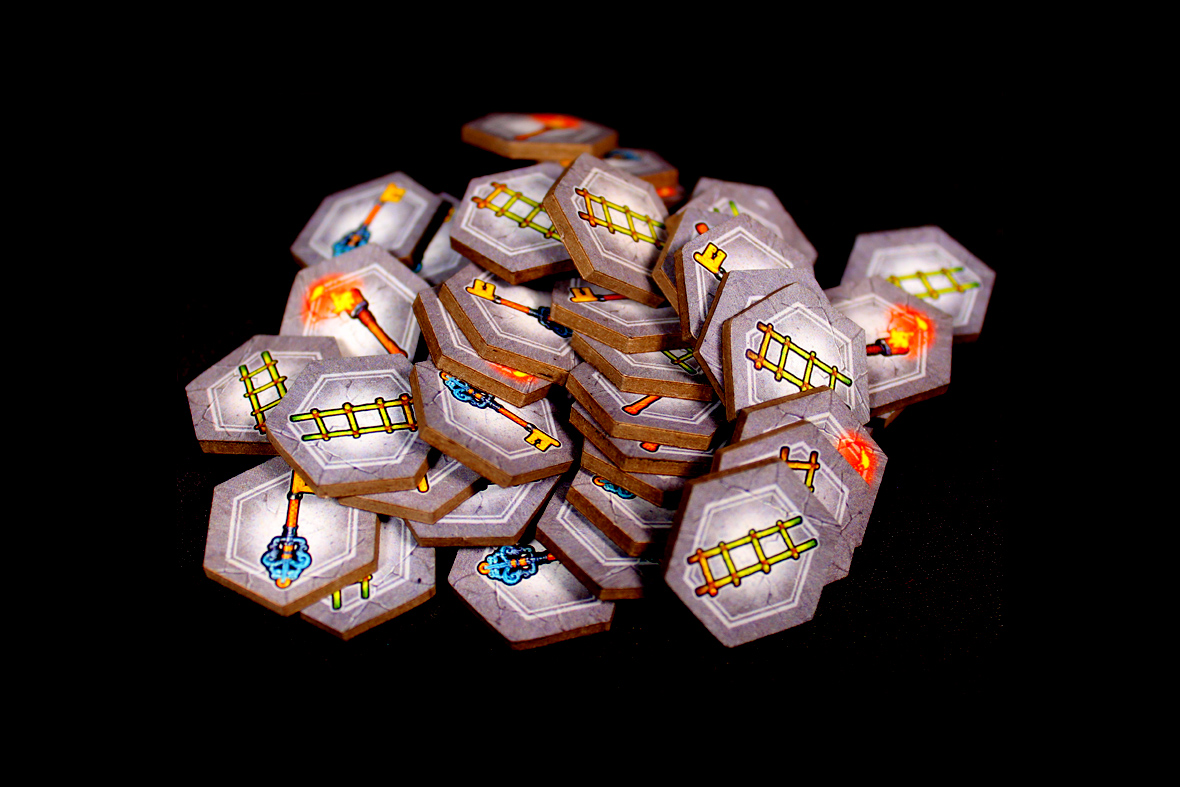
Then, shuffle the Dungeon Maps and the Dungeon Depths Maps, placing them nearby:


Now, each player gets a Hero Board:
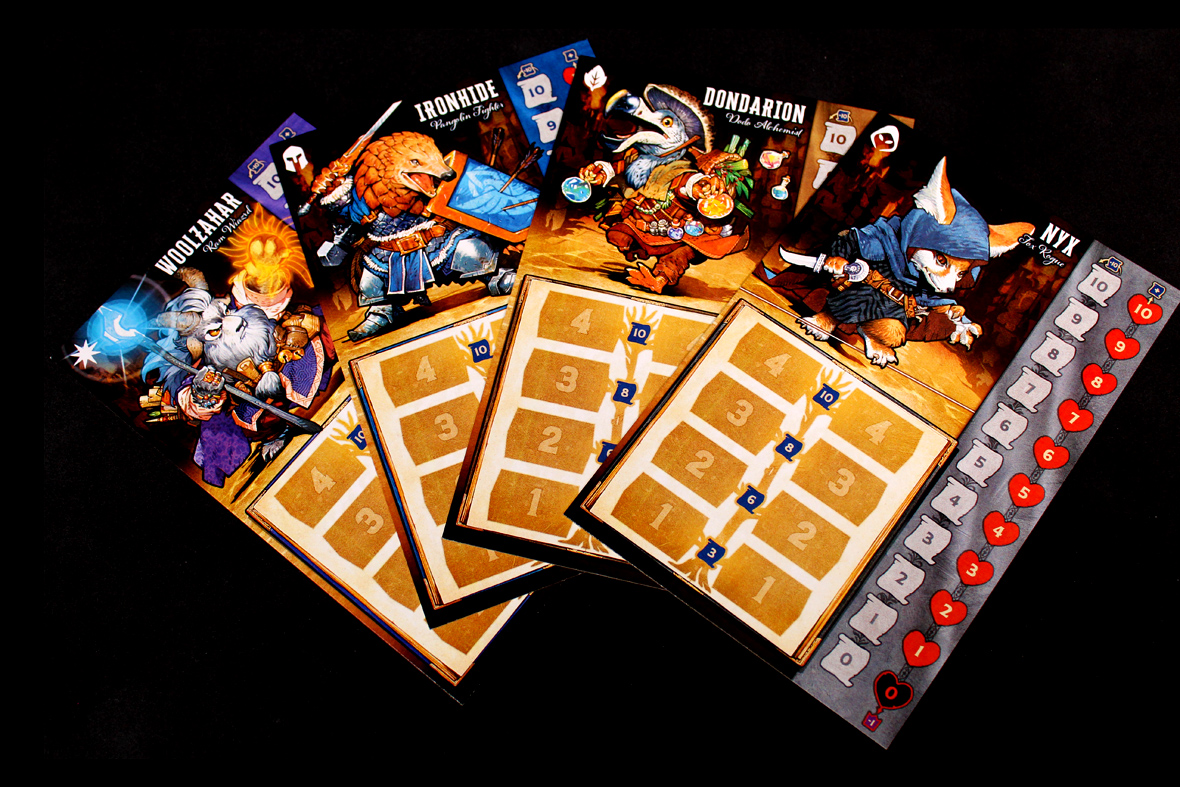
You also get a bunch of player tokens!
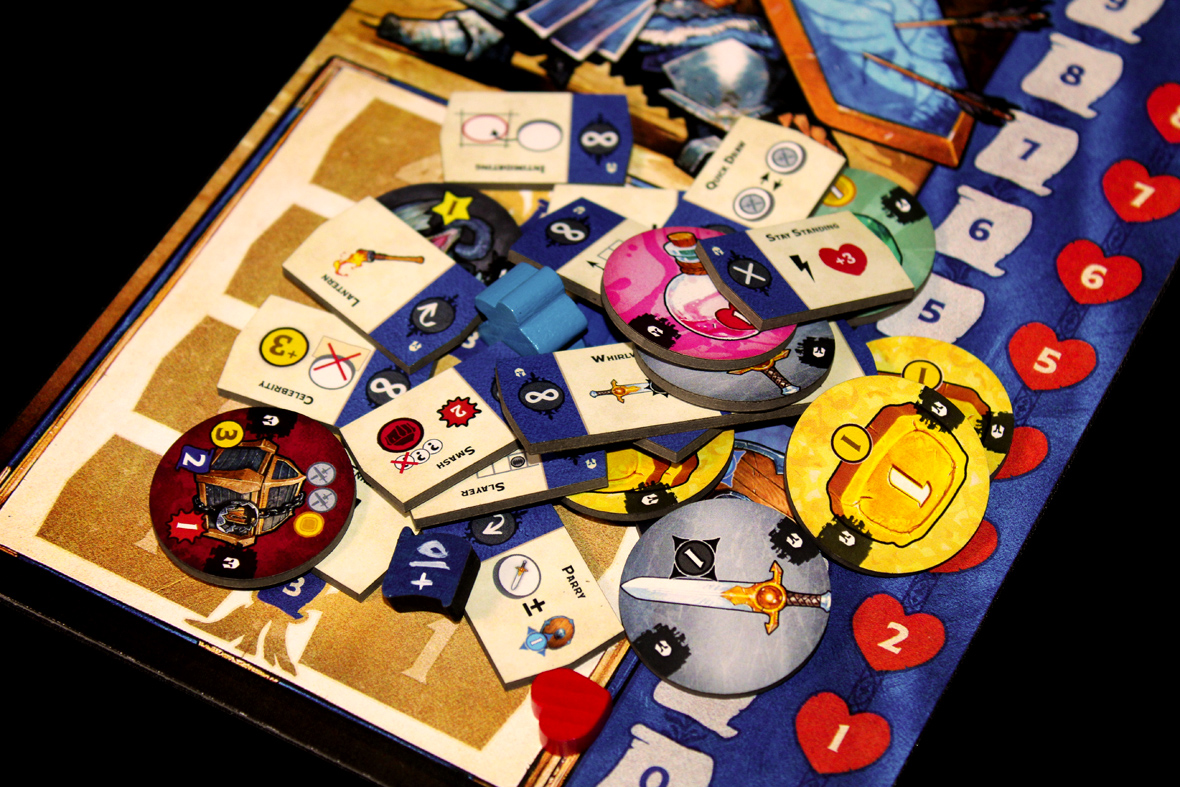
Put the chips in your corresponding bag, and set two of each level of skill chip on the board. Health and XP start at 0, and your VP token goes on the board, also at 0. Flip the first Path Card and it’ll tell you how to set up the rest. You’re just about ready to start!
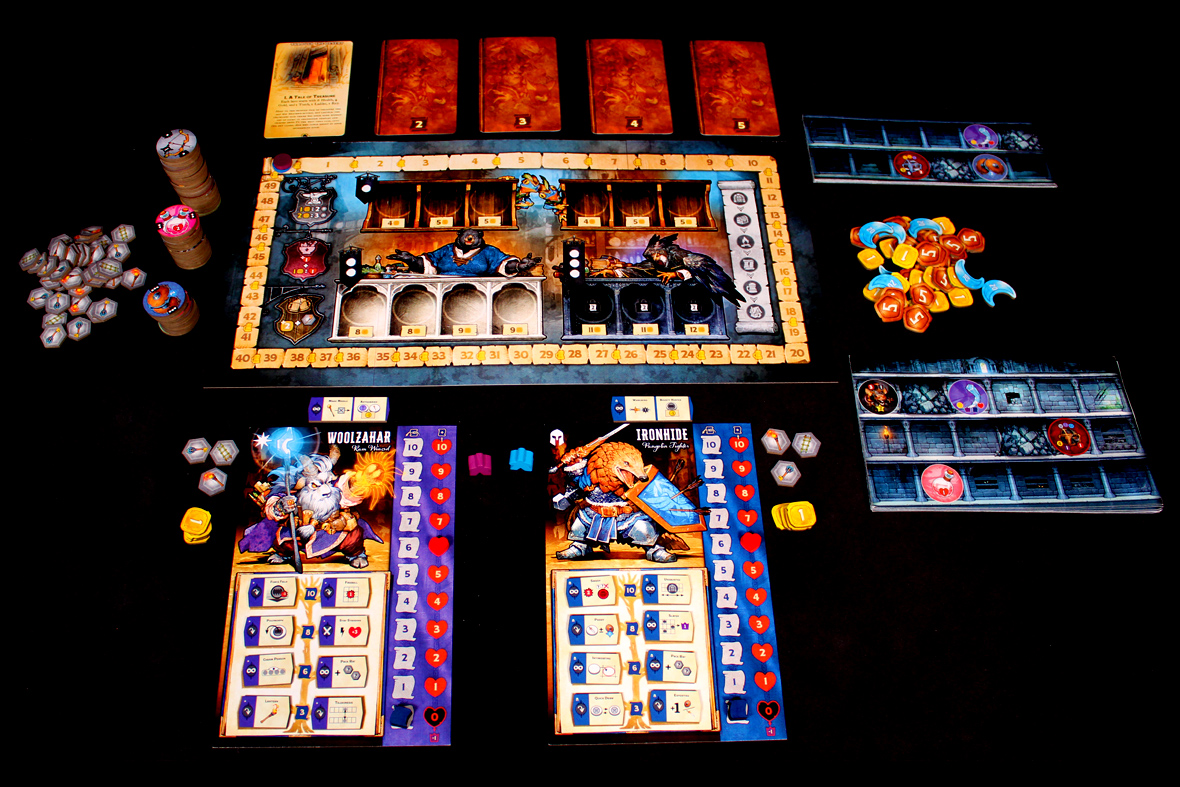
Gameplay
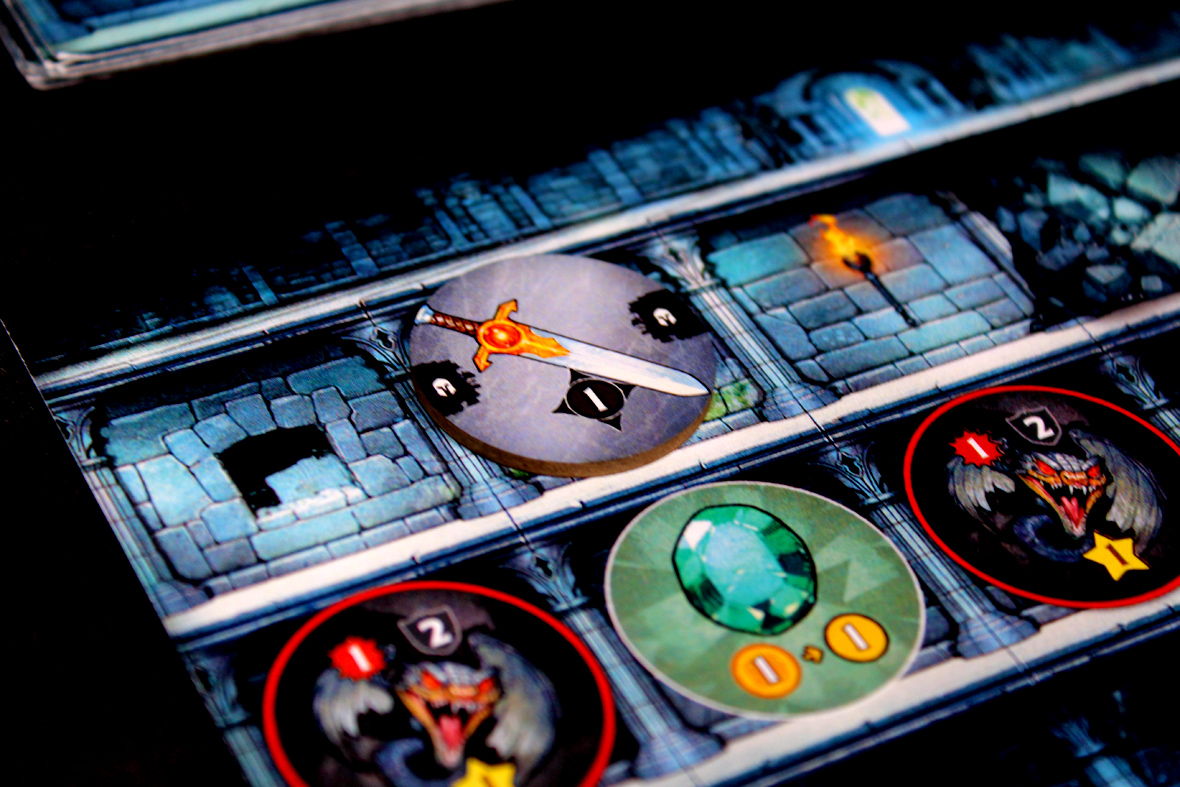
Satchel Quest! Your goal is to dig through dungeons and earn Valor Points! Along the way you’ll gain money, find gems, and occasionally open a chest or two. Maybe attack some monsters? There’s a lot to do.
You play a game over five rounds. Each round starts the same! You’ll draw a Dungeon Map from the bottom of the stack and then pick a side. Then, start drawing chips one at a time! Each chip has two sides, and you can place them in the current row on any unobstructed space. Some obstructions are fallen rocks, and others are pre-existing red-lined chips. Once you fill a row, you can move on! You can also use torches to skip a chip, ladders to move down a level, and keys to meet requirements on chests.

After all players have used all their chips (or just decided they’re done; that’s allowed), you resolve the dungeon! First, you get health from potions. Then, you open chests (or at least try). If you don’t meet the requirements exactly, you take damage. But at least if you provide more than the requirements, you still get what’s in the chest. Monsters attack next! They deal damage and then you attack back. Just be careful, because here’s where you can die. You can also reduce damage with armor. You collect XP / VP / coins for beating monsters, too! After resolving that, gain coins, then gems (which give you extra coins for being near coins), and then artifact bonuses. A set of artifacts gives you one of the listed bonus types for each type of artifact in the group, and then gain those bonuses equal to the size of the group of artifacts! It’s cool.

Go back to camp once the dungeons are finished! If you die, you come back to life with 5 health. Either way, you return the chips to the bag and discard your dungeon maps to the top of their stacks. You can also spend XP to level up and gain new skills! After finishing all that up, reveal the next Path Card! If there are none left to reveal, the game ends.
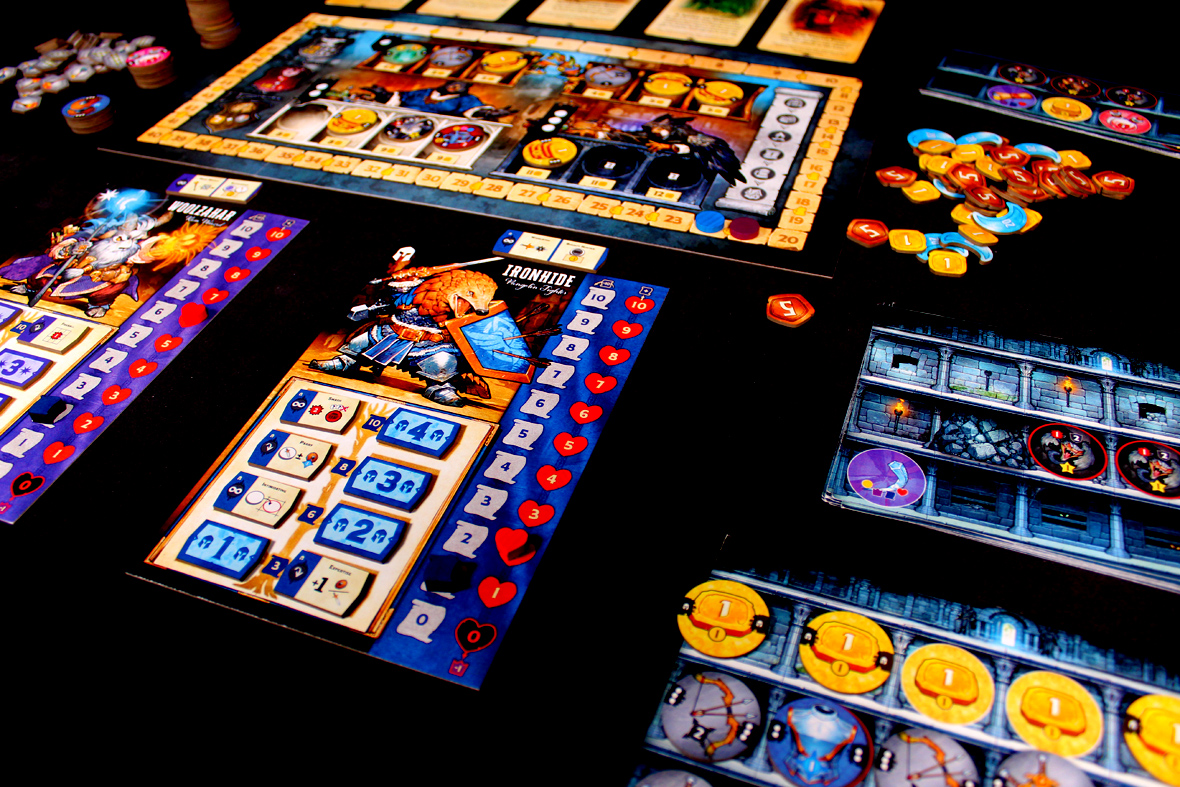
The Tavern and the Village come next! At the Tavern, each player gets 2 coins or 1 health for each mug between them and the leader. At the Village, each player gets three turns to potentially look at chips and buy them from the Village! They don’t refill unless you spend a tool and use one of your Browse actions. You can gain additional chips to try and fill holes in your strategy and better synergize with your skills. It’s useful! After everyone’s finished shopping, it’s time to delve again!
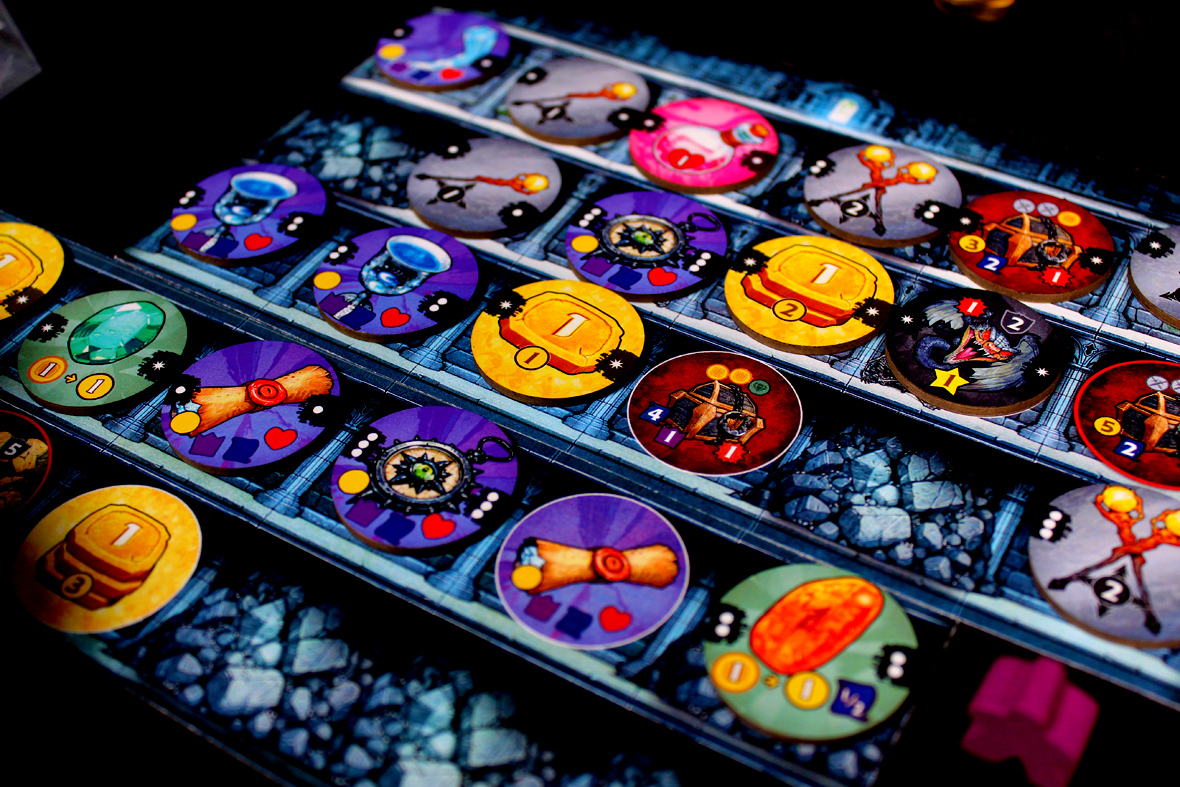
Play continues for five rounds, and then that’s kind of it! Tally things up and the player with the most Valor Points wins!
Player Count Differences
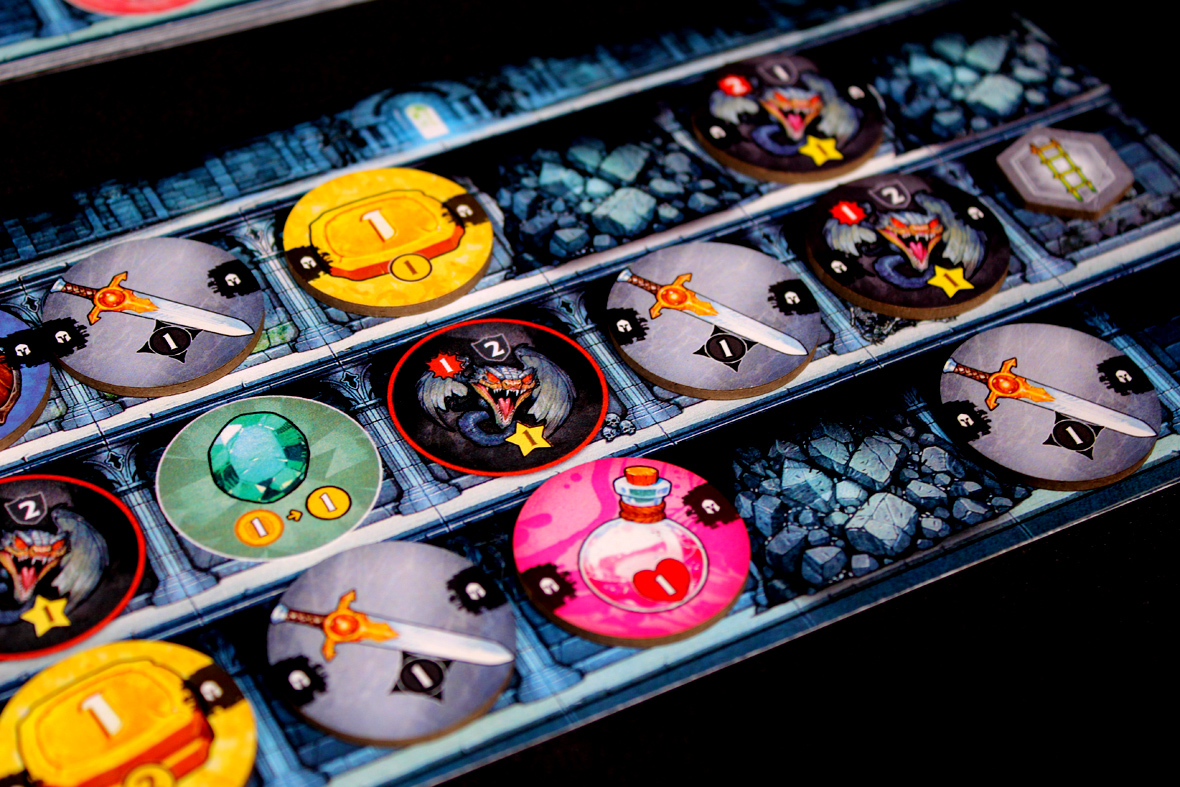
Not a ton, really. Satchel Quest isn’t a huge contender in terms of player interaction. You largely draw your chips independently, play them out, and see how things end up. Where you can interact is during the chip-buying step, I suppose, but even that’s not particularly intense. If someone takes something you want, you just need a tool and you can spend your Browse Action to just refresh the relevant market. With fewer players, you do run the risk of the market becoming a bit stale. Tokens that nobody wants kind of … stick around. Again, another reason to refresh it every now and then, and with more players you have more shots to get a refresh (but more players taking from the market). I wouldn’t say that I have a huge player count preference though; it’s a fairly solitary game.
Strategy
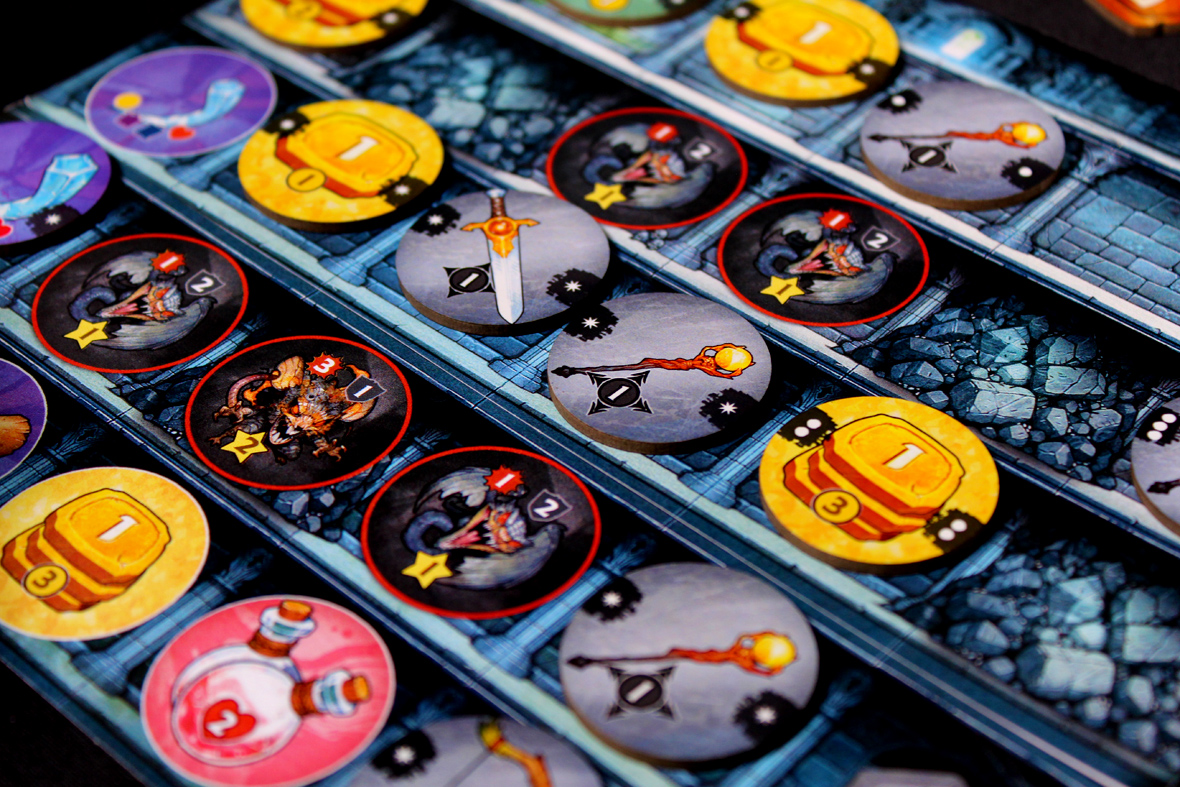
- Don’t die! If you die, you take half VP for the rest of the round, and that sucks. Especially later in the game, it can really block you and potentially cost you the game.
- Gems are a great way to double up if you’re going on a money-heavy route. All gems let you regain the adjacent gold again, so that’s useful, and some will give you extra XP and extra VP as you progress. Going heavy on them is good, but make sure you have enough gold to actually make it worth it.
- You can’t overheal; potions are great but they can only take you so far. This is important! You can’t gain, say, 11 health from potions and then take 12 damage from monsters; you cap out at 10 health so you’ll just die. Instead, you gotta focus on getting armor to decrease monsters’ damage output if you want to go combat-heavy.
- Slaying monsters gives you points, money, and XP; it’s worth digging into that and getting some weapons. It’s worth doing but it can cost you a lot if you end up dying or don’t have a way of reducing damage. Again, focus on armor or don’t bite off more than you can chew.
- Look into how getting skills aligns so you can plan a strategy. Some of the skills synergize off of each other so you can build them up into a fairly coherent strategy. Look for things that increase values on chips that you can then add extra directions on to or use for different purposes.
- Weapons have different ranges; use them to your advantage! You can use them to line up extra hits on monsters or potentially wipe out a lot of them in one go! Staves are easiest for that, but obstacles might get in your way.
- Having a bunch of artifacts is pretty good; you can earn a lot that way. You earn points, gold, VP, or XP, and you can choose one category per artifact type, and then you earn for the total size of your artifact set. So if you have two types of artifacts but six total, you can earn 6 XP and 6 VP. It’s great.
Pros, Mehs, and Cons
Pros
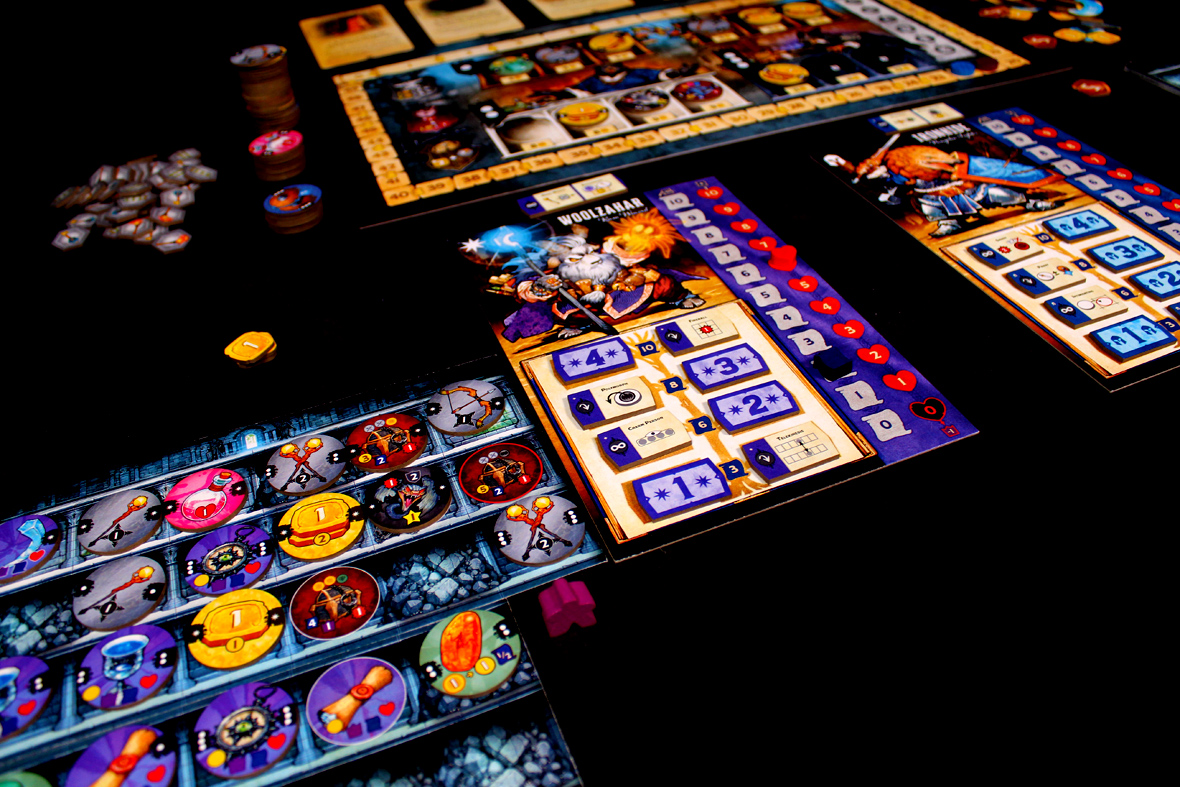
- The art style is a lot of fun. I think Vincent Dutrait’s style is almost ornate or fancy, to some degree, but it works here! It’s got a lot of great, deep colors and line work and gives the game an almost-Redwall feel to it? It works well for the game, though it would be interesting to see how different art styles could lead to different feelings for the game itself.
- There’s a lot of depth to each character. You can really change things up based on what skills you decide to learn and how that influences what chips you go after. You will need to switch things up based on the market, but you could easily play a few games with each character just to get a sense of the skills alone.
- You can get a lot of value out of experimenting with different combinations of characters, skills, paths, and dungeons. The skills alone give you a lot of flexibility, but the Path Cards can change up how the dungeons, chips, and game work. The whole game is very modular and configurable, but it’s done smartly; it doesn’t just feel like a random smattering of random elements. There’s throughlines to it.
- I like that there’s almost always some level of choice to what you do. Even if you have bad luck with chips, they usually have an okay side. You also get to choose which side of the Dungeon Cards you want and which Skill you want to activate; the whole thing lends itself to a lot of planning that you can execute on.
- By the end of the game, your character is pretty powerful; that feels great. You’re powering through monsters and chests and entire dungeons. It’s awesome!
- I just generally like bag-building. Pretty much all -building games goes right up my alley. Path-building, deckbuilding, dice-building, character-building; the whole thing. I’d play any of them. I played all of them. I love these types of games.
- It’s also nice that the older, less-powerful chips don’t feel like they’re inhibiting you too much later in the game. They still provide a lot of utility! They’re never useless, even if you wish you were drawing other, more high-output chips.
- The little mini-stories from the Path Cards are cute. It’s nice to have a bit of flavor text without so much that you need to “read” intently.
Mehs
- It’s kind of interesting that XP seems to cap out at 20; it’s definitely possible to waste some of it. I don’t think it’s a huge deal, but this is definitely something to watch out for if you don’t want to waste any extra XP. Use some of your Artifacts to get VP or coins or health or something! It can be frustrating if you end up wasting XP.
Cons
- I would have liked to see more player interaction. I think that’s kind of funny because I generally don’t love player interaction, but it feels like there could have been opportunities for positive player interaction, not just dropping new monsters on players or stealing their chips or something. As it stands, the exploration element of the game can be largely silent as players reason through their steps without it needing to affect anyone else, and while that’s fine, I think a more interactive style of play would have been cool too.
- The chip placement process can spin out a bit if you have players prone to analysis paralysis. There’s a spatial element and a planning element to placing a chip, and that leads to some players just agonizing over chip placement forever. Try to nudge them along if you can, but just be warned that this may be a game to leave on the shelf if your friends who take forever to take a move are coming to game night.
Overall: 8 / 10
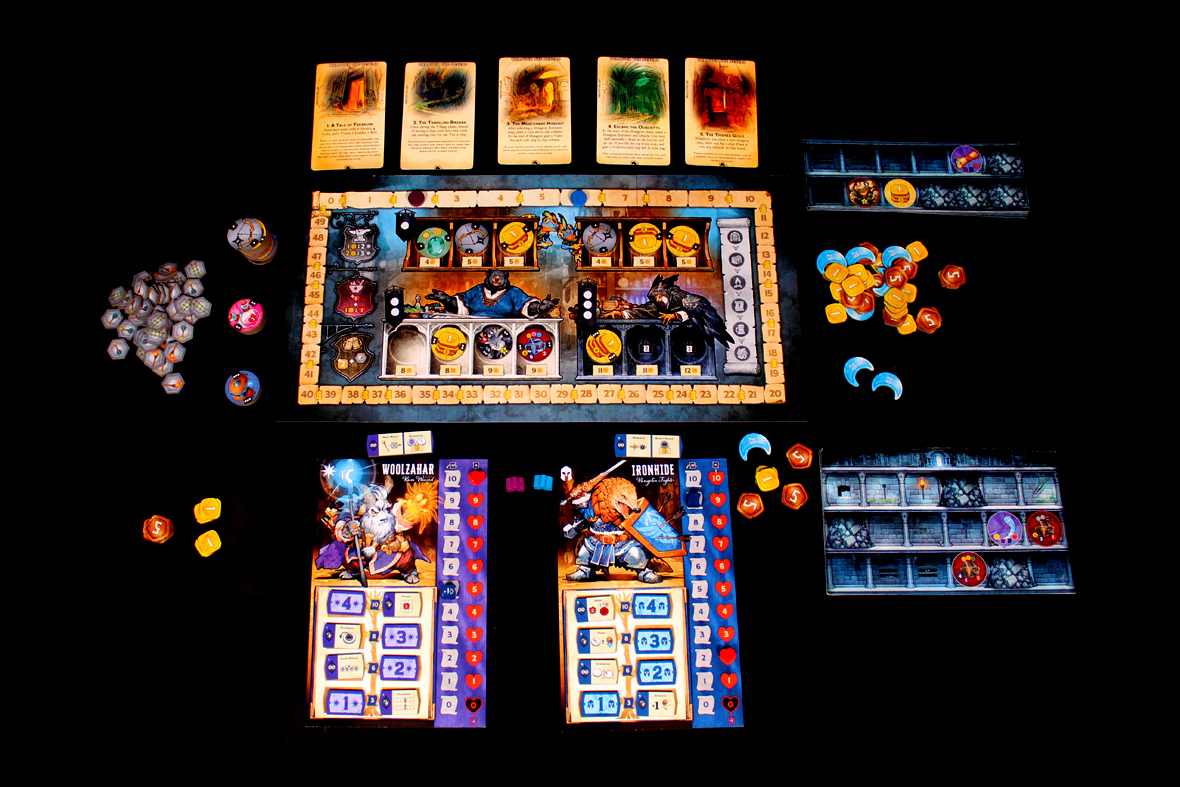
Overall, I think Satchel Quest is a lot of fun! Where I think folks are going to engage with it most is Vincent Dutrait’s art, of course, but there’s a lot of interesting gameplay worth digging into, too! It plays to me a bit like Quacks of Quedlinberg, but with more player choice. Instead of drawing out of a bag and hoping for the best, you’re drawing out of a bag and then seeing how you can use what you’ve gotten to your advantage. Do you want to take the gold side and get money or fight the monster on the other side? How do your chips affect the other chips you’ve already played? Can you plan ahead and slay a bunch of monsters with one attack or set up a bunch of chests to be easily unlocked? The game rewards planning and depth, rather than just breadth, so each character has a lot to do and a lot worth doing again on a replay, like trying new skills and linking them together or seeing how different Path Cards lead to different gameplay experiences. My one big complaint is that I do wish there were more opportunities for player interaction. The Path Cards occasionally offer some, but having the sole source of engagement be me taking a chip you want from the market doesn’t exactly strike me as fun. I’d have really liked to see chips or skills that gave adjacent players benefits while giving you a better one or something, or even chips that let you use abilities from your opponents’ boards. Something that makes you feel more like competing adventurers rather than folks playing independent games. That said, if you’re looking for a lower-interaction game, you’ll definitely be able to plan out elaborate moves and execute on them without interference, which is nice in its own right. If you enjoy a bag-building game, you want to explore a dungeon and see what happens, or you just want to see a dodo alchemist, Satchel Quest will likely be right up your alley! I had a good time with it.
If you enjoyed this review and would like to support What’s Eric Playing? in the future, please check out my Patreon. Thanks for reading!
 What's Eric Playing?