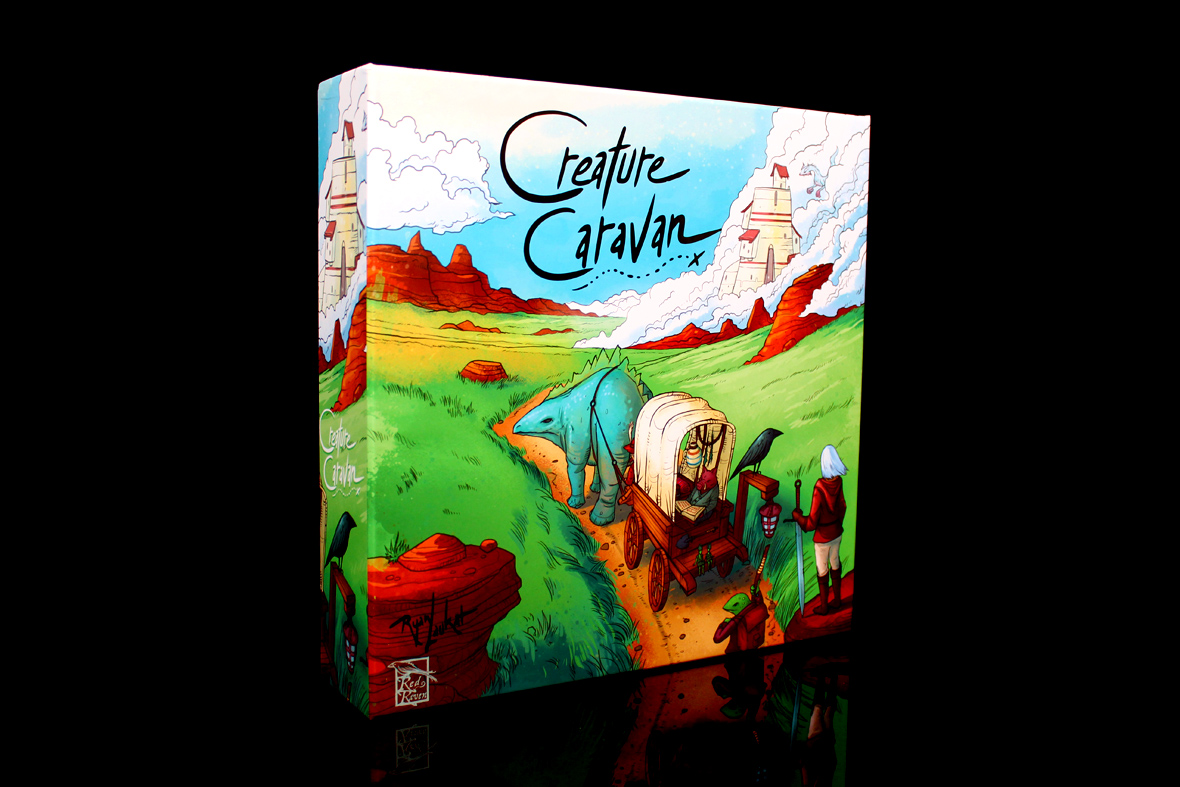
Base price: $50.
1 – 4 players.
Play time: 60 – 90 minutes.
BGG Link
Buy on Amazon (via What’s Eric Playing?)
Logged plays: 2
Full disclosure: A review copy of Creature Caravan was provided by Red Raven Games. Some components and cards are from the Deluxe Edition, as well.
I always end up writing at least one game review at a convention. I think I just lack the stamina to play multiple games consecutively without breaks unless I’ve gotten somewhere in the neighborhood of a week’s worth of perfect sleep. It’s part of the territory of being mildly and constantly overstimulated, I guess. Plus, sometimes I just like to take breaks. I write to you, dear reader, from one such break. We just finished a game of Creature Caravans and I figured why not get right to it?
In Creature Caravans, unfortunately, zombies. Ember Zombies, which is even worse, as they have a bunch of nasty stuff inside of them. You’ve decided, correctly, to get the hell out of town, but you have a soft and kind soul and feel bad leaving all these folks on the way to an unpleasant firey death. That’s good of you. So you invite them on board your caravan! Several of them have useful skills that can help you on your way to Eastrey, so, at a certain point, it’s almost symbiotic. Mutual benefit and everyone wins. Can you use their abilities and your smarts to safely make it to shelter? Or will you end up zombie food?
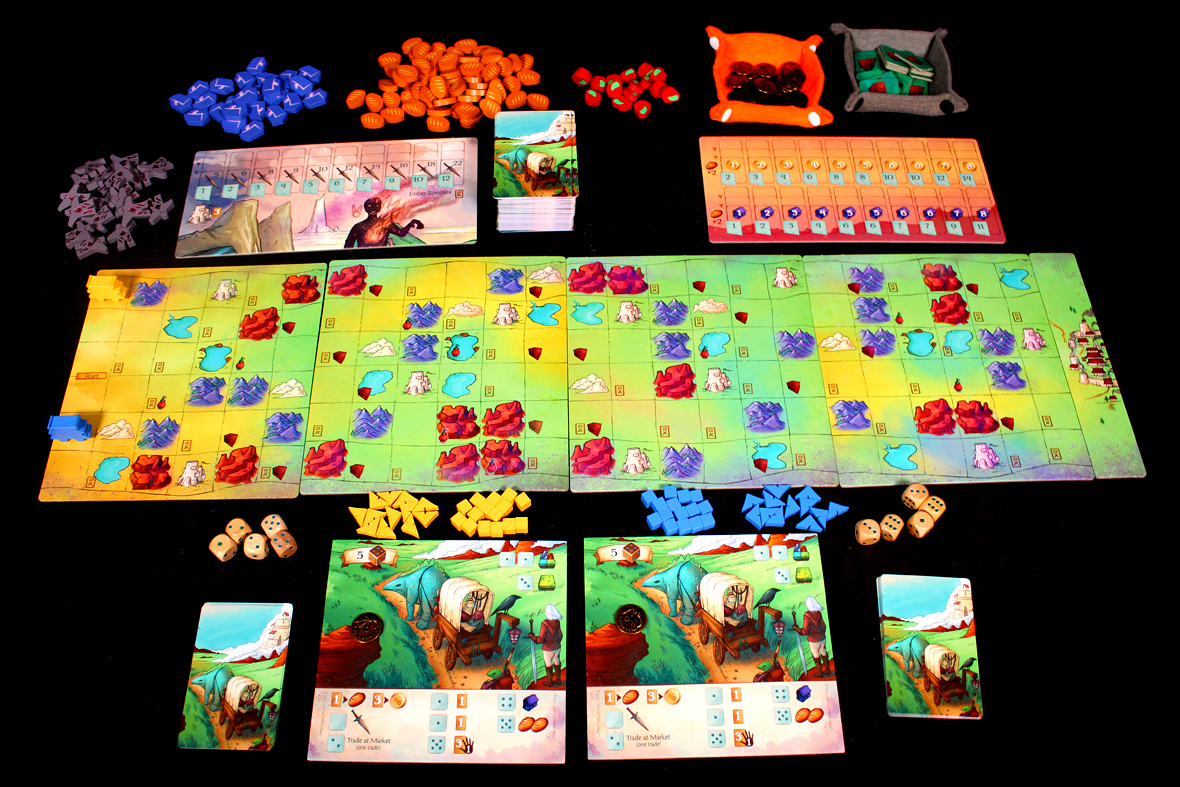
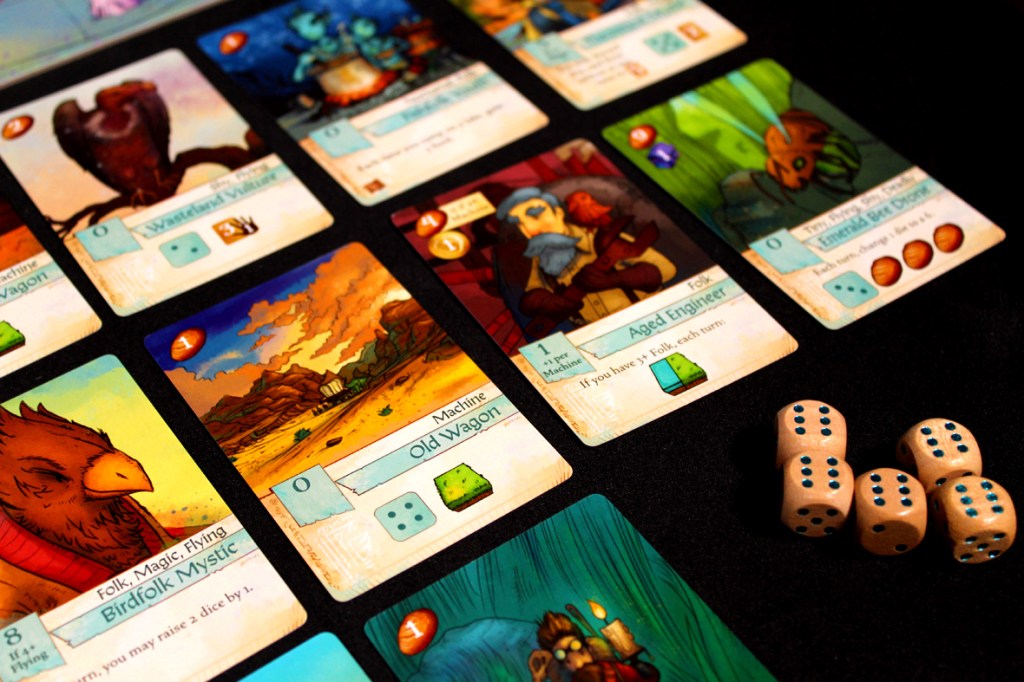
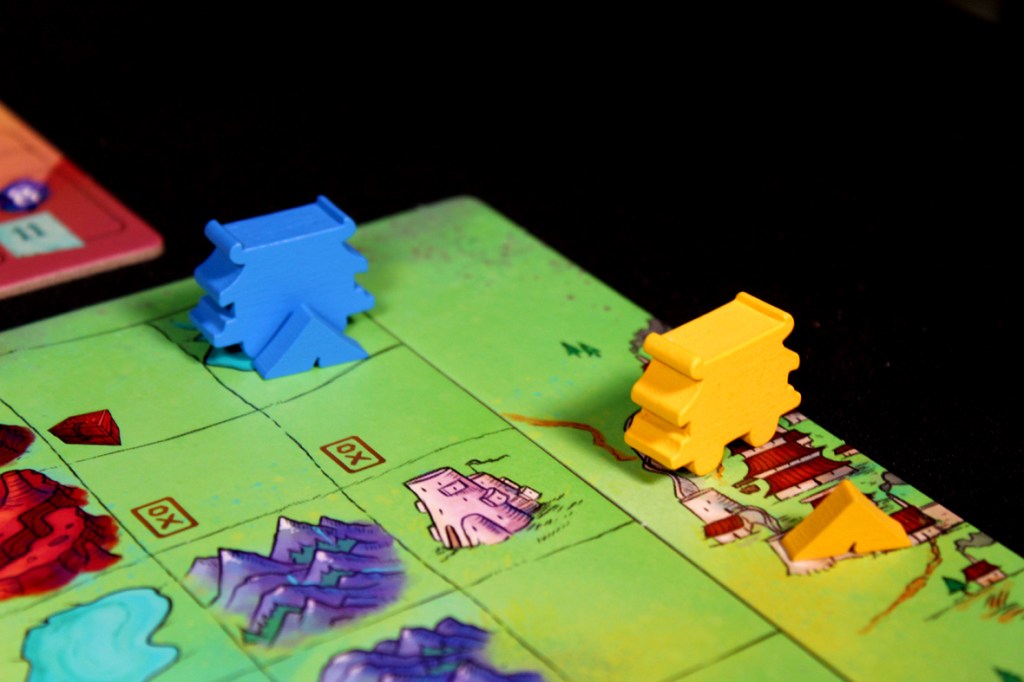
Contents
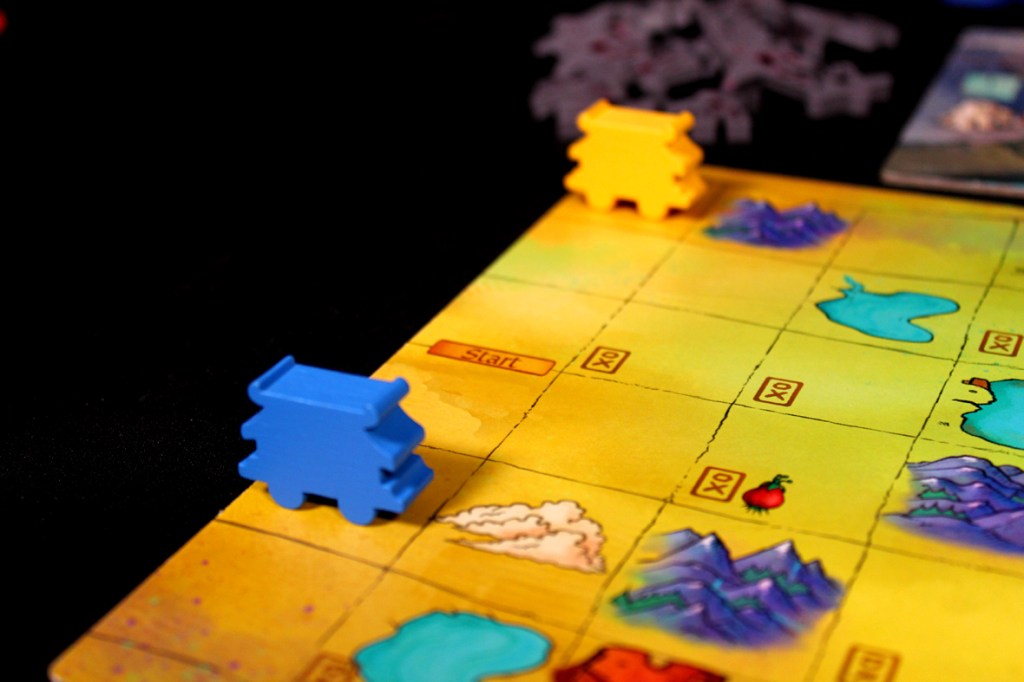

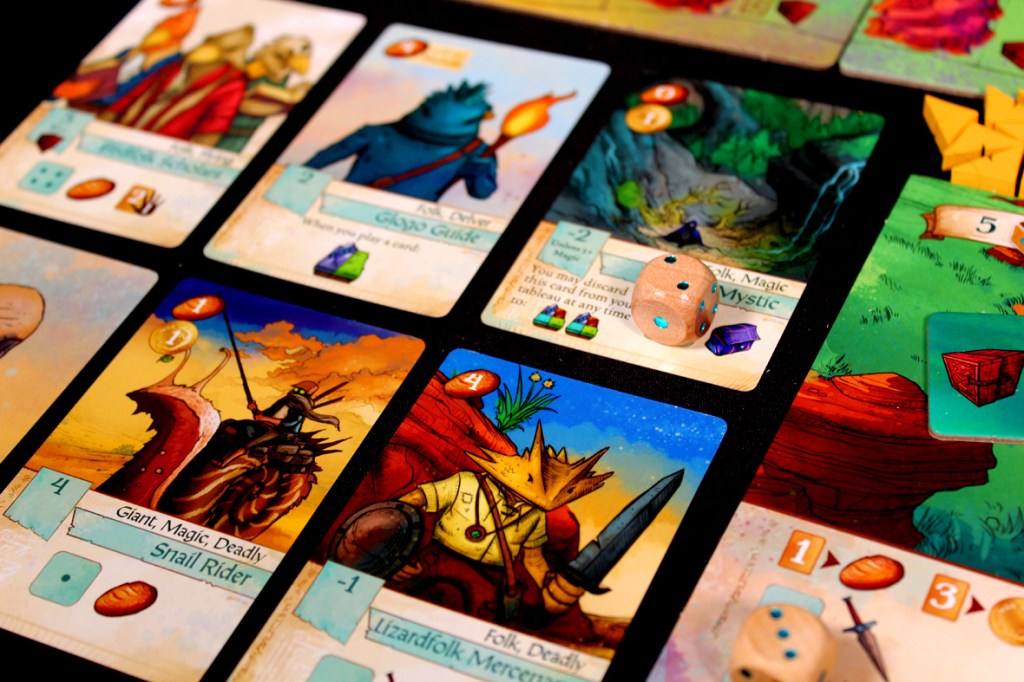


Player Count Differences
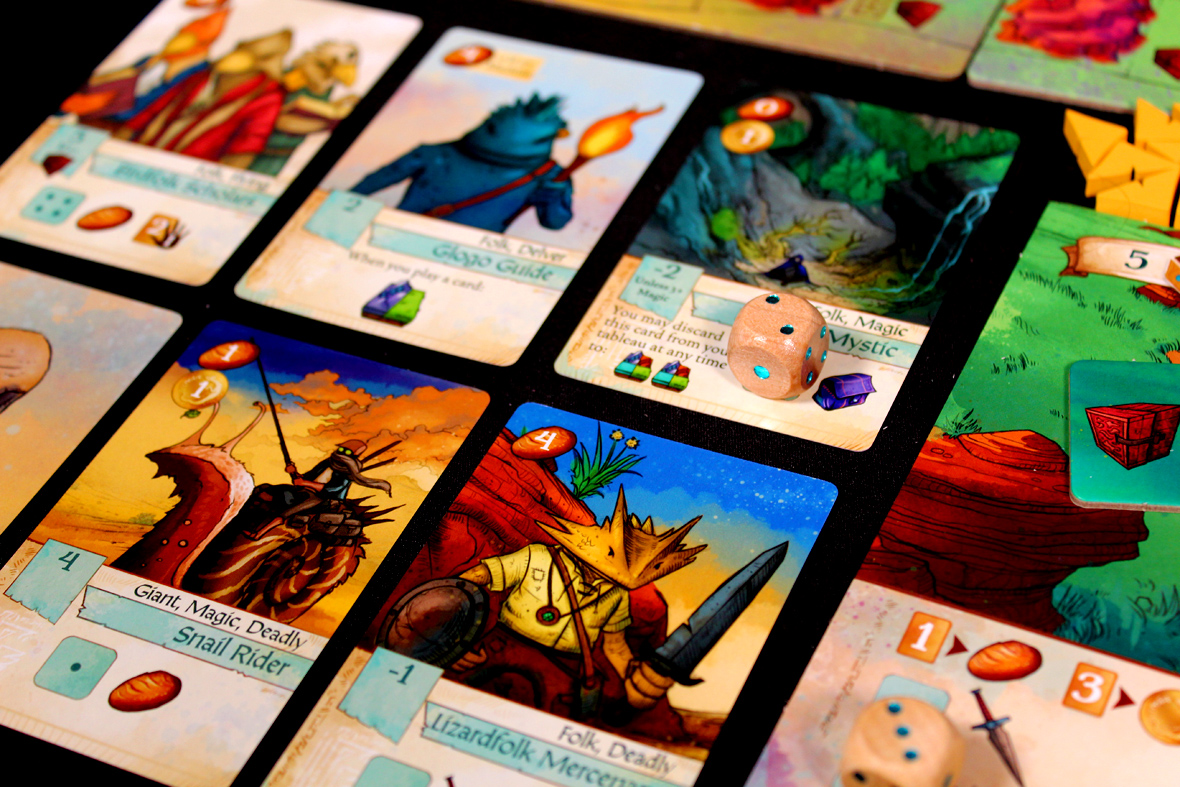
Surprisingly for a strategy game, not many. The game plays pretty independently, as you kind of do your own thing on the map and move around without paying much heed to other players. They might draw or play cards you want, but you can’t necessarily do much about that no matter the player count. The two things to watch out for are optional trading rules and the market / zombie boards. With trading, naturally, the game changes as the player count changes. You then kind of want to be the person that everyone trades with so you’re constantly getting built up. Thankfully. that’s optional. With the market and zombie boards, with more players, you run the risk of players specializing in some resource and being more quickly able to place on the board (and potentially lock you out). This all being said, if you see someone place on the board and you want those points, just hustle and earn those resources within the next two rounds. Beyond that, I wouldn’t say that there are major player count differences; I’d happily try this with any player count.
Strategy
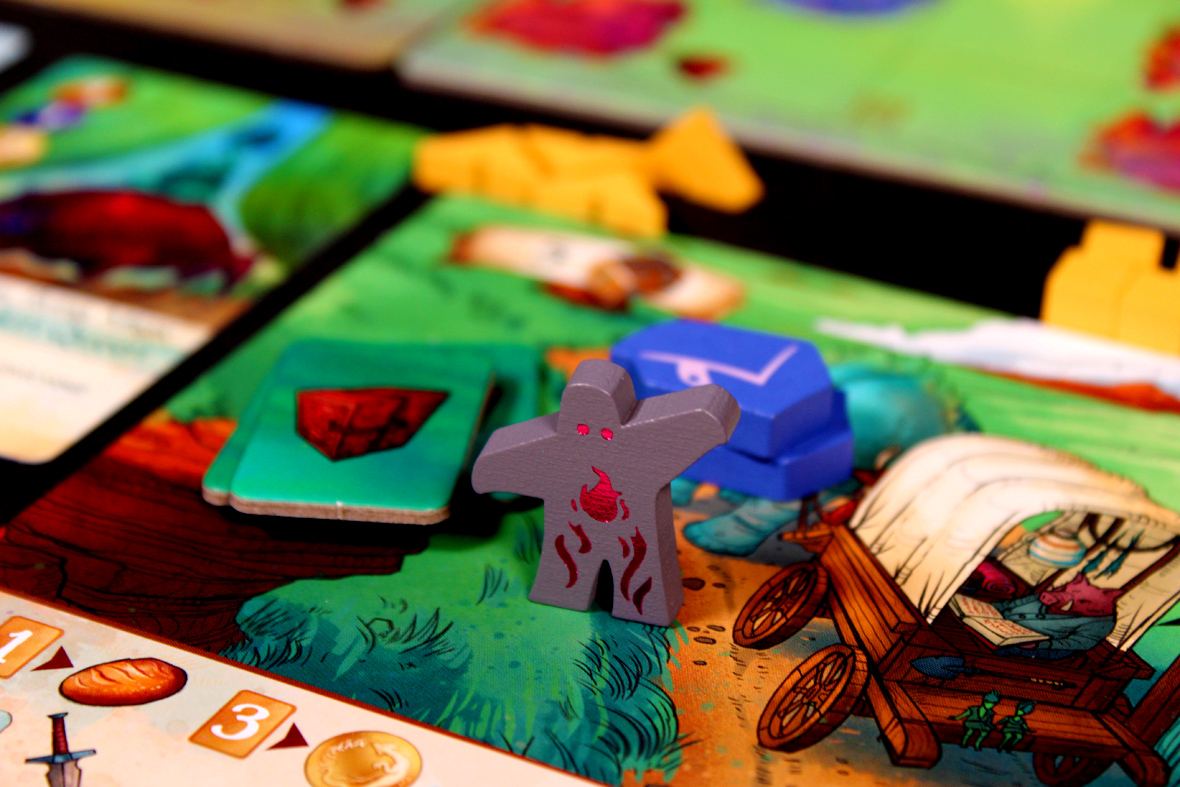
- Don’t immediately play 12 cards unless you have a strategy locked down. You can inadvertently lock yourself into a tableau with minimal movement or missing resources if you’re not careful. Look for cards that let you discard them later (or, if you’re lucky, a card that lets you ignore certain cards with respect to your tableau limit). If you see a player with 20+ food at the end of the game, they goofed. (This is also worth emphasizing to new players.)
- You’re really looking for a through-line combo. Ideally, your best combos would let you do a lot of damage or get a lot of coins or bags or something that lets you engage with one of the boards. Eventually, though, having a good source of movement is nice, too.
- Don’t underestimate dice, generally speaking. Rerolls and cards that let you increase the value of dice can turn a bad round into an okay one pretty effectively. Take care of your dice and they’ll take care of you.
- Gold and bags are both difficult to come by and relatively valuable. You can leverage them to get high-level cards by trading them at the market for points and food. Doing this early can be a great way to get a lynchpin card to base your strategy around.
- Try to avoid moving into threat spaces unless you’re ready to fight Ember Zombies; you’ll take an endgame penalty otherwise. There are certain cards that let you avoid zombies or fight them on other spaces, but otherwise, you can only fight Ember Zombies on the threat spaces; if you don’t, you’ll just get stuck with a -1 VP penalty for the rest of the game.
- Oh, you do want to get all the way to the end, if you can. It’s an extra 6 points, minimum. The farther east you push the more points you’re going to get. but making it to Eastrey is specifically 5 extra VP.
- There’s always going to be some resource you struggle to get; you can either figure out a way to balance your process or you can focus on getting cards that don’t require that resource. You might just play an entire game ignoring combat, coins, or bags; that’s totally fine. Try not to split yourself in such a way that you need all of them unless your goal is to do a little bit of everything. Even then, it’s usually better to go in on one thing pretty intensely.
- Using the Market to get food is also a good conversion if you already have access to a sellable resource. You get X + 2 food, where X is however much of the resource you’re trading in, which is pretty great. Use that to quickly accumulate enough food to get the cards you need!
Pros, Mehs, and Cons

Pros
- Fantastic art, as you’d expect from Red Raven. I particularly like that several cards are clearly different parts of the same larger art piece. It’s not just nice from a thematic link standpoint, but also an efficient use of art time and space, I think.
- There are a ton of different, intricate, interwoven card combos and they’re all satisfying. It feels like the kind of game where you’ll discover or uncover a new combination that works for you every game, and it’s interesting how what you draw when has such an impact on the direction you choose to take. Just remember that 12 cards is the forcing function; you need to prioritize to get a coherent combo.
- I like a modular board! It just force you to think a little differently about how to approach some things during the game. The actual obstacles change every time, so you can’t really go into autopilot. I wouldn’t say it increases “replayability” or anything silly like that; I just like that there’s a modular board and that the path is different every time.
- Simultaneous turns keeps the game moving well. You do need to do the “is everyone ready to advance?” thing when you think everyone is about wrapped up, but that’s hardly an imposition.
- You have a ton to do by the end of the game, just from all the cards in your tableau. Ideally, if you’ve set up a coherent strategy, you should have a fair bit of options every turn and even with more dice, you should have plenty to do.
- I like the Arzium world; it’s nice to have games that keep coming back to it. It’s a fun world. Lots of interesting characters and intra- and inter-group dynamics and such. I suppose that’s why they made an RPG as well.
- Pretty light, rules-wise. You don’t have to remember a ton; just the icons. You roll the dice each round and then activate cards or play cards from your hand for a variety of effects.
Mehs
- This is a nitpick but it would have been nice if all the cards had unique art. It’s occasionally a bummer to see a full repeat, but that’s largely because I like the art so much. It would also bump up production costs, though I have no idea how Red Raven handles that since Ryan is often the designer and artist.
- The market / zombie burndown boards are a bit clunky; I like that multiple players can still get a shot at something unless they ignore it for too long, but remembering to bump the cubes down is a very commonly missed rule for new players. It’s just one of those Round Cleanup Things that everyone tends to think someone else is in charge of and actively doing, so sometimes it doesn’t get done. You can be vigilant about it or accept that it’s imperfect; either way.
Cons
- Engine building games all kind of have the same common frustration and this does not avoid that pitfall. As with many games in this genre, it really helps to know all the cards. You know better what you’re looking for, what you can chain together, and what you should try to acquire over the course of the game. If you’re just slapping down cards effectively at random, you may not know what to grab and may end up with a card that doesn’t help you at some point/
Overall: 8.75 / 10
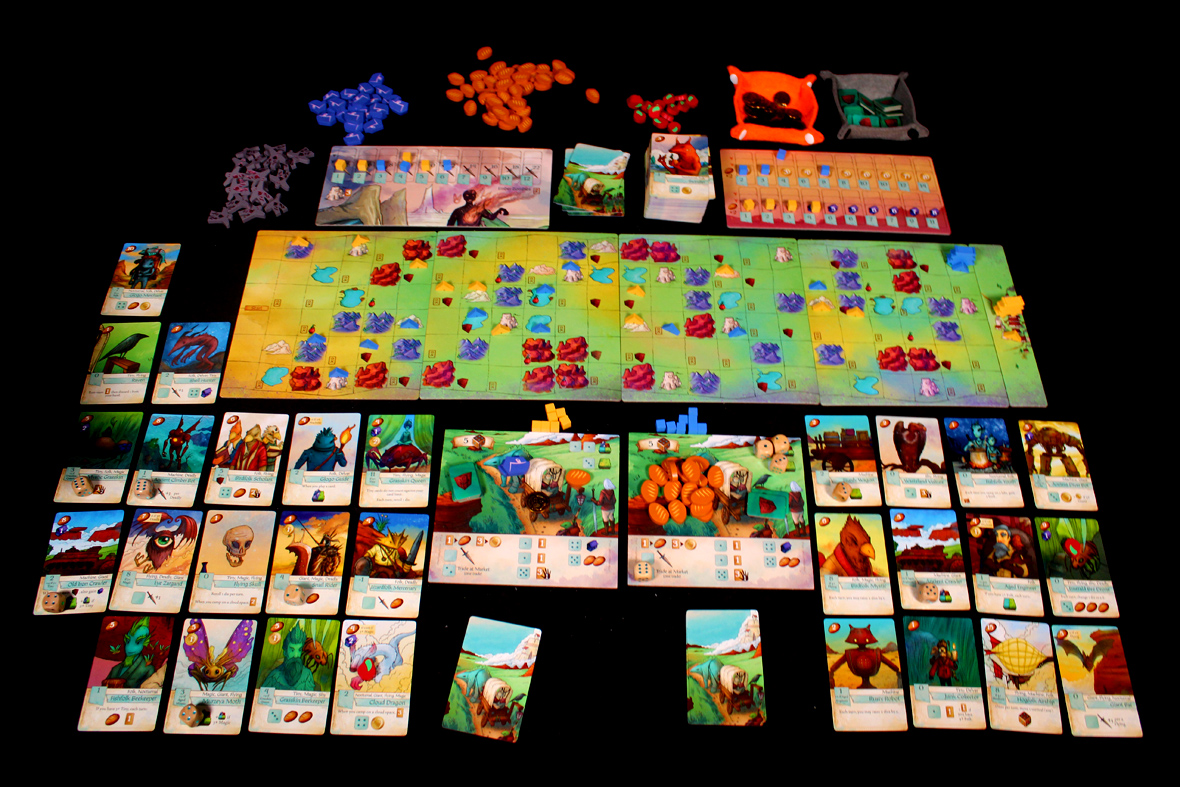
Overall, I think Creature Caravan is fantastic! I’ll be up-front that I’m not the biggest fan of engine building games (mostly because they’re hard to learn for new players vs. experienced players), but I was fortunate that my first game was with a bunch of players who hadn’t played the game before. You may find that there’s some challenge for players new to the genre to learn card combos, but that’s kind of par for the course with engine building games. Thankfully, the card combos themselves are pretty relatively straightforward, so you almost instantly know what to look for. Trying to tie together a strategy is more complicated, but that’s what makes the game fun. I think Laukat (and Red Raven as a whole) are pretty consistent on both quality and figuring out how to flesh out an engaging world, and Creature Caravan does that quite well. I like that I’m trying to help a tiny flying skull escape zombies. I feel invested. Plus, every turn I have a lot to do! It doesn’t take much to understand how to play; there are relatively few icons and dice just need to be placed so that they meet or exceed the space’s value. Quick pickup and quick play are both great; even though the game sits at a 60 – 90 minute playtime, you don’t necessarily feel like there’s downtime, as everyone gets to play simultaneously. The goal is clear, too: you score bonus points for making it to the end, though I’d be interested to see if there’s a winning strategy that involves not going there. Who knows. Either way, I think Creature Caravan is a great pick for folks looking for a casual engine builder or a great-looking strategy game. If you’re looking for a great game for game night, you enjoy some thoughtful play, or you just want to hitch a ride back to Arzium, I’d definitely recommend checking Creature Caravan out!
If you enjoyed this review and would like to support What’s Eric Playing? in the future, please check out my Patreon. Thanks for reading!
 What's Eric Playing?