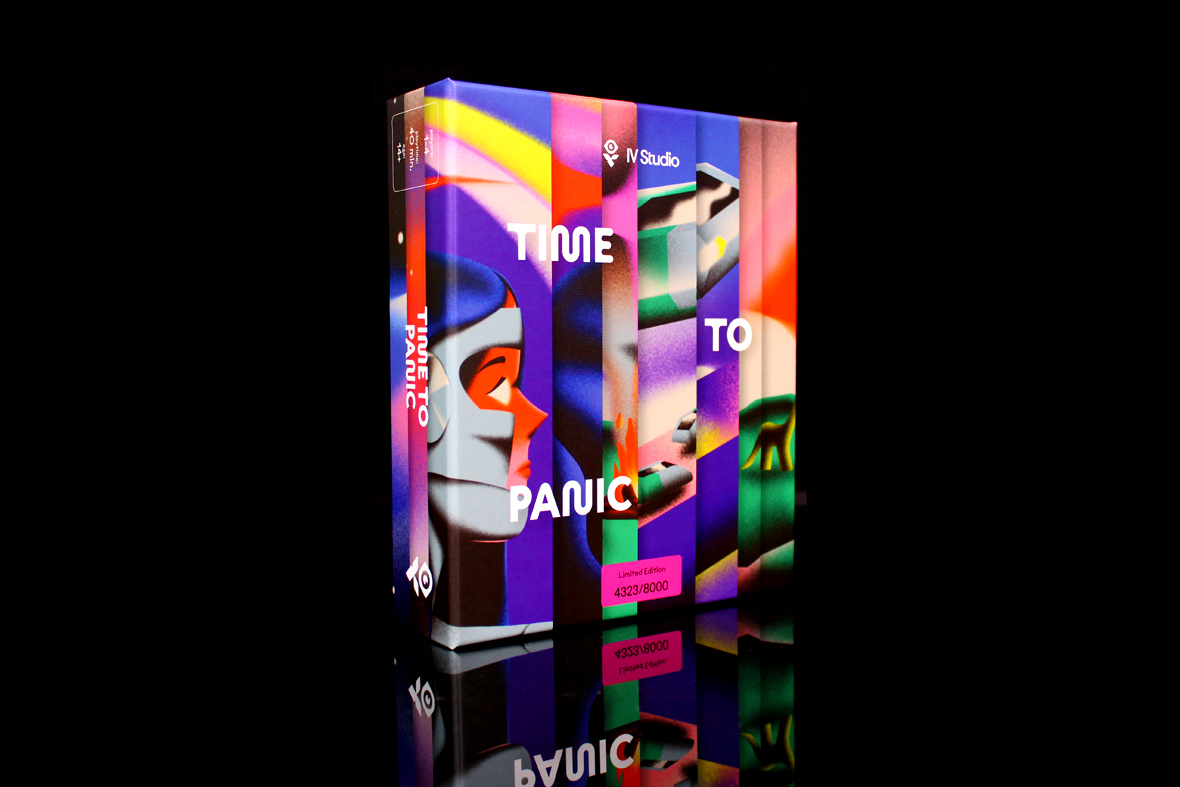
Base price: $30.
2 – 4 players.
Play time: ~40 minutes.
BGG Link
Buy directly!
Logged plays: 1
Full disclosure: A review copy of Time to Panic was provided by IV Studio.
Okay, I regret waking up at 7AM to do photography this morning. I’ve been trying to type for half the day, now, and despite it being literally noon I’m exhausted. I keep typing things like stiwrking or uhadsternd and while I can largely piece together what word I’m going for, I worry that it may be a bit less clear for y’all. Those were pretty easy examples, to be fair, but some parts of this have been a mess. Like in that sentence I unsuccessfully attempted to type the letter a three separate times before I finally got it. I should probably get something to drink with caffeine. In the meantime, though, let’s dive into Time to Panic!
In Time to Panic, the timeline is … a mess. Cause is preceding effect, sometimes nothing never happens, and there are occasional self-sustaining events that always are, were, and will be. It’s not ideal. You’ve been chosen as an elite team to try and put the timeline back together, but there are so many things going wrong. If you make too many mistakes, you run the risk of time unraveling completely and wiping out you and everyone. Maybe something better will evolve from the nothing? Small comfort, though if you were always nothing, maybe you wouldn’t think about it too much? Not worth thinking about. Will you be able to put time right again?
Contents
Setup
Not much, here. Shuffle the Timeline Cards:
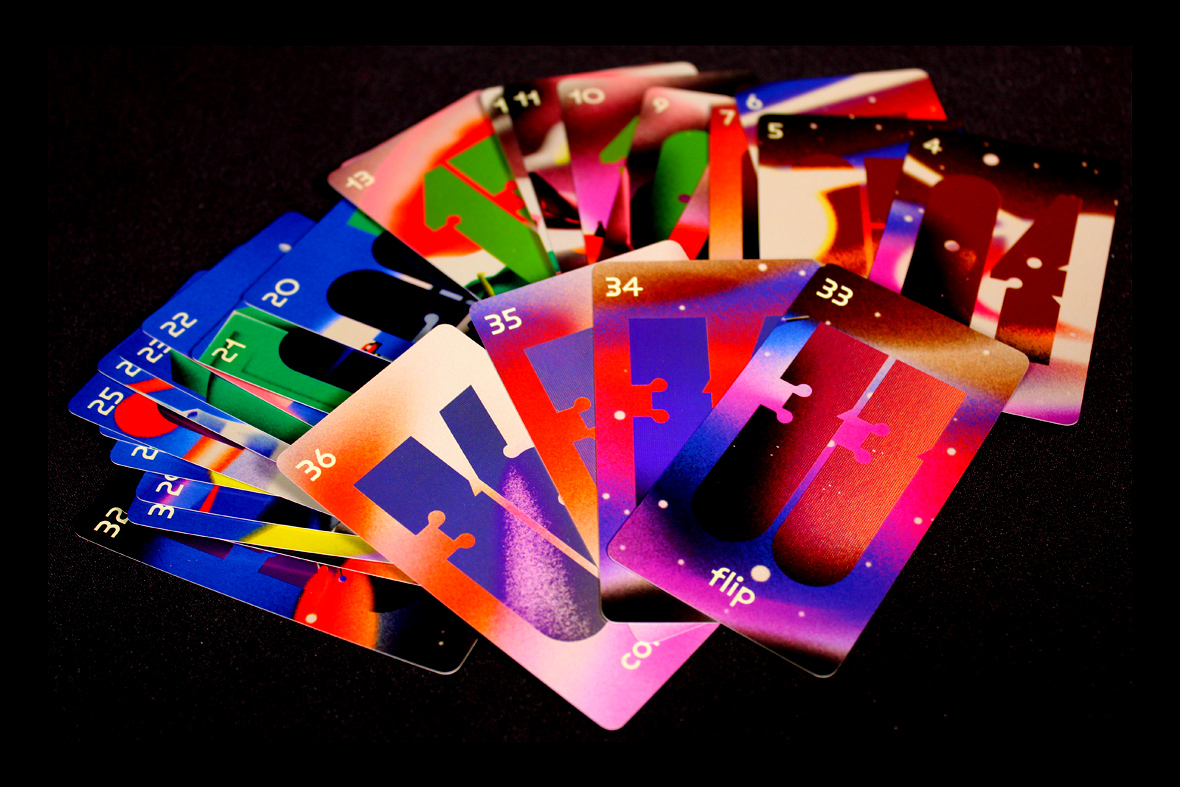
Then, choose a difficulty level (Minor Panic / Panic / Total Panic), and take and shuffle the deck of Panic Cards into its own pile.

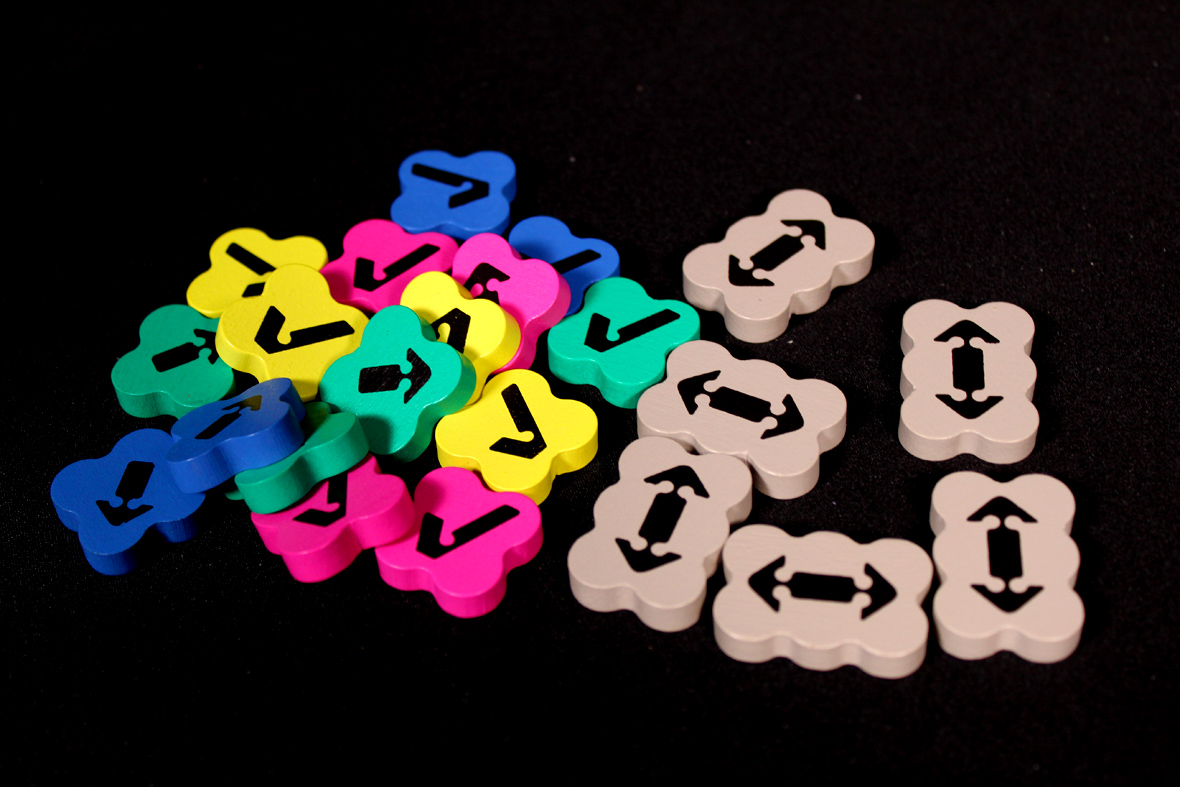
Place a Gap Token in the center of the play area, and give each player a set of Tokens in their color:
Then, place one face-down card on both sides of the Gap Token, and one face-up card on the left- and right-most side of the line. Each player draws four cards and you should be ready to start!
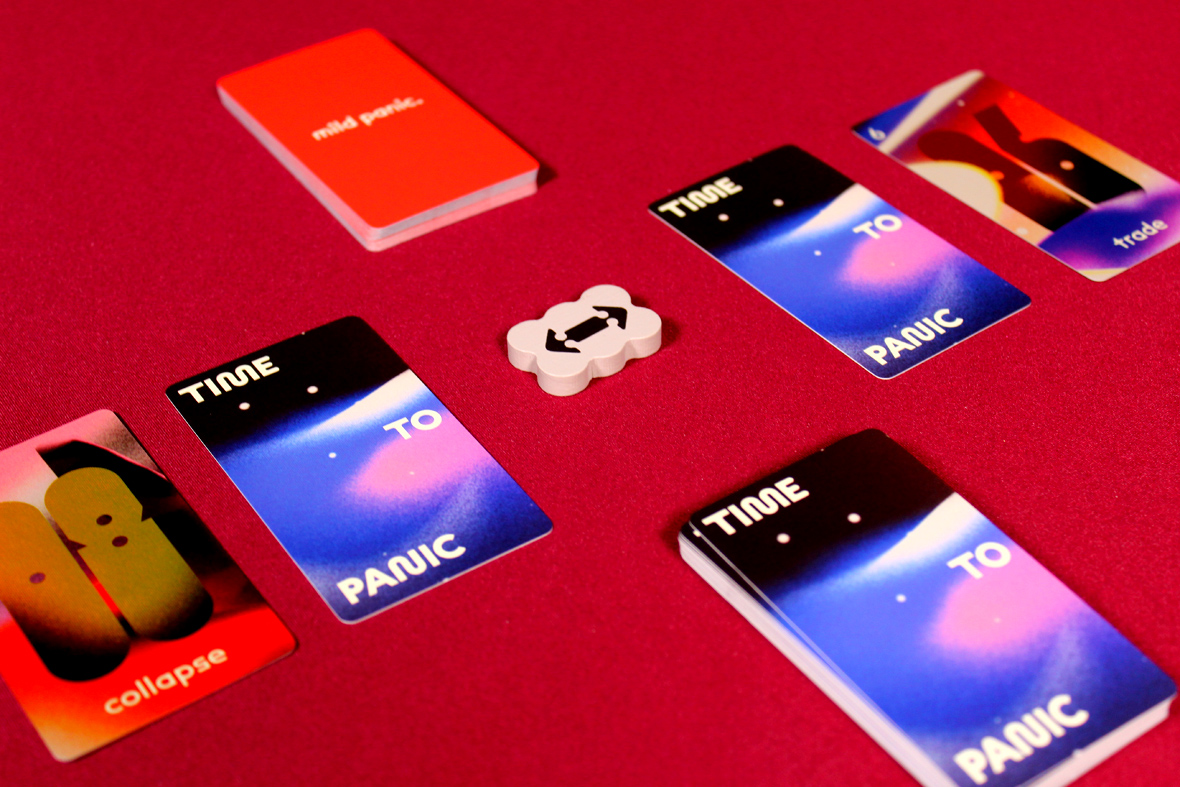
Gameplay
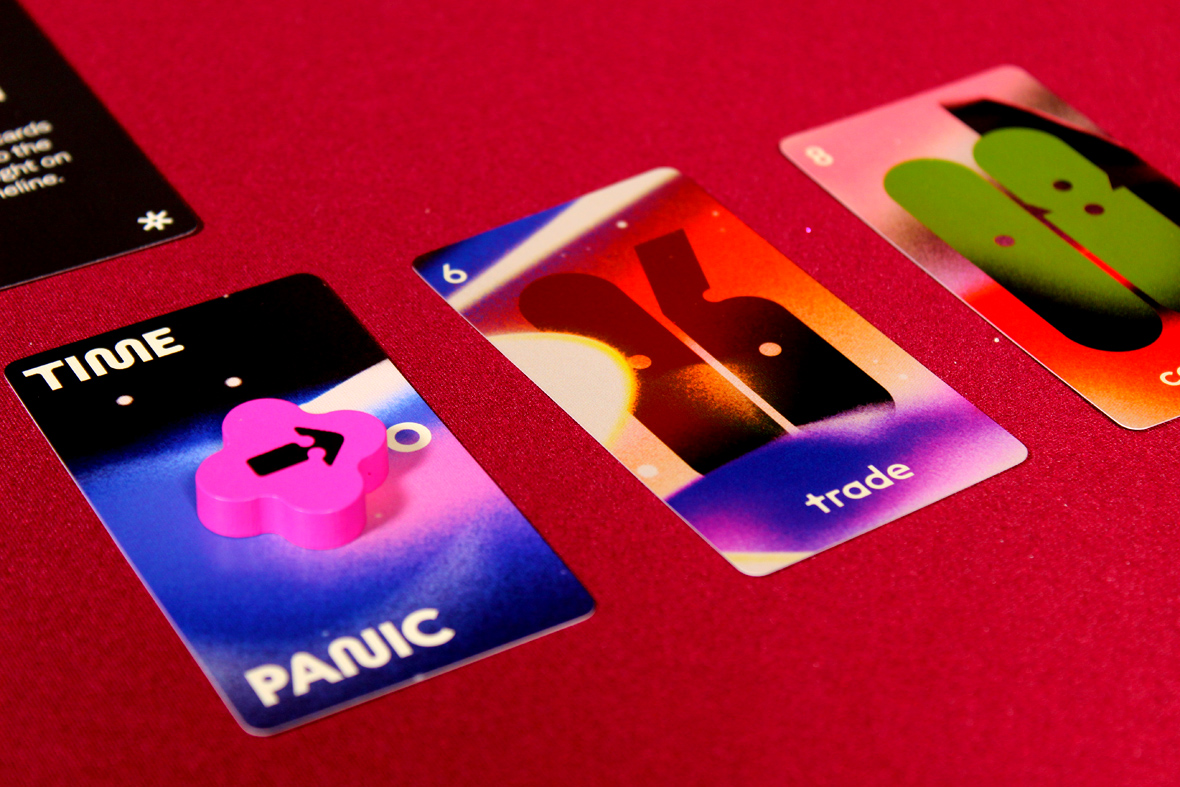
The game is pretty easy to pick up! You’re trying to correct the flow of time and avoid Panics before the game ends. The closer you get to a perfect timeline (left-to-right increasing), the better you do!
Each turn, you’ll play a card from your hand. A card can replace any Gap Token (the Gap Token is then discarded), or a card can be played to the left or the right of the timeline. Then, the card’s ability is activated. This can do a variety of things, from activating other cards to switching two cards to swapping a card in from your hand to discarding a single card to discarding multiple cards. After doing that, if your card is still on the board and adjacent to any card without a “Delete” action, you must activate one of your neighbor card’s abilities. You can’t use to Delete, though!
If the Timeline Deck still has cards, then you also draw a card and flip a Panic Card. Panic Cards are generally bad, but sometimes you can get away with a minor issue.
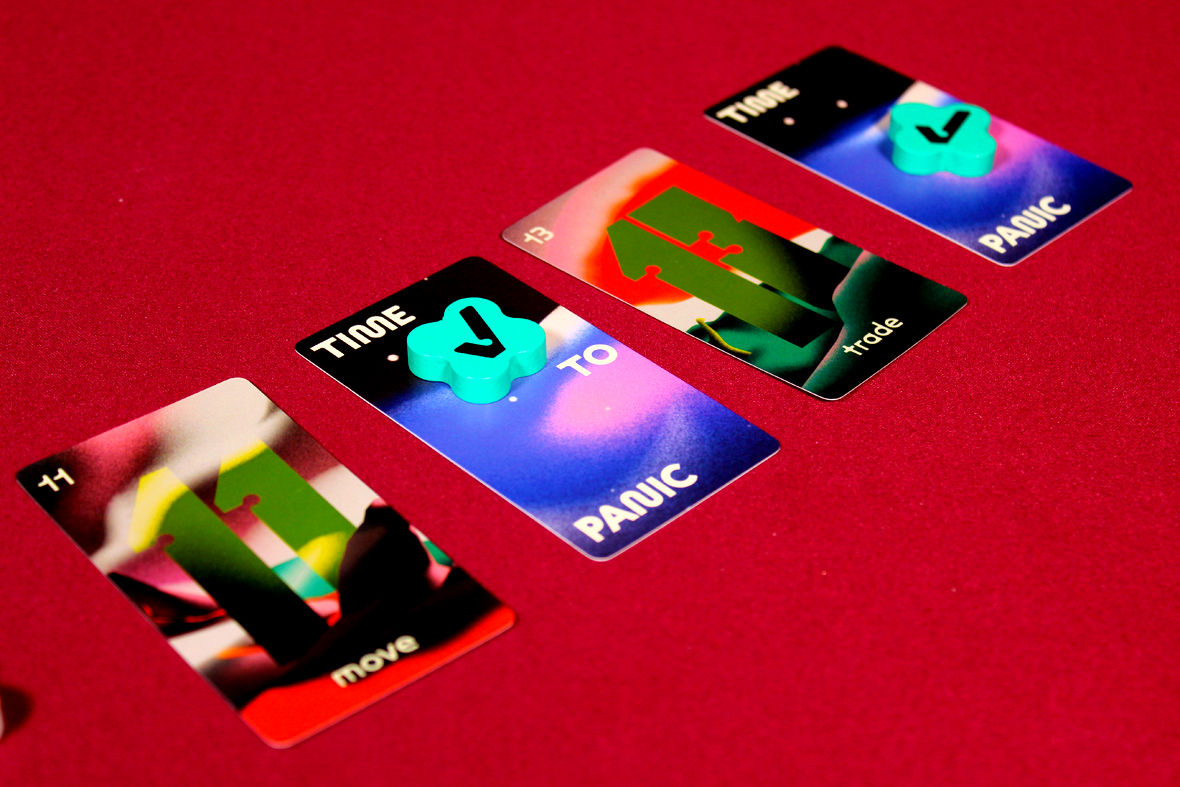
Play continues until each player has only one cad left, which is then discarded. To score, flip all face-down cards face-up, and then see how well you did! Remove any cards that would violate the strictly increasing rule. The fewer cards, the better!
Player Count Differences
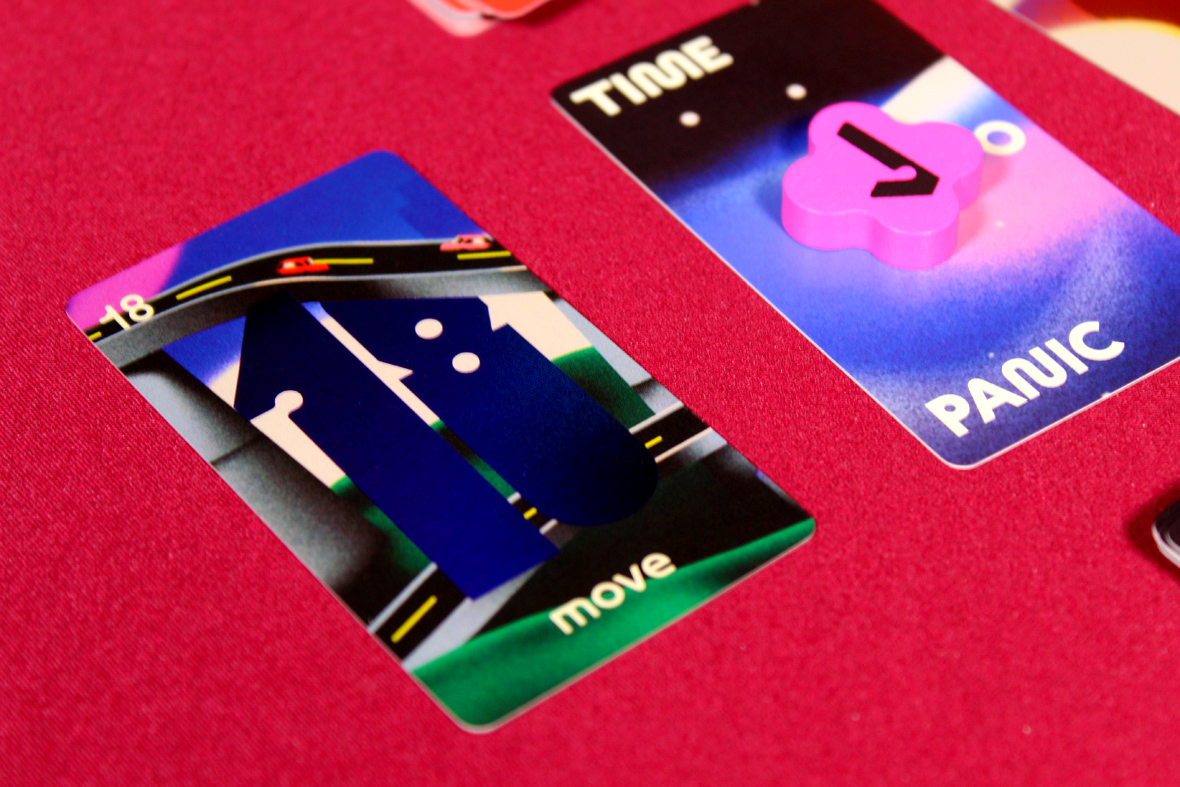
The usual pros and cons for this style of game. There are more cards available across players’ hands, which is generally good (as player count increases), but there are also more turns that have to happen between players’ turns, which makes coordinating those card plays more difficult. It’s just a matter of flexibility and luck, since you’re playing until the cards run out; the same number of turns will be played at any player count; just not the same number of turns per player. No strong preference as a result.
Strategy
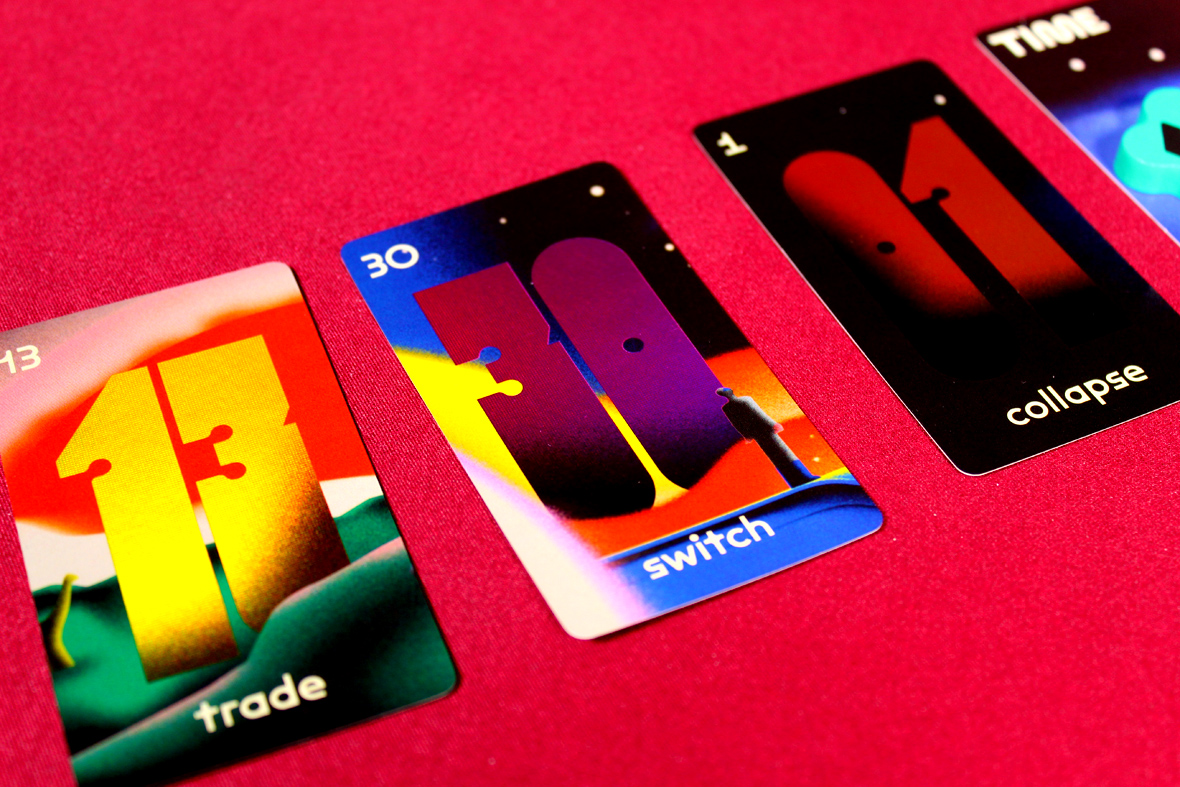
- Collapse and delete, my friends. You want to remove as many cards as possible since there are a lot of Panic Cards that will mix and shift and shuffle. If you remove avenues for chaos, then the remaining stuff is a bit easier to control because you have smaller surface for issues.
- Making big chains of cards to collapse can give you the gaps you need. Gaps, in general, are also good. You can use them to insert other cards, which, good. Getting rid of a lot of cards at once is also generally good, because then you just don’t have to deal with them.
- Use Activator to get at abilities you want to use again. You can chain Activators to dig in a bit deeper; the main issue is that you can’t use a Delete with Activator; bummer. But use Activator to dig in a bit deeper to use Switch or Collapse or Move or whatever, as needed.
- Communicate liberally, within the rules. You can advise on a few things but make sure you’re not telling people what’s in your hand or what’s face-down. That’s against the rules!
- Set yourself up to play next to cards so you can use their abilities as a bonus. You can use them to essentially reorganize the line or even occasionally move cards into place and then execute a big Collapse. You can Trade a card to place it face-down and then execute a bonus Flip to get to use its ability and put it into a great spot. It all works out.
- The Panic Cards are going to mess you up no matter what, so you can lean into it. Don’t be too precious about having the timeline perfect all the time every turn. Some things are just going to mess you up, and you have to live with it.
Pros, Mehs, and Cons
Pros
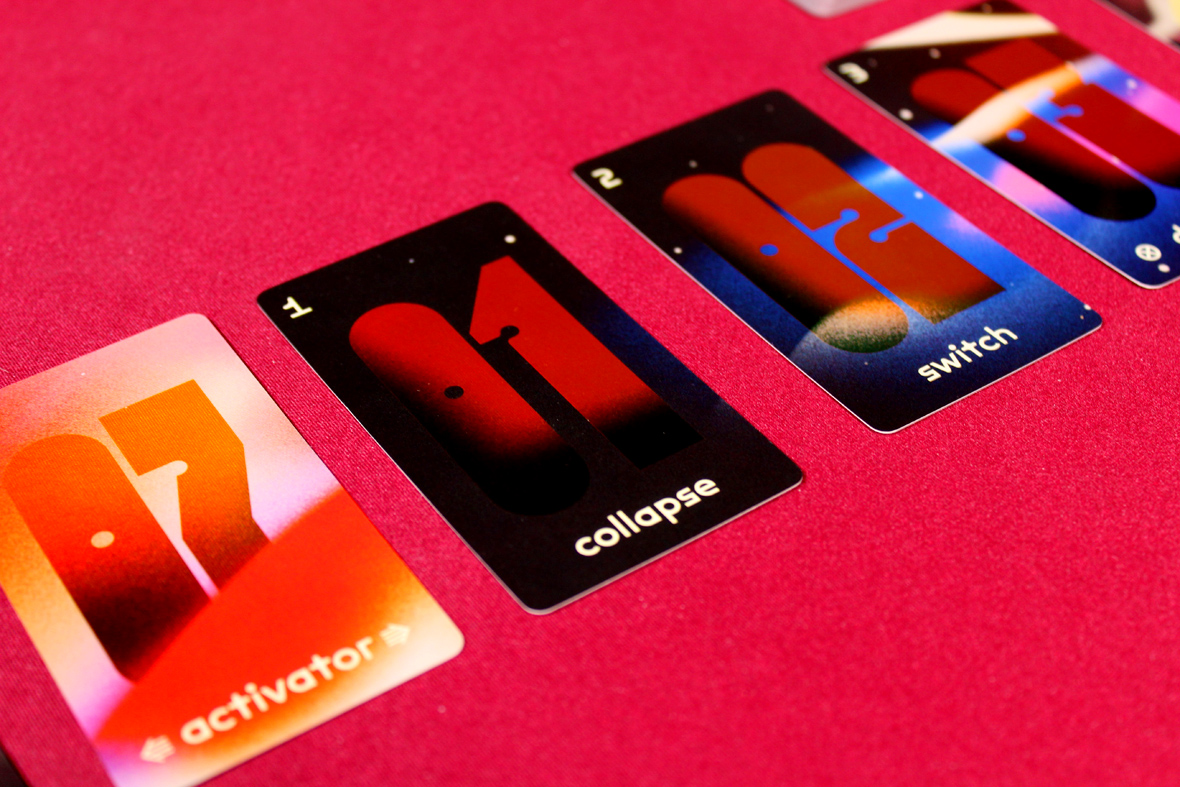
- The aesthetic is impeccable, but if you’ve played an IV Studio game that should come as no surprise. The game looks great, and all the cards are part of one long-form art piece, which is cool as hell. It starts at nothing and gradually works its way into the cool future. I wish we were getting to the cool future!
- Pretty portable! It’s a relatively small box game, which is nice. Since it’s mostly cards, you do figure you could probably make it a bit more portable, but that’s not really my problem to solve.
- Very low setup commitment, which I like. Best part is that the difficulty toggle isn’t shuffled into the main deck, so you don’t have to even separate out cards! It’s smart.
- I like cooperative games with multiple difficulty levels, and it’s pretty clear how they increase the difficulty. You just use a harder deck or eventually lower the hand size limit at max difficulty. There’s clear and contained ways to modify the difficulty level, and for a cooperative game, I feel like you gotta have a few difficulty options.
- The card size is perplexing, but not too difficult to shuffle or anything. I occasionally enjoy a weird card size (except for square cards).
- The other tokens are nice too! They’re silk-screened and pretty high-quality; they’re nice to hold and big enough that they’re highly visible and easy to use.
Mehs
- The numbers on the cards have a cool style to them, but it does make them hard to read. I think your brain adjusts to it after your first game. Looks great though.
- The challenge with long horizontal games is that you need a certain amount of space. This goofed us a bit at PAX West, but it wasn’t as intense as this week’s other Long Horizontal Game, Creature Caravan. Thankfully, Creature Caravan isn’t as variable.
Cons
- The flow of play is a little clunky. It really comes down to the bonus actions. They get missed a few times or new players struggle with where or how to activate them, but there are a few other things, too. Players struggle to remember how they can engage with face-down cards when they don’t activate for Collapse but they do activate for Delete. Flipping them activates their ability, but not if you flip them via a Panic Card. What happens if you draw a final Panic Card and there aren’t any cards left in the deck for you refill your hand after you play a card to each end? These things can impact the game flow negatively.
- I wish the theme came through a bit more in the game’s presentation. I’d love to see events on the timeline that are getting messed up or something that’s not just the abstract numbers. Like I said, I love that the entire timeline is basically one long-form art piece
Overall: 7.5 / 10
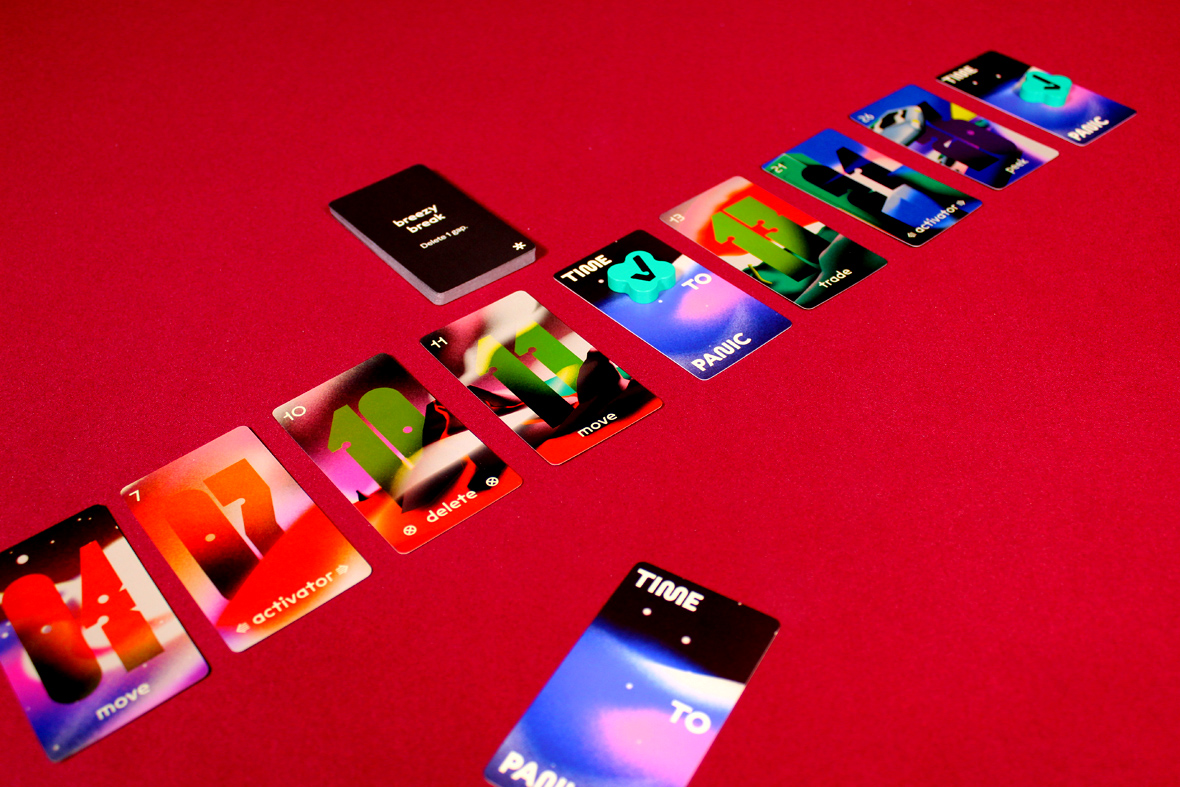
Overall, I think Time to Panic is fun! It’s a bit more complex than other games of its type, which is interesting. Part of that is, granted, that the game’s core flow is a bit clunky, but that’s not the only thing. One major component of that is that the Bonus Action flow is easy to miss. You always do the bonus action, except if your only other option is a delete, or if your only option is a face-down card or if you’ve removed the card because of a delete or a collapse and that injects just enough inconsistency that players trip over it a bit. It’s relatively easy to fix if you have an experienced player helping make sure that other players glide over it, but if you’re playing with all new players that might be challenging. The other aspect of the games complexity is much more satisfying, though: thinking about the action you can take and the potential adjacent bonus actions you can take is great! There’s strategy there and planning and a well-executed plan that eliminates a bunch of cards feels incredible. It’s good. Usually a lot of games of this type don’t have those abilities, but they certainly don’t have an adjacent ability-chaining thing going on. So that’s fun. Otherwise, Time to Panic does a lot of things that other cooperative games about organizing a set of disparate things do, and it does them well. The varying difficulty levels are good! The challenges offered by the strategy of playing well are good! The art is fun, even if it takes you a full game to understand how to read the numbers! But if you’re looking for a fun, portable cooperative game with just a bit more complexity than the rest of its peers, I think Time to Panic does a solid job! It’s a great-looking game to boot.
If you enjoyed this review and would like to support What’s Eric Playing? in the future, please check out my Patreon. Thanks for reading!
 What's Eric Playing?