
Base price: $9.
1+ players.
Play time: ~10 minutes.
BGG Link
Buy on Amazon (via What’s Eric Playing?)
Logged plays: 2
Full disclosure: A review copy of Tearable Quest was provided by Allplay.
There’s something to the entire idea of taking one day off a week to just rest and recharge and do around-the-house tasks. I’m pretty sure it comes from the Bible, but, that’s generally my plan on Sundays. Rest, relax, TV, and this. I had a few other things to do but resting came first; I’ve been burning the candle at both ends lately. I think living closer to Seattle than I did to San Francisco makes events and things to do more accessible, so I end up getting pulled into a lot more (or pushing my friends into a lot more); who knows. There’s always something going on here, though, especially as the summer ends. Excited for the Fall! But in the meantime, let’s check out Tearable Quest, coming to us from Allplay!
In Tearable Quest, you’re going to tear your friends a new one! And probably a new five or six by the time things are all said and done. You see, the only way to score points in this game is to literally tear segments off of your player sheet to match patterns on the scoring cards. Just, you do have to be fairly precise; it’s not going to count if you’ve got parts and pieces of other symbols on your paper! As clean of a tear as you can get. Hopefully your hands aren’t shaky or sweaty; that will make this tough. Will you be able to separate yourself from the pack? Or will you just end up having a tearable time?
Contents
Setup
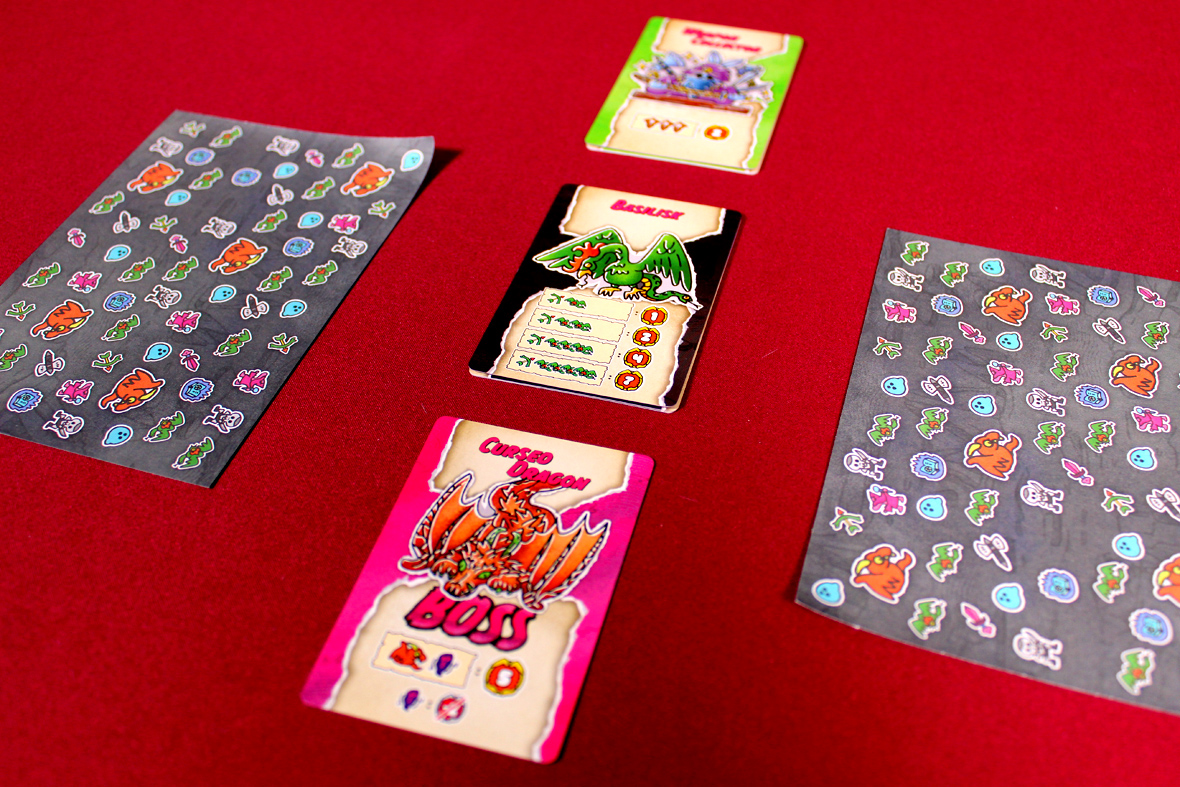
Not a ton here. Choose a sheet to play on and give each player one:

Use the corresponding boss (they’re double-sided, and the Phantom can be used with either sheet):

Shuffle the Monsters and pick three, revealing the top one:

And if you want an extra challenge, do the same with the Bonus Cards (shuffle, draw three, reveal one):

Set a timer for two minutes and you’re ready to start!
Gameplay
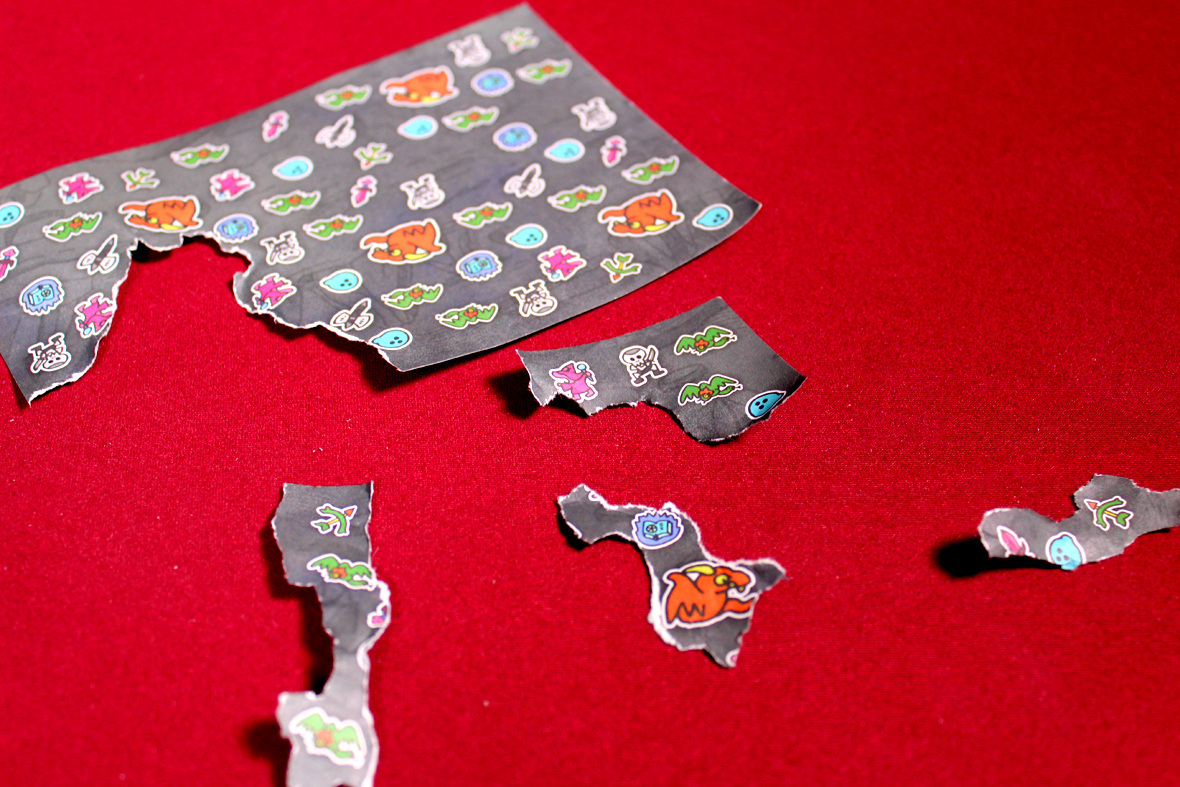
Easy stuff this time around. You’ve got three rounds that play exactly the same, each time. Your goal? Create pieces, each with exactly the symbols pictured on the cards. You can score more than one piece per round with the same set of symbols, so try to maximalize! How do you get the pieces? Well, you have to tear them out of the paper. With what tools? Your hands! Good luck with that.
Each round lasts two minutes. After you finish, check your pieces. There may be bonuses on the back: any full coins are worth +1, full treasure chests are +2, and partial or full curses are -1. Watch out for those. Partial symbols do not count otherwise, and, in fact, partial symbols on a piece can prevent you from scoring that piece (since you can only score a piece if it has exactly the symbols indicated on a card).
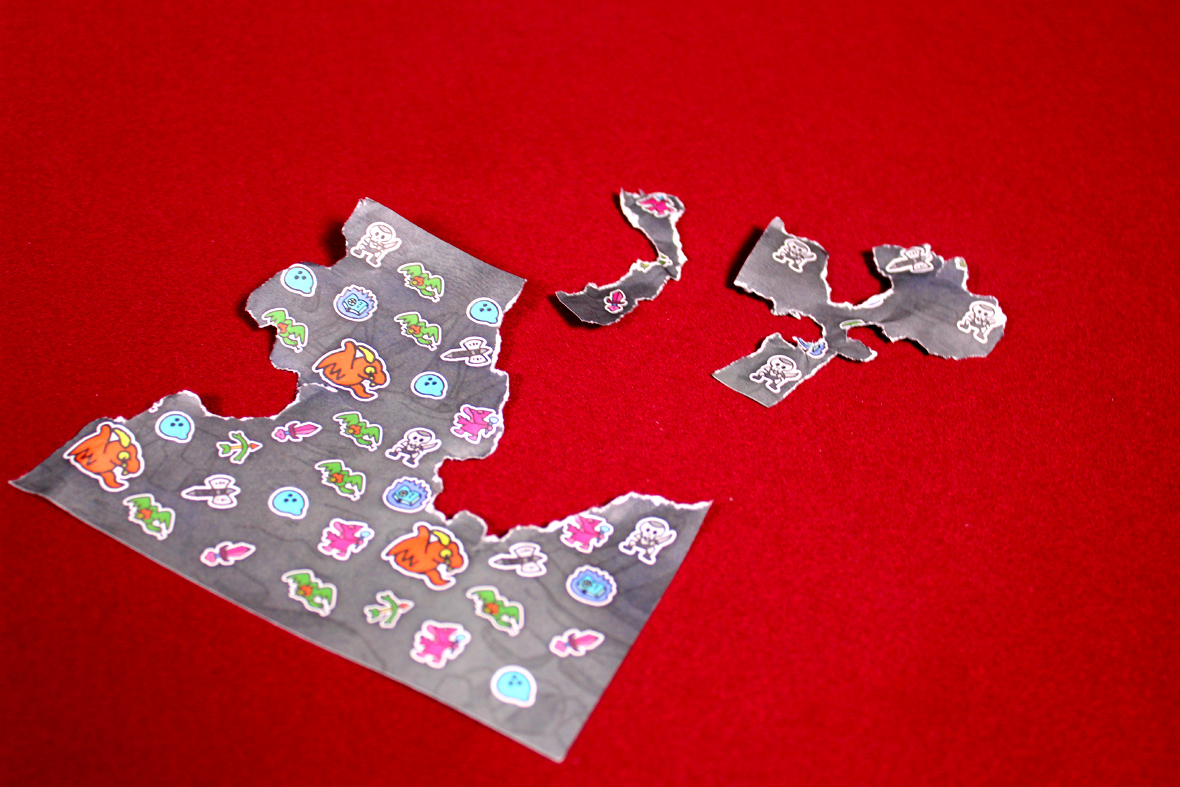
After each round, discard the current Monster Card and Bonus Card and reveal new ones. Players can choose one piece of their torn-up papers to keep for the next round (you usually want to keep the big piece with the rest of the symbols on it, so try not to split it in half or something). Start another two-minute timer and go again!
Once the third round is over, the player with the most points wins!
Player Count Differences
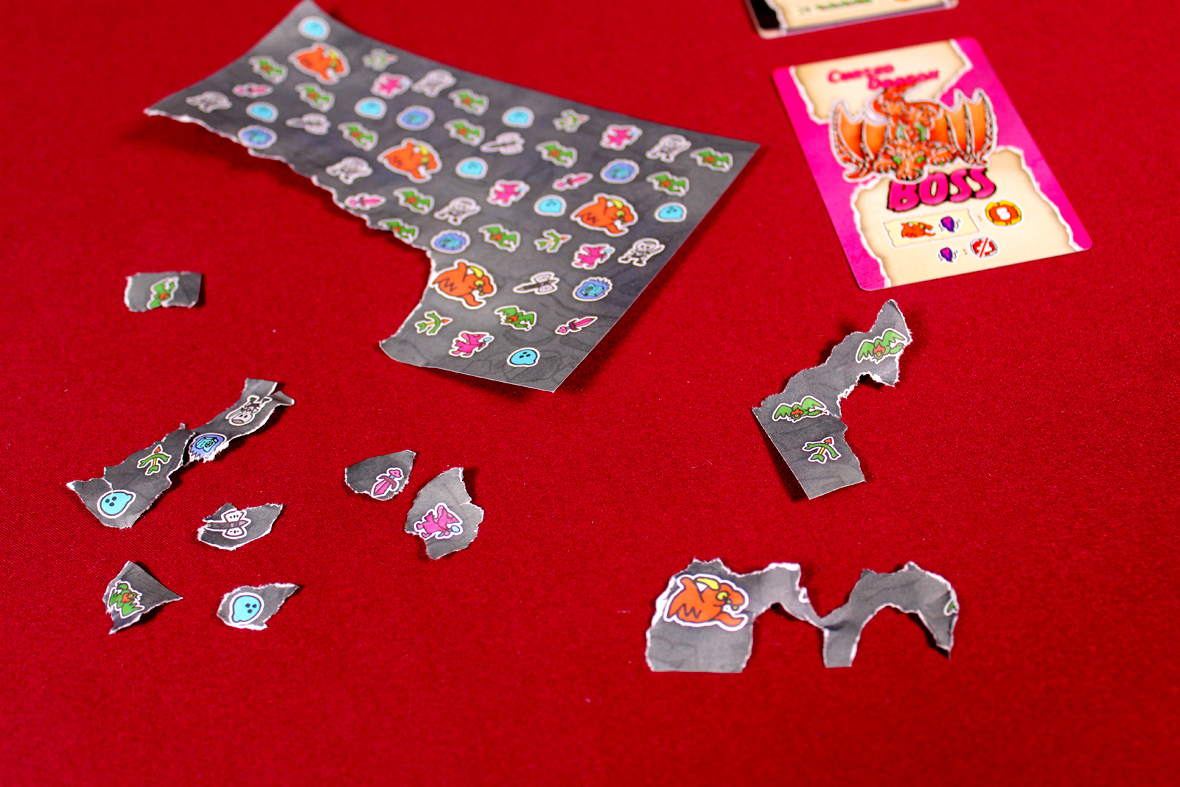
None, here, really; I believe that the game even advertises that you can play with up to 50 people (though you’ll use all the sheets). There’s no player interaction, either, outside of a couple Bonus Cards that give you points based on how many pieces you scored relative to other players. As a result, playing solo or playing with 50 friends ends up feeling roughly the same. For longevity’s sake I wouldn’t necessarily recommend playing with 50, but hey, do what you want.
Strategy
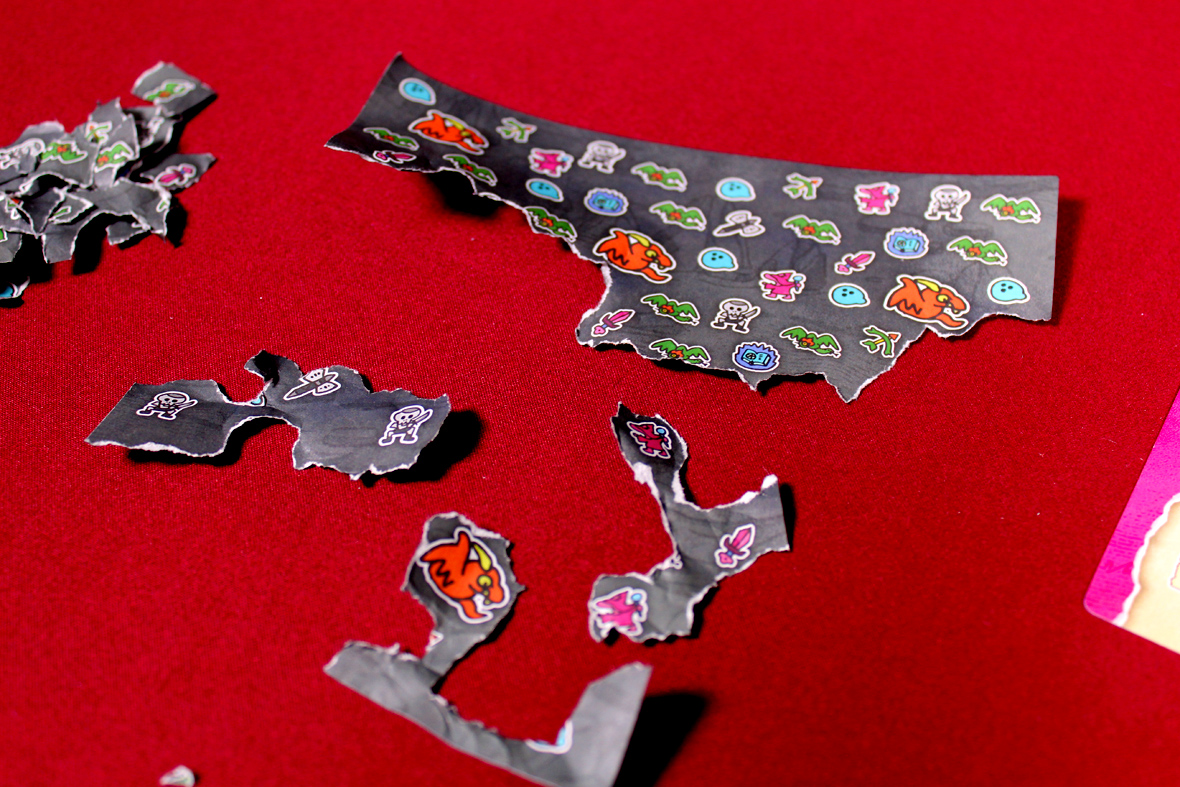
- It helps to look at the cards and figure out pathways. There are definitely options that you can make for yourself if you know what symbols you want and which you don’t.
- Leave yourself room when tearing! You may need to keep symbols connected by tiny segments of paper, so give yourself some options! Don’t just tear as close to the symbol as possible every time (unless you need to).
- You can often tear off a big chunk and then spend the time removing the bits you don’t want. It’s a little wasteful, but towards the end of the game it might be faster than erring towards precision.
- Pay attention to the back. Coins and chests can get you points if they’re whole but curses (even partial ones) will cost you points. The worst thing you can do is split a curse in half and have the same one in pieces on both of your pieces (leading to multiple negatives off of one curse). It’s worth playing holding your sheet to the light or occasionally flipping it over for best results.
- Bosses can be tough to get but lucrative. It’s worth going after them! Just be mindful of the requirements, as some want you to pay attention to what’s on the back of the sheet, too.
- If you’re using Bonus Cards, you don’t necessarily need to focus on them, but it can help! A few extra points here or there isn’t necessarily a bad thing.
- Leave yourself something to do in later rounds. Don’t just tear straight through the middle of your sheet. You can only keep one piece for subsequent rounds, for one, and you’ll want to have options in those rounds for what to tear off to try and score. Haste can quite literally make waste in this time.
Pros, Mehs, and Cons

Pros
- I appreciate how portable it is. The game is a lot flatter than I expected, which is nice.
- It’s wise to come with two different sheets. Two options for play is great for a tiny game, but I particularly like that the third boss type can use either sheet type, so you really get three distinct experiences right out of the box.
- The bosses being double-sided is also nice. It’s an inexpensive way to add some variety, and one thing that I do appreciate about Allplay’s smaller box line of games is that they are really trying to stretch the amount of value you can get out of a small box game.
- I like the art style a lot. Sai Beppu strikes again. Always a treat.
- It’s nice that you can respond to player skill gaps by allowing for more time, rather than just punishing everyone with two minutes. Honestly, for your first game, going for four minutes might be a good idea each round. That said, the two-minute timer does keep the game short if you’re just looking to practice.
- The Bonus Cards add a nice wrinkle. It’s not a lot of big changes, but it gives you something else to shoot for.
Mehs
- There’s no bad time quite like accidentally tearing too far and losing a ton of points. One of the best “feels bad” moments in gaming that I’ve seen in a hot minute. Can lead to some player frustration.
- Probably the most stressed I’ve been playing a board game in a while. I haven’t felt this since Captain Sonar legitimately gave me stress nausea. That was certainly an experience. I think the combination of small tears + big hands + limited time can be a pretty stressful experience.
Cons
- This requires a very specific type of manual dexterity or a very friendly interpretation of the rules to maximize fun. If you find players are getting points cancelled by very fine edges still remaining on their tears, just relax a bit; games are supposed to be fun. Players who find manual dexterity challenging are likely still going to have a lot of trouble with this game, though.
- There’s a big skill ceiling on this one. If you mess up and score very few points, you’re almost certainly not recovering, especially if other players are playing consistently well. This is the kind of thing that some people are going to be good at and other folks are going to need to practice.
Overall: 7.75 / 10
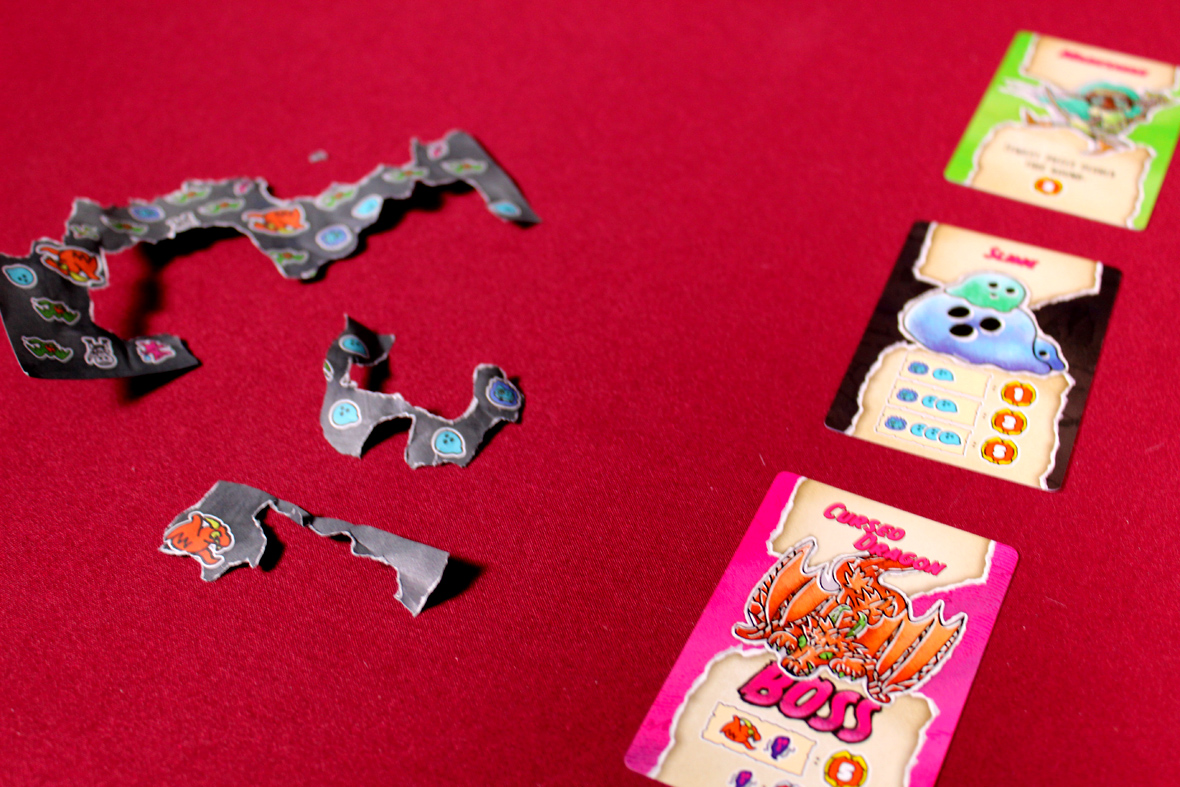
Overall, Tearable Quest is pretty fun! Stressful, but fun. I think I prefer ClipCut Parks‘s precision-based scoring (and the tiny scissors), but given that that game is out of print probably forever, this is a nice substitute! I imagine it’s even better if you actually enjoy tearing things up a la Turnip Boy Commits Tax Evasion, but I’m speculating. I think one of my major issues with the game is actually that: if you struggle to make precise tears (or if you just have sweaty enough hands), you’re going to end up making particularly frustrating mistakes that you’re not necessarily going to be able to come back from, points-wise. On one hand, the game is short, so that doesn’t necessarily matter as much; on the other, such a skill gap existing can make the game challenging to enjoy in some groups. That said, if you’re taking a game about tearing up a sheet of paper that seriously, I’d strongly recommend some other, more beige games for your future plays. I do think that the word my friends used to describe Tearable Quest (“stressful”) is probably the game’s defining feature, but I also think it’s impressive that such a small game can inspire such a big feeling in players. On subsequent plays, I found it marginally less stressful but I got a better handle on the mechanics, and that felt good, too. Either way I could look at Sai Beppu’s goofiest art all day. I love the little monster scribbles. But yes, if you’re looking for a small game that will break the mold a bit or you don’t mind making a bit of a mess, Tearable Quest will likely intrigue and challenge you! Plus, it’s fun.
If you enjoyed this review and would like to support What’s Eric Playing? in the future, please check out my Patreon. Thanks for reading!
 What's Eric Playing?