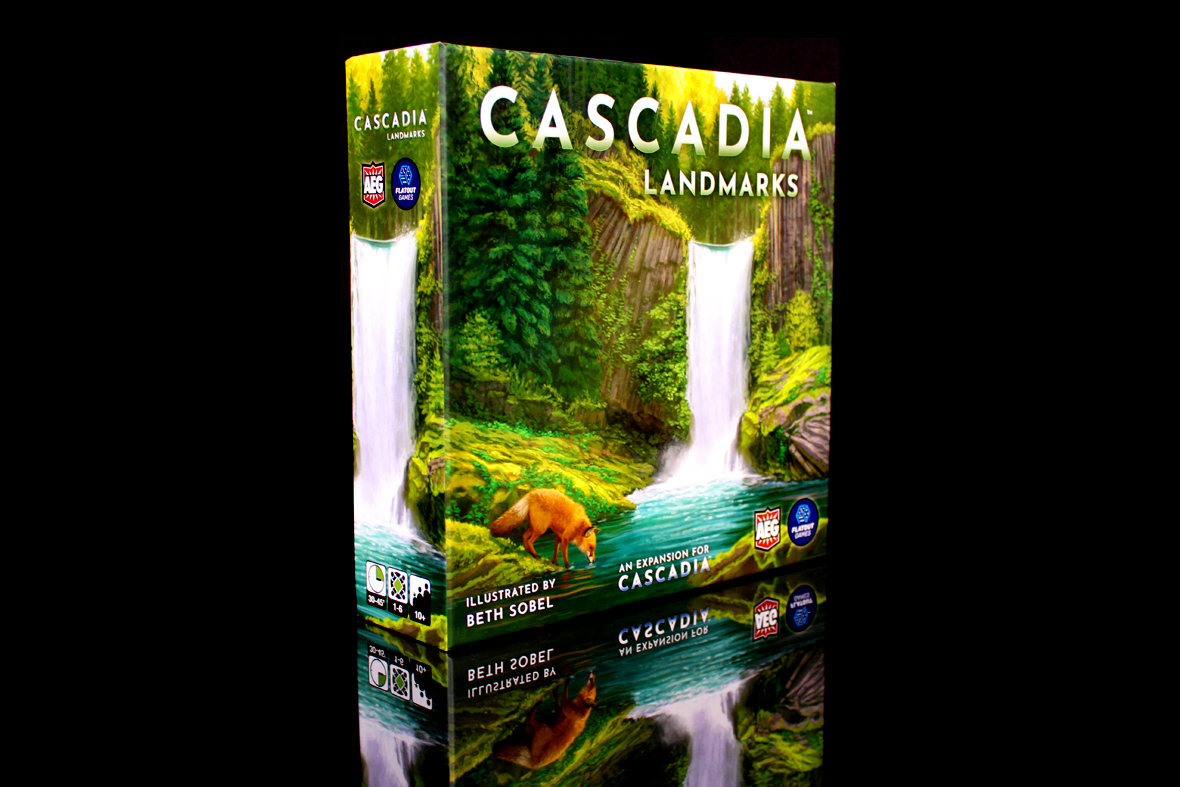
Base price: $35.
1 – 6 players.
Play time: 30 – 45 minutes.
BGG Link
Buy on Amazon (via What’s Eric Playing?)
Logged plays: 2
Full disclosure: A review copy of Cascadia: Landmarks was provided by Alderac Entertainment Group.
Note: This expansion requires Cascadia to play.
Tough day to live in Cascadia (heavy rain and windstorms knocking out power left and right) but great day to write about Cascadia. Alpine Lakes is crushing it on Kickstarter and it made me want to go back and revisit some other stuff that I hadn’t quite gotten a chance to try, like the expansion Cascadia: Landmarks. If your game wins a Spiel des Jahres, you make an expansion; it’s what’s done. It’s smart marketing and generally a good idea because it sells well. Plus, I assumed they still had some ideas left in the tank, so here we are. Let’s check them out!
In Cascadia: Landmarks, you’ve once again set out to explore the Pacific Northwest, but armed with new ideas and new modules you can do more, see more, and hopefully score more. The major additions in this are a 5 / 6 player mode (with Faster Game Rules to help move that along), additional Habitat Scoring Cards that are a little spicier from a scoring standpoint, and the eponymous expansion module itself: Landmarks. These extra scoring conditions activate if you make a corridor of 5+ of the same tile type. You can place a landmark after that and gain two bonus scoring elements for the end of the game which can vary wildly from game to game and change up your focus. More tiles and more tokens are here as well, and every player now gets a free Keystone Tile to start to add some more motion to the game. There’s always more to explore in Cascadia; what will you get to first?
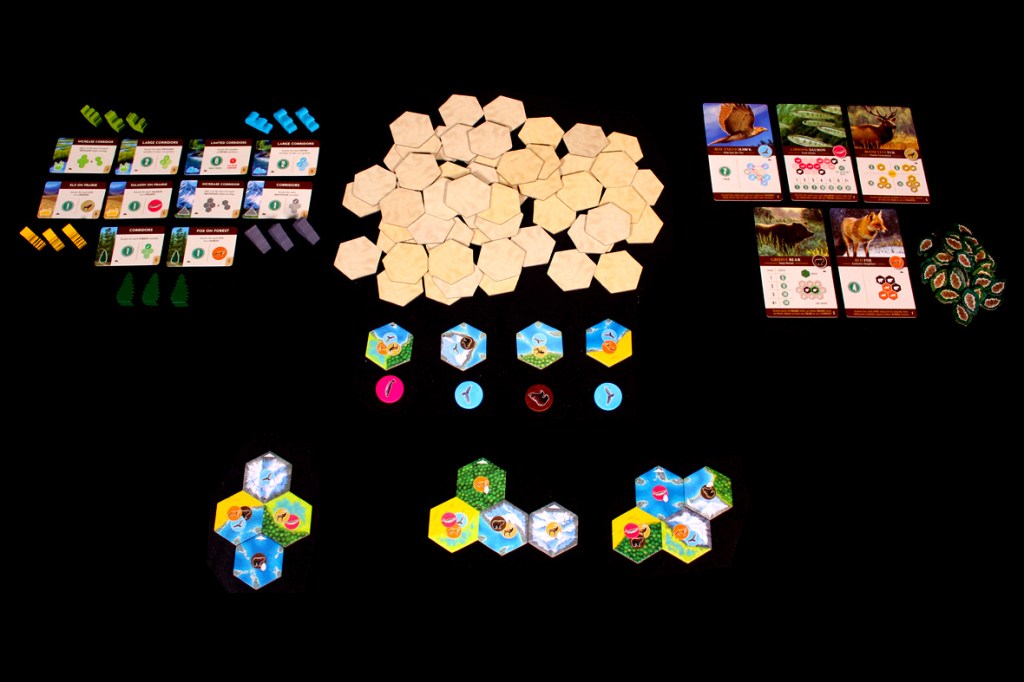
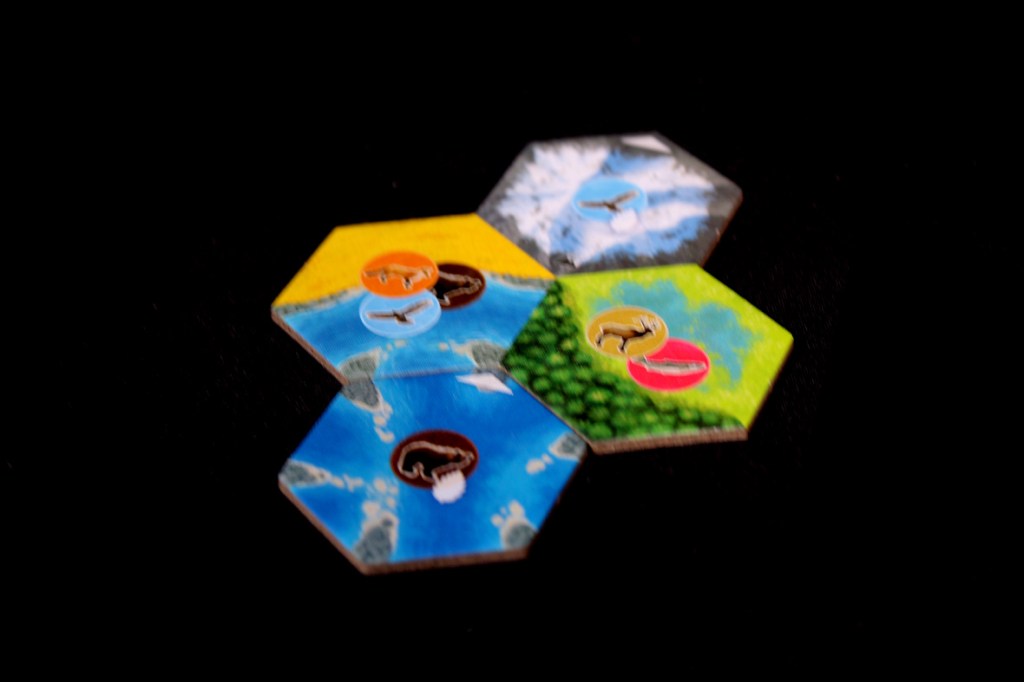
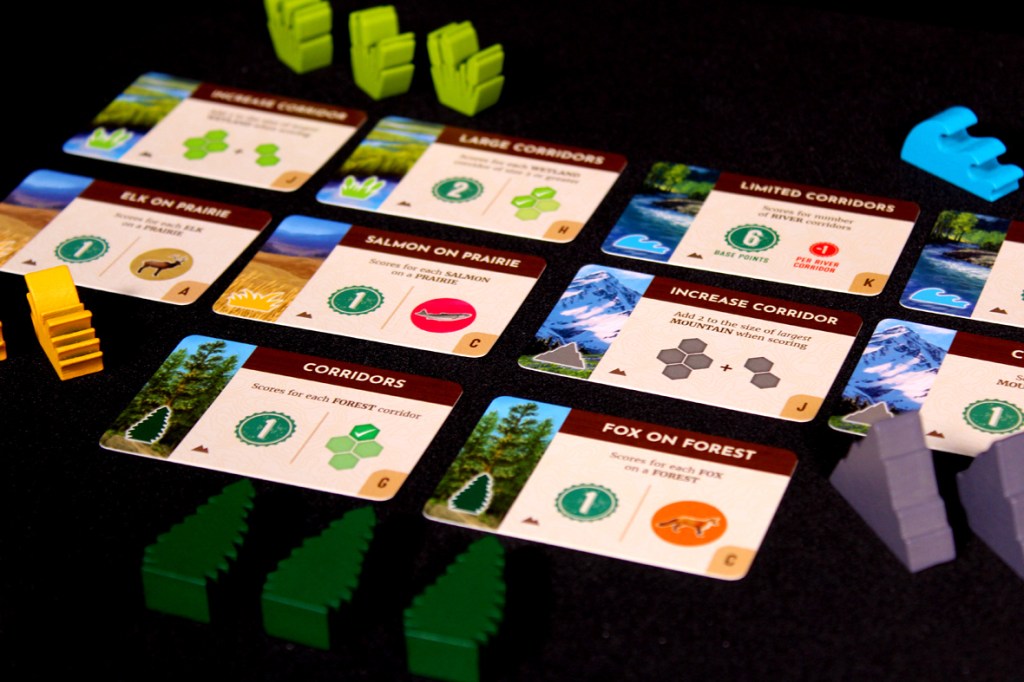
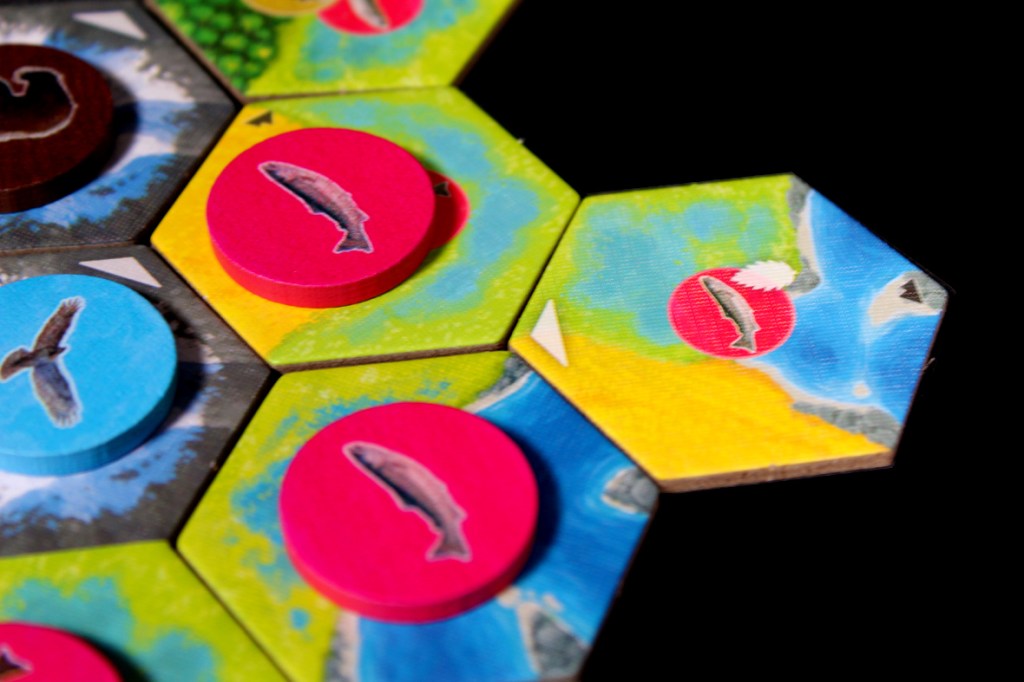
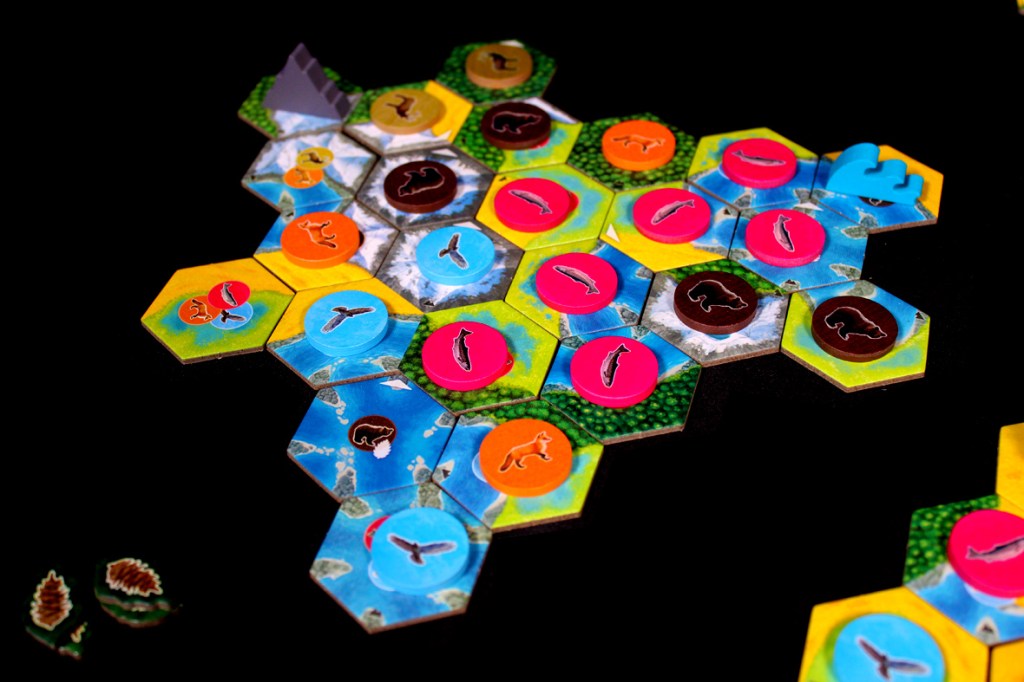
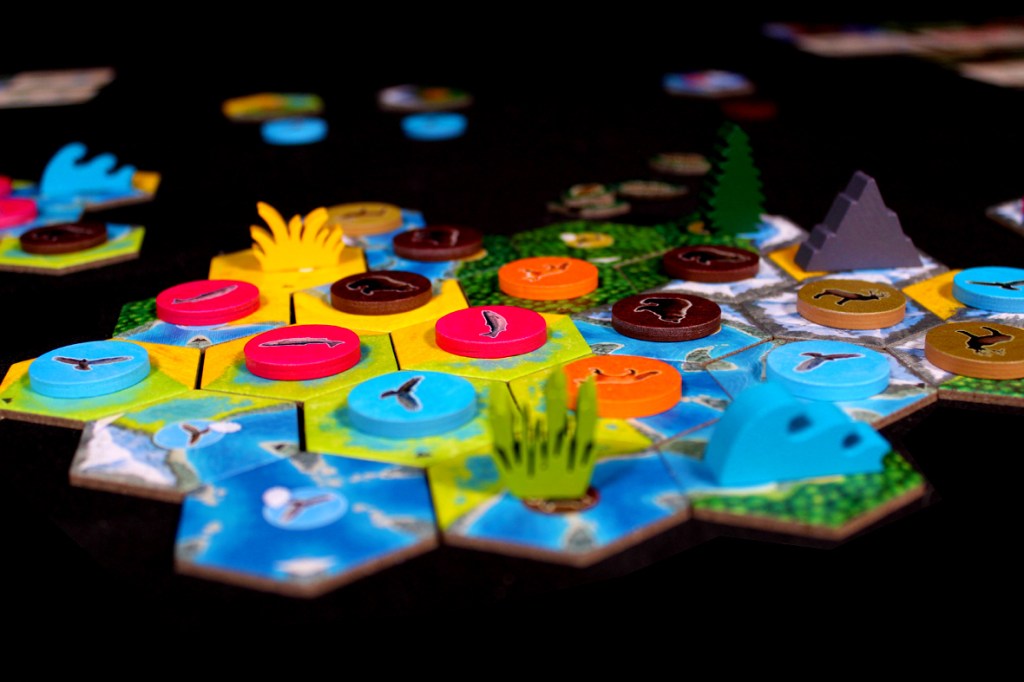
Contents
Player Count Differences
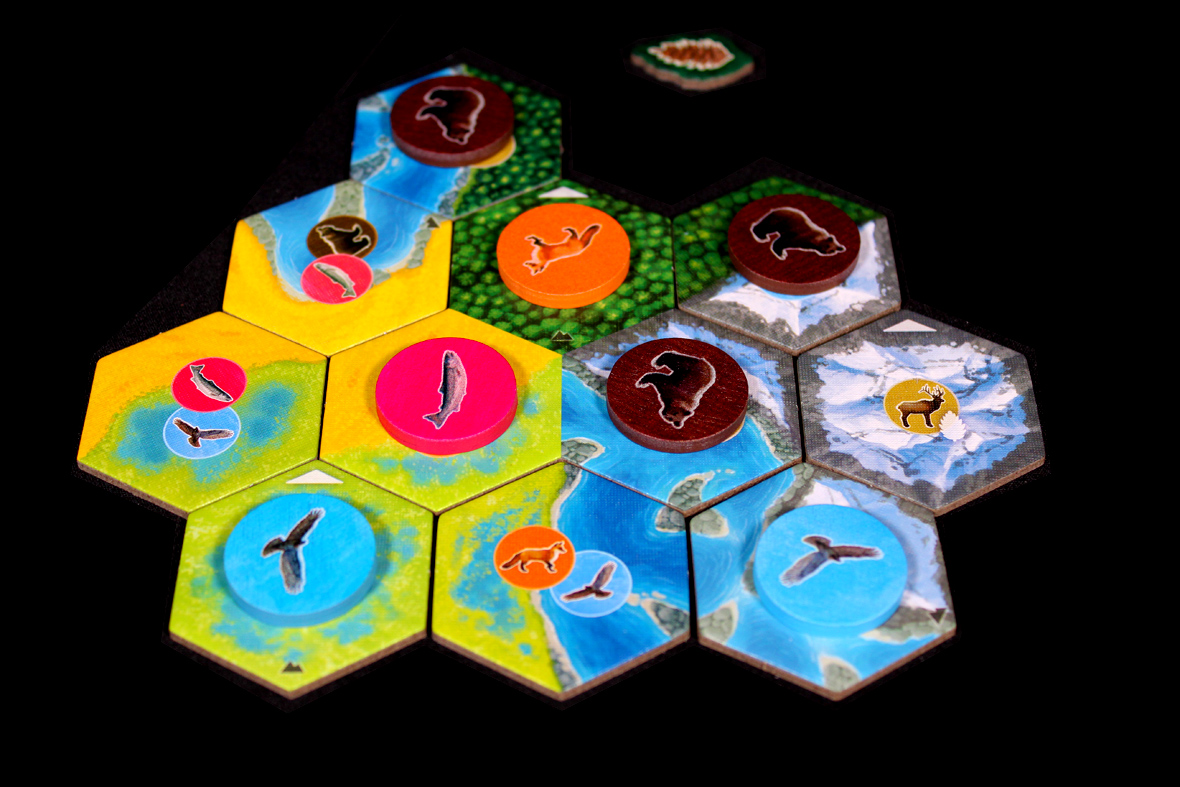
A few, here. The major one is that Landmarks adds components for a fifth and sixth player, which is a lot. There’s some puzzley strategy here, which will make the game slow with five or six. Thankfully, they address that by also adding rules for making the game faster with higher player counts (or lower, if you’re just really impatient). In the game itself, you’ll mostly notice the player count spread with how the tile market changes round-to-round. At two, you run into a vaguely problematic form of market staleness where if nobody wants any of the tiles, you may see your opponent routinely take the newest one, leaving you potentially stuck (or forced to use a Nature Token). At four, the market should change pretty drastically between rounds and players are less likely to pursue the same strategy. That can work against you if you want the market to stay the same because all the tiles are ones you need, but, you know, that’s how it all works out sometimes. I’m still wary of higher player counts, but I love Cascadia, so no strong preference here.
Strategy
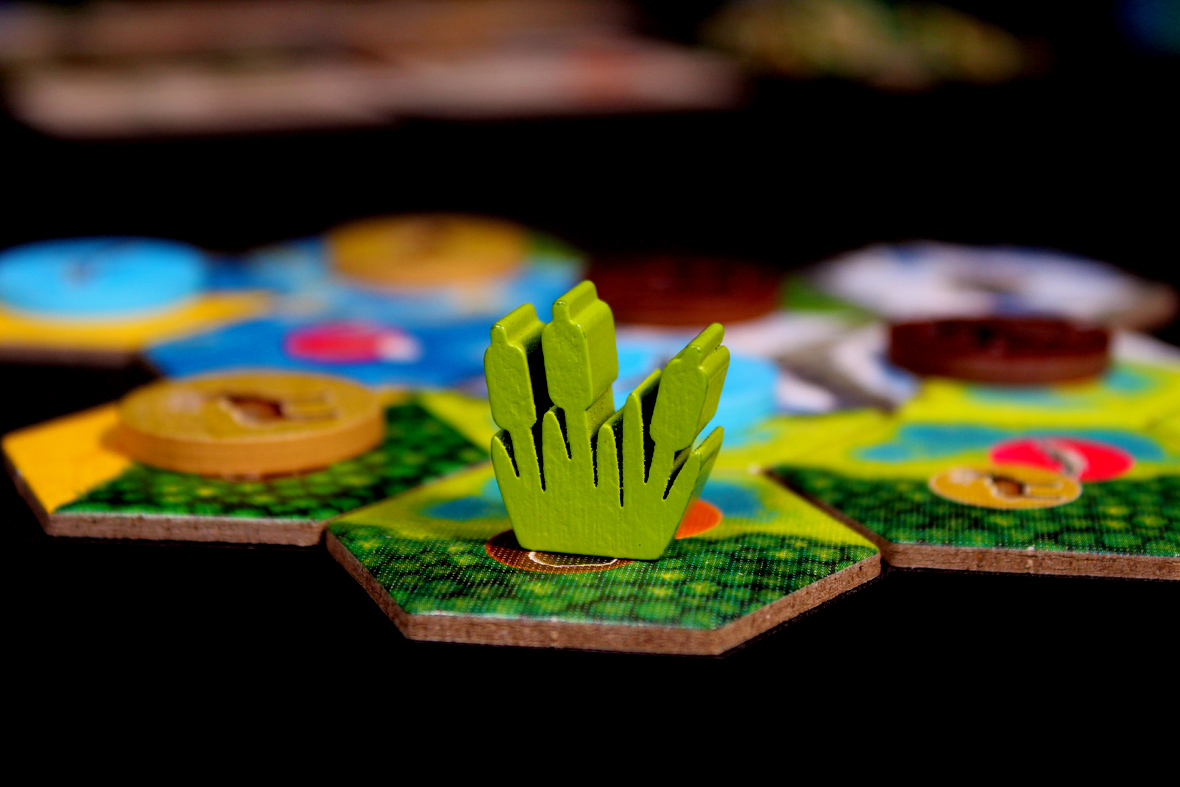
- Going deep matters a lot, here. You can really rack up points on Landmarks if you commit to a few; getting one point per Landmark in lieu of being able to place a Wildlife Token isn’t necessarily worth it. If you’re getting 12+ points off of a Landmark, then sure, forsake that Elk or whatever. But figure that plan out in advance; don’t wait until the end of the game to realize you placed a totally worthless Landmark (especially for places where Wildlife Token placement matters for Landmark scoring).
- Watch out for Landmarks that affect majority scoring! You may not think much of the Landmarks, but you might get chumped pretty significantly if one of your opponents is building two equal-sized corridors and they end up taking the majority for that corridor away from you. Sure, it’s only a few points in a two-player game, but the extra points they get from a giant combined corridor may swing the game in their direction. And, at higher player counts, it might be a much bigger swing to boot someone else down to second place, especially if they’re not expecting it.
- You may not want to get every Landmark. Like I said, sometimes it’s just not worth it. Getting them fundamentally requires you to block off a spot where you could have otherwise placed a Wildlife Token, and particularly for Keystone Tiles, you’ll be missing out on gaining a Nature Token as well, which is an extra lost point. If you’re doing all of that for a grand total of … 0 bonus points, that’s effectively at least a net -1.
- If you are going after every Landmark, you will make Wildlife Token placement harder for yourself. They eat Wildlife Token spots, so once you place it, you can’t move it and you can’t place a Wildlife Token on that spot. That means you’re covering up two spaces on that turn: the Wildlife Token you likely placed and the Landmark Token you are placing. If you do that enough, you will soon only have the most recent tile you placed available, which means that you may not be able to place a Wildlife Token at all if you get another Landmark.
- The new Habitat cards may conflict with the Landmark scoring; plan accordingly. Some want Salmon on Rivers and some want Salmon on Prairies. I was going to say you can’t do both, but that’s a lie; you can. You just need the right tiles. That said, the tiles may not come up, so if you’re focusing on one thing you may need to blow off the other.
- Nature Tokens can make the difference between winning and losing in close games. Always worth having a few to potentially spend, but keep in mind that each is worth 1 point, so holding on to a stock can be a +5 or a +7 boost at the end of the game (and your opponent may not have any!).
- Regardless, you do want to pretty much always build big corridors of the same type. Big corridors go a long way for scoring since you get one point per tile in that corridor, and you get a shot at the majority (which can be big!). There are a few Landmark cards that conflict with this, of course, and you can’t place a Landmark unless you have at least 5+ tiles of that type in a corridor, so, figure out your priorities.
Pros, Mehs, and Cons
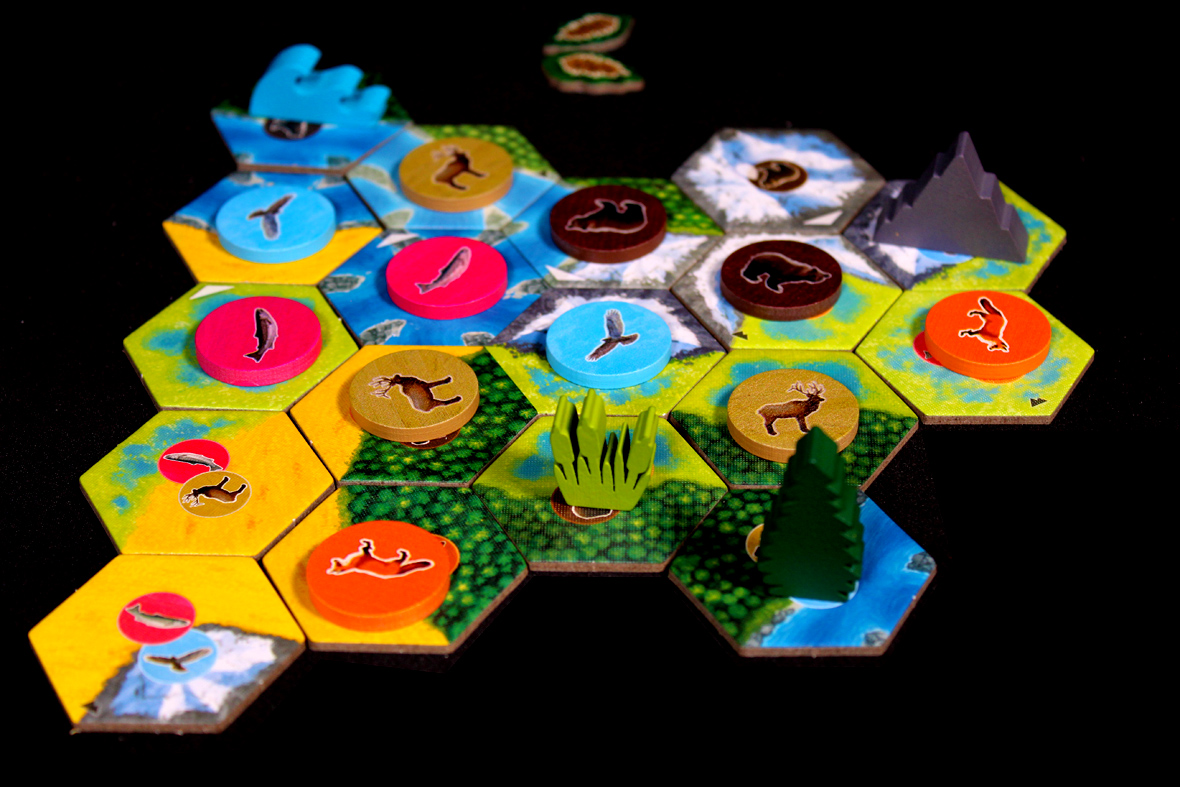
Pros
- The modularity of this expansion is really nice. You don’t have to use all of them at once or any of them! You can even just fold in the extra tiles if you want. It’s worth playing a few games with your group and then just building in whatever they like, and I like the flexibility that it offers.
- I like that there are new tiles to mix in as well! They’re pretty interesting, too. The new tiles are fun! Some of them are multi-type Keystones or single type tiles with three potential Wildlife Tokens or a variety of things to make your corridors more complicated. Or more interesting! It’s a mindset thing.
- The new Habitat Scoring Cards are a lot of fun. There are a lot of new scoring types and opportunities, some of which are pretty tricky. The additional complexity is welcome and you may find there are some that particularly synergize with the Landmarks or particularly mess you up in their pursuit.
- I like the concept of Landmarks a lot! Rewarding players for building large corridors is a lot of fun, and adding in the challenge of how they affect Wildlife Token placement is interesting. They’re also so modular! I like that you use two cards per game and get both benefits, even if they sometimes don’t work well together at all. If that happens, that might just be a Landmark you don’t want to pursue.
- The recommended loadouts and achievements are great too. Great for anyone who really wants to dive deep into Cascadia (I’m surprised we don’t have annual tournaments). The game suggests which Landmarks and Habitat Scoring to use and then you have to try and exceed certain scores in certain ways to earn your way up the trail. It’s interesting and adds some nice depth.
- The sped-up rules for higher player counts is very smart. Anything that makes 5 / 6 player games go faster is almost always a fantastic idea. Especially with the puzzley and spatial nature of this game, I worry that with more players you’re going to see pretty significant per-turn slowdowns, so speeding it up is good.
- Rumor has it that you can fit the expansion contents into the base game box, which is always good. I’ll report back after I finish my latest game. Actually, yeah, it works perfectly.
Mehs
- There’s a bit of an issue still with market staleness: if you’re playing with two players one player can often get stuck with a pretty uninteresting market if everyone’s always taking the newest tile. That’s just a hazard of my difference of opinion with the Flatout collective on market refreshing. Most of their games, ironically, have this sooner or later. At least with Cascadia you can spend a Nature Token to refresh the Wildlife Tokens, but you’re stuck with the tiles regardless.
Cons
- Landmarks adds a lot of extra mental and table space, just in terms of five sets of two cards that need to be face-up on the table at all times. It’s a lot of startup cost for new players since they need to read all the cards and that feels like a lot. It’s, in my opinion, not really, since the cards are all the same across each terrain type and they’re pretty simple in presentation and idea, but there are 10 of them. It’s a stressor, and I get that. They also can be a lot on the table since they need to go somewhere and not every player can see or reach everything if you spread it out too much.
Overall: 8.25 / 10
At the end of the day, pretty much anything you can say about this expansion boils down to: it’s more Cascadia. And that’s pretty good! It’s very modular, to its benefit, so you can add any of the three modules to your games of Cascadia to speed it up or spice it up. There’s also just more, across the board. More tiles, more tile types, more tokens? Everything you need to bump up the player count to five or six. Personally, I appreciate that the game acknowledges that higher player counts will slow things down considerably and so they added a speed-up rule for more players. It’s similar to the Sagrada expansion, though I think the Sagrada expansion makes every player count better. For the modules, I do enjoy the extra complexity from the new Wildlife Scoring Cards. Great way to change things up if you’re looking to play the standard game with a bit more oomph. To really add a new layer of complexity, the Landmarks do a lot! They also introduce a lot of extra reading to the start of the game, so keep that in mind too. That will largely work itself out if you play enough, though; they’re pretty consistent and easy to get used to. It’s kind of a density vs. complexity thing, here. Alpine Lakes adds more complexity and plays with the idea of Cascadia, and Landmarks adds more density: there’s just more of everything in the same mental space. These look similar when you first start playing them, but I think part of the genius of the Flatout collective is that they know how to design and develop these similar ideas into separate spaces. If you’re a fan of Cascadia, I’d certainly say that more is sometimes more, and Cascadia: Landmarks is more. I’d recommend checking it out!
If you enjoyed this review and would like to support What’s Eric Playing? in the future, please check out my Patreon. Thanks for reading!
 What's Eric Playing?