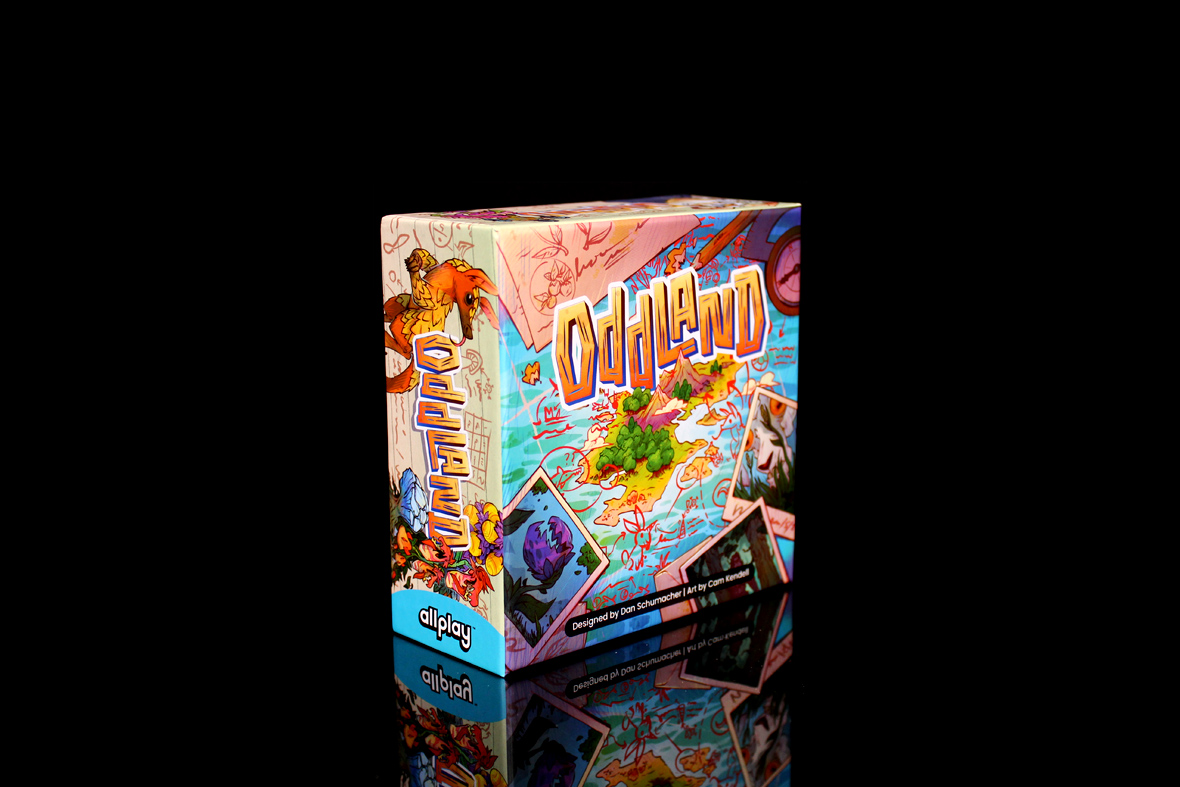
Base price: $24.
1 – 5 players.
Play time: ~30 minutes.
BGG Link
Buy on Amazon (via What’s Eric Playing?)
Logged plays: 2
Full disclosure: A review copy of Oddland was provided by Allplay.
I think this is the first really rainy weekend we’ve had up here since the Spring, and that’s great for general lifestyle stuff but terrible for days where I don’t just want to sleep all day. So I’m bringing you, live from Seattle, the What’s Eric Playing?: Between Naps Edition. I’m not entirely asleep yet, but I’m pretty close, so excuse any and all severe typos. It’s just the perfect weather for blankets, some warm drink, and a lot of face-down time. I’ll probably break out some of the MicroMacro games and the EXITs if this continues next week; they’re great rainy day games. In the meantime, though, let’s check out Oddland, from Allplay!
In Oddland, you’ve got a very specific task. Go to this land and document the weird animals that live there. I suppose they don’t think they’re weird, but they have an Avatar: The Last Airbender-like quality to them in that they feel like a hybrid of two more familiar animals. What a concept. You have to document these strange creatures and their territory without running afoul of them or your fellow researchers, which might be more than you bargained for. Can you return the most knowledgable about Oddland? Or will you end up stumped?
Contents
Setup
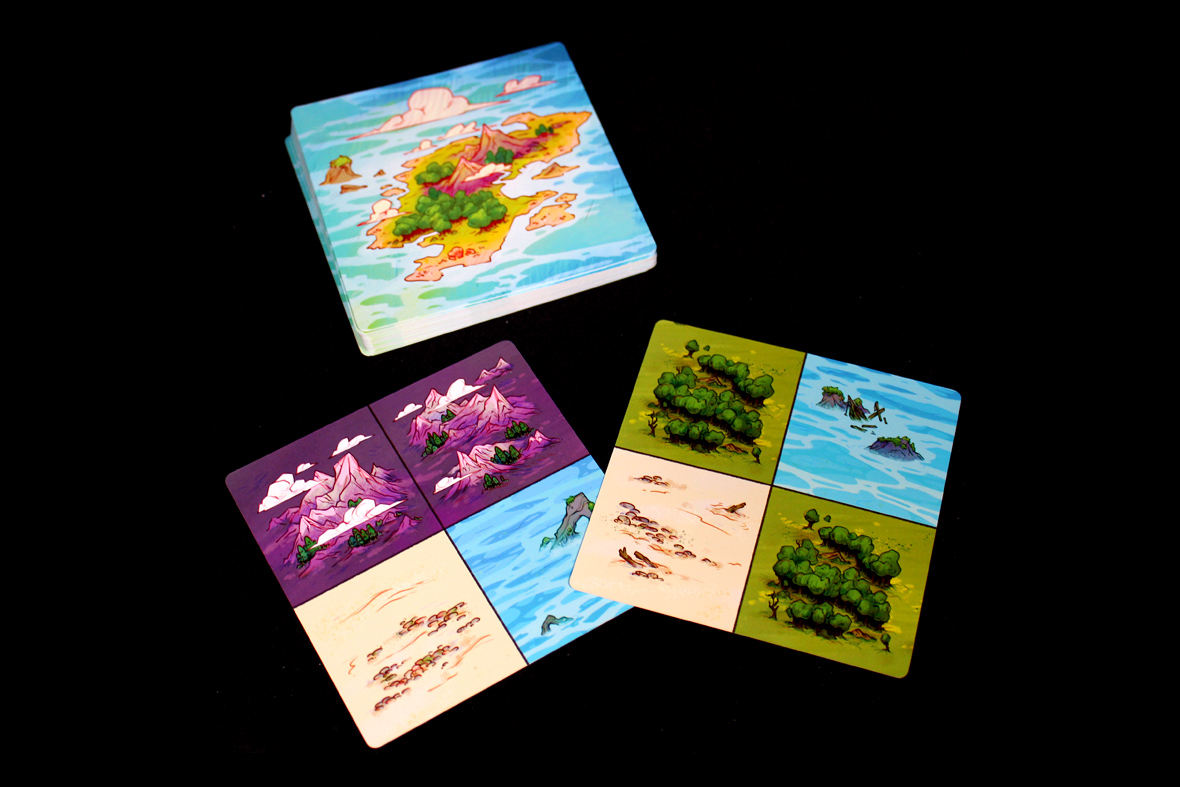
Not a ton. Shuffle the landscape cards, lay two out in the center of the play area and deal each player two:
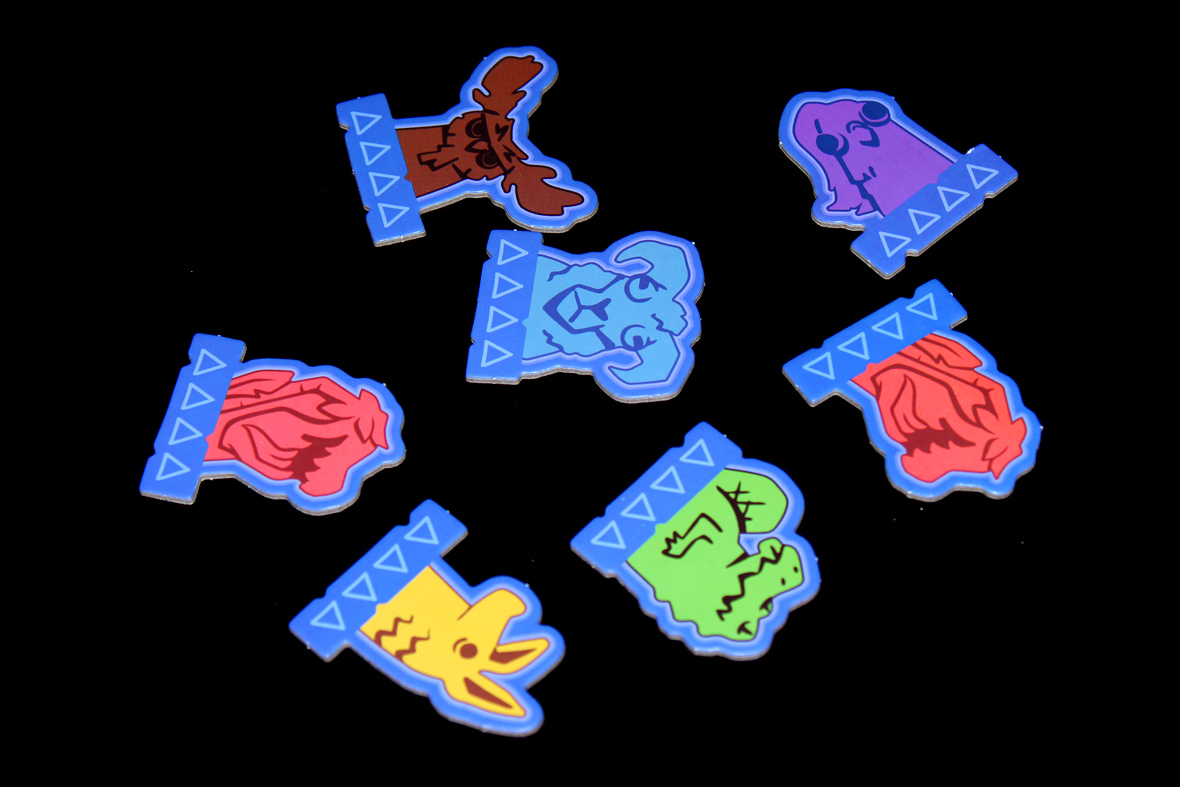
Give each player a set of tokens with the same symbol:
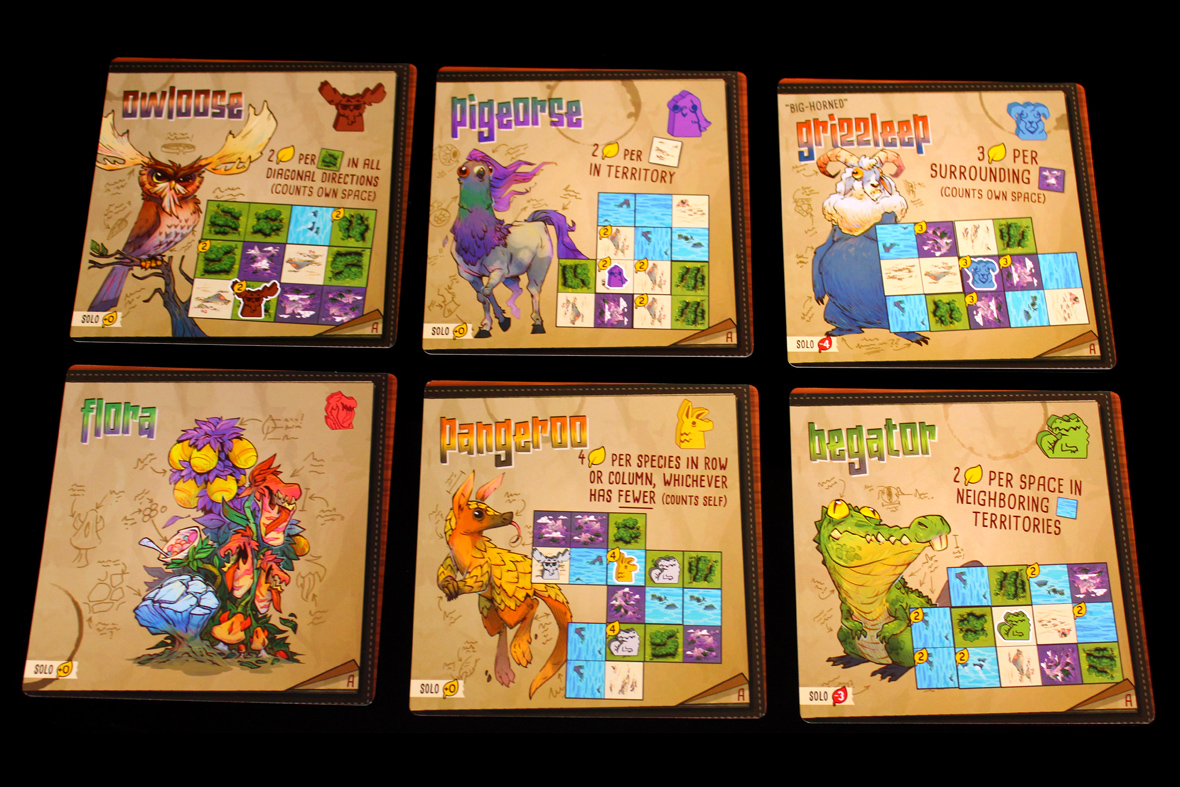
Then, place the Scoring Cards. They can be on the A or B side or mixed:
You can set the scoreboard aside:
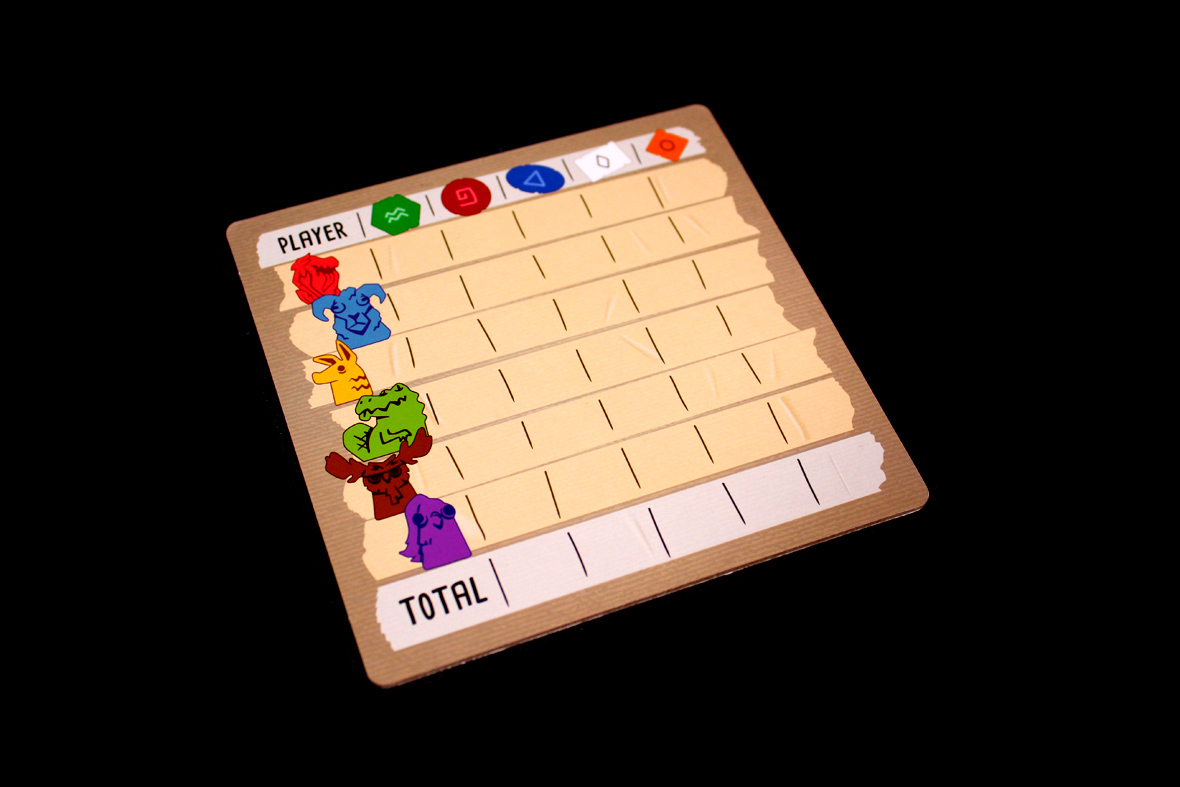
And then you’re ready to start!
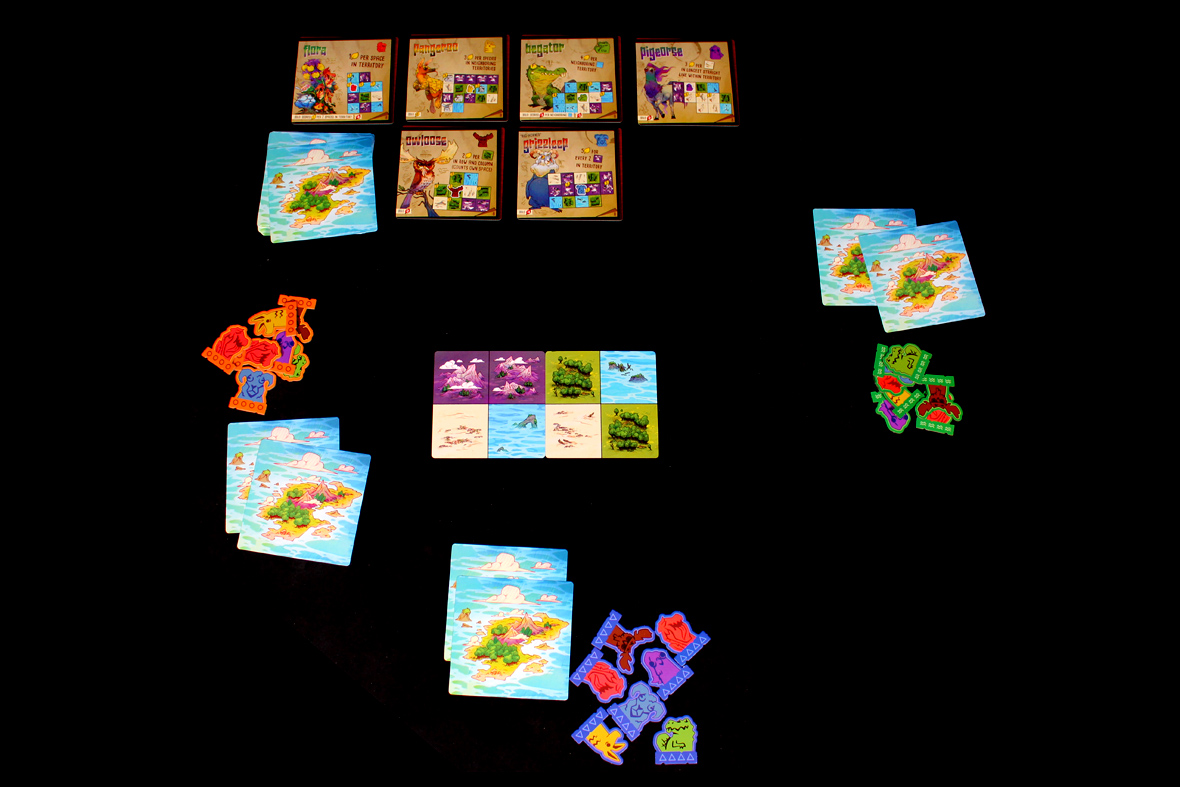
Gameplay
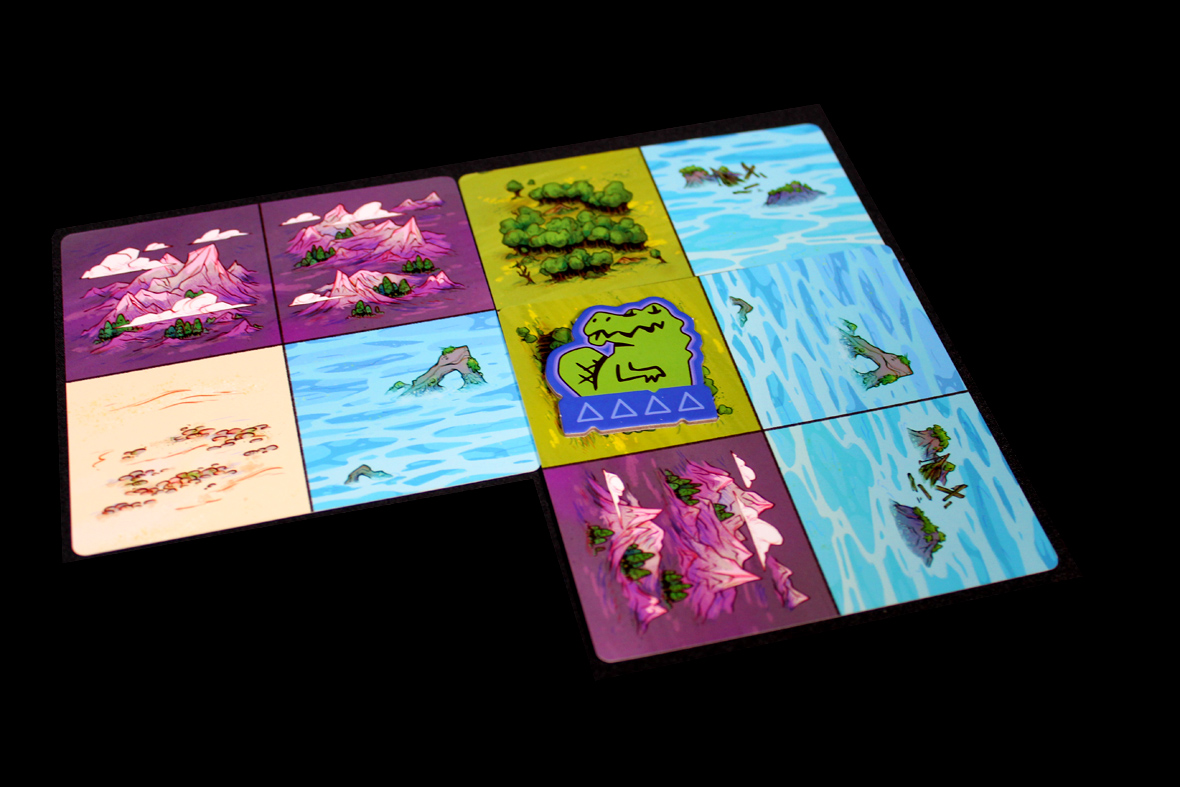
Not too complicated here, either. Each turn you place a card and then place a token. Placing a card is easy; it just has to be adjacent to another card’s edge (or one of the spaces on the card) and, if you’re covering part of the card, you can’t cover more than 2 spaces on it. Simple enough. You can also rotate the cards! You also can’t cover any tokens.
Placing a token is a bit more complicated. Contiguous groups of the same space type are known as territories, and you can’t place a token in a territory that’s already occupied. You can, however, place a token and then later connect those territories. That’s totally fine. You can use tokens to buff out your preferred spaces or make sure opponents can’t place in certain spots.
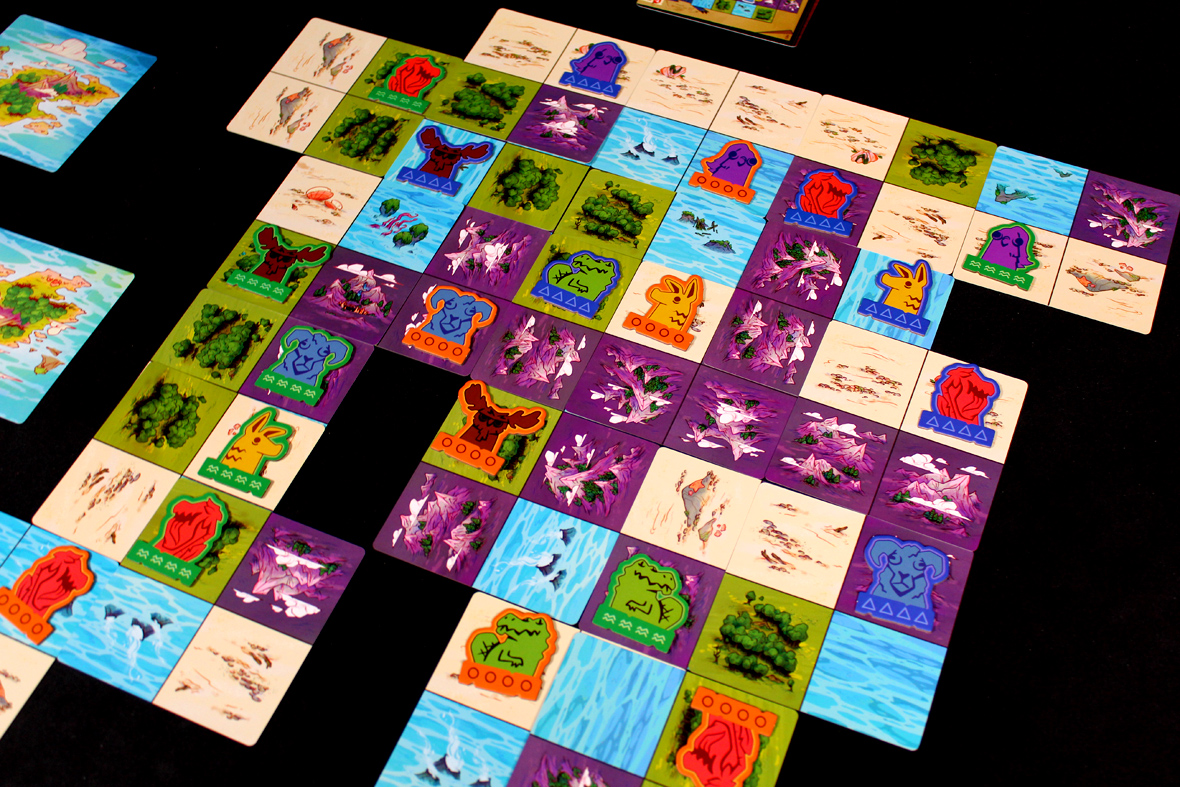
The game ends after every player has placed all of their tokens. Once that happens, score your tokens based on the scoring cards and the player with the most points wins!
Player Count Differences
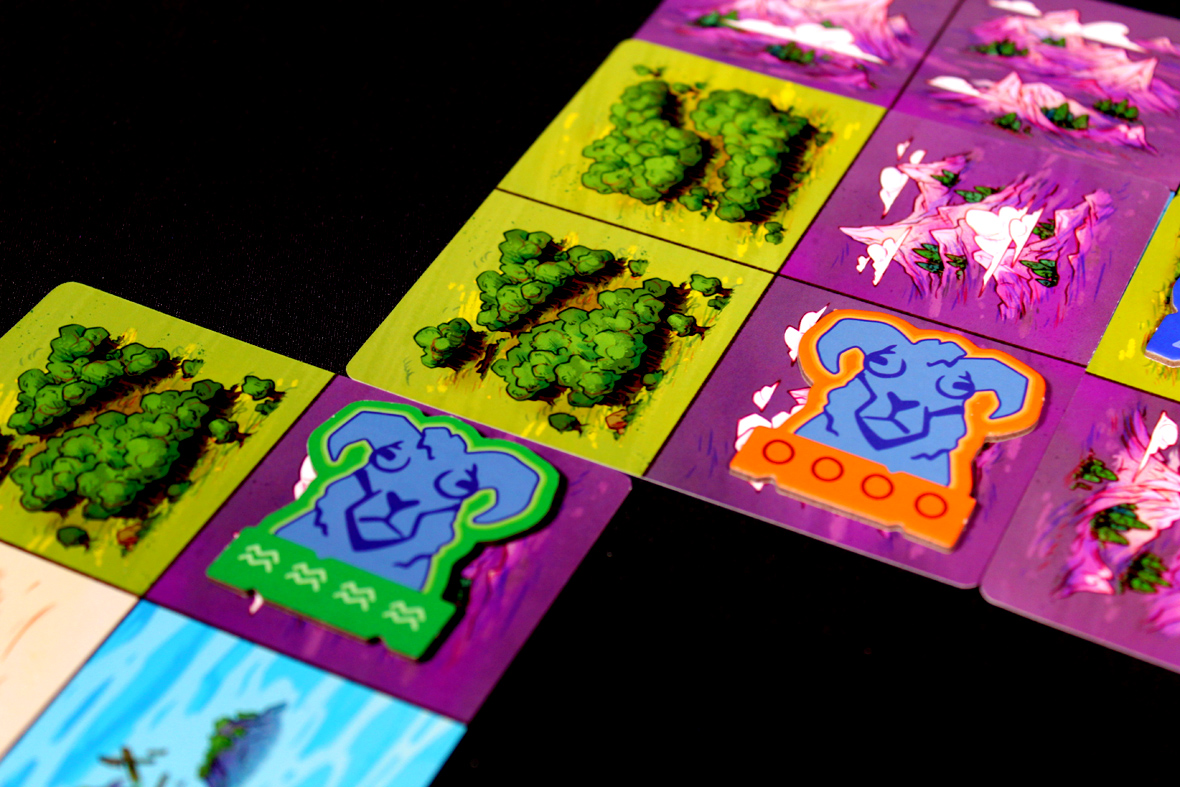
Generally, I find that the game can be a bit generally meaner at two players and specifically meaner at higher player counts. I’ll explain. With two, the game is extremely zero-sum. There’s little difference between me getting 6 points and me costing you 6 points. Either way, the difference between our scores is increased by 6. So you’ll be blocking your opponent and eating into their territory as much as you’re expanding yours, I suppose. With more players, that no longer applies. If player A causes player B to lose 6 points, that has no impact on player C, whereas if player A gains 6 points, they break away from both of their opponents. That’s mostly fine until one player gets too far ahead and then everyone can pile on to them to drive them back down. I generally don’t like that in games, and it may not happen in yours since the scores can be tricky to calculate in the moment. I do think that given the potential for less zero-sum play, I prefer Oddland with more players.
Strategy
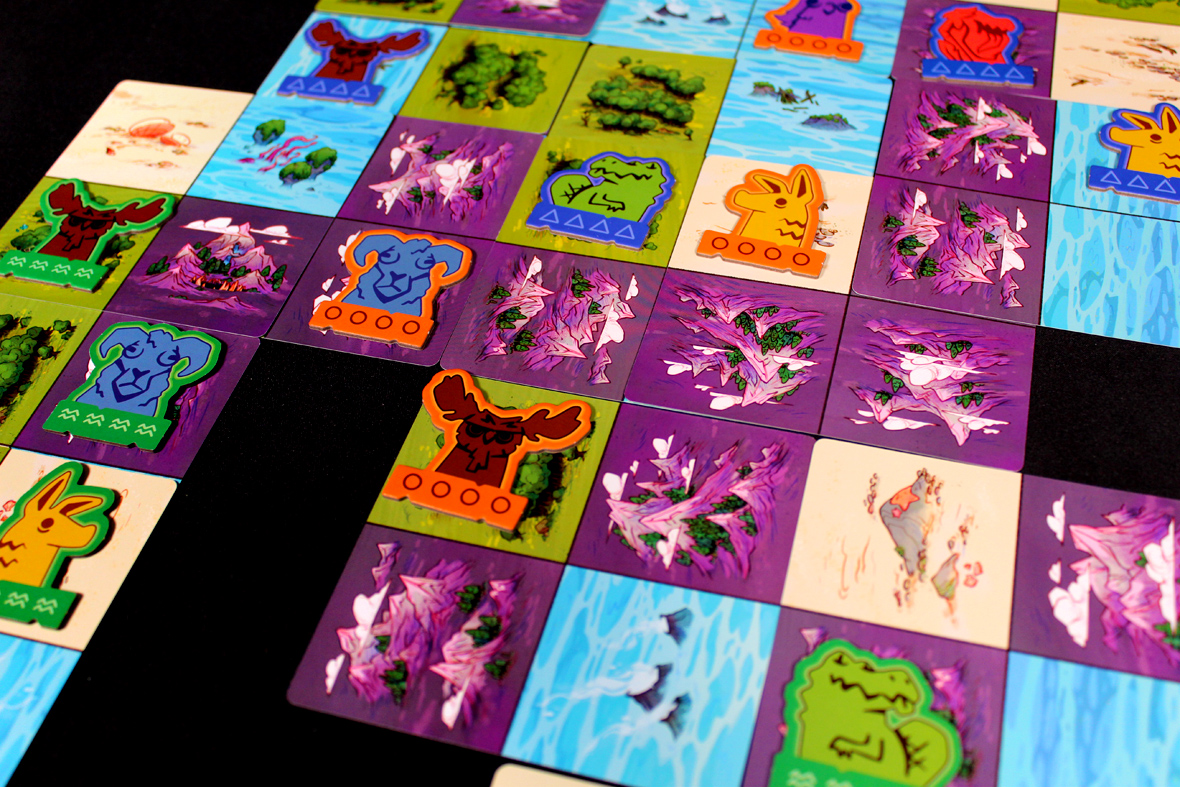
- Your placement and timing matter a lot. You can have a great spot and then watch as your opponents chip away at it over the course of a game, or you can luck into a great spot on your last turn and then have a great time. Both times the spot needs to already be good, but having more luck with the timing is pretty key. Plus, you can turn a bad spot into a decent one over the course of the game with good placement; just make sure you remember you have to place on every turn.
- Blocking your opponent is key at two players. You need to be actively cutting into their high-value territories and defending your own. If you let them in too quickly they might take out a bunch of your points or your big settlements. Use tokens and the card placement rules to box them out if you can.
- That said, for a zero-sum game, sometimes getting more points is better than making your opponent lose points. At higher player counts especially, you don’t want to totally invest in just messing up other players. That doesn’t often score you much and it only hits one person, letting the other players thrive. Instead, focus on scoring big yourself. Be the person everyone else wants to take down.
- With more players, try to join your tokens to big territories. You want to join high-value territories. For one, that gives you a bunch of points, and also, it gives you another player who doesn’t want to tear it down. Now, they might be able to split the territory up, but that’s still pretty good for you.
- Use your tokens to block out territories so your opponents can’t place cards or tokens of their own. They cannot place on tokens, so you can place a card such that it’s near-impossible to place on if you spot it correctly and use a token in the right spot. The best they can do at that point is an adjacent play. Just make sure doing that isn’t going to be a worthless play for you!
- Don’t get blinded by the score, though; make sure you’re not setting an opponent up for a big pay day. If you leave a sufficiently large block of spaces available after your turn, your opponent is going to snap those up pretty quickly. Try not to give them free points if you can avoid them.
- Sometimes the best thing you can do is just play away from your opponents’ tokens so you don’t inadvertently set them up to score. Avoidance isn’t a bad strategy, but it’s doubtful that your opponents will leave you in peace.
Pros, Mehs, and Cons
Pros
- Very portable, which is nice. The small boxes aren’t the tiniest games around, but they’re plenty little, and you can pack a bunch of them together. I like the form factor.
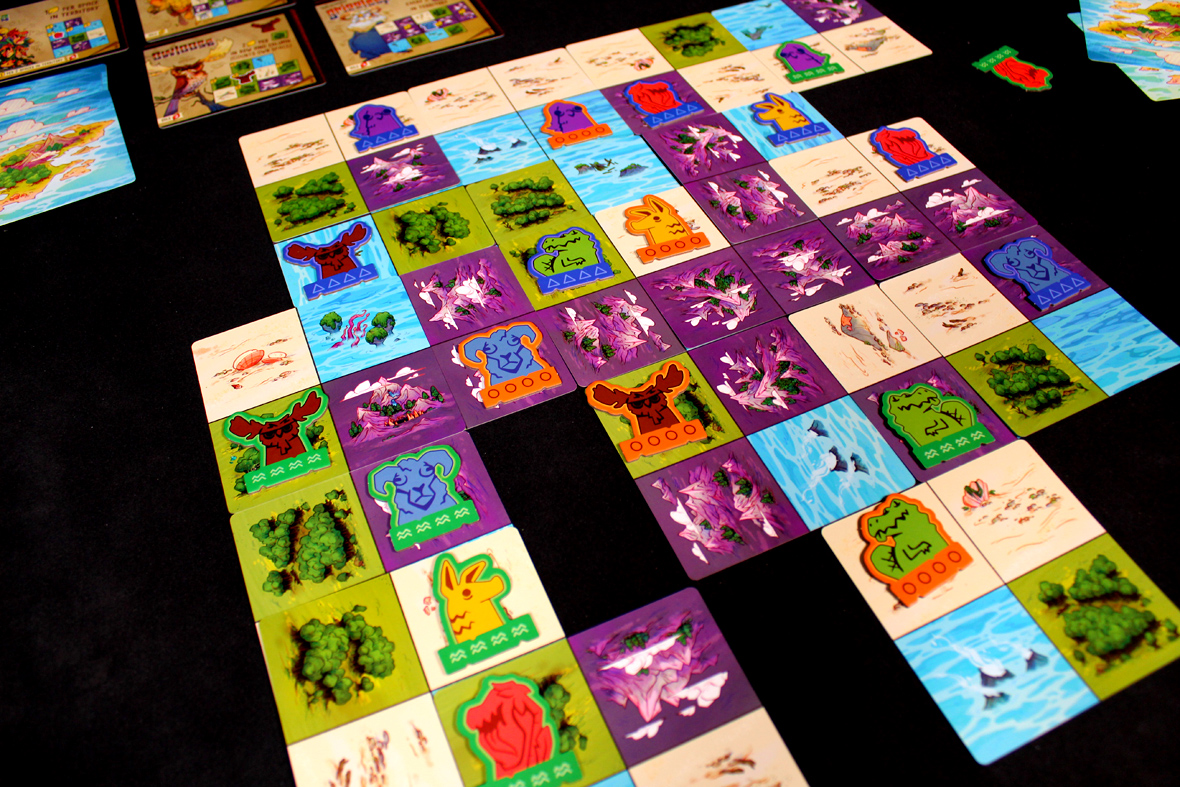
- I like how big the cards and the squares are. I think I’m used to the smaller cards from Button Shy games, so it’s really nice to have a lot of real estate and visual abundance on the cards. The tokens are appropriately-sized for the cards, but that’s kind of a given.
- The bold, saturated color scheme really appeals to me. It shares the same aesthetic vibe as a lot of my photography, which I like. I think I just generally enjoy a vibrant game for that reason.
- I like how weird the animals are, also! It’s great. They’re fun and goofy; the art style is great on this game.
- Plays pretty quickly. You’re really only taking seven turns, which all works out pretty nicely.
- Scoring isn’t too hard, either. You just have to take it one animal at a time (and potentially flora, I suppose).
Mehs
- Having Flora not score at all on the A side is an interesting choice! I’m still not sure if I like it or not. It makes the game easier to learn but makes two of your seven placements essentially null ops. It’s interesting!
Cons
- A bit meaner than I would like at lower player counts. It’s explicitly very zero-sum, so you almost always want to be blocking your opponent unless you think you can outscore them. It’s a bit stressful, especially since the play area is much smaller than, say, Carcassonne and you have to place something every turn. You can’t really make an area that’s too far away from your opponent and make meaningful progress on it in 7 turns, and there’s no real way to stop your opponent on all fronts from blocking you.
Overall: 7 / 10
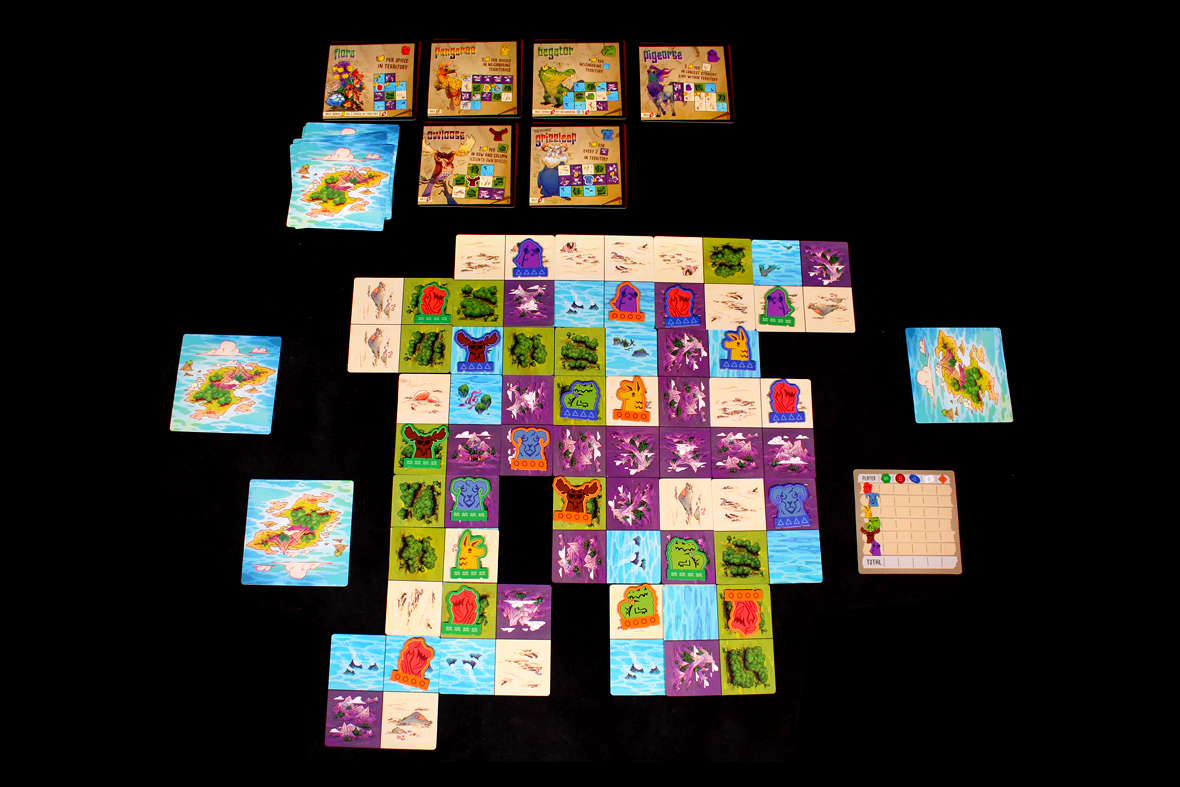
Overall, Oddland is pretty fun! A lot of the intensity of the game derives from how players work with or against each other, so you’ll find something to do even if the core game doesn’t deviate too much (though the side B animals give you something to work with). I suppose additional scoring card types could be interesting and add more variety, but the core game is pretty fun and quick for a nice break. It’s more player-driven than anything else since it’s so close-quarters, unlike other larger-play-area tile games. I wish it were less zero-sum at two players, but I think that’s going to still be just how it goes in such a close-quarters game. It’s a quick and fast card-playing game for the whole family. I’ll be interested to check out the expansion. If you’re looking for that kind of game, or you enjoy a fast-paced card-player, or you just want to see an exceptionally weird horse, Oddland might be right up your alley!
If you enjoyed this review and would like to support What’s Eric Playing? in the future, please check out my Patreon. Thanks for reading!
 What's Eric Playing?