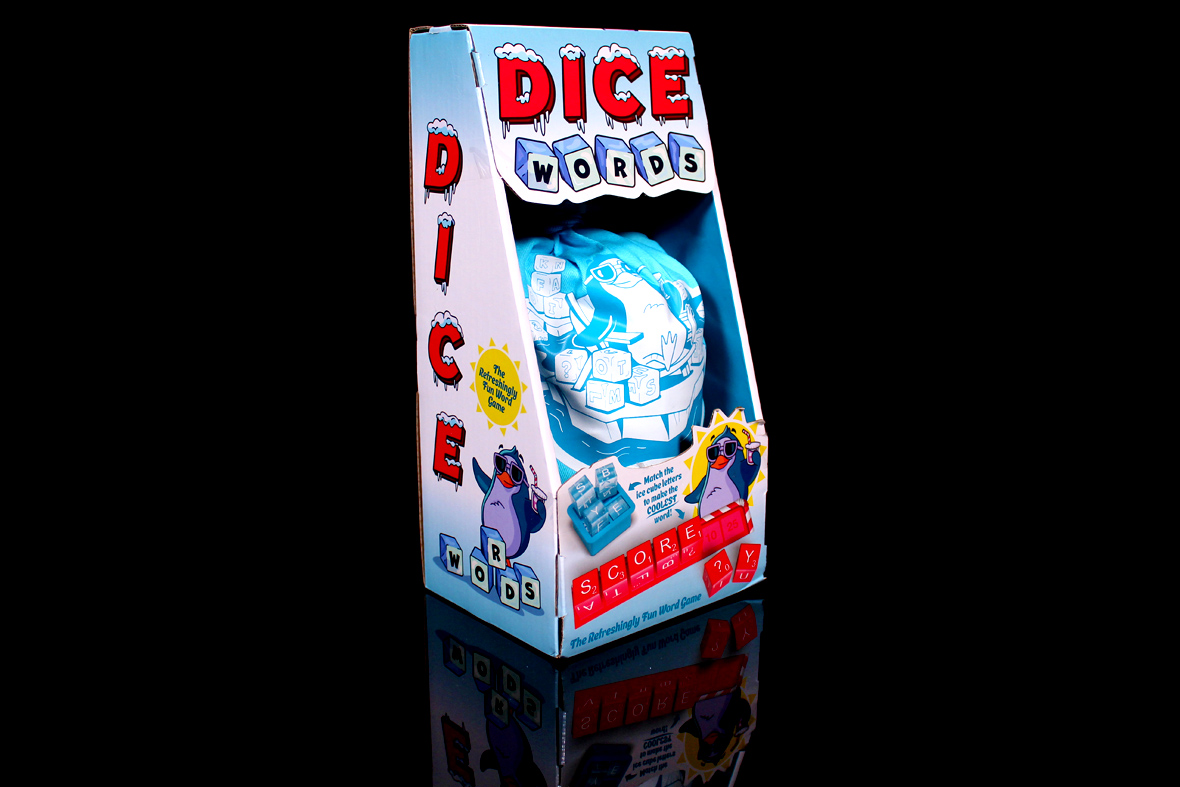
Base price: $23.
2 – 4 players.
Play time: ~30 minutes.
BGG Link
Buy on Amazon (via What’s Eric Playing?)
Logged plays: 2
Full disclosure: A review copy of Dice Words was provided by KOSMOS.
I … slept all weekend; that was exciting. I think, given the State of The World, I’ve gone from needing one day a month to rest to needing approximately one day a week to rest. That’s not great, but it is what it is. Thankfully, I built in some time where I can actually get some work done on reviews, so we’re going to be covering a couple new games (new-ish, I suppose) as we approach the end of the year. Plus, PAX Unplugged is coming up, so that will be exciting, too. Let’s kick off the Cold Weather Seasons up here in the Pacific Northwest with Dice Words, from KOSMOS!
In Dice Words, players are trying to cool their drinks down the only way they know how: with ice! Spelling cool words will give you more points, but matching letters to the target word is definitely the way to go. So shoot for those long words and rack up points if you want to be the coolest player around! Can you beat the heat?
Contents
Setup
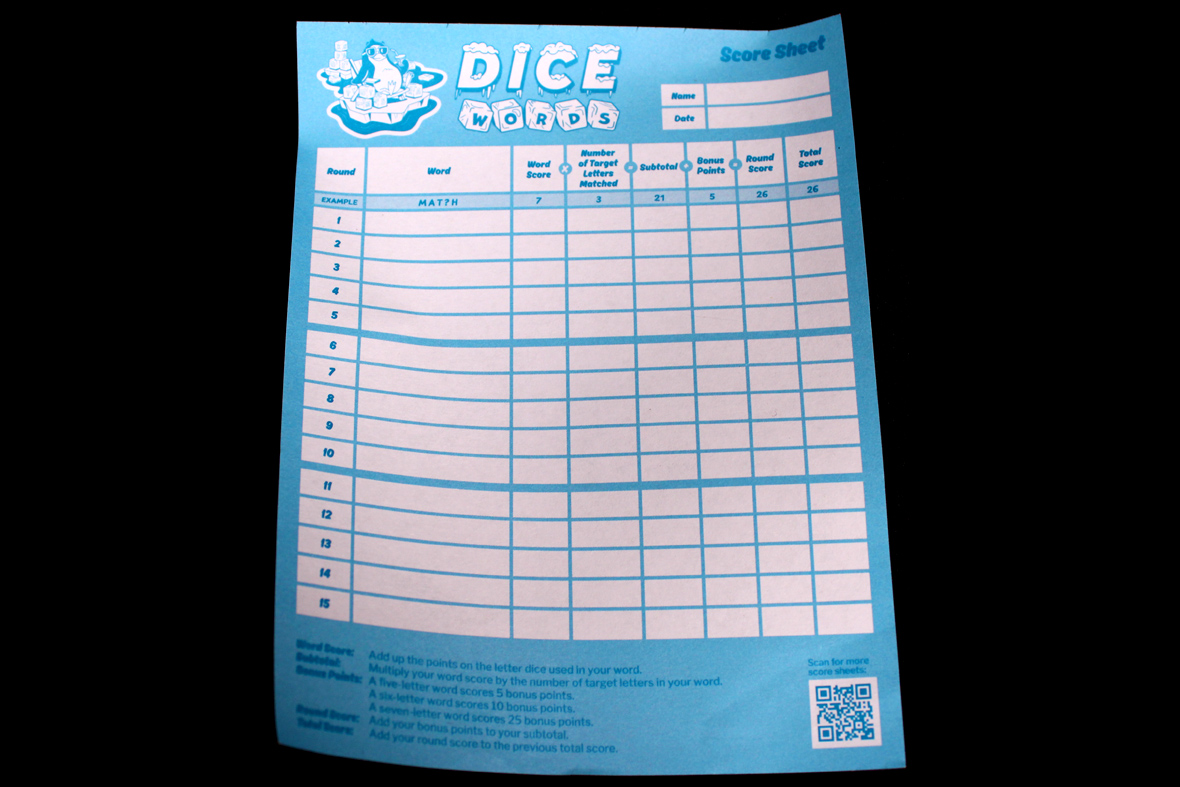
Not a ton, here. Give each player a score sheet:
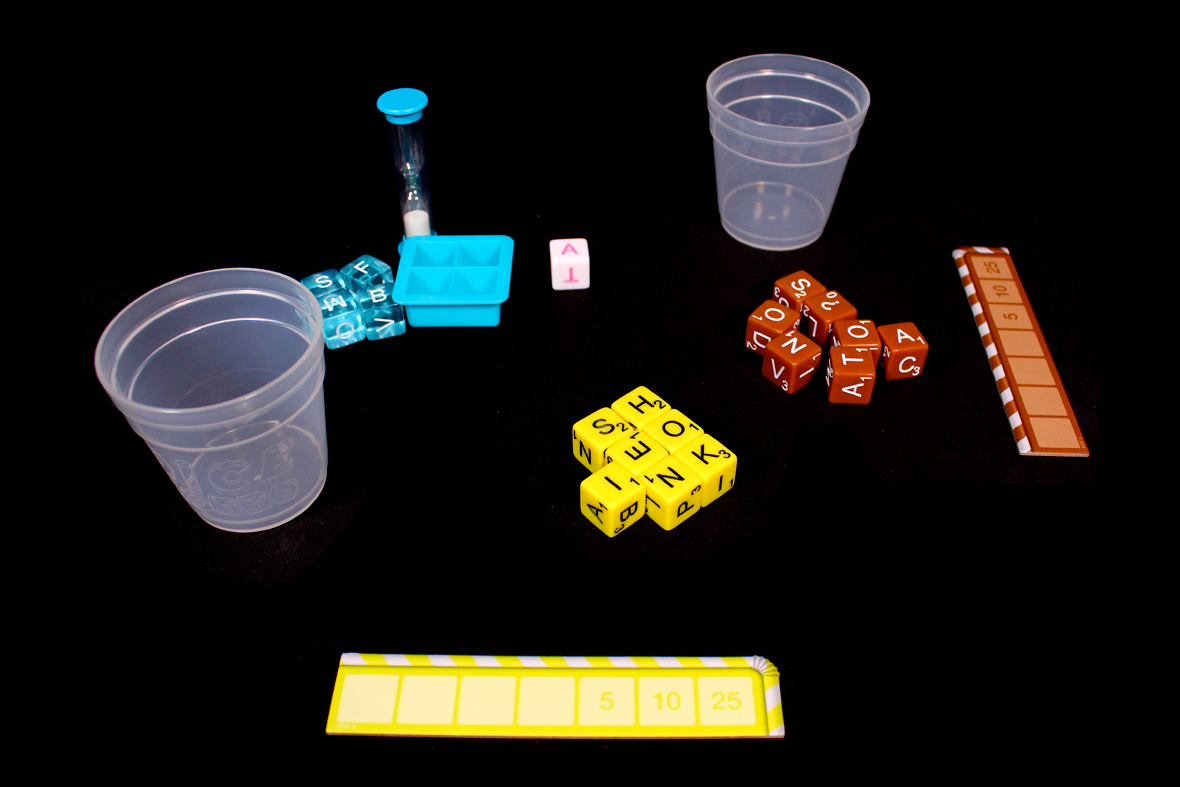
Give them a set of player components. That’s going to be a cup:

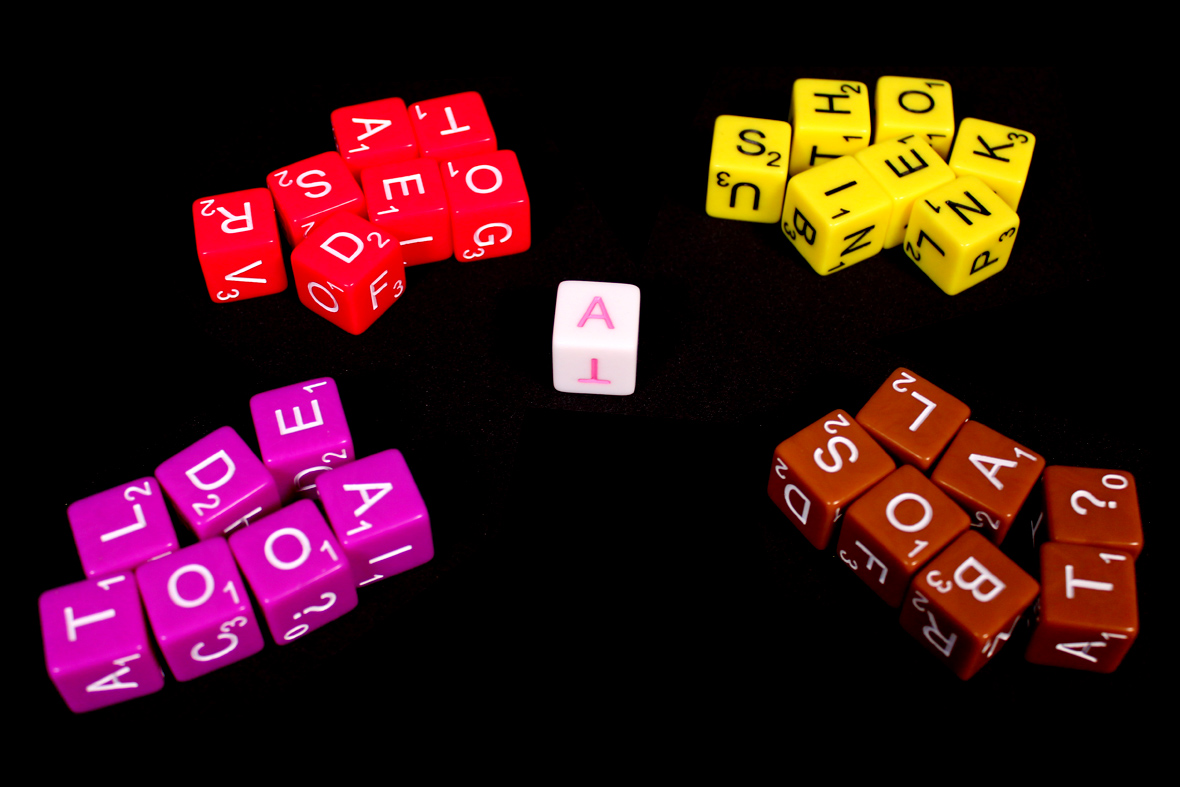
A set of dice:
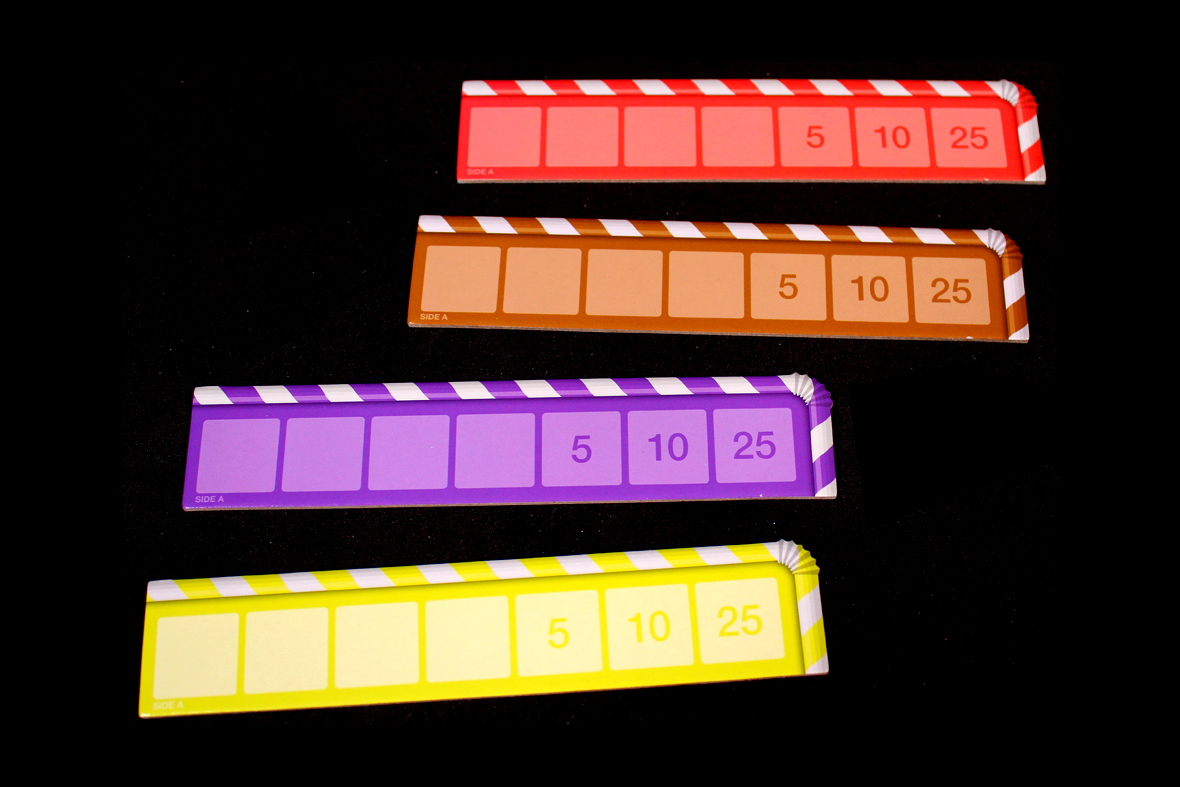
And a scoring board:
The timer and ice tray and ice dice can go in the center:

You should be ready to start!
Gameplay
This one’s pretty easy. You can play 5 / 10 / 15 rounds, but the player with the most points at the end wins!
To start a round, each player rolls their dice and then one player rolls the Ice Dice and flips the timer. Over the next two minutes, you can reroll your dice two additional times, but you must keep the final result. Your goal? Assemble a word that’s worth the most points!
After two minutes, you score your word. To do so, sum up the total of your letters. Then, multiply it by the number of Target Letters in the center you match (you only add one to your multiplier, no matter how many times you use a Target Letter in your word). If your word is 5 / 6 / 7 letters long, you add an extra 5 / 10 / 25 to your score for your total for the round. If you’re playing with the Sugar Cube Variant, give the cube to the player with the lowest score and then start a new round!
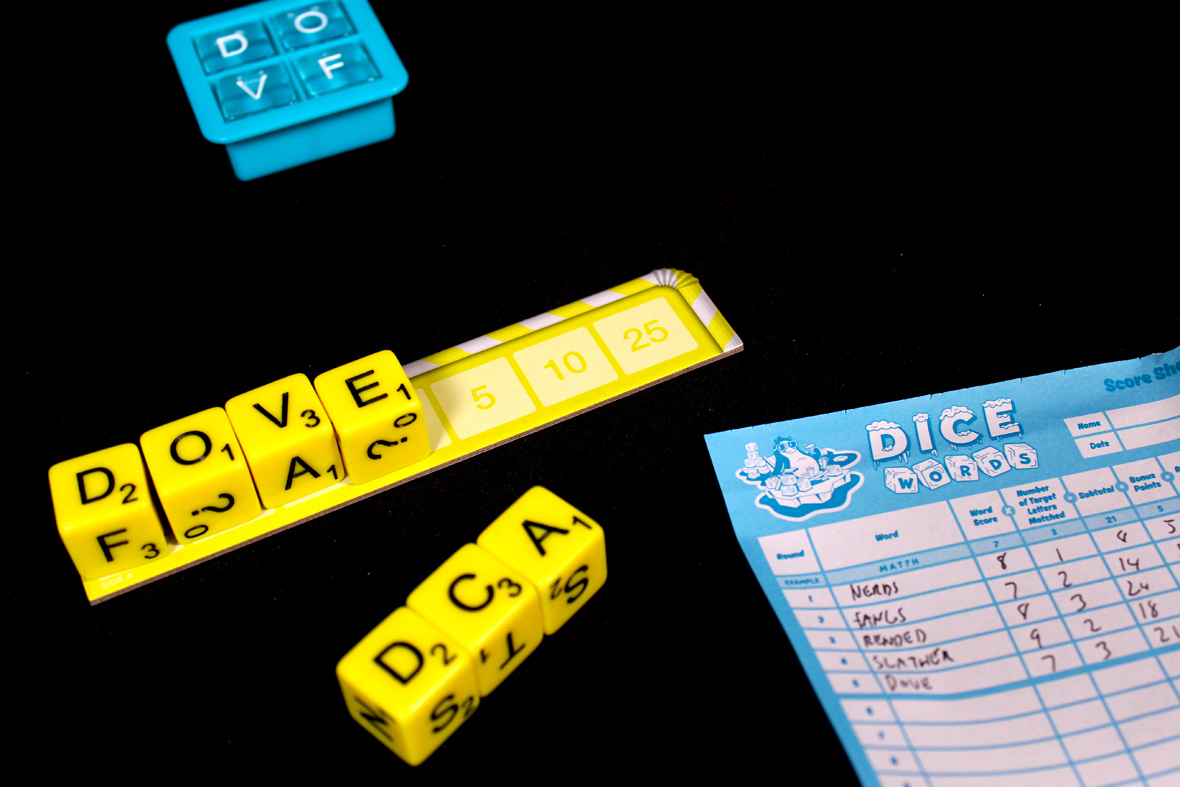
After the 5th / 10th / 15th round, the game is over! The player with the highest total score wins.
Player Count Differences
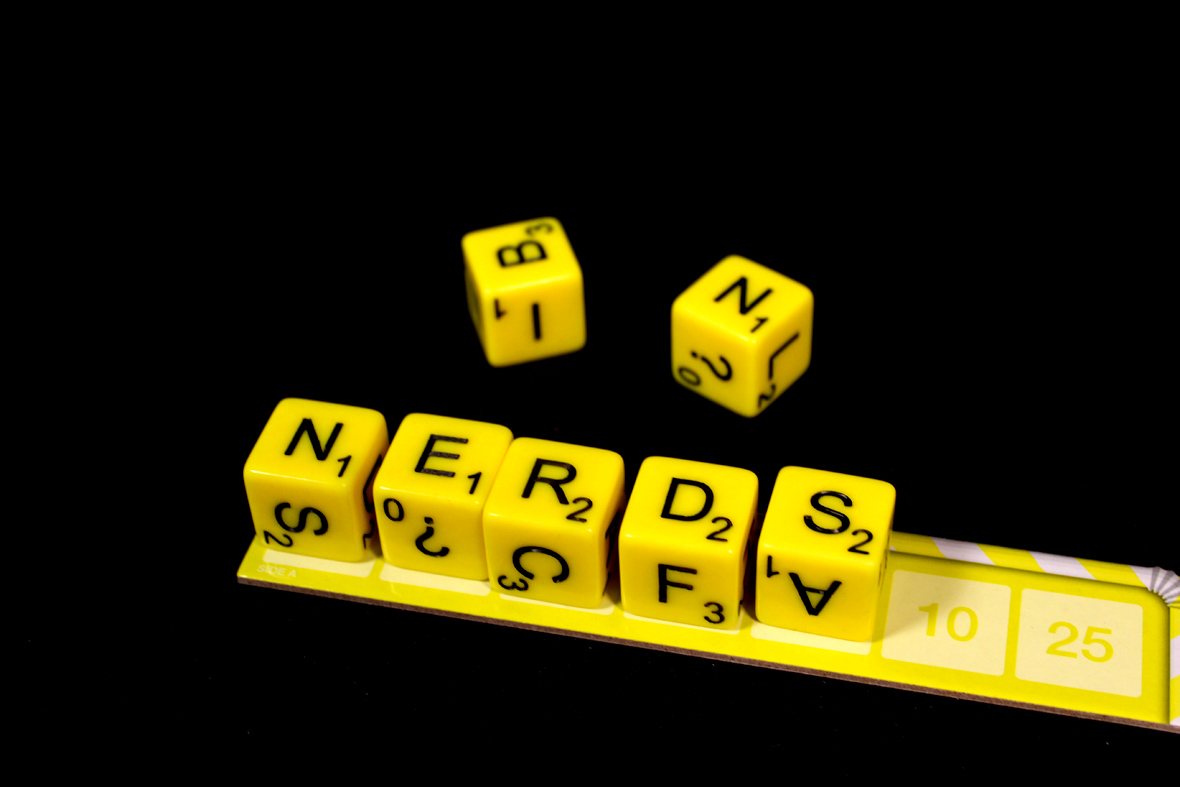
Functionally none unless you’re playing with the Sugar Cube Variant. In the standard game, you’re rolling your own dice and trying to use letters on the Ice Dice in the center for bonus points, as stated earlier. As a result, there’s … not really anything you can do to your opponents or do about them. They’re going to do their own thing and score their own points. With the Sugar Cube Variant, the player with the lowest score gets the Sugar Cube, which is just a bonus extra die they can use on their turn. I’ve even seen huge games with multiple sets at Gen Con, so you can stay flexible or stay frosty as you’d like. No big player count preference otherwise.
Strategy
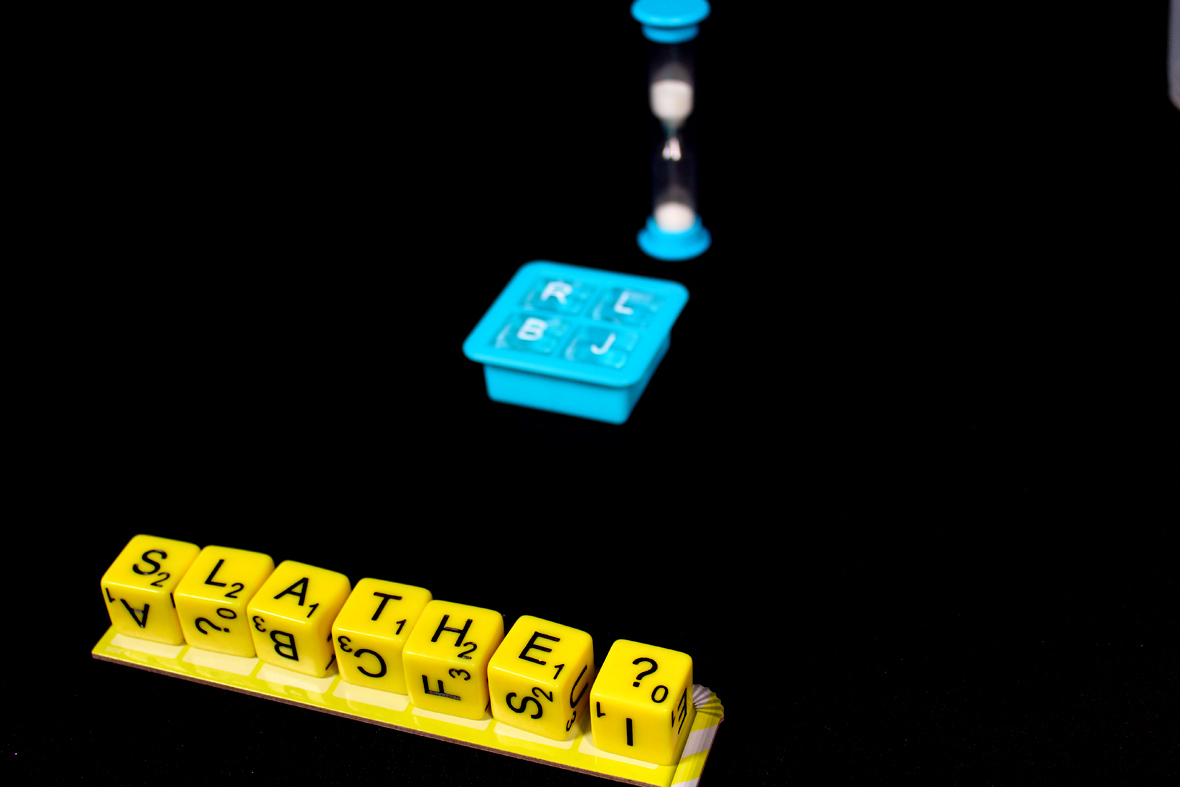
- If you can go for a seven-letter word, that’s usually a good plan. The 25 extra points, if nothing else, can often put you ahead of the curve if you play your letters right. That’s more than a common round score for some players! It’s just, it’s not always great to score absolutely nothing from the target letters.
- It’s best if you can get some of the Ice Dice letters in your word. Every time you use one of the four types, you gain a bonus multiplier. If you don’t use any, well, the multiplier is 0. That’s … bad.
- There’s something to finding the balance between a long word and using the target letters. If you can do both, obviously good, but getting no bonus or getting only 10 points because you got the bonus but no target letters isn’t great either.
- If you get too behind, it can be hard to recover. That’s the difficulty of a purely additive game, to some degree. If you get behind, your only solution is just … do better.
- It might be worth looking at the dice to know which ones are best to reroll. Different dice have different text on them! It’s worth knowing which ones are at least worth it. Some may depend a bit more on what the target letters are.
- When choosing which dice to keep, I usually try to keep an E / D / S / R, or letters similar to that so I can make something. You just need some letters that you can use to make a word. If you have those, then at the very least you can go for the bonus rather than just being up a creek if you have nothing.
- Even a short word can score big if you get enough target letters. The letters themselves are pretty valuable, so getting something chained together that offers a decently high value that you can then multiply by hitting target letters is a generally good idea.
Pros, Mehs, and Cons
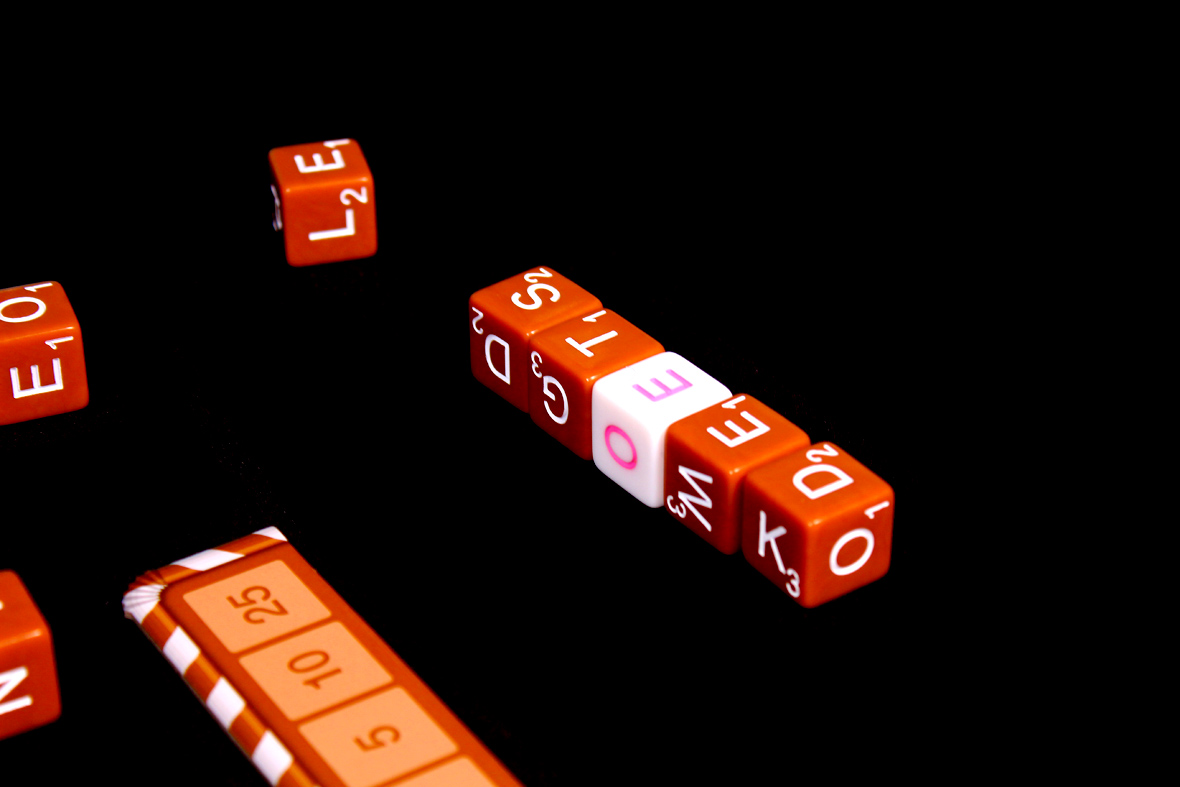
Pros
- Pretty quick to play! I like that there are different round length options for players based on how long of a game you’d like, though I think sticking to the five-round game always works for me. Worst case, you can always play more games, right?
- Relatively portable, given the bag. The bag holds everything and holds it decently well, I suppose. I wouldn’t say it’s easy to store, unfortunately, but what can you do? You just kind of have to put the bag on the shelf or on top of it? I’m more of a “boxes” person.
- I think a real strength of this game is how well it accommodates new and younger players. This is the real crux of the game in my opinion; there are so many ways to get new and young players into the game! You can let them have unlimited rerolls or ignore the target letters or just score for how long the word is. I think that’s a great way to get folks into word games, since they can often be a bit more opaque and skill-based. Sometimes it’s no fun to play against someone and just get wrecked, especially if you’re just trying to learn the game. This helps a lot.
- I do enjoy a word game. It’s one of my favorite genres, generally speaking, so I’m always excited to play more often. Having new types to try out is always interesting.
- The scalability is nice, provided you have enough dice. You really can play with a ton of people if you have multiple copies of the game. It just kind of scales up nicely.
Mehs
- I don’t love the color scheme; I wish it were a bit more intense. I do think it’s a bit funny that one of the options is just … iced coffee, but maybe that’s just because I’m not a coffee drinker? Not sure. I think the color palette is just, in general, a bit more muted than I wanted it to be given how bright the box and bag are.
Cons
- I’m not entirely sure why they store the score sheets in the bag by default; it means they’ll likely never lay flat. They’re truly never going to flatten out entirely, now, but … maybe some day. It’s nice to hope, I guess.
- What happens if you don’t roll any vowels? It’s possible; that happened to me on one roll (before I rerolled), but it seems like the game is just betting that won’t happen after two rerolls, which is a bit risky.
Overall: 7.25 / 10
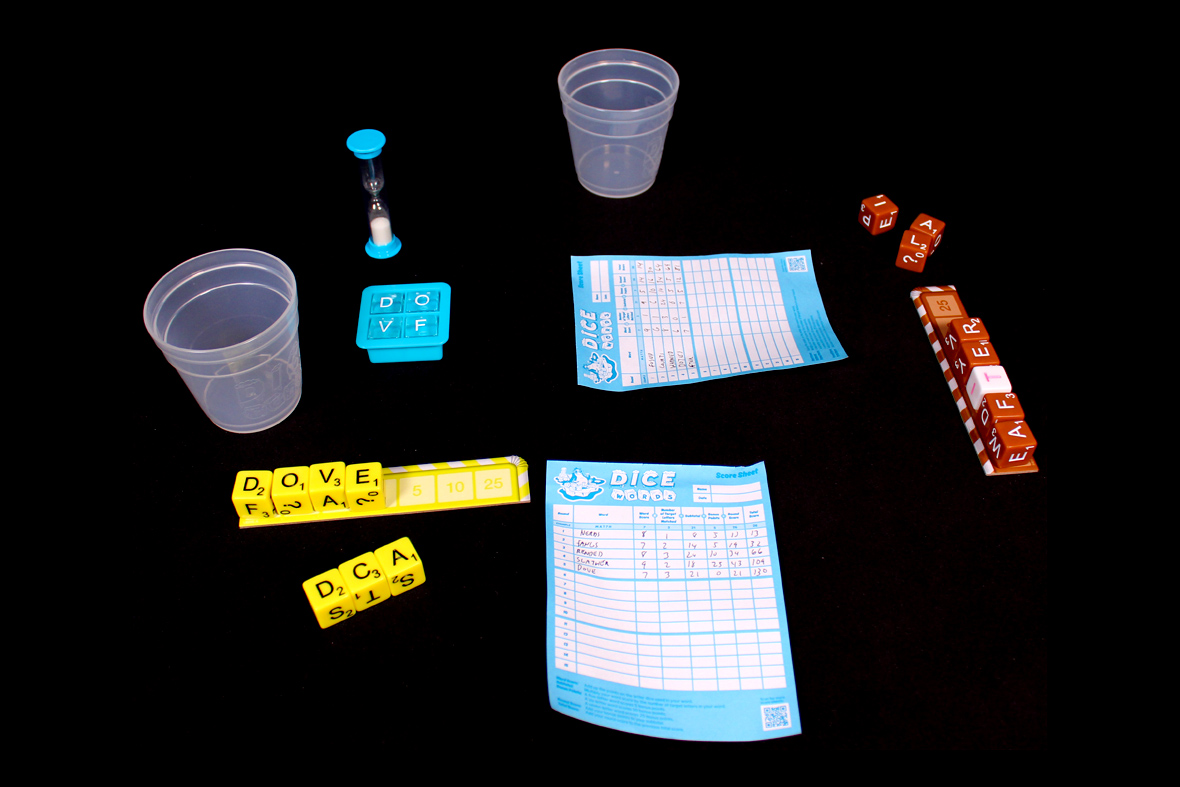
Overall, I like Dice Words! It’s a nice, entry-level word game that’s surprisingly approachable for the whole family, which fits very nicely within KOSMOS’s general line as well. We love market alignment, or, I suppose, they do. I think customers do as well, though; they get confused when a company sells something that doesn’t seem right for their general vibe. That’s not super relevant, here. What is relevant is that you can configure the game to have a lower difficulty level for new players that lets the game grow with them, and that makes the traditionally-not-new-player-friendly genre of “word games” a lot more approachable, which is great. Granted, some of the rules tweaks they recommend will usually let a new player absolutely stomp you if you’re not careful, but you can just not use those with players who know word games or aren’t children. Or let them just get a good win on you; it’s none of my business. The components are very family-friendly as well; you’ve got big chunky dice and a cup to rattle them around in and while that noise is awful and loud, I’d be lying if I said it wasn’t definitely someone’s favorite part of the game. Kids especially like that noise, as well as Roll for the Galaxy players. It’s just part of them. I have my personal gripes with any game that comes in a bag, mostly because I’m running out of shelves to place the bags on top of that actually look intentional, but my house is a mess, so that was going to happen sooner or later anyways. I just wish they had kept the score sheets flat. That all said, if you’re looking for a family-friendly word game, you enjoy dice, or you’re just down for the idea of cooling your drinks with words, Dice Words might be right up your alley!
If you enjoyed this review and would like to support What’s Eric Playing? in the future, please check out my Patreon. Thanks for reading!
 What's Eric Playing?