
Base price: $12.
2 players.
Play time: ~15 minutes.
BGG Link
Logged plays: 2
Full disclosure: A review copy of Championland: Track & Field was provided by Button Shy.
I genuinely don’t understand WordPress. I’ve been using it for a decade and they just make baffling UI choices sometimes. The latest thing is that they’ve once again changed the “delete block” button from CMD + SHIFT + BACKSPACE to ALT + CMD + Z. For a while it was just SHIFT + BACKSPACE, which was amazing. You’re typing a capital letter and you hit the backspace button because you mistyped and delete an entire block of your review. So now I get to re-learn a fairly useful keyboard command because someone decided to mess with prod again, I guess? What a treat. I frequently say I’d love to move to another platform but exporting my reviews and moving them over would be a Herculean task at this point, so I might be stuck. But enough of my existential dread: let’s head back to Championland!
In Championland: Track & Field, everyone in this part of town is into track and field events! You’re itching to compete and score big for your team, but your opponent has the same ideals. Only one team can take the victory in the big event, so show up and get vaulting, jumping, shot-putting, and whatever else actual athletes do! Will you be able to hit the ground running?
Contents
Setup
This one’s easy. Split the cards into two teams:

Each player takes their team, shuffles them, and then makes a hand of 9 cards. Once you draw your nine cards, keep them in order! You can’t change the order of the cards in your hand. You can start, though!
Gameplay
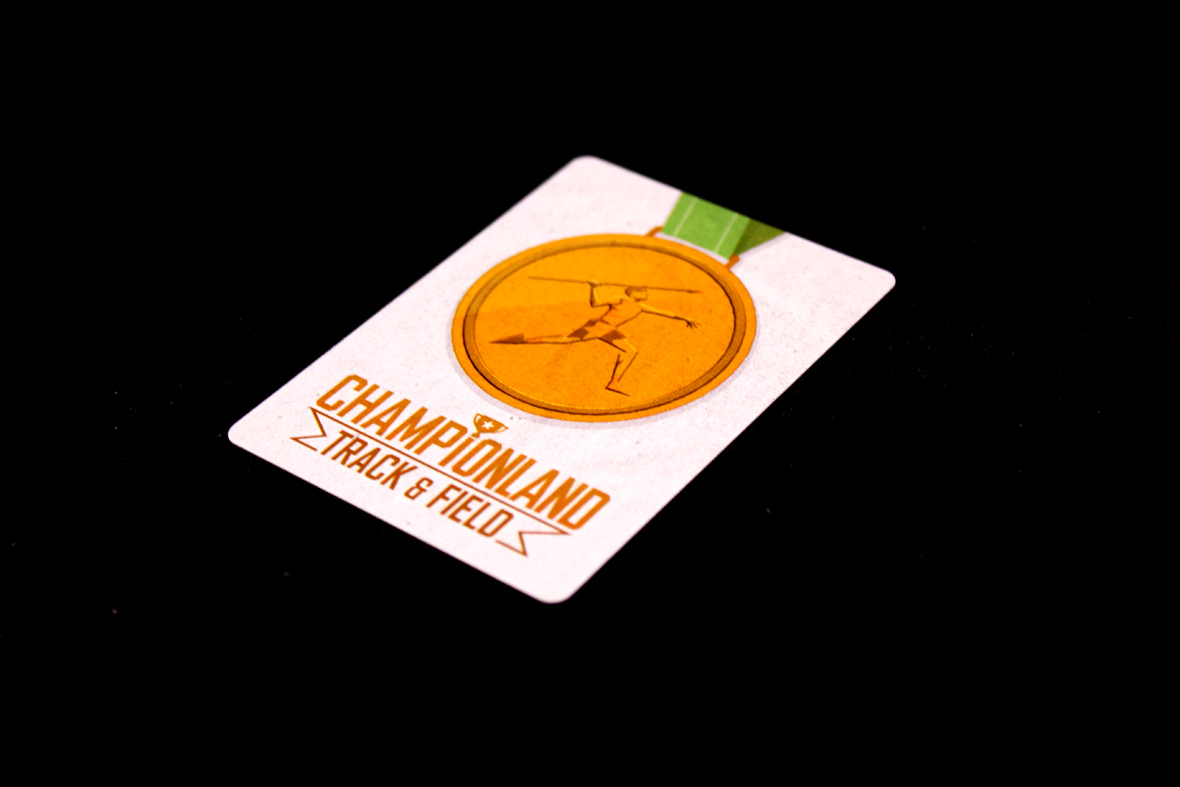
Championland: Track & Field plays entirely differently from Volleyball with one key difference: the way you play is the same! Each turn, you’ll play one card from either the leftmost spot or the rightmost spot in your hand and, from there, try to win!
Each turn, you’ll add an Athlete or an Event to the play area. You’ll, during the game, add six Athletes and three Events. You’ll also play three face-down cards and six face-up cards. Exciting! Events are played horizontally to the middle, and Athletes are placed vertically into one of six columns (usually below an Event on your side of the play area).
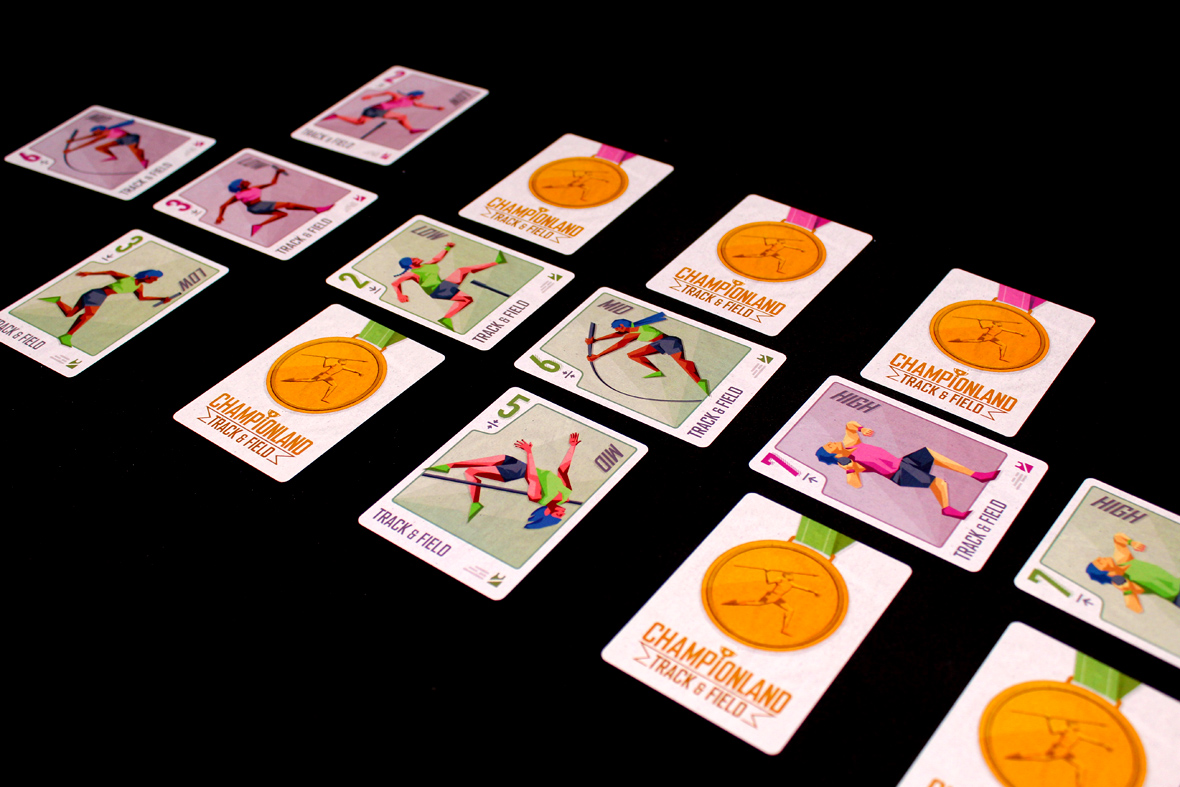
Once all cards have been played, they’re revealed! Each Event is then evaluated based on its number:
- 1 – 3: The lowest-value Athlete placed there wins.
- 4 – 6: The Athlete closest to 5 placed there wins.
- 7 – 9: The highest-value Athlete placed there wins.
If there’s a tie, nobody wins that event. Players evaluate all the events and the player who won more events wins! Don’t like the outcome? Play again!
Player Count Differences
None! Two-player only.
Strategy
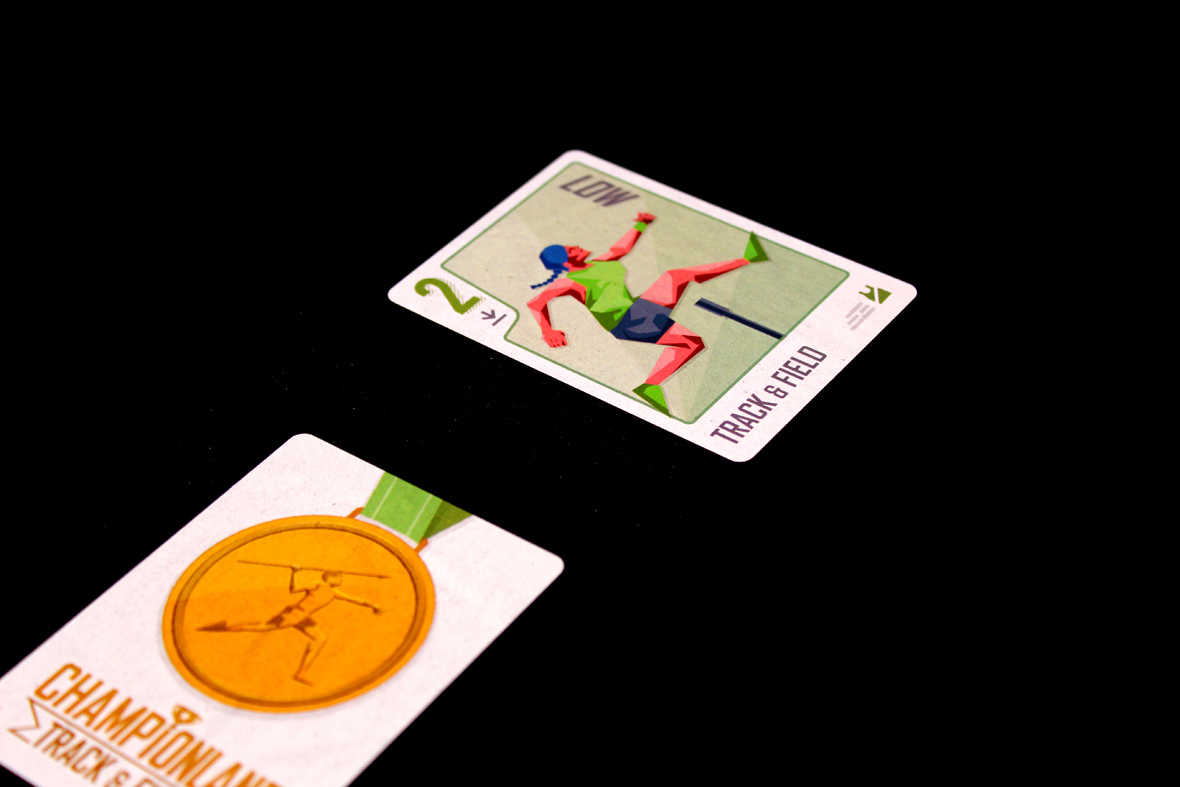
- Playing your Events face-down is smart and tricky, but that gives your opponent a ton of information via process of elimination and can leave the outcome of the game to chance. If you play an Event face-down, your opponent can’t know what you’ve played until they see what other cards you’ve played. Even then, they can only narrow it down to three. Granted, if the cards you haven’t played are 4 / 5 / 6, that might not especially matter. But if they’re all over the place, you force them to try and guess what your plans are. If you play an Event and an Athlete face-down, they have no choice but to guess. That might work in your favor! It’s a difficult probability to calculate though.
- Don’t forget that the Athletes you play also provide a lot of information. If you play a 9 on a face-up Event, you’re likely trying to win the Highest Event type. If you play a 9 on a face-down Event, the same logic applies. If you place a 7, though, are you hoping your opponent won’t beat it? Or does the face-down Event mean something else?
- If you want, there are still plenty of fun ways to be tricky. If you place a 7 face-down, you’re prompting a highest-card wins, right? So if you place an 8 as your Athlete, your opponent might see that and place a 9. But what if the event you placed was a 4 (closest to 5 wins), instead? Your opponent might have just wasted their highest card on an Event they’re not even going to win.
- You should assume your opponent is trying to mess with you. You don’t have to take the bait! You can also mess with them back, as mentioned.
- Timing is important. For some Events, you can play them face-up or wait to see what your opponent plays and take the win / tie straight out of the gate. You can also play elsewhere and force your opponent to eventually play to a spot.
- Don’t try to win everything. It’s impossible; there are literally too many Events and too much balance between what you an your opponent have in your hands. Focus on trying to beat your opponent in the Events you can take.
- Your constraint is also which cards you can play and when; keep that in mind. If your middle cards are 1 / 5 / 9, you’re going to have trouble winning too many Events straight out of the gate. Plan accordingly.
Pros, Mehs, and Cons
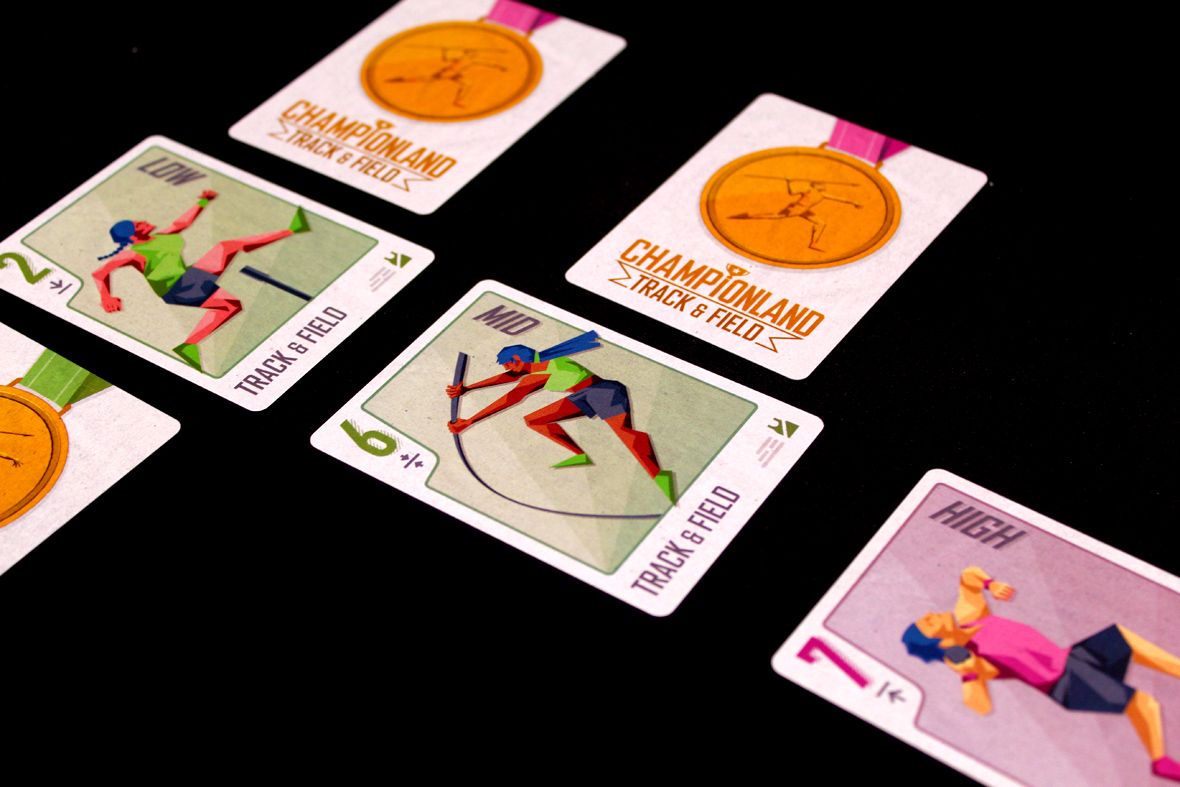
Pros
- I like the general game system a lot. Games where you can’t reorder your hand frustrate me because I like having an ordered hand, but they encourage a lot of smart strategy around timing and how everything matches up. I think they tend to be pretty clever, and this is no exception.
- We love a portable two-player game. I like having a bunch of quick, rough-and-tumble two-player options. Yes, portability is part of the Button Shy Brand Identity (except for that one
- The gold wallets are fun! They feel … luxurious. Casinopolis paved the way, though I’m still a fan of Numbsters‘s hot pink wallet. More! aggressive! wallet! color! options! This is my 2026 Hill to Die On.
- I like sports-themed board games. They’re whimsical. It’s a less irritating version of dudes getting really into FIFA or Madden, I think, because you’re still playing a game about playing a sport, but you’re not yelling the whole time. I suppose you could yell the whole time, but then I would ask you to leave my home.
- This takes up some space, but the strategy is interesting. you need eighteen distinct places to place cards, but you can place them in a weird ordering to try and get what you want. It’s helpful that you’re limited to certain cards and combinations, though.
- Very quick turns and some good back-and-forth. It has the same energy as some of the other classic two-player games like 7th Night where you’re specifically thwarting or trying to trip up your opponent and I love that kind of thing.
- Still a big fan of the art style. I’m not sure what the exact style is but the game looks nice.
Mehs
- Initial hand ordering can matter a bit. If you start with 1 and 9 on opposite sides of your hand, do you waste them on Events or do you try to play them as Athletes? If I see a 9 Event from you, I’m playing my 9 there. If I see a 9 Athlete with no Event, I’m attaching a different Event type immediately so I can get a cheap win, and then I’m using my 9 to win a Highest Event later. Neither option is good for you and that’s just from getting a bad hand draw.
Cons
- I would like if the Events were a bit more interesting than Low / Middle / High, but it does keep the game simple. I think I love needless complexity in my simple games, though. If it’s short it can be wackier without deterring me, even if that makes it more complicated.
Overall: 7.25 / 10
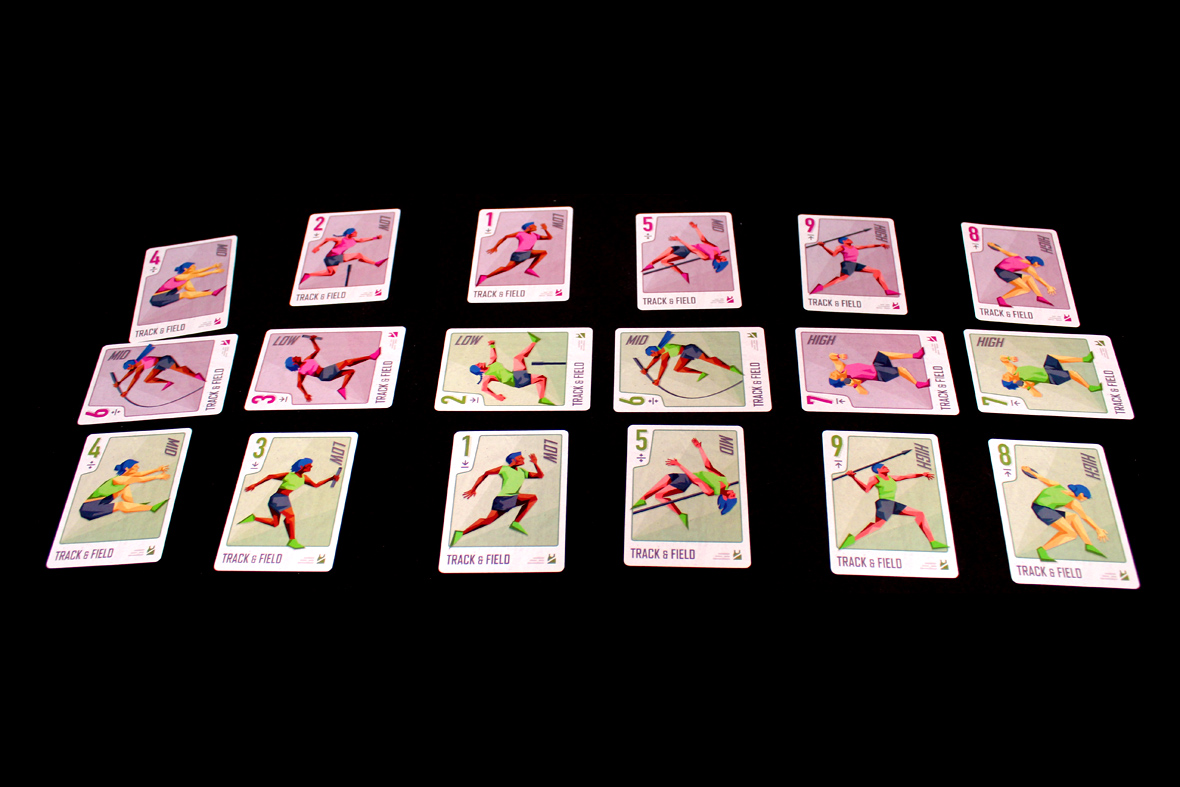
Overall, I like Championland: Track & Field! I think the art style got me right from the start, frankly, but there’s a lot to enjoy about this style of game. For one, the hand management element does a great job keeping players on their back foot, to some degree. You may have the perfect play in front of you, but if your cards aren’t accessible you’re out of luck. Similarly, you can play risky and leave an opportunity out for your opponent in the hopes that they can’t take advantage of it in their current state. It’s great. Quick, punchy, and some good back-and-forth as you try to set up Events that only your Athletes can win, only to get thwarted by your opponent’s desires to do the same. Placing cards face-down can give you an edge, but the same opportunity is afforded to your opponent, which means that you might get outfoxed (or just unlucky). Having a wider variety of Event types would be cool, though that could make the game more complicated; almost makes me want to see a Track & Field 2 or something to switch things up a bit. If you’re a fan of quick two-player games, you just like track, or you want to have more wallet games, I’d recommend checking Championland: Track & Field out! It’s a lot of fun.
If you enjoyed this review and would like to support What’s Eric Playing? in the future, please check out my Patreon. Thanks for reading!
 What's Eric Playing?