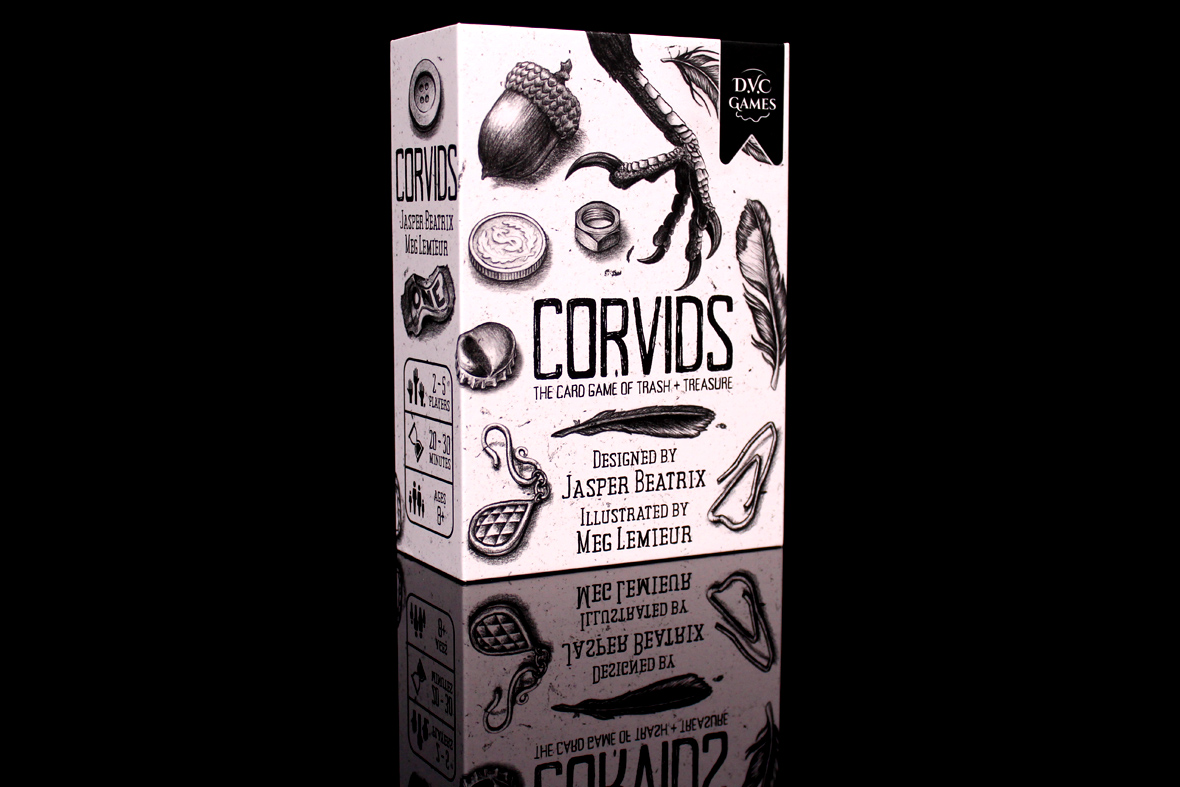
Base price: $25.
2 – 5 players.
Play time: 20 – 30 minutes.
BGG Link
Buy on Amazon (via What’s Eric Playing?)
Logged plays: 2
Full disclosure: A review copy of Corvids was provided by DVC Games.
Well, that’s another PAX Unplugged mostly in the books. Still my ongoing favorite con of the year. Nice city, easy access, well-run convention; you love to see all of those things happening at once. Plus, there’s a ton of new games to talk about, so expect to see some of those coming down the pipeline in the future. Splendor … Kids? More from our friends at Button Shy? A wrestling trick-taking game? They’re all options. What’s happening right now is another game from the great folks at DVC: Corvids! Let’s learn more.
In Corvids, players are various types of … crows? ravens? I’m not a bird guy. I’m vaguely aware of them. You seek one thing: trinkets. Maybe some treasures while you’re at it. You’ll add them to your nest and use your beak to do it. However, you’re not always the nicest birds in the world, so theft is totally an option, provided you can figure out where your opponents are hiding their things. Will you end up with the most valuable nest? Or will you just be eating crow? I think the phrase works here in context but the unintended dual meaning of the phrase makes it weird. Oh well. Review now.
Contents
Setup
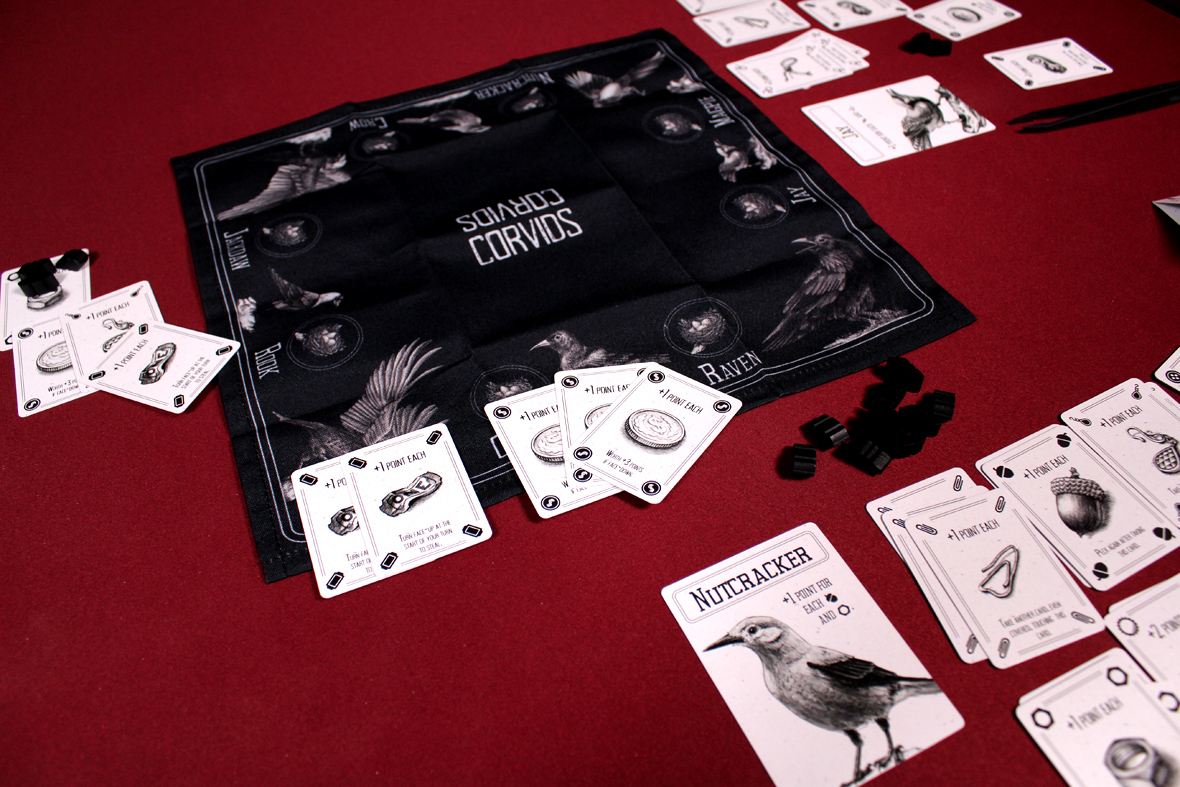
This one is fun! You can be as messy as you want. To start, set out the game mat:
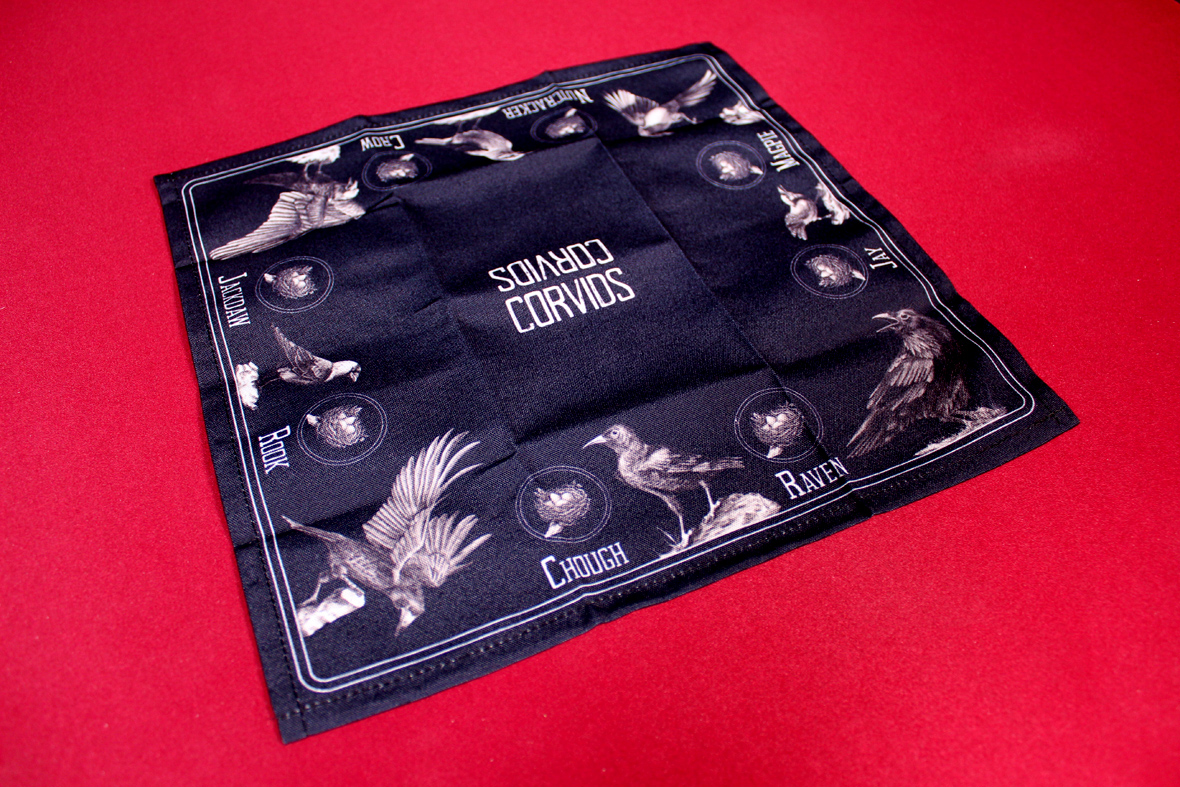
Shuffle the Trash Cards, and do that thing where you flip some of the cards over as you shuffle them (some will end up face-down, and that’s okay; that’s preferred, actualy). Once they’re shuffled, place them all over the mat (it is fine if some are partially on top of each other, for instance).
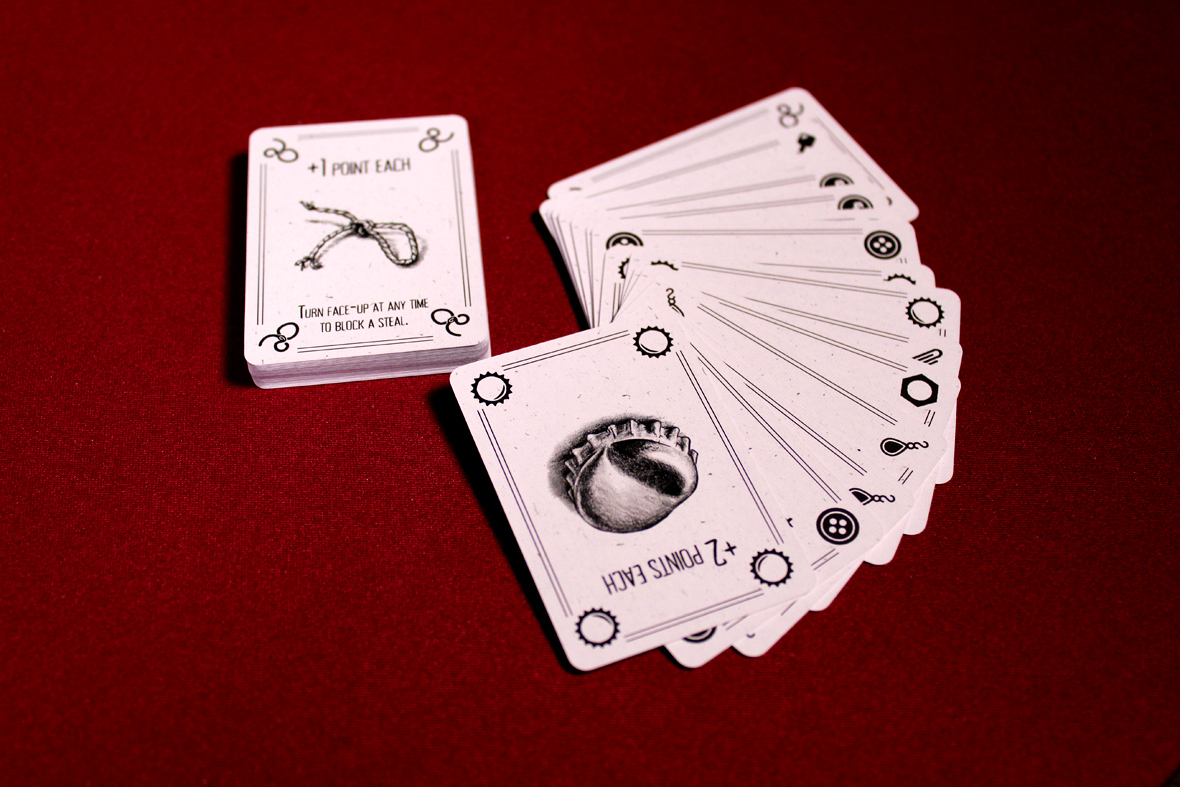
Divvy up the Feather Tokens between players and scatter them on the mat so they’re on top of cards but not off the edge of the mat. This is now going to be known as the Trash Pile.
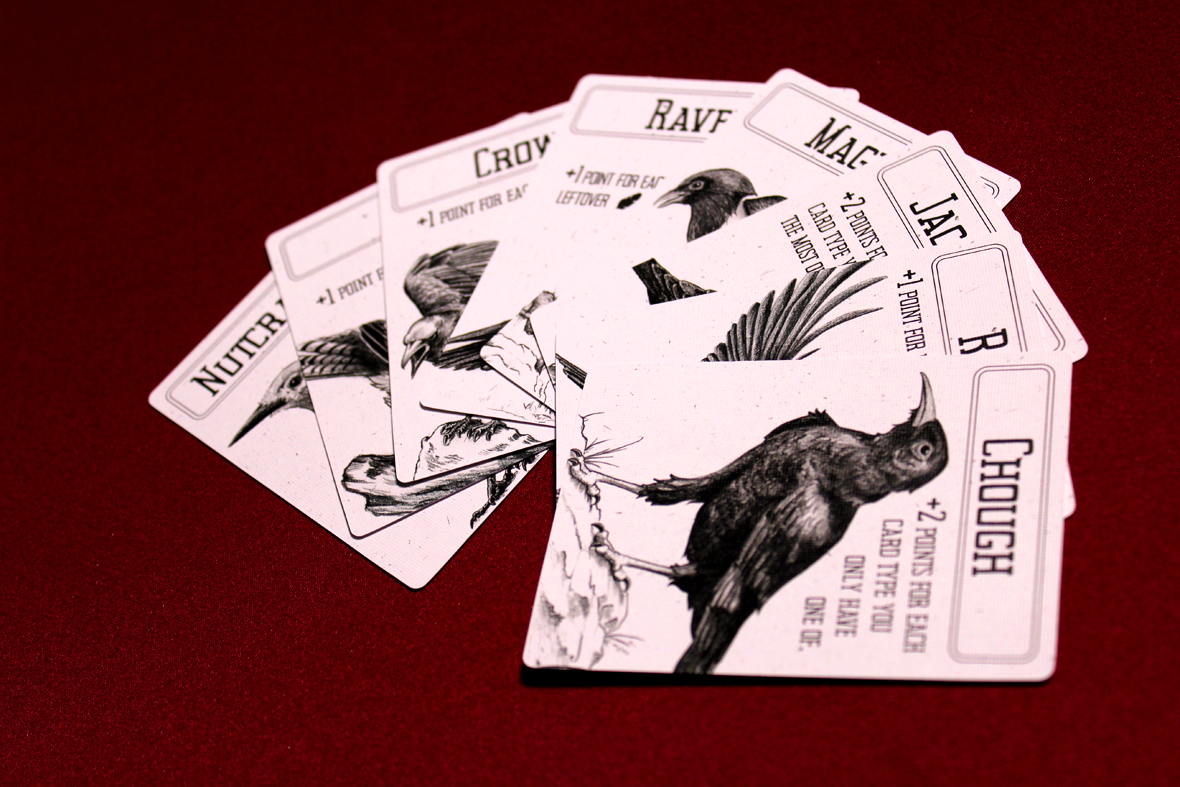
How romantic. Each player gets a Bird Card next; keep it face-down (but you can look at it).
Place the tweezers nearby and choose a player to go first.
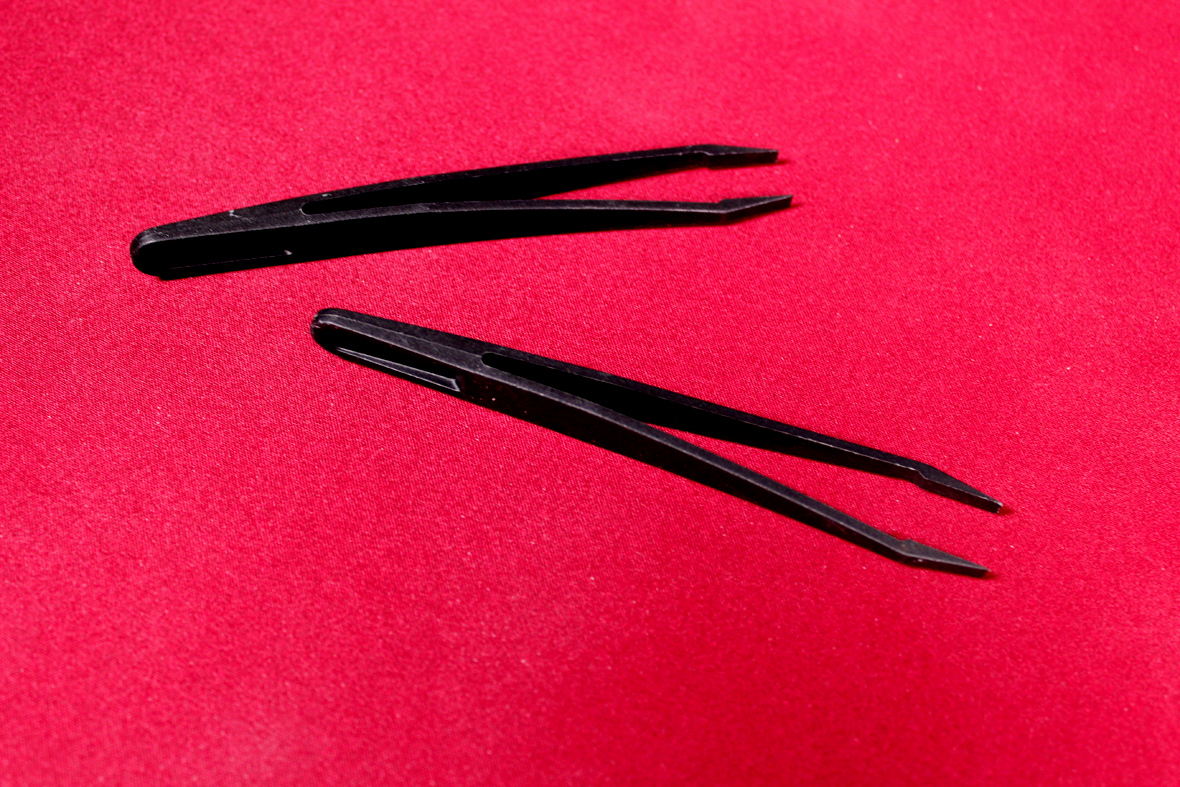
You should be ready to start!
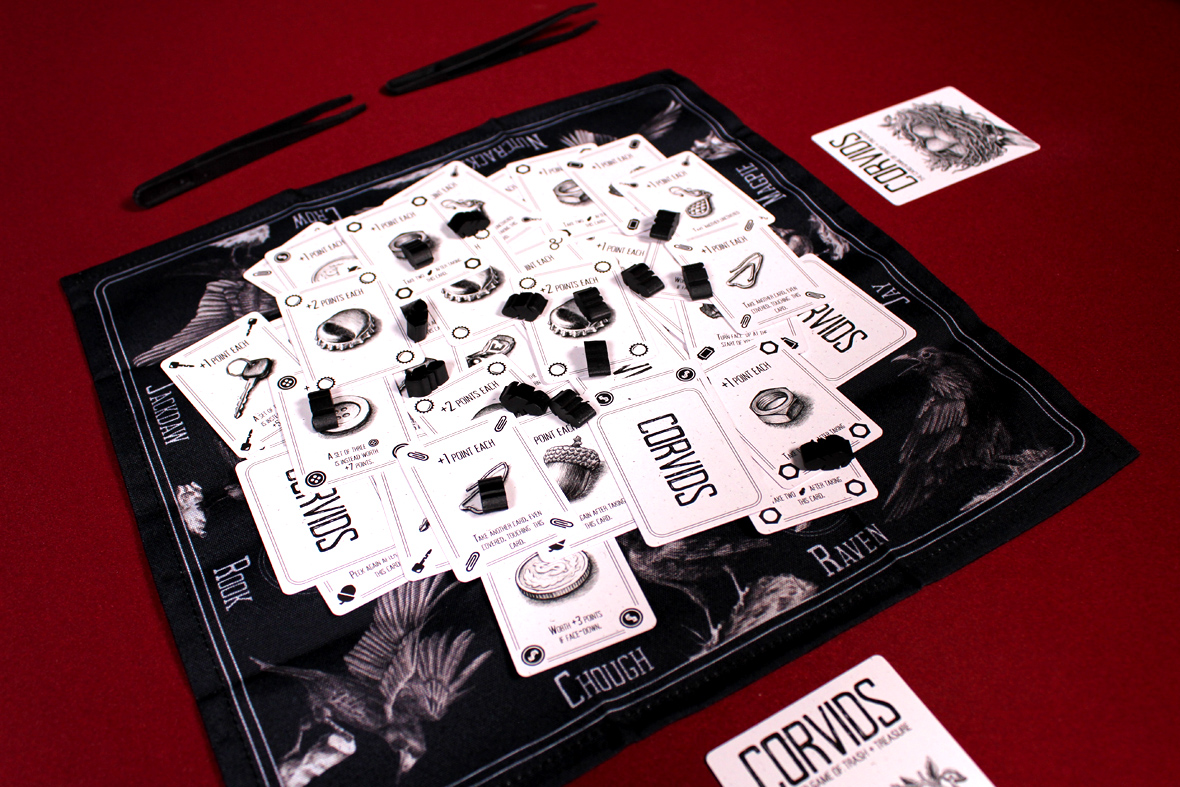
Gameplay
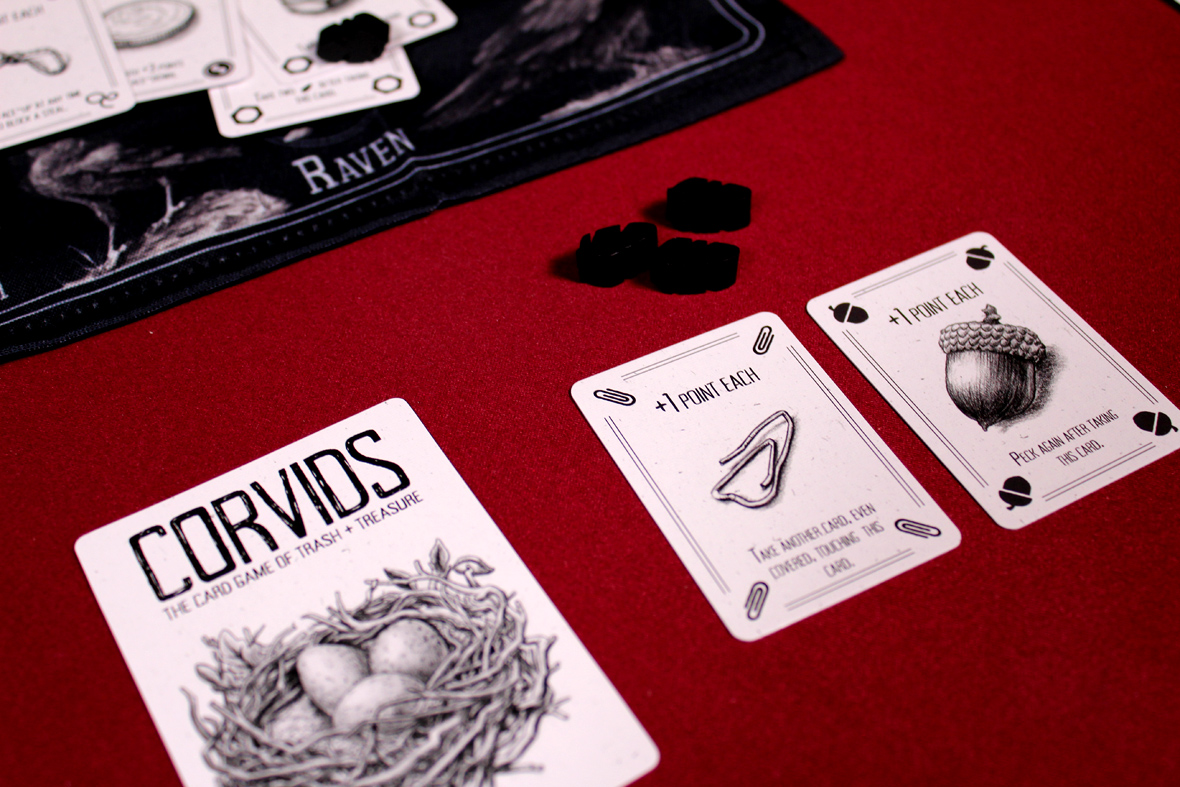
In Corvids, one person’s trash is everyone’s treasure. Your goal is simple: get as much trash in your nest as possible! But as you do, keep an eye out; wandering birds might look at what you’ve got and want it for themselves. Jerks.
Each turn, you’re going to Peek then Pick. You can also optionally Steal, if the requirements are left.
To Peek, take a card and flip it over with your tweezers! You may end up flipping more than one card, and that’s fine, but if any go off the board they’re removed from play and your turn immediately ends. Try to avoid doing that unless absolutely necessary.
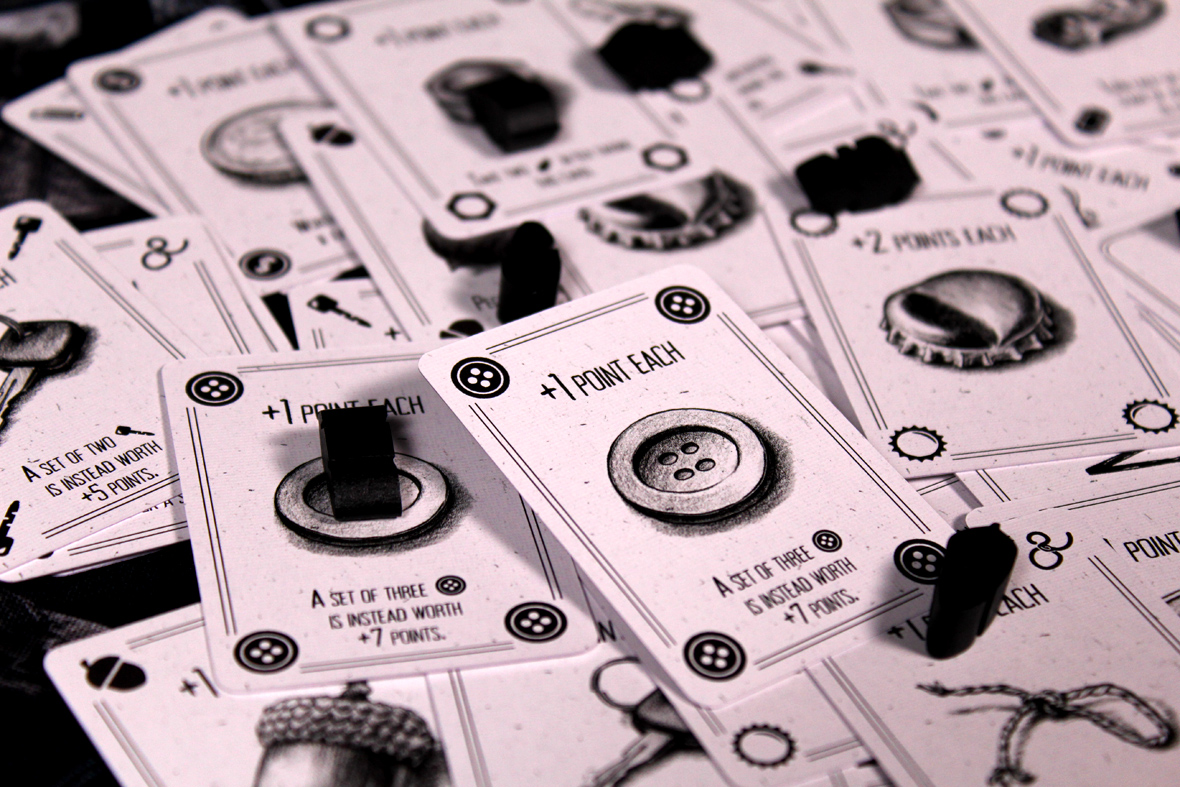
To Pick, take any uncovered card (it can be anywhere on the mat or have Feathers above or below it) and move it to your supply. If it was touching any Feathers, you get those too. Some cards will be face-up, some will be face-down. You (and only you) can look at your face-down cards! The game also encourages you to caw to signal your displeasure with someone taking your next move or underutilizing the available cards.
After doing both of the mandatory actions, you can optionally steal from a bird! You can only steal from a bird whose nest is uncovered. When you do, spend two feathers and announce that you’re stealing. They can counter with certain face-down cards, but if they don’t, you can pick any card from their play area and add it to yours. Then, your turn ends. If any cards are completely orphaned (touching no other cars or feathers, they’re immediately discarded.
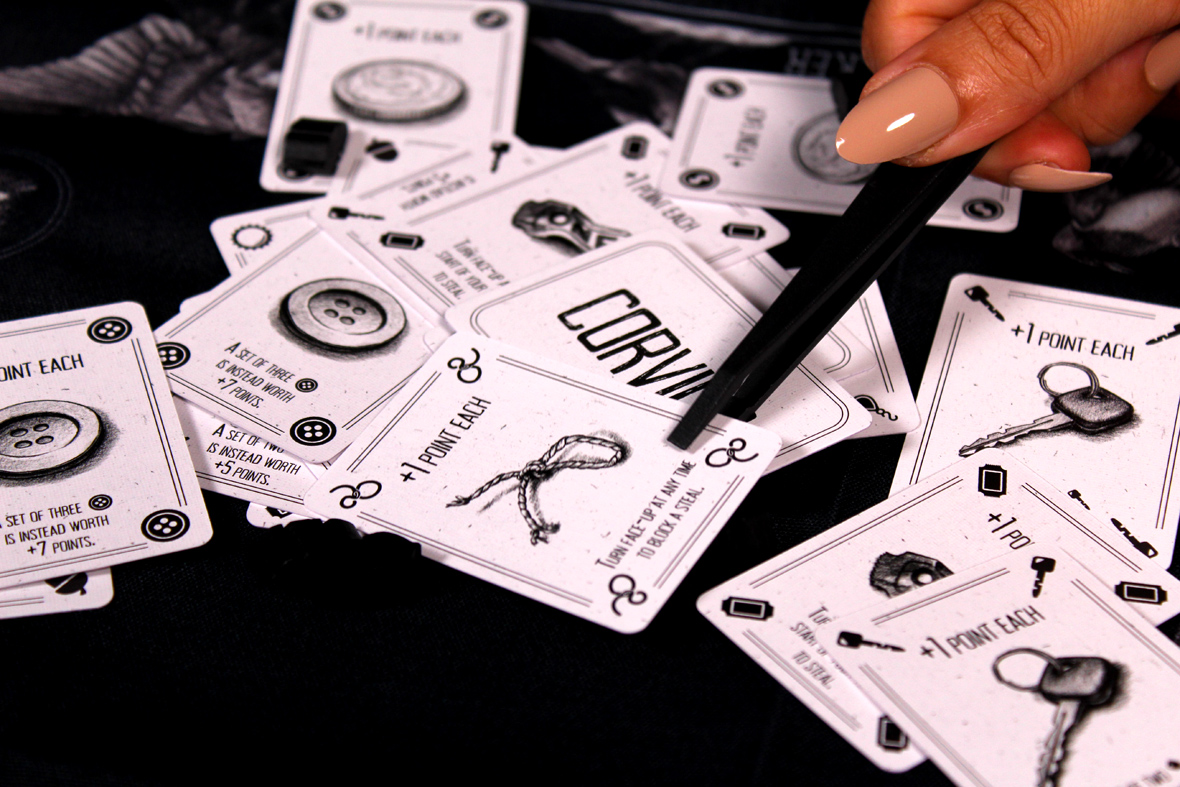
Play continues until the Trash Pile is empty. Players then tally their scores, and the player with the most points wins!
Player Count Differences
It’s fairly different depending on how many players you have, and that’s largely going to be a factor of how aggressively other folks play. With more players, you risk the terrifying specter of dogpiling, where one player uncovers your nest and the subsequent players all steal from you on their turn if they have the feathers to do so. With two, stealing is fine, but if you and your opponent are stealing from each other each turn you’re largely just sorting your collections to an optimal point for each other. Oh well. I’m generally pretty against dogpiling just as a strategy because it leads to bad outcomes for the player being hit, but I also can’t wholly recommend against it. You need to steal from whoever’s in the lead! It’s just going to happen more with more players. That said, the mild deduction element of finding a nest is going to happen much faster with more players as well, as there are more nests lying out there waiting to be exposed. So that theft and grift may just start happening naturally instead of you prowling to find your rival’s nest at two players. Beyond that, though, you likely won’t see too many differences, just that the state of the board can be significantly altered between your turns based on how many players you have. That’s pretty expected, though. I’d probably stick to the lower end of the player count spectrum, myself, but if you’re looking for a high chaos game with lots of theft, more players is the way to go.
Strategy
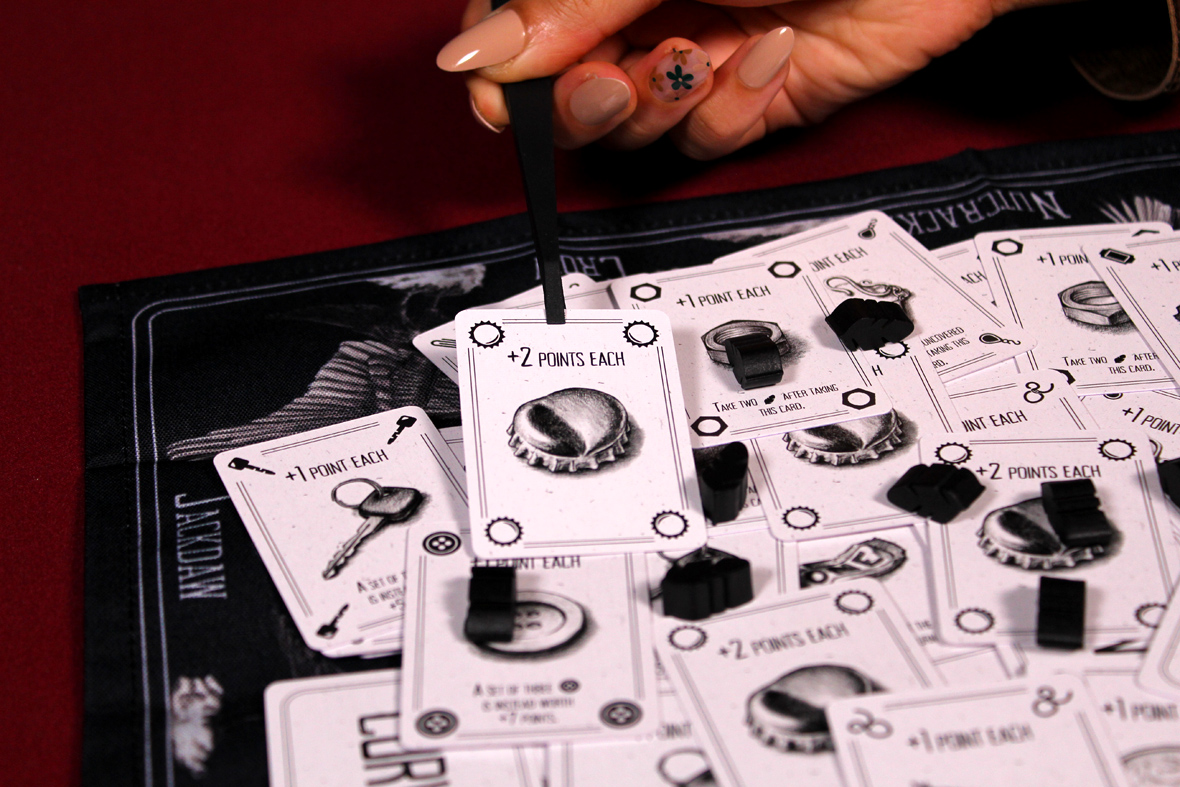
- You can guard your nest. Just flip cards back on top of your nest and then cover it with other stuff to make your stuff more safe. That said, anyone at any time can flip and clear your nest on their turn
- I usually flip a bunch of cards at once and figure it out from there. Sometimes that splay can be distracting on purpose, otherwise it’s a good way to see what’s on the backside. It also can throw off a ton of other people’s plans for the cards that they want to take. All in all, a good thing to do.
- Sets are a pretty good way to score points, but you run the risk of a particularly scrupulous opponent stealing cards and breaking them up. Some sets are worth more than the sum of their parts! Check card abilities to see what the possible sets you can make are, and then try to score big off of those!
- Face-down cards are a good way to bluff; you can just threaten to have the card that blocks stealing to keep opponents away from you. Sometimes that works! I’ve done this before and while it generally sucks, it’s pretty useful. If someone is relatively new to playing they might take you seriously, but they should do so at their own peril. You might have anything in here, like a pen or something.
- Lean into the preferred things that your corvid wants to get. They’re free extra points! You should, generally, always pursue free extra points if you’re not sure what else you should be doing.
- You do want to have enough feathers to do theft, even if you don’t want to steal. It’s kind of a nuclear deterrent. It’s a nuclear deterrent in the sense that it doesn’t really work and just invites stockpiling aggression from your rivals, but the implicit geopolitics of Corvids might be out of scope for this review. Either way, having the ability to steal and choosing not to exercise it might win you loose allies (or at least get them to rob someone who can’t rob them back). It also might not! Depends on your players.
- If you’re significantly in the lead, consider orphaning cards to speed up the game. The cards you take give you points, yes, but the cards that aren’t touching anything else get removed from play, which hastens the end of the game. You can use that to your advantage if you have a healthy lead! It’s harder to do in the beginning of the game, though.
Pros, Mehs, and Cons
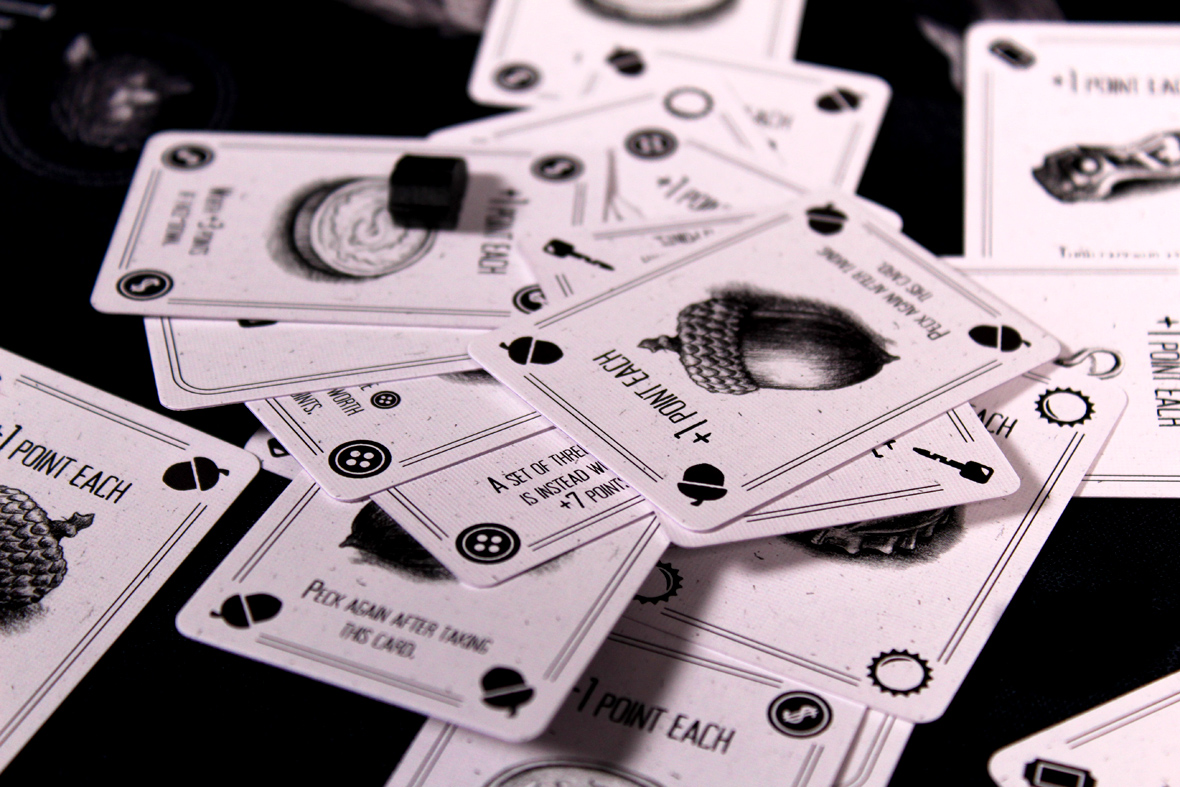
Pros
- You really do need to play with the tweezers. I think it makes the game more fun! You can play with your hands, but the tweezers are right there for your use and it’s so much sillier than using your hands. Naturally, if you have any dexterity or mobility challenges, do whatever you need to do.
- I appreciate that the game specifically encourages cawing at players who do something you don’t like. That kind of metagame interaction makes the game more fun and more memorable, and it’s goofy. I love goofy stuff in games.
- I like this box size! It’s compact and portable. This is a great
- I like the general mess of how the cards are laid out and organized. It makes the game easy to set up while still looking kind of put-together. Plus, having a rule where they need to be placed nice violates the whole ethos of the game. We’re birds! We don’t really understand aesthetics.
- Uncovering a player’s nest making them vulnerable is clever. I like it! It usually happens randomly since it’s hard to know which player belongs to which nest, but once it happens the game kind of shifts its nature towards being a little more aggressive now that you can steal from each other.
- I think a lot of people like crows? This seems like it’s for them. There are a lot of people who really like crows and ravens, I guess? I didn’t see much of them growing up so I’m kind of neutral on them now.
- It’s kind of amusing that you can just lose the rest of your turn to throw a ton of cards out of the game. I wouldn’t, personally, but I’d respect you if you did. Doing that can sometimes be useful if you’re pretty far in the lead and you don’t want anyone catching up, but it’s still pretty rude.
- Aesthetically, the game is fantastic. I like the monochrome vibes. It’s a great art style for corvids generally speaking! I like how it pairs with the red of the tabletop.
- The game doesn’t overstay its welcome; it moves at a good pace. It’s a quick game with short turns. That’s great!
Mehs
- While I appreciate the portability, the game is fairly small-scale. I’m a big guy! Tiny cards are generally the bane of my existence.
- I thought I would dislike the memory element of knowing what’s on the other side of a card but I largely don’t mind it. I think it’s kind of amusing to flip over a card and be like, “oh; that’s useless”. I’ve done it several times and by God, I’ll do it again.
Cons
- The element of dogpiling where every player steals from you in particular can be frustrating.
- Similarly, it’s kind of a bummer if your opponent is just robbing you blind but you can’t find their nest or keep it uncovered. This can happen a bit in two-player games as well: you get your nest uncovered and then the next turn, you cover it back up. On your opponent’s turn, they can uncover it again and they can consequently steal from you right after doing that. This cycle never explicitly has to end.
Overall: 8 / 10
Overall, I think Corvids is a lot of fun! A lot of it is that the DVC design ethos just agrees with me, to some degree, from the box size to the rules explanations to just being encouraged to caw angrily at players who do things you don’t like. Is it truly necessary? No, but it creates an environment where silly and funny things can happen spontaneously. Maybe someone’s caw is aggressive enough that you steal from someone else next time. Is that great strategy? No! But games are supposed to be fun. On the subject of fun, I do worry that dogpiling is always going to be a slight issue, here. If you can steal from other players, you can coordinate with your opponents to always browbeat the player in the lead. Just, keep in mind that there always needs to be a player in the lead, so try not to play too aggressively lest you become the victim of your own machinations. At its core, though, Corvids is some kind of dexterity game, and I love almost all dexterity games. You’re flipping cards with tweezers pretending to be birds. It’s extremely silly and very fun. If you’re looking for a quick dexterity game, you’re one of those people who tries to make friends with crows, or you just want to play with tweezers, Corvids might be right up your alley! I’ve enjoyed it.
If you enjoyed this review and would like to support What’s Eric Playing? in the future, please check out my Patreon. Thanks for reading!
 What's Eric Playing?