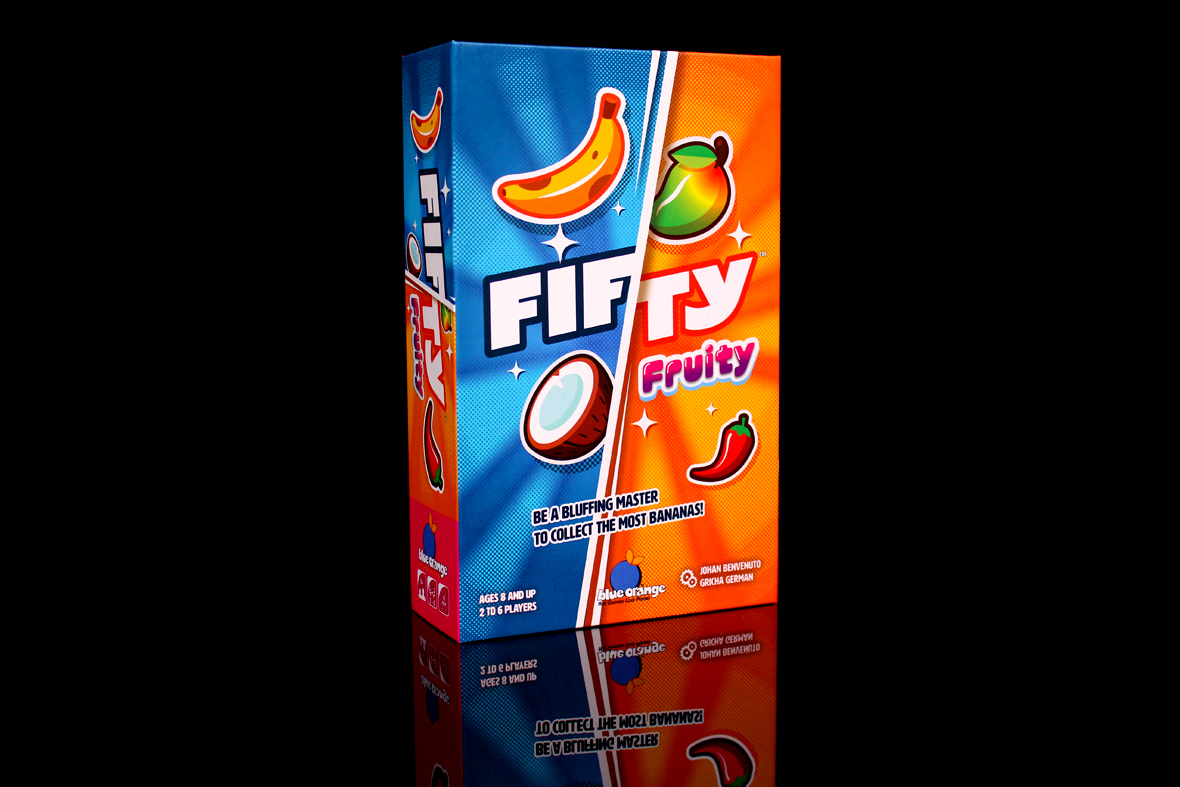
Base price: $18.
2 – 6 players.
Play time: ~10 minutes.
BGG Link
Buy on Amazon (via What’s Eric Playing?)
Logged plays: 2
Full disclosure: A review copy of Fifty Fruity was provided by Blue Orange Games.
I’m ahead of the curve on Pacific Time, at least, but I’ve been at PAX Unplugged all weekend so I’ve been pretty busy with all of that. Lots to do, lots to see. It was a great show, as always, this year, but I’ll be happier to return to the standard time next year (it was Weirdly Warm, this time around). Current highlights were the PostCurious and Button Shy booths, but I’m most excited to see what these new Oink Games titles are going to play like. Keep an eye out and more on that later. There’s also Innovation: Ultimate, which is going to be lit. In the meantime, though, let’s check out some lighter fare: Fifty Fruity, from Blue Orange Games!
In Fifty Fruity, your goal is simple: go bananas! Or go for bananas, I suppose, if you want to get technical about it. However, the person offering you bananas is inherently untrustworthy, and you have no idea if they’re actually giving you what they’re saying. You can often repay the favor in kind with your own banana-related bluffs and lies on your turn, but the player with the most bananas at the end will win! Can you keep the best cards for yourself?
Contents
Setup
It’s not too bad. The cards have player counts on some of them; set aside any cards that are for a higher player count than yours.
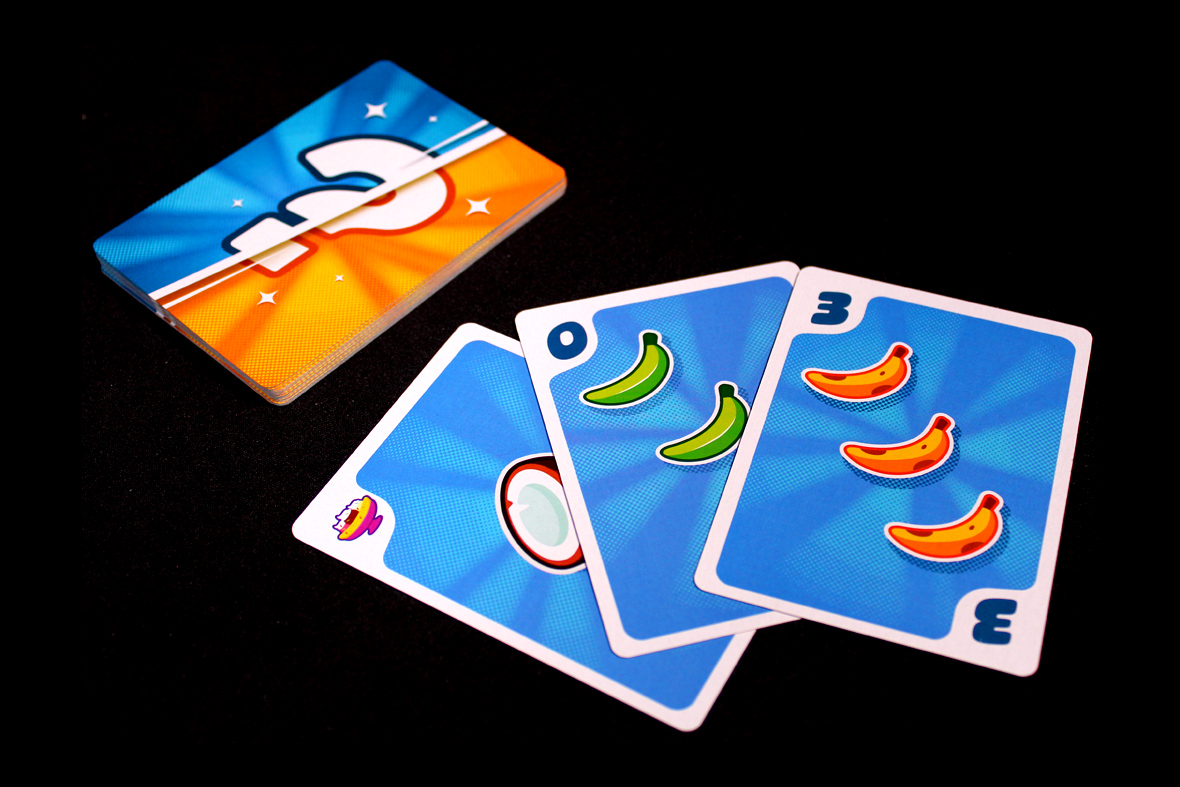
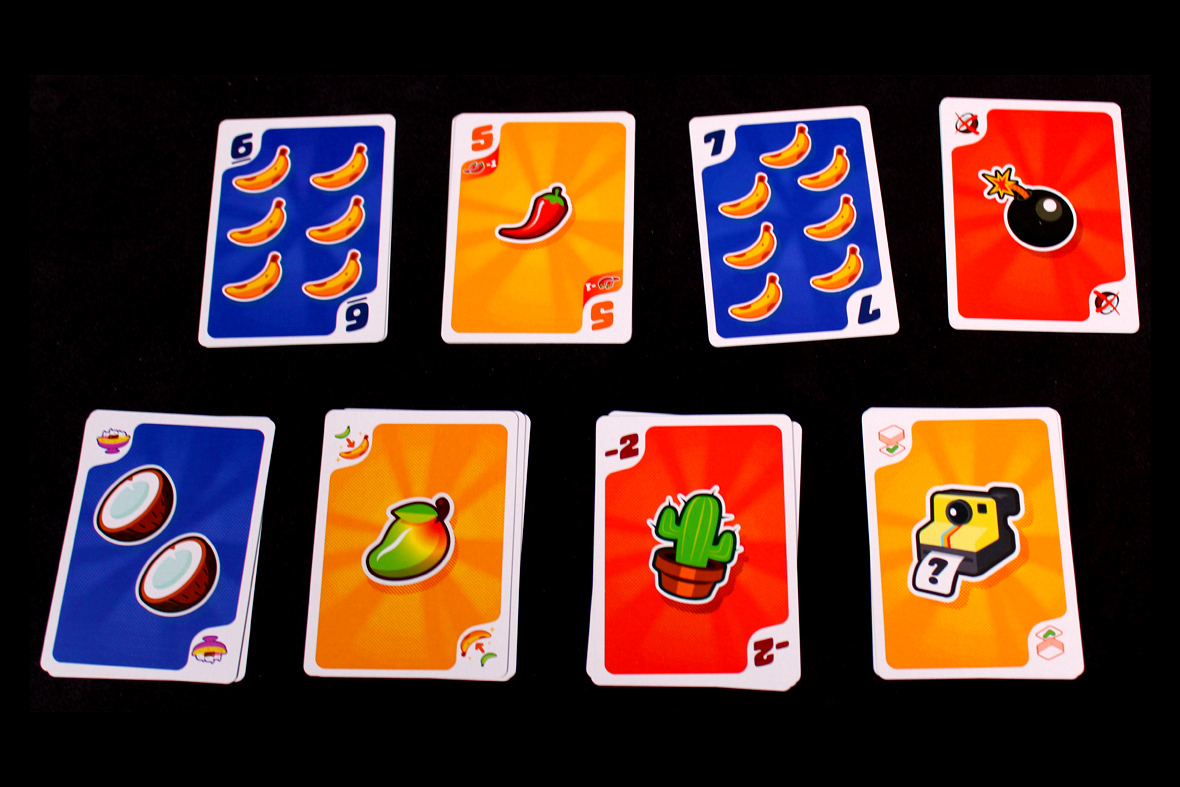
You can shuffle them, or, if you’re playing with the Advanced Rules, you can have each player chooe two Bonus Cards to add and then shuffle the deck:
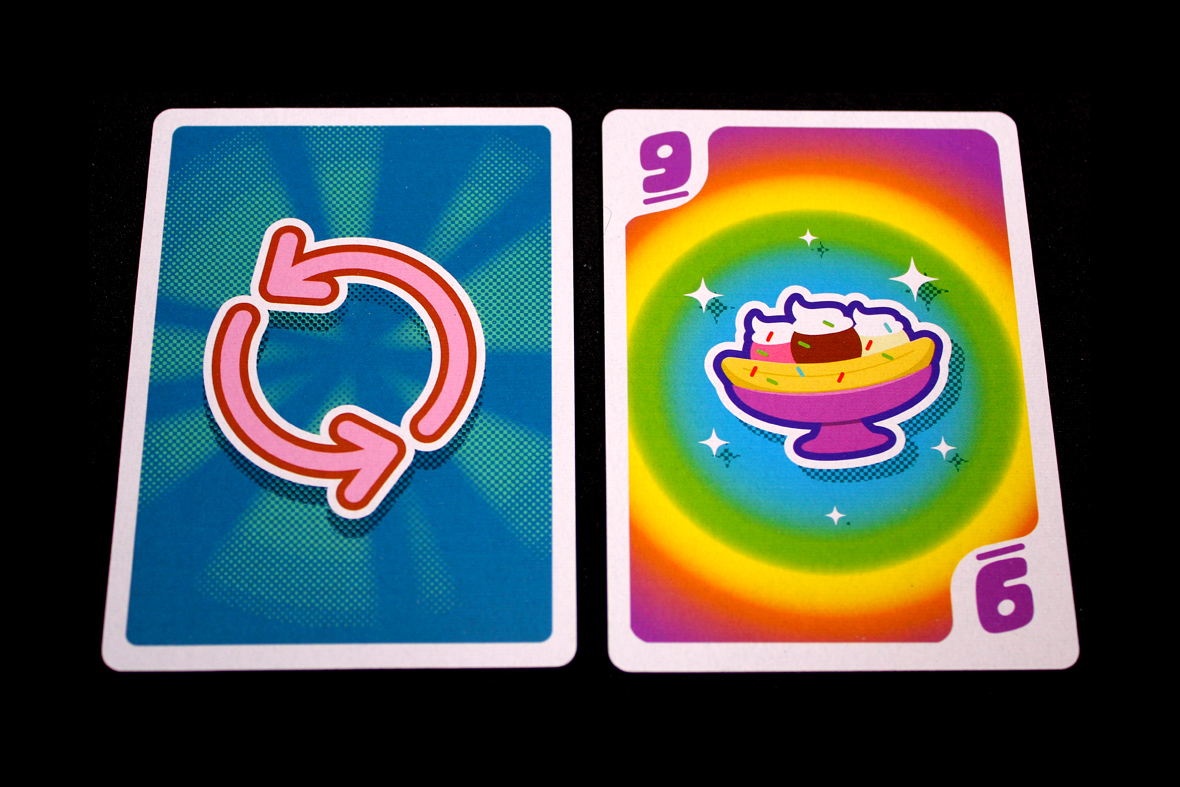
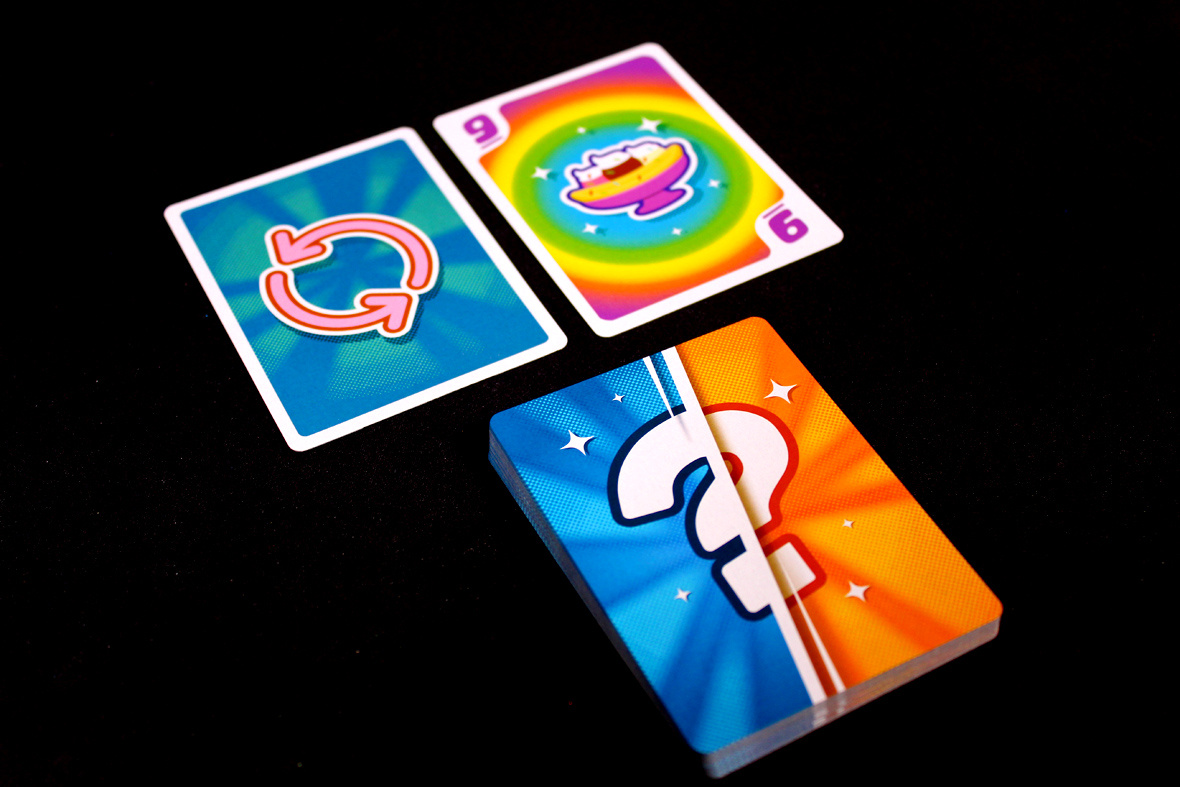
Place the Banana Split Card and the Turn Direction Card in the center of the play area; the Turn Direction Card can be on either side.
You’re good to start!
Gameplay
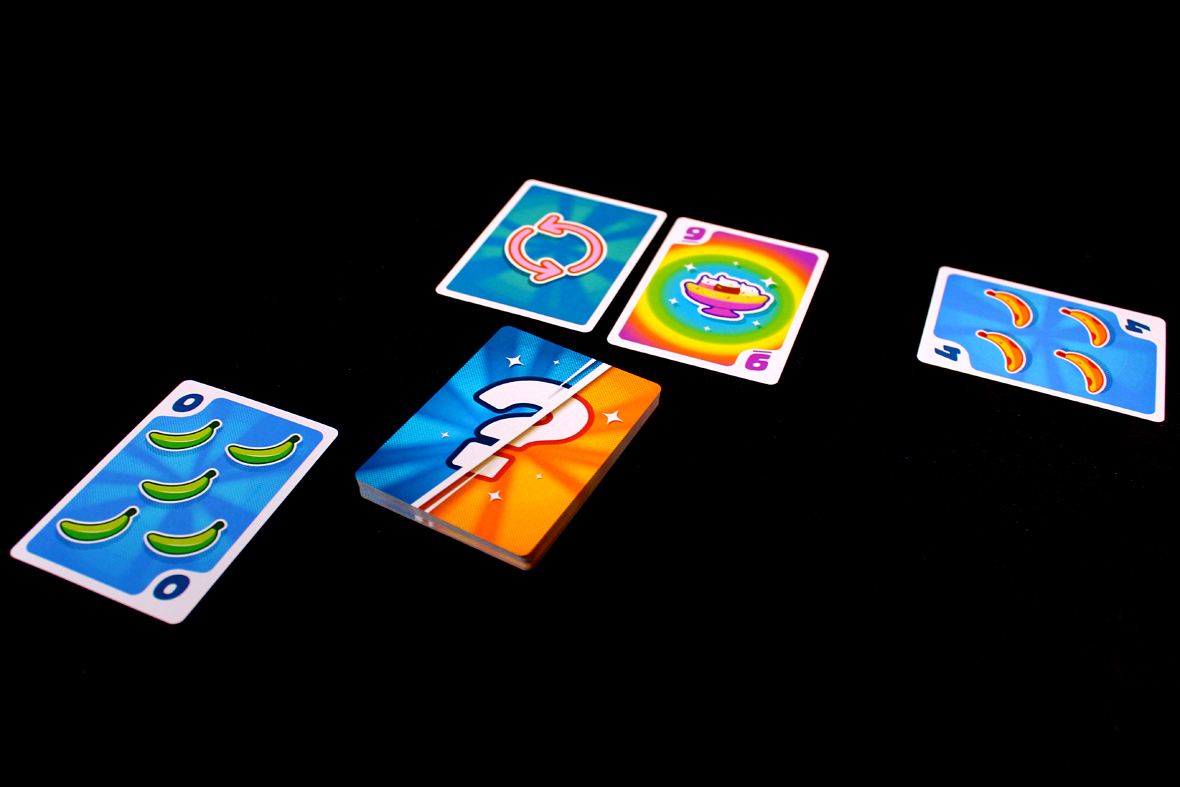
Quick and simple. Each turn, you draw two cards. Then, look at the Turn Direction Card. Facing the player on your left or right (based on what it says), you offer them the two cards. They are not allowed to look at them yet; you must tell them what’s on the card! Do you have to tell the truth? Halfway. You must always speak truthfully about one of the cards; for the other, you can tell the truth or you can lie. Your opponent then picks one to keep and leaves the other one for you. Add both cards to your score piles.
Play continues until the score pile is empty! Then, score. Yellow banans count their points, but green bananas do not. The player with the most coconuts gets the 9-point Banana Split card, too! The player with the most points after three rounds wins!
For additional chaos, add in the Bonus Cards! They add new effects, new penalties, and new words that are almost impossible for me to reliably spell correctly this late at night.
Player Count Differences
Not a ton, since you really only deal with the player on your left or your right depending on how the turn rotation card is facing. With more players, there’s a few extra cards added, but you’re still going to see overall lower scores because there are just more players getting cards. With two, the game becomes surprisingly entertaining and intense because you know what they have and what they want and you’re going to be bluffing at or around each other the entire game. With six, you’re still mostly focusing on your two neighbors. If the player across from you is playing a perfect game, there’s not much you can do about it. You just gotta hope that their neighbors start bluffing better. I’m a sucker for a two-player bluffing game, so two is my preference here, but Fifty Fruity can be fun with more as well.
Strategy
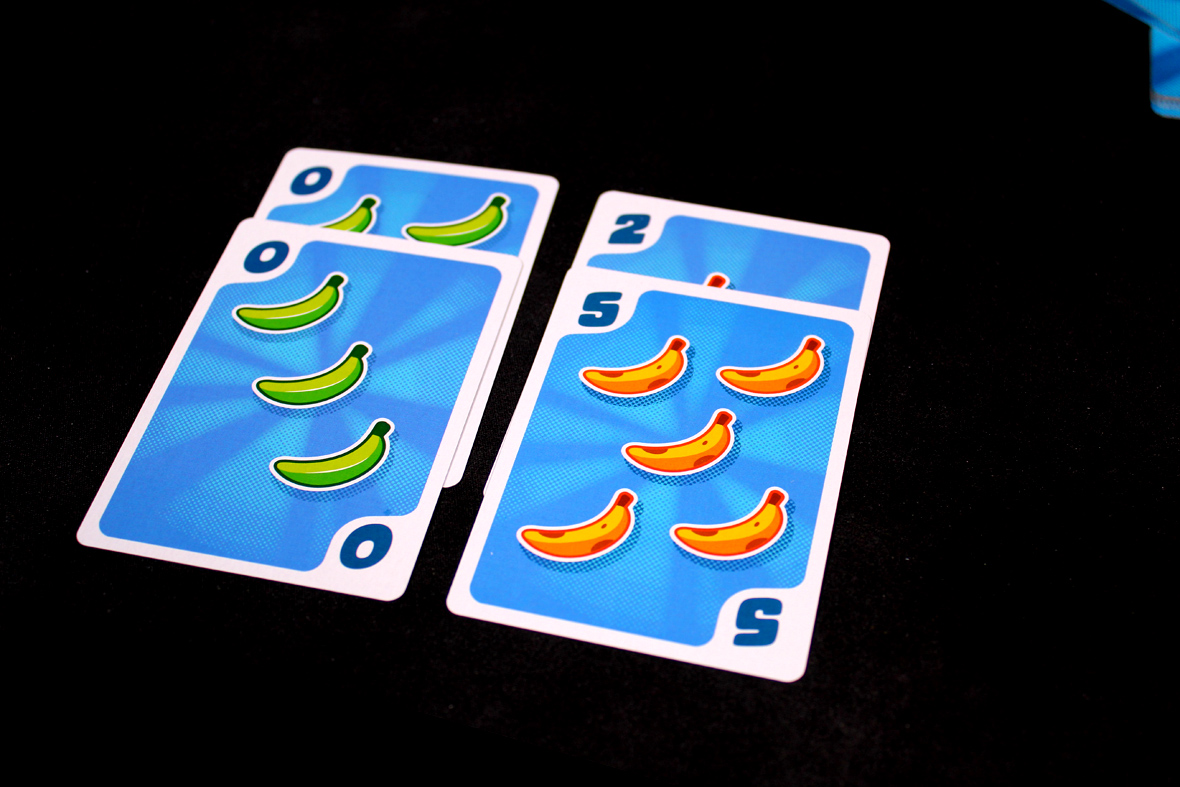
- One of my favorite bluffs is to say that the two cards I’m holding are the same. Obviously, that can’t be true (in the rules, explicitly, if both cards are exactly the same you must lie about one of them) but it makes the lie fun and easy.
- Try to see if your opponent has a tell! They might tend to bluff their left card or they might always just change the color of the bananas, not their value, or they might have no tell at all. If you can figure it out, though, that certainly gives you an edge.
- If you’re not sure, try to determine their tell through trial and error, I suppose? I tend to just make up random lies off of the top of my head and randomly alternate that with telling the truth just to mess with someone. Makes my tell a bit more scattered. You may not get a lot of information from your opponent on when they’re bluffing, but maybe you can lock in a bit more after a few games.
- Try to mix up your bluffing style to make it harder for your opponent to do the same. You figuring out your opponent’s tell is good! Them figuring out yours is bad! So, if you’re not sure what else to do, just try to behave unpredictably. Sow doubt. You know, normal stuff.
- The extra cards can be a lot of fun, especially if you pick nasty ones like the bombs that explode coconuts or the strictly-negative cacti. Choosing which two cards you’re forcing into the game is its own art form, in my opinion. Some reward bigger risks and some force you to (usually) bluff. It’s got a lot in common with Cake Duel, to be honest, which is almost certainly why I enjoy it.
- Obviously the goal is to get your opponent to take bad cards. Or, at least, less good cards. You want to win every interaction, so try to do what you can to convince them to make bad choices!
- Don’t forget about coconuts! A coconut or two can often be what you need to land that banana split card, which is a (huge) 9 points! In a two-player game, getting it over your opponent can be a major points swing, so keep an eye on that.
Pros, Mehs, and Cons
Pros
- I love a quick bluff. Fast bluffs are more fun for me than, say, long-form social-deduction games. I struggle with maintaining the complexities of an intricate lie for an hour, but I’ll happily tell you I invented cars in a five-second span and think nothing of it ever again.
- The Blue Orange box size is really neat; it works perfectly with some shelves that I have. The IKEA BESTA is still one of the better shelves for small-box games and this works perfectly with those. Another shout-out to Suzanne for showing me them in the first place; they’re great.
- The bright colors of the game are really inviting as well! I like how energetic the game is, especially since it’s so active (with regards to bluffing).
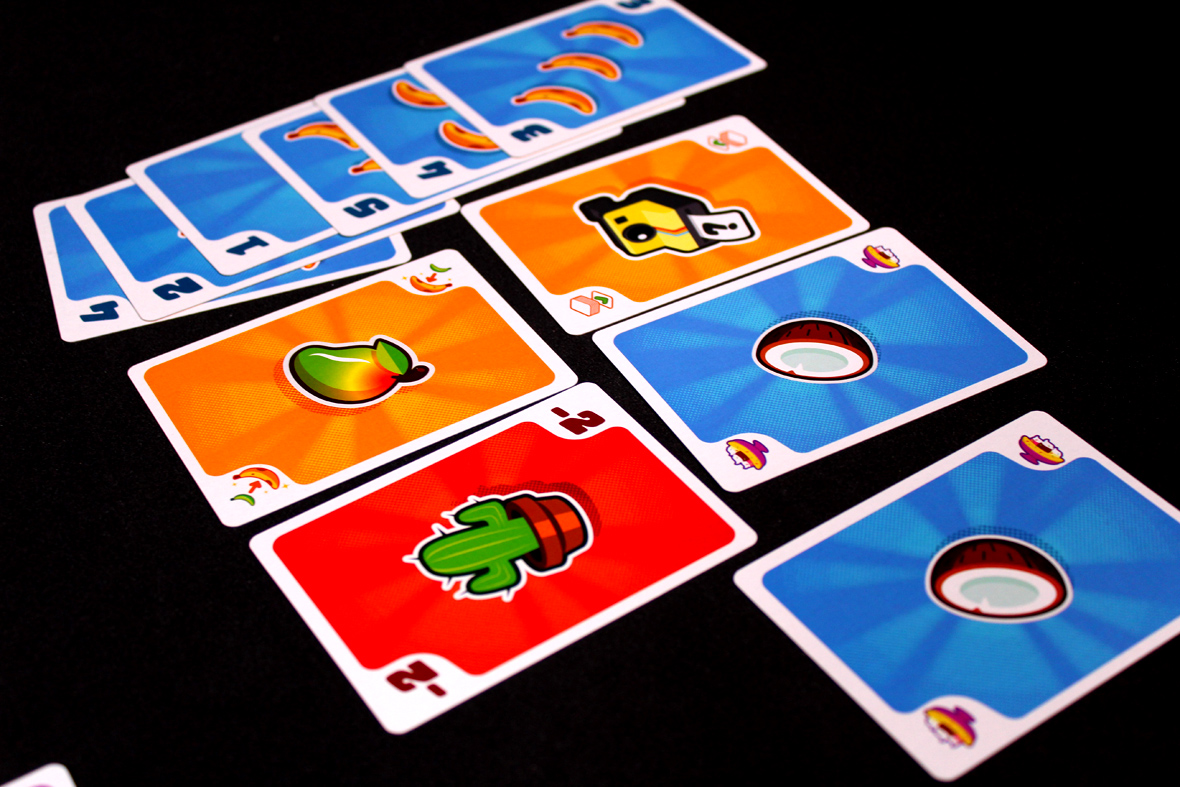
- I like how messy some of the extra cards can get. It really spices up the game. They’re mean and complicated and fun! You can use a mango to ripen a green banana card of your choice and turn it into points or use a camera to duplicate the leftover card or just lose points because you ate too many spicy peppers. It’s all over the place.
- There are so many mind games you can play. Quick bluffing games give you a lot of options straight out of the gate, though this has some fair restrictions. Unlike other bluffing games, bluffing a card that doesn’t exist (-1 bananas, for instance) isn’t a great idea, but you can try mixing things up to confuse your opponent as much as humanly possible.
- Plays very quickly. Yeah, this is a fast one. You’re always drawing two cards and getting one and giving the other, so things move pretty quickly turn-to-turn and for the game overall.
- Low-complexity bluffing games are also just a really fun category for the whole family. Getting hustled by a child who lies directly to your face is deeply, personally wounding, but it’s also pretty funny if it happens to someone else. Just don’t sit next to younger players if you want to finish the game with your dignity intact.
Mehs
- I’m actually fairly amused by how basically none of the actual card effects have any logical backing behind them. Do mangoes help bananas ripen? I have legitimately no idea. Why do bombs only explode coconuts? These are questions that will emerge as you play the game, and lamentations, I have no answers for you.
Cons
- I’m surprised there’s no player aid or “one truth, one lie” reminder; that’s often forgotten when we play. A couple pieces of player reminders would go a long way. DVC often prints common rules on the inside of the box to incentivize having it open and make it easier to do quick reference; Blue Orange might do well to look into doing the same.
Overall: 7.75 / 10
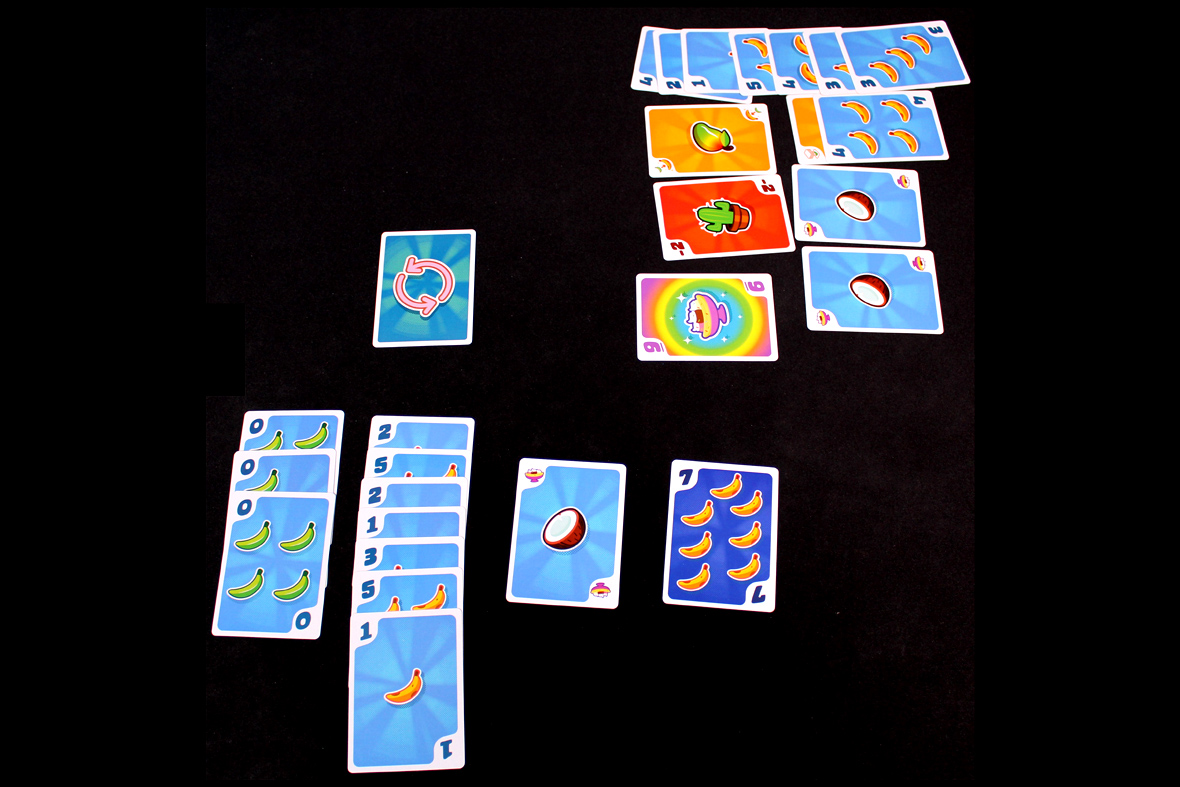
Overall, I like Fifty Fruity! I keep accidentally calling it Fruity Fifty when I’m typing, but that’s on me, to some degree. I think part of it is that the core of the game is just a lot of fun. You just have two cards and you get to make your opponent guess which one is good. Sometimes they’re both good! Sometimes they’re both bad and your opponent is trying to trick you. Having to figure out both if someone is lying and why someone is lying is a lot of fun, While this loses the delightful sheep art of Cake Duel and isn’t my favorite themes in the world (…fruit?), it’s clear that someone wanted to make a quick and fun bluffing game for the whole family, and I’m into that. Getting hustled in a bluffing game as a huge fan of the genre is always fun, to boot. Blue Orange has been using this box style and line for quick and clever games that tend to play quickly, both I imagine to keep costs low and to keep growing the hobby. I’m all for that! If you’re looking to do some bluffing, you like fruit-themed games, or you just want to lie about Coconuts, there’s a lot to like about Fifty Fruity! I’m looking forward to playing it again.
If you enjoyed this review and would like to support What’s Eric Playing? in the future, please check out my Patreon. Thanks for reading!
 What's Eric Playing?