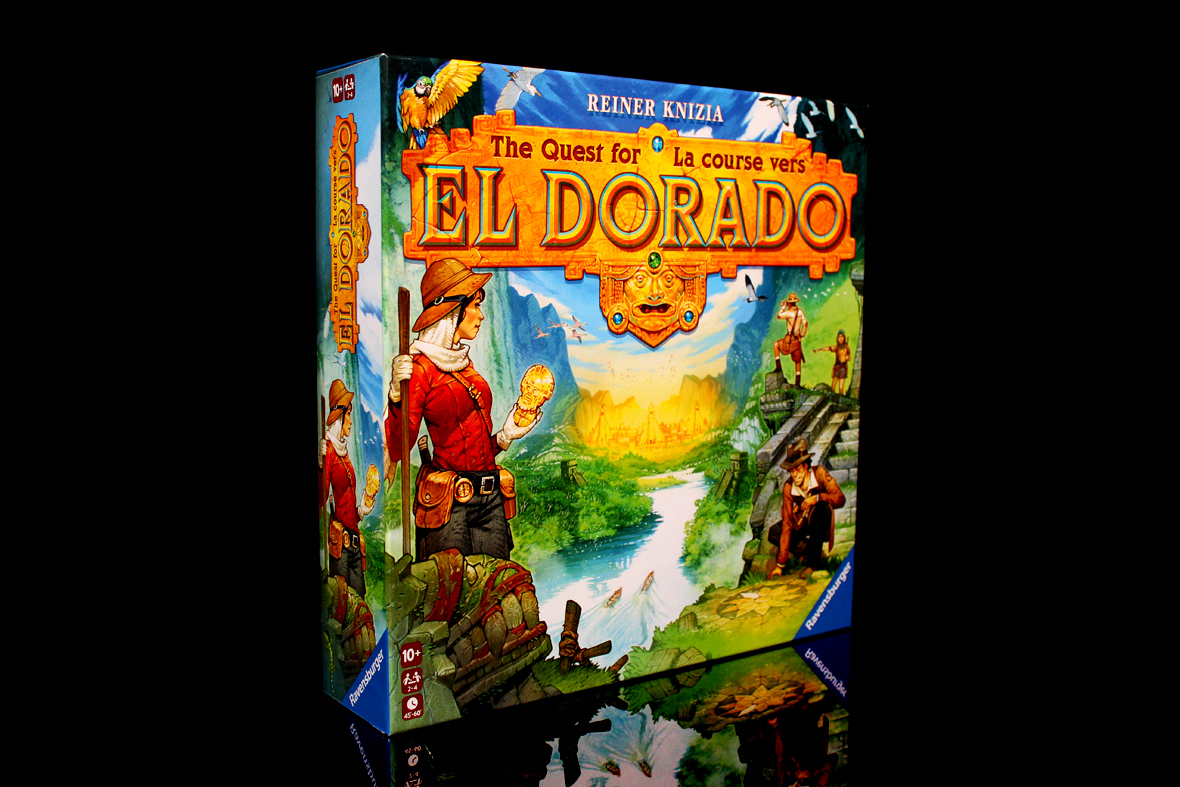
Base price: $40.
2 – 4 players.
Play time: 30 – 60 minutes.
BGG Link
Buy on Amazon (via What’s Eric Playing?)
Logged plays: 6
Full disclosure: A review copy of The Quest for El Dorado was provided by Ravensburger.
It’s almost the end of the year. so sometimes you have to go back to the hits. I’m occasionally bummed that the review cycle is such that I don’t often get to revisit games that I love, but occasionally they get a new edition or a major revamp or an expansion that completely justifies my circling back. The Quest for El Dorado is an all-time favorite of mine, so, it’s definitely one that I was excited to get to replay. Plus, with time, my writing style changes (and I think the quality improves), so it’s always good to see how things change with time as well. How do I describe games differently now? It’s useful to be occasionally thoughtful about process after a thousand reviews or so so that I don’t get overly complacent and such. But it’s worth thinking about! Either way, let’s dig into it and we can figure out what’s new.
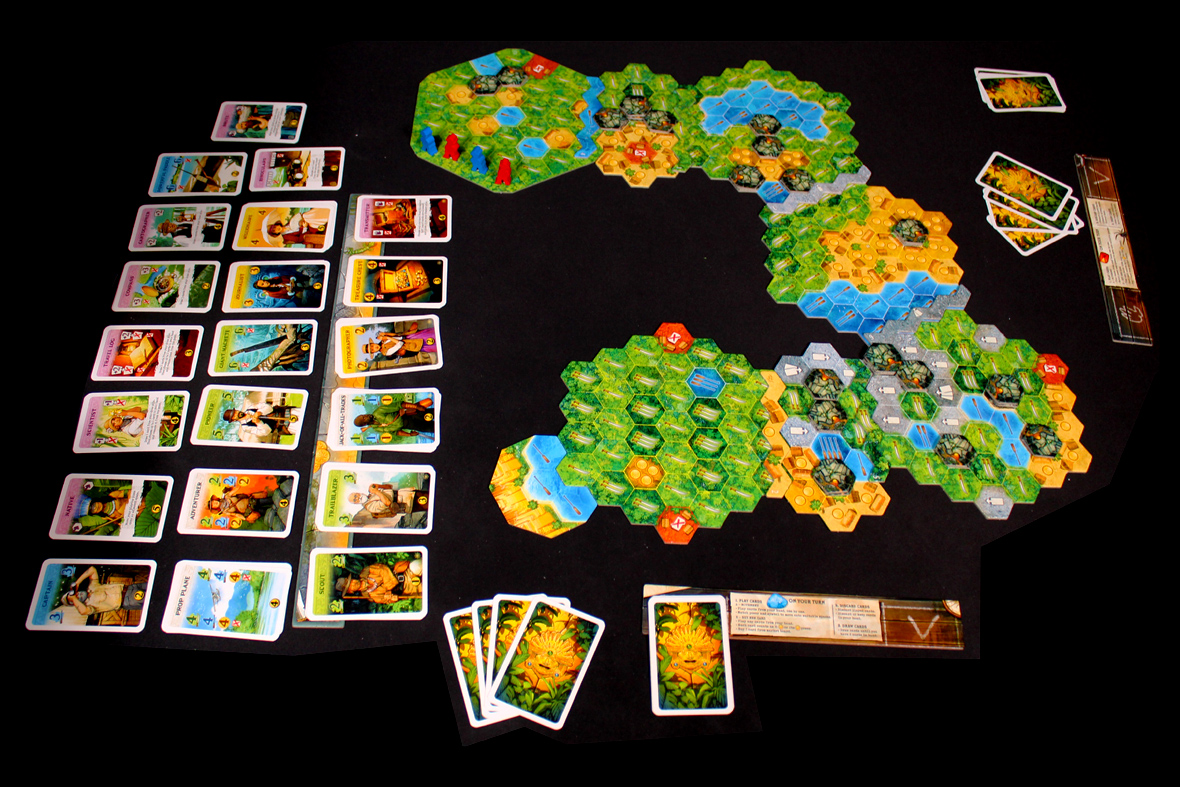
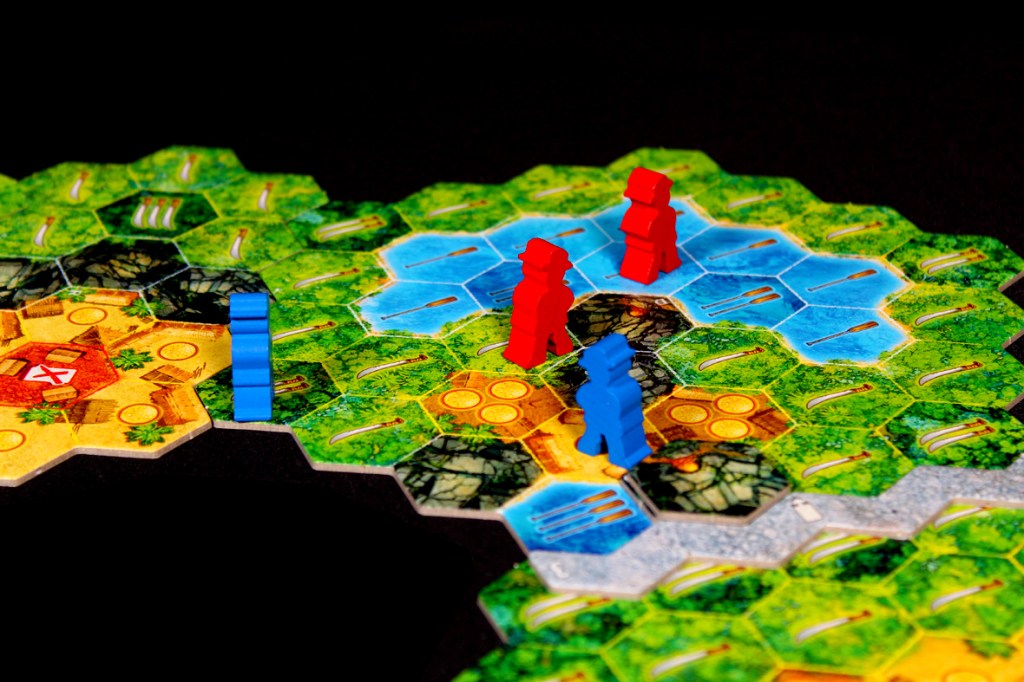
The Quest for El Dorado is a game of exploration, as players seek out the legendary golden city. Here, though, rather than a path or trail or some kind of paved road, there’s just endless jungle and, honestly, too many trees. That is, loosely, a jungle, by definition, but you have to hack your way through it. There are plenty of places where money will help, too, and you’ll likely need to get across a river or lake, so staying prepared is pretty useful. I’ve reviewed this one before, but here’s the basic idea of how it works: each turn, players play cards from their hand to advance along the way to El Dorado, moving through spaces that match the cards’s symbols. At the end of each turn, you can buy new cards to enhance your deck’s abilities, adding new tricks and items to help make your traversal easier. The problem is, everyone else wants to get to El Dorado first, so you also have to watch out for them! Opponents can buy the cards you want, block you, or just generally make your life harder. You’ll have to deal with them and the jungle if you want to find the City of Gold in time; will you be the first to the discovery?


Overall: 9.25 / 10
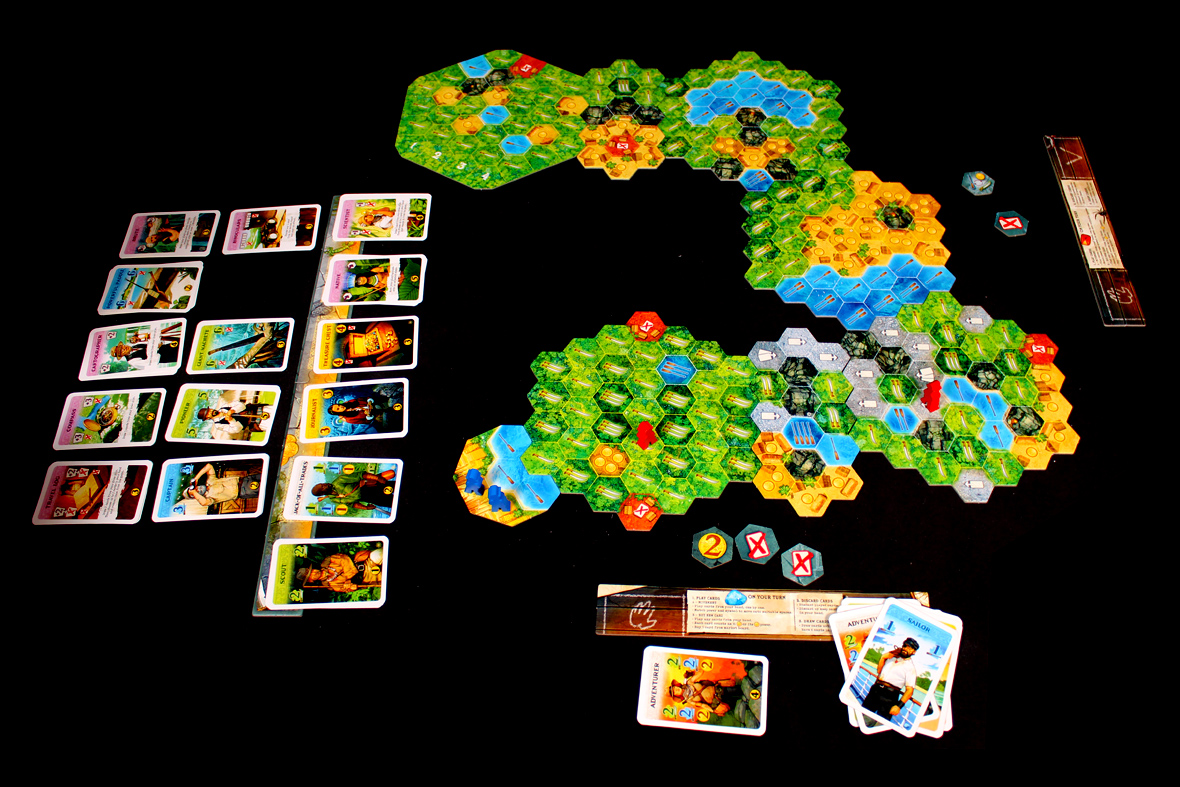
Overall, I love The Quest for El Dorado. Every time I play it, it’s consistently a delight. Here’s why. First off, it’s a smart design. It takes everything players love about deckbuilders and forces them to think a little less linearly. You’re not just going for points; you have a clear destination in mind. Everything you do needs to get you closer. That said, just because your destination is clear doesn’t mean your route is. The game demands flexibility and rewards it handsomely. Manage to have the right cards for the inside track? You’re suddenly a full tile ahead. Stuck always taking the long way around? Not good. Deckbuilders do not generally lend themselves to pivoting, but The Quest for El Dorado really forces players to think and learn and strategize. But it does so gently, as the game accelerates as players get their decks. Suddenly, instead of having three 1 Machete cards, you have a 5 Machete, a 6 Machete, and two 3s. That’s a huge difference if you draw those on one turn and it feels great as a player. The game is also impeccably designed, thanks to the modular boards. You can play very differently game-to-game. While I love Witch’s Cauldron, there’s a lot to be said for the simple or medium boards, and they even provide advice on how to make your own layouts! I need to look more into those.
Plus, there are things they’ve improved from the original that I’m also very excited about. I love the OG but the tiny cards were a blight. Here, they’re full-sized and easy to shuffle, and given the size of your ideal deck in this game, you’re going to be doing a lot of shuffling. That’s just how it goes sometimes. They’ve also augmented the game with fantastic art from Vincent Dutrait. When I first saw that getting an international release I was jealous. The game looks impeccable. It’s like when The Castles of Mad King Ludwig wised up and used the Polish Edition art for the tiles; it makes the game look different and elaborate and new. These are all good things, as Quest for El Dorado deserves to be an evergreen title that’s hitting the table over and over. An evergreen classic should look the part, and while I did like the original art, I will certainly say that this is a genuinely beautiful game, now. I also saw that the expansions got updated art internationally, so this is definitely a plea from me to bring those stateside, because the expansions are also a lot of fun.
Does the game have things I don’t like? Absolutely. Setup is still a chore, mostly because there are intricacies that are annoying to communicate to the players that there’s not really a good solution for, and that’s the orientation of tiles and how they join together during setup. You just kind of have to deal with that one; I have yet to figure out any better way and it’s clear that I’m in the same boat as the publisher. It’s annoying but not disqualifying, mostly because it’s quick to fix and then you get to get to one of my favorite games. It’s actually reminding me that I promised I would go back and update my Top 15, so that’s tonight’s task once I finish writing this up. In the meantime, though, if you’re looking for a genuinely excellent strategy game that plays with the idea of deckbuilding while still being approachable, you want another game with Vincent Dutrait’s incredible art to hit the table, or you just like the idea of slashing your way through the jungle to find El Dorado and do some non-colonizer-focused research that benefits the indigenous and local communities (which is what I assume the game is about), then I can’t recommend The Quest for El Dorado enough! I really think it’s a blast.
If you enjoyed this review and would like to support What’s Eric Playing? in the future, please check out my Patreon. Thanks for reading!
 What's Eric Playing?