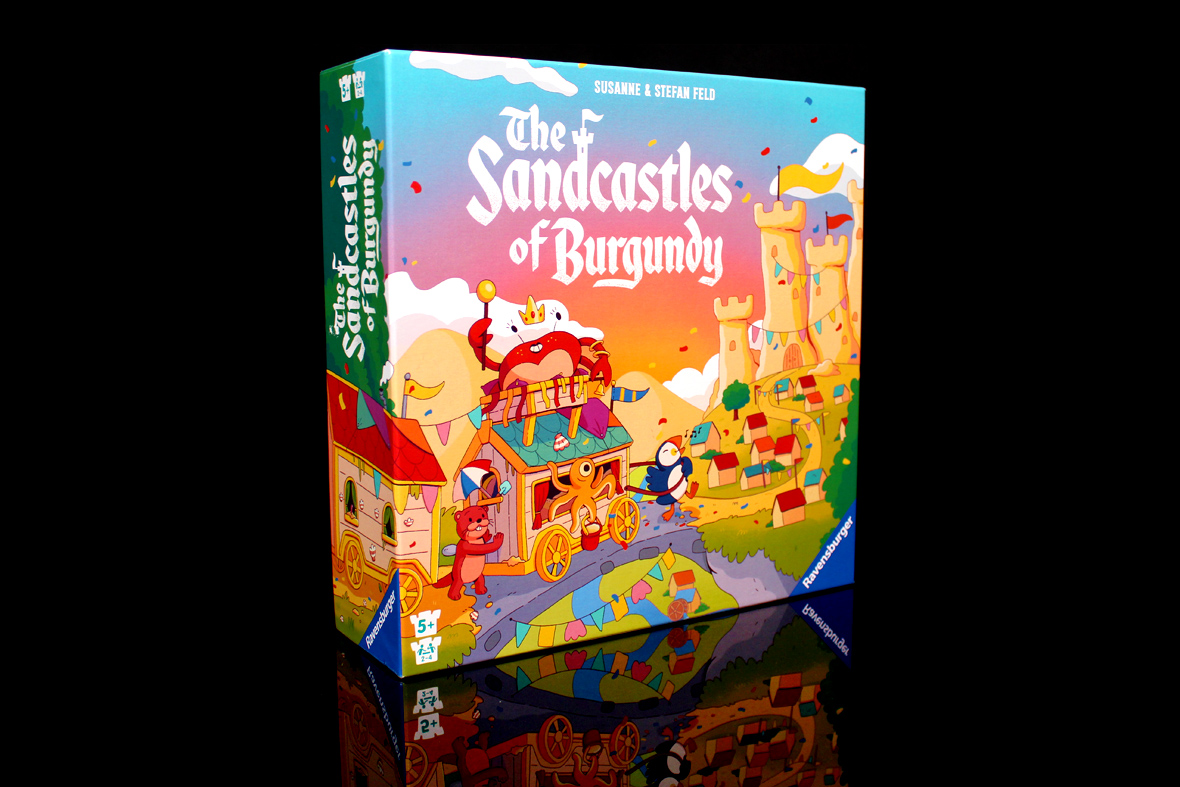
Base price: $30.
2 – 4 players.
Play time: 20 – 30 minutes.
BGG Link
Buy on Amazon (via What’s Eric Playing?)
Logged plays: 2
Full disclosure: A review copy of The Sandcastles of Burgundy was provided by Ravensburger.
OrcaCon was this weekend! I’ve lately been trying to balance my con schedule with being able to review games, which sometimes leads to me awkwardly typing away on a game review at a con, like I’m currently doing. I like the background noise and sometimes I need to take a mental break between games, and offloading some of my brain into a review helps me focus back up for the next one. Or I might go home and sleep; it’s anyone’s game. In the meantime, though, I wanted to go back and review at least one of the games I went in-depth on today, and that was The Sandcastles of Burgundy! A friend of mine is a big fan of the original Castles of Burgundy, so I wanted to see how the kid-friendly version shaped up.
In The Sandcastles of Burgundy, players take on the role of animals prepping to welcome the glorious Queen Crab to Burgundy. Thankfully, you don’t have to deal with farms or workhouses or shipping like those other guys in their other castles; you just need to decorate your stalls so that you can host a big beach party for her! She loves the beach; it’s not just us doing Crab Essentialism. Over the course of several turns, check the sandcastles for decorations that you can scavenge or bring them back to your village and potentially attract animals from the Royal Guild to add to the celebration. Can you throw the best possible beach party?
Contents
Setup
If you’re not playing with the more advanced mode, you can set aside the crowns and special power tiles. Either way, set up the main board:

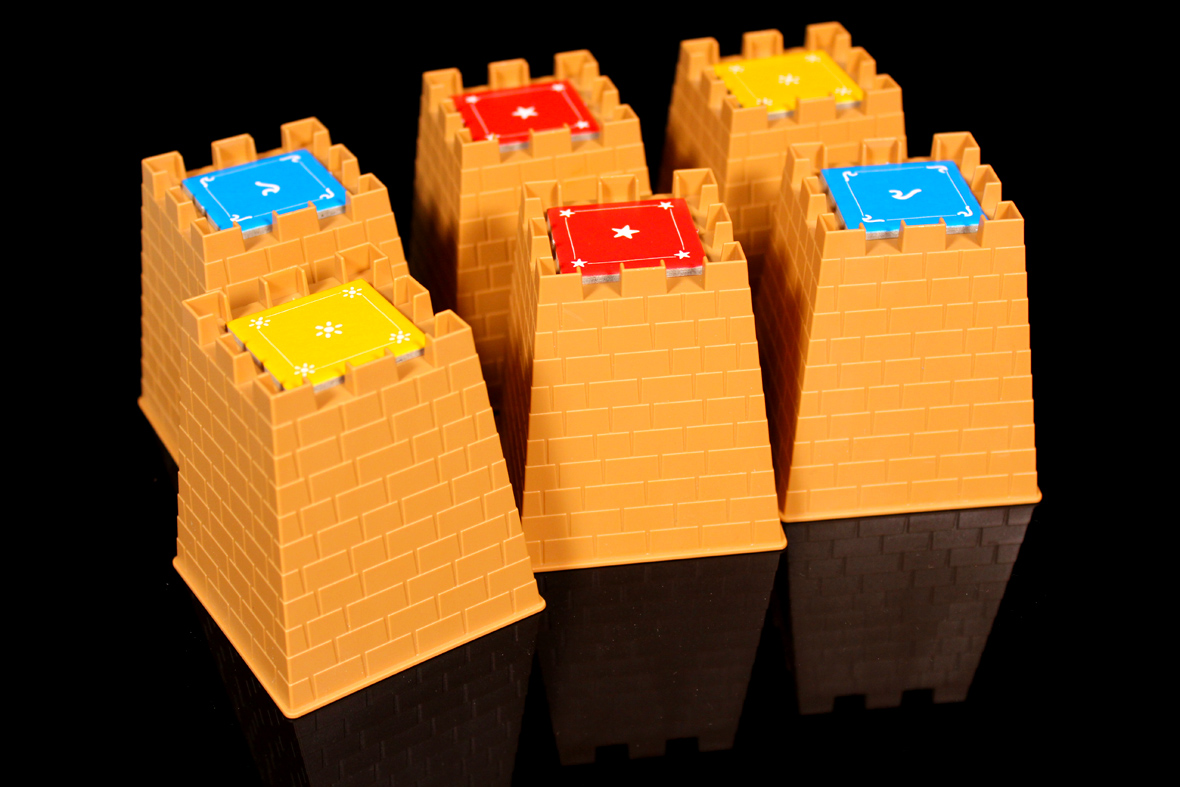
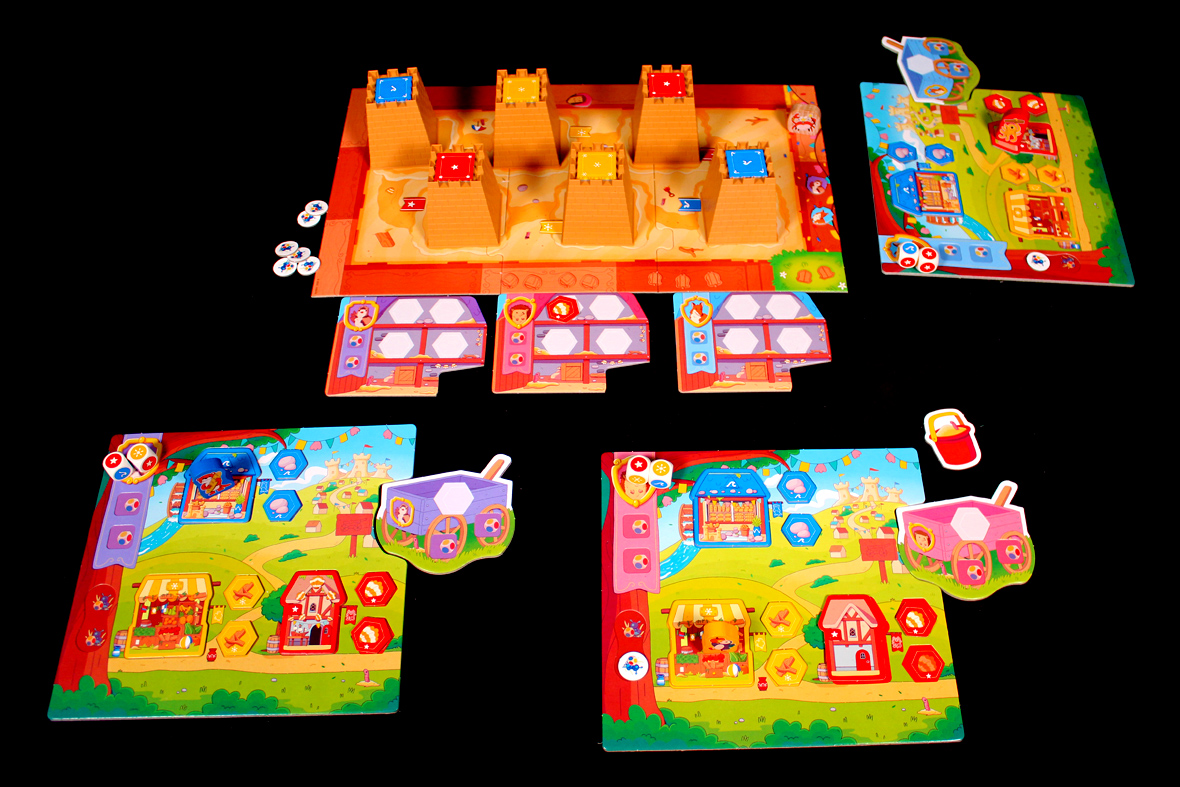
Add the sandcastles to the spaces corresponding to their color. You may need to stick the tiles to the top of the sandcastles, first.
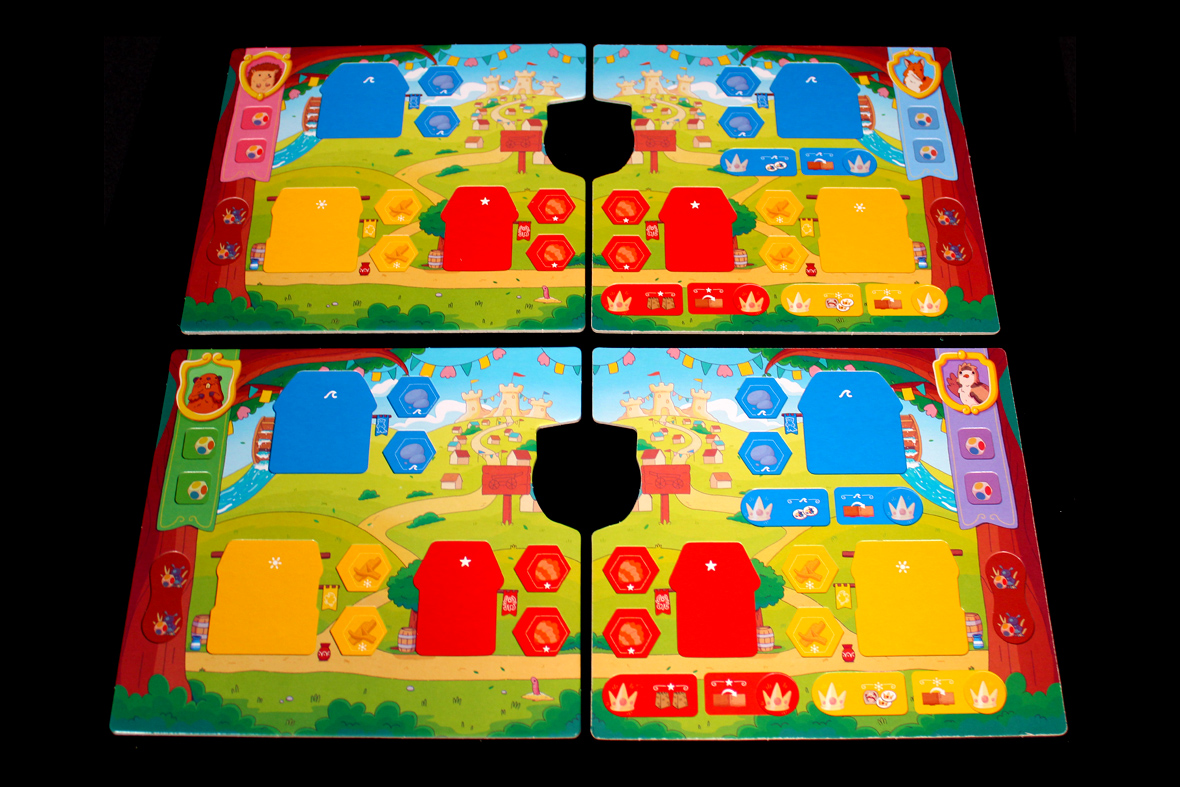
Have each player choose a coat of arms (Beaver / Hedgehog / Fox / Very Tired Bird) and give them a board, wagon, and storehouse:
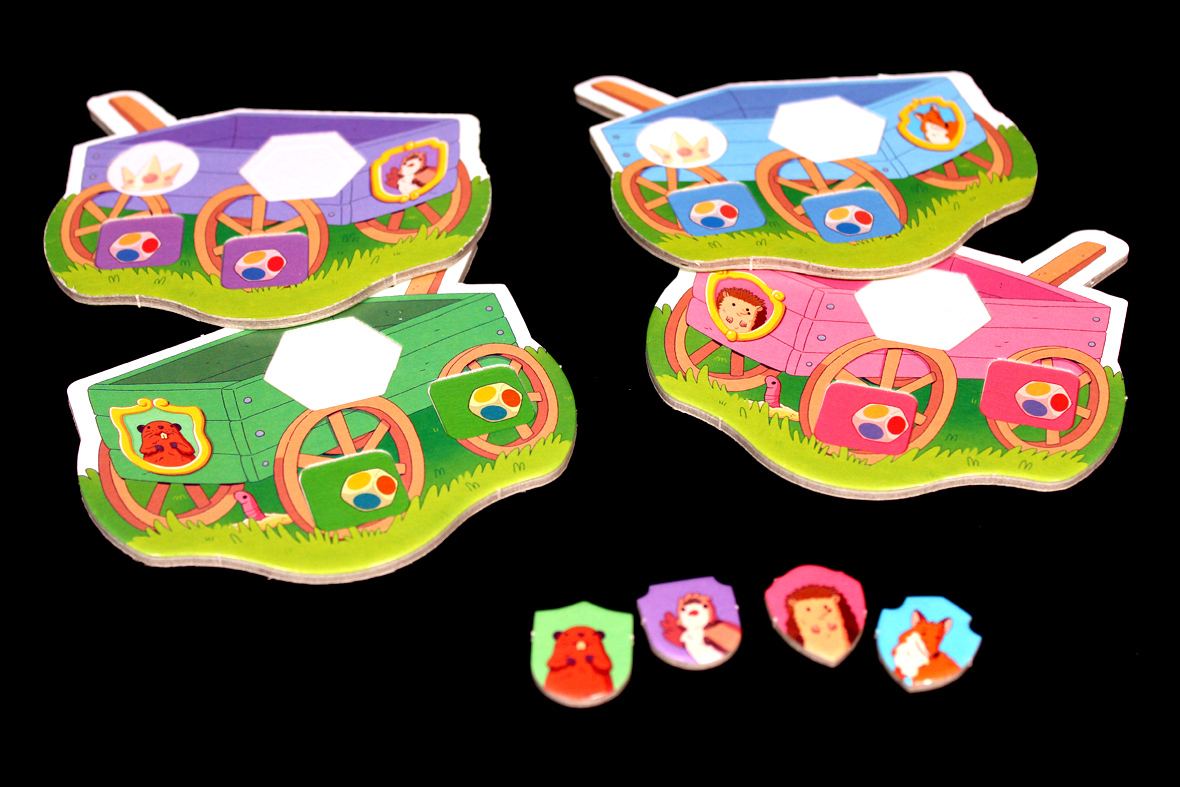
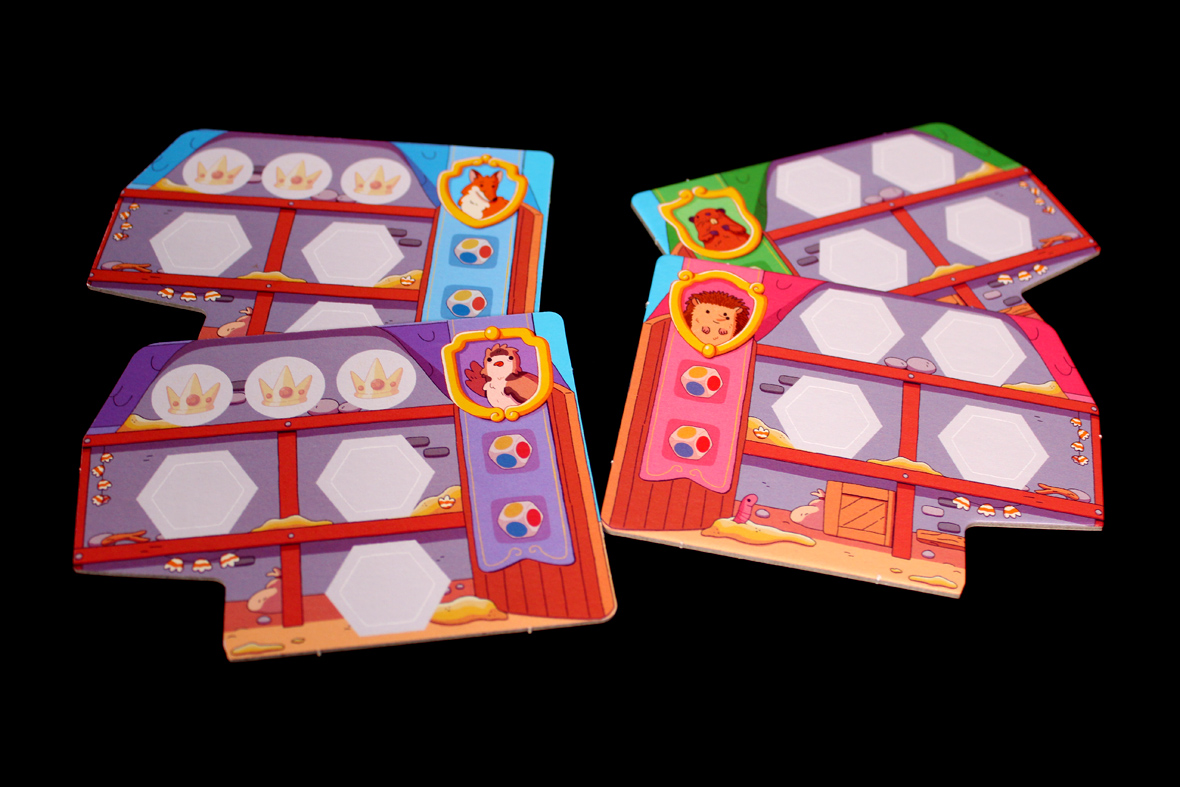
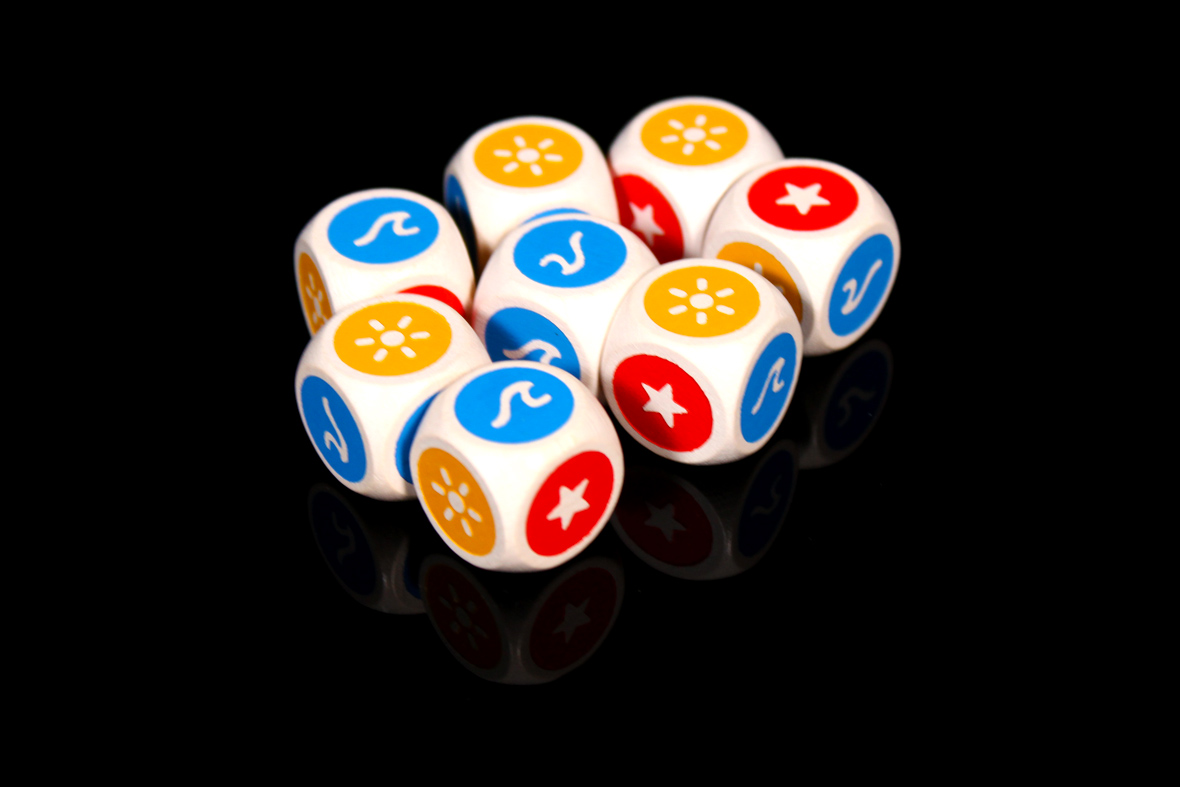
They’ll also get two dice:
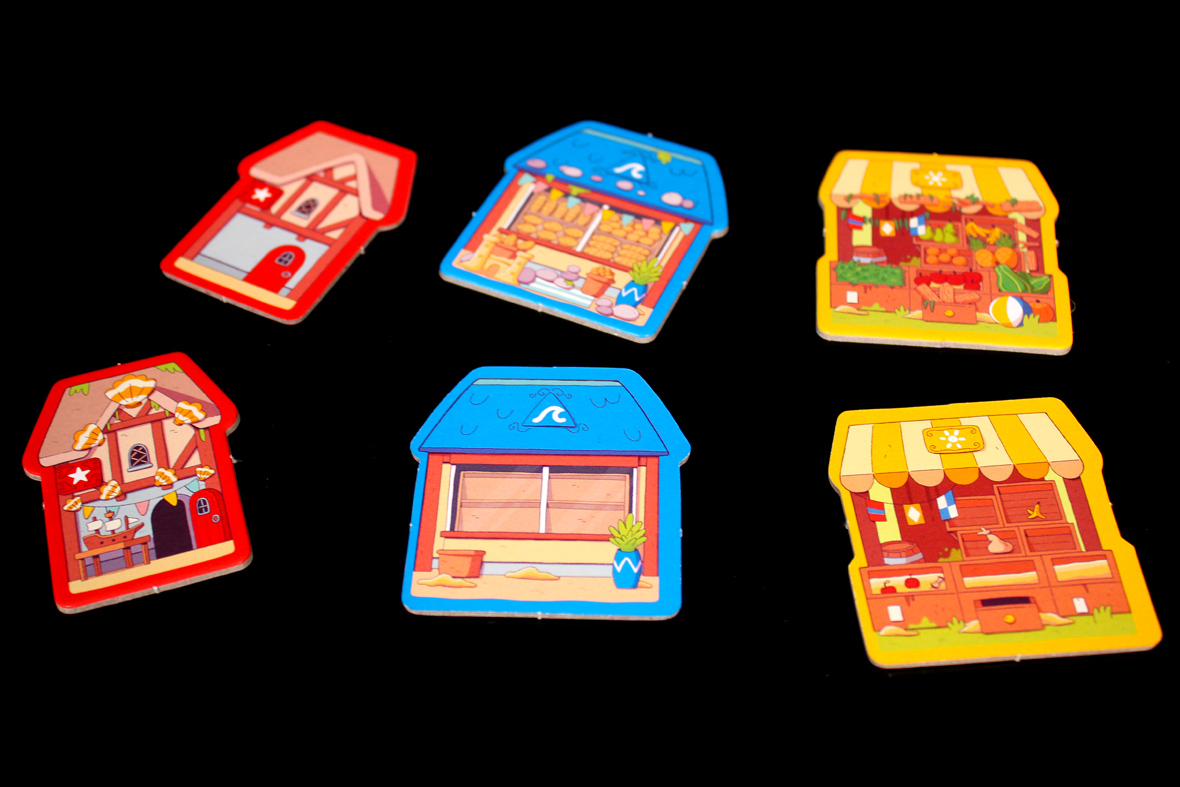
And three shops, set on their board on the undecorated side:
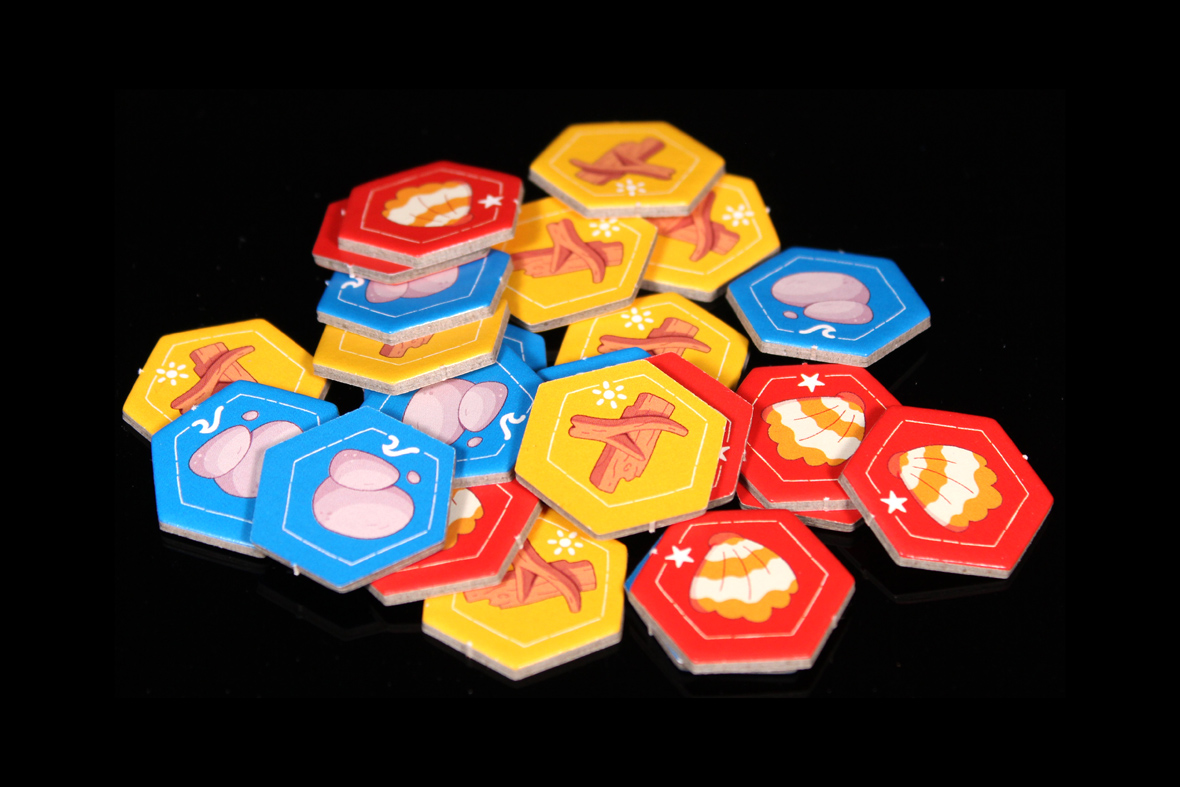
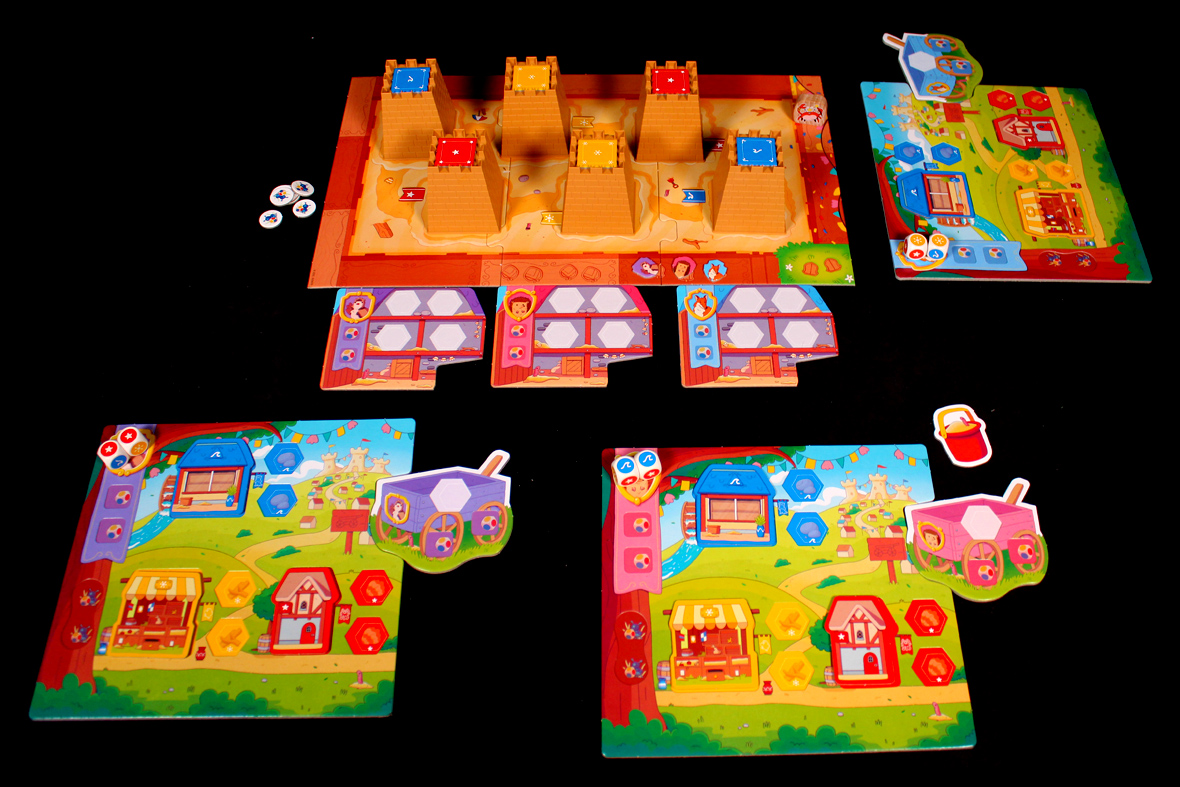
Everything should have the worm up for this mode. Place your coat of arms on the sandcastle board with the number of coats that matches your player count. Now, this part threw me off because I’m just bad at math and reading comprehension, but you’re going to set up the castles next. Take two decorations of each color per player (for instance, 24 total decorations at four players) and deposit one decoration per player in each sandcastle.
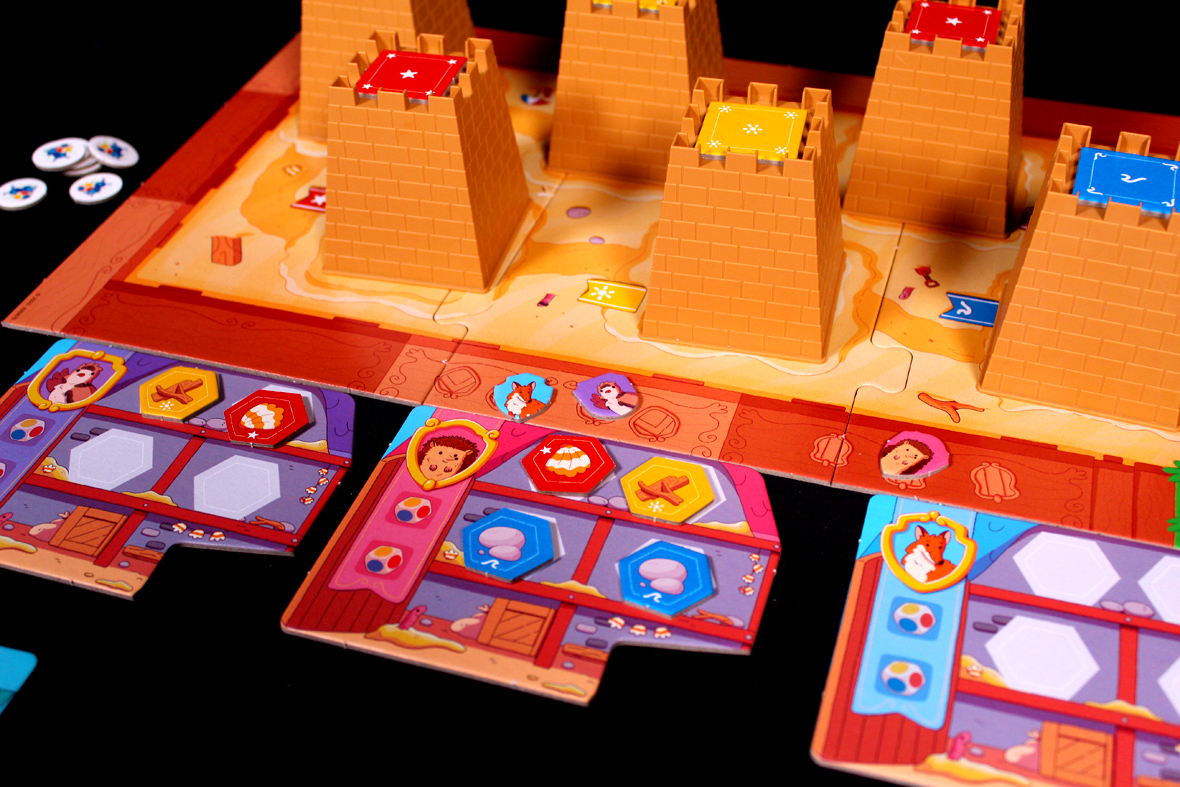
Next, choose three sandcastles at random and place one of each animal of the Royal Guild underneath. Everyone should see where they went! The Queen Crab can go on the confetti space on the board. The roller beetles get placed nearby.
You should be ready to start!
For the advanced mode, place the crowns near the board and place Queen Crab on top of one of the sandcastles.

I’ll talk more about that later, but also flip all the boards to the crown side, rather than the worm side.
Gameplay

In The Sandcastles of Burgundy, you’re decorating the town to get ready for Queen Crab’s Beach Party! The faster you get done, the sooner you can go to the beach party!
To start a round, everyone rolls their dice. Then, you can use each die for one of two actions. For the first action option, you can look for decorations! Choose a sandcastle with a top tile matching the die color you rolled and check underneath of it. You can take any tile under it and add it to your Storehouse, provided you don’t already have two of those tiles between your Storehouse and player board. If you find one of the Royal Guild Animals, you can take it to your town if your Shop in that color is fully decorated; otherwise, move it to an adjacent sandcastle along the path.
The second action is all about your Storehouse. You may take one tile from your Storehouse matching the die color rolled and place it in your Wagon, move your Wagon to your Village, and then add it to your Village’s shop! You earn a point and advance your coat of arms one space forward. If you add the second tile of a color to your Village’s shop, then it’s completed! It flips over to its decorated side and now Royal Guild Animals can come to the shop. Also, you get another point, so that’s cool.
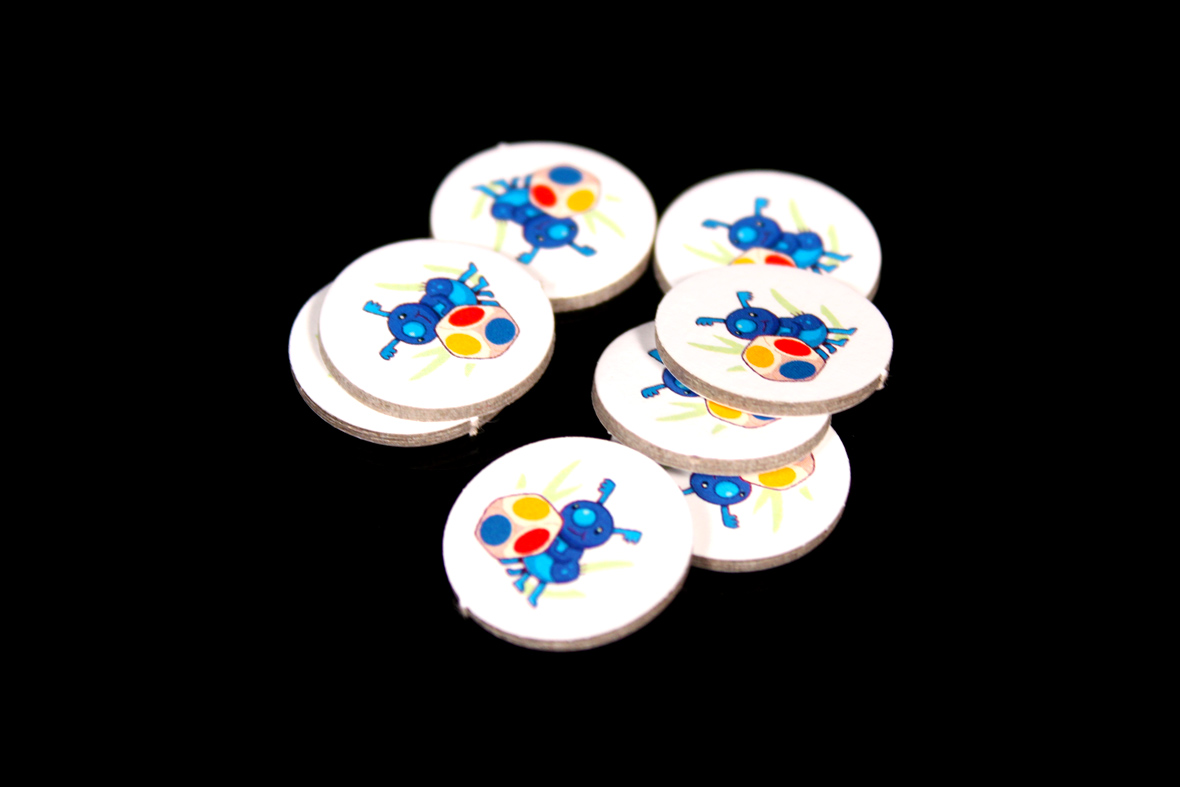
If your specific die cannot be used for any action (or you don’t get anything when you look under a sandcastle), you get a Roller Beetle! You can use that to change any die to any other die.
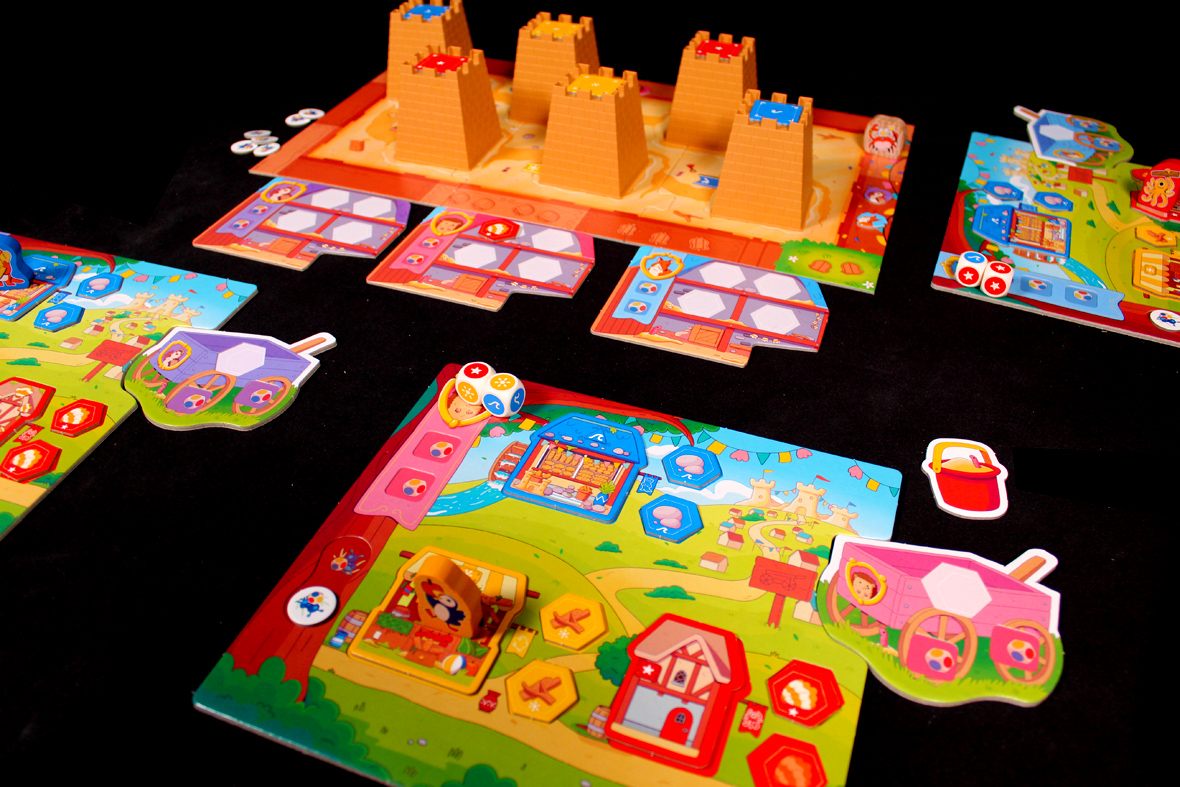
After any player reaches the space with Queen Crab, the game ends! Players should finish the current round so everyone gets the same number of turns. The player with the most points wins!
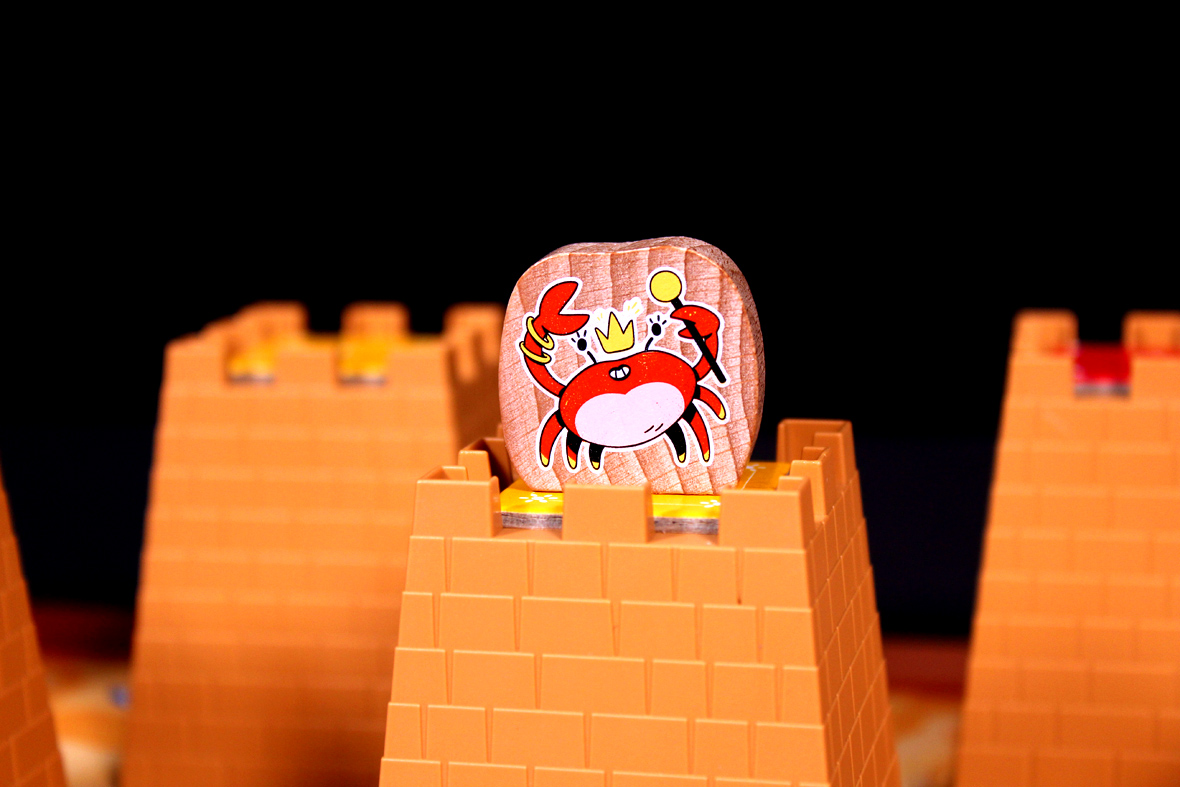
For the Advanced Variant, use the other side of the boards and add in the Crowns! Now, you can visit Queen Crab for benefits! When you visit a sandcastle with the Queen Crab on it, you claim a Crown and add it to your Storehouse. When you move a resource from your Storehouse to your Village, you can move one Crown with it and use that Crown to activate an ability or score an additional point! The various abilities can help you get more coins, change your dice, get more Crowns, and more!
For even more varied play, try using the unique player power tiles!
Player Count Differences
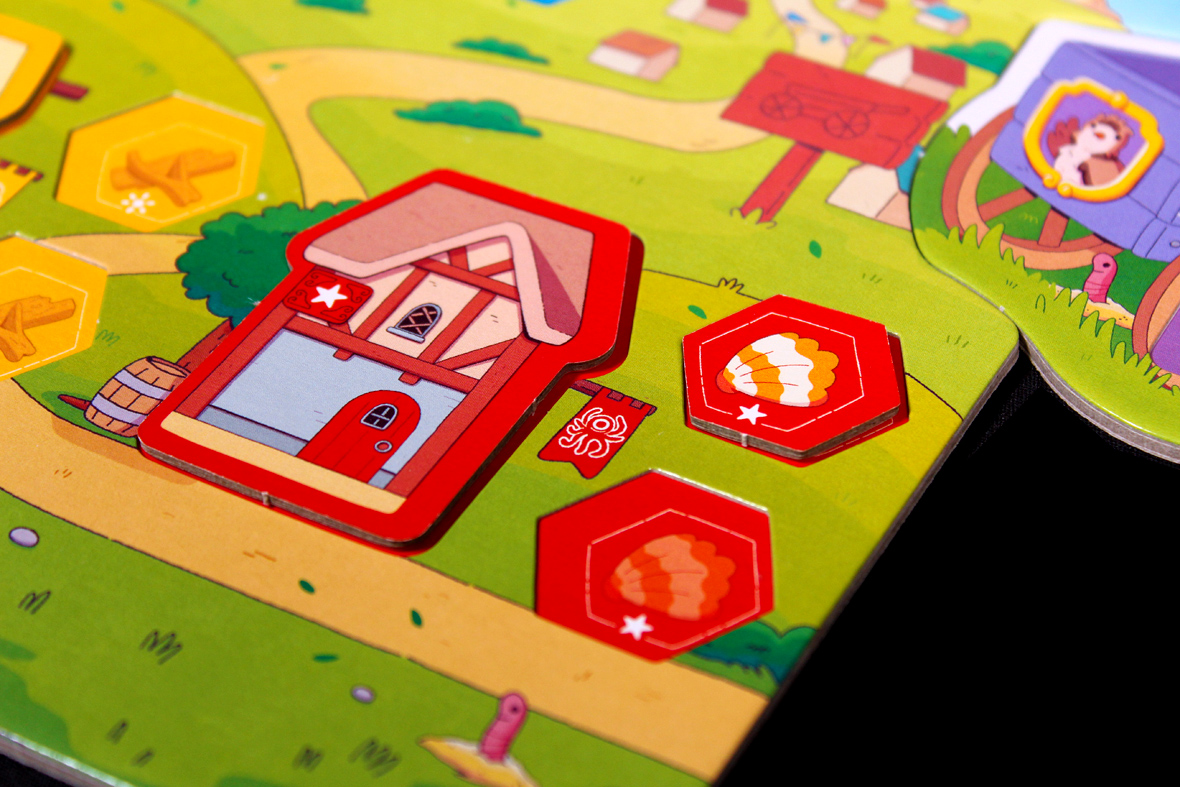
There are a few, but that’s mostly around probability and ease of access. So, there are only so many resource types, yeah? Three. With more players, there are more resources under each sandcastle, which makes it technically easier to find what you’re looking for. When you lift a sandcastle, you can take any tile from underneath of it, so more is generally good. That said, more players also means more players taking tiles, so it should theoretically balance out to some degree. I’d call it a bit of a wash, personally, but it’s not bad. With two, you really need to pay attention to what’s available and where towards the end of the game, otherwise you’re going to be grabbing a bunch of empty sandcastles and rapidly getting nothing. The one thing that remains constant outside of player count is the number of Royal Guild Animals, though, so those will be tighter with more players just by virtue of only having three. It may be worth going deep a bit more quickly, as a result. No strong player count preference; just worth noting the differences.
Strategy
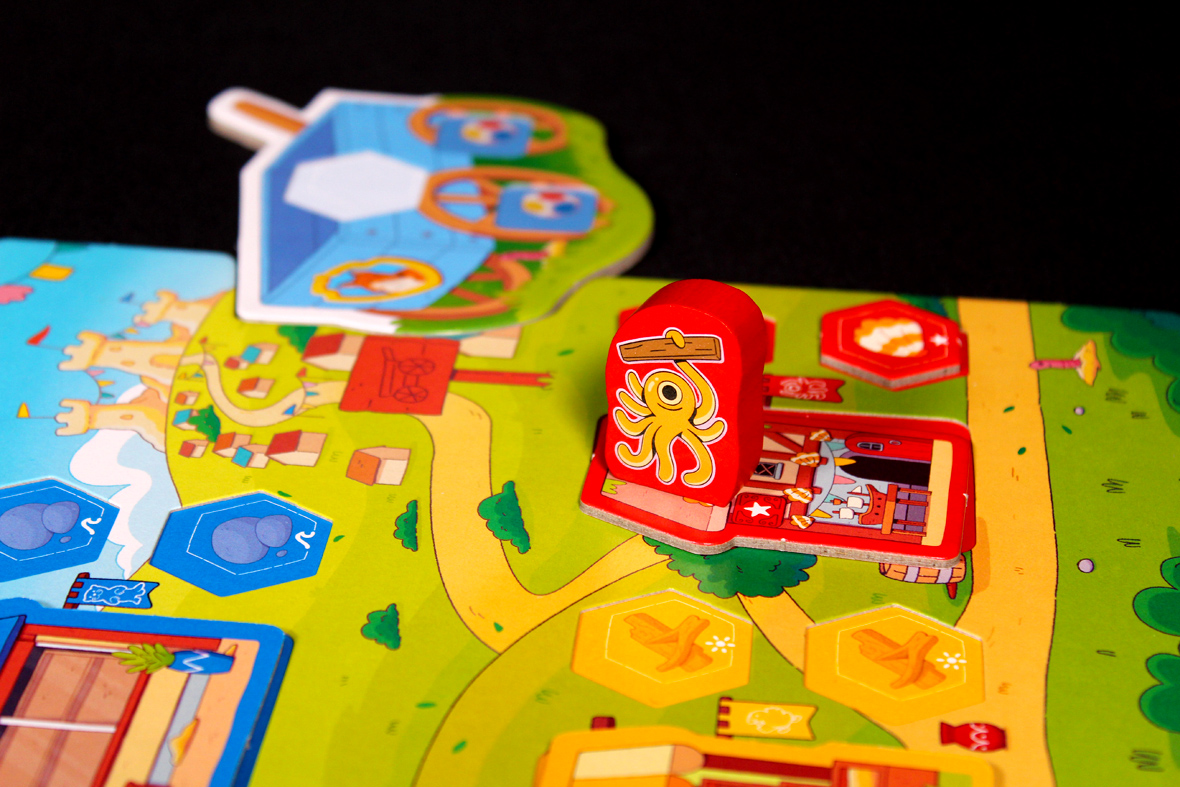
- I mean, memory is the key, here. You really need to remember what’s under each sandcastle or you’re going to waste a bunch of turns. Yes, you do get a little guy who lets you change the die to whatever color you want, but it doesn’t really make up for essentially losing half of your turn. At that point you just have to depend on your opponents rolling poorly, which isn’t really … viable, as strategies go.
- When it’s not your turn, pay attention! You might learn something. So you might think that the only way you can get information is to look under the sandcastle yourself, but there’s nothing stopping you from looking at the board while your opponents search. In fact, that’s pretty explicitly encouraged. If you see them lift an empty sandcastle, well, you know not to do that. And that’s pretty helpful!
- Watch out for how dice work, probabilistically. You do have a one in three chance of rolling doubles, for instance (proof outside of scope of review). You also might end up rolling values you don’t need if you cross off an entire shop quickly. This would theoretically seem like the game is encouraging you to go wide, rather than deep, but there are extra points for completing a shop and getting a Royal Guild animal, so you just have to hope for the best, to some degree.
- Get to those Royal Guild animals before your opponents do! They’re free extra points that you get in addition to the search action, so, locking them down quickly is always a good idea. Plus, you don’t want your opponents getting points.
- Filling up your Storehouse isn’t a bad initial strategy. It helps you lock down tiles before other players get them, which is good, and if you have a diverse set of elements in your Storehouse then you can usually do something every turn.
- There’s nothing wrong with a little bit of negative player interaction. Note that everyone rolls their dice at the start of the round. This means you can see what their available actions are. You might wonder if that’s useful, but, if your opponent has the blue shop complete and rolled two reds and you found the blue Royal Guild Animal, should you move that animal under the yellow sandcastle or the red sandcastle? And that’s Adversarial Play in a nutshell.
- If playing with crowns, balance using them for abilities and getting points. Getting points is nice, but if you can use a crown ability to get more crowns more easily or make it easier to find what you want, you might be able to leverage that for even more points in the future. Points now or more points later? I’d reference the Marshmallow Test, but that’s been widely debunked. Check your populations before drawing wide conclusions, but that’s a lot of early psychology research coming out of Stanford.
Pros, Mehs, and Cons
Pros
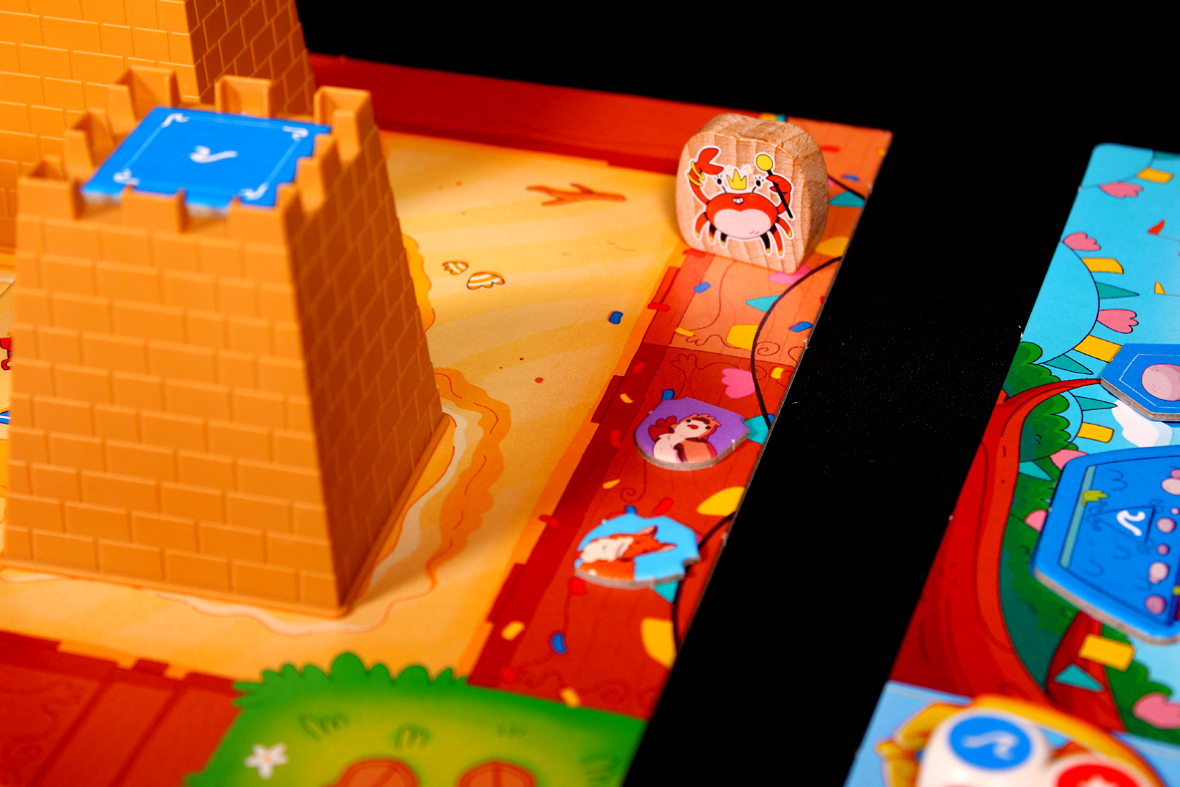
- I really like the art style! It’s very cute and, I think, perfect for a kids’ game. I particularly like the Queen Crab; she’s very regal.
- I had no idea what to expect from this, but I was impressed at how well it takes the Castles of Burgundy mechanics and scales them to a kid-friendly experience. I like how they use a memory element to maintain engagement and also they smooth a lot of the edges down to make the game so approachable. No market, no additional resources, no tile abilities; just rolling dice and grabbing tiles to try and get what you need. It’s very smooth.
- It’s great that the game can grow up with the gamers, to some degree. The basic version is very basic but still fun. The Advanced Mode has a good amount to offer with the various abilities and such. I like games where you can start in one place and let it scale up as the players get more experienced (and get older!).
- The turns are extremely short, which is great. Mercifully short is the term I use not because the turns are bad, but because they’re just very quick. You can keep moving quickly and recover even if you end up with nothing on a turn.
- The memory element is actually pretty entertaining; it forces people to pay attention even when it’s not their turn. I like that a lot for a kid’s game. There’s a real temptation to let players wander off and not pay attention, and if they do that, they’re not going to win. Do you explicitly mention this or let it serve as a Teachable Moment? That’s up to you.
- There’s some level of positive player interaction in that players can show each other things that they need (or potentially take them, which is less so). I like that a lot! It incentivizes paying attention when it’s not your turn (good) and is something useful about having more players; you get more chances to look under the various sandcastles between your turns, even if they are taking things you need. There’s also some negative player interaction but it’s pretty light.
Mehs
- The sandcastles are just a tiny bit smaller than they should be for placing things under them, and slightly too large to fit well in the box. Nature loves a paradox, I suppose, but a bigger box and bigger sandcastles would help. Being able to more easily slide tiles and animals under the castle would be good.
Cons
- Genuinely, the adhesive strips being slightly longer than the tiles they’re supposed to attach to gave me psychological damage. Look, I am a simple man with simple ideas about how things are supposed to line up with other things, and the adhesive strips are slightly too long for the sandcastle top tiles. This caused me a little bit of stress, but I’m growing as a person.
Overall: 8 / 10
Overall, I was pleasantly surprised by The Sandcastles of Burgundy! I’ll be honest; I wasn’t fully sure what to expect with an ages 5+ variant of one of my favorite games, but it was a very pleasant surprise! Now, some of the context of the game matters: it’s a kid-friendly version of the classic Feld The Castles of Burgundy, with some opportunity to scale up the complexity and customization as players grow and better understand how to play. If you’re not familiar with Castles, then take it instead as a game of dice-rolling and tile collection with some light memory elements for younger players. I was skeptical (as I tend to be of memory games), but the game is tightly designed and works. Granted, the higher-complexity variant is a little more appealing to me, but also, I’m a fully-grown adult. For younger players, I do appreciate that the turns are quick and the game is overall simple to explain, but one of the best parts about it is that the game demands you pay attention to do well. When it’s not your turn, you need to be watching the board to see what other players reveal so that you know where what you’re looking for is. This helps players (young and old) stay on task and ends up being a fairly positive form of player interaction. It’s a smart mechanic, especially since the game is simple. Adding in unique player activities increases the appeal of the game, as well, giving players something wholly theirs to work with as they play. I, in general, really like when games grow with players, and this multi-stage version of a classic hits. I’ll at least say I’m not entirely convinced you can go from this straight to Castles of Burgundy, but maybe Castles of Tuscany next? Unclear. Add in some fantastic art (a lot of this, I feel, was done for the Castles to Sandcastles wordplay, but it still works) and you’ve got a great family title that I’m interested in playing again. If you’re a Castles of Burgundy fan looking to game with the whole family, you enjoy a bit of dice rolling and memory, or you just want to find a queen crab to swear fealty to, The Sandcastles of Burgundy might be right up your alley! I quite enjoyed it.
If you enjoyed this review and would like to support What’s Eric Playing? in the future, please check out my Patreon. Thanks for reading!
 What's Eric Playing?