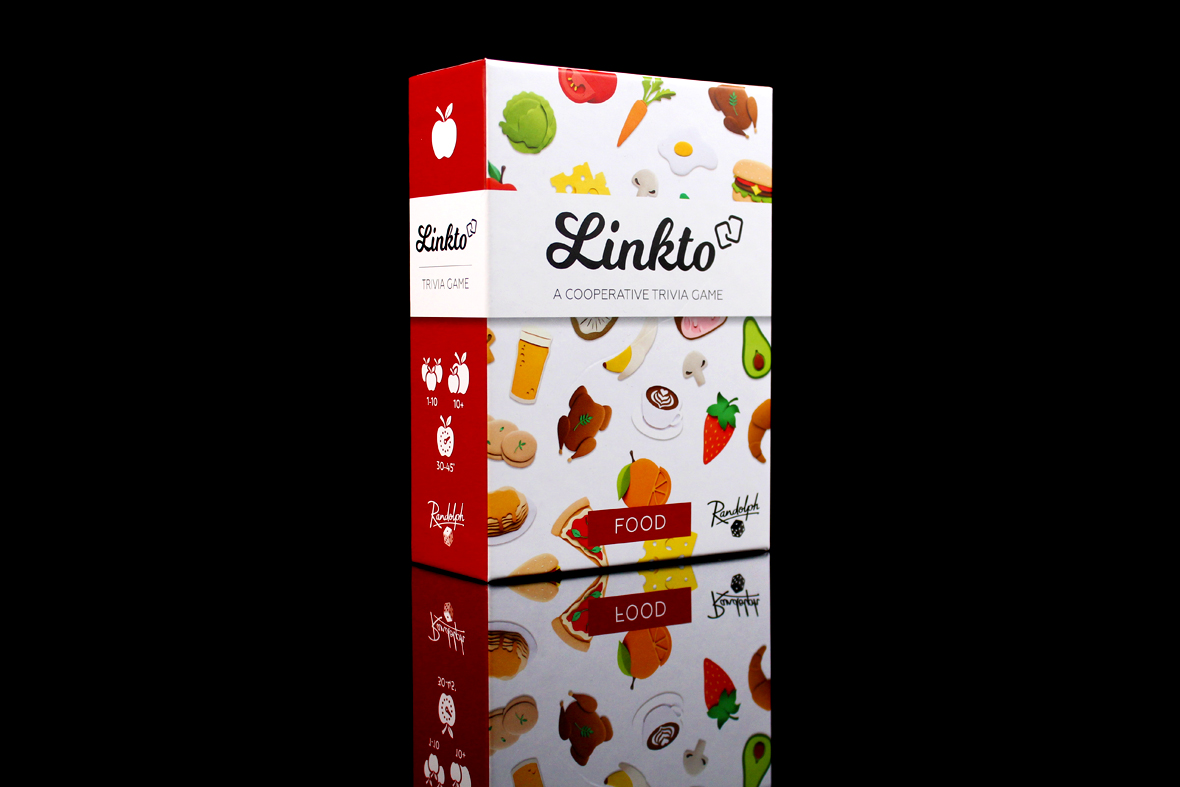
Base price: $13.
1 – 10 players.
Play time: 30 – 45 minutes.
BGG | Board Game Atlas
Buy on Amazon (via What’s Eric Playing?)
Logged plays: 3
Full disclosure: A review copy of Linkto Food was provided by Hachette Board Games.
I’ve been having a very intense week, both at work and at home. I’m trying to get through a mountain of games before this weekend, you see, because I’m going to be very focused on Across the Spider-Verse and less focused on writing for the next few days. And I’m moving. I guess that’s important to mention, to try and get the whole point across. To that end, there are many, many games I’ve been trying to get around to for a while that I just need to sit down and review, including this one. Not entirely sure when I’m going to be able to get my gaming setup back up and running in my new place, so there may be a pause on reviews at some point. I don’t think that will be necessary, but you never know. Thanks for bearing with me in the meantime. Next game up is new from Randolph: Linkto! It’s a relatively new series that’s coming over stateside. This is the Food edition, so let’s check it out!
Linkto Food is a cooperative trivia game! Your goal is to find the missing key, which will be the only card left over when you correctly match all of the Word Cards to the Clue Cards. Simple, right? Well, with 49 clues and 5 levels, it might be anything but. So grab 9 (or more, really) of your friends and clear the table; it’s trivia time. Will you be able to find the key for each level? Or will you end up clueless?
Contents
Setup
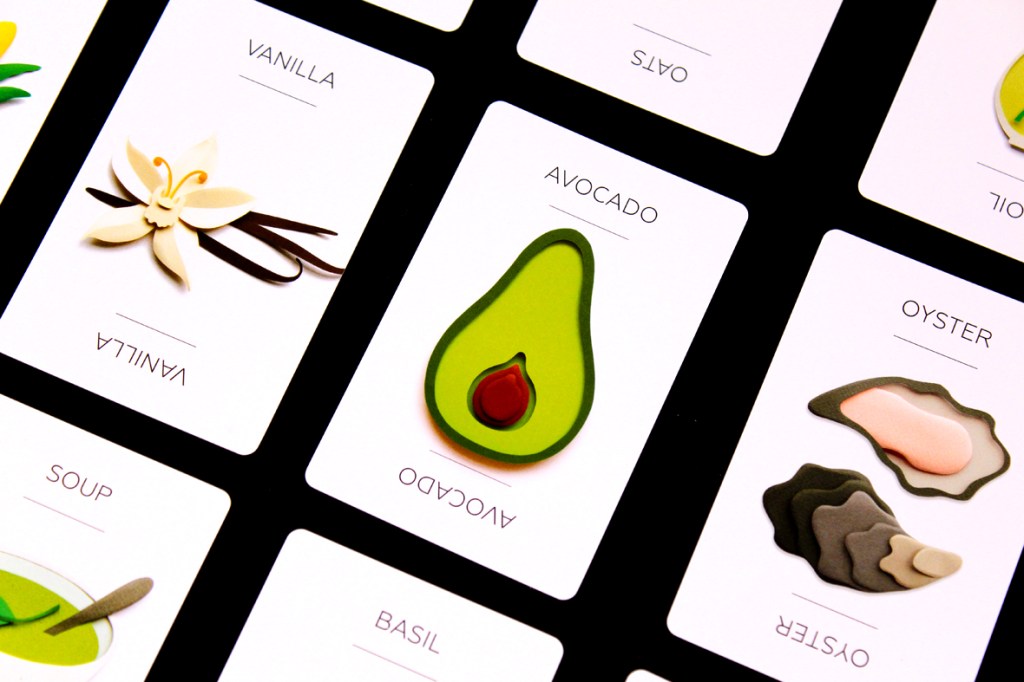
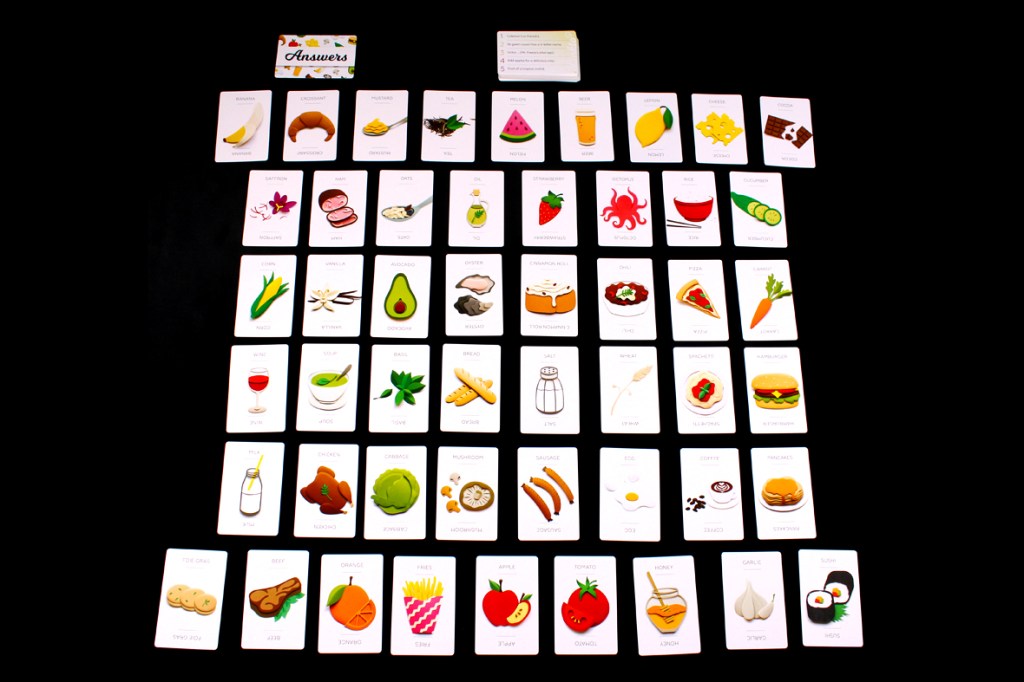
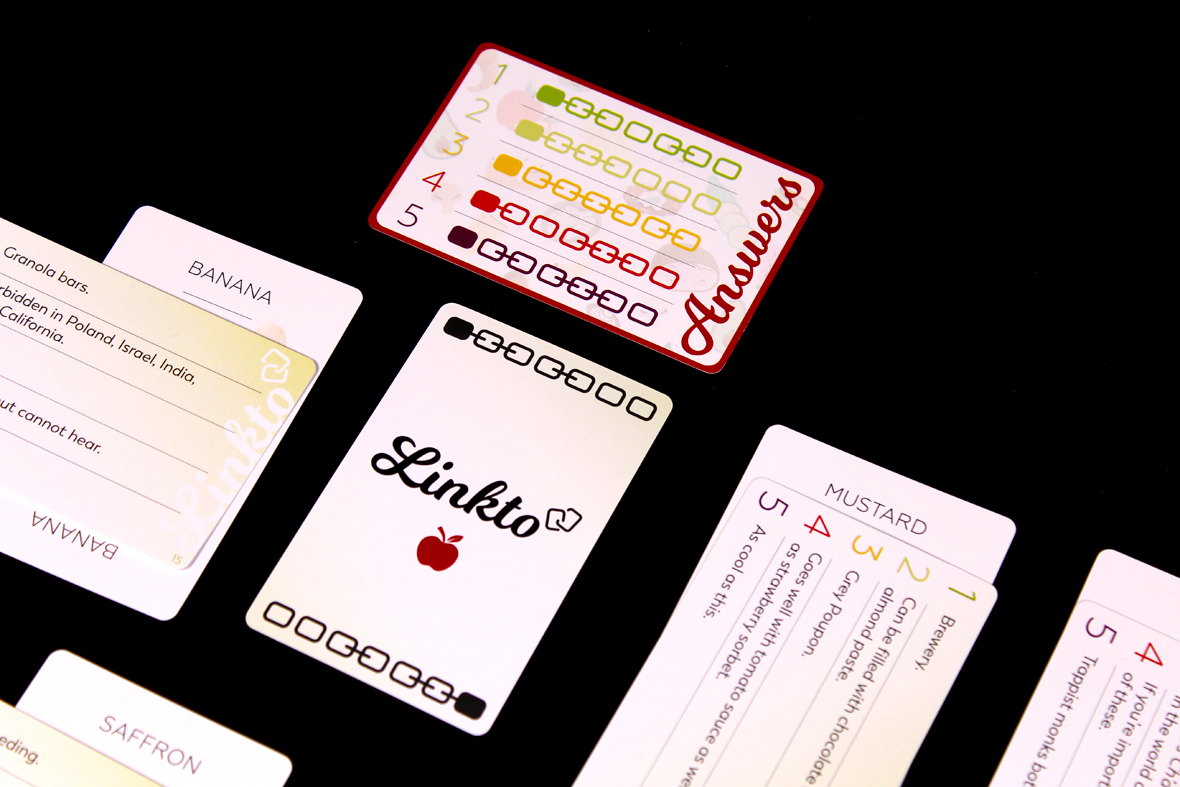
It’s not a lot in terms of complexity, but it is a lot in terms of total area. So you’re going to take out all the Word Cards, placing them face-up on the table. Leave room for cards to be placed on top of them:
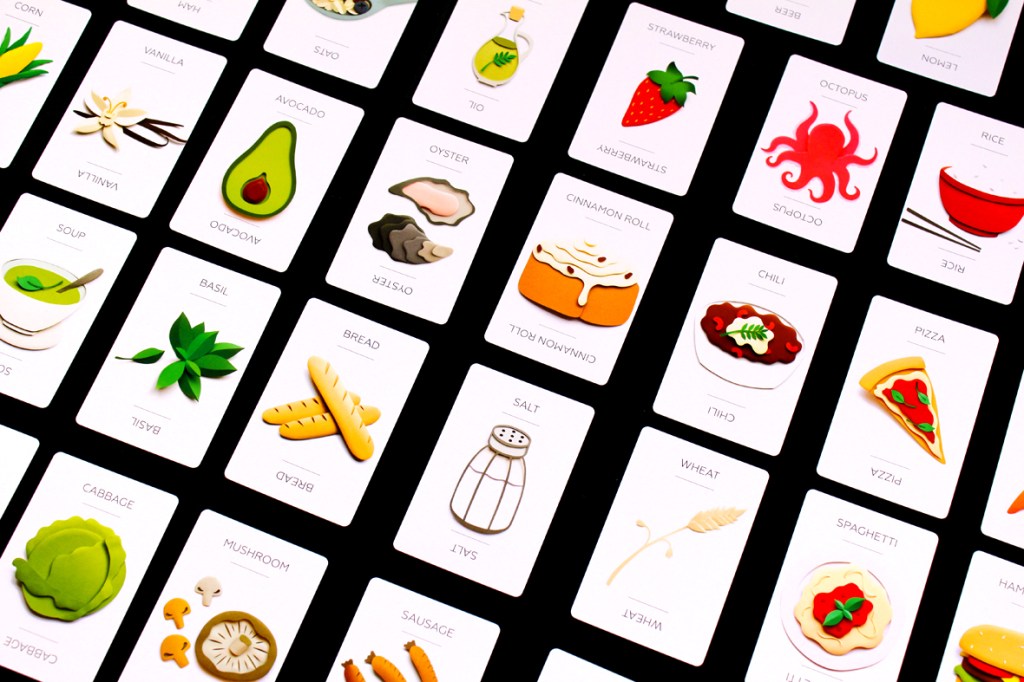
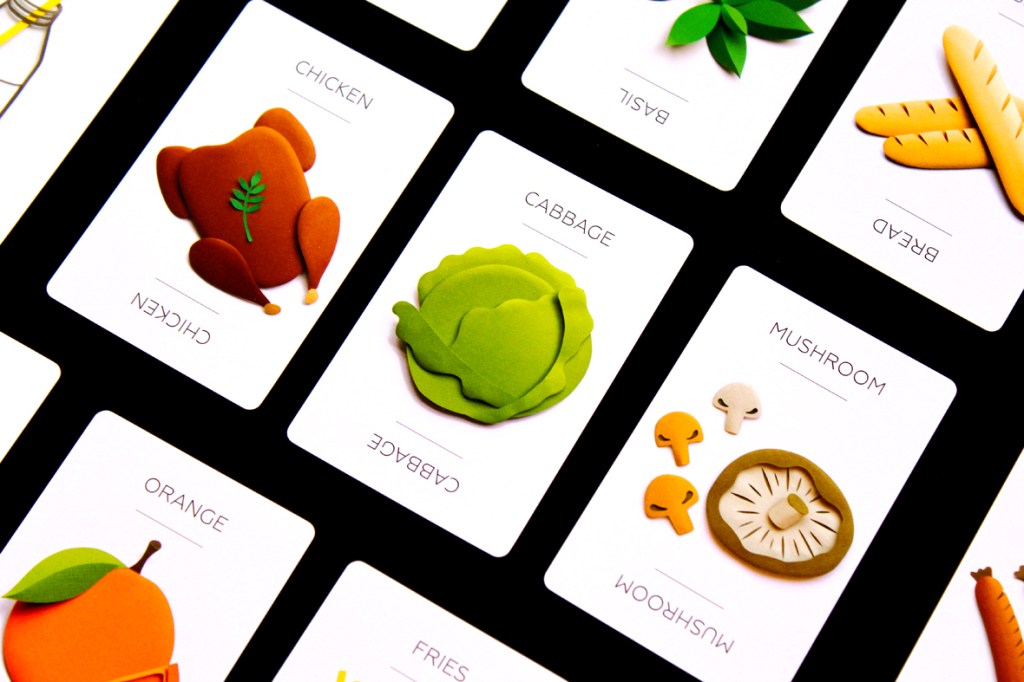
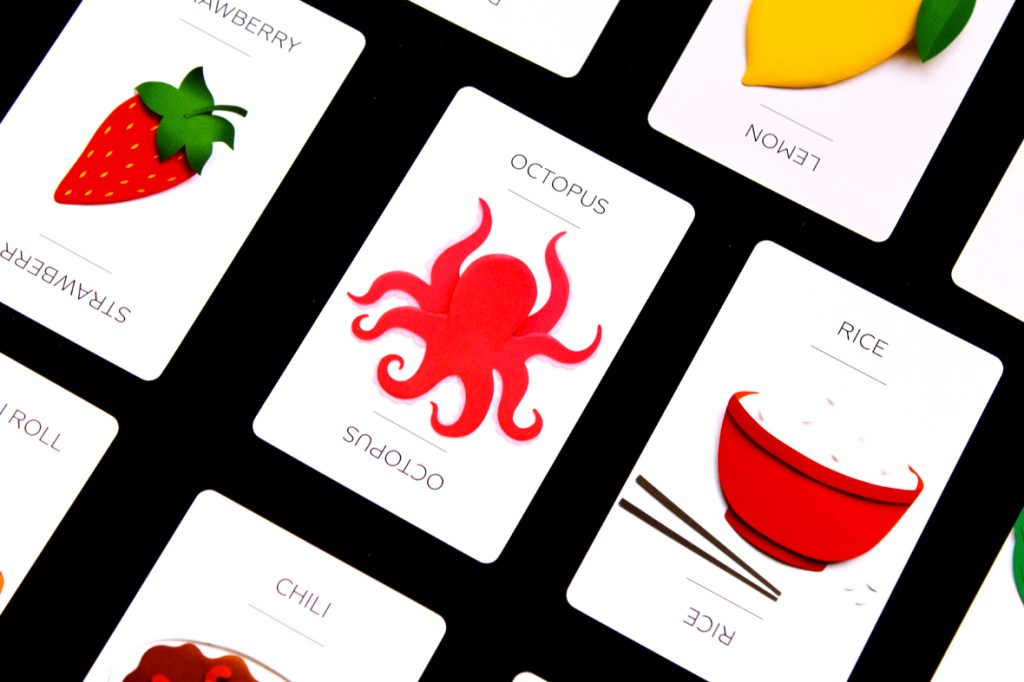
Then, set aside the Clue Cards and the Answers Card. Keep the Answers Card face-down. You should be ready to start!
Gameplay
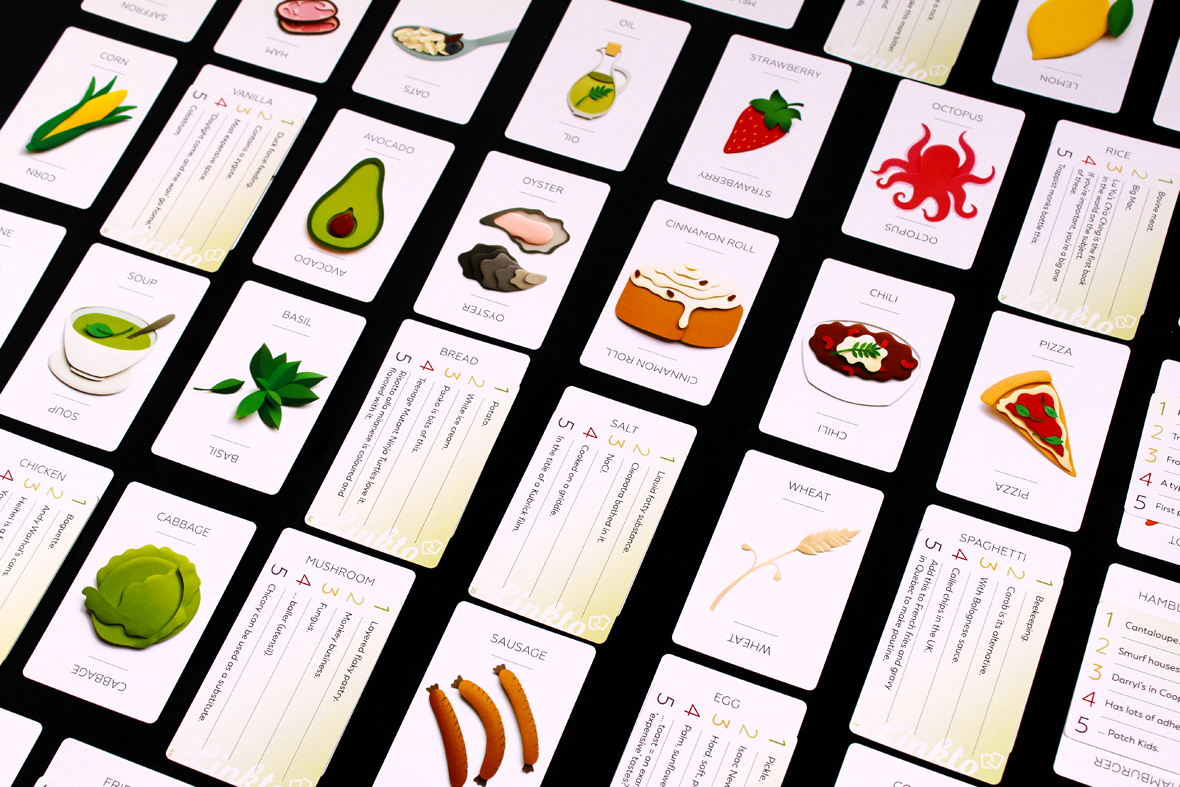
This one’s a game of trivia! Your goal is to figure out the key by eliminating all the other words. How do you do that? Clues!
Each player takes turns drawing a Clue card and then tries (with help from the other players) to figure out which Word Card that Clue matches to. You can always move Clue cards to other cards. If you’re not sure which Word the Clue matches, set the Clue card aside! You can deal with it later.
Once there’s only one card left, you’re done! Check the Answers Card and compare the link on its level to the link on the back of the remaining word card. If they match, you win!
If they don’t match, try reworking it and try again! You get two more chances. Before the final chance, check all the Word cards against the Clue cards you already placed on them by flipping the Clue cards and checking their links against the links on the back of the Word cards. If you get it on your third try, you’re still in the game! If not, better luck next time!
Player Count Differences
So I’ve tried this at both ends of the player count spectrum, and I have to say, 10 players is a lot more entertaining than 1. With just me, I’m struggling and trying to figure out trivia and kicking myself for the things I don’t know. I’m just one guy; my knowledge can’t be all-encompassing. Just doesn’t work. At 10, everyone knows something, so there’s all sorts of shouts and half-answers and weird intuitions about whether or not Columbo likes chili or pizza better. Turns out sometimes our intuition is right, which is baffling, but this is very much a wisdom-of-crowds kind of trivia game, as far as my group and I are concerned. Having more players makes it a bit raucous, granted, but we just passed the clue deck from person to person and then made decisions as a group and it worked great. We tried Level 1 and Level 5, had a blast with it. I’d definitely recommend it with more players, unless you’re looking for a challenge for a small group. If you are, it’s still fun with fewer people; just harder.
Strategy
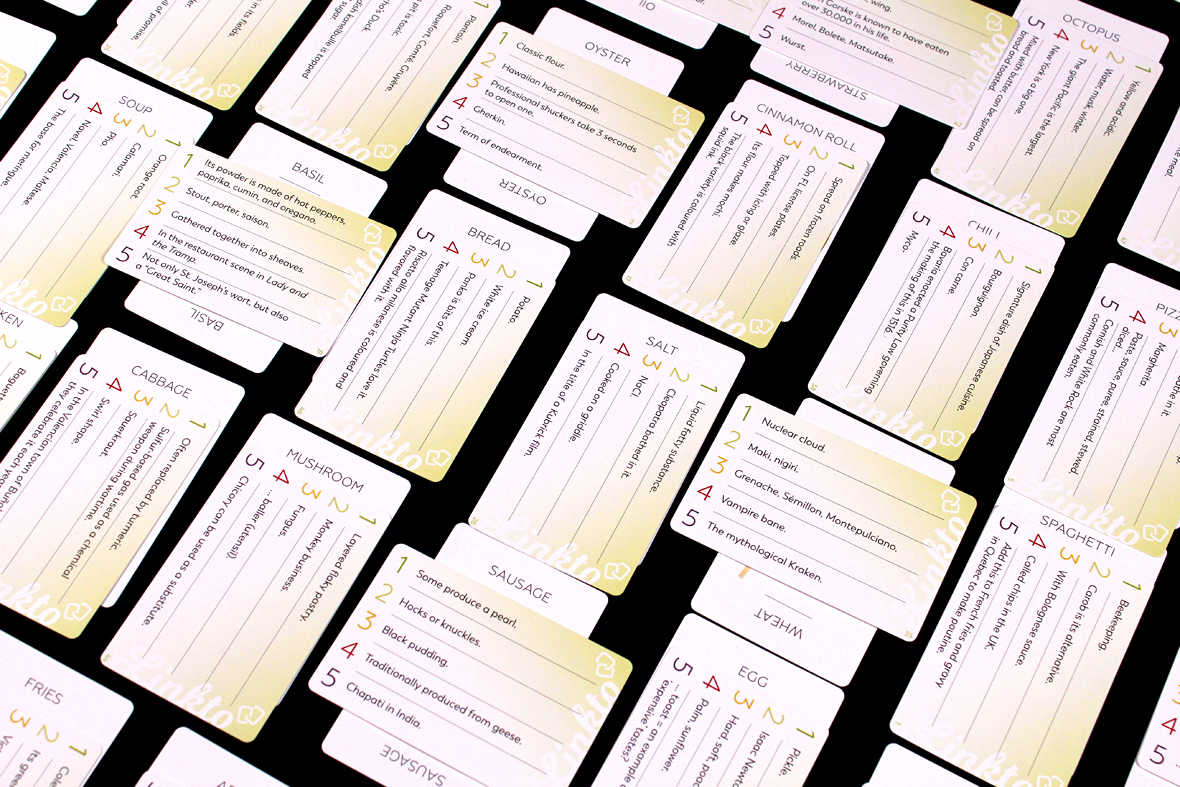
- Don’t stress over the cards you don’t know; just set them aside for later. It’s like taking a test, to some degree; rather than spending time in the dark with a question you don’t know the answer to, just skip it and move along to something else. You’ll end up with a stack of clues that you can’t match towards the end of the game, granted, but you’ll also have the advantage of a lot more obvious cards being covered, so process of elimination may work to your advantage, at this point.
- Grouping the cards by type may help make it easier to scan; there are a lot of them. There’s just a lot of text on a lot of cards on a lot of table; grouping them into categories may help make sure you don’t forget anything, but it probably will work against you from a trivia perspective. The related cards usually have very little in common, as far as the clues go.
- It’s mostly just a trivia game; there’s not a whole lot of strategy beyond “know things about food”. I mean, you could theoretically study up, but I’m genuinely unsure if that would help. Plus, it feels a bit against the spirit of the game. Instead, if you get stuck, just glomp more people onto your friendship Katamari. The more players the merrier, here, and ten heads are a lot better than one.
Pros, Mehs, and Cons
Pros
- The art style is a lot of fun! Oh, it’s legitimately papercraft! I didn’t notice that until I read the back of the rulebook just now. I just liked it, but now I’m extremely impressed. Yes, I write a lot of this in real time and this sort of thing happens every now and then. Like I said; I love learning new things.
- I end up learning something every time I play, which is a nice thing for trivia games. It’s hard to come away from a game without learning something new; there are so many unique clues and so many things to learn about. Some of the clues are obvious (to me), but others are extremely obvious to other players and are about something I’ve never heard of. It’s a lot of fun!
- Having a game that plays well at 10 is quite a helpful boon. It’s a bit of a rarity in my collection, short of the One Night Ultimate Werewolf games (which, granted, I haven’t played in a very long time. I should get back to those). This being cooperative is also very nice, on top of that. Low stakes, easy to get players into, and most critically: not that hard to teach.
- Nicely portable! The Linktos come in fairly small boxes, which I appreciate. I tucked a couple of them into my game bag the other day and they were very popular.
- Games about food are always crowd-pleasers. People like food; there’s not a whole lot more to say about it than that.
- I do think there’s something elegant about how the game leaves one single card at the end and that might be the correct answer. It’s clever and fun. It’s similar to how Cryptid only has one space where the cryptid can be at the end of the game; watching the space slowly shrink and leave only one valid option at the end of the game is satisfying and a bit of neat design, since the clue cards aren’t unique by level.
Mehs
- There’s a competitive variant, but I don’t really feel anything about it. I get it, but it doesn’t really move me to go head-to-head on trivia stuff. I’d rather just play the cooperative version pretty much every time.
- You really need a large table to do this game justice. 50 cards take up a surprising amount of table space, as you can see from my photos. I need a bigger table for my photography anyways, so this isn’t that much of a surprise, but it’s still a bit inconvenient.
Cons
- Five plays feels a bit low for a game, but at least it’s reusable, so I can gift it to friends. After five plays, you’ve tried all the clues for all the levels, so you might start remembering things. It means you’ve essentially played out the game. That said, it’s still four more plays than you’ll get out of an EXIT game for a similar price, so your mileage may vary on whether or not that’s a problem. The finiteness of the game bothers me at some level, but, I figure, I can give it to friends who like that kind of thing.
Overall: 7.25 / 10
Overall, I had a good time playing Linkto Food! Like I said elsewhere, it’s a nice little cooperative trivia game, where you answer questions about food with five levels of difficulty. The card left over when you’ve answered the other 49 clues is your key, and you can check to see if you’ve won. Plus, you get three tries to try and win, which is nice. It’s a pretty solid system for some quick and fun trivia, which is not something I’ve experienced in a little while. I’m more used to the intense Trivial Pursuit-style games (having grown up doing Quiz Bowl) or the more whimsical trivia-adjacent games (like Anomia or Zero to 100), so having this as sort of a buttoned-up standard cooperative trivia game is a nice alternative to have. The limitation of only really being able to try the five levels and having to move on is annoying, but the game is compact and relatively inexpensive, so, I suppose that that is the trade-off, sometimes. Beyond that, I was very impressed with the game’s art (all that lovely papercraft) and the ease of scaling up to ten (I think we had eleven at one point) players. I’ve not really seen much in the way of raucous trivia that wasn’t in a bar, so it was nice to be able to emulate the experience at a place where the floors weren’t sticky. I think Linkto has the opportunity to have some broad appeal among folks who are fans of trivia-style games, which I enjoy, since it’s so approachable. Easy to learn, easy to set up, and easy to play. A good combination, especially when you’ve got ten people waiting on a game. If you’re a fan of trivia, you like food, or you just want to see some really pleasant art, I’d recommend Linkto Food! It’s a fun little trivia game.
If you enjoyed this review and would like to support What’s Eric Playing? in the future, please check out my Patreon. Thanks for reading!
 What's Eric Playing?