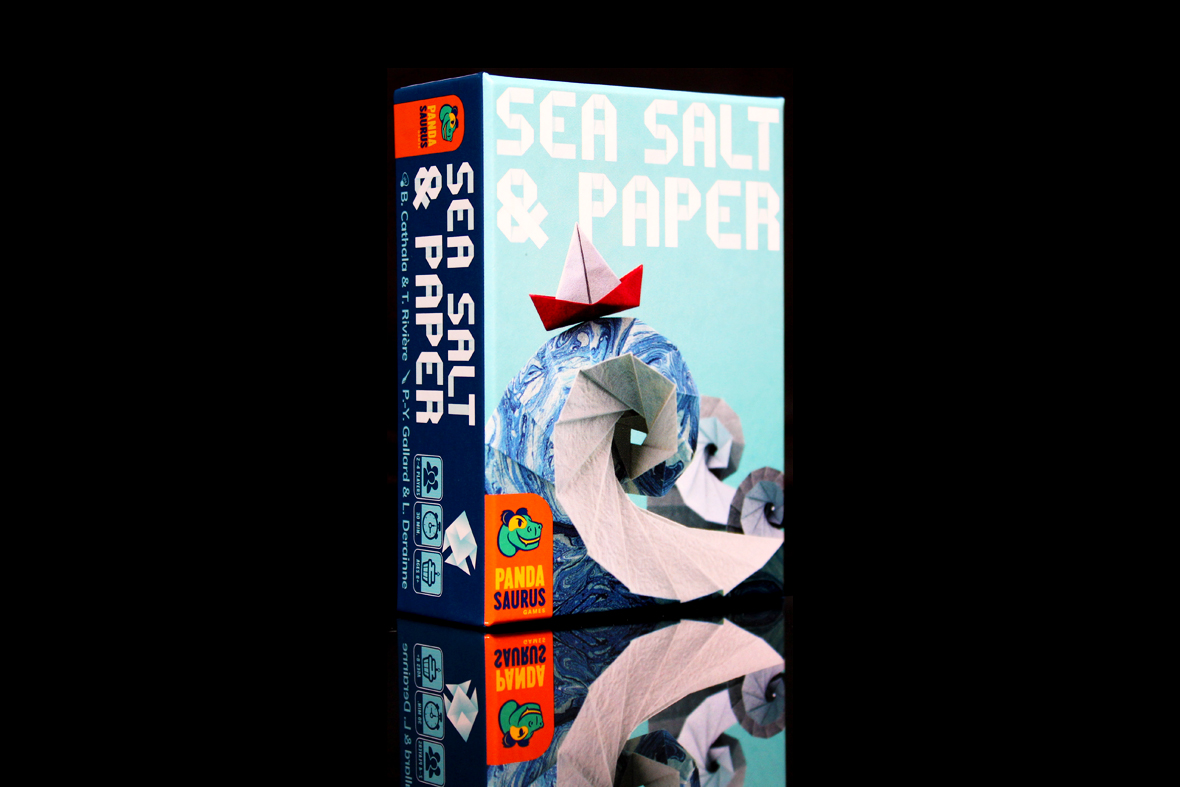
Base price: $15.
2 – 4 players.
Play time: 30 – 45 minutes.
BGG | Board Game Atlas
Buy on Amazon (via What’s Eric Playing?)
Logged plays: 172, give or take.
Full disclosure: A review copy of Sea Salt & Paper was provided by Pandasaurus Games.
So, there’s really no getting around this one. Generally speaking, I’m not going to play a game I hate 100+ times. If a game is fortunate enough to get into my Century Club, it’s probably going to be one of my all-time favorites. Except for that period where I was super into social deduction games; I’ve largely moved on from that genre. As a result, we’re looking at games like The Crew (500+ plays), Burgle Bros. (300+ plays), Similo and Santorini (200+ plays); things like that. ICECOOL is almost up there; probably over 100 if you count all the ICECOOL2 plays, and Cake Duel is there too. But with Sea Salt & Paper sitting at 172 (as of writing; it’s gone up since then), there’s no really getting around it. So enjoy a positive review of a game I just really really enjoyed. A fun treat!
Sea Salt & Paper is a casual card game that lets players appreciate origami and combos. Not a ton else to it, frankly, but the ease of play and the art might catch your eye like it did mine. Or the occasional way that you can be super mean to other players, if that’s more your scene. Who knows? Will you be able to string together combos in pursuit of that 40 points? Or will you end up folding?
Contents
Setup
Not much to set up, here. Shuffle the cards:
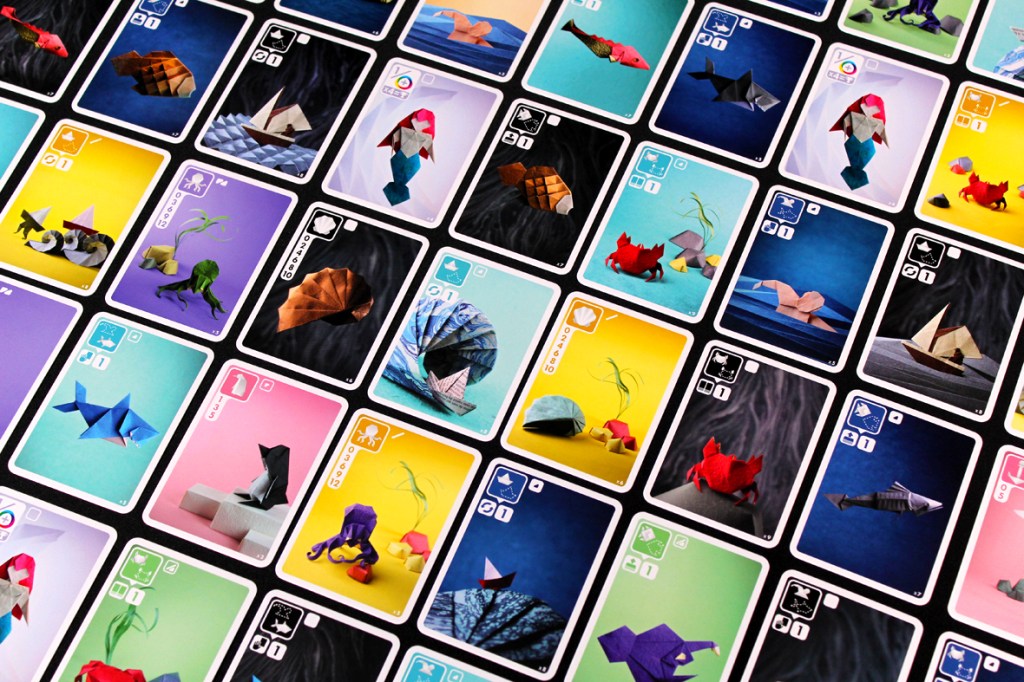

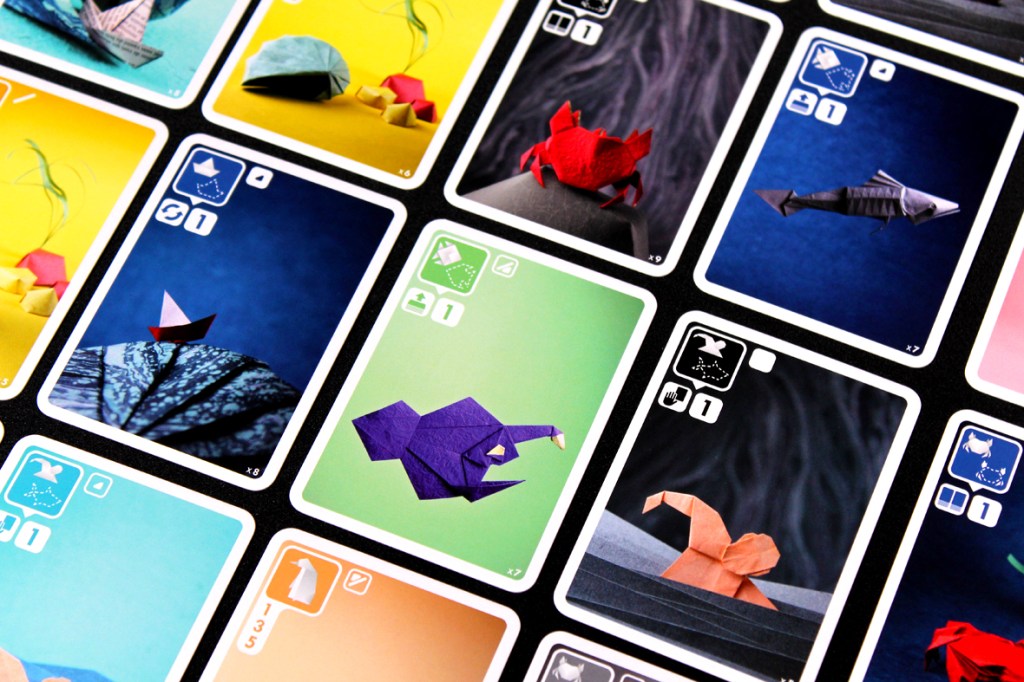
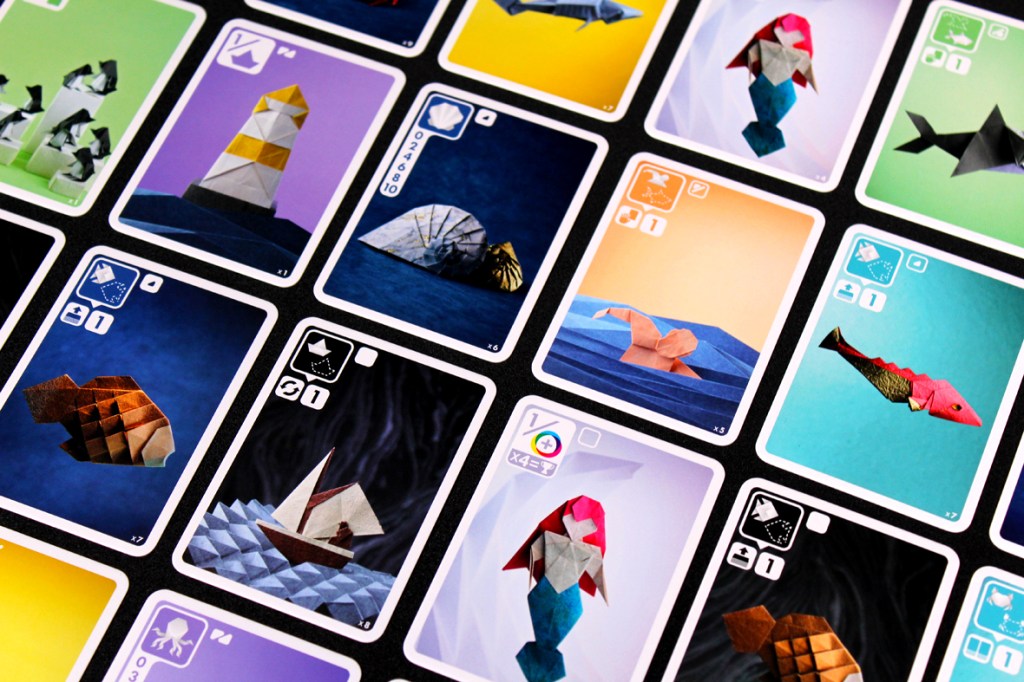
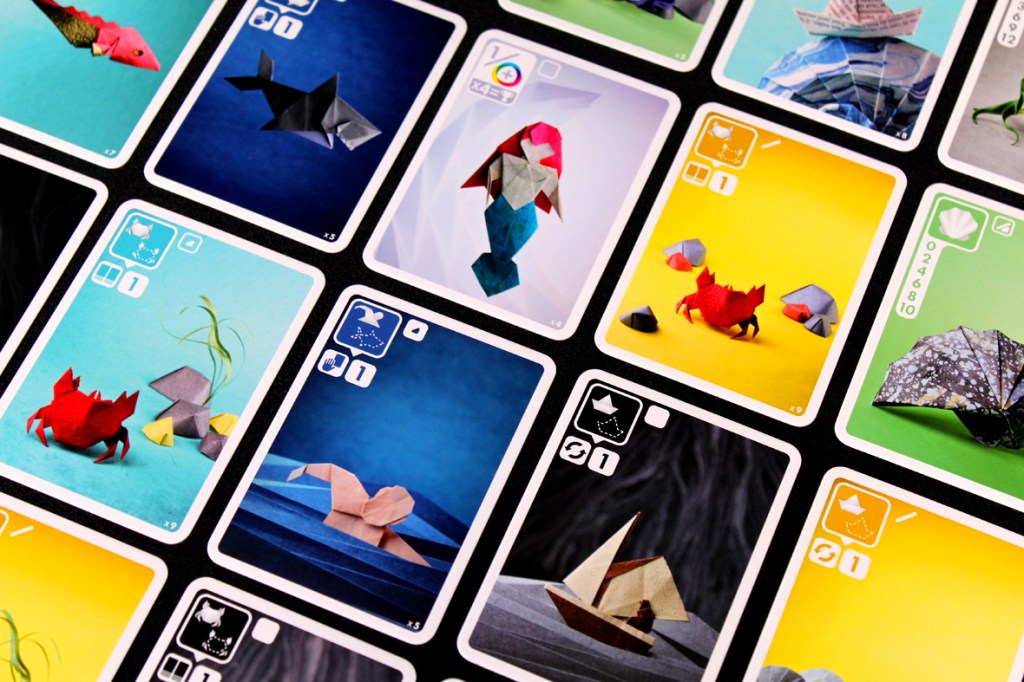
Then, flip two face-up and set them next to the deck. Once you’ve done that, choose a start player and you’re ready to go!

Gameplay
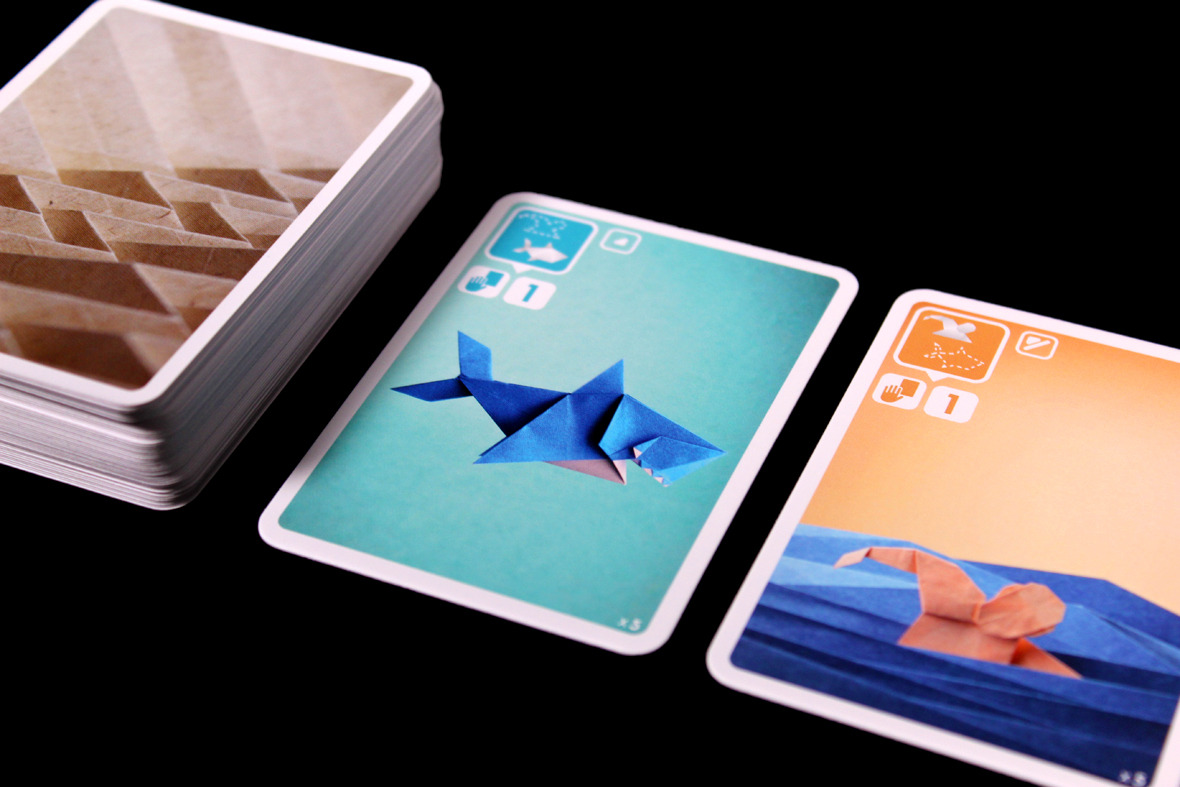
A game of Sea Salt & Paper is played to 40, 35, or 30 points! This is done over several rounds, each of which play the same way.
To start your turn, you may do one of two things:
- Draw two cards and keep one. The other is placed on one of the two discard piles of your choice, face-up (note that if one is empty, you must place this discarded card there).
- Take the top face-up card from a discard pile. You may only take the top card and may not look through the piles.
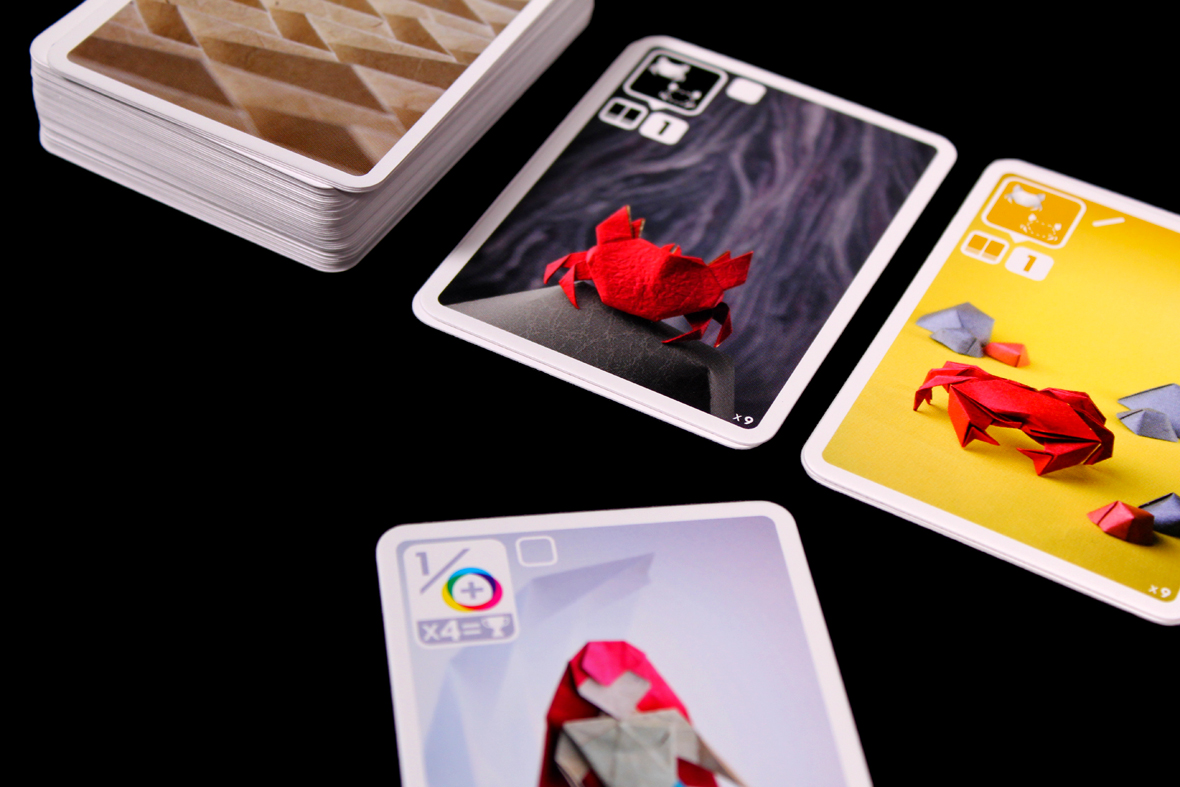
Certain cards (fish, shark + swimmer, boats, crabs) can then be played as a Duo, activating their effects:
- Fish: Draw the top card of the deck.
- Shark + Swimmer: Steal one card from an opponent’s hand.
- Boat: Take another turn.
- Crab: Look through one discard pile and take a card of your choice.
Note that if you get another Duo, you can play that as well (and so on). After your turn ends, if you cannot end the round, the next player takes their turn. If you have more than 7 points between your in-hand and played cards, you can end the round one of two ways:
- Declare “STOP!”: The round ends and all players score their hands and played cards.
- Declare “LAST CHANCE!”: You must play your cards face-up and declare your score. Every other player gets one more turn. After they’ve had their final turn, if no player has a higher score than you, you score your cards and one point per card of the color you have the most of. In that case, all players only score one point per card of the color they have the most of. If a player scores higher than you, you lose your bet and only score one point per card you have the most of. The other players score normally.
- If the deck is empty at the end of a player’s turn, the round ends without scoring.
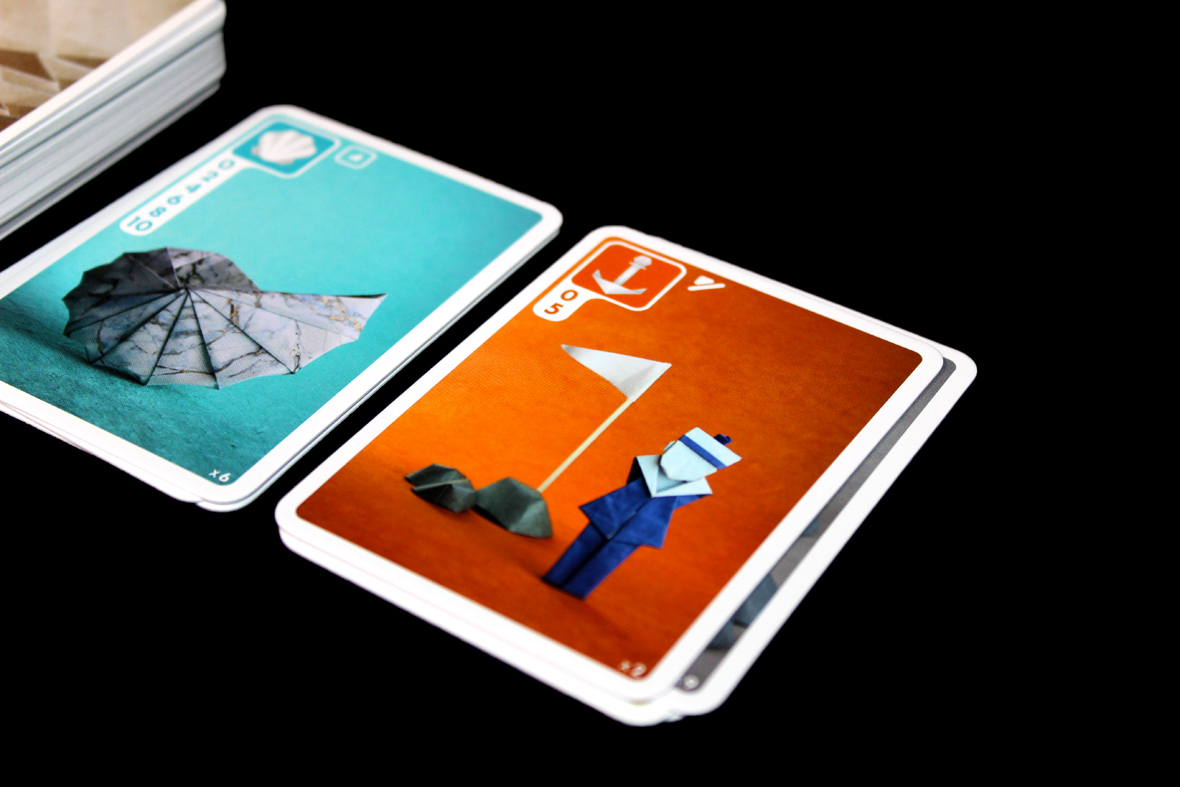
Scoring depends a bit on your cards. Most Duo pairs are worth 1 point per pair, and certain cards are worth points for other cards you have (the Captain scores per Sailor, the Lighthouse scores per Boat, things like that). There are also cards that score as a set (Octopodes, Penguins, and Shells).
The player to the left of the player who ended the round starts the next one. Play continues until the score threshold for your player count is reached, at which point the player with the most points wins!
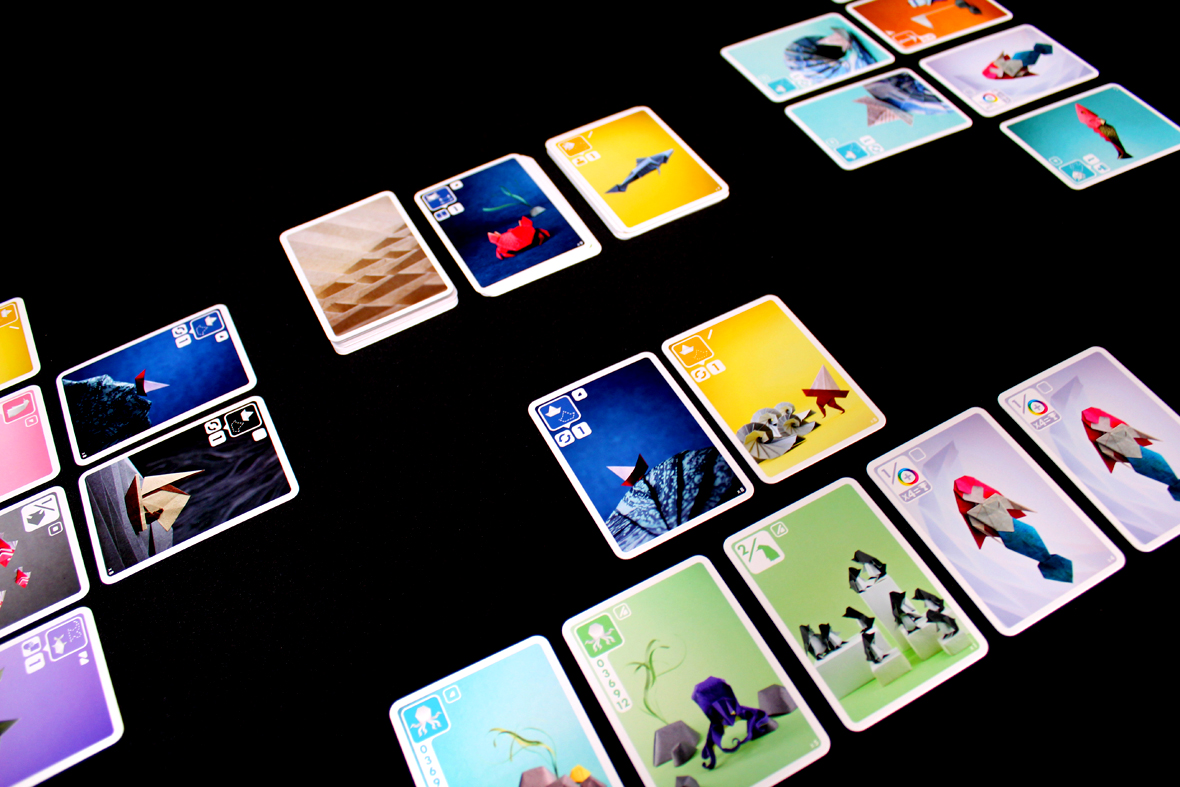
There is, however, a secret win condition. The Mermaid cards are special White cards that are worth one point per card in a color of your choice (they must be different colors, and you can choose White). If you ever manage to get all four Mermaids in your hand, you may play them like a Duo effect. However, instead of having any other effect, you immediately win the game! It’s very fun.
Player Count Differences
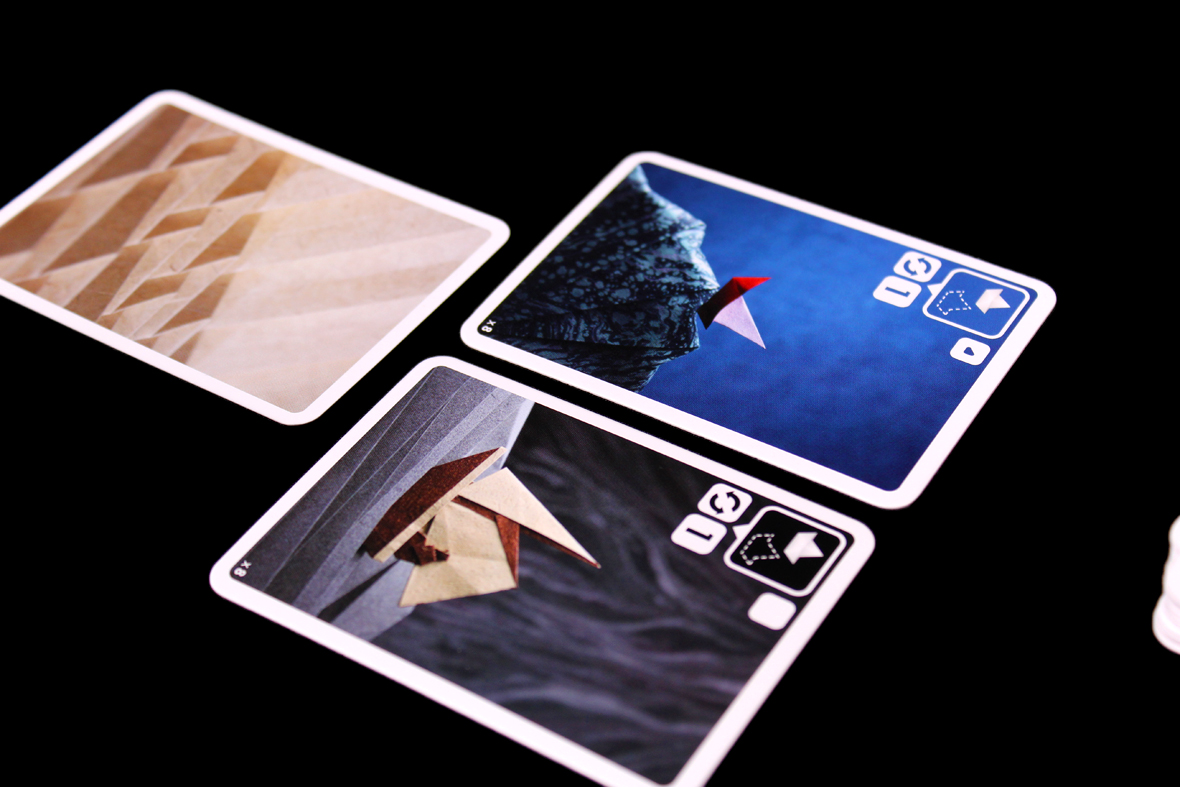
Being real, I’ve played about a hundred and sixty games of this at two players, so that’s my preferred player count, but that’s not particularly because of any issue with higher player counts. I just like the back-and-forth of two players. With more players, you can steal from the same person or gang up, and I’d rather just focus on one other player. Plus, it’s extremely unlikely you’ll get all four Mermaids, but that’s not really that big of a deal, I suppose. For me, it’s just the speed of play that really determines my two-player preference, here, though in-person I’d probably have no problem with more folks. It’s a light preference.
Strategy
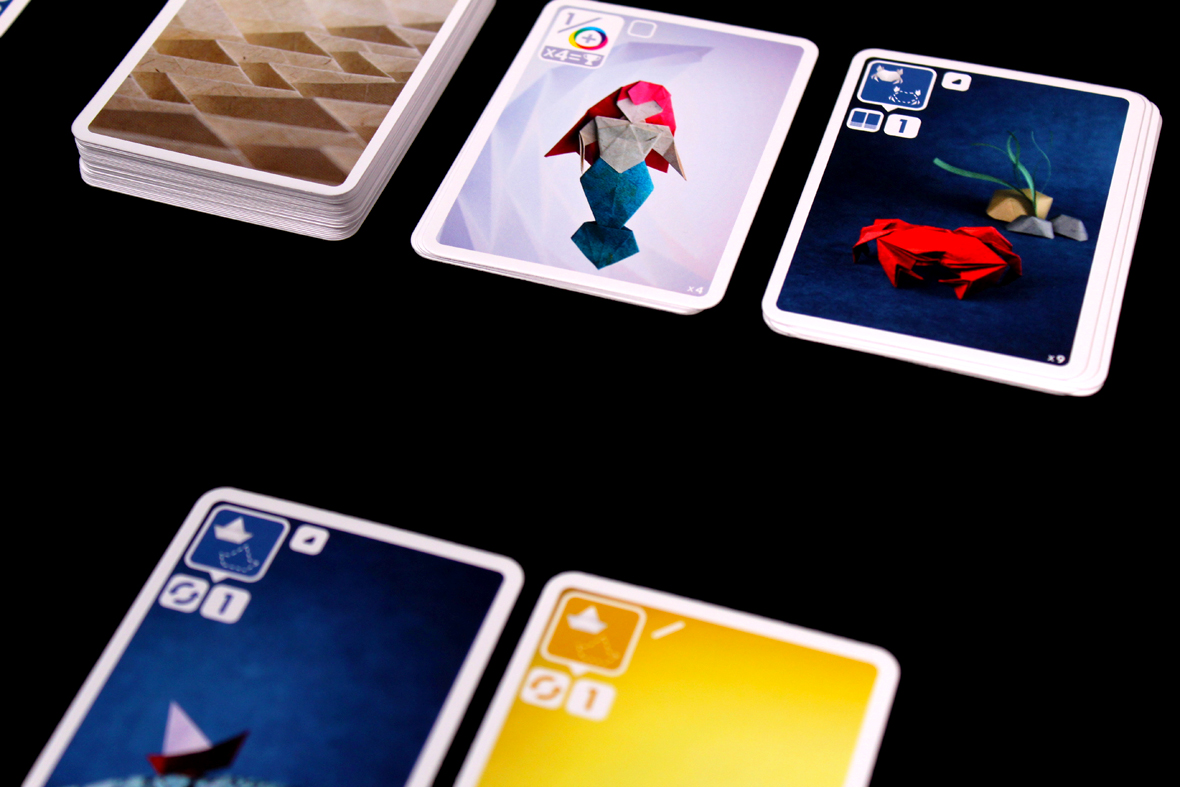
- I mean, Boats aren’t usually bad. They’re pretty helpful because in addition to getting points, you get to take another turn, so you can occasionally pocket them and chain together a few turns to try and end the round quickly.
- Robbing another player can be a helpful way to get some of those cards that they can’t play. Theft is bad and mean, yes, but if you see a player continually just drawing and keeping cards but never playing any of them, it might mean that they have some of the higher-value cards like the Octopus or the Sailor or the Penguin. Since they can’t play them and lock them in, there’s really nothing to stop you from playing a Shark + Swimmer Duo and taking one of them. That said, you might just end up with the one Crab they drew but haven’t been able to play. That happens sometimes as well.
- Careful when you pull from the discards! It might clue your opponent into what you have. Sometimes one of my friends and I will leave certain cards in the discard to bait the other player into taking it so that we know if they have The Captain or a Sailor or something like that. It can be an expensive way to deduce what they have. If your opponent has a bunch of Sharks and Swimmers, though, it can also be dangerous; it might make them steal from you instead of another player.
- There are some cards that I almost always take. I usually take the Sailors if I see them just because they’re worth 5 points together, which is huge if another player gets both. If they have The Captain, those three cards become worth a total of 11 points, which is alarming on its own terms. Sometimes it’s better to take a 0 for them just to break up someone else’s combo.
- LAST CHANCE is risky, but if you can make it work, it’s usually a solid payoff. I usually try to see how many cards my opponents have played and how strong of a hand I have. I won’t usually LAST CHANCE with 7 points unless there have only been like, three cards taken so far. If I have 10 points and we’re pretty early in the round I will LAST CHANCE, though. I’ve lost a LAST CHANCE with 10 points, though, and that hurts. So try to gauge how well you think your opponents are doing. If they have four cards, they’re all face-up, and it’s two boats and two fish, you’re probably doing okay.
- Players are fairly anti-Shell and anti-Crab, which you can sometimes make work for you. Shells have a decently-high startup cost, but there are a lot of them, so players tend to overlook them at times. Crabs let you pull from the discards, but there have to actually be cards you want. As a result, these two tend to litter the discards more than other cards, in my experience. If you go after these, though, you can have your pick (and use the Crabs to get even more Shells, which is nice). Your opponents will likely notice your shenanigans, though.
- Four Mermaids isn’t something you really strategize as much as it is something that happens. It’s a spiritual thing. That said, if you want to make it work for you, try stealing from your opponents or using Boats to sift through more of the deck. The more cards you see, the more likely you’ll find what you’re looking for.
Pros, Mehs, and Cons
Pros
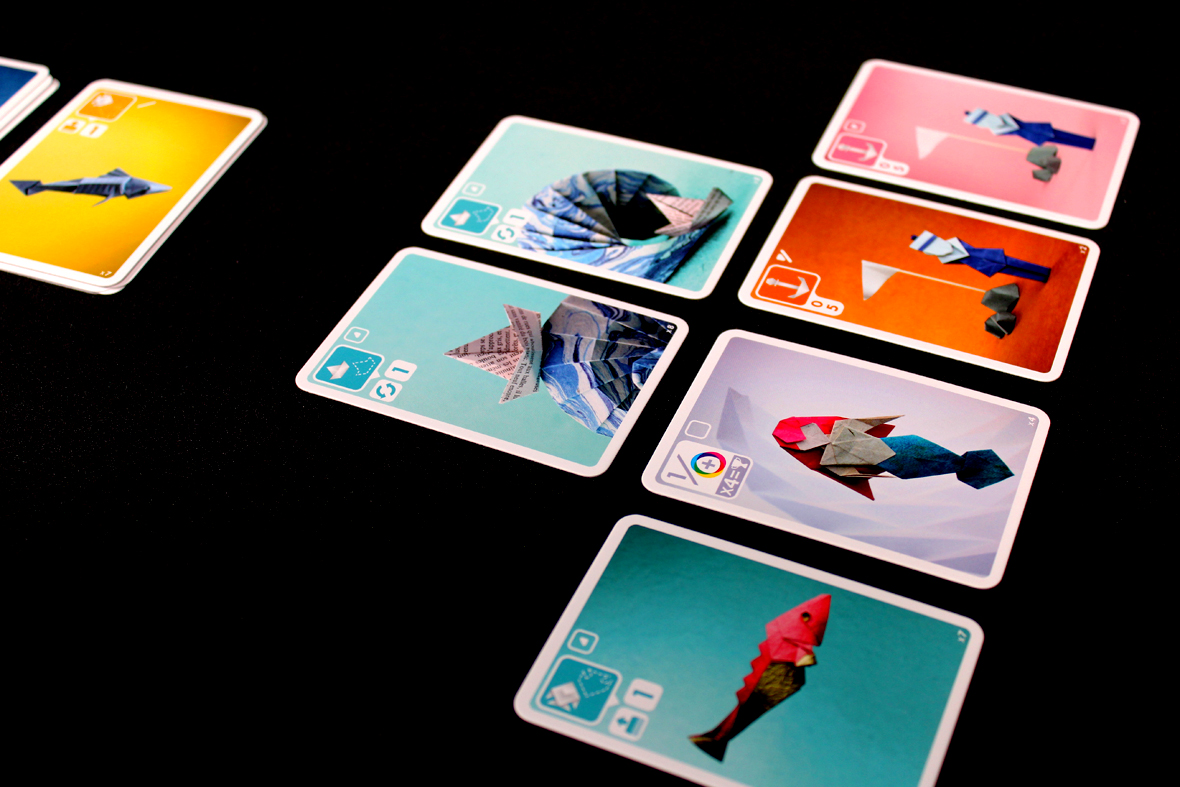
- I love the art in this game. The origami style is fantastic! It gives the game a very cool aesthetic that I haven’t seen a ton of other places. I particularly like the contrast of the pieces against the background! It makes me want to experiment more with my photography.
- No setup, which I really appreciate. You just kind of shuffle, flip two cards, and then you’re ready to roll. I love games like that.
- Pandasaurus did a thing I like a lot and made this a telescoping box rather than a tuckbox, so it’s not going to get annihilated when I take this game everywhere with me. The original version was a tuck box, which, fine, but I always see those get shredded and I really like this game, so I don’t want that to happen. Half the time they get messed up before I can even get them into the studio for photography, so that’s never great. Love a nice telescoping box, though.
- Plays nice and quickly, and the scoring scales with multiple players, which is good too. I appreciate that the scoring threshold to end the game decreases with more players so that the game goes “faster”, to some degree (assuming each player scores at least a little bit every round). It keeps things moving.
- This is relatively easy to teach, but once you get the symbols down, it’s very easy to power through. As I mention elsewhere, the duo vs. non-duo cards can cause a bit of player confusion. Board Game Arena helps a lot with that since it doesn’t mark the cards as playable, but what can you do. Once you’ve got it, though, it’s a very fast game.
- It honestly feels like a classic card game, and plays as smoothly as one, too. Draw two, keep one; not much more complicated than that beyond deciding which cards to play for their bonus effects. I love it.
- The tension between STOP and LAST CHANCE is delightful; do you take what you have or risk it to stomp your opponents and get even more? Sometimes you have to if you want to have any shot of winning. Push your luck is one of my favorite mechanics, specifically because I’m so bad at judging whether or not pushing my luck will pay off. Here, though, it can really cost you in points, especially if your opponent gets a dynamite combo and pulls off a gross upset. I kind of love the thrill of it, though, so I’m glad it’s there instead of just letting you STOP and score what you score. It’s a very meaningful tension.
Mehs
- There’s some potential for dogpiling if multiple players are stealing from one player, especially since the scores carry over from round to round, which isn’t my favorite. I just dislike when games allow players to dogpile. Not much to be done about it beyond just taking cards that players can’t use when they steal from you, or stealing from them, first. Either can work. I think I would have liked if there were another take-that option in the game to balance against.
Cons
- New players tend to get confused as to which cards are “playable” and which aren’t; I do wish there were something a bit more visual to make that difference clearer. This is really my only issue with the game, and it comes up a few times in the early plays. Some players think that they can play two of any card and keep it safe, so they might inadvertently reveal certain cards or take other cards because of that (or try to play the wrong cards). The real fix for this is just taking care to explain how duo cards work to players. It would be nice if they had some visual that was more indicative, but, oh well.
Overall: 9.5 / 10
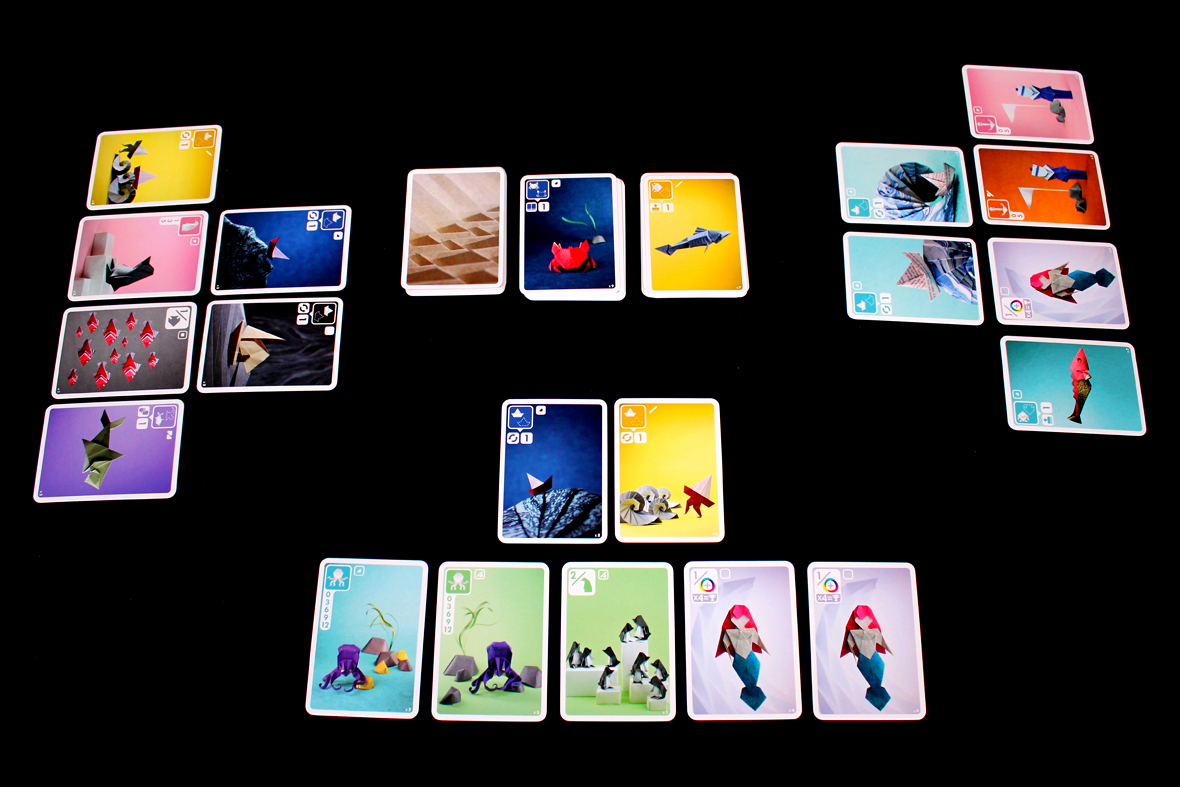
Yeah, unsurprisingly, overall I really love Sea Salt & Paper. Like I said, play any game 150+ times and you start to develop a real soft spot for it. I have a couple standing games with some close friends and we’ve been playing back and forth for at least six months, I think. I find the simplicity of the gameplay elegant, and I really appreciate how back-and-forth the two-player game is. Simple card play plus push-your-luck is usually a recipe for success for me, so I’m always coming back to this one. I do think there could be some visual updates to make things a bit clearer for new players, though; that would be a nice way to alleviate early-game confusion for some folks. But even then, they pick it up pretty quickly and they’re well on their way to the four mermaids outcome. I’ve had it happen twice; it rules. I love games with secret win conditions. That all said, I think Sea Salt & Paper has all the feel of a classic game with some elegant art helping bridge the gap between mechanics and visuals. It’s a game that’s every bit as fun to play as it is to look at, and easily one of my favorite games of the year. If you’re looking for a small card game with a lot to offer, you enjoy origami, or you just want to spent your life pursuing the four mermaids, I’d highly recommend Sea Salt & Paper! I really love this little game.
If you enjoyed this review and would like to support What’s Eric Playing? in the future, please check out my Patreon. Thanks for reading!
 What's Eric Playing?
Have you tried it with the ‘Extra Salt’ expansion?
LikeLiked by 1 person
I haven’t yet! Hoping to do so soon.
LikeLiked by 1 person
I’ve played the base game around 50 times. How’s the card quality? read somewhere that they were cheap.
LikeLike
oooh I haven’t had an issue with the Pandasaurus box; I’ve mostly been playing it on BGA though, and the card quality there is great. 🙂
LikeLiked by 1 person
haha, yea that’s where I’ve been playing as well – always great quality cards
LikeLike
I am new to your blog. For Sea Salt and Pepper, I am interested what your experience with Gin Rummy is?
I like Sea Salt and Pepper, but I see it as a more modern take on Gin Rummy and I generally prefer Gin Rummy.
The one change Sea Salt and Pepper does that I really like is having two discards. There is some interesting decisions in which discard you discard to.
However, the action cards feel kind of basic and “take that,” while the set collection seems overly focused on the Mermaid cards. I rarely got the Sailor or other high point set cards to work (as that is just pure luck), so I found myself digging for Mermaids and trying to steal my opponent’s mermaids. With four in the deck, in a two player game at least one player will probably have one or two.
Those two issues (uninteresting sets and boring power cards) detract from the game for me, rather than add to it.
LikeLiked by 1 person
I haven’t actually played much Gin Rummy!
LikeLike
Do you share your BGA name?
LikeLike
Not generally, though I’m not opposed to it. It’s, unsurprisingly, whatsericplaying, lol.
LikeLike