
Base price: $30.
2 – 4 players.
Play time: ~30 minutes.
BGG Link
Buy on Amazon (via What’s Eric Playing?)
Logged plays: 3
Full disclosure: A review copy of Splendor Kids was provided by Asmodee.
On the plus side, I should actually get a little bit more ahead this week, more out of necessity than anything else. I’m headed on a trip next weekend, so in order to prep for that, I need to get reviews done before the weekend. There’s a slight chance I can finish things up when I get back, but that feels needlessly risky? Almost inviting catastrophe? I don’t know; we will see. But in the meantime, let’s head toward simpler fare with Splendor Kids!
In Splendor Kids, you’ve been invited to the Queen’s Palace! It’s a very fancy shindig, but she lives far from the port. It’s more luxurious, but transit isn’t provided. You’ll have to make your own way there. You arrived broke, wildly, but you can figure things out on the way. Barter system? Villages and cities will help you if you can reach them, though, so it’s worth getting there if you can. Arriving at the palace will earn you a fancy medal and the Queen’s favor, so work on that! Will you be able to make it to the palace in time?
Contents
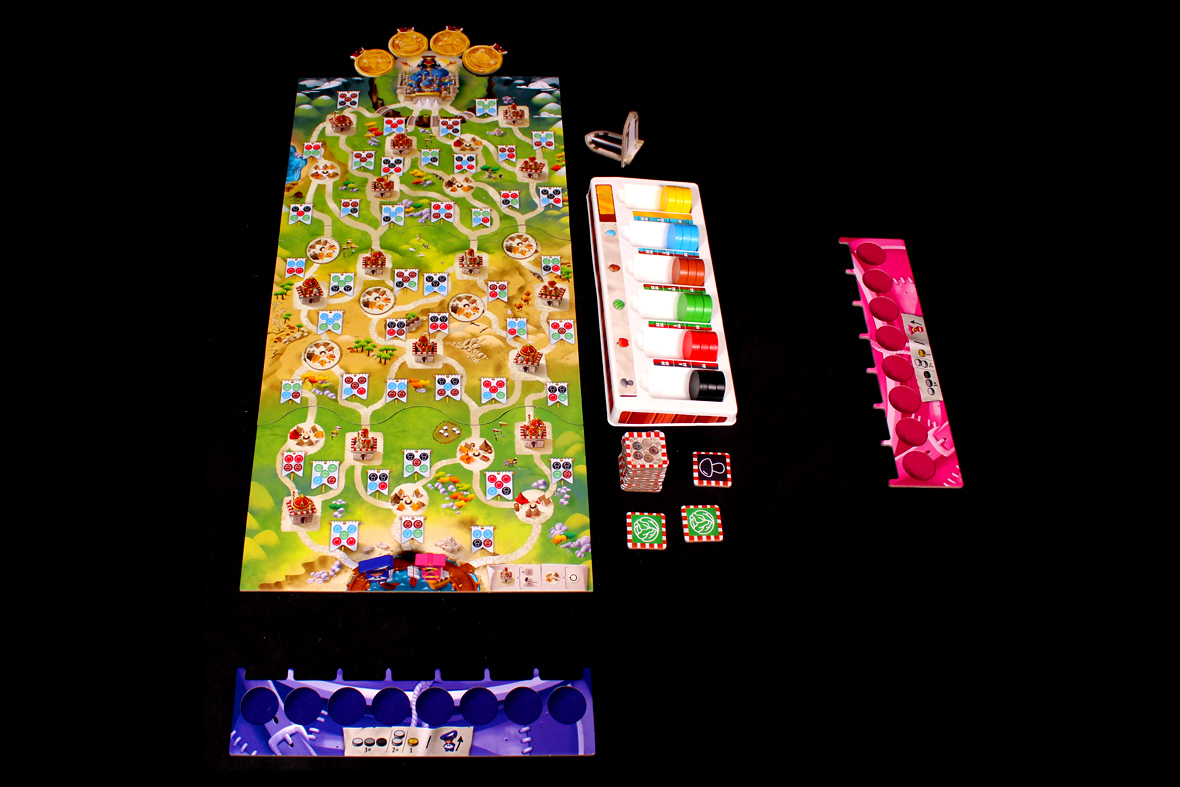
Setup
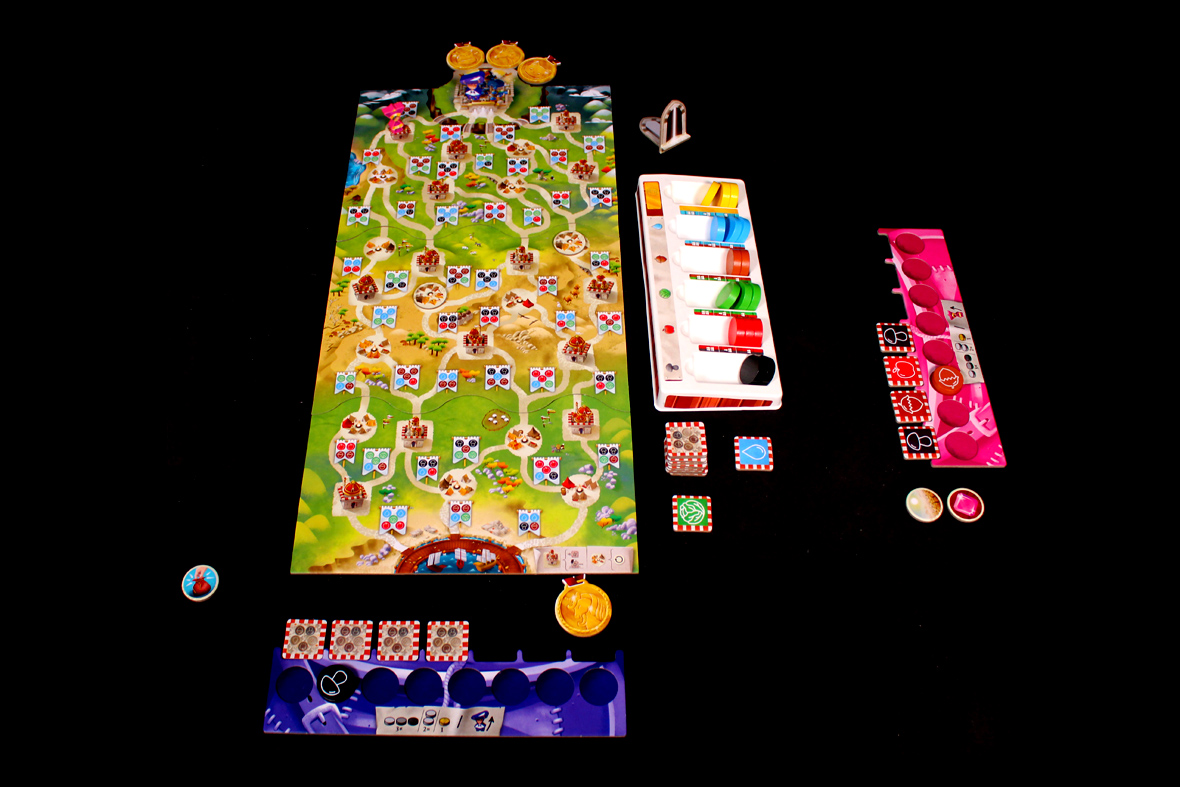
First thing to set up is the board:
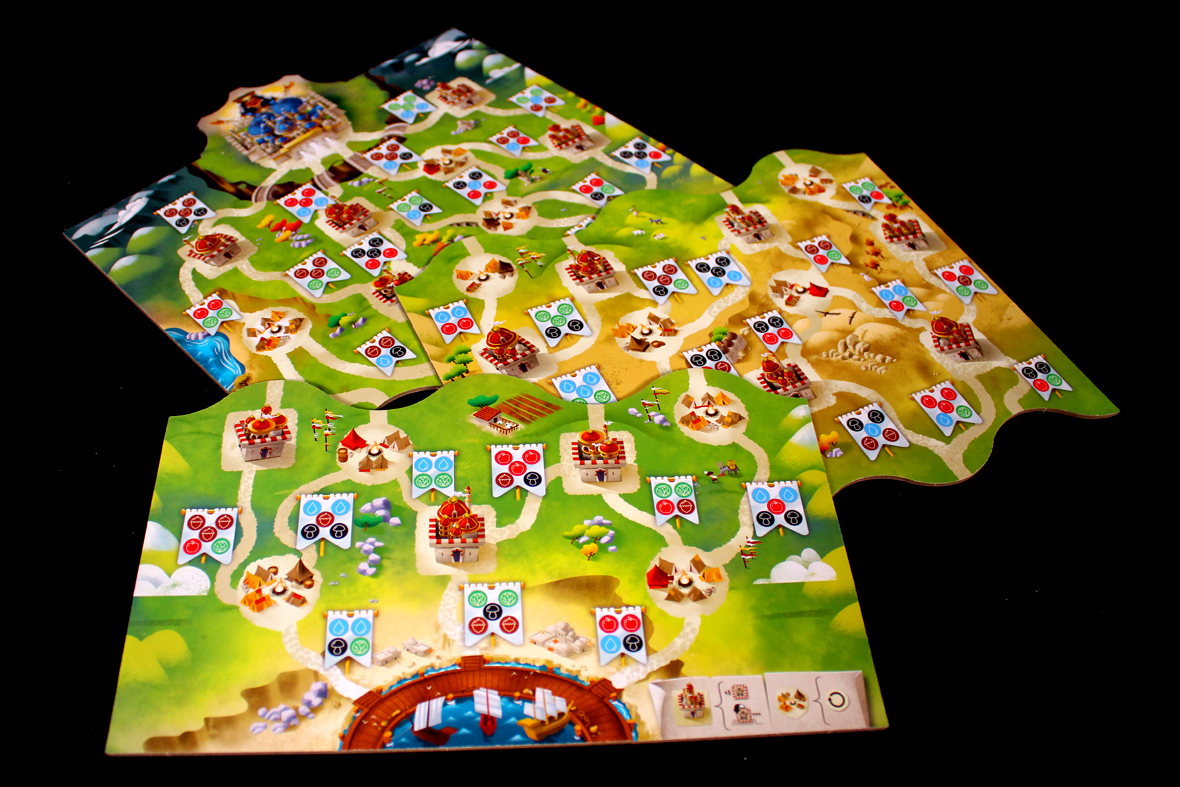
For a shorter game, omit the middle board piece. The pieces are double-sided, so you can flip them to your satisfaction. Set out the resource tokens next:
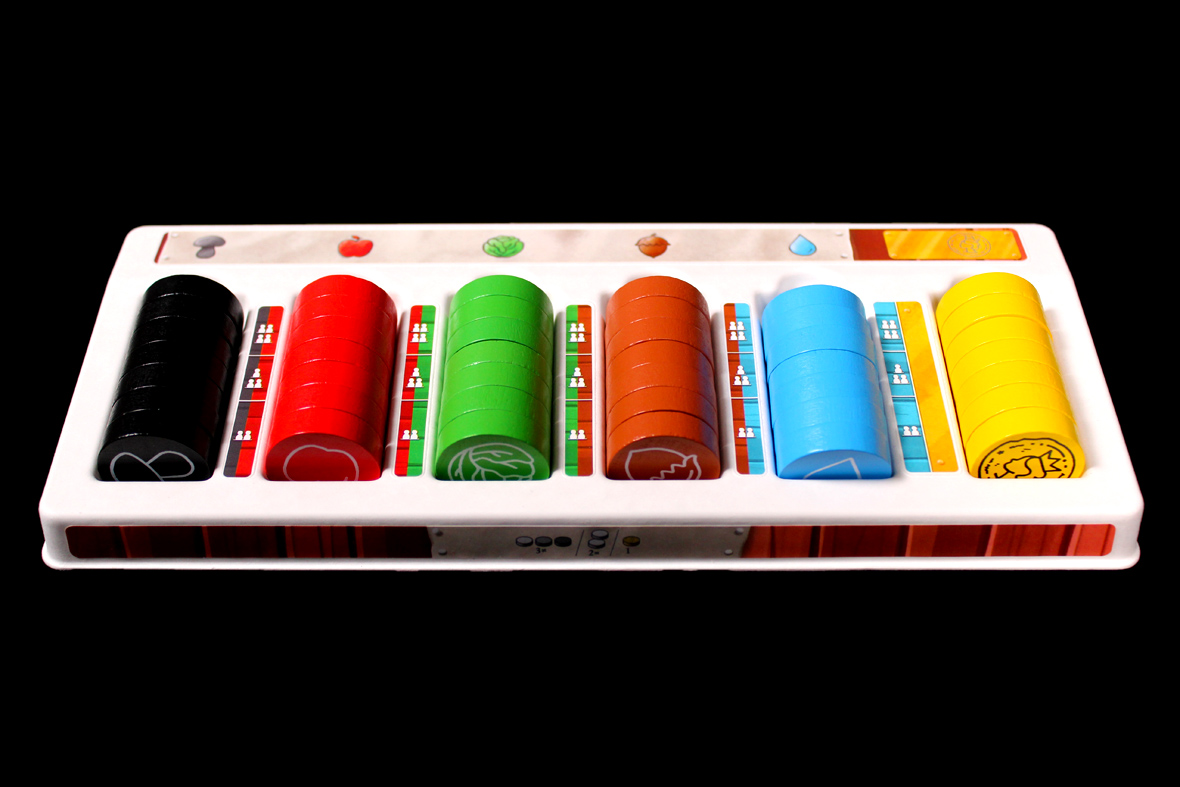
What you need is based on player count:
- 2 players: 3 resources of each color
- 3 players: 5 resources of each color
- 4 players: 7 resources of each color
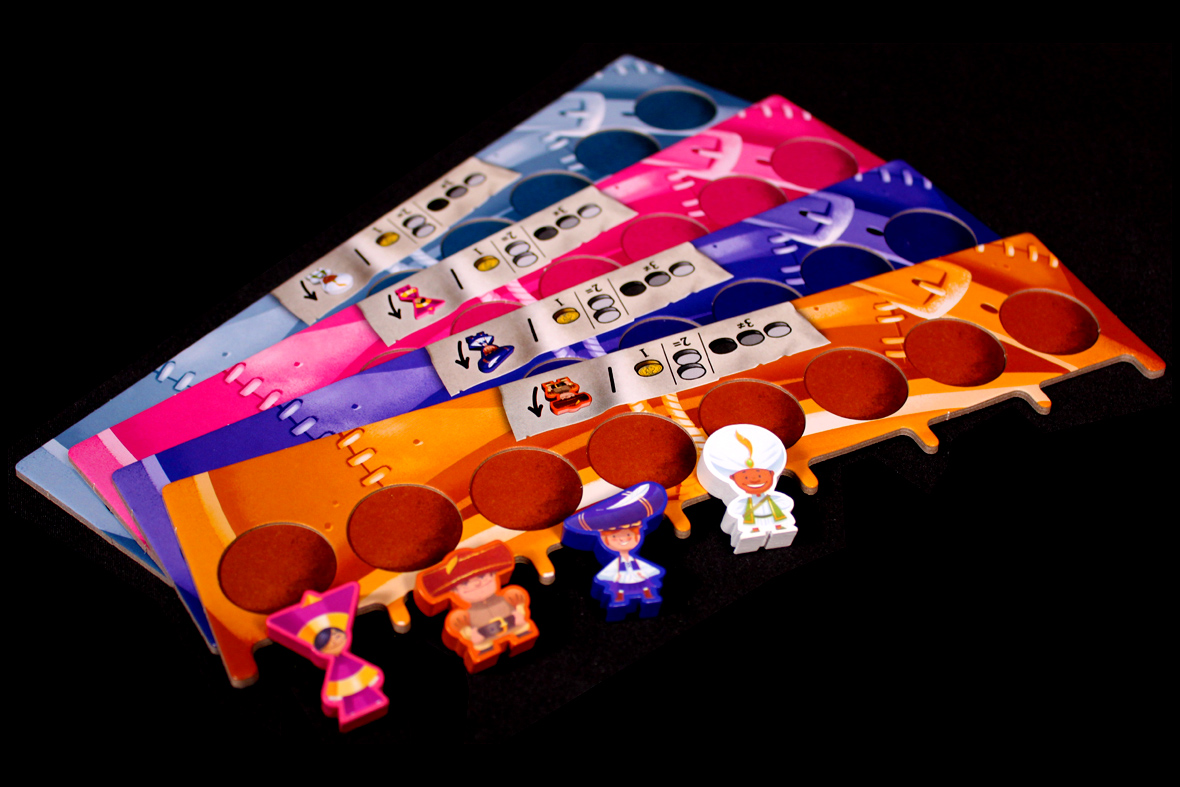
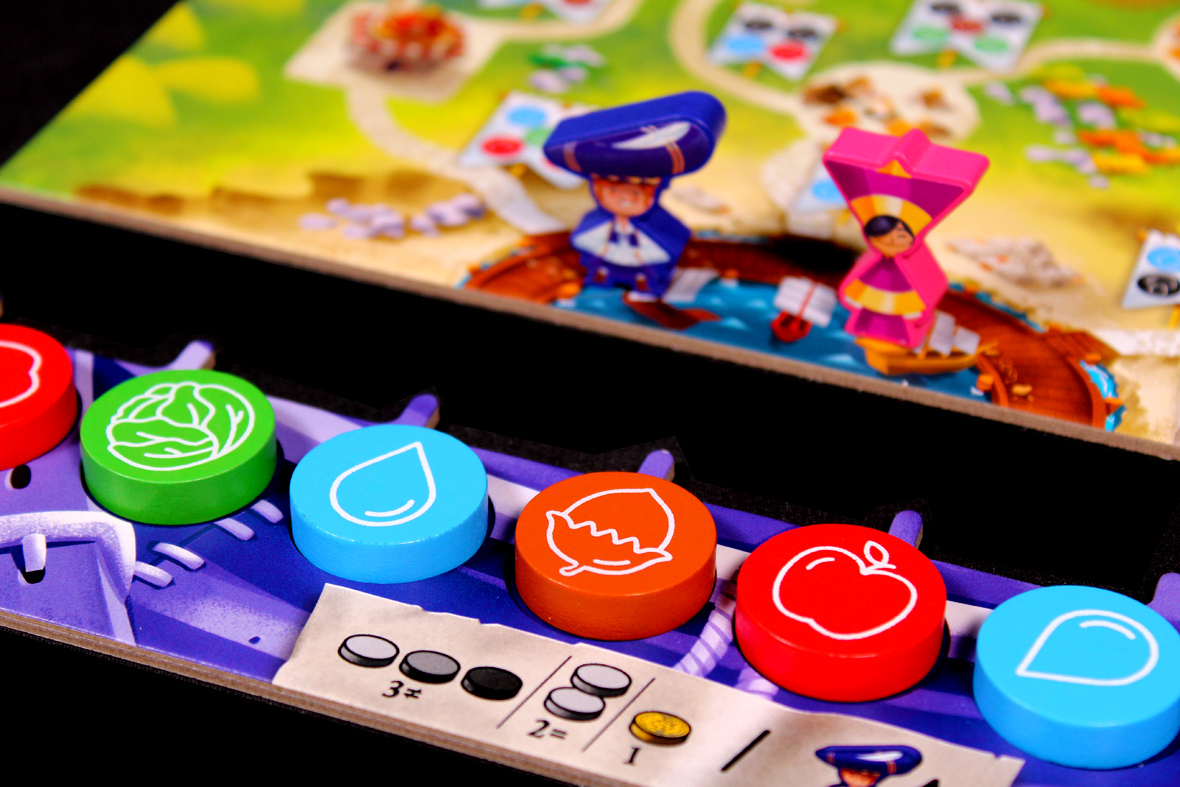
Each player gets a purse board to hold resources and a corresponding Traveler token:
Shuffle the City Tiles and make a face-down stack.
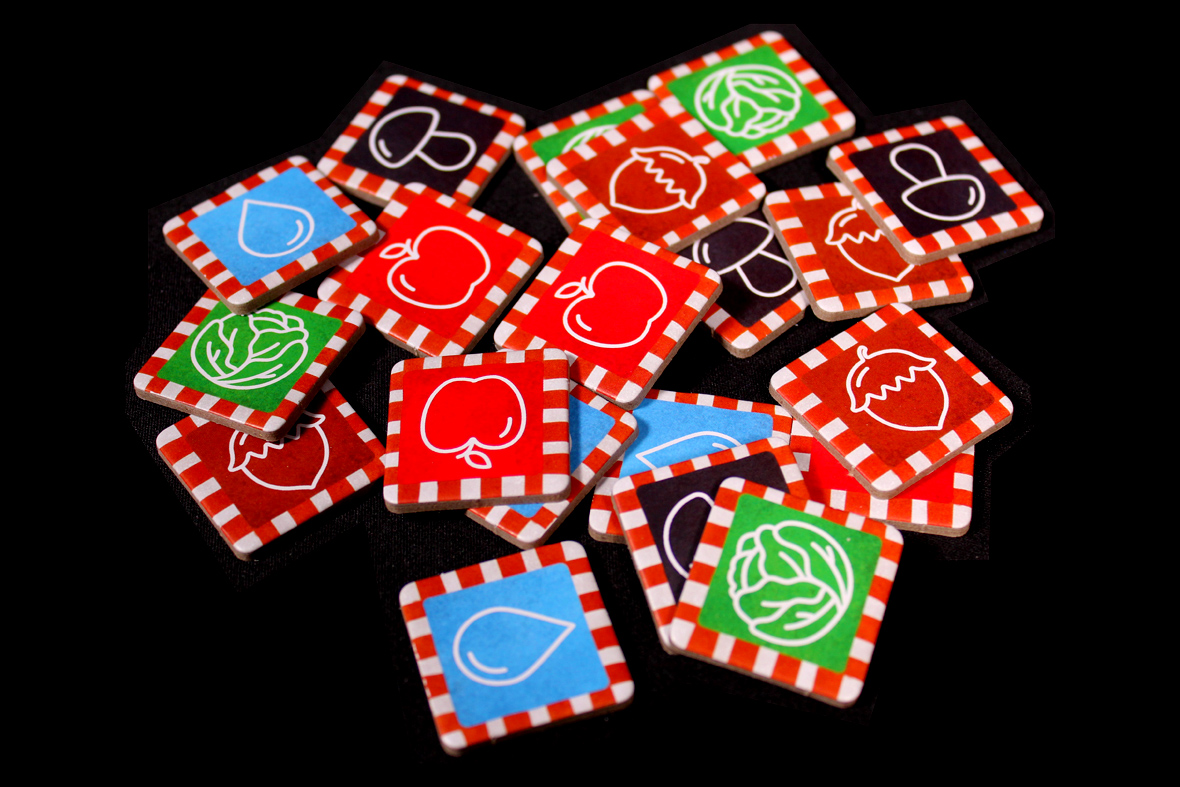
To make the game a bit more strategic, you can reveal three of them face-up, if you want. You can set the Palace Gates and the Queen’s Medals near the Queen:
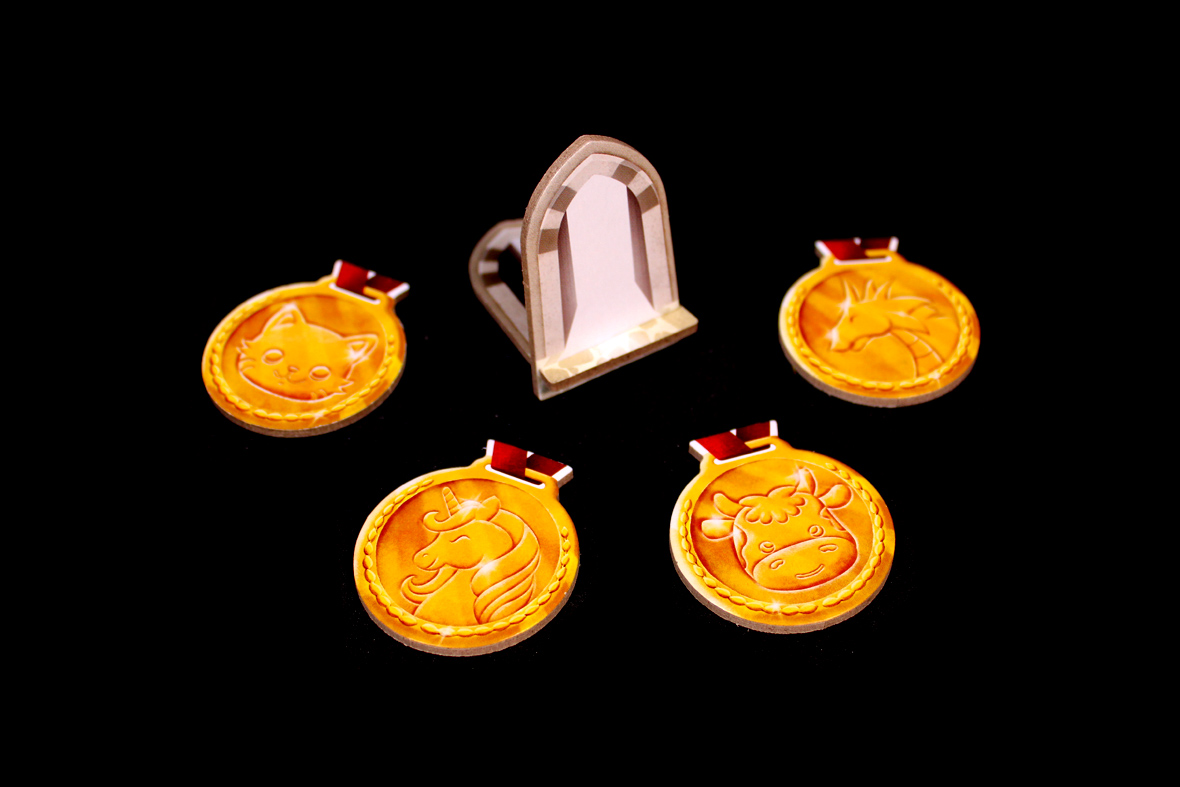
For an advanced game, shuffle the Village Tiles and place them on the Village spaces on the middle section of the board:
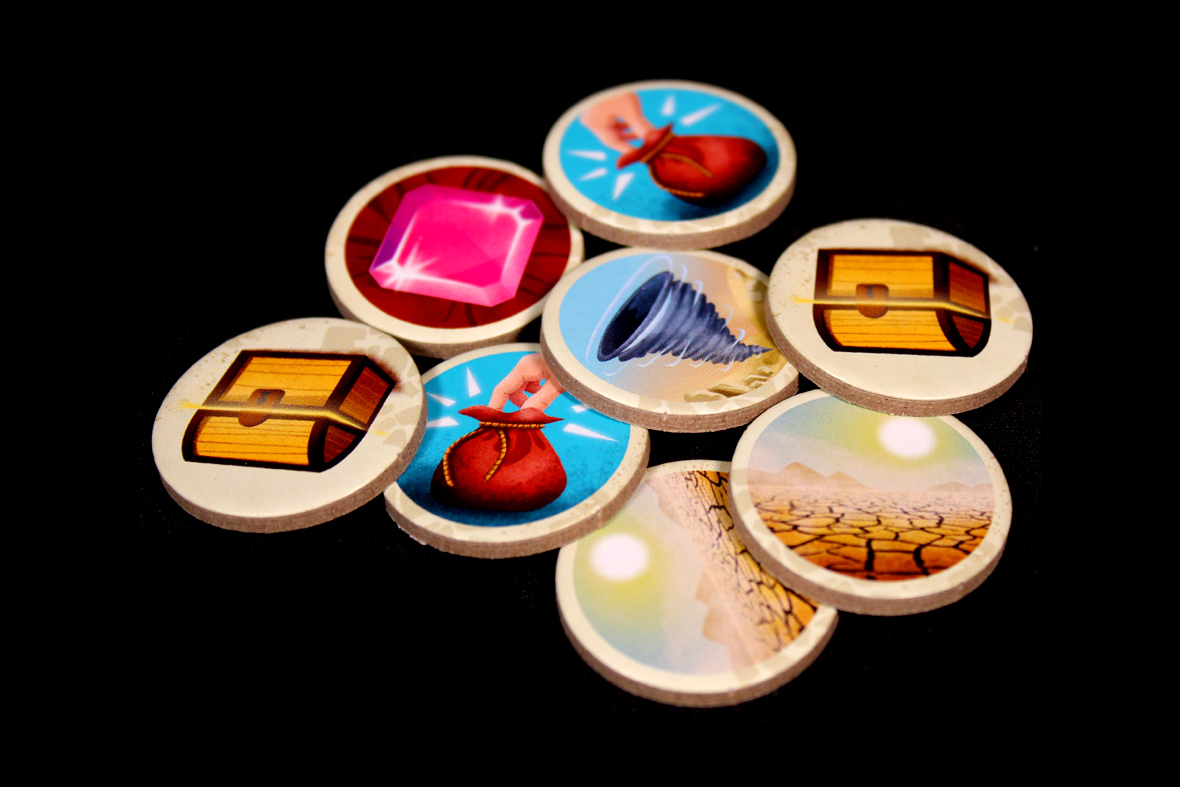
You should be ready to start!
Gameplay
Not too complex, this one. Your goal is to make it to the Queen’s Palace before the doors close and the party begins!
Each turn, you can either take resources or move. If you take resources, you must take three different resources, two of the same resource, or one gold (wild resource). Pretty simple.
To move, you must choose the direction you want to go and spend the printed resources. If you have City Tiles with that resource on them, you may flip the City Tile over instead. Where you move to matters, also! If you move to a Village, you immediately take another turn. If you move to a City, you immediately gain a random City Tile and refresh all of your face-down City Tiles, flipping them face-up.
Play continues until a player reaches the Castle! They immediately take a medal and switch the Palace Gates from Open to Closing. After the last player takes their turn, the Palace Gates close and the game ends. All players with a Medal win!
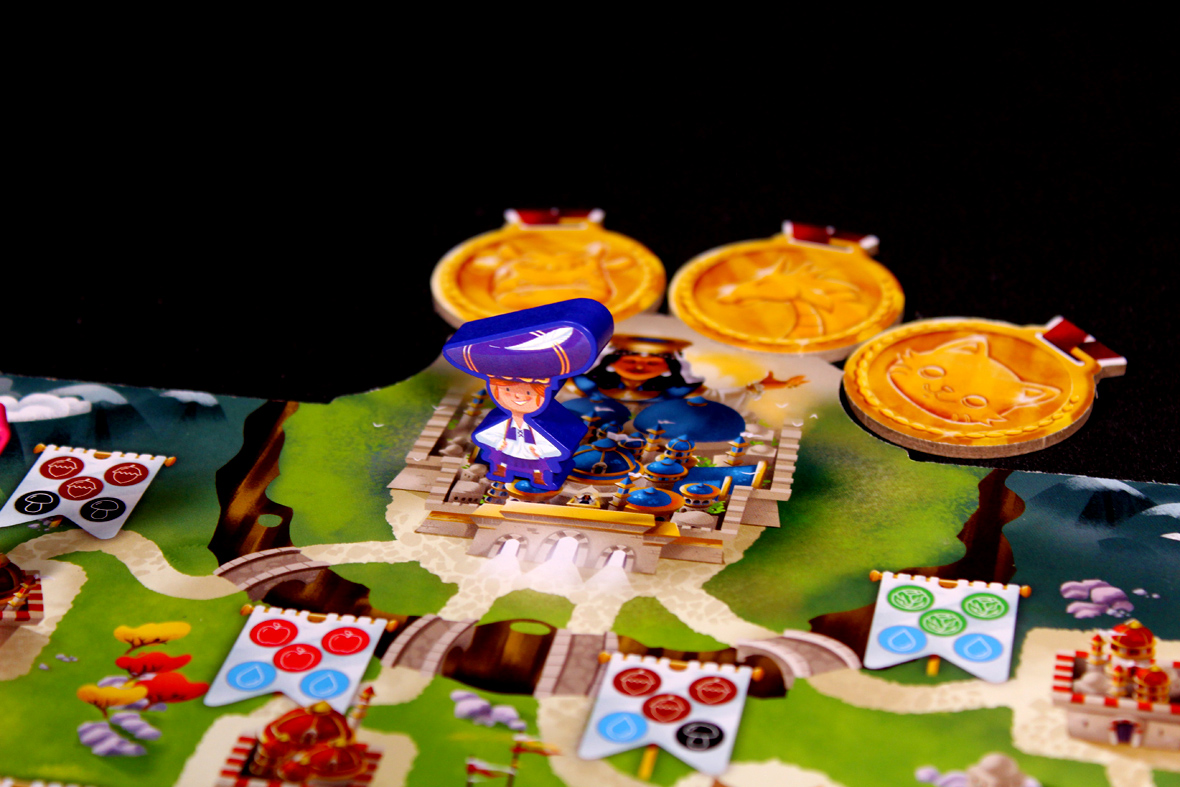
For added challenge, there are a few extra variants. The first adds a row of three City Tiles that are visible to all players. When gaining a City Tile, you may gain from that row instead of drawing from the top of the stack (or draw from the stack as normal). There are also random Village Tokens that can be placed on the villages on the middle piece of the board. When you land there, one is revealed, and they have a variety of effects (both good and bad!).
Player Count Differences
Not a ton, really; with more players you add more resources to the starting pool, so it’s often not a bad thing if more people are about. They’re picking different pathways (usually), so there’s not too much more fighting over resources. If you’re trying to follow someone else, well, don’t? You’ll have trouble getting what you need to move forward, and that’s never ideal. The board doesn’t really change with player count; it’s pretty much all resources. You can still try to jam up the works and hoard a critical resource at any player count anyways, but, I mean, if you see your kid trying that, that’s tyranny. Tell them to cut it out. No major player count preference otherwise, though.
Strategy
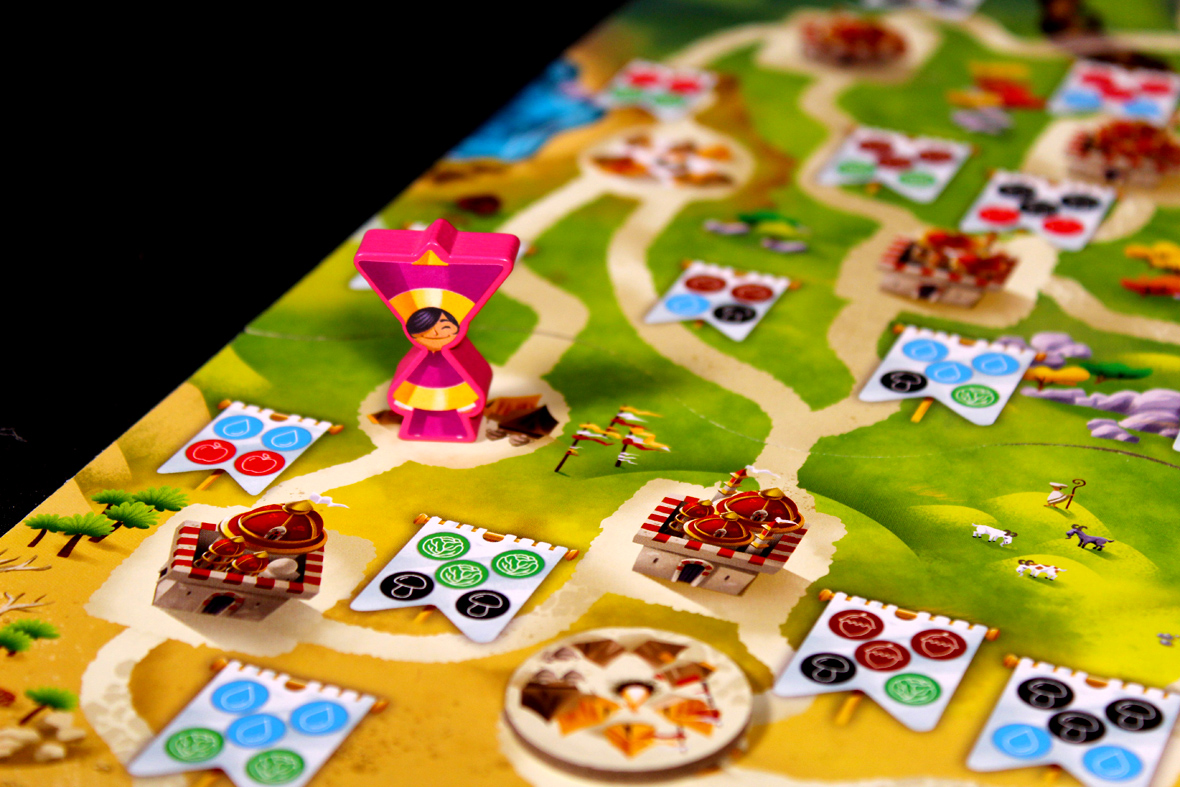
- This game’s an efficiency puzzle. As Splendors go, that’s kind of the business. You need to make sure that your moves lead to being able to move rather than getting stuck with a bunch of resources you can’t use. That’s the name of the game. Ideally, every set of three resources you take on your turn will be used eventually, since you get the most resources that way.
- If you’ve got nothing better to do, take something someone else might need? If you can clear a pile of resources, then your opponents can’t grab them if they need them and might be forced to either take two of the same resource or a gold. Both are less efficient!
- Planning ahead is usually a better option. Taking what you need is good, but you need to be able to use it. Otherwise, you’re junking up your resource bin, which isn’t sustainable either.
- Taking City Tiles is nice, but that extra turn from a Village can be pretty helpful (especially since Villages usually cost 4 tokens instead of 5). It really just depends on what you need in the moment and what you can actually pay for. Stay a little dynamic with that; don’t just go after City Tiles if you’re not going to use them.
- Everyone can win. It’s a race, granted, but if everyone arrives in the same round then everyone can win. It’s worth keeping that in mind, as sometimes stalling someone isn’t going to make them lose; it might just be the thing you need to help you win.
- Village Tokens are kind of a mixed bag; sometimes you’re better off just having ignored them. There’s at least one that forces you to helpfully donate a resource to another player, for instance. Other ones give you a Gold, but, there’s really no way to know.
- Sometimes taking a Gold is the best you can do, but that’s usually not ideal. It lets you fill in a gap but it’s literally two resources fewer than you can otherwise get.
Pros, Mehs, and Cons
Pros
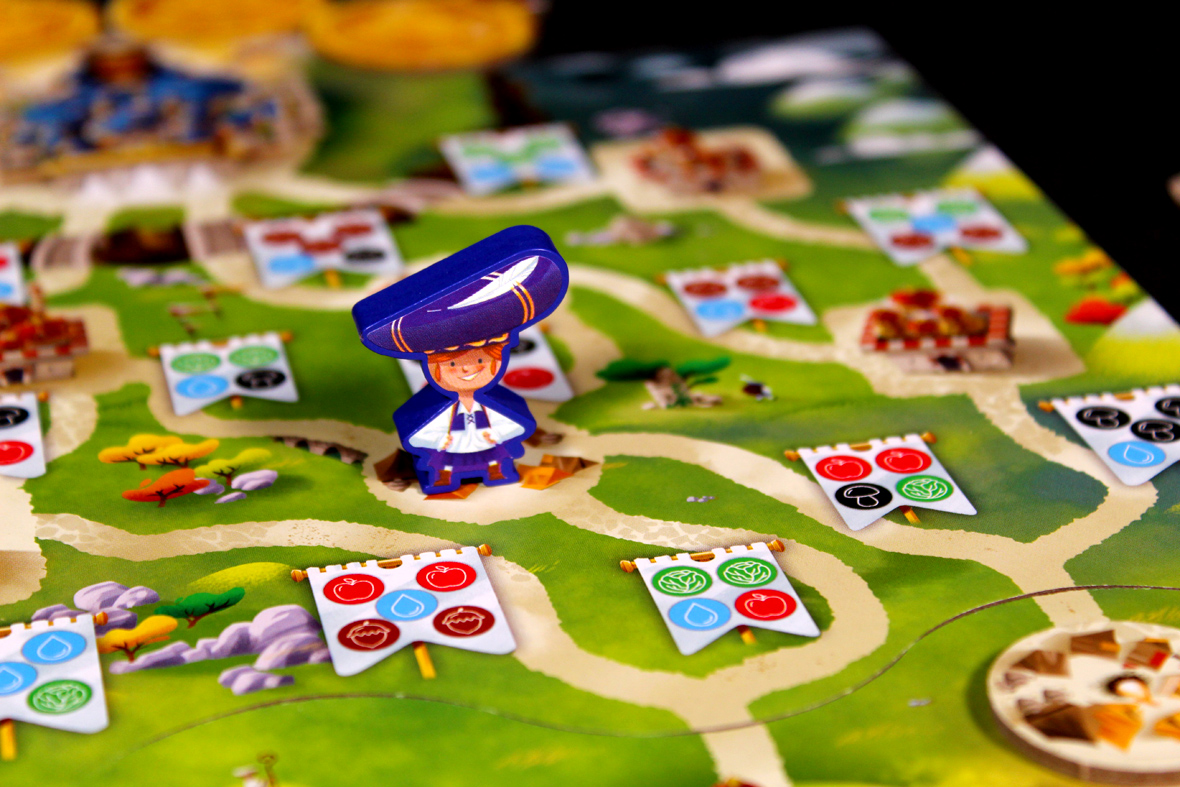
- More player tokens should have legitimately silly hats. I think that’s the gold standard for all player pieces. Even better if they can have interchangeable hats.
- I like how they make the “finish the round” of many games more explicit for kids. It makes it a lot easier to know when the game is ending.
- Plays pretty quickly. I think one major part of this is that they kept the simple and short turns of the original game. The actual spending of tokens is simplified, since there’s really only two options based on where you are. Keeps things moving at a pretty snappy pace.
- I like that you can flip the board or remove the center component to mix up the gameplay. Removing the center to make the game shorter is great when you’re first getting started, and then you can add it back in to get the game back to its usual length. Either way, though, the top and bottom of the board can be flipped over to
- It did make me miss Splendor to some degree. It’s been a while since I’ve played! I kind of wanted to get back into it.
Mehs
- I selfishly miss the super-weighty and pleasant poker chip resources from the original Splendor. I really like poker chips as a component. They’re well-made and pleasant. The tokens here are cheaper for sure. They’re not bad, but I do miss the originals.
Cons
- There’s a pretty nontrivial luck component with how the City Tiles work. Luck of the draw is what it is in certain games, but it comes up the most with City Tiles. Randomly drawn, you might get something that’s functionally useless. Not good, given that it usually costs more to go to a City. There’s something
Overall: 7 / 10
Overall, I enjoyed Splendor Kids! It’s another smartly-designed kids game that is ideal for younger players and grows and scales a bit as players grow. I particularly like that the modular board not only is double-sided, but also can have the middle removed for a shorter game as desired by the players. It’s smart. Playing it made me nostalgic for the full Splendor; it’s been a while. Maybe the Duel version? Haven’t tried that one yet. This definitely feels more like a learning game, to some degree, and that may or may not be what you’re looking for. One of the big critiques of the original Splendor is that some things can largely come down to luck of the draw. One character gets a lucky card and a favorable flip and they’re off to the races. Here, that problem isn’t really mitigated. Even as you introduce City Tiles, a player getting a more relevant City Tile for their goal than another player is going to have a better time. For an added challenge, there are Village Tokens with unique abilities added, but even these run into the same problem. Granted, a little luck isn’t going to kill anyone, but it can occasionally be frustrating when someone’s learning to play and another player just happens to get better draws than they got. I don’t think that’s going to be an overwhelming negative for this game, but if you’re worried your players may respond negatively to that, it’s at least nice to know. One big win here is that all the player pieces have incredibly silly hats, which I’m overwhelmingly enthusiastic about. Someone gets me. If you’re looking to get kids into gaming, I think this and Sandcastles of Burgundy are both great recent steps in the right direction. If you’re looking to play a fun and silly game with your kids, ICECOOL and Rhino Hero are both also available. Both pathways exist and that’s cool! For the little eurogamers in your family, though, Splendor Kids might be just what you’re looking for. It’s neat!
If you enjoyed this review and would like to support What’s Eric Playing? in the future, please check out my Patreon. Thanks for reading!
 What's Eric Playing?