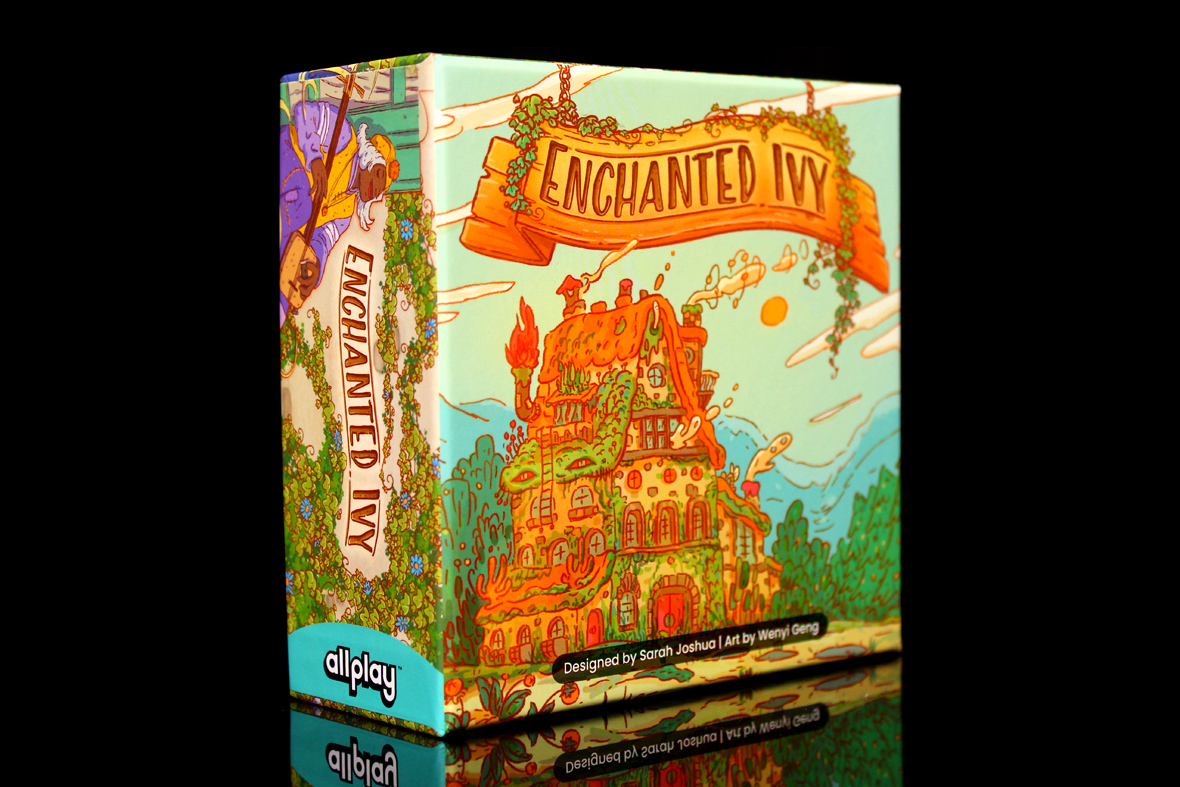
Base price: $19.
1 player.
Play time: 10 – 20 minutes.
BGG Link
Buy directly!
Logged plays: 4
Full disclosure: A review copy of Enchanted Ivy was provided by Allplay.
There have been a lot more solo game reviews on the site, lately. Is that a function of me still setting up a gaming group? Probably. Is it also just that solo games are getting really good? Yes. With Button Shy’s Simply Solo series setting up a ton of great, portable solo titles, it’s nice to see more companies playing around in the solo space, like Renegade’s Solo Hero series or, impressively, Allplay’s first solo-only title. Solo-only is risky! It can turn off some players or challenge the idea of what people look to board games for. So if you’re going to lead with solo play, you’ve got to make it compelling. Does Enchanted Ivy live up to the challenge?
In Enchanted Ivy, players now own a new Inn, all their own. Sort of a Stardew Valley leave-your-old-life-behind kind of deal. Ivy, the proprietor and POV character, has a lot to learn and a lot of guests to take care of. It’ll be a busy time. Thankfully, it’s a magical inn, so there’s plenty to discover along the way; we’re not only cultivating ivy around here. What awaits you behind some of these magical doors? What strange and quirky guests will stop by? One way to find out!
Contents
Setup
There’s actually not a ton; it’s usually dictated in the scenario booklets if you’re playing Story Mode:

If you’re playing Endless Mode, use one of the Endless Mode cards:

Shuffle up the Ivy / Wall Cards and then use the number indicated.

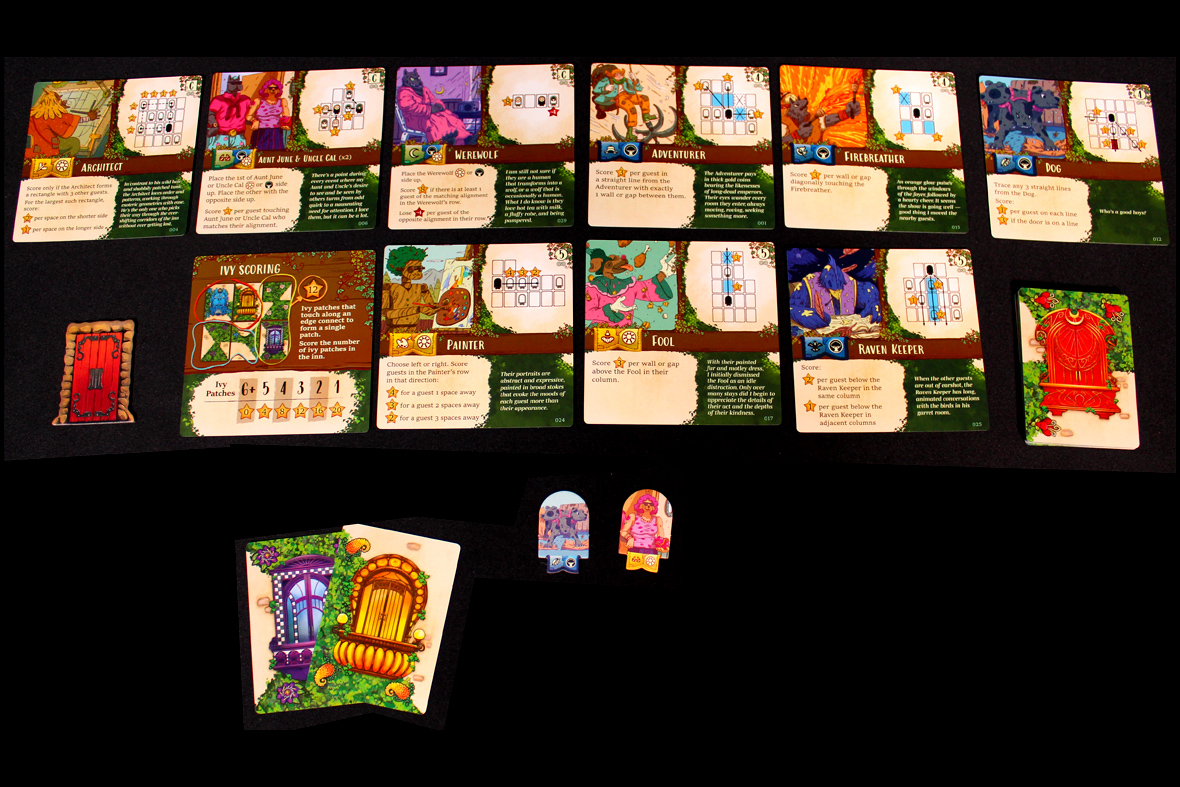
You’ll need the Guests and their Tokens. Story Mode will tell you which to use; Endless Mode lets you pick two Number Groups and a Letter Group (checking the letter / number in the top-left corner). Set those Guest Cards above or on the side of your play area:
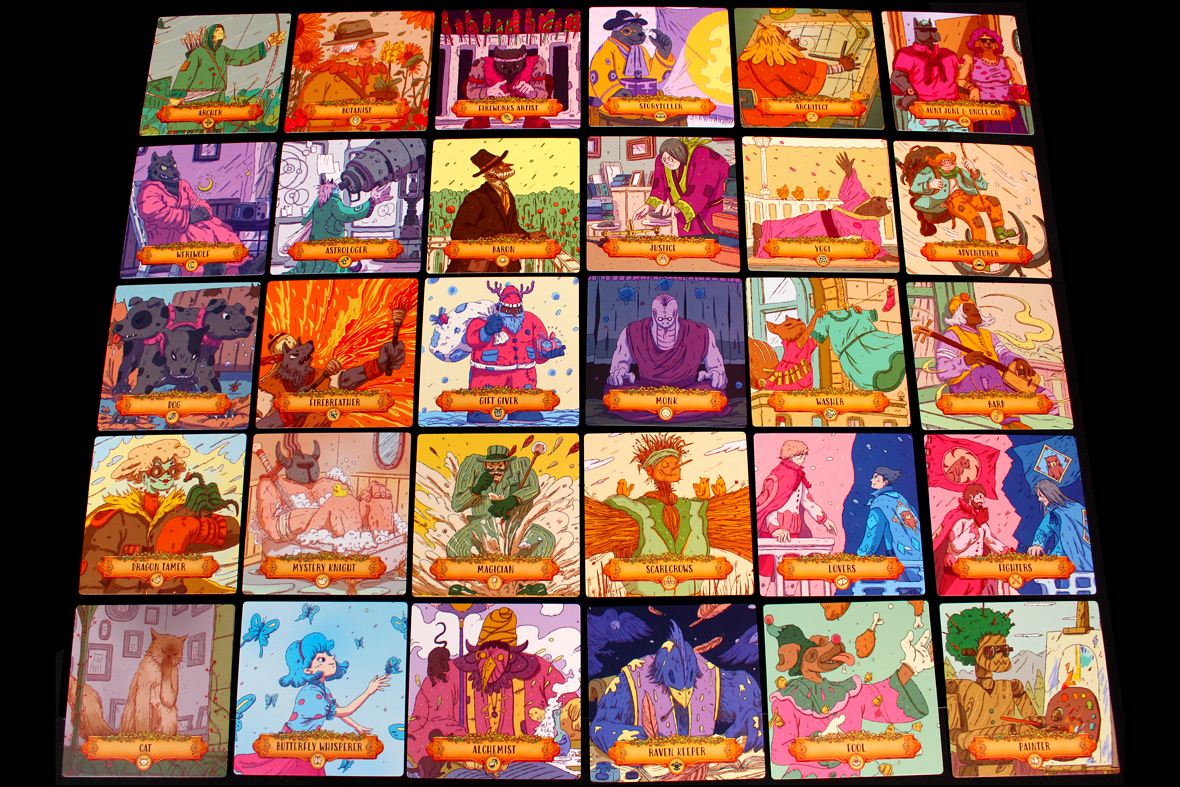
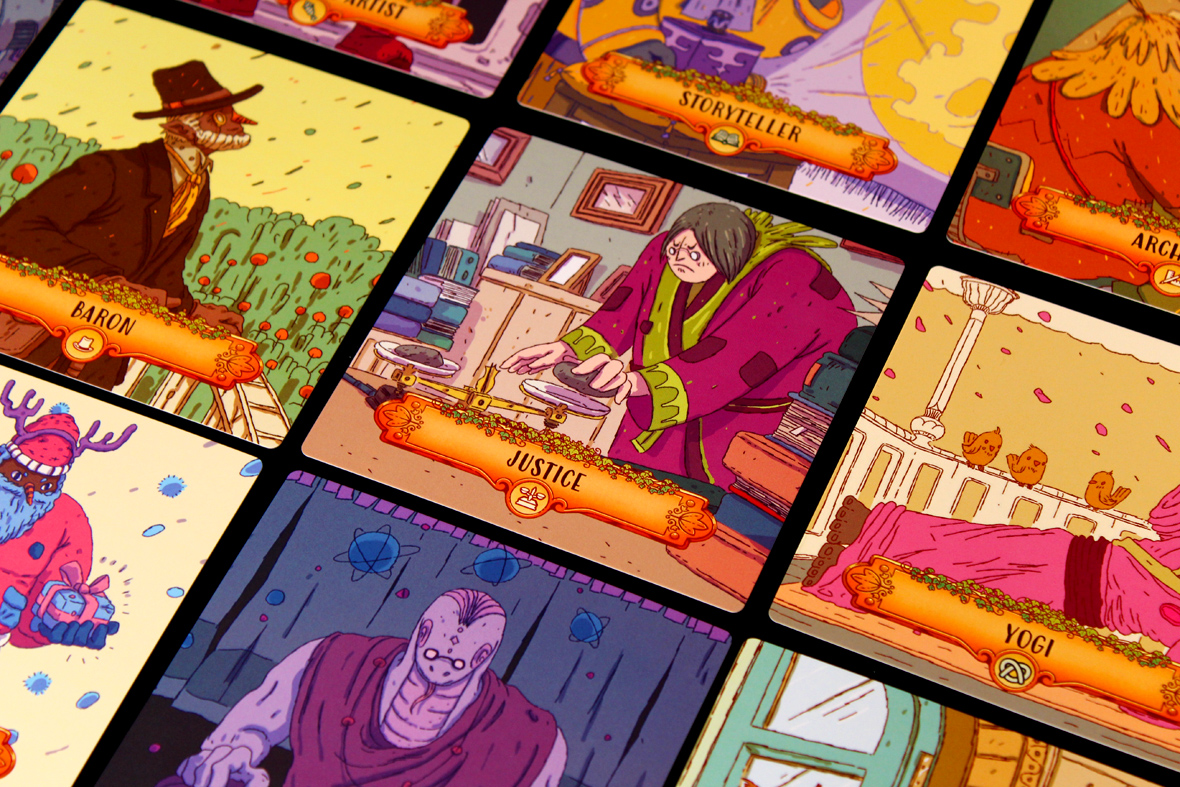
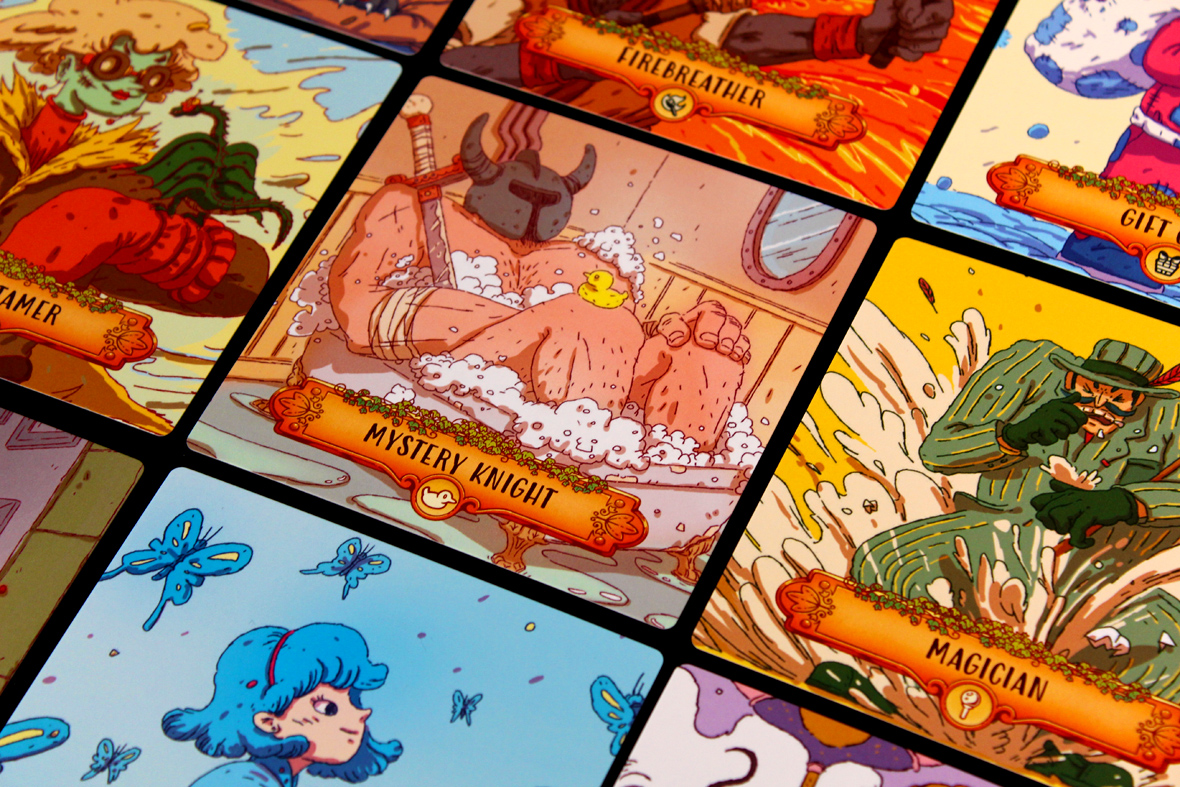
The Guest art is very charming, so let’s take a closer look.
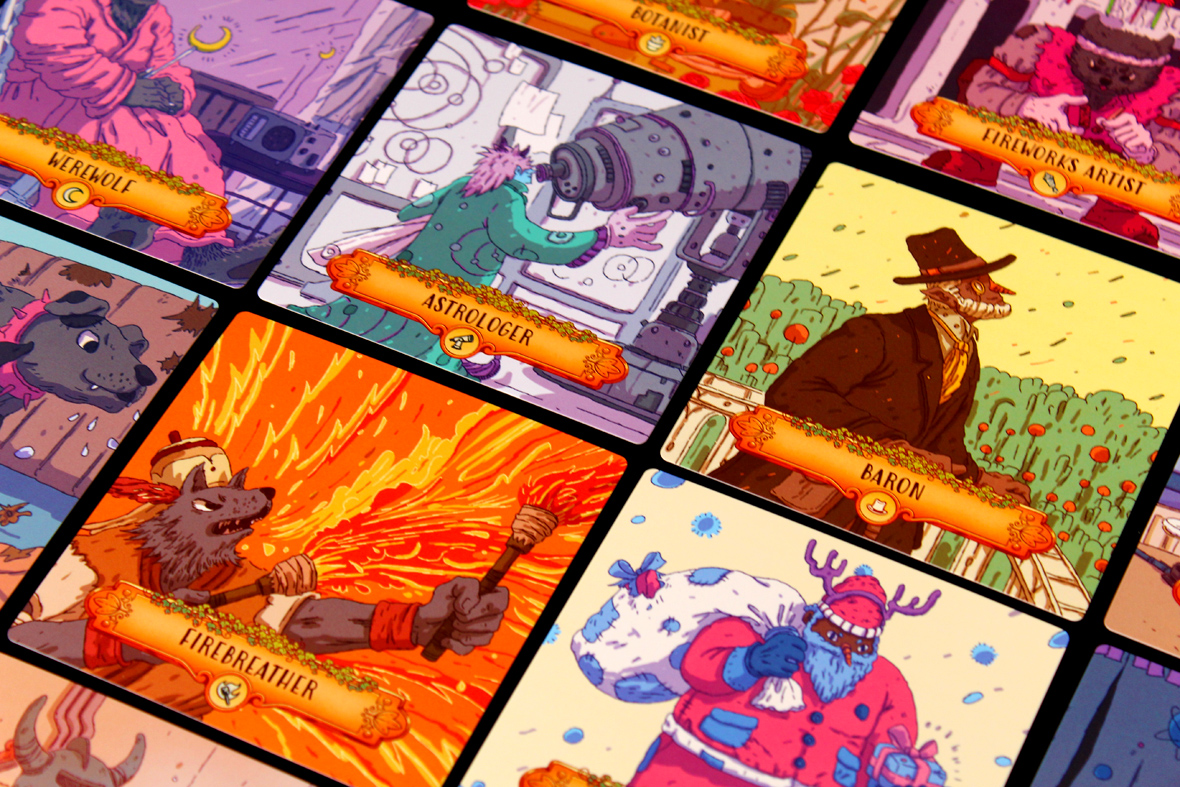
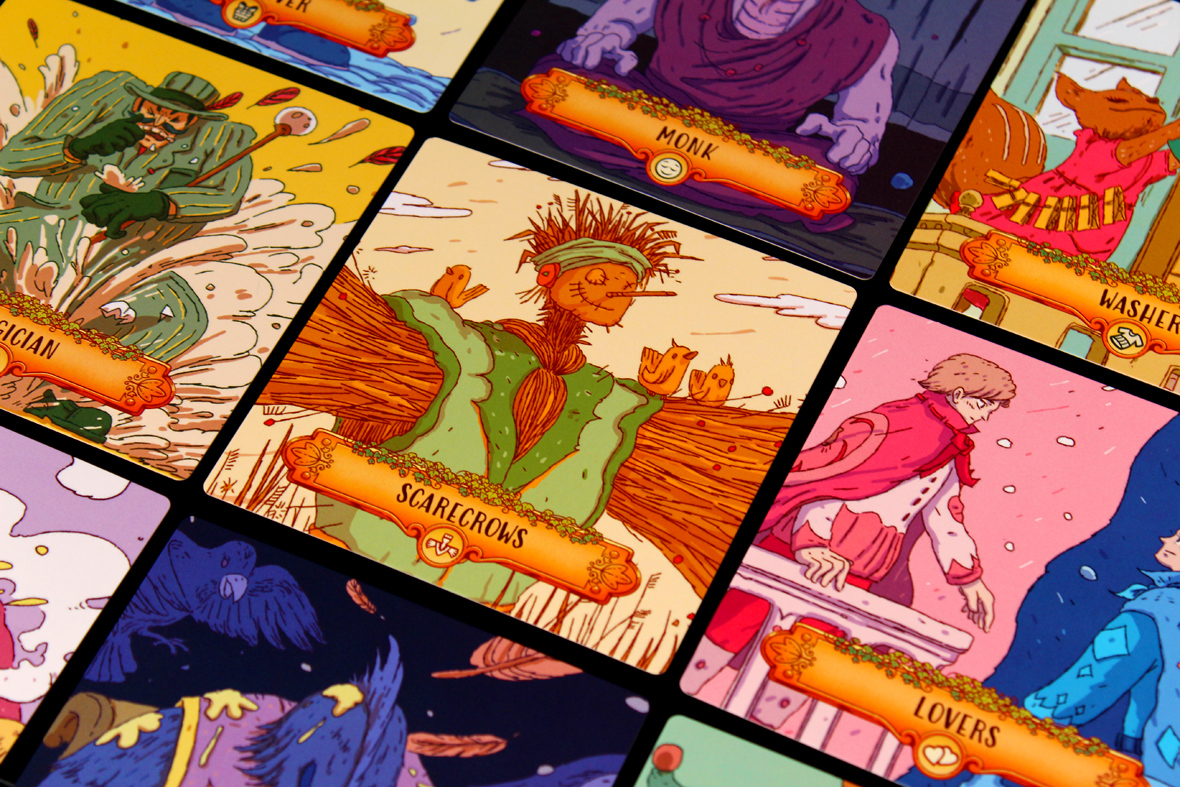
Place the corresponding Guest Tokens into the bag:

Keep in mind that some of the Guest Cards have two Guest Tokens, so look for the symbol at the bottom.

From there, shuffle the Wall Cards and draw two, and draw two Guest Tokens from the Bag. You should be ready to start!
Gameplay

Enchanted Ivy is all about making your guests comfortable! And scoring points.
Each turn, you’ll play both of your wall cards. One will be balcony-side-up, and the other will be played balcony-side-down. The first card of the game can be placed anywhere, but all subsequent cards will need to share an edge with an already-placed card. Note that you can rotate wall cards 180 degrees, but balconies must stay upright. Once you’ve placed both cards, add one of your two Guest Tokens to the balcony, and then refresh your hand with two new cards from the deck and a new Guest Token from the bag.
At any point in the game, you can place the Door Token on a non-balcony wall on the bottom of your Inn. Once you do, that’s the bottom row.

That’s largely the whole game; once you’re out of cards you move to Scoring and the final Guest Token goes unplayed. You score your Guests based on their criteria, and you score Ivy based on how many connected groups of ivy you have on your wall (fewer groups is better, ideally you’d only have one giant connected group). In Story Mode, you’re given a score to beat and occasionally a High Score and / or a Challenge. Each of those will produce stickers that will go on your Garden Board and in your Keepsake Book:
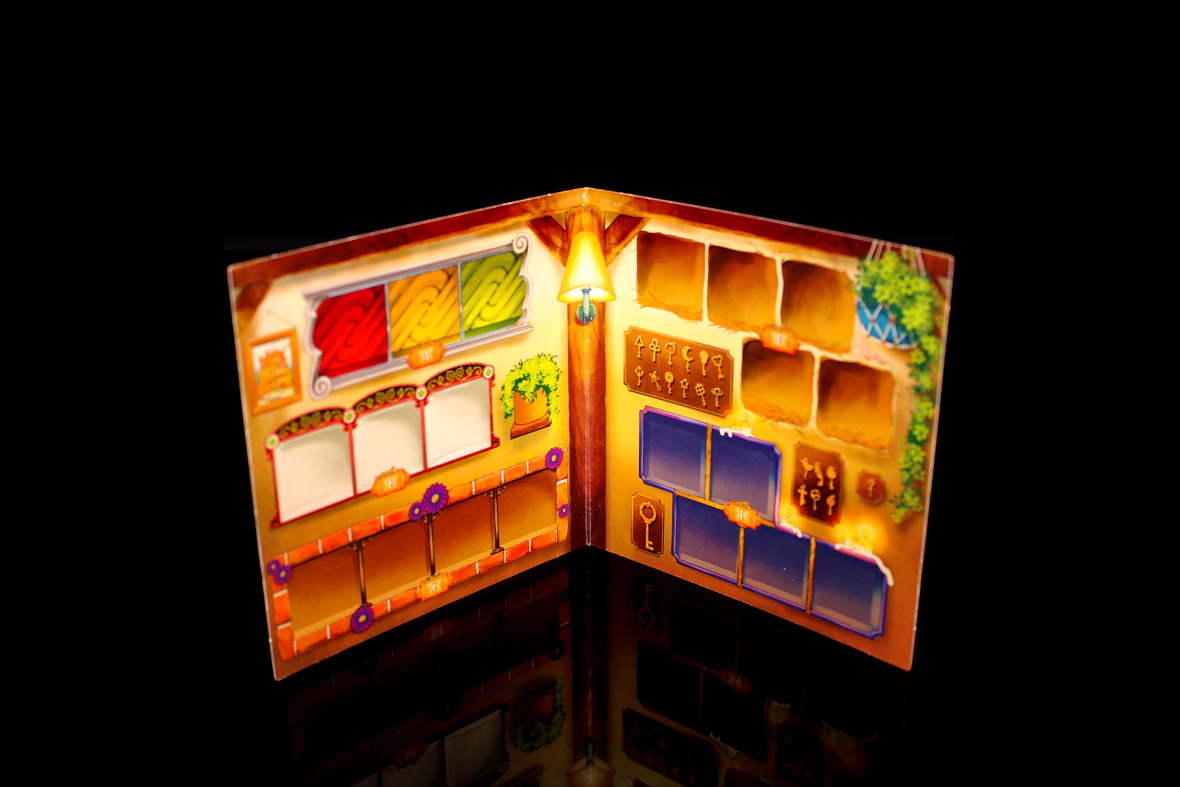
If you fill out a Keepsake row with stickers, rumor has it that the Inn may reveal some of its secrets to you!

For Endless Mode, the game is played the same way, but at the end you total your score and compare it to a chart to see how well you did. Try to beat 90 points!
Player Count Differences
None! This is a solo game. For a cooperative experience, you can play this with multiple people and all work together on how to best set up your B&B, but that’s up to you!
Strategy

- It’s really nice to try and keep all of your ivy as one big pod. You get 20 points for that, so it’s usually worth considering since it doesn’t depend on any Guests whatsoever. There might be tradeoffs (or bad draws) but generally going for that 20 is always a good idea.
- You have to plan a few things in advance! Not just what you want but also where you want it. One thing you have to shake off is the idea that you’re starting at the explicit top or explicit bottom (or left or right) of the Inn. You can build in any direction on your turn, just so long as it doesn’t make the layout on your card or in the Storybook impossible. This means that the first two cards you play might be in the middle and you’re building outwards. So have a plan for where you want guests, but try to stay flexible in case you suddenly need to add another row below your “bottom” row.
- You’re going to place a Guest every turn, which doesn’t necessarily afford you a lot of flexibility. Sometimes you have two bad options; both guests would be better served by being placed later in the game but you got them on turn two. That’s tough, but you can make the best of it.
- Don’t block off your ivy if you can avoid it. Your best option might be to build around it and leave a gap and hope for a better card in the future. Note that the top card of the deck is always visible, so you at least know what one of the two cards you’ll have next turn will be. That might mean that a better card is just a turn away, so build somewhere else if you can. You don’t want to cut off your options and lose points.
- While you can’t rotate balconies, you can rotate walls, which might save you some heartache. Sometimes flipping a wall upside down is the perfect way to get the ivy where you want. And you do want to keep everything connected if you can!
- Pay attention to your Guests! There are a lot of different ways to score and it’s easy to lose track. I think it’s easy to get overwhelmed here as well, since there are so many guests in play at all times, but try to remember that perfectly optimal play is impossible since you don’t have perfect information; instead, try to do locally-optimal choices that set you up well for the future and leave you with options. If you over-optimize for certain things, you risk missing potentially even bigger point windfalls.
- In Story Mode, you can (and should!) replay scenarios from time to time! Get those unlocks. You really want to beat challenges to unlock Keepsakes and complete those rows. Who knows what you’ll find? Possibly you if you cheated and looked in the box when you weren’t supposed to, but don’t do that.
Pros, Mehs, and Cons

Pros
- The art is exceptional. Wenyi Geng absolutely crushed it; though that’s no surprise given her absolutely impeccable work on Evergreen. The world feels alive and vibrant to the point that you could imagine an entire book or game set inside of this hotel with interesting stories and even more characters. I do hope this isn’t the last we’ve seen of her art or this setting.
- The story plotting and unlocks are also great! I think that’s a really fun way to motivate players to continue through a game, and I’m already hoping I can make time to come back to Enchanted Ivy and play it more, which is a relative rarity for me.
- It’s also great that you can use Story Mode as a demo to learn the structure of it before diving into Endless Mode. Some players aren’t as interested in the story, I guess? Or they’re reviewers who want to understand how the game works but want to avoid anything even remotely spoilery for their readers. I guess I should mark this review Spoiler-Free. But it’s nice to have a Prologue that pretty gently teaches the game’s systems; I’d definitely recommend that before trying out Endless Mode even if you’re not interested in the story for some unknowable reason.
- Having an Endless Mode as a backup structure is a great way to increase the game’s longevity. If the game were just the Story Mode, it would end and then you might think you’re done. That’s all well and good; some games just have explicit life cycle lengths. However, with Endless Mode, you can basically turn this into an unstructured arcade game and keep playing with different sets of groups and different layouts. I do kind of wish they did the Dominion thing and had special names for certain configurations, but I imagine that’ll pop up online in fan groups soon enough.
- There’s so much configurability! 30 different Guests is a great way to go about it, but I particularly like how the various groups are designed around certain strategies or ideas or engagements so that you have good challenges. This only applies within a group, though; intergroup synergy can be completely random, which is always fun.
- I was worried it was going to be hard to set up Endless Mode, but the organization of it isn’t too complex. I think it helps that the Guest Cards all have clear groups they belong to (except for the Magician, weirdly enough?) so you can promptly group them up and then choose which Groups you want. A randomizer wouldn’t be unwelcome, though, especially if this is going to be further expanded.
- Enchanted Ivy gives a similar vibe to some Button Shy games, but with much more depth and variability. I think it’s got the energy of a Button Shy title but the scope and scale of an Allplay small box game, which is very up my alley. There are, as I’ve said, a lot of options and ways to play, but it never feels overwhelming or like stuff just got thrown in as a Kickstarter reward or something like that. The guests have interesting synergies (and antisynergies, at times) and their quirks make every game different.
Mehs
- When luck isn’t on your side, it can be a little frustrating. It helps that you can rotate the walls, but sometimes you get exactly the cards you don’t want, which can mess up a promising game. If you’re trying for an unlock or you had an otherwise stellar set of turns, it can be annoying, but that’s the luck of the draw sometimes.
- The logos aren’t very large, so while you can distinguish between various characters, it’s tough at times. I will say the most difficult part of setup is getting the Guest Tokens in play. The logos are tiny and I’m not familiar enough with the character art as of yet to recognized it immediately, so I have to comb through the whole stack to find what I want. I don’t think this will be a problem forever, but it’s definitely something you’ll deal with the first few times you play.
- Some more Endless Mode Layout Cards would be nice. Five is a reasonable number, but I’d love to see some genuinely weird Inn layout options.
Cons
- I do wish the game had a slightly smaller footprint in order to make it more on-the-go friendly. I think my dream version of this is vaguely Button Shy-sized, just so I could play it on the go. Something like smaller cards and preset groups, maybe? Just to have it for travel and a quick puzzle. Though I think having a quick daily configurable version of this like a Wordle or something would be incredible. That said, I also think the game’s structure and style are compelling enough that a bigger Legacy Box could be a good move. Guess we’ll see! As-is, though, it’s not quite small enough that it fits the travel game size that I would want it to be.
Overall: 9 / 10
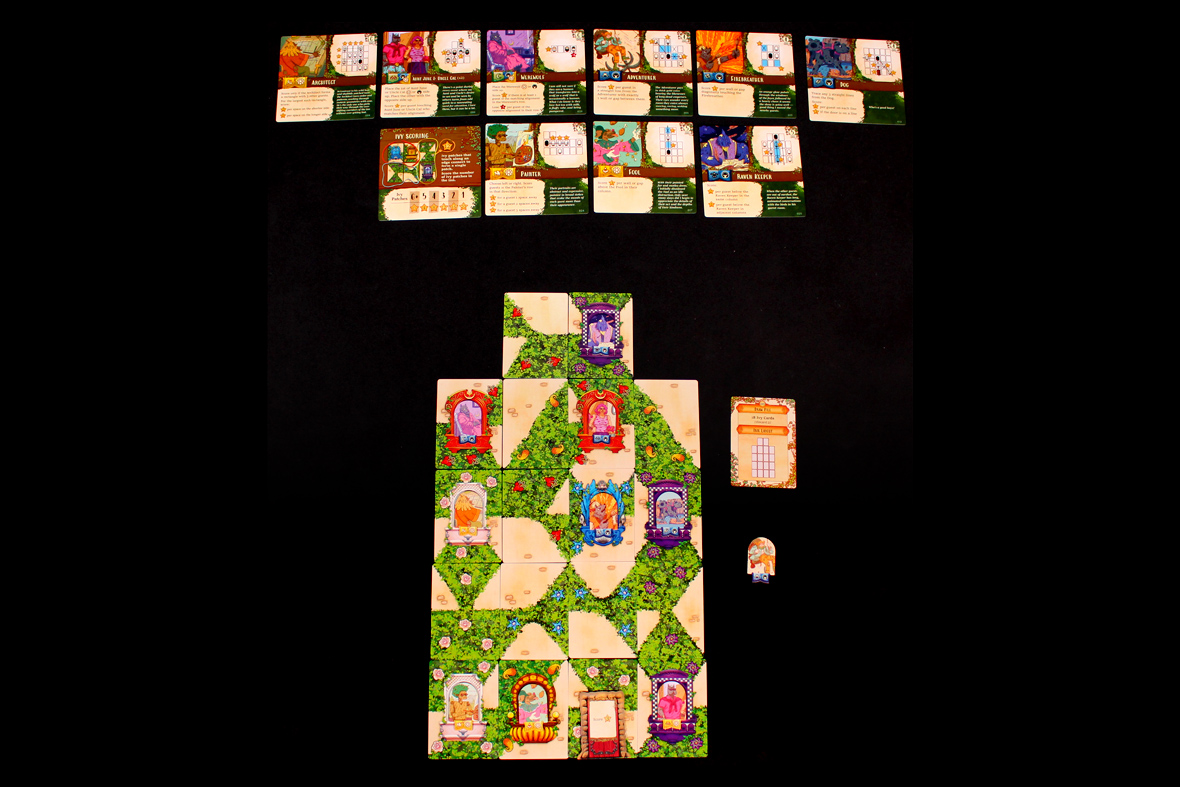
Enchanted Ivy is a blast, just clearing that up straight away. The game is an excellent spatial game with challenge, planning, and luck management all coming together with fantastic art and a charming story. I get that cozy games are all the rage, but Enchanted Ivy plays in the space by earning its coziness. It doesn’t feel forced or perfunctory; it feels earned and intentionally designed. You’d have had a lot of trouble convincing me that this is designer Sarah Joshua’s first game, but I can see immediately why Allplay locked in and took a risk on a solo-only game. It has a fantastic core that would be interesting enough on its own (managing room and ivy placement), but adding the guests and dealing with how they interact with each other and complicate their goals turns the experience into a compelling one. Compelling and approachable, which is a tough line to walk. I was impressed from the first play, and then played it a bunch more times immediately to make sure it wasn’t a fluke or that I wasn’t just hooked on the style. I’m still thinking about it even now, which yes, obviously, I’m writing this review, but I’m thinking about my next game, not just an analysis of the game for Review Reasons.
I get totally lost in the game while I’m playing, planning ahead and trying to figure out how to deal with the various competing factors sitting between me and the high score. It’s satisfying, that challenge, and having to learn to live with the compromise of not being able to play perfectly optimally with so many conditions in play. Enchanted Ivy immediately makes its case (and again, it would have had to for Allplay to take a chance on both a new designer and their first solo-only game), and I think it’s going to sit well with the cozy gamer crowd and the puzzle game fiends. You could even imagine a daily challenge or a setup app if they ever add even more Guests and challenges, though I think a Tiny Enchanted Ivy that aims to be like The Daily Weather or a Wordle-style game would absolutely kill. There’s precedent from Allplay, given Tiny Mountain Goats, Mountain Goats, and Mountain Goats Legacy, but I have no insider knowledge; only hopes and dreams. If you love a spatial game, fancy yourself a future B&B proprietor, or just love good art and a fun story, Enchanted Ivy is going to be a great time for you. I think it’s quite impressive, and I really can’t wait to play it again.
If you enjoyed this review and would like to support What’s Eric Playing? in the future, please check out my Patreon. Thanks for reading!
Discover more from What's Eric Playing?
Subscribe to get the latest posts sent to your email.
One thought on “Enchanted Ivy [Spoiler-Free]”