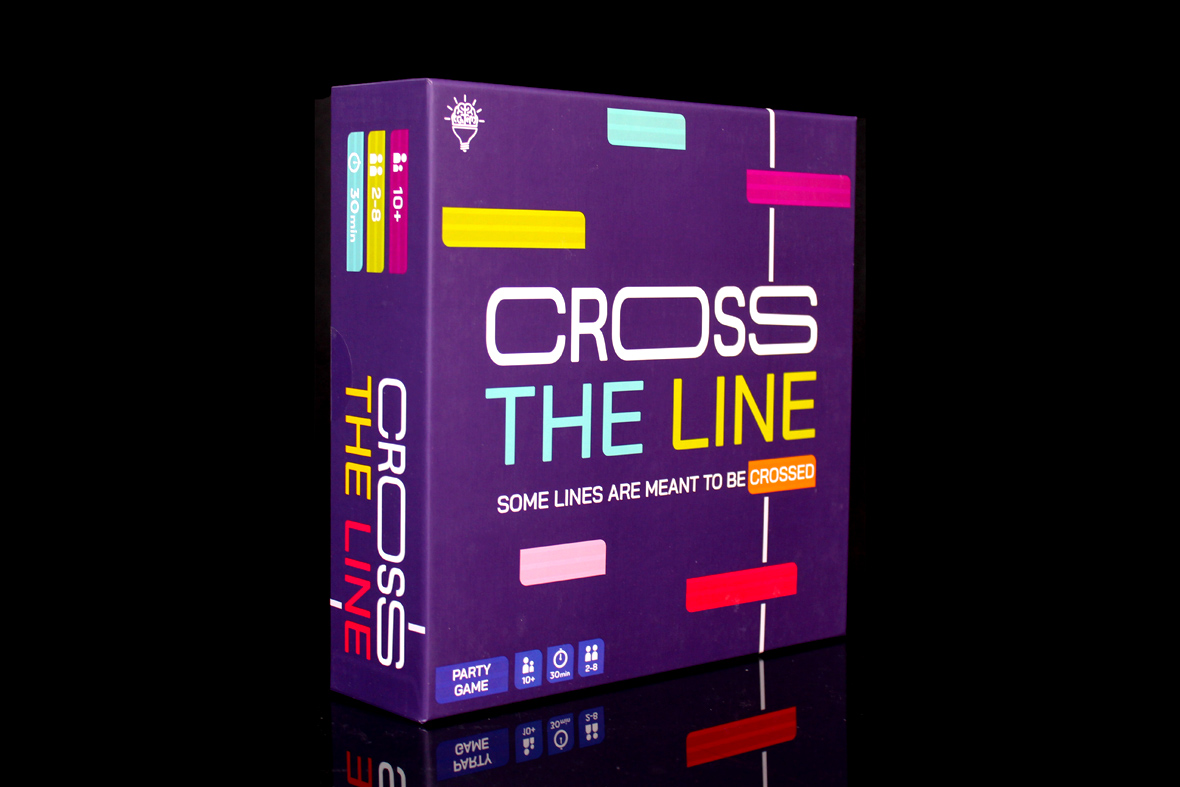
Base price: $25.
2 – 8 players.
Play time: 30 – 45 minutes.
BGG Link
Buy on Amazon (via What’s Eric Playing?)
Logged plays: 1 (multiple rounds of a party game)
Full disclosure: A review copy of Cross the Line was provided by Asmodee / Gray Matters Games.
I actually saw Cross the Line at PAX West, which was a little surreal, so that kind of motivated this whole thing today. I’m running a bit behind, but PAX West 2026 was an incredible show (more on that later). I played a few games outside of PAX this year, though, so that’s what you’re getting now, as well as some Gen Con highlights. Next week is Kickstarter and some escape room games, so please get excited about that as well. In the meantime, let’s Cross the Line!
How well do you really know your friends? And I don’t mean things like their likes or their fears or things that are interesting about them; I mean things like “do they believe in ghosts” or “what non-foods have they eaten” or “can they survive outside”; the critical stuff. Here, you’ll bet on how confident you are that you know or you can guess these Important Friendship Tidbits and see how things shake out. Will you prove yourself the most knowledgable friend?
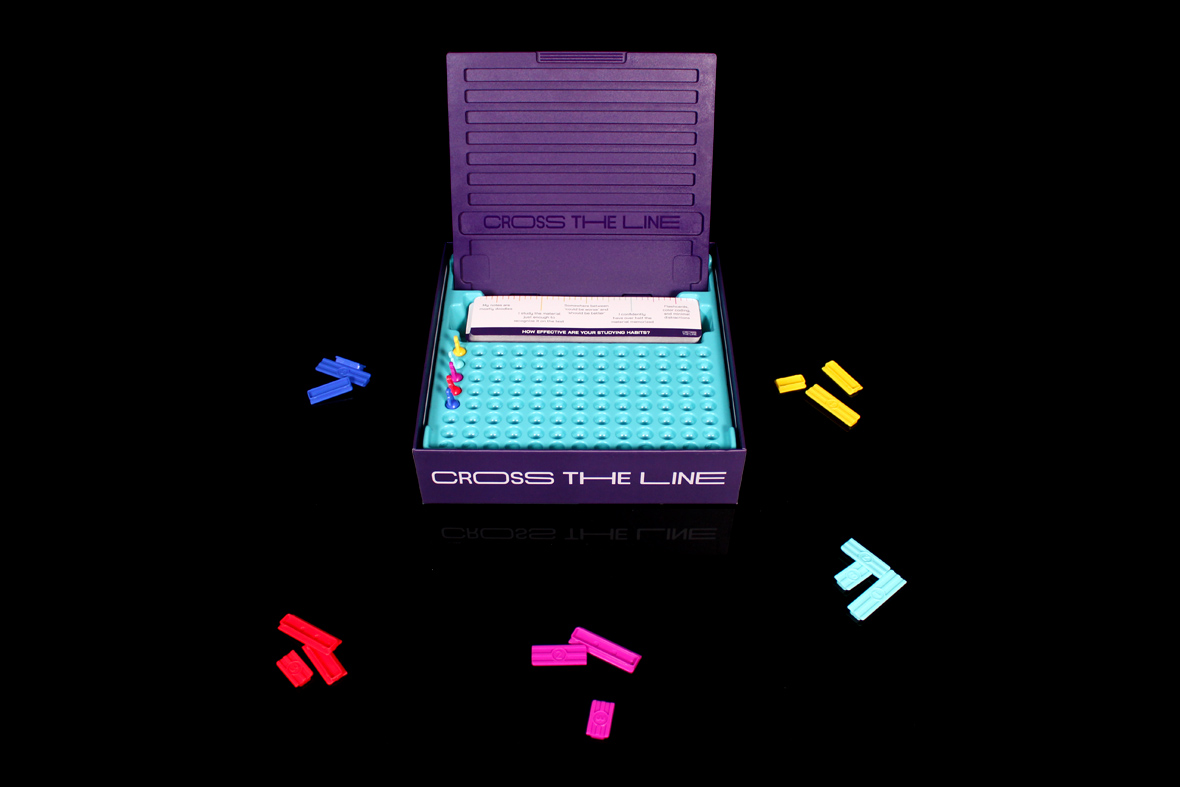
Contents
Setup
Give each player a set of Confidence Bars in the color of their choice:

They should set their Scoring Token in the leftmost spot of the scoreboard:

Shuffle up the question cards (good luck), and set the Cross the Line Board inside of the groove in the box bottom:

You’re good to start!
Gameplay

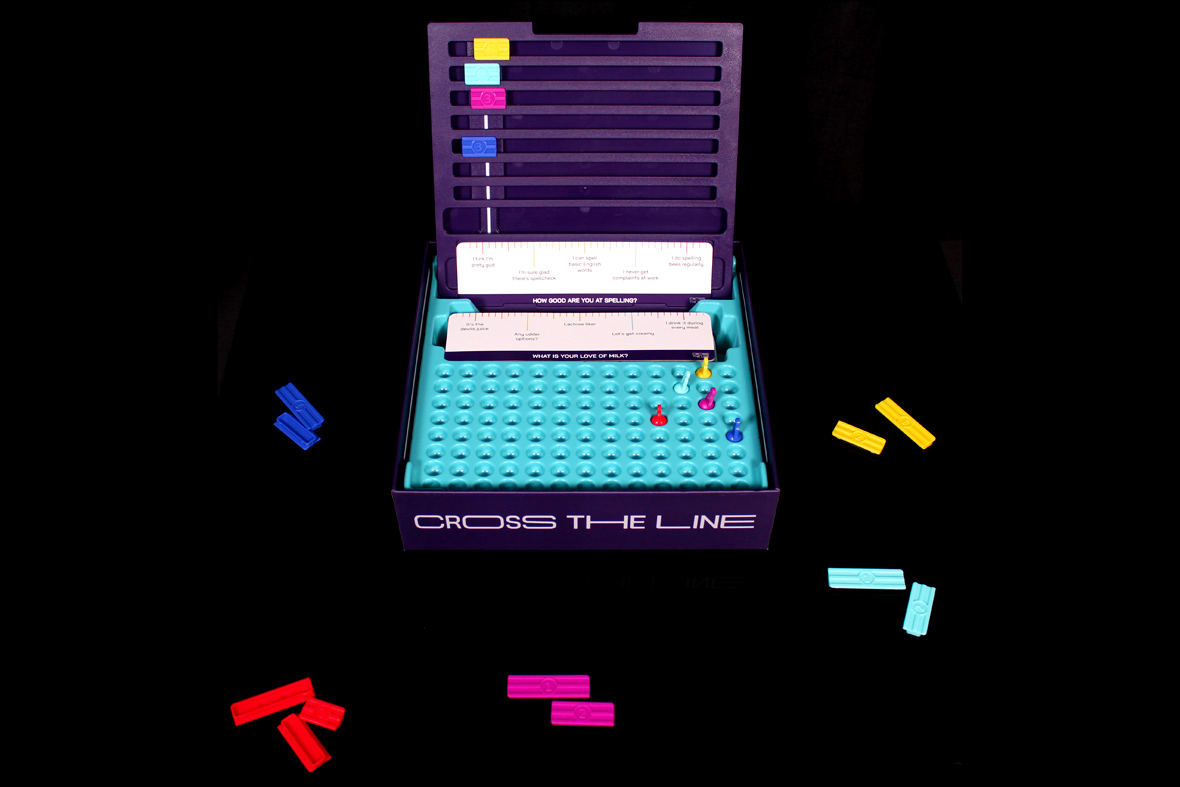
This one’s pretty simple. On a given turn, a player draws a Question Card and chooses which side they want to use. Then, they secretly move the Line on the Cross the Line Board to the spot on the Question Card which matches up with their answer. They hide the Line after that. Starting with the player to their left, each player places a Confidence Bar (1 / 2 / 3) in their color on the board where they think the line is.
Once everyone’s placed a Confidence Bar, the line is revealed! If your Confidence Bar touches the line, you score the corresponding number of points. Then, the next player gets to pick a question! Keep going until one player scores 12 or more points; then, the player with the most points wins!
Player Count Differences

There aren’t really major player count differences, since players don’t interact. Technically, with more players, you get to see more information before you have to make decisions (in certain rounds), but honestly, that “information” might be extremely noisy or wrong so I wouldn’t trust it in the slightest.
The game does support two players, which I think is genuinely baffling, but I’m not opposed to it.
Strategy

As with most party games, try not to go too hard on a strategic / trying-to-win kick. This is a game about getting to know each other with a soft winner, not an intense display of your strategic guessing prowess. Try to have fun more than try to win; I think that’ll be good. That said, there are definitely things you can do to help improve your odds.
- You’re allowed to pick questions that might throw other players off. You can’t score on your turn, so, ideally, nobody else would score either. You can try to pick something that people don’t know or might not suspect. For instance, I complain all the time about the outdoors, but I am an Eagle Scout, so I actually am a bit better at wilderness survival than people think at jump.
- It’s often better to score 1 point than 0. If you’re not confident in your answer, use your smaller confidence bar! You won’t get as much in the way of points, but you have a better chance of actually being right, which means you’ll score at all.
- You can absolutely copy your neighbor’s homework. If the person who went before you knows the player better than you do and you think it works, just do exactly what they did. No kings; no masters.
- You can’t really stop someone once they’re close to winning. The only thing you can do is outscore them; good luck!
Pros, Mehs, and Cons

Pros
- A good question-oriented party game should spur some discussion. This did that. We found out that one of our friends claims that a kid came around to their school with a bag of dog food that they ate. We are all convinced our friend is this person. But in all seriousness, these games should, on their best day, get players talking and asking follow-up questions. It’s a get-to-know-you game. I want to have questions that I need answered just from context, and there are places where things should be illuminated a bit more. The questions do a good job, here.
- I appreciate the all-in-one packaging idea. The board, the cards; it all fits inside of the box bottom and there’s not a ton of extra stuff getting outside. The score tracking pieces are a little weirdly small, but it’s a small sacrifice for compactness.
- Very intuitive to play. Scoring makes sense, gameplay makes sense, and what you do on your turn as the guesser or the answerer is pretty straightforward. A fairly no-frills party game, in that regard.
- I appreciate that every card has at least one kid-friendly question. It’s wise and it keeps the game playable with families. It’s not a hard requirement, but if you’re already writing a bunch of questions I imagine there’s no reason to purposefully limit yourself. Plus, if the game sells well enough, you can just sell extra question decks for “Adult” or “Travel” or things like that that might be less inherently kid-friendly. It’s smart future-proofing.
- I enjoy a good confidence wager. I like that here, you can try to get more points by narrowing your correct range. If you’re more confident about your answer, you can use a smaller piece to get more points. It introduces a nice tension and a way for some players to catch up! If you’re falling behind, you’ve gotta play more risky to win, and I like that.
- I love seeing a single-page rule sheet. For a party game, that’s almost always a good sign. I breathe a sigh of relief when this happens.
Mehs
- For players that know each other well, there’s a distinct advantage and disadvantage to seating positions. One game I played included two best friends with 10+ years of friendship between them (ish). This meant that sitting to the left or right of them was great for certain rounds, as you’d get to see what they answered for their best friend before you answered. That’s definitely an element of the game from a strategy perspective, but also, meh.
- Boy howdy those Question Cards are hard to shuffle. And I can shuffle a lot of things. They’re just weirdly proportioned (and stiff, but I imagine that will get better with more plays). Would recommend an overhand shuffle if you’re planning to play a lot.
- A near-distracting number of TMs on some questions. I think that’s kind of a consequence of wanting to be relevant and referential. On one hand, it makes your game a better game for now; on the other, you risk referring to businesses that no longer exist in a few years. It does take you out of the game a bit just from the cards.
Cons
- I’ve got some mixed feelings on the construction of the game itself. Multiple players complained about how hard it was to remove the bars from the board between rounds, which, while I don’t agree with, it was mentioned by several people. The main issue I have is with how insecure many things feel. We had instances where the players’ placed bars would slide down the board if it was moved (as it kind of has to be for everyone to place their bars) and where the specific line would also slide around.
- For the line specifically, moving it yourself may leak information to the other players. Since you move it with your hand (as opposed to, say, a crank like Wavelength), other players may note where you’re still moving the line around to and use that to give themselves an edge. I try my best to mess with anyone doing that, but it would have been nice to have a more private way to do that.
Overall: 7 / 10
Overall, I enjoyed Cross the Line! It’s definitely shooting for the mass-market party game sphere with its design, aesthetic, and general energy, and I think that it’s a good contender there. It probably struggles against an immensely popular game like Wavelength given the similarities between the two, as Wavelength is more generative (you have to come up with a word that matches a specific point between two extremes) and this is more responsive (you answer a question and other people guess your answer). That said, it’s doing pretty well in its zone. I think it drives conversation and gets players engaged with learning more about each other, which is exactly what you want from something like this. I think I’d be a tiny bit more bullish on the game if the construction were a bit more solid, but I also think that would likely add $5 – $10 to the price point and it would start to hover outside of what people might expect to spend on a light party game. Economic compromise is the foundation of a lot of business. This isn’t a bad game for a bachelorette weekend or a social mixer or a friend group hangout, though, so I’d expect I’ll probably play it again soon. If you’re hosting one of those or you just want to find out which of your friends has apparently Strong Opinions About How They Definitely Didn’t Eat Dog Food, you might enjoy Cross the Line! It’s a good time.
If you enjoyed this review and would like to support What’s Eric Playing? in the future, please check out my Patreon. Thanks for reading!
Discover more from What's Eric Playing?
Subscribe to get the latest posts sent to your email.