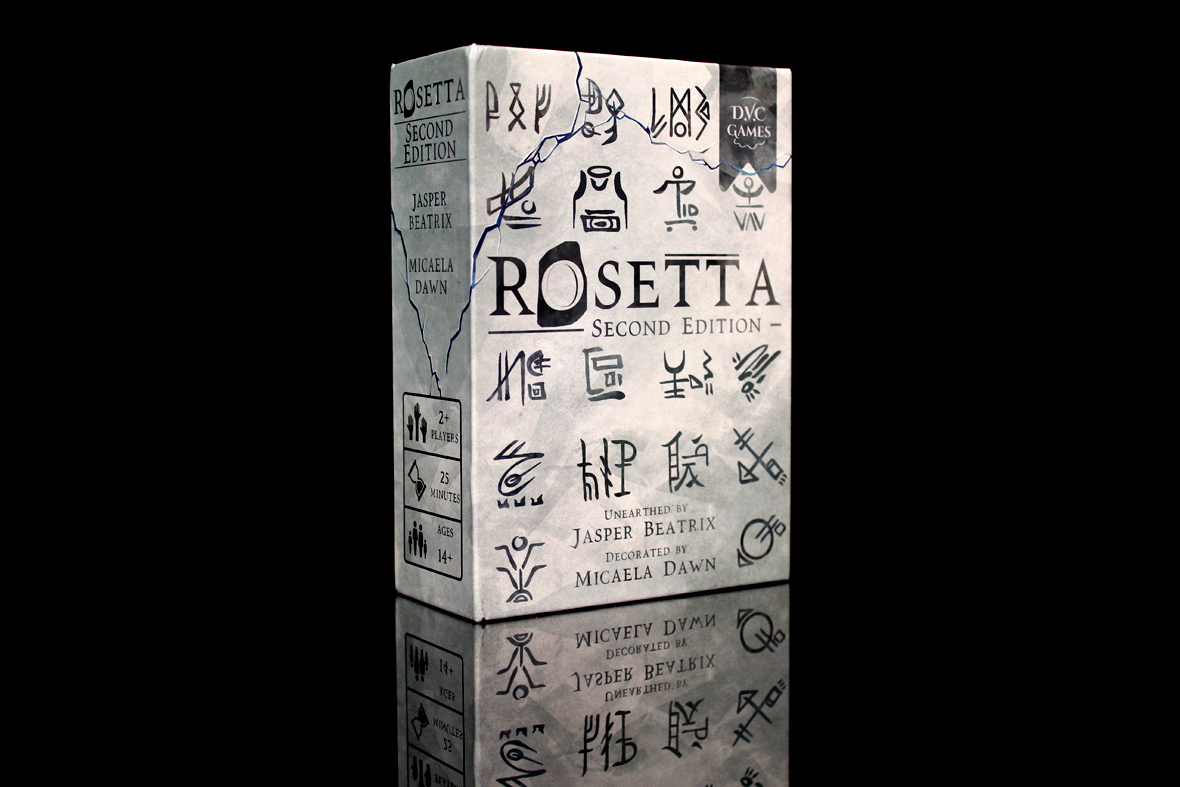
Base price: $27.
2 – 5 players.
Play time: ~25 minutes.
BGG Link
Buy directly!
Logged plays: 5, of the latest edition
Pacts | Inkwell | Scream Park
Corvids | Playthings
Full disclosure: A review copy of Rosetta: The Lost Language was provided by DVC Games.
Note: This is my review of the new section edition! For my thoughts on the first edition, check out Rosetta: The Lost Language [First Edition]!
I think since DVC Games came back around, I’ve been waiting / hoping / praying / crying for them to get the rights to Rosetta: The Lost Language, one of my all-time favorite games. And here we are, with a brand new edition of a classic game of language. I’m extremely excited and have been bullying all my friends to try it out since the new edition arrived. I wonder if they’ll bring it to Gen Con? I suppose we will find out. In the meantime, let’s talk more about it!
Rosetta: The Lost Language’s second edition brings new updates and features to Rosetta! In the original, your goal was simple. One player would be the Author, and pair a drawn Inscription with a Location Card and determine a meaning. The other players would be tasked with determining that hidden meaning cooperatively. For every guess, if they were correct, they win! If they were wildly incorrect, their guess would be crossed out. If they were close, the Author would draw their guess in the glyph language of the Inscription! Each guess you make gets you closer to the true meaning. This time around, they’ve added new locations, new Inscriptions, and new abilities! To make things even more exciting for new players, there’s also a Campaign Booklet to help you get started! Can you crack the forgotten language and discover the meaning within?


Overall: 9.5 / 10

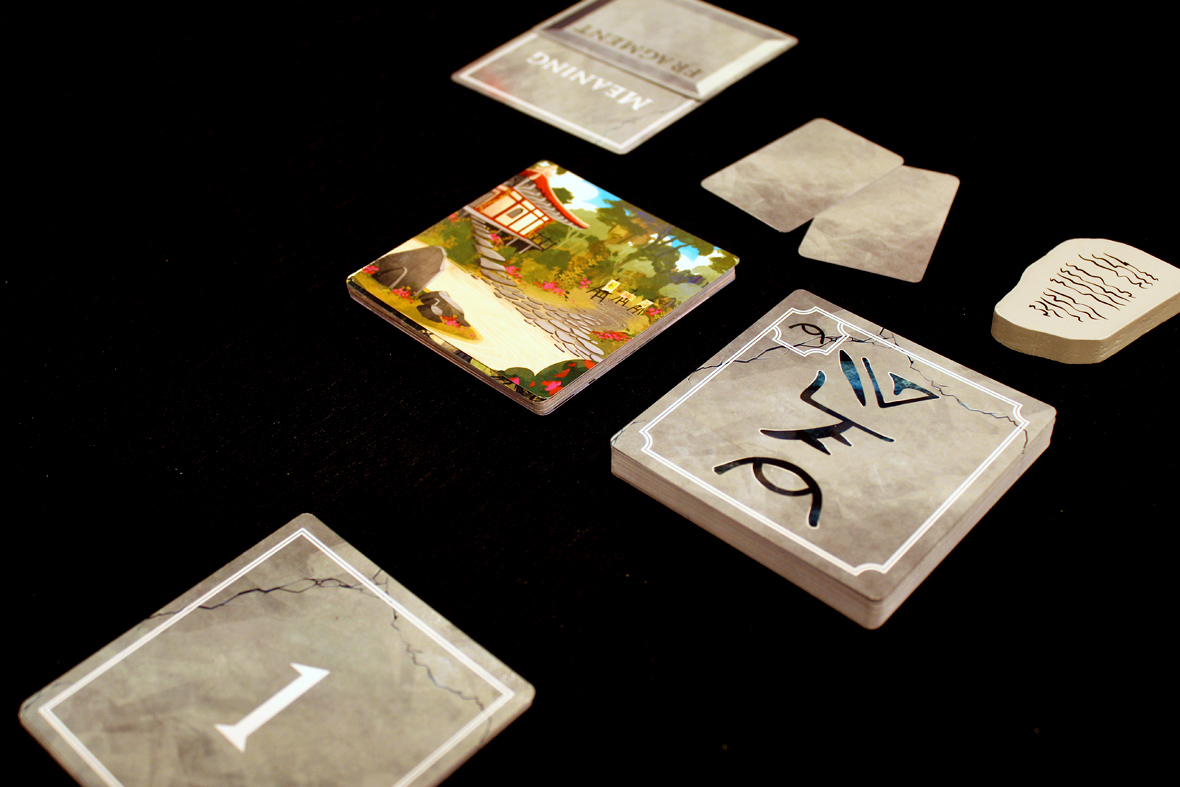
Unsurprisingly, Rosetta: The Lost Language is even better in this revised edition. Pretty much everything I felt mixed or negative about in the previous iteration got improved! There’s bigger answer cards, giving you more room to draw glyphs and provide answers; there’s note-taking cards, to let you keep track of any useful or pertinent information; and there’s that new Campaign Booklet, which gives you a set scenario to try out so that you can get started and learn the ropes of the game. This elevates it from a fantastic game to an all-timer for me, as it’s pretty much doing everything I like. It’s got great art, intense gameplay, and it’s just engaging, even when I’m the Author. I mean, I personally love being the Author when I play; I can just sit and listen and observe and I only have to do something when I’m directly asked. I could honestly punch out other games, read a rulebook, or even write. Maybe that’s not ideal for you, but I’m very much a doing-two-things-at-once kind of weirdo.
The one thing worth noting about Rosetta remains that it’s hard. It’s a difficult cooperative game, to the point that some players may genuinely find it frustrating. Some aspects of the game just may not click between players, and a critical aspect of play here is that you eventually end up on the same wavelength as the Author,. If that doesn’t happen, you do lose a slow loss as you keep guessing words that have almost nothing to do with the Inscription’s Meaning. I think if that happens, you should pivot to something out of the Campaign Booklet; they’re set up to be great ways to learn the game and ramp up, and if the group isn’t landing on the same conclusions, it may lower the challenge somewhat. I don’t begrudge the game for being hard, but I do think that the potential for intense player frustration is still there, and I’ve even seen it to some extent when I’ve played. Your job as the Author is, to some degree, to mitigate that.
Rosetta is a game that makes me excited about games, and I love showing it to folks who are looking to be introduced to modern board games. There’s care put into the game’s design and construction, and it’s fun to play a game that the people who made it so clearly loved making. I’m glad to see the game coming back around and hope that more people get a chance to try one of my favorites! Plus, games about the construction of language and glyphs are a lot of fun; you really get to design something and watch other players interpret it through their own lens. As you do so, you’re forced to add (and adhere to) language rules, allowing something to come together that feels intimate and personal. It’s your language, and you built it with your friends! It’s got some rules and some weird inconsistencies and it’s fairly compact, but it’s yours. It’s why games like Dialect are so powerful, as well. If you want to dig into a language and discover something new, you’re looking for a dynamic cooperative game, or you just want to draw some glyphs and see what happens, I’d wholeheartedly recommend Rosetta: The Lost Language’s second edition! It’s an even better version of one of my favorite games.
If you enjoyed this review and would like to support What’s Eric Playing? in the future, please check out my Patreon. Thanks for reading!
Discover more from What's Eric Playing?
Subscribe to get the latest posts sent to your email.