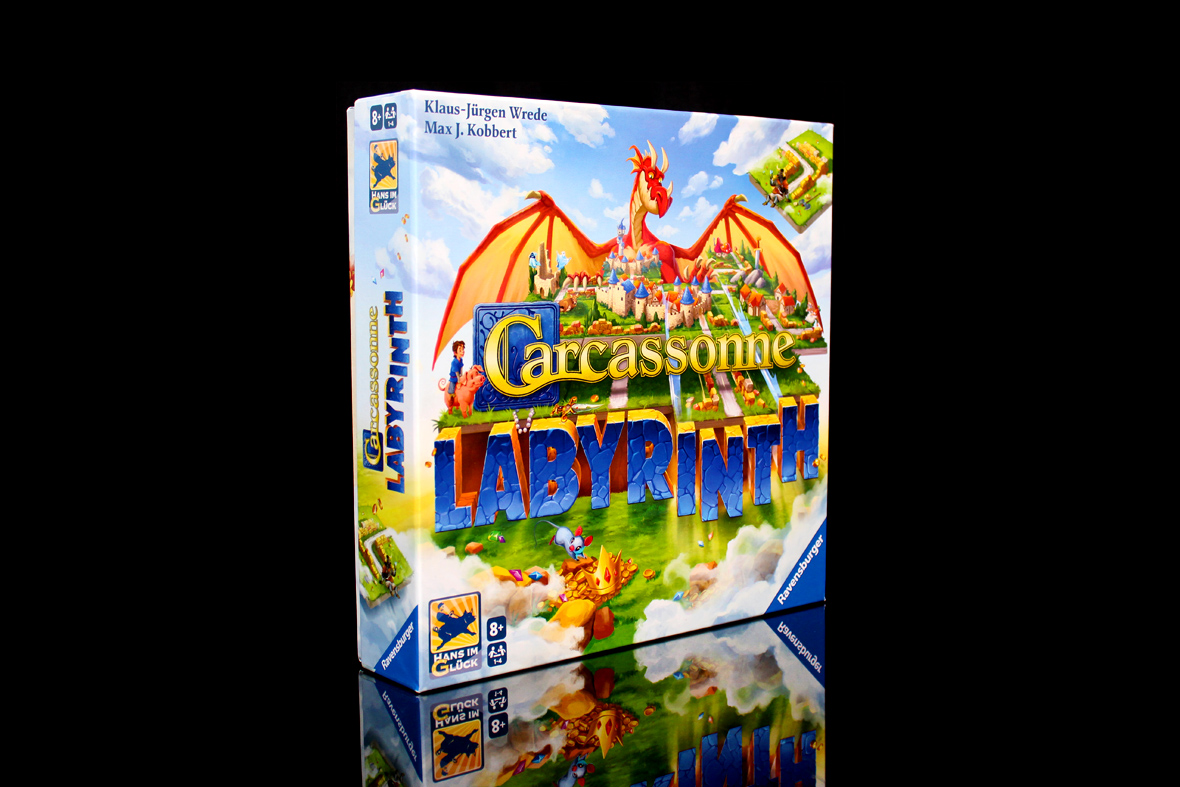
Base price: $34.
1 – 4 players.
Play time: ~30 minutes.
BGG Link
Logged plays: 3
Full disclosure: A review copy of Carcassonne Labyrinth was provided by Ravensburger Games.
I like the idea of this Carcassonne Series Library that I’ve built out here as though I’ll ever be able to assemble a comprehensive review of the Carcassonne series (note that if it’s no longer up here it’s gotten large enough to be at the bottom of the review). Carcassonne is a collector and completionist’s nightmare, with BGG saying that there are 200 expansions ranging from an ill-advised catapult (I love you, Carcassonne: Catapult) to some half-tiles to fan expansions to literal maps that you can use as a backdrop to a single tile that appeared in a magazine that was only sold in Germany eleven years ago. Talking about it fills me with a primal dread, but I love it so here I am. Thankfully, there are also too many spin-off games, like Star Wars or a cooperative ghost game or, now, a smooshed version of Carcassonne where they got Labyrinth in my Carcassonne and vice-versa. Let’s learn more.
In Carcassonne Labyrinth, you’ve decided to celebrate the 40th anniversary of Labyrinth and 25th anniversary of Carcassonne by building a huge maze full of treasure outside of town (is this true lore? who cares). As intrepid explorers go in, the treasures that they find can help build out your cities to make them bigger and better. Not to be outdone, the local royalty has also issued quests and challenges for intrepid players to further expand their territory. So explore a labyrinth and take treasure and tiles to build out the city of Carcassonne. Should be easy, right?
Contents
Setup
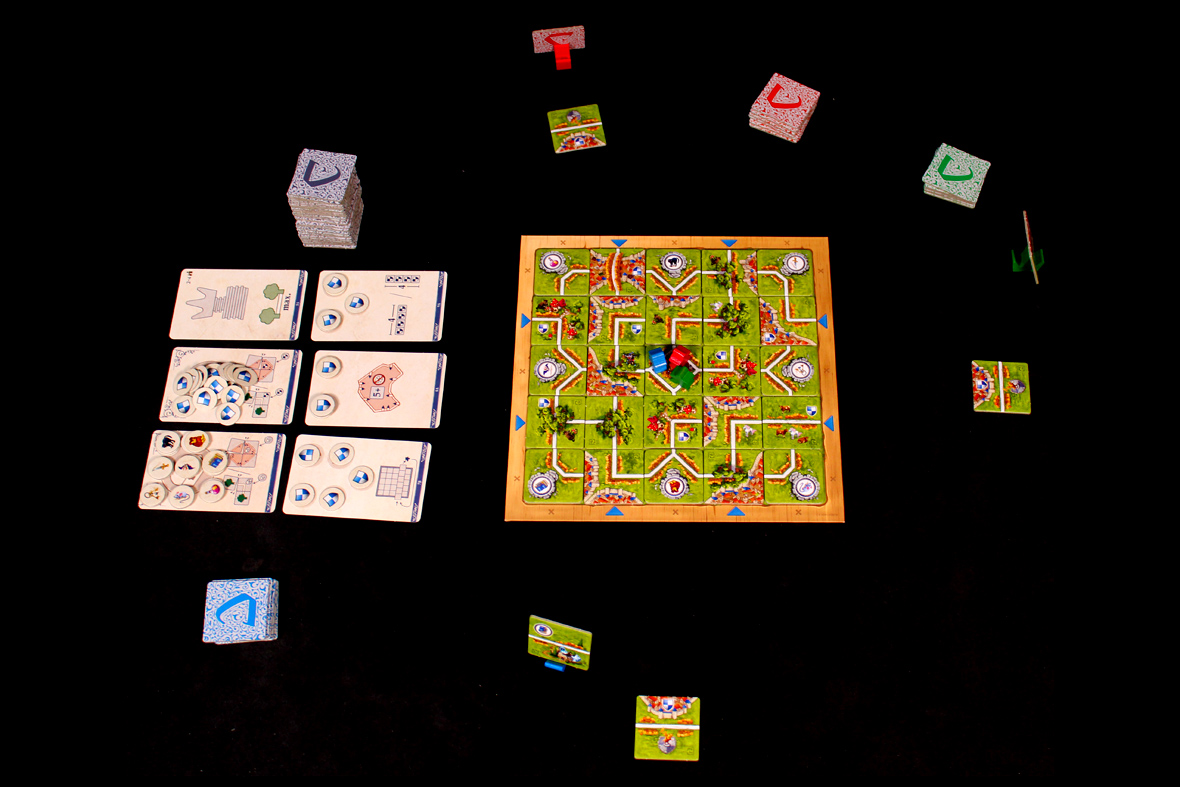
So there are going to be two play areas: the central play area and each player’s individual play space. Let’s start in the center first by placing the main board:

Shuffle the light-backed tiles and place sixteen in the empty spaces on the board. Feel free to rotate and shift them as you shuffle.


Of the remaining tiles, take ten tiles per player and make a stack! You’ll need that. Each player then picks a player color and places the corresponding meeple on the central dragon space on the board.
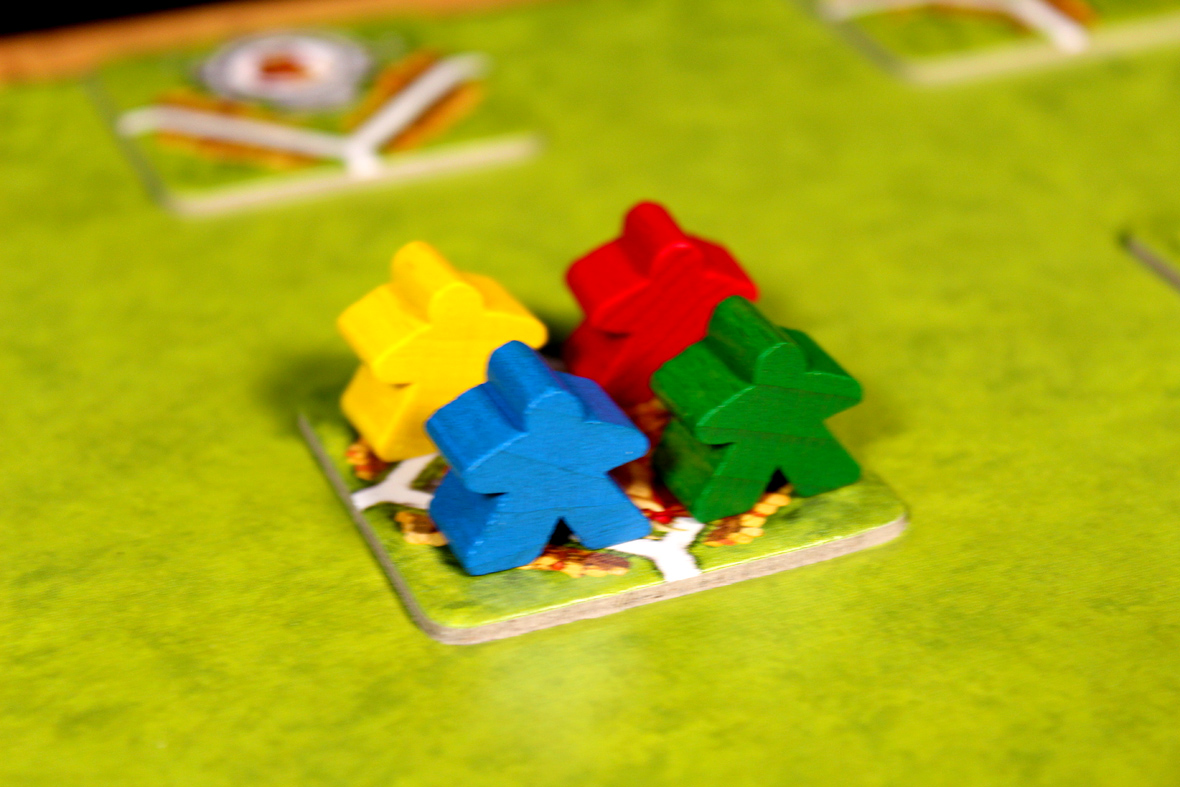
Each player gets eight Treasure Tiles; shuffle those up and place them face-down!

You can use the little crown in your color to hold one tile; one there now. Don’t let other players see it! And then grab a Crown Quest! This card gives all players a global challenge to try and complete. There are a few options.

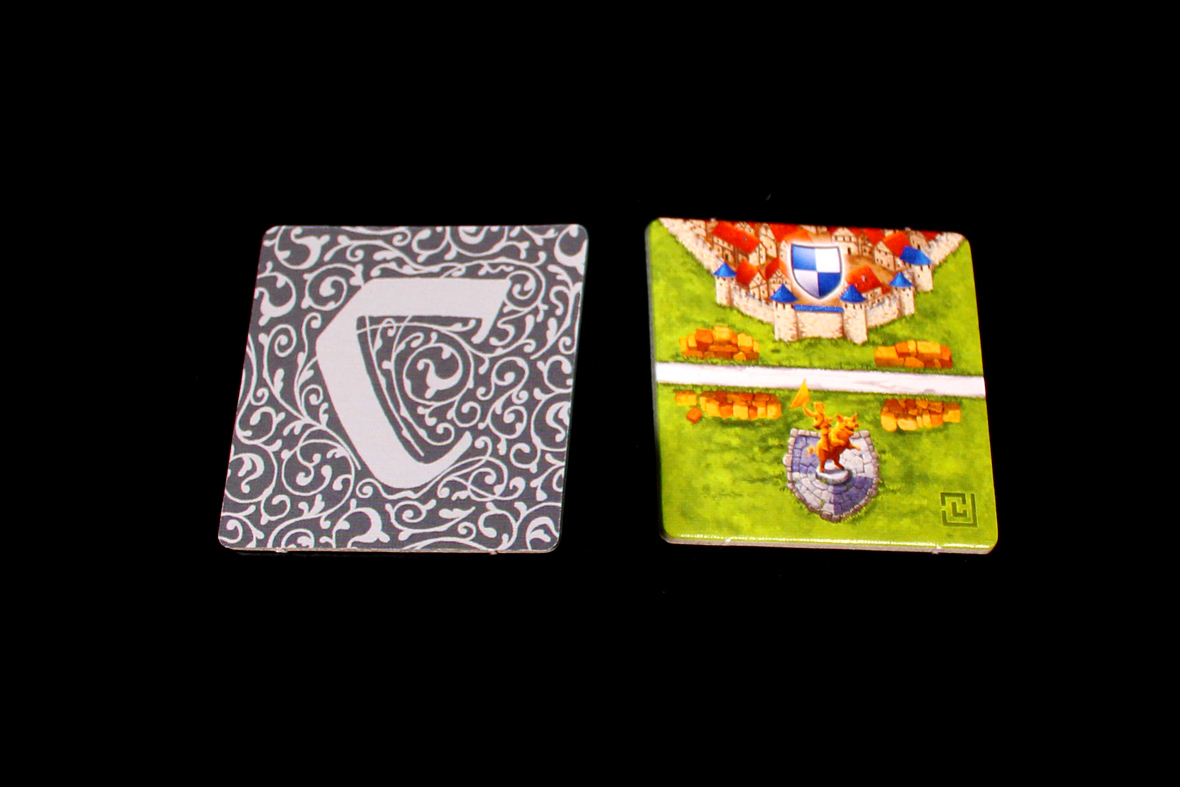
Then place the dark-backed starting tile face-up in front of you; that’s your starting landscape tile for your personal Carcassonne.
Place the Shield Markers and the Treasure Markers on the Shield Card and the Treasure Card, respectively:
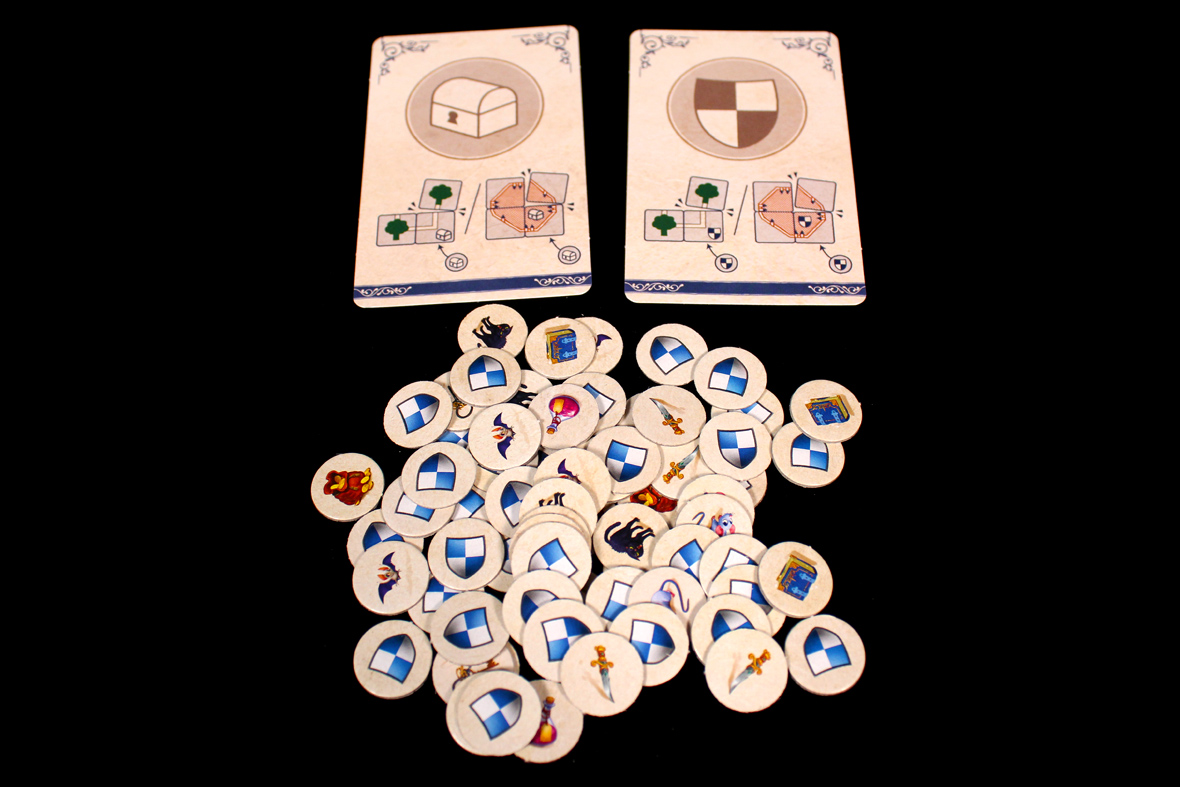
For more challenge, you can also play with the other tasks / quests; you use three (unless you’re playing one of the included scenarios).
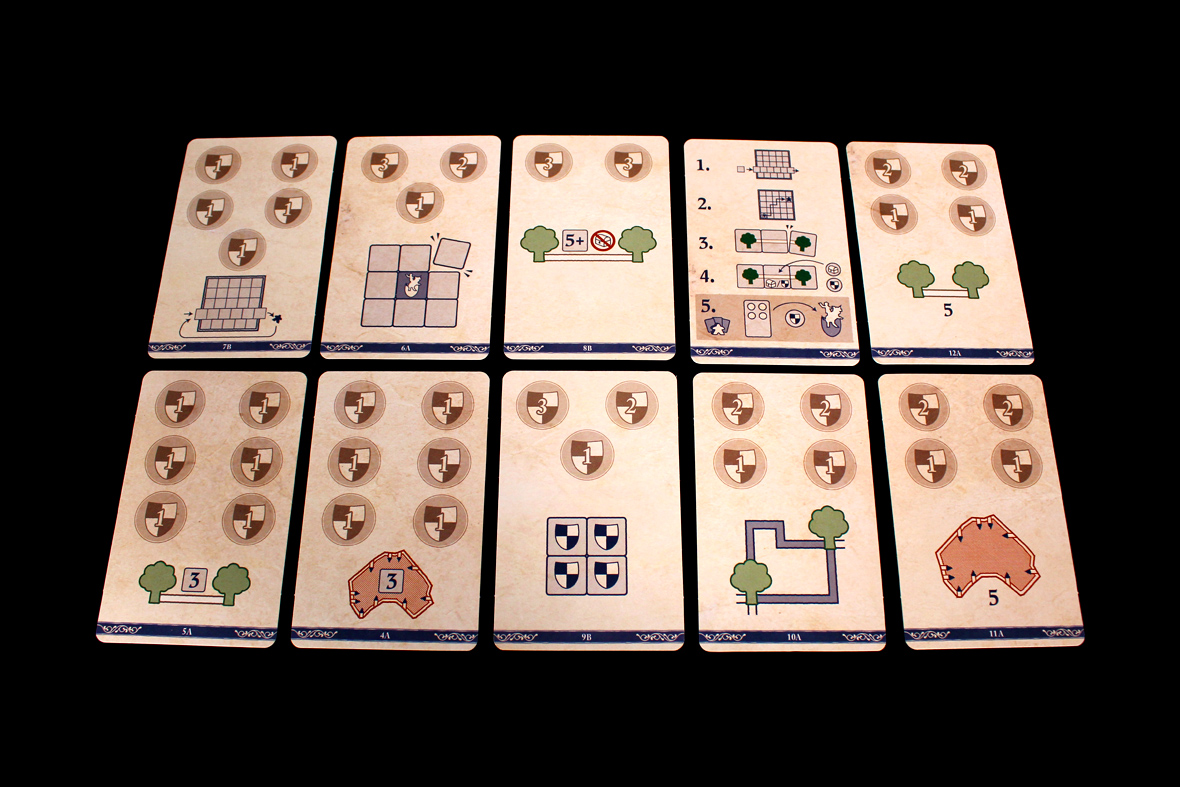
Place the indicated number of Shield Tokens on the indicated spaces. You should be good to start!
Gameplay


A game of Carcassonne Labyrinth is all about finding treasure! It just might take a bit. That Treasure Tile? That’s the space you want your meeple to end up on during your turn. But the paths are all jumbled! So to take your turn, draw a tile from the shared pile and insert it into the maze, pushing a row or column of your choice. You can rotate the tile as needed or desired before insertion. Once you’ve done that, you’ve done two things (hopefully): you’ve ejected a tile from the board (keep that) and you’ve potentially made a path to your Treasure! Either way, you can move your meeple tile-to-tile following connected roads as far as you want. If you land on your Treasure, you collect your Treasure tile as well, adding it to the other tile you claimed! You can stop anywhere, but be careful! If you stop on a tile that gets pushed off the board, you wrap around to the other side!

Once you have your collected tile(s), you’ll expand your landscape! For each tile you have, add it to the board following normal Carcassonne rules (roads connect to roads, cities to cities, and each tile must be placed adjacent to an already-placed tile). If you can’t place it, the tile gets returned to the box, and that’s bad.
If you successfully complete a feature (closing a road or a city completely), you can score it! Take any treasure tokens and / or shield tokens shown on the completed feature and place them on the tile. That’s great! If you’re playing with tasks, you may potentially complete those as well, which will award you additional shields! If you run out of shield tokens during the game, take from unclaimed task cards. You can complete multiple features and tasks per turn, depending on how things shake out.

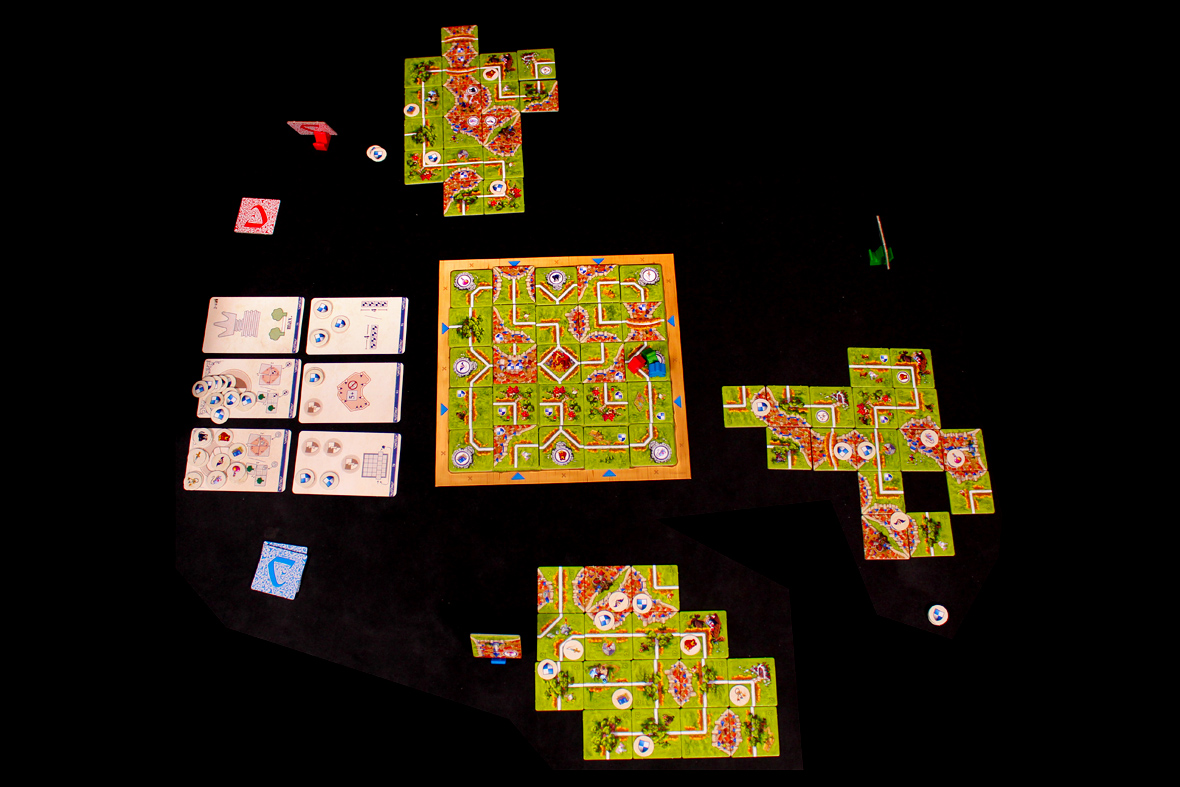
Once all the tiles in the shared stack are depleted, the game is over! Instead of scoring, check first to see who won the Crown Quest. Whoever did sets their meeple aside and replaces it with their crown. If there’s a tie, all tied players use their crown instead of their meeple. After that, stack all your landscapes, then all your tokens, and then your crown or meeple. The player with the tallest stack wins!
Player Count Differences


Not many for this one, other than the additional chaos around the labyrinth itself. With more players entering and pushing in tiles and pulling them out, it can have a deeply unpredictable effect on your own ability to navigate the maze. Sometimes that’ll work in your favor! The player before you will place a tile that clears a path for them and for you. Other times it’ll completely mess you up and you’ll get stuck. And that’s okay. There’s no real way to predict. The only other place where gameplay might be affected is around the Crown Challenge and various quests / tasks. With more players, you’re going to have trouble beating everyone to everything, so you’ll likely see more shields spread around the players rather than (at two) just going to you or your opponent. So more chaos with more players, which is very often the case.
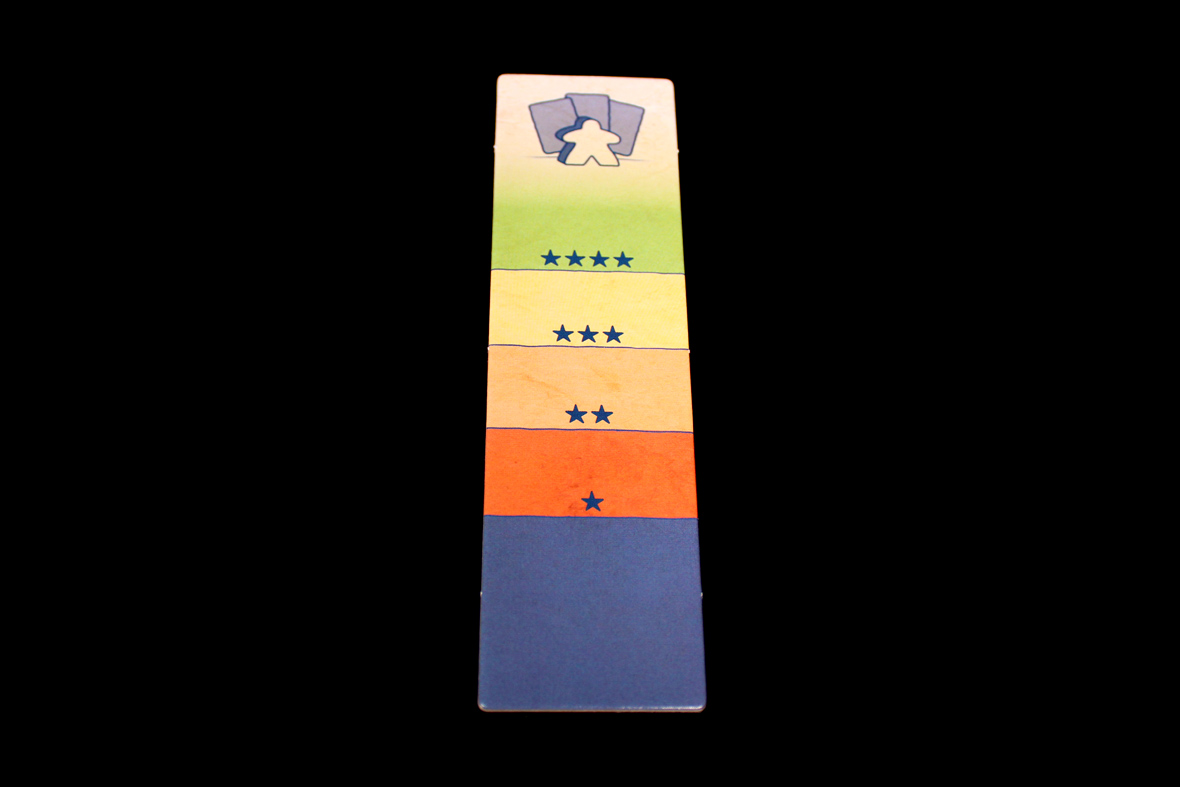
There is a surprisingly robust solo mode, but you know how I am with solo modes for games. The main difference seems to be that the game comes with a little ruler so you can measure the stack of your game and see how you did overall, which is pleasant and fun.
Strategy

- More tiles is almost always good! Tiles are quite literally worth two tokens at the end of the game, so always try to complete Treasure challenges and get more. This isn’t to say you should neglect tokens, just that you should focus as much as you can on tiles and getting them. They’re pretty good!
- Don’t build out giant roads or cities! Unless you’re being very careful and playing nearly perfectly, you’re not going to finish them and they’ll just end up not getting you any points, which truly sucks. The smaller the better, especially since you can then get the token bonuses from completion. Note that if the tasks and quests contracdict this advice, do whatever they ask for instead.
- I wouldn’t necessarily try to block paths in the labyrinth if I don’t need to, unless you’ve already explicitly gotten that treasure and don’t need to go back to that corner. Blocking paths in the labyrinth will piss off other players (lightly inadvisable) and potentially make it harder for you to get where you need to go later (really, more the problem here). You don’t really want to incentivize other players to block you in, but you also still need to get where you’re going every time. That said, don’t help other players if you don’t need to either; this isn’t a charity and they’re still your opponents.
- Keep an eye on your status on the Crown Challenge and various tasks. Just worth seeing what your opponents are doing and how that compares to the current challenge. Also certain tasks are worth more if they’re completed earlier in the game, so it’s worth trying to race your opponents there (and win) if you can.
- The game is shorter than you’ll think it is; plan accordingly. Yes, as I mentioned, don’t build giant features, but also keep your play area fairly compact and make features easy to complete where you can. You don’t have to make it dense (especially since that will make cities hard to finish; there are a lot of tiles with roads), but try to build features that are easy to finish, not just small.
- The forest terminal tiles for roads are your best friend; end roads quickly to score extra shields. Things that make it easy to close roads and cities are going to be in high demand with this specific version of the game, so keep an eye out for them.
- If you’re not getting a Treasure this turn, at least make sure the tile you are getting is definitely worth it. Don’t just pick a tile as a blow-off tile; make sure it helps advance your goals and potentially cuts opponents off from an otherwise-useful path. If you’re slowed down, the polite thing is to slow other players down also.
Pros, Mehs, and Cons


Pros
- I don’t think I’ve ever seen a game take from two different games and make it great. I love hybrid ideas, like Spring Rally‘s trick-taking racing game or The Gang‘s The Crew-meets-Texas Hold’ Em vibes, but Carcassonne Labyrinth manages to do a best-of-both that I haven’t seen that’s really exciting. More games should try just smashing two games together and seeing what happens, I guess? Looking forward to the Root-meets-Thunder Road mashup (this is not a real game please do not email me).
- This is super interesting from a game design perspective, as well. Fundamentally, what the game is doing is replacing Carcassonne’s draw-a-tile mechanic for getting tiles with Labyrinth’s exploration and tile-pushing mechanics for getting tiles. That makes an otherwise boring element of the game significantly more interesting. To even out the complication, it strips away a lot of the scoring elements, including one that Carcassonne writ large has been moving away from in recent years (Fields, which are really challenging for new players to score). This makes the game feel balanced from start to finish and turns feel exciting even if you don’t accomplish a goal, which is great from a player standpoint. I would love to read a designer diary about how this game came to be.
- I love what they’ve done with scoring. So scoring is completely gone, and that’s amazing for lowering the complexity of any game. Instead, you’re just stacking tokens on completed features with those images, and at the end of the game, you stack your tokens, your tiles, and your meeple (or the Crown if you won the Crown Challenge) and the tallest stack wins! It’s pointed out (fairly) that this may not be the most accessible approach in a BGG thread, but thankfully the folks in that thread have translated everything to points if you’d prefer (or if you just want to know how much someone won by). I just like the removal of the more complicated scoring element from an otherwise casual game; I think it makes it a lot more approachable.
- There’s still player interaction, but it’s not as nasty as standard Carcassonne. One of my beautiful sweet precious friends insists that Carcassonne is a polite and friendly game, and I have no idea who they’ve been playing with because it’s been a bloodbath for me and my other friends when we play (and we haven’t played with each other). Here, that’s mostly mitigated by giving you your own personal Carcassonne space to play around in, but you can still mess with other players via the actual Labyrinth board (or ride the tiles to try and get closer to a different place. Still feels pretty interactive!
- Even if you can’t complete a treasure path, there’s still something to do on your turn. If you complete a Treasure Path, you get two tiles to place on your turn. Otherwise, you just get one. Two is obviously better, but the one you get is still important. You want to complete structures and collect tokens.
- I really like the quests and challenges. Little ways to incentivize thinking about the game differently are all exciting and interesting, and they get players invested. Plus, the Crown Challenge is pretty critical; it’s a big extra chunk of points over your Meeple if you manage to get it!
Mehs
- Large structures feel less encouraged since the game is so short. There aren’t that many rounds and you only score for the symbols on a structure, so you’re not really incentivized to build these giant sweeping cities like you would be in standard Carcassonne, which can be a bummer. You kind of want to build more tactically and more strategically, making small and easy-to-complete areas where you can. It’s not bad; it’s just a different kind of play than I’m used to.
- I wish the Crown Challenges were weirder. I just want to be challenged aggressively when I play, you know?Hopefully the game is popular enough for an expansion or sequel.
Cons
- Carcassonne causes the game to inherit some of its physical quirks. The main one I see is that the original Labyrinth had pretty rounded edges on its tiles whereas Carcassonne is pretty square, so the tiles will catch, at times, as you try to push them through the Labyrinth. It’s a little annoying. I also wish that everything in the game was maybe 50% larger, but then you couldn’t use the tiles in a game of Carcassonne, and I understand why that’s important. No winning on that front, unfortunately.
- Try to place the meeples on the tiles so that they don’t cover up the paths; it’s easy to obscure them by mistake. If you can’t see the paths, it can make things complicated for players and lead to mistakes. It’s fine to take back a mistake; it’s just a game, but it can be frustrating. One of the consequences of keeping the same meeples as Carcassonne.
Overall: 9.5 / 10
Carcassonne Labyrinth is brilliant, in a way that I found genuinely compelling during Gen Con. I hardly ever have time to play games at cons anymore (this is not because I am cool and busy; it is because I am tired and sleepy) and I made time to play this a few times because it’s just that interesting. I grew up on Labyrinth and I love Carcassonne, and I think this is a rare example of two great tastes that taste great together. They took the parts of Labyrinth that are fun and folded them into the tile-selection mechanism for Carcassonne, and then sanded off the more fiddly edges of Carcassonne (scoring and fields) to let the game fit into a slightly lower-complexity spot. It’s sharp. The game is now a better Labyrinth for more complex play and a lighter, entry-level Carcassonne. Stacking the tiles and tokens to determine your score is delightful, the actual tile shifting is a lot of fun, and the rules are simple and straightforward without compromising the quality of the game. I suppose my one complaint is that the game is restricted by the Carcassonne tile size, so some elements are difficult to see and without the more rounded corners of standard Labyrinth, the tiles can get caught inside of the grid sometimes. It’s a specific consequence of inheriting Carcassonne elements, but it also means that the game can serve as an alarmingly road-heavy expansion to standard Carcassonne, which is also very fun. I was super excited when I heard about this, even more excited to play it, and I’m still thinking about it even now, weeks later. You might be less excited about this if you’re looking for something with more Carcassonne and more depth and more strategy, but if that’s the case, try Mists Over Carcassonne! It’s much harder. This is streamlined and great for new players, and I love it. If you’re a Carcassonne or Labyrinth fiend or you just love the idea of two games getting smashed together, I’d definitely recommend Carcassonne Labyrinth! I’ve loved playing it.
If you enjoyed this review and would like to support What’s Eric Playing? in the future, please check out my Patreon. Thanks for reading!
Discover more from What's Eric Playing?
Subscribe to get the latest posts sent to your email.