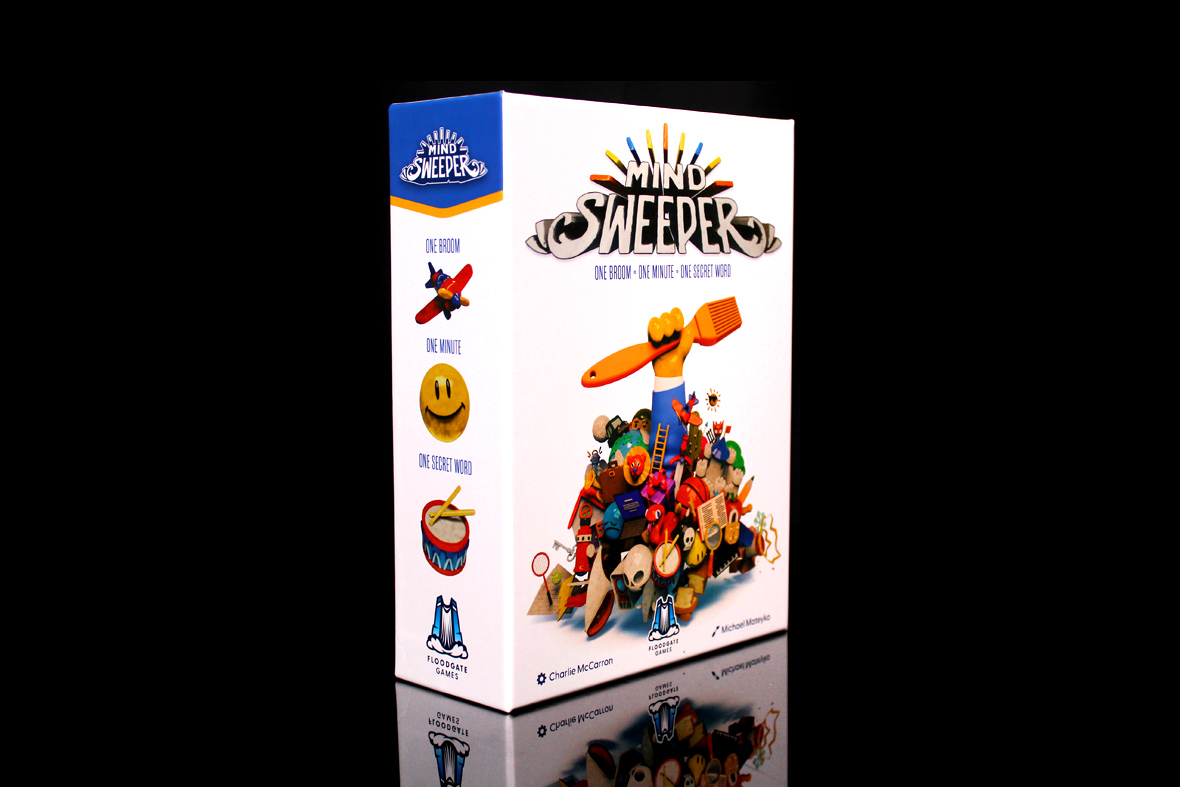
Base price: $30.
2 – 10 players.
Play time: ~25 minutes.
BGG Link
Logged plays: 4
Full disclosure: A review copy of Mind Sweeper was provided by Floodgate Games.
There’s a few games coming down post-Gen Con as we slowly approach Essen, so I imagine some of my coverage is going to start looking forward rather than covering stuff that we saw at Gen Con. For y’all, this means that there’s a lot to look forward to! For me, this means that the Review Queue will continue to grow, which is my own private nightmare. The worst part is the specific circumstances that are required to play some games! I want to tell y’all about Star Trek: Captain’s Chair, but I need my Trekkie friend otherwise it won’t hit as hard, you know? More on that later. In the now, we’re covering a new party game from Floodgate! It’s going to be hard to go up against their last title, Everything Ever, but we’ll see how it measures up!
In Mind Sweeper, you’ve got a lot of mental mess and a very small broom; it’s time to clean up! This cooperative game tasks you with trying to clue your coplayers into your secret word, but without saying (or doing) much of anything. You just … broom. The broom is your best friend and your only friend. That said, you can do a lot with a broom! You can connect words together, bridge concepts, and even broom more aggressively to make your point. Will you be able to make a clean sweep of your challenges?
Contents
Setup
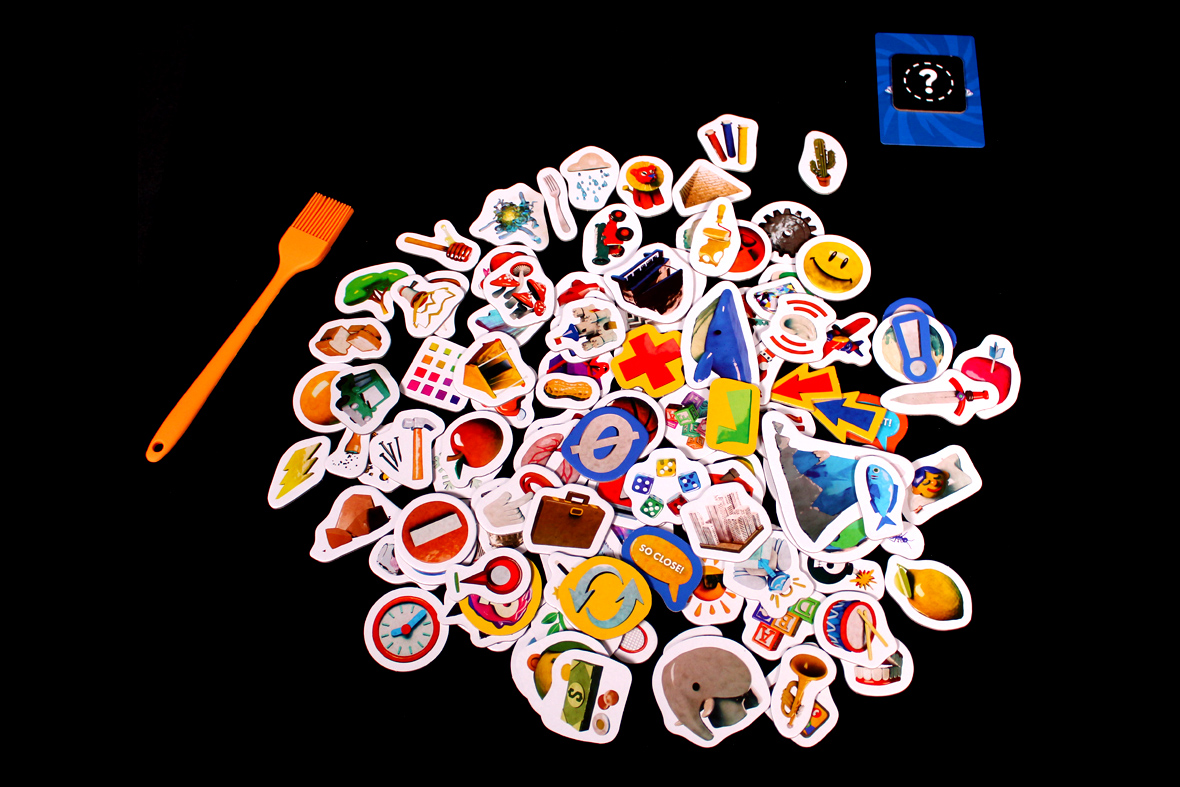
Thankfully fairly few components to setup. There’s the key bit, which are the tokens:

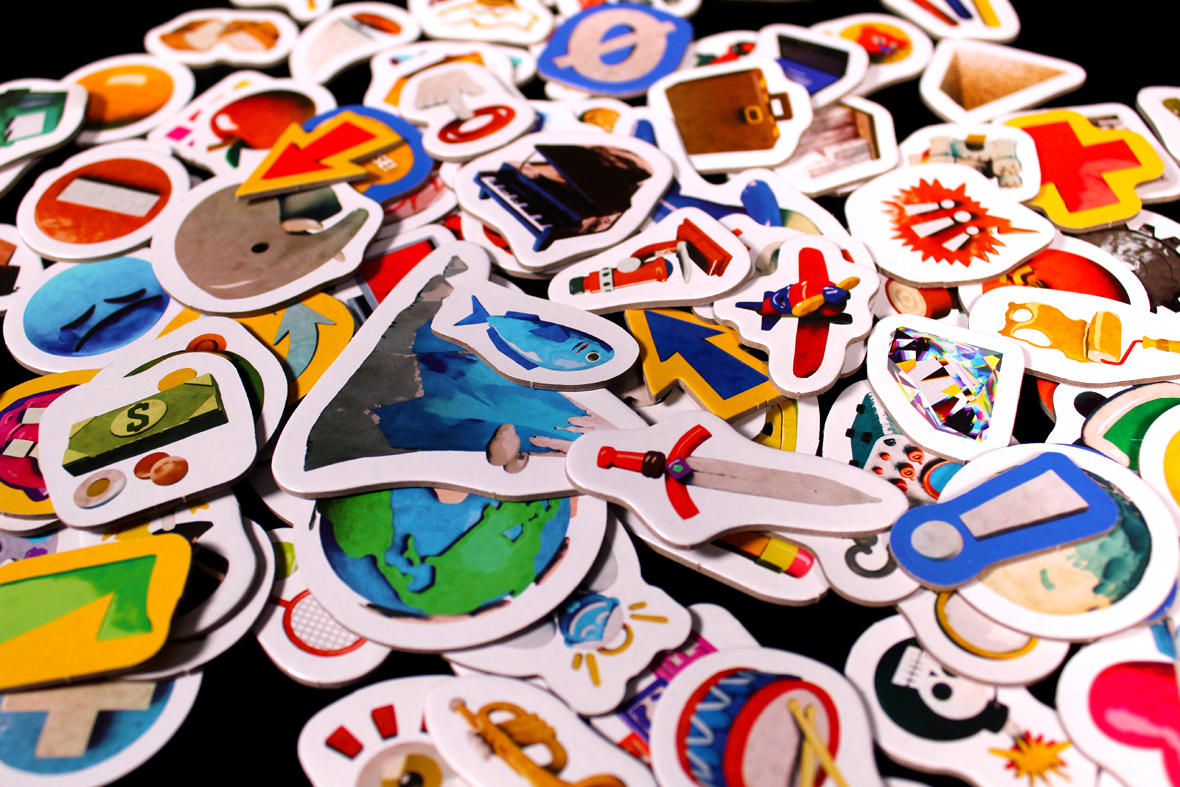
Just kinda spread them out; you can mix them up between rounds if you’d like. Choose one player to be the Sweep Master (Sweep Lord, Chimney Guy; whatever you’d like), and give them the broom:

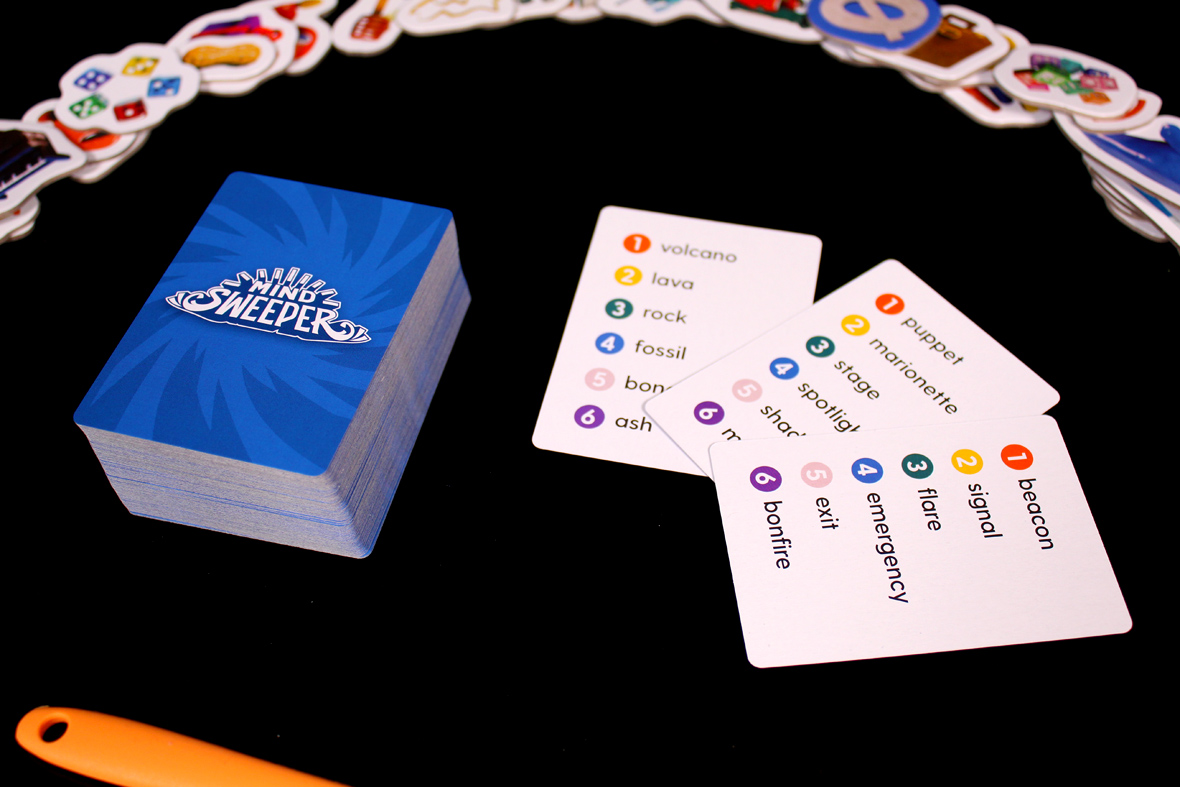
They’ll also get the first of a stack of cards:
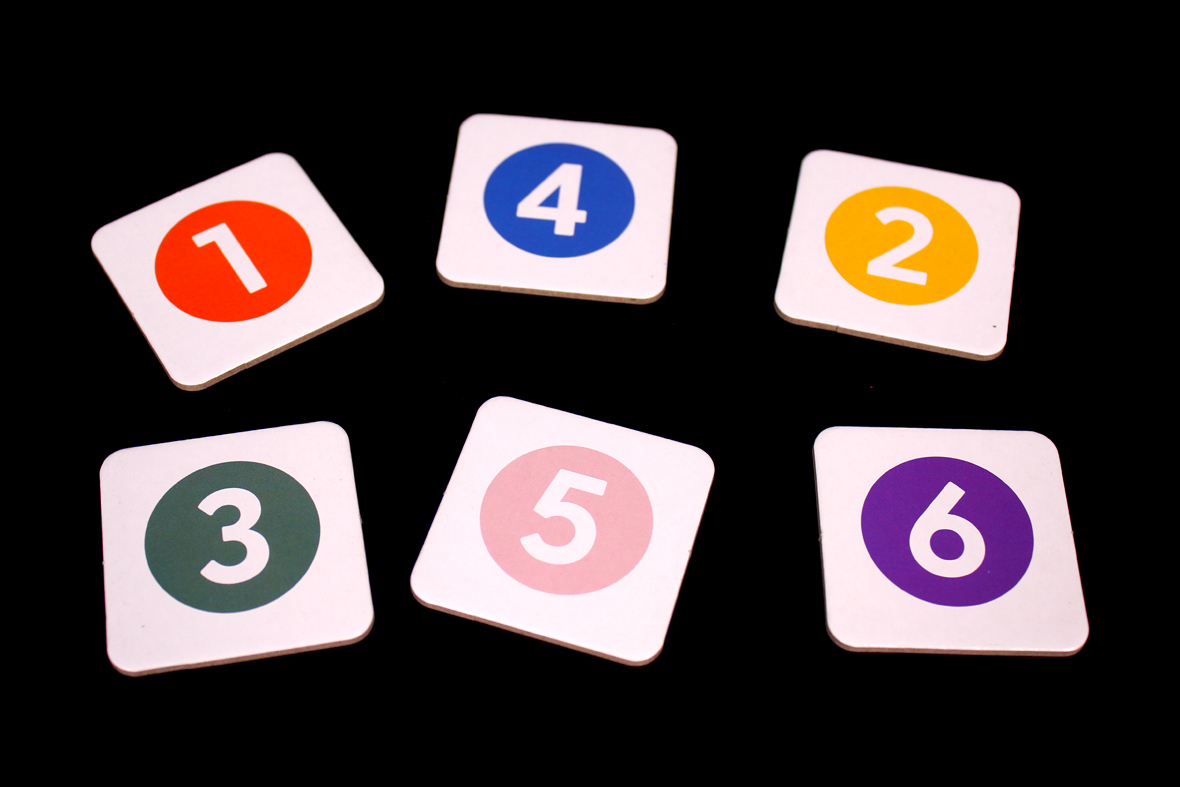
And one random token to determine which word is going to be the round’s secret word:
You should be ready to start!
Gameplay

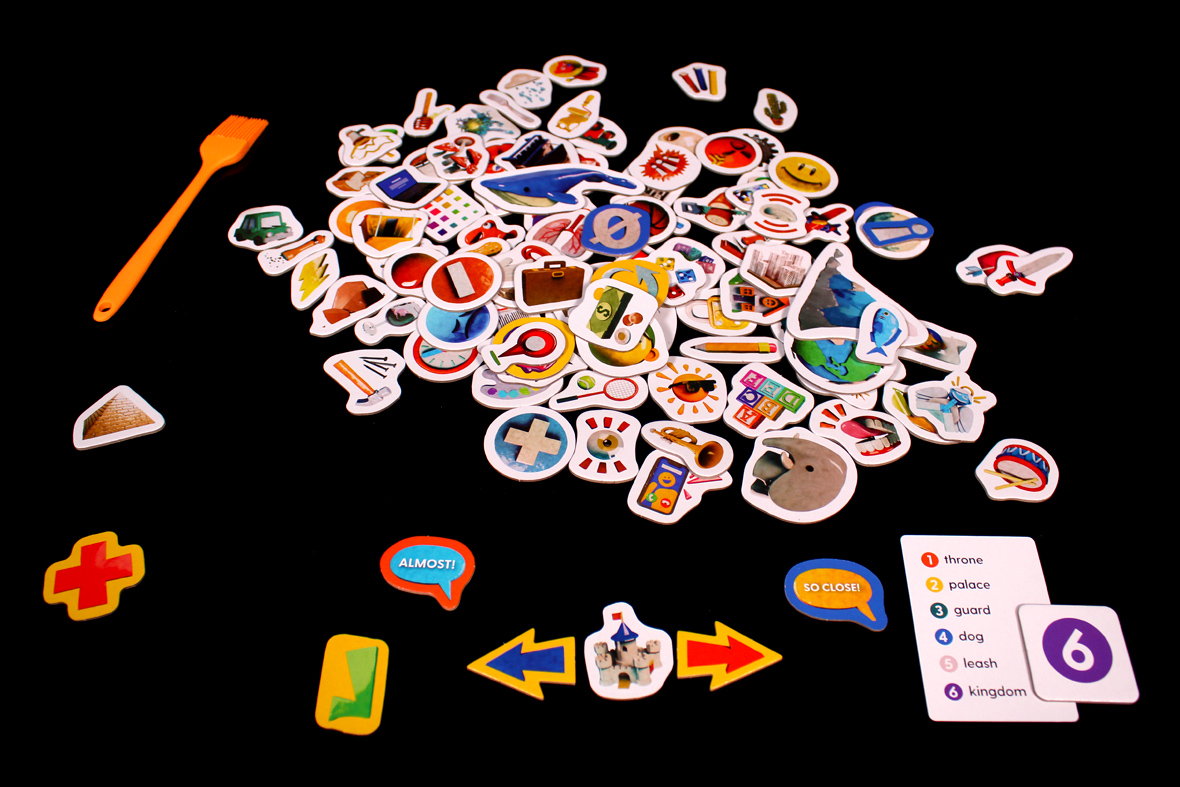
Not much here; you’re sweeping together ideas! Once you have a secret word, the Broomer starts sweeping to try and clue that word to the Guessers. Only the Guessers can talk, and they can say whatever as the Broomer sweeps tokens around as clues.
If, at any point, the Guessers guess correctly, the Broomer says that that’s correct, they take the card, and that round ends. Otherwise, you have a minute. After 60 seconds, if no correct guess has been said, the Broomer flips over the hidden card and you get to see what the options on the card are. The guessers can then make one final guess to get the card for a point. If not, the card is discarded for 0 points.

Set up the next round by passing the brush to the left and reshuffling the tokens. The new Broomer draws a card and a token to get a word, and you start again. After ten rounds, see how many points the group got! A perfect score is 10 / 10.
Player Count Differences

There aren’t really any in this one. With more players, you personally get to be the Sweepster less frequently, but that’s not necessarily the worst thing if you’d prefer not to be the Sweeperino. Plus, if you’d prefer not to be at lower player counts, you can just pass. It’s not a particularly big deal. You may find with more players that it’s difficult to distinguish or indicate who’s saying what, but at that point, just use the broom to point or use the arrow tokens to indicate who should be saying something so that you can get signal from the noise. I wouldn’t say I have a particularly big preference on player count with this one.
Strategy

- I think it’s a good idea to get certain tokens out almost immediately. I find the X, the checkmark, the Almost!, and some others are really useful to just have handy so that you can quickly use them to indicate who’s close, who’s not helping, and when players are approaching the right answer. There are similarly five sense-adjacent tokens, like see, smell, hear, taste, and touch, and you can sometimes use those to bridge concepts.
- Be mindful of the timer. You won’t have a ton of time to make your point, so don’t linger and don’t just expect players to keep guessing over and over again.
- Sometimes you’ll have to cut and run from your current plan. Sometimes what you’re doing just isn’t working and you need to move on. Just shuffle everything back in and try with new tokens to make it clear you’re scrapping things.
- If nothing else, try to distinguish your word from the other words on the card. You’ve got one more shot once time runs out, so try to make it clear, if nothing else, that your word is different than its other neighbors on the card you got. Once players see the card, it might be a lot easier.
- Your ability to map concepts is what’s critical here. You need to be able to relate a few things together using (fairly) arbitrary words to try and get the point across. You can’t just point at a castle and expect players to intuit whatever you mean; you’ll have to dig deeper.
- Guessers should try not to talk over each other. It makes it much harder for the Sweepista to designate whose idea is getting close or is completely wrong or something. There’s a lot of energy and not a lot of time, but try to make sure everyone gets heard. That said, try to avoid long silences; you need to also be saying things for your sweeping player to react to.
- Also, give the Broom Captain time to respond to a guess. If they’re moving stuff around, it’s probably in response to something someone just said, so let them finish that idea (or just keep saying stuff to try and get closer).
Pros, Mehs, and Cons

Pros
- I love a game with a dumb interaction mechanism. You can only engage with the game via the broom? Fantastic. I love that; it’s absolutely goofy.
- Very easy to teach. You just broom tokens until your co-players guess the right word. You can only use the broom. Now you’re set.
- The single-minute timer gives the game a good amount of tension. I’ve played without the timer to teach people the game before (it’s a nice way to learn things) and one round took twenty minutes. Sometimes it’s just agonizing, so having the timer makes rounds that aren’t going well mercifully short, which is often appreciated. Plus, it disincentivizes just putting some tokens in front of players and telling them to just keep guessing related words with no direction, since you don’t have a ton of time.
- That final guess can sometimes alleviate a frustrating round. It doesn’t always, but at least getting your choices narrowed to six options can sometimes be the scoping limiter that players need to actually lock in and guess right. If they guess wrong, well, then they were likely thrown off by the clues. Good note for next time.
- Plays quickly. A lot of timed games do; this is no exception.
Mehs
- Kind of odd for a game to come with no sand timer that depends on timers. Yes, you can use your phone, but given that Floodgate published an entire game based around sand timers it seems odd to suddenly get stingy with them now.
- Similarly odd box storage. The tokens won’t just fit in one bag, so I’m surprised there’s not a bag included for the tokens just to have a like, cloth bag or something. They do include a tuckbox for the cards, however? No other insert.
Cons
- I don’t love the randomized difficulty of the words on the cards; it makes it difficult to help new players learn the game. I get that the words are loosely related, but I preferred Jibber Jabble‘s system of making the words progressively more difficult as you go down the line. It helps new players ramp up more easily and lets you configure the difficulty to your group’s preference.
- The game also could use some calibration, which I find confusing. Across all the cards, for instance, there are several words that appear as tokens within the game itself. Did you get honey? Great; there’s a honey token and you’ll get the word in several seconds. Did you get chicken? Good luck; there are literally no bird tokens. I’m not sure what the reasoning was behind this. I’d prefer if the cards had no words on them that appear as tokens to keep the game’s difficulty feeling somewhat balanced card-to-card.
Overall: 7.5 / 10
Mind Sweeper is a hoot, to be fair. I knew I liked it as soon as I was taught it at Gen Con. Ever since I started playing games, games that make you engage with the components in a silly way (still thinking about that sticky hand game, for instance) are always going to be fun. It’s part of what made Tokyo Highway so exciting when I first learned how to play it; the idea of playing a game with tweezers and tiny cars was a hoot and a half. That said, there are some confusing production choices that give me pause when I’m thinking about them, and most of them are around the arbitary-feeling difficulty curve of the game. A cooperative game should be challenging, yes, but that challenge should feel structured and fair, and I don’t think Mind Sweeper always does that. Some rounds you’ll get the word in a second, which doesn’t always feel satisfying, and other rounds you’ll get “vanity” and be stuck up a creek through no fault of your own. The difficulty isn’t even necessarily “concepts are harder than animals”, for instance (though it may be safer to treat a vanity as furniture rather than the concept of vanity?) as plenty of animals are hard to clue just because of the selection of tokens available. That ends up feeling weird, rather than challenging, and that’s not always the feeling you want the game to leave players with. Granted, I could imagine a kids’ version of this that’s just something like animals with a more limited token set that would go over pretty well, but that’s neither here nor there. That said, the last-ditch guess you get to make after the time has expired can sometimes help you out, since you have options. Beyond that, though, I think it’s a very interesting concept that ends up being pretty fun; I’d just recommend having a large enough space to play it on. A tiny coffee table in my living room isn’t nearly as good as a big table at Gen Con; I’ll tell you that much. If you enjoy cooperative party games, you excel at guessing hidden words, or you’re just a wizard with a broom, you’ll probably like Mind Sweeper as well! I’m looking forward to my next play.
If you enjoyed this review and would like to support What’s Eric Playing? in the future, please check out my Patreon. Thanks for reading!
Discover more from What's Eric Playing?
Subscribe to get the latest posts sent to your email.